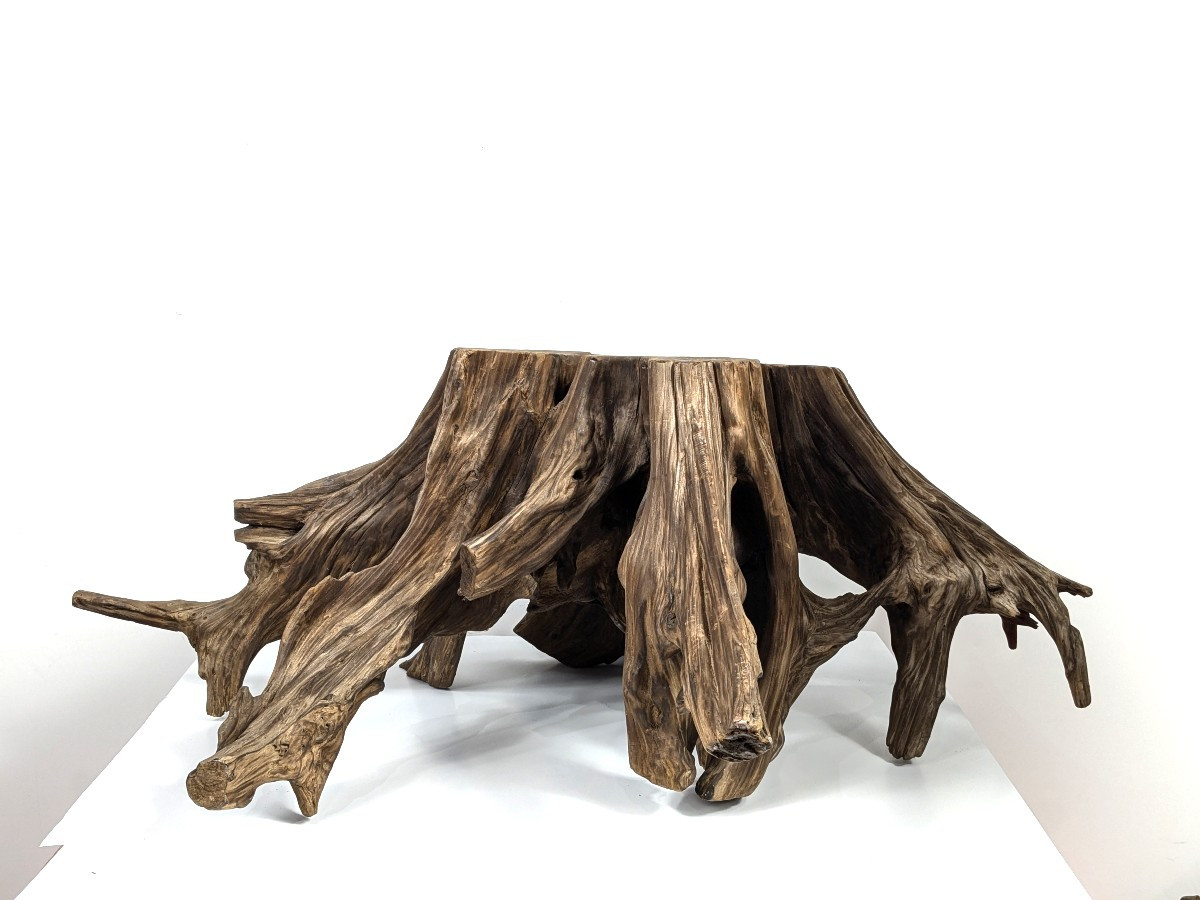
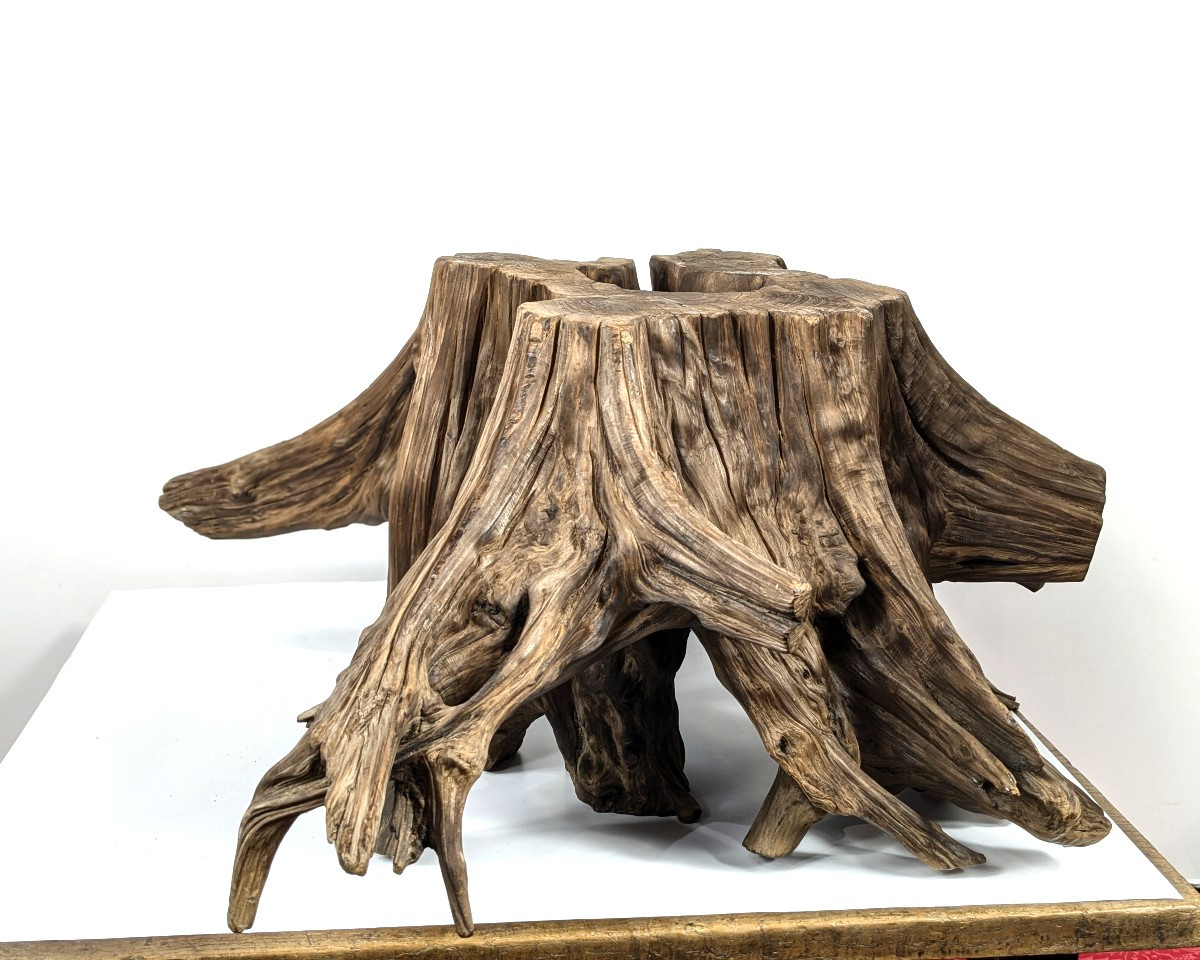
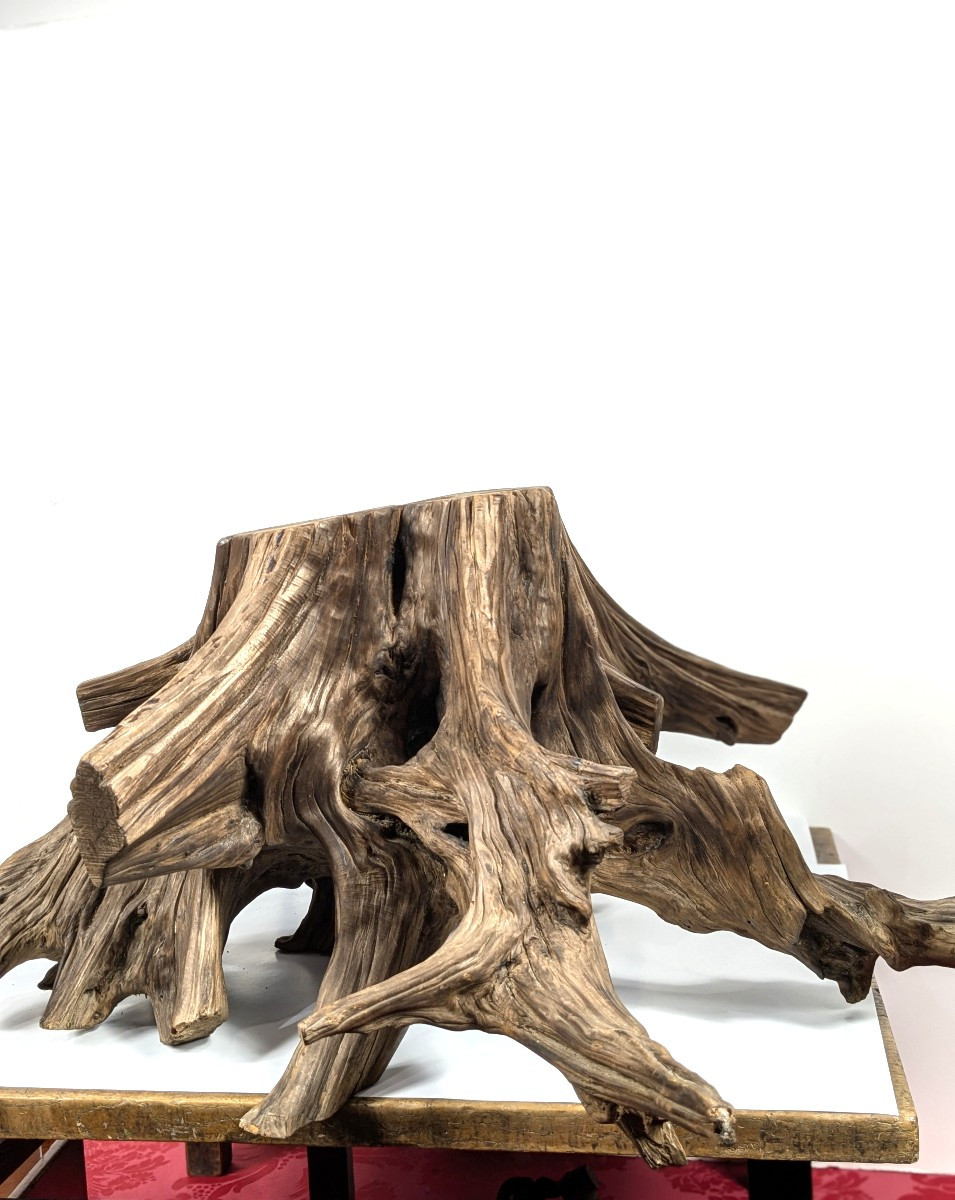
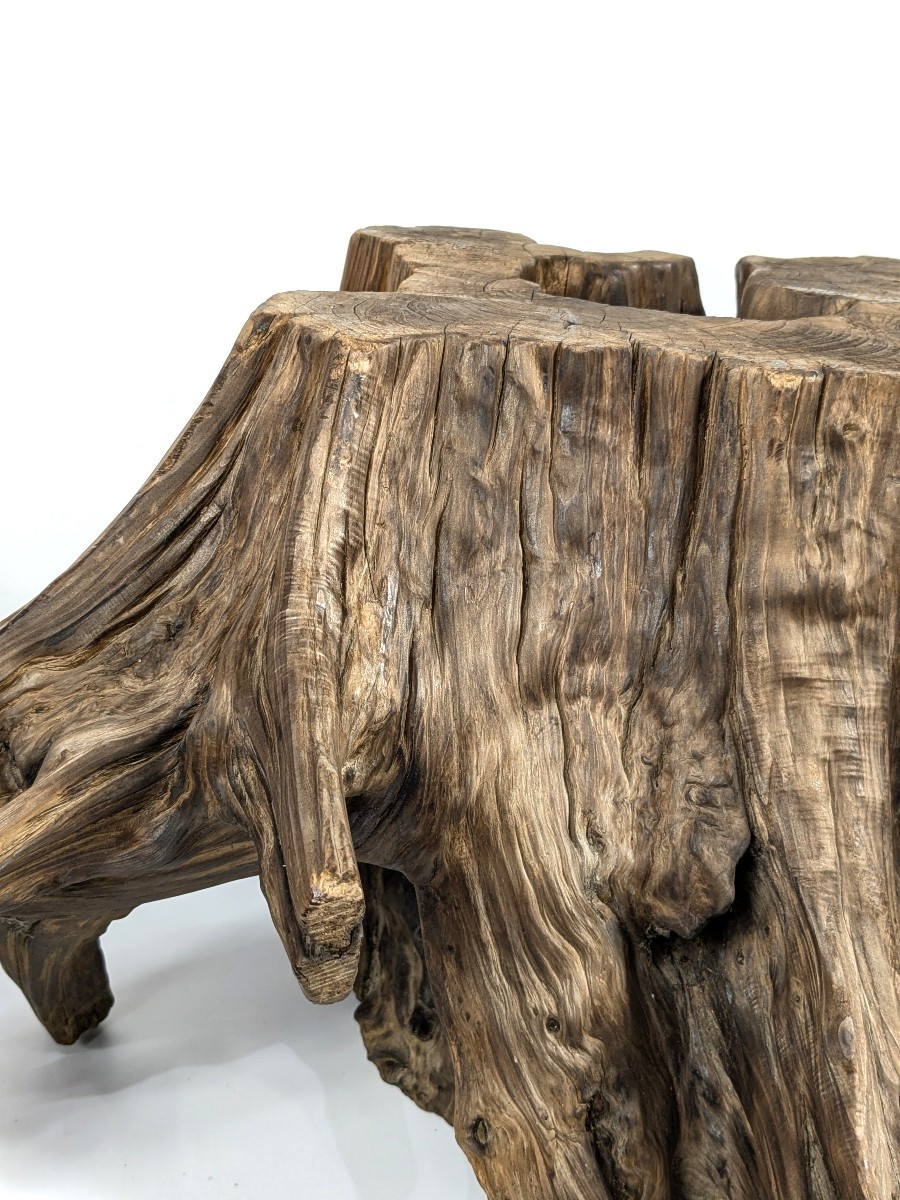
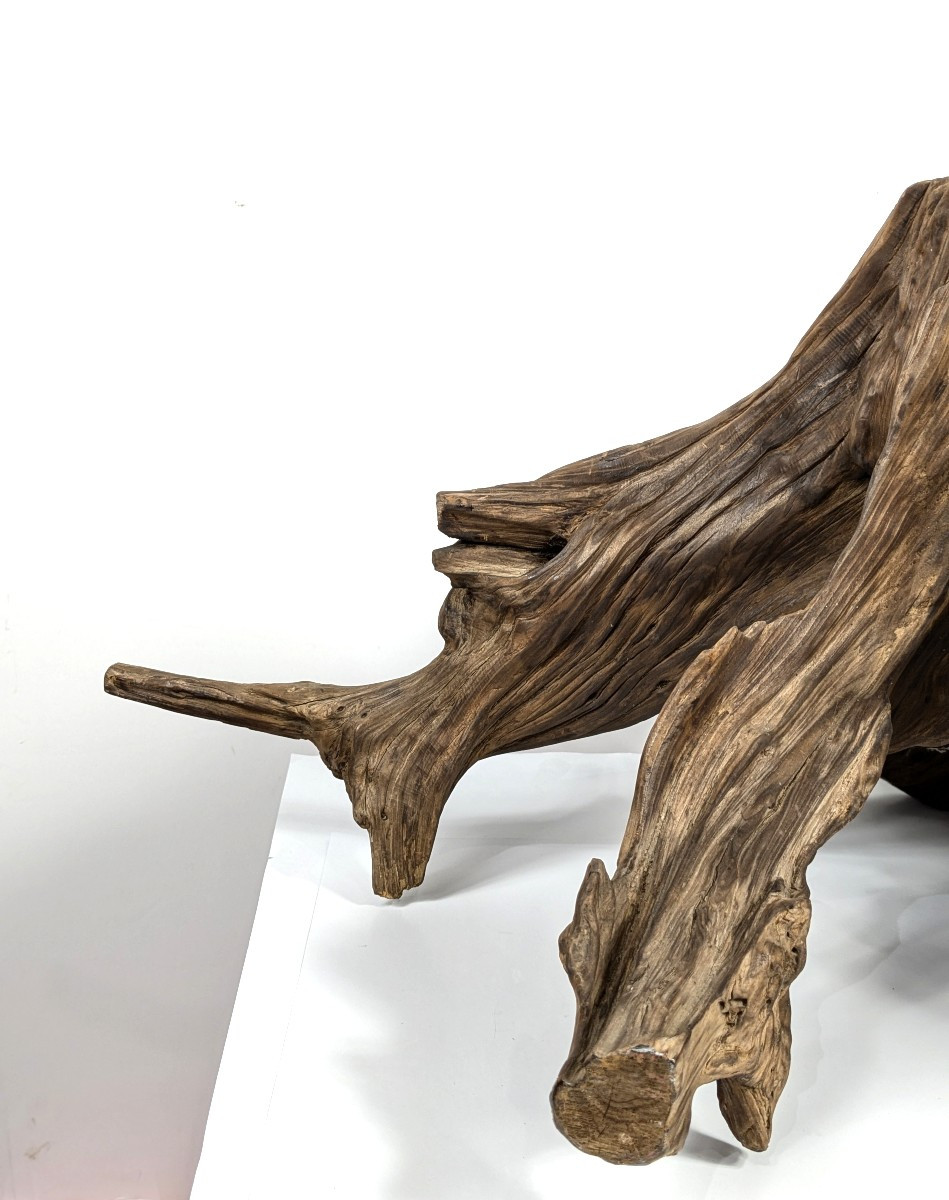
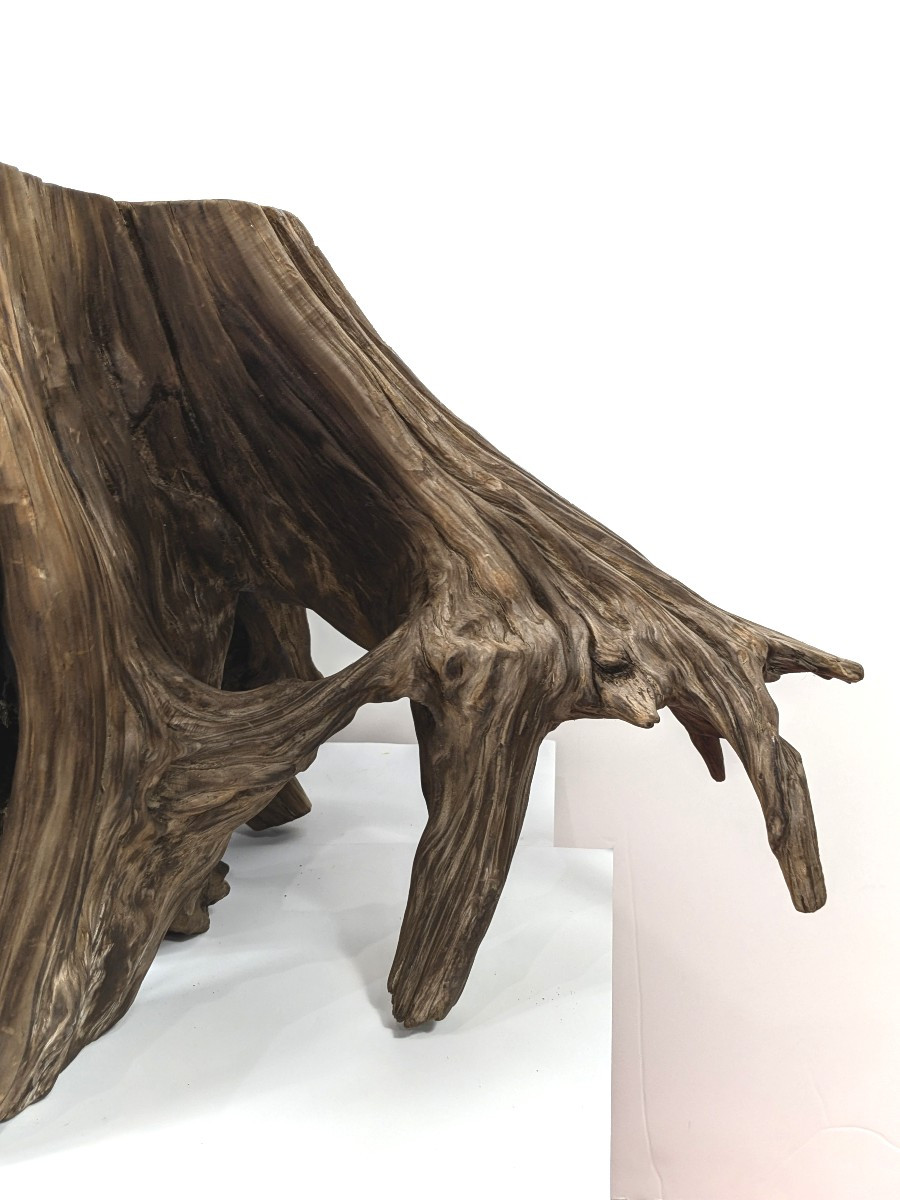
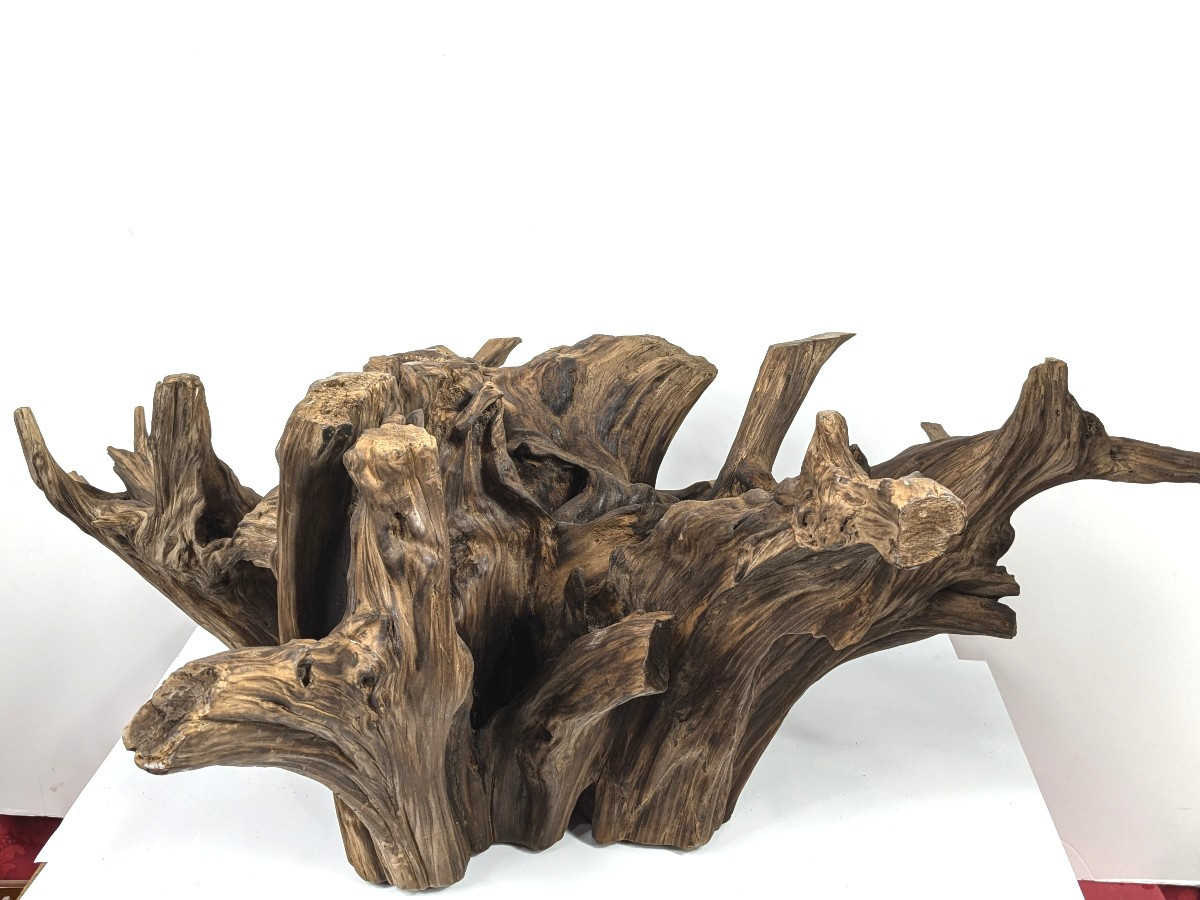
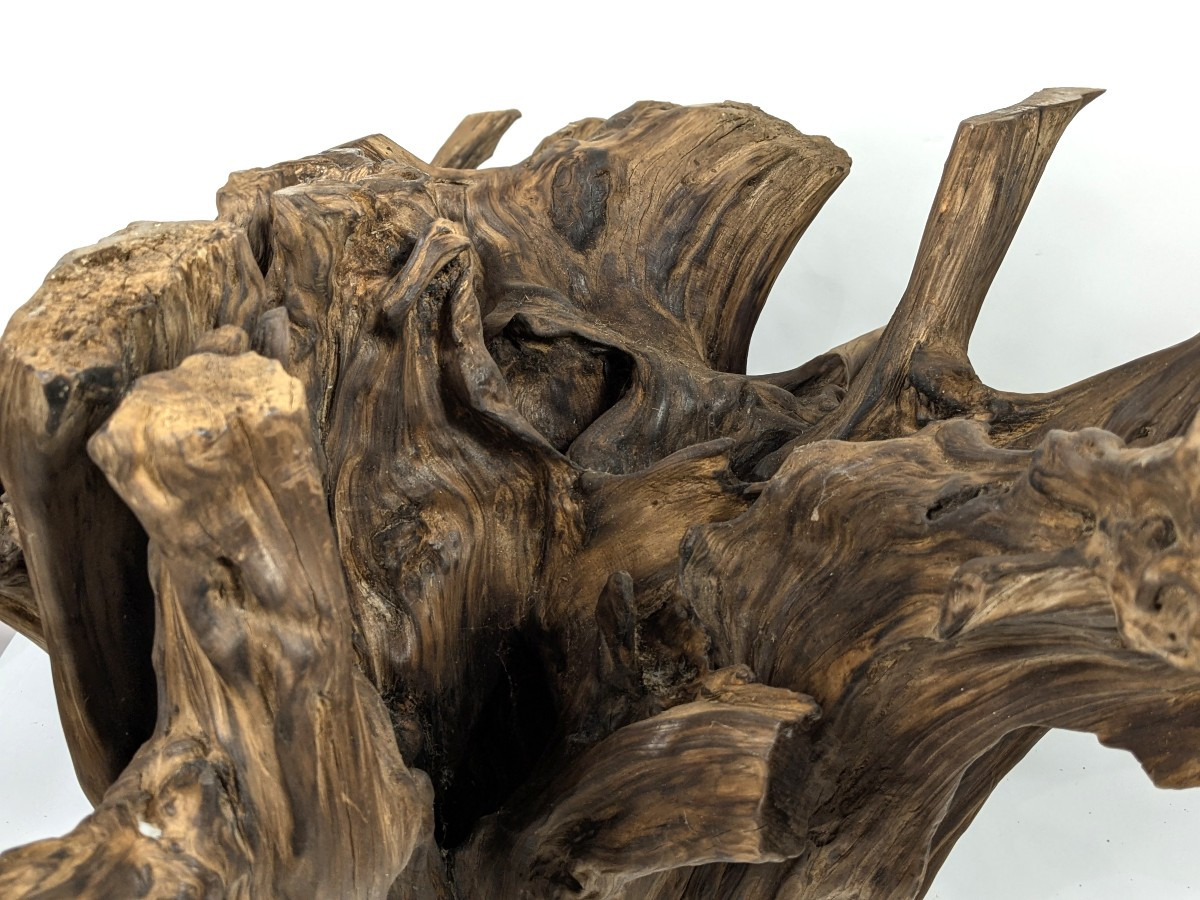
Wabi-sabi Root - Kare San Sui Garden - 20th Century Showa
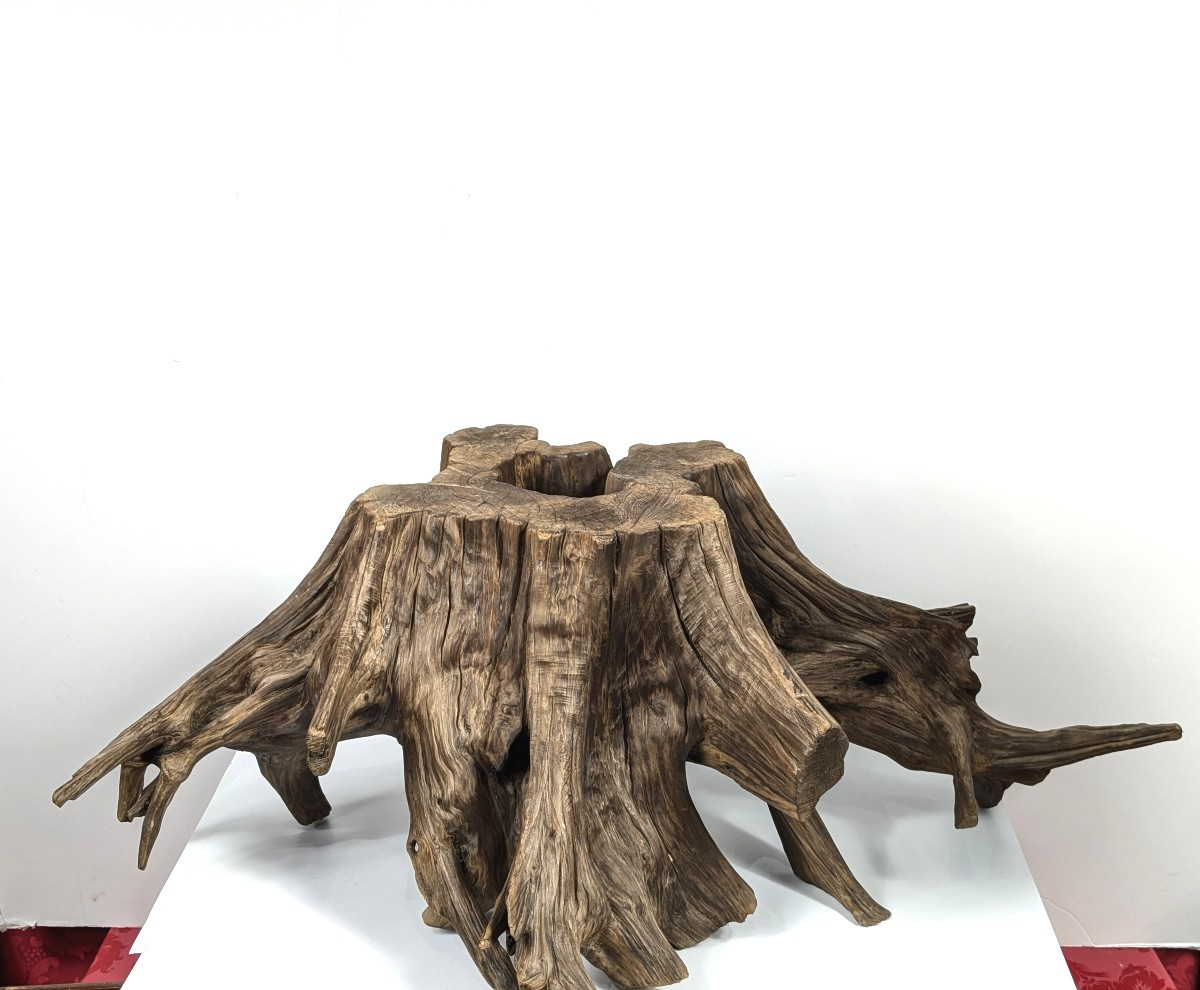
This root was intended for a "Dry Garden" (枯山水 - karesansui) - a Japanese garden composed of sand, rocks, gravel, moss, mushrooms, and dried roots. Appearing in the 15th century, these gardens are most often abstract in character and are created with an economy of means in accordance with the Zen principle of eliminating the superfluous, which contrasts sharply with the profusion of gardens from previous eras. The root also refers to
Wabi-sabi, a spiritual and aesthetic concept derived from Zen Buddhist principles. It
connects two principles: "wabi," which means solitude, simplicity,
melancholy, natural asymmetry; and "sabi," which is the alteration of time, the taste for things aged, the patina of objects.
The
wabifait
refers to the fullness and humility one can experience
in the face of natural phenomena,
and the sabi,
the feeling one has when confronted with things in which one can discern the
work of time or humankind. A
quest for imperfect perfection. Showa period, circa 1950-70. Weight 6.9
Ask us for a shipping quote!
Wabi-sabi, a spiritual and aesthetic concept derived from Zen Buddhist principles. It
connects two principles: "wabi," which means solitude, simplicity,
melancholy, natural asymmetry; and "sabi," which is the alteration of time, the taste for things aged, the patina of objects.
The
wabifait
refers to the fullness and humility one can experience
in the face of natural phenomena,
and the sabi,
the feeling one has when confronted with things in which one can discern the
work of time or humankind. A
quest for imperfect perfection. Showa period, circa 1950-70. Weight 6.9
Ask us for a shipping quote!
280 €
Period: 20th century
Style: Asian art
Condition: Condition of use
Material: Solid wood
Width: 79
Height: 27,5
Depth: 61
Reference (ID): 1687896
Availability: In stock
Print