THIS OBJECT WAS SOLD
Mucha - Chromolithograph - Lu Biscuit Calendar Poster / Lefèvre-utile




A rare poster-calendar created in 1897 by Alphonse Mucha for Lefèvre-Utile, the iconic Nantes biscuit manufacturer. A major figure of Art Nouveau, Mucha is one of the most influential artists of the Belle Époque, whose style is instantly recognizable for its ornamental compositions, sensual female figures, and masterful use of line.
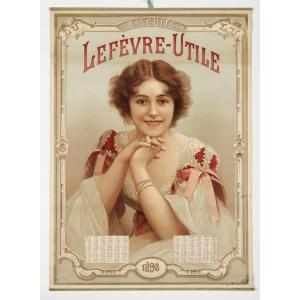
The composition features a woman with an assertive, almost ambiguous sensuality, in a deliberately suggestive pose. Her direct gaze, the transparency of her clothing, her flowing hair, and the fluidity of her pose create a delicately erotic atmosphere, daring for the time. She presents the viewer with a tray of "boudoir" biscuits, whose symbolic meaning is clearly not innocent. Mucha subtly plays on the ambiguity between indulgence and desire, transforming the commercial object into a veritable instrument of seduction.
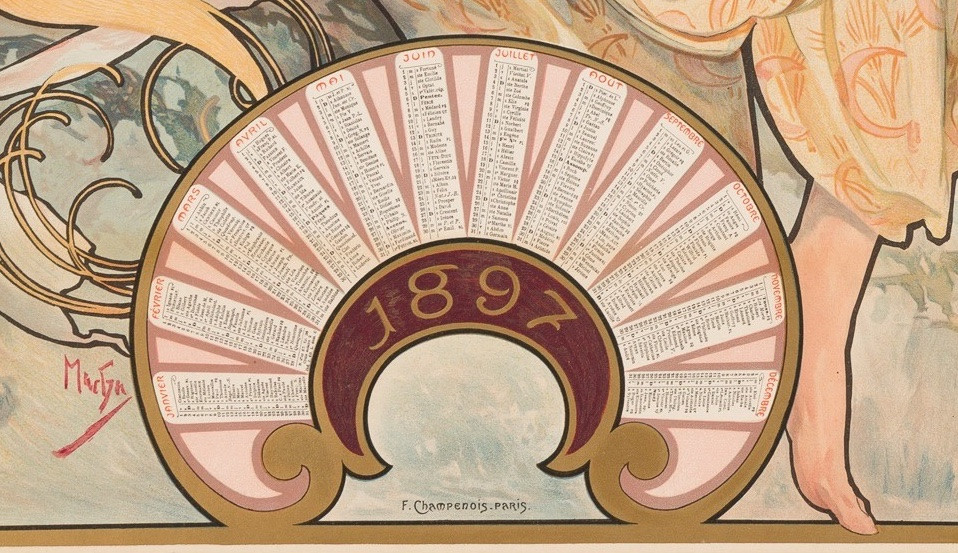
The LU monogram is masterfully integrated into the floral ornamentation, perfectly blended into the composition. Arabesques, sinuous lines, floral motifs, and a refined color palette constitute an exemplary synthesis of Mucha's graphic language. The lower section features a semi-circular calendar for the year 1897, making this poster both decorative and functional, in keeping with a principle typical of the Belle Époque.
This poster reflects the visionary policy of Louis Lefèvre-Utile, who, from the late 19th century onward, associated his brand with the greatest artists of his time. The collaboration with Mucha was a pivotal moment in the history of modern advertising, bringing Art Nouveau into the commercial and domestic spheres.
This poster transcends the realm of simple advertising to become a true artistic manifesto. Today, it is considered one of Mucha's most iconic images and encapsulates all the stylistic codes that earned him international renown.
The artwork is preserved mounted on its original frame, as evidenced by the photographs provided. This old mounting contributes fully to the authenticity and historical interest of the whole.
Lefèvre-Utile biscuits, 1897 calendar.
Chromolithograph on paper, originally mounted on metal strips.
Condition
Exceptional condition for a poster from this period. The colors are fresh, intense, and perfectly preserved.
The gold illuminations are in remarkable condition, with no oxidation, retaining all their original luster.
The paper shows no yellowing or deterioration. No visible restoration.
This is clearly a copy that has never been exposed to light, which explains its exceptional freshness.
It is essential to refer to the photographs, as they form an integral part of the description.
The composition features a woman with an assertive, almost ambiguous sensuality, in a deliberately suggestive pose. Her direct gaze, the transparency of her clothing, her flowing hair, and the fluidity of her pose create a delicately erotic atmosphere, daring for the time. She presents the viewer with a tray of "boudoir" biscuits, whose symbolic meaning is clearly not innocent. Mucha subtly plays on the ambiguity between indulgence and desire, transforming the commercial object into a veritable instrument of seduction.
The LU monogram is masterfully integrated into the floral ornamentation, perfectly blended into the composition. Arabesques, sinuous lines, floral motifs, and a refined color palette constitute an exemplary synthesis of Mucha's graphic language. The lower section features a semi-circular calendar for the year 1897, making this poster both decorative and functional, in keeping with a principle typical of the Belle Époque.
This poster reflects the visionary policy of Louis Lefèvre-Utile, who, from the late 19th century onward, associated his brand with the greatest artists of his time. The collaboration with Mucha was a pivotal moment in the history of modern advertising, bringing Art Nouveau into the commercial and domestic spheres.
This poster transcends the realm of simple advertising to become a true artistic manifesto. Today, it is considered one of Mucha's most iconic images and encapsulates all the stylistic codes that earned him international renown.
The artwork is preserved mounted on its original frame, as evidenced by the photographs provided. This old mounting contributes fully to the authenticity and historical interest of the whole.
Lefèvre-Utile biscuits, 1897 calendar.
Chromolithograph on paper, originally mounted on metal strips.
Condition
Exceptional condition for a poster from this period. The colors are fresh, intense, and perfectly preserved.
The gold illuminations are in remarkable condition, with no oxidation, retaining all their original luster.
The paper shows no yellowing or deterioration. No visible restoration.
This is clearly a copy that has never been exposed to light, which explains its exceptional freshness.
It is essential to refer to the photographs, as they form an integral part of the description.
Explore similar pieces and discover your ideal find:
lithography