



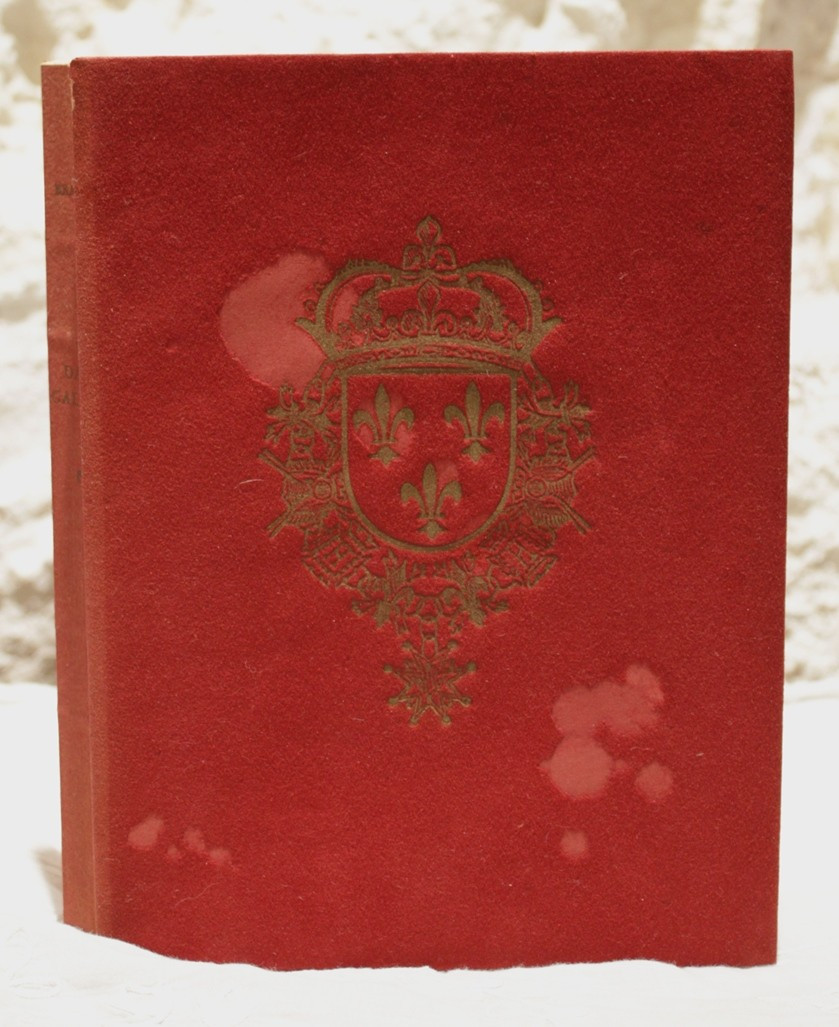


Boxed Book 'les Dames Galantes' By Brantôme, Hémard Illustrations, 1930
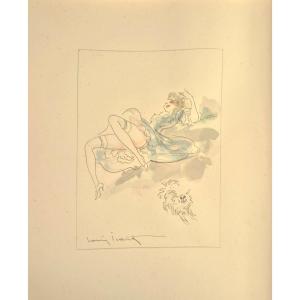
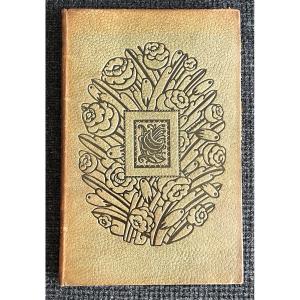
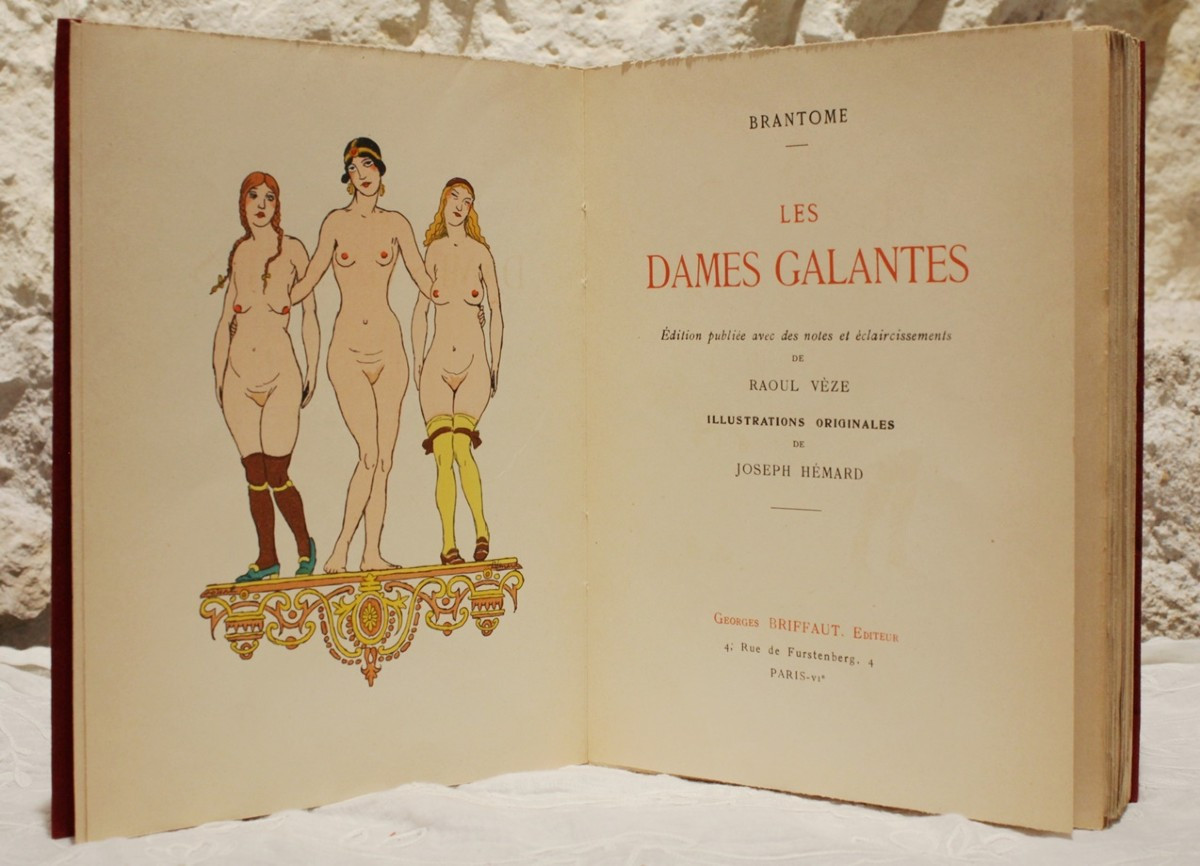
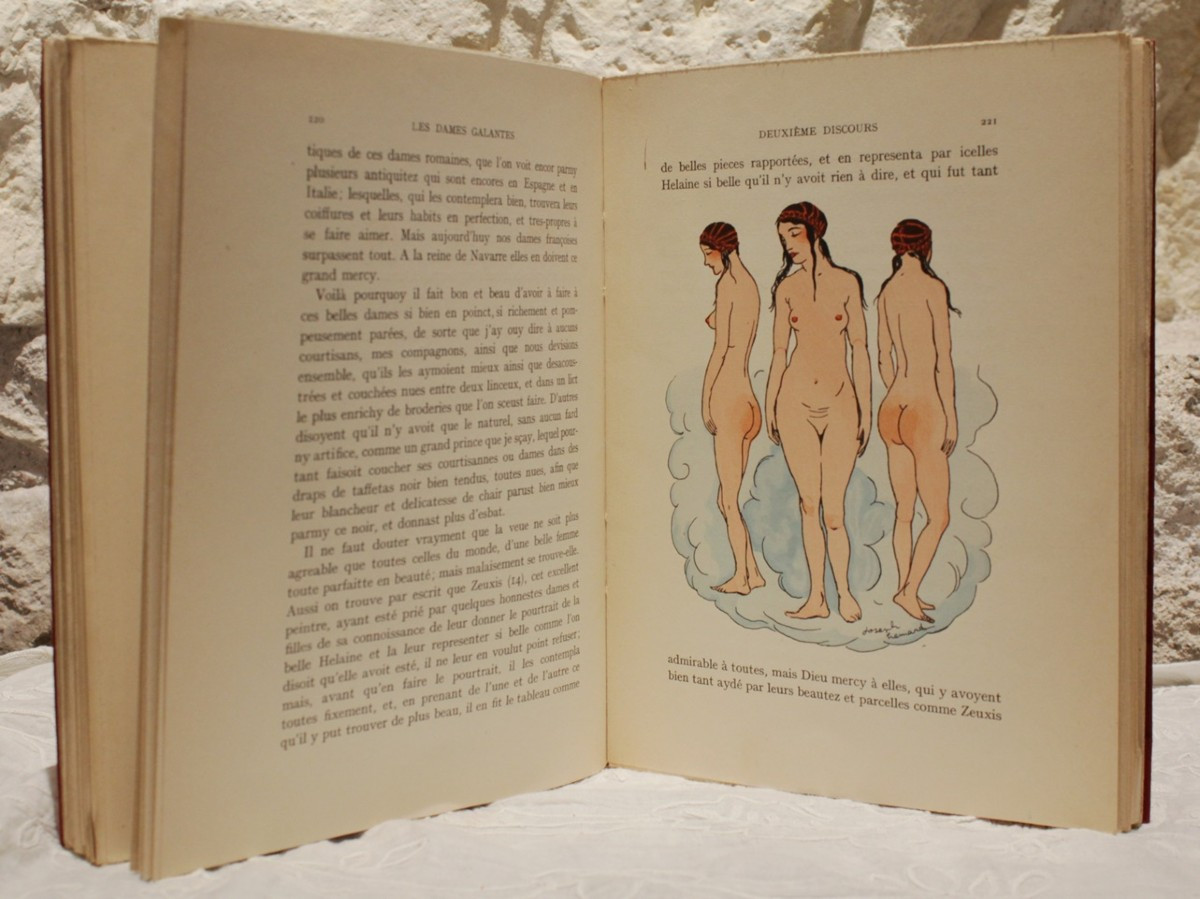
The book "Les Dames Galantes" by Brantôme, in two volumes, in slipcases. Polychrome illustrations by Joseph Hémard, edited by Georges Briffaut and printed in Tours by Arrault. Bound in red velvet with the arms of France, one binding damaged and the slipcase slightly creased. Copy 592/1500. Volume 1: 308 pages, Volume 2: 372 pages. Complete books, some unopened pages.
Circa 1930 and 1931.
Slipcase dimensions: H 17.2 x 23 x 4.6 cm, books: 17 x 22.4 x 3.6 cm.
"Les Dames Galantes" is a work by Pierre de Bourdeille, Lord of Brantôme, written at the end of the 16th century but published only after his death, in the 17th century, due to its character being considered too risqué for the time. Brantôme was a gentleman and courtier who lived through several reigns of the French Renaissance, allowing him to offer a firsthand account of aristocratic life. His work is set against a backdrop where official morality, heavily influenced by religion and honor, coexisted with more flexible social practices, particularly within courtly circles. The book is not a novel, but rather a collection of anecdotes and stories inspired by real or reported events, without a continuous plot. Brantôme evokes noblewomen, courtiers, and sometimes well-known figures, often disguised under altered names. He presents himself as a keen observer rather than a moralist, seeking to describe human behavior as it truly exists. The work focuses primarily on romantic and gallant relationships within high society. Brantôme portrays cultured, skillful, and influential women capable of playing an active role in their emotional and social lives. It shows that marriage is often a matter of self-interest or family strategy, while extramarital affairs are frequent and tolerated as long as they remain discreet. Gallantry appears as an art of living based on elegance, wit, and mastery of social codes. Brantôme's tone is generally light, sometimes ironic or admiring, and he avoids judging or condemning the behaviors he describes. His aim is more to bear witness and entertain than to give moral lessons. Thus, *Les Dames galantes* is a valuable document for understanding the mindset of the French nobility during the Renaissance, revealing the contrast between the stated rules and the actual practices of court life, while offering a vivid and insightful look at the relationships between men and women of his time.
Circa 1930 and 1931.
Slipcase dimensions: H 17.2 x 23 x 4.6 cm, books: 17 x 22.4 x 3.6 cm.
"Les Dames Galantes" is a work by Pierre de Bourdeille, Lord of Brantôme, written at the end of the 16th century but published only after his death, in the 17th century, due to its character being considered too risqué for the time. Brantôme was a gentleman and courtier who lived through several reigns of the French Renaissance, allowing him to offer a firsthand account of aristocratic life. His work is set against a backdrop where official morality, heavily influenced by religion and honor, coexisted with more flexible social practices, particularly within courtly circles. The book is not a novel, but rather a collection of anecdotes and stories inspired by real or reported events, without a continuous plot. Brantôme evokes noblewomen, courtiers, and sometimes well-known figures, often disguised under altered names. He presents himself as a keen observer rather than a moralist, seeking to describe human behavior as it truly exists. The work focuses primarily on romantic and gallant relationships within high society. Brantôme portrays cultured, skillful, and influential women capable of playing an active role in their emotional and social lives. It shows that marriage is often a matter of self-interest or family strategy, while extramarital affairs are frequent and tolerated as long as they remain discreet. Gallantry appears as an art of living based on elegance, wit, and mastery of social codes. Brantôme's tone is generally light, sometimes ironic or admiring, and he avoids judging or condemning the behaviors he describes. His aim is more to bear witness and entertain than to give moral lessons. Thus, *Les Dames galantes* is a valuable document for understanding the mindset of the French nobility during the Renaissance, revealing the contrast between the stated rules and the actual practices of court life, while offering a vivid and insightful look at the relationships between men and women of his time.
110 €
Period: 20th century
Style: Art Deco
Condition: En l'etat
Material: Paper
Width: 23
Height: 17,2
Depth: 4,6
Reference (ID): 1685519
Availability: In stock
Print