



Roman Marble Trapezophorus - 1st-2nd Century
Antique Marble Trapezophorus – Head of a Roaring Beast
Roman Period, 1st–2nd Century AD.
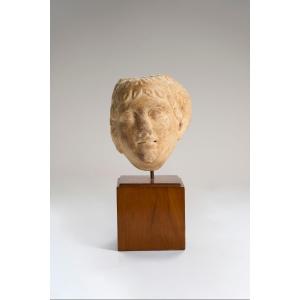
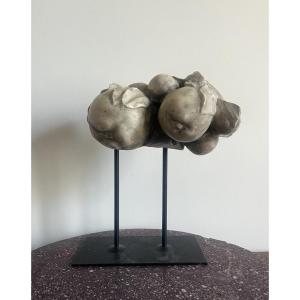
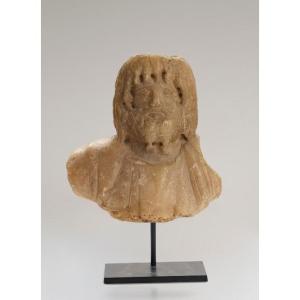
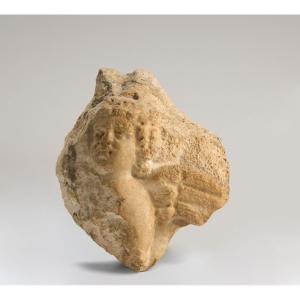
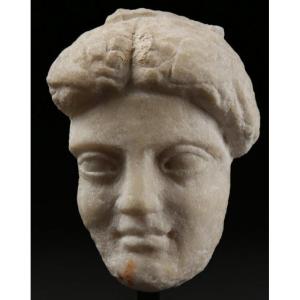
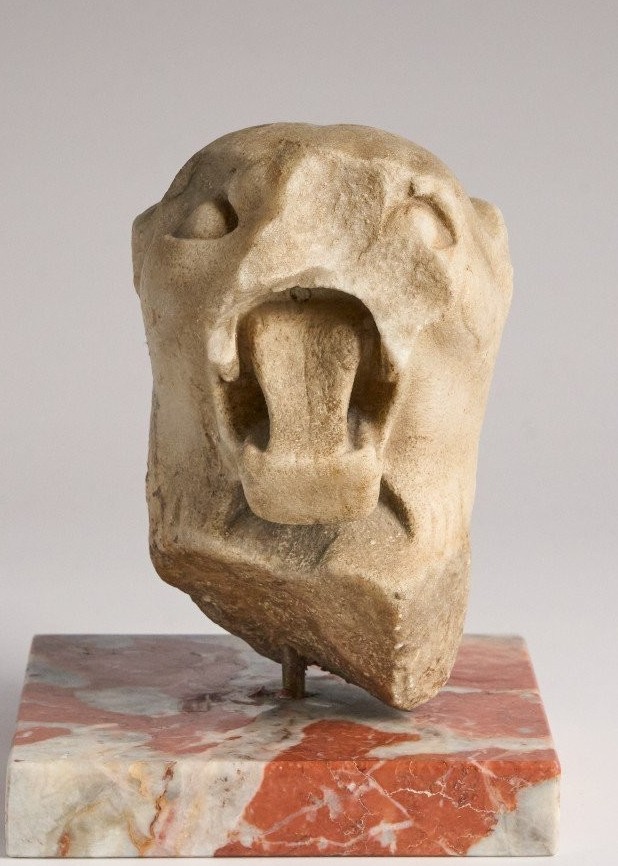
Roman trapezophorus in light-colored marble, 14 cm high (excluding the 2.5 cm base), depicting the head of a roaring beast, most likely a lion. The mouth is wide open with the tongue visible, the jaw protruding, and the eye sockets deeply hollowed.
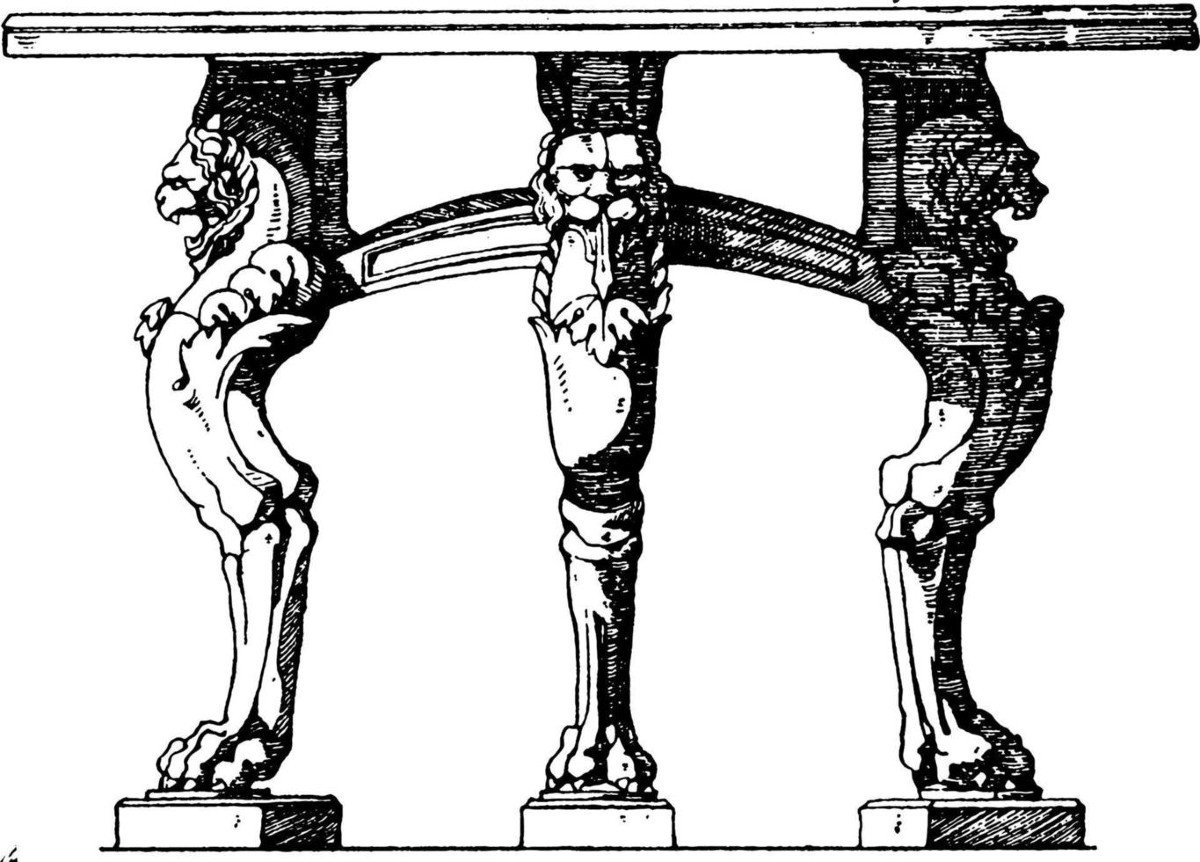
Trapezophoros are Roman furniture pieces intended to serve as supports for tables (trapeza), usually arranged in pairs. They frequently take the form of real or fantastic animals—lions, griffins, sphinxes—symbols of strength and protection, and adorned both private homes and public spaces.
The sculpture is carved in the round on the front and sides, while the back is left more roughly hewn, in keeping with its original function as a supporting element placed against a wall. The surface displays a beautiful antique patina, with traces of wear, erosion, and concretions consistent with its great age. A few chips and losses are visible, without detracting from the legibility or aesthetic quality of the work.
Museum references:
Auction references:
Roman Period, 1st–2nd Century AD.
Roman trapezophorus in light-colored marble, 14 cm high (excluding the 2.5 cm base), depicting the head of a roaring beast, most likely a lion. The mouth is wide open with the tongue visible, the jaw protruding, and the eye sockets deeply hollowed.
Trapezophoros are Roman furniture pieces intended to serve as supports for tables (trapeza), usually arranged in pairs. They frequently take the form of real or fantastic animals—lions, griffins, sphinxes—symbols of strength and protection, and adorned both private homes and public spaces.
The sculpture is carved in the round on the front and sides, while the back is left more roughly hewn, in keeping with its original function as a supporting element placed against a wall. The surface displays a beautiful antique patina, with traces of wear, erosion, and concretions consistent with its great age. A few chips and losses are visible, without detracting from the legibility or aesthetic quality of the work.
Museum references:
- British Museum - https://www.britishmuseum.org/collection/object/G_1973-0327-52
- MET - https://www.metmuseum.org/art/collection/search/248740
- Louvre - https://collections.louvre.fr/ark:/53355/cl010277996
Auction references:
- Christie's - https://onlineonly.christies.com/s/collections-including-property-international-interior-designer-robert/un-trapezophore-romain-en-marbre-186/235072
- Sotheby's - https://www.sothebys.com/en/auctions/ecatalogue/2013/antiquities-n09005/lot.54.html
2 700 €
Period: Before 16th century
Style: Rome and Antic Greece
Condition: En l'etat
Material: Marble
Width: 8cm
Height: 14cm
Depth: 11cm
Reference (ID): 1683224
Availability: In stock
Print