



Fernand Lantoine, " African Landscape " Around 1930 - Africanism And Orientalism
Artist: Fernand Lantoine (1876-1956)
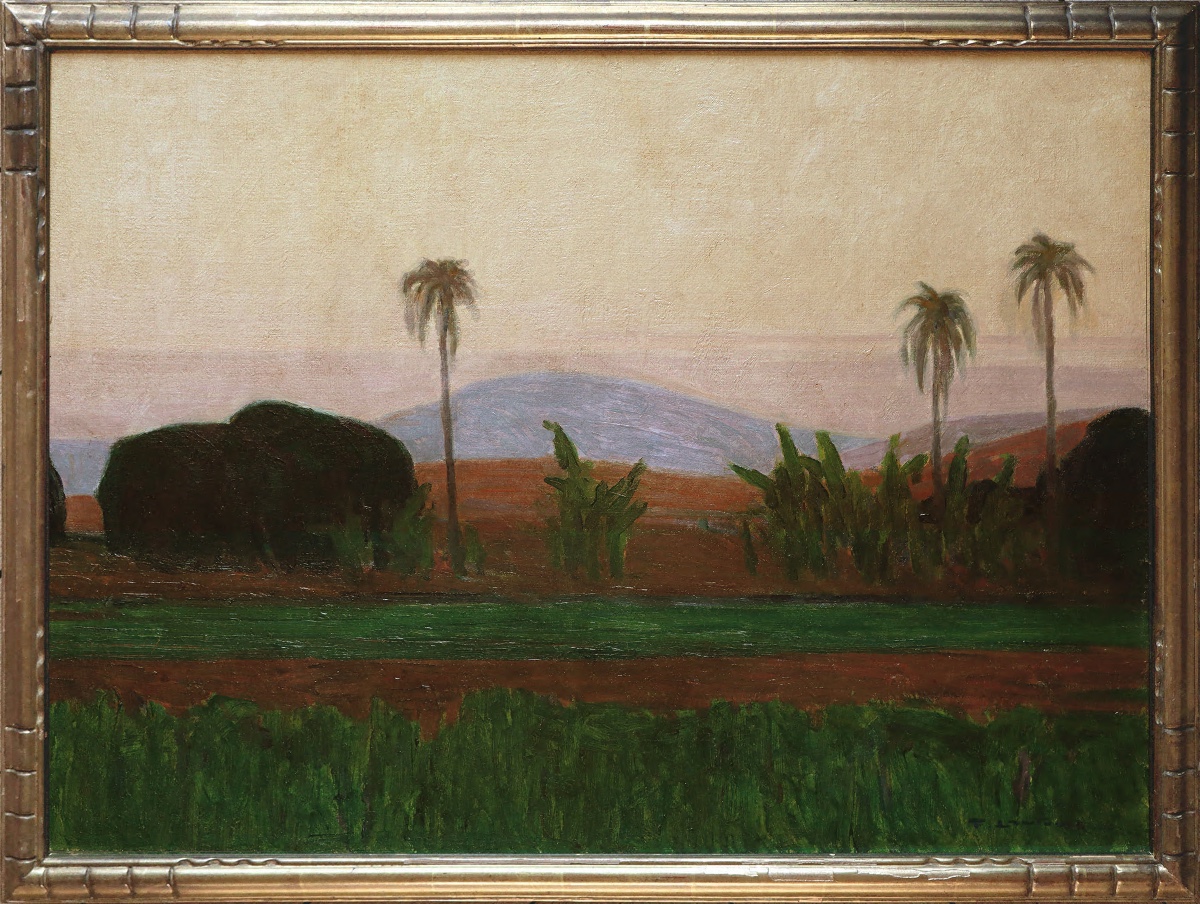
A landscape under the shadow of the reliefs and the light of Africa.
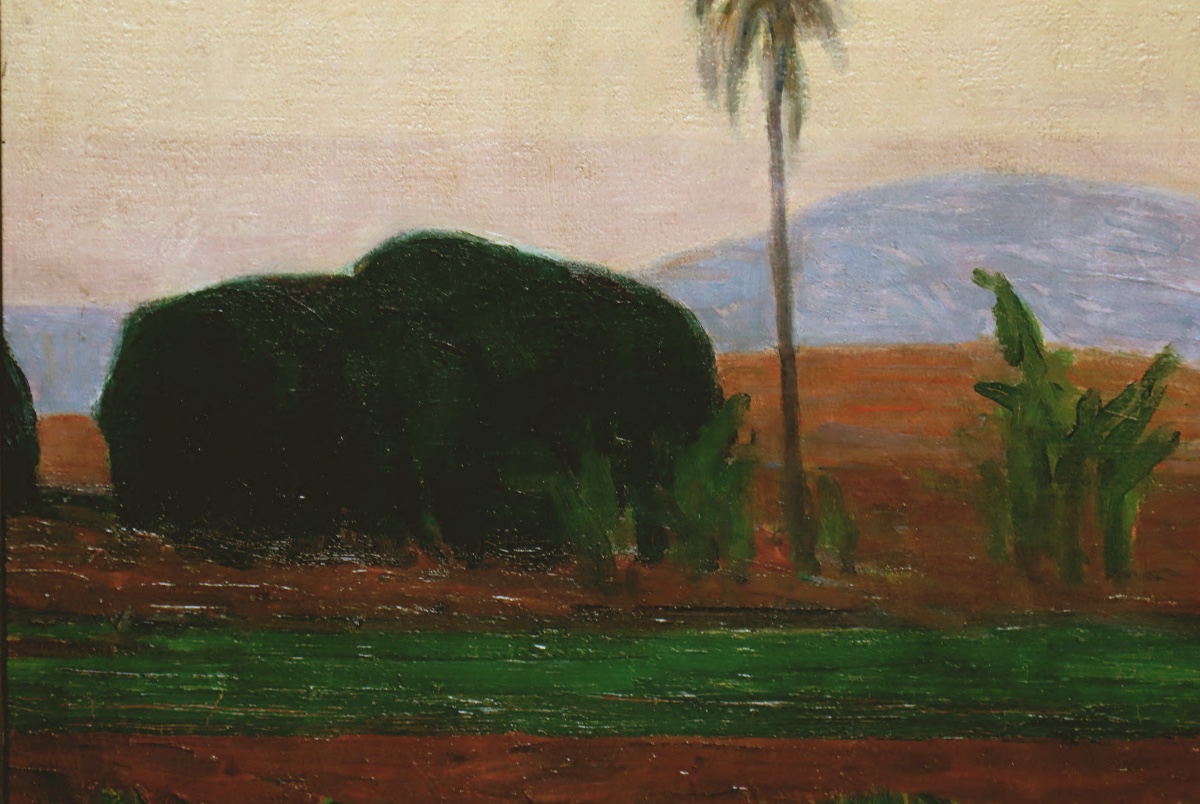
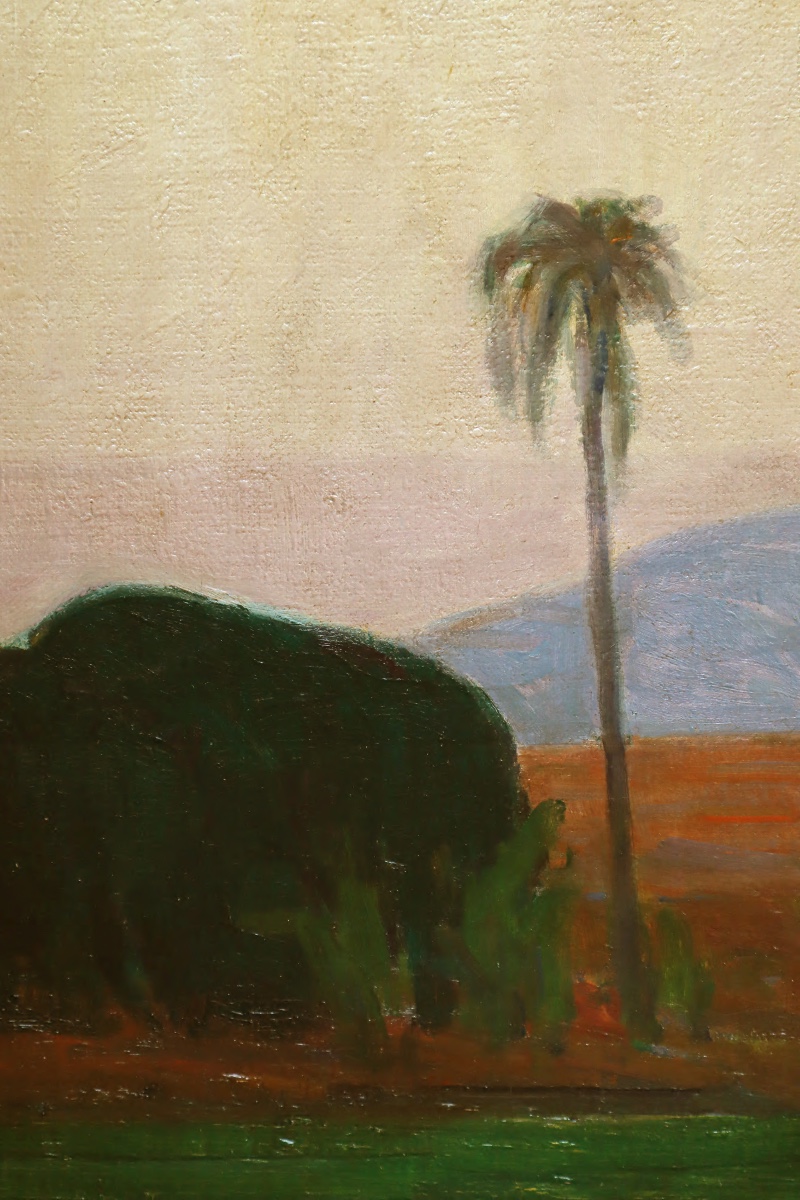
The alignment of elements shapes the horizon, minimalist composition, with intense colors and an elegant modernity, created by the painter Fernand Lantoine.
With a keen sense of color and line, Fernand Lantoine naturally imbued his works with power and majesty. These qualities are evident in this landscape from around 1930, likely from the Belgian Congo, a period when his painting, tinged with "Primitivism," acquired a simplicity far removed from the mannerism of some of his Orientalist contemporaries.
"The immensity of the landscape, the gait of an aboriginal person, are inexhaustible sources of inspiration for the artist," he said of Africa.
Fernand Lantoine was a French painter and draftsman born in Maretz (Nord) in 1876 and died in Paris in 1956.
He was buried in the cemetery of Maretz, his native village.
He is associated with the Belgian school of painting, since from the age of fifteen, he lived with his family in Uccle, near Brussels, where he resided for about fifty years.
Between 1894 and 1897, he performed his military service in the 4th Marine Infantry Regiment in Brest.
This contact with the sea stimulated his burgeoning taste for distant horizons.
He then studied at the École des Beaux-Arts in Paris, where he met Paul Signac, whose Neo-Impressionism would influence his later work.
Returning to Belgium, he joined the avant-garde group Le Sillon, adopting its austere realism.
At the beginning of the century, traveling on the French Riviera and in the Balearic Islands, his painting shifted towards a clearer and more colorful interpretation of reality, using fragmented brushstrokes.
Critics sometimes described him as a Pointillist, sometimes as a Luminist.
When the First World War broke out, Lantoine was mobilized on the Belgian front.
Taken prisoner by the Germans, he was transferred to the Rhine, then to the Niemen, on the Russian front.
He produced drawings and watercolors that revealed a desire for schematization, which were the subject of a highly successful exhibition in 1920.
Having become a painter for the Navy in 1922, he embarked on the French fleet for missions in the Mediterranean and North Africa.
In 1925, as part of his missions, he discovered the Belgian Congo where he met up with the Belgian artists Auguste Mambour, Pierre de Vaucleroy and Fernand Allard l'Olivier.
In 1927 he exhibited at the Salon des Artistes Français, then in 1931 at the International Colonial Exhibition in Paris.
In 1934, he participated in an Arctic expedition and painted the Norwegian fjords.
His works were exhibited the following year at the Salon des Artistes Français.
In 1936 he received a travel grant for French West Africa, then traveled to Oceania, Madagascar, and the Somali coast.
He won the colonial prizes for French West Africa and Madagascar, and then, in 1940, for Morocco.
In 1948, he was made a Knight of the Legion of Honor.
Fernand Lantoine was one of the greatest traveling painters of the first half of the 20th century.
A privileged witness to and participant in an era marked by numerous artistic movements, he constantly evolved his painting technique.
In the biographical note devoted to him by Lynne Thornton and Florence Austin in *Les Africanistes, peintres voyageurs* (Africanists, Traveling Painters), we read: “Initially drawn to the pointillism of Théo van Rysselberghe, then convinced that the most structured drawing should underpin the color, he arrived at an austere style, refined to the extreme.”
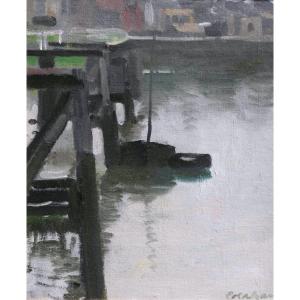
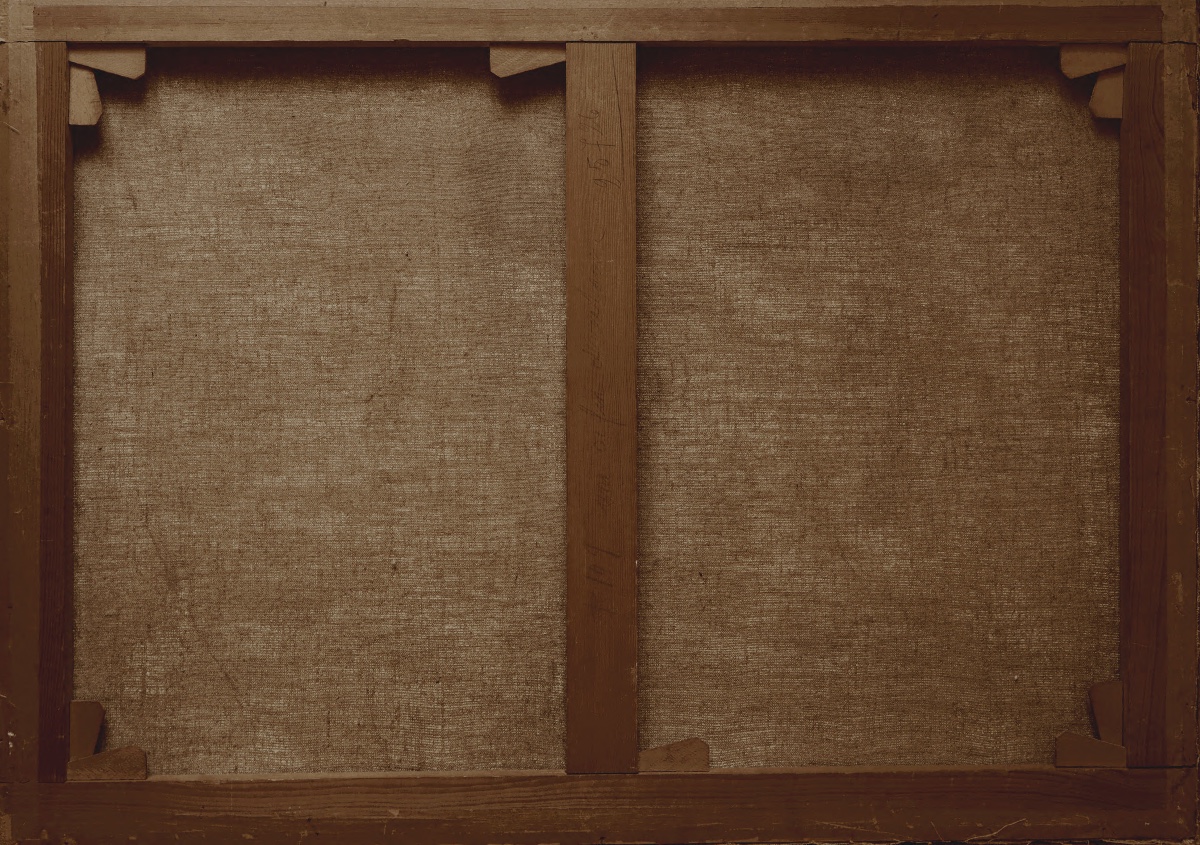
Oil on canvas, in perfect condition, signed “F Lantoine” lower right.
Size : 22,2 x 30,3 Inches without frame and 24,6 x 32,7 Inches with its original frame.
The alignment of elements shapes the horizon, minimalist composition, with intense colors and an elegant modernity, created by the painter Fernand Lantoine.
With a keen sense of color and line, Fernand Lantoine naturally imbued his works with power and majesty. These qualities are evident in this landscape from around 1930, likely from the Belgian Congo, a period when his painting, tinged with "Primitivism," acquired a simplicity far removed from the mannerism of some of his Orientalist contemporaries.
"The immensity of the landscape, the gait of an aboriginal person, are inexhaustible sources of inspiration for the artist," he said of Africa.
Fernand Lantoine was a French painter and draftsman born in Maretz (Nord) in 1876 and died in Paris in 1956.
He was buried in the cemetery of Maretz, his native village.
He is associated with the Belgian school of painting, since from the age of fifteen, he lived with his family in Uccle, near Brussels, where he resided for about fifty years.
Between 1894 and 1897, he performed his military service in the 4th Marine Infantry Regiment in Brest.
This contact with the sea stimulated his burgeoning taste for distant horizons.
He then studied at the École des Beaux-Arts in Paris, where he met Paul Signac, whose Neo-Impressionism would influence his later work.
Returning to Belgium, he joined the avant-garde group Le Sillon, adopting its austere realism.
At the beginning of the century, traveling on the French Riviera and in the Balearic Islands, his painting shifted towards a clearer and more colorful interpretation of reality, using fragmented brushstrokes.
Critics sometimes described him as a Pointillist, sometimes as a Luminist.
When the First World War broke out, Lantoine was mobilized on the Belgian front.
Taken prisoner by the Germans, he was transferred to the Rhine, then to the Niemen, on the Russian front.
He produced drawings and watercolors that revealed a desire for schematization, which were the subject of a highly successful exhibition in 1920.
Having become a painter for the Navy in 1922, he embarked on the French fleet for missions in the Mediterranean and North Africa.
In 1925, as part of his missions, he discovered the Belgian Congo where he met up with the Belgian artists Auguste Mambour, Pierre de Vaucleroy and Fernand Allard l'Olivier.
In 1927 he exhibited at the Salon des Artistes Français, then in 1931 at the International Colonial Exhibition in Paris.
In 1934, he participated in an Arctic expedition and painted the Norwegian fjords.
His works were exhibited the following year at the Salon des Artistes Français.
In 1936 he received a travel grant for French West Africa, then traveled to Oceania, Madagascar, and the Somali coast.
He won the colonial prizes for French West Africa and Madagascar, and then, in 1940, for Morocco.
In 1948, he was made a Knight of the Legion of Honor.
Fernand Lantoine was one of the greatest traveling painters of the first half of the 20th century.
A privileged witness to and participant in an era marked by numerous artistic movements, he constantly evolved his painting technique.
In the biographical note devoted to him by Lynne Thornton and Florence Austin in *Les Africanistes, peintres voyageurs* (Africanists, Traveling Painters), we read: “Initially drawn to the pointillism of Théo van Rysselberghe, then convinced that the most structured drawing should underpin the color, he arrived at an austere style, refined to the extreme.”
Oil on canvas, in perfect condition, signed “F Lantoine” lower right.
Size : 22,2 x 30,3 Inches without frame and 24,6 x 32,7 Inches with its original frame.
2 200 €
Period: 20th century
Style: Modern Art
Condition: Perfect condition
Material: Oil painting
Width: 77cm hors cadre
Height: 56,5cm hors cadre
Reference (ID): 1682156
Availability: In stock
Print