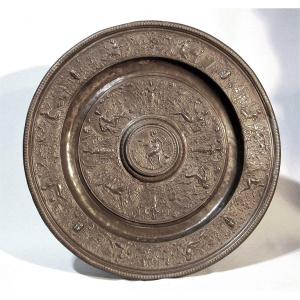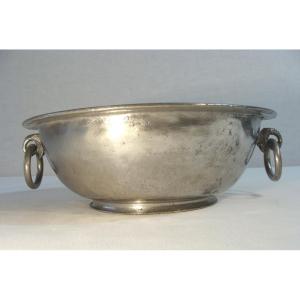
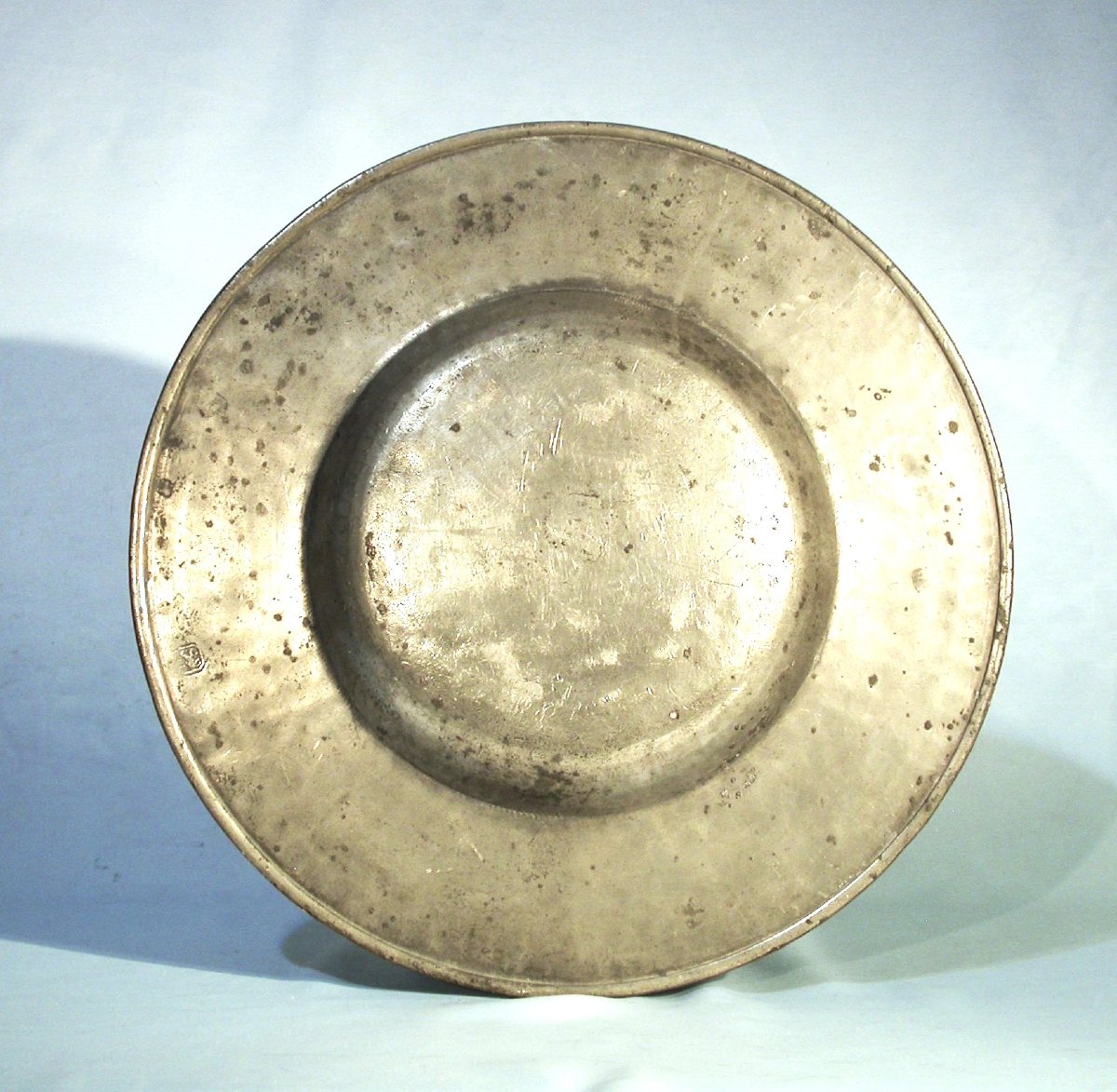




Large Round Forged Pewter Platter -angers, XVII Th C.
Artist: Jean 1er Ballain
Free shipping within mainland France via La Poste or Mondial Relay
************
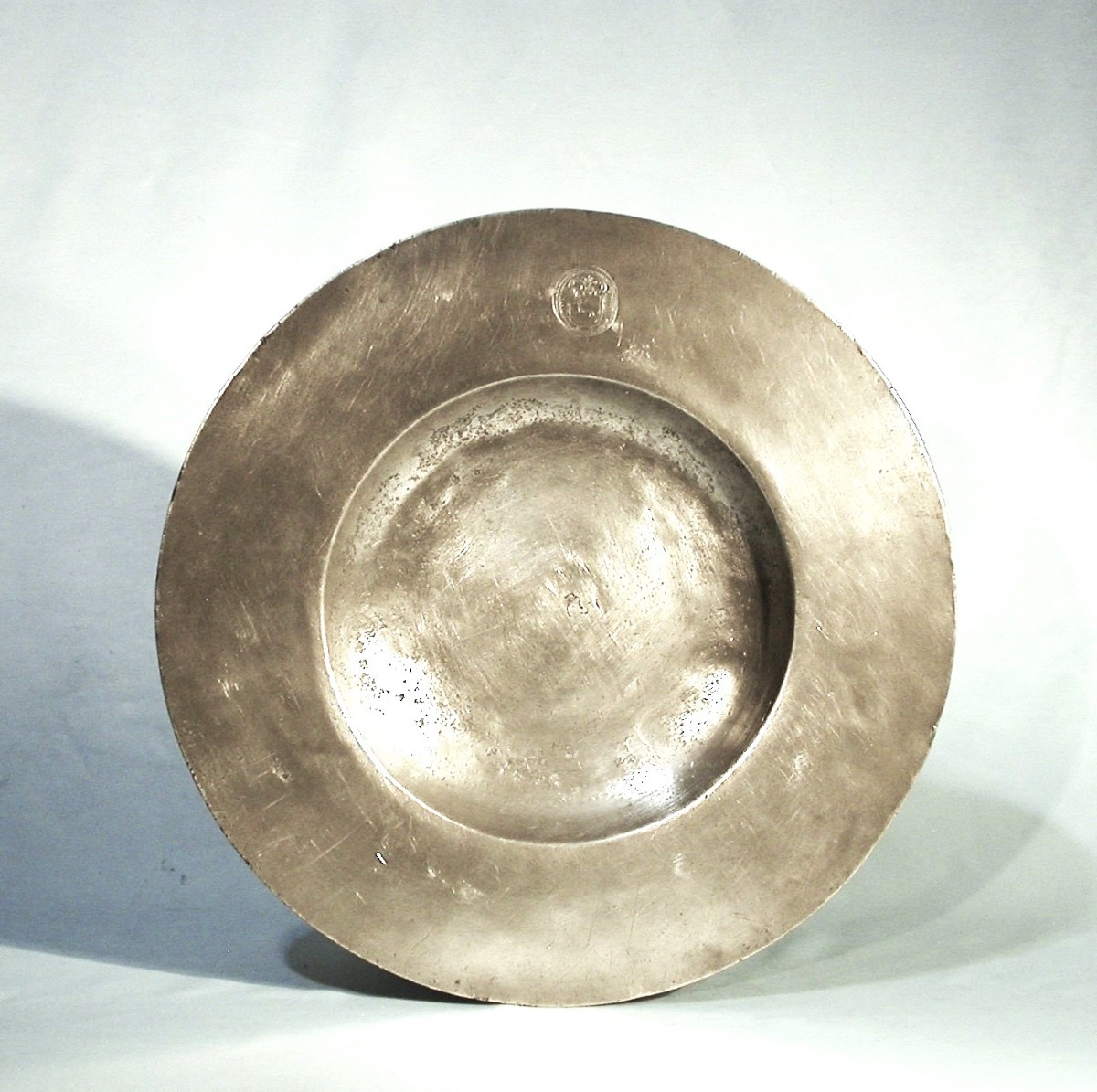
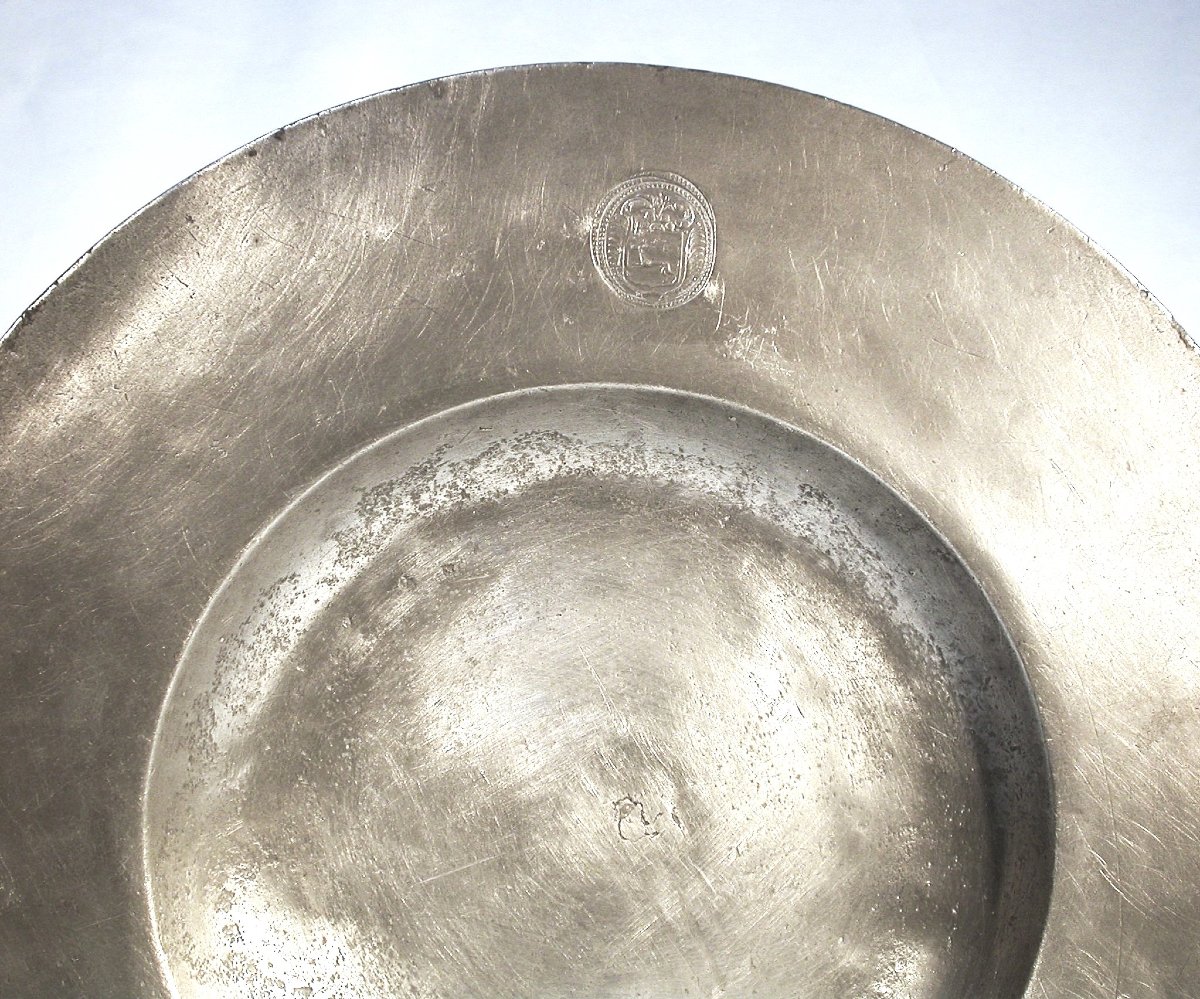
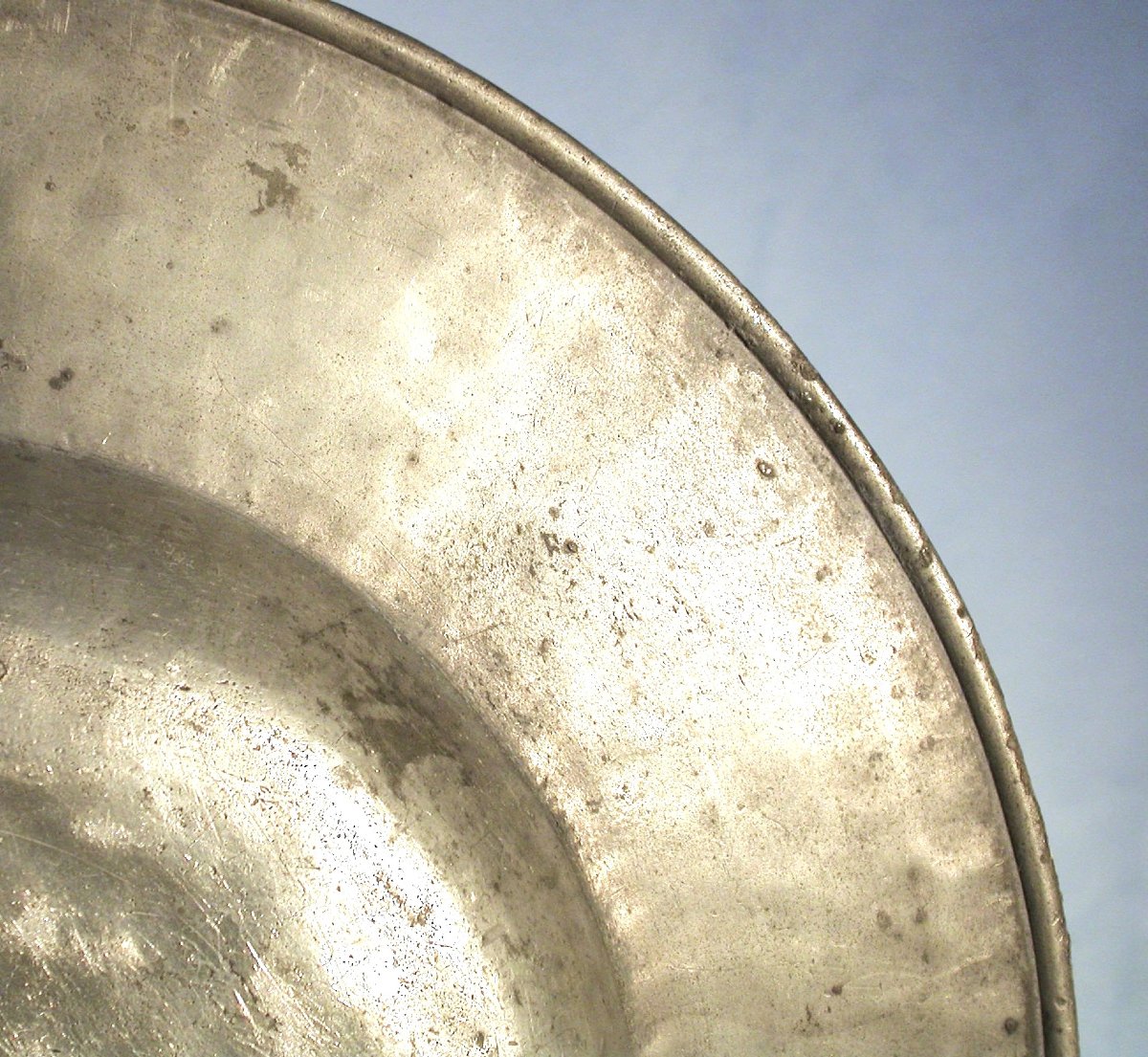
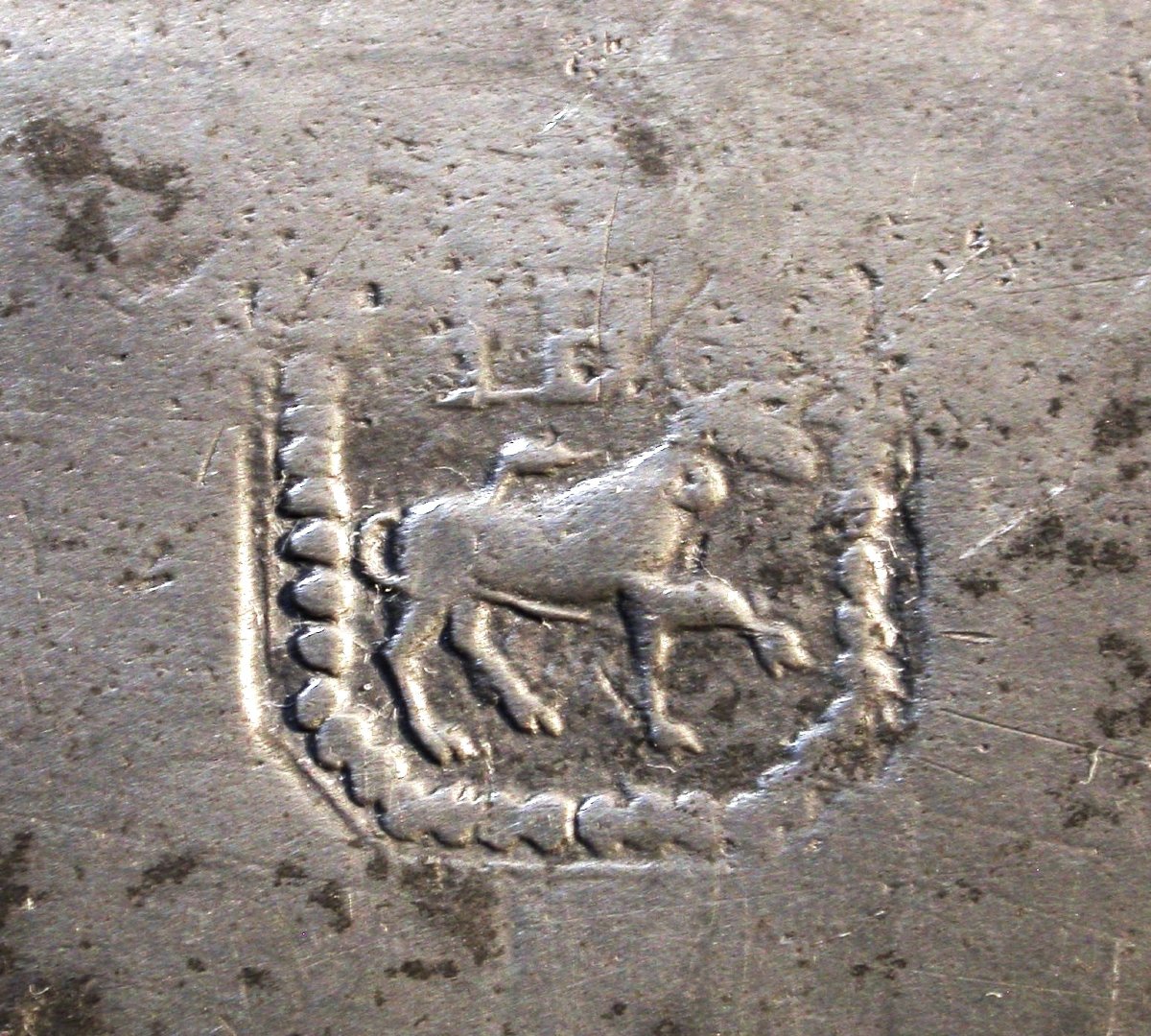
Large round forged pewter platter with a wide, plain rim, known as "cardinal style," with an external reinforcing band. Unidentified maker's mark: stag passant / I.B. (Probably Jean 1er BALLAIN master on 1636. The typology of this mark is perfectly typical of Anjou.
Large stamped ownership mark with the arms attributable to the De Nicolay family, which are "azure, a greyhound courant argent, collared gules, with gold buckles."
Diameter: 38 cm.
Angers, mid-17th century.
This family produced numerous prominent figures from the 14th to the 20th centuries.
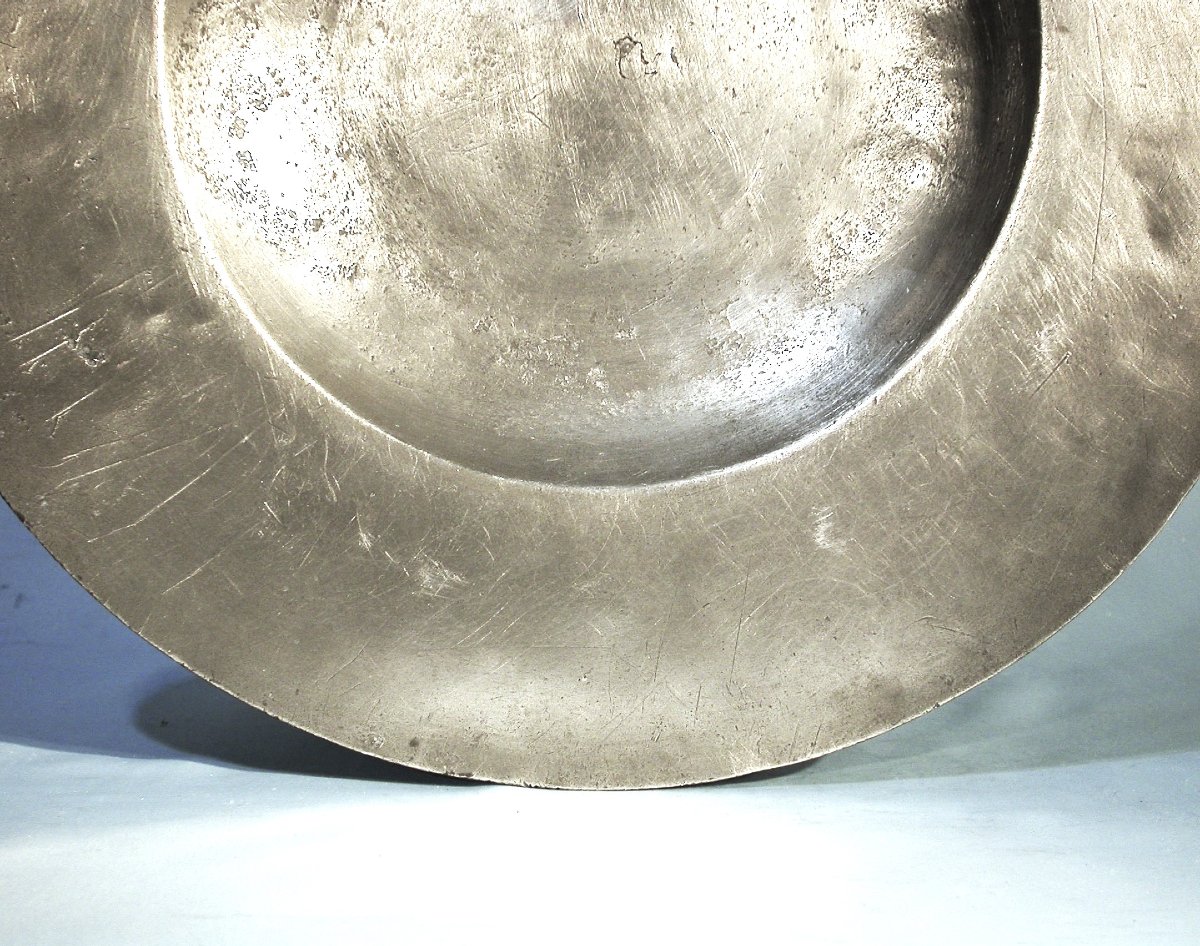
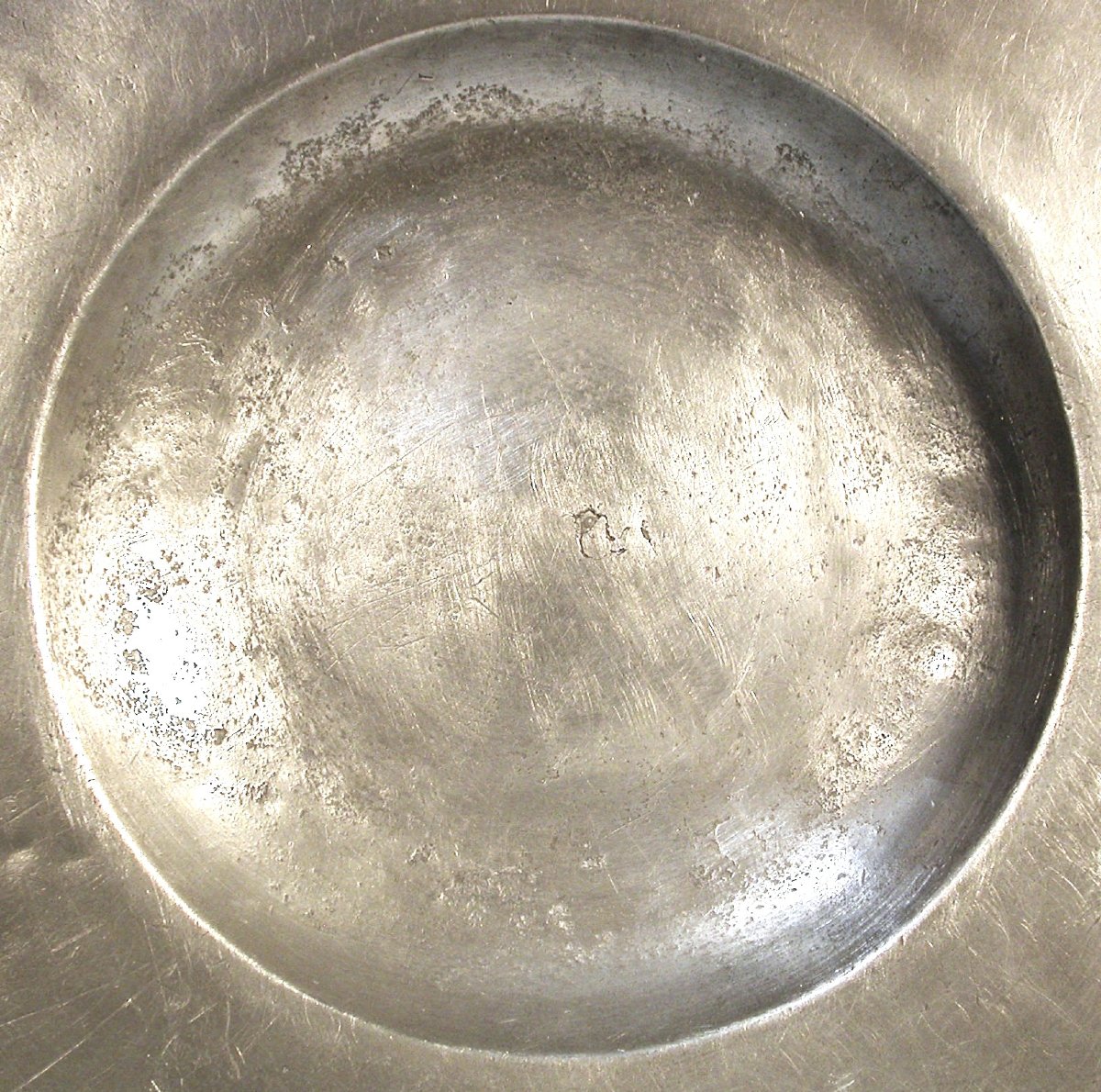
Condition: Pitting on the rim, stains on the reverse, and a small repair in the center.
Bibliography: "Quand l’étain brillait en Anjou" (When Pewter Shined in Anjou), Angers Museum, 1996.
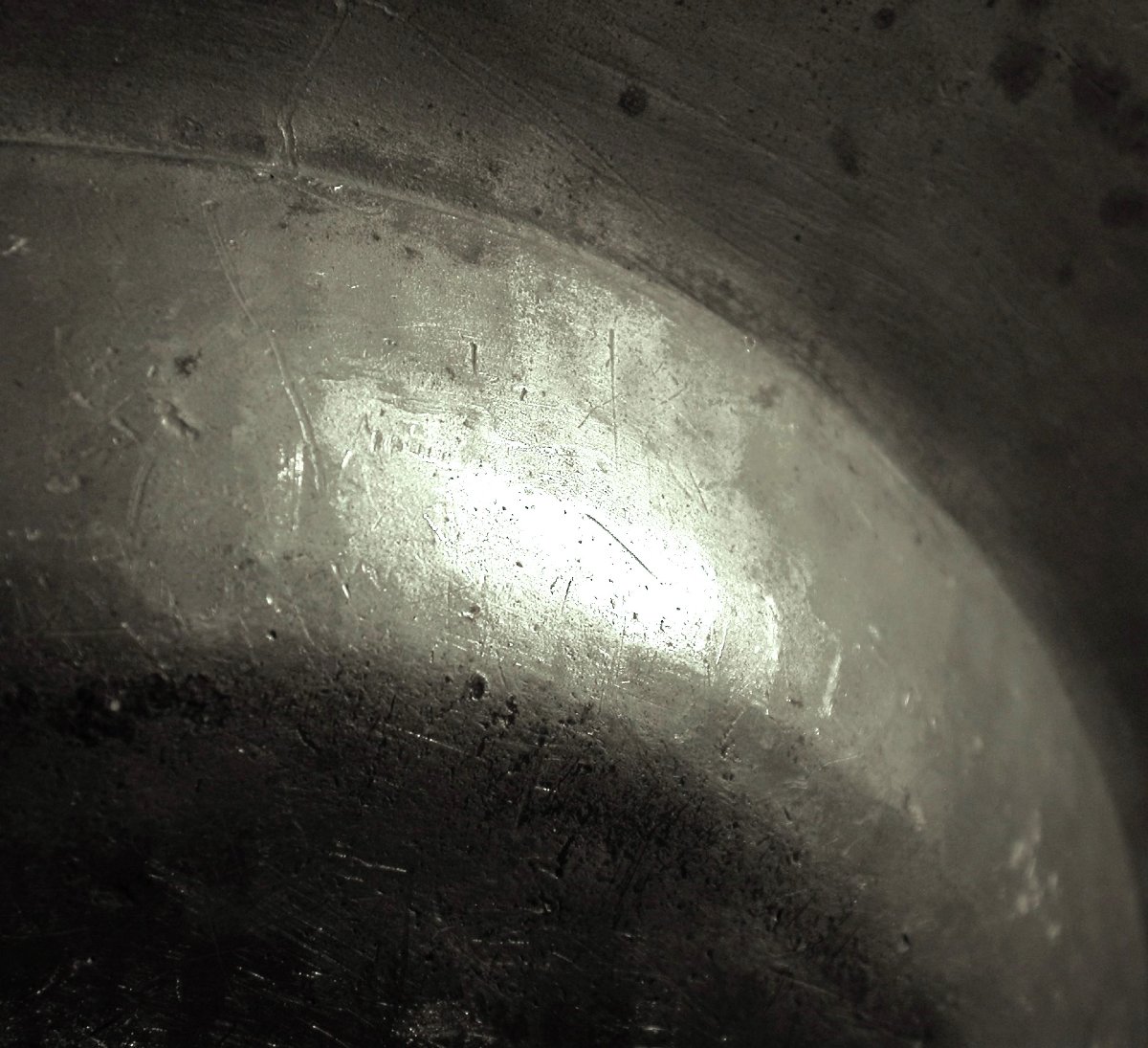
Technique: Upon removal from the mold, hammering compressed the metal molecules to improve its rigidity. This practice was later largely abandoned, only to be reintroduced at the beginning of the 20th century by artists of the Art Deco movement, such as Jean Despres, Maurice Daurat, Pierre Du Mont, and René Delavan, to name only the most famous. One of the photographs shows the "facets" left by this hammering technique, which required a very high degree of control over the intensity and precision of the blows.
************
Large round forged pewter platter with a wide, plain rim, known as "cardinal style," with an external reinforcing band. Unidentified maker's mark: stag passant / I.B. (Probably Jean 1er BALLAIN master on 1636. The typology of this mark is perfectly typical of Anjou.
Large stamped ownership mark with the arms attributable to the De Nicolay family, which are "azure, a greyhound courant argent, collared gules, with gold buckles."
Diameter: 38 cm.
Angers, mid-17th century.
This family produced numerous prominent figures from the 14th to the 20th centuries.
Condition: Pitting on the rim, stains on the reverse, and a small repair in the center.
Bibliography: "Quand l’étain brillait en Anjou" (When Pewter Shined in Anjou), Angers Museum, 1996.
Technique: Upon removal from the mold, hammering compressed the metal molecules to improve its rigidity. This practice was later largely abandoned, only to be reintroduced at the beginning of the 20th century by artists of the Art Deco movement, such as Jean Despres, Maurice Daurat, Pierre Du Mont, and René Delavan, to name only the most famous. One of the photographs shows the "facets" left by this hammering technique, which required a very high degree of control over the intensity and precision of the blows.
290 €
Period: 17th century
Style: Renaissance, Louis 13th
Condition: Good condition
Material: Tin
Reference (ID): 1677304
Availability: In stock
Print