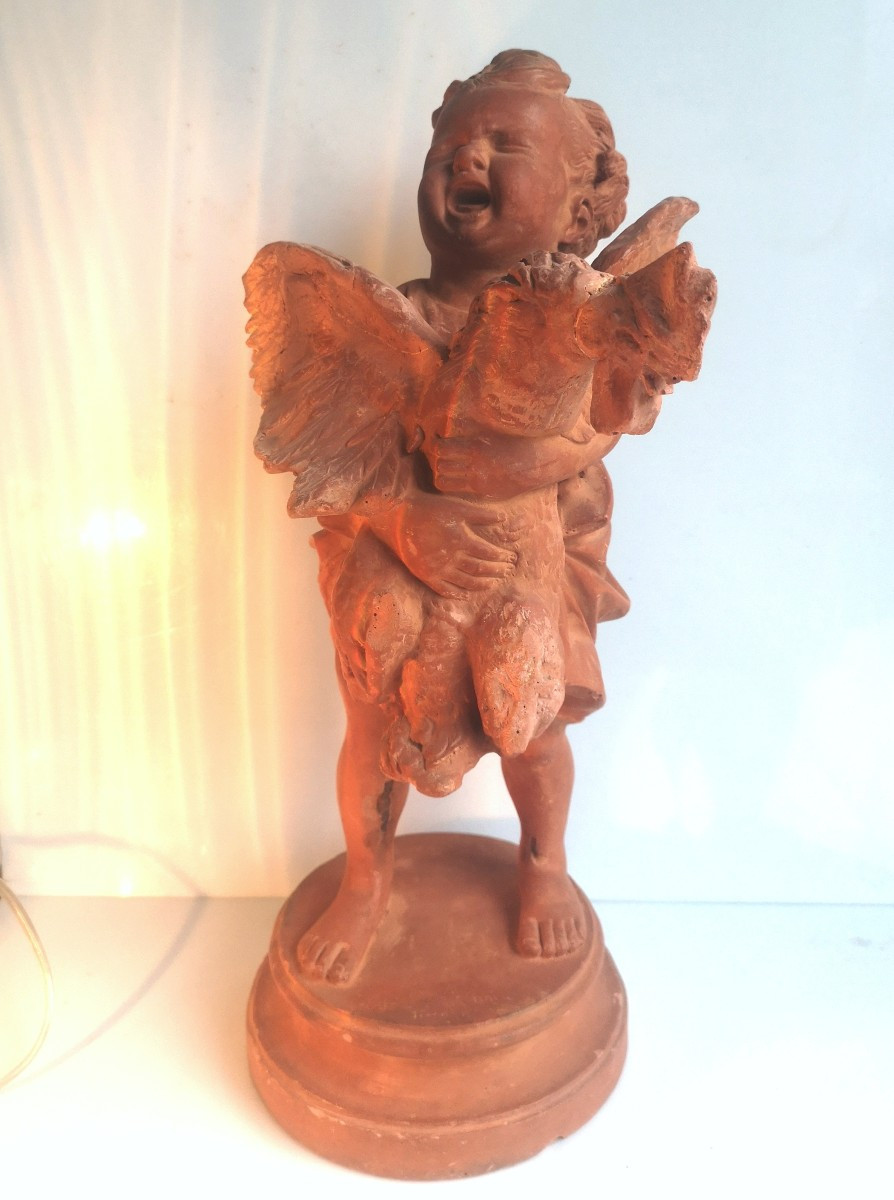


Adriano Cecioni 1836–1886 -bambino Col Gallo - Bozzetto Original In Patinated Raw Earth, Signed
Artist: Adriano Cecioni
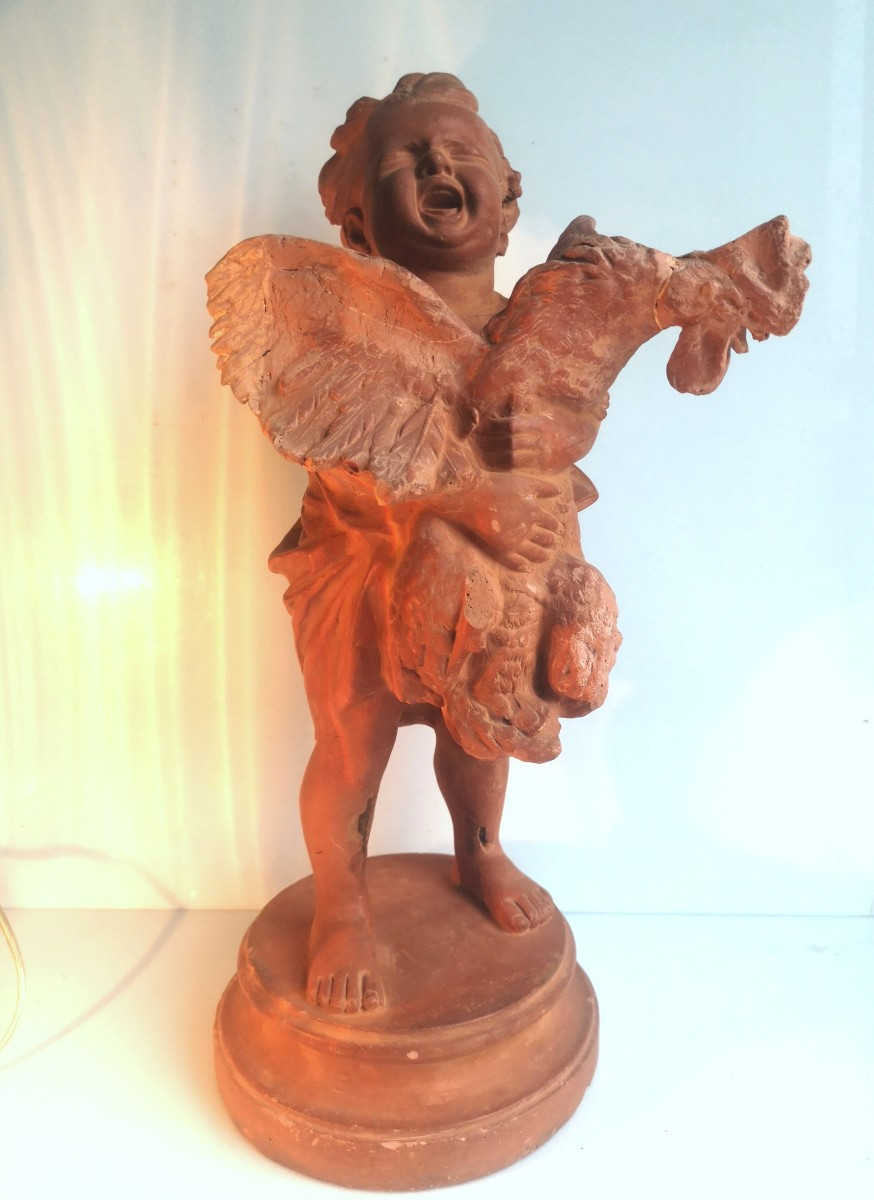
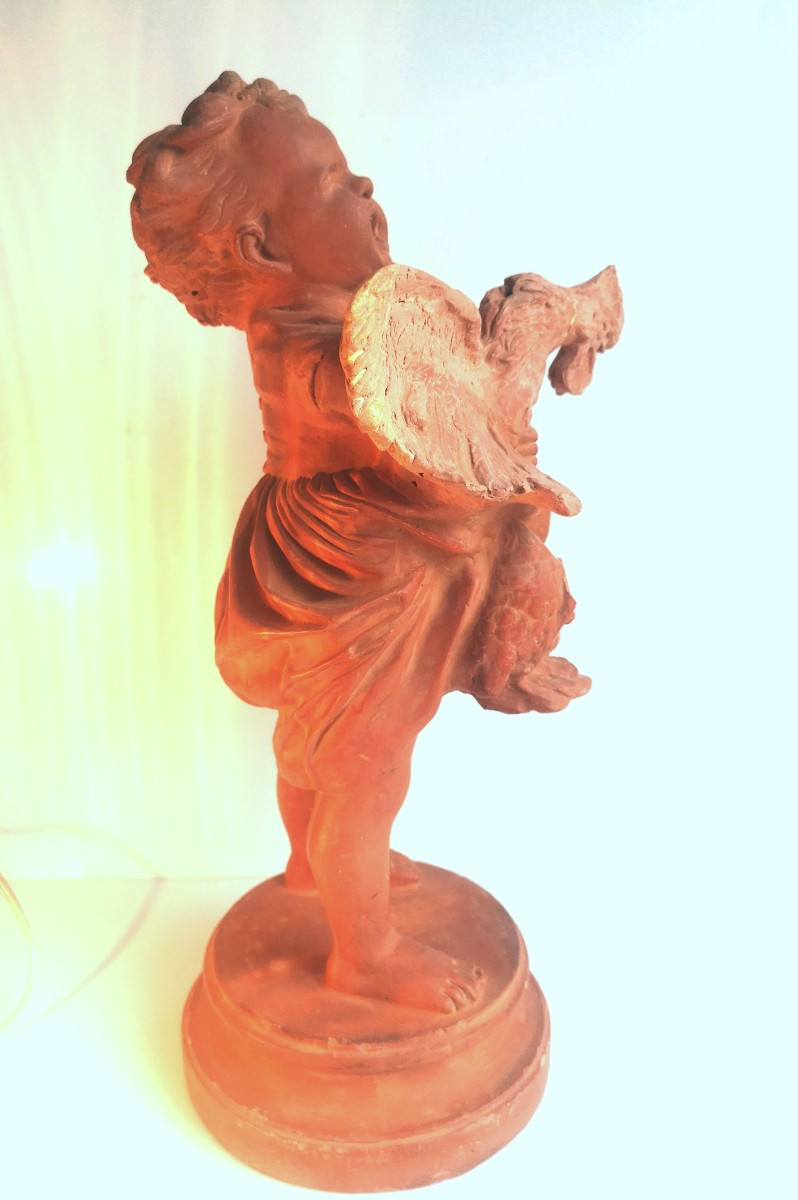
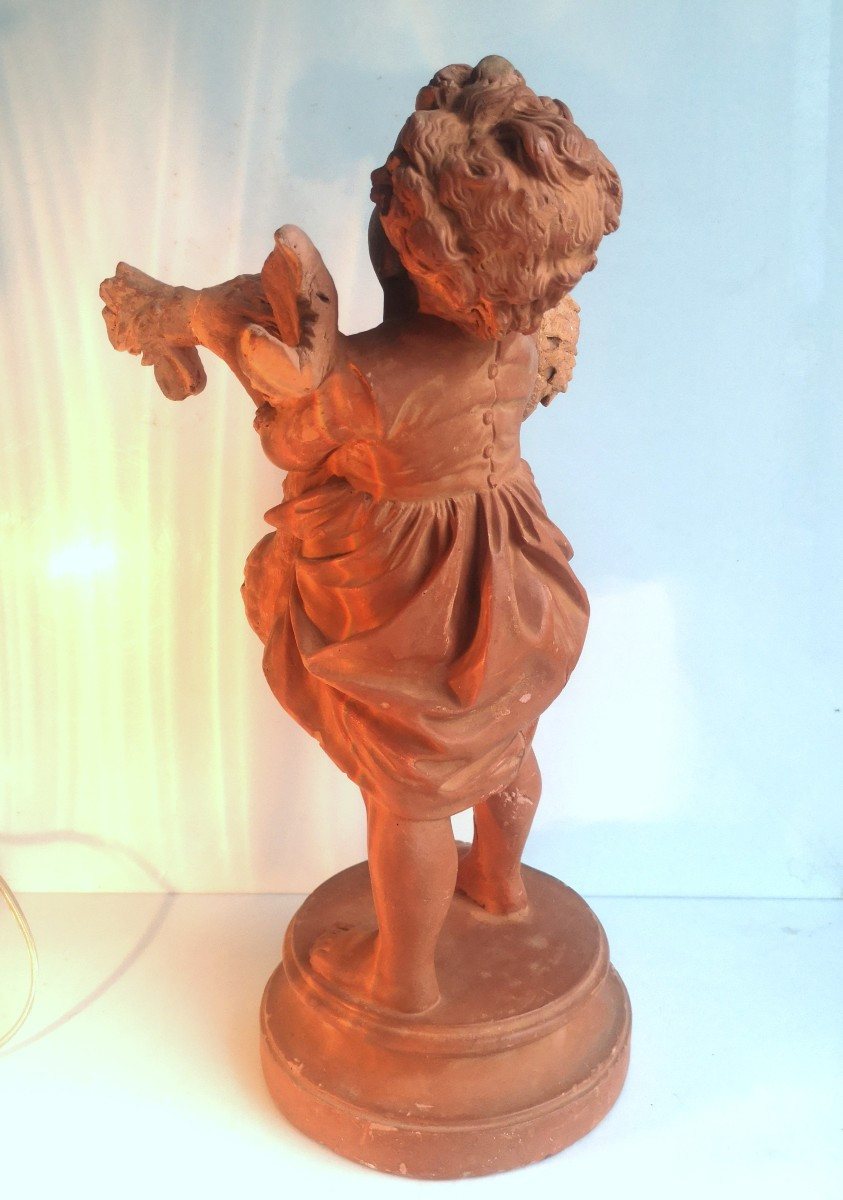
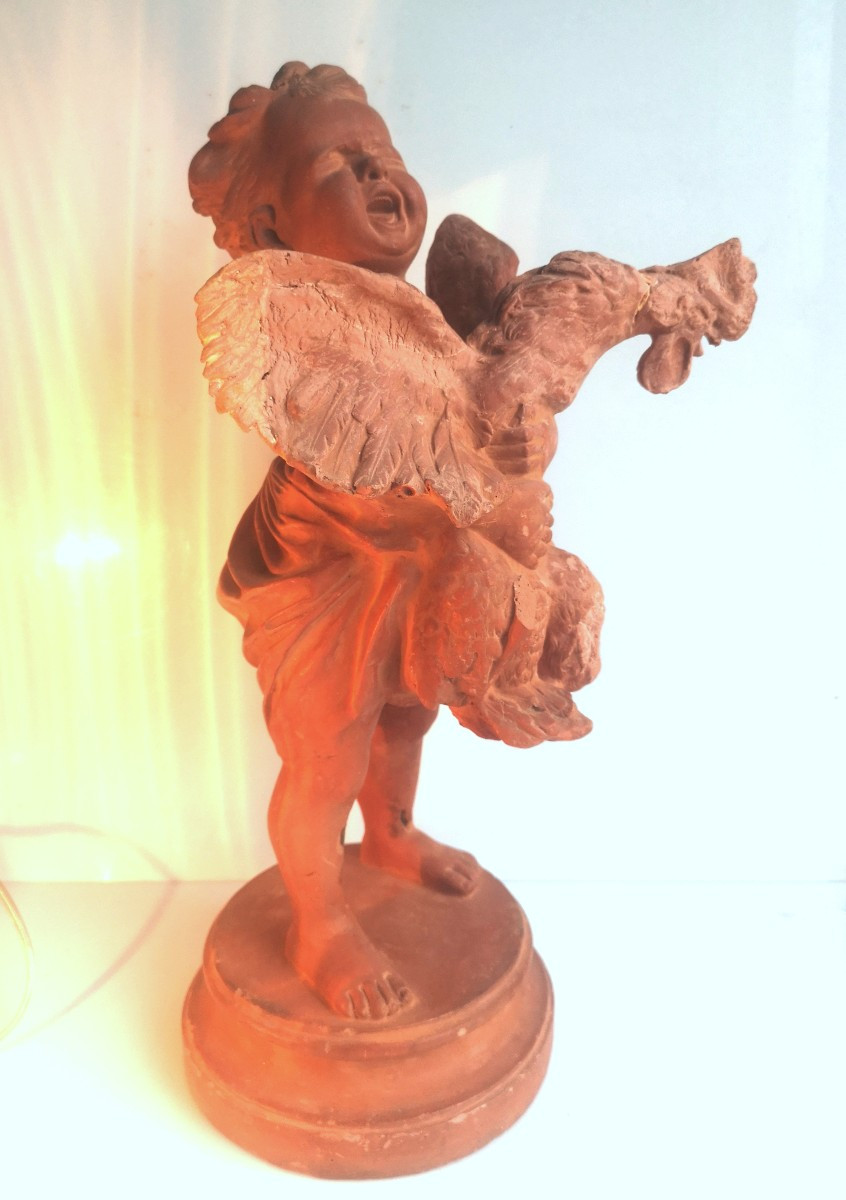
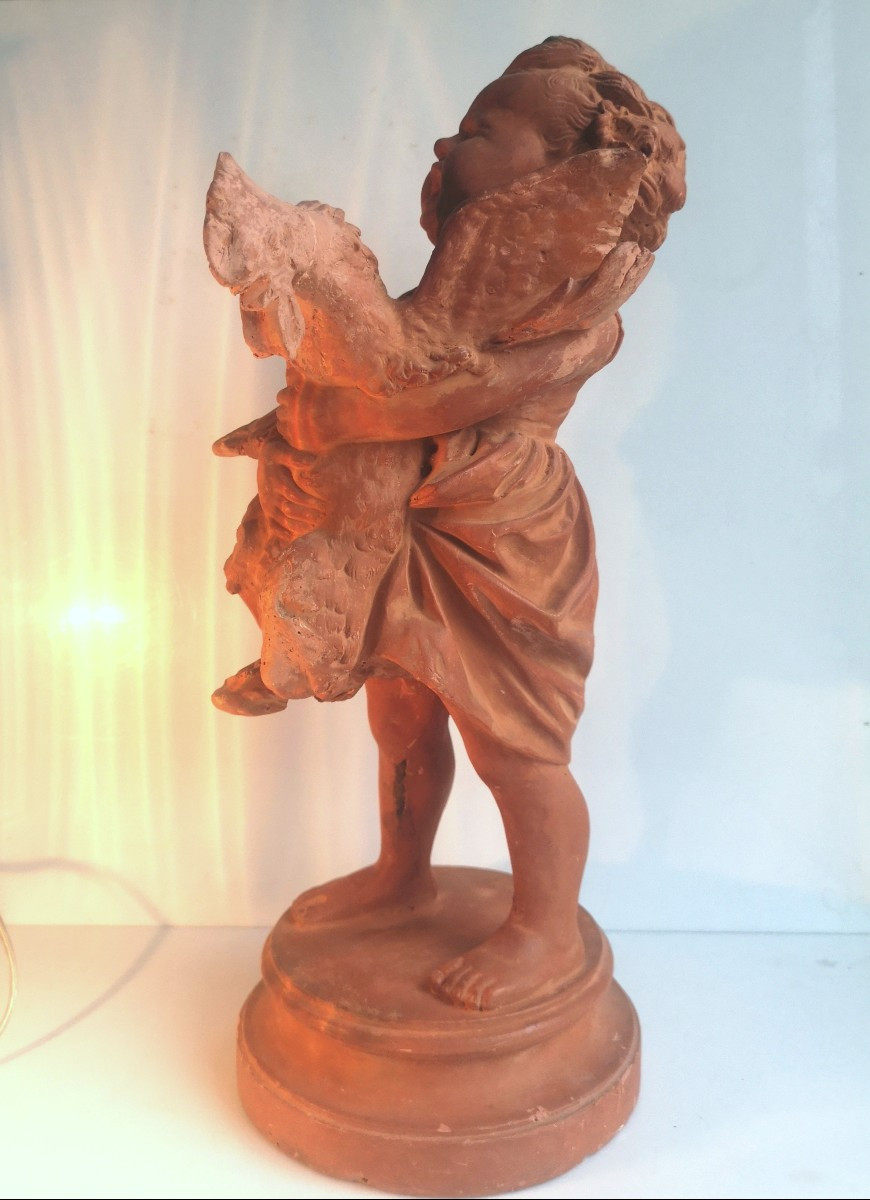
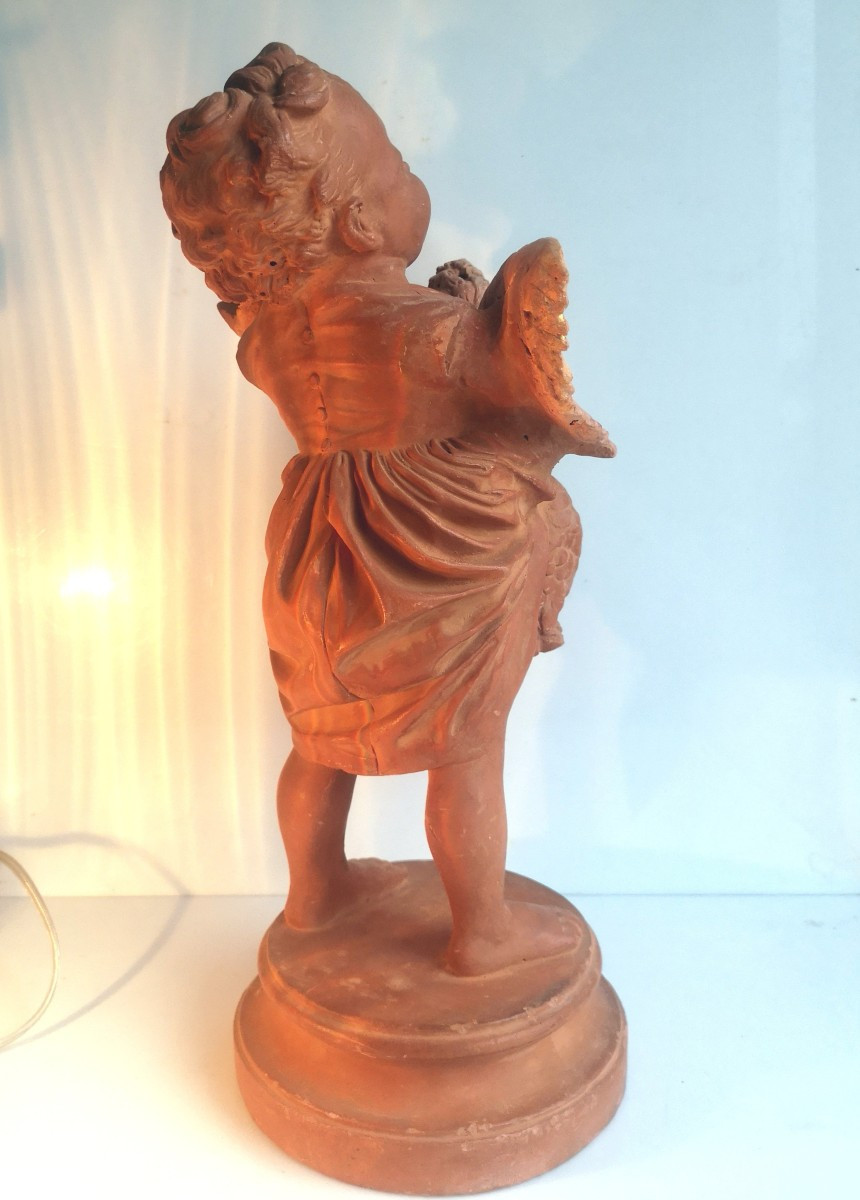
Original bozzetto in patinated raw clay, signed on the base 'Adriano Cecioni a Firenze', depicting a child clutching a rooster trying to escape.
This is a finished workshop model (bozzetto finito) that predates the preceding the final plaster prototype of the 1868 sculpture 'Bambino col gallo' (The Child with the Rooster).
This sculpture would be produced in bronze, marble, and plaster after 1870, but never in terracotta, and certainly never in unfired clay.
Several material and formal characteristics confirm that this is an autograph bozzetto, and not a print or a work from an edition:
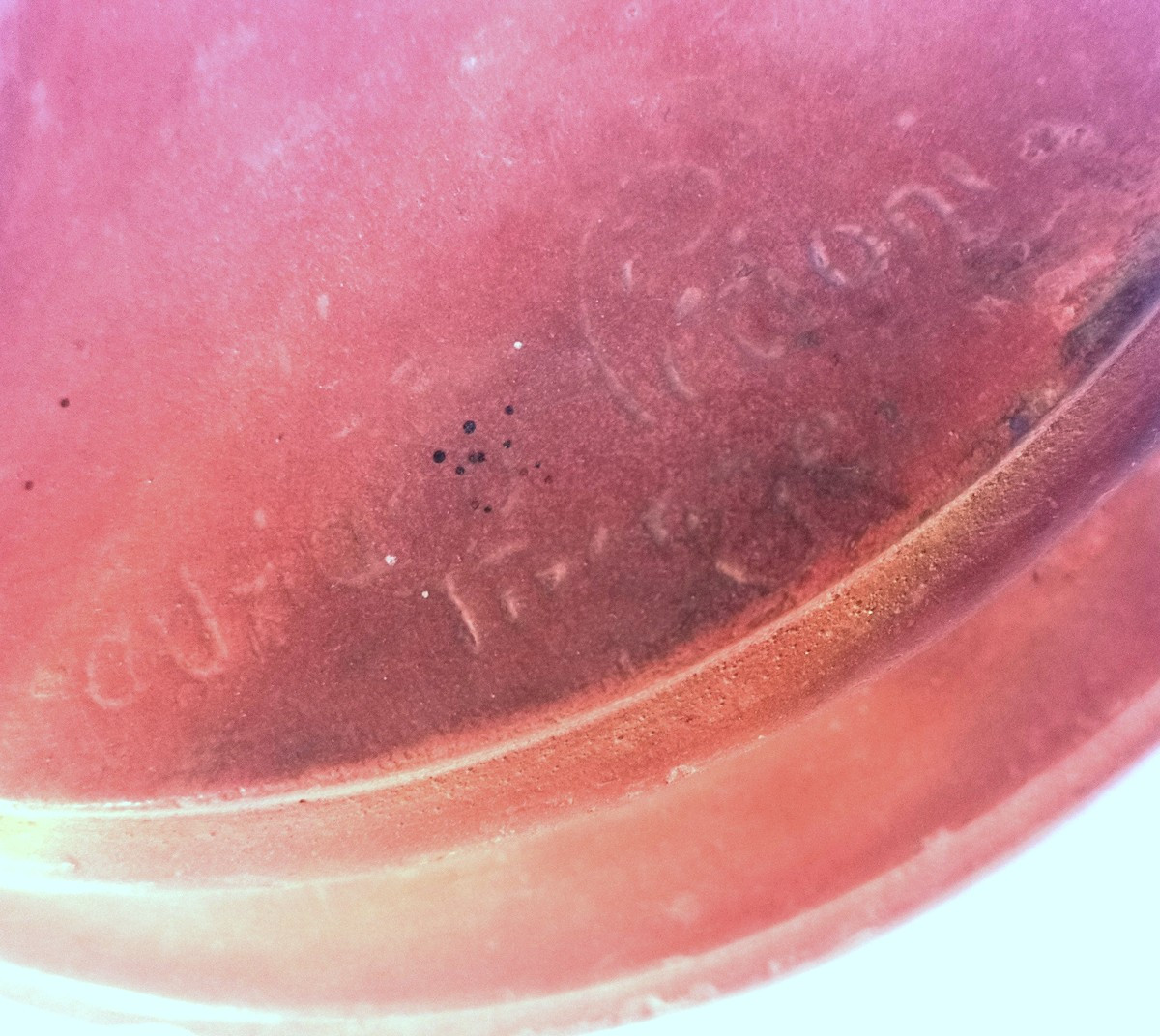
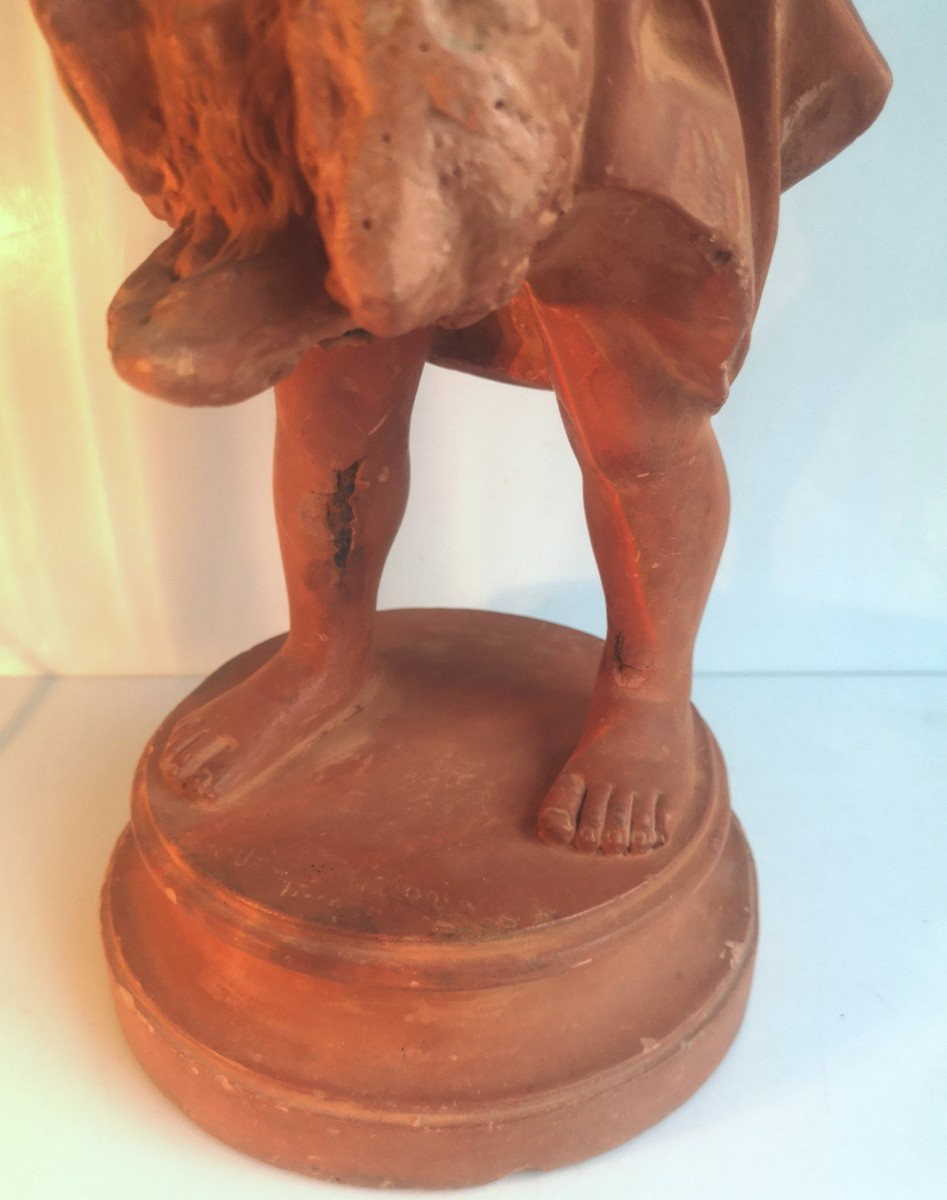
1. Signature: The work is signed by hand incised on the base 'adriano Cecioni a Firenze'. This sculptor frequently added the location, Florence, to objects made in his studio. The signature was incised into the still-raw clay in a free and uneven manner: letters of varying sizes, alignment not strictly rectilinear.
Fluctuating depth of incision. These characteristics clearly attest to the fact that this is a unique work.
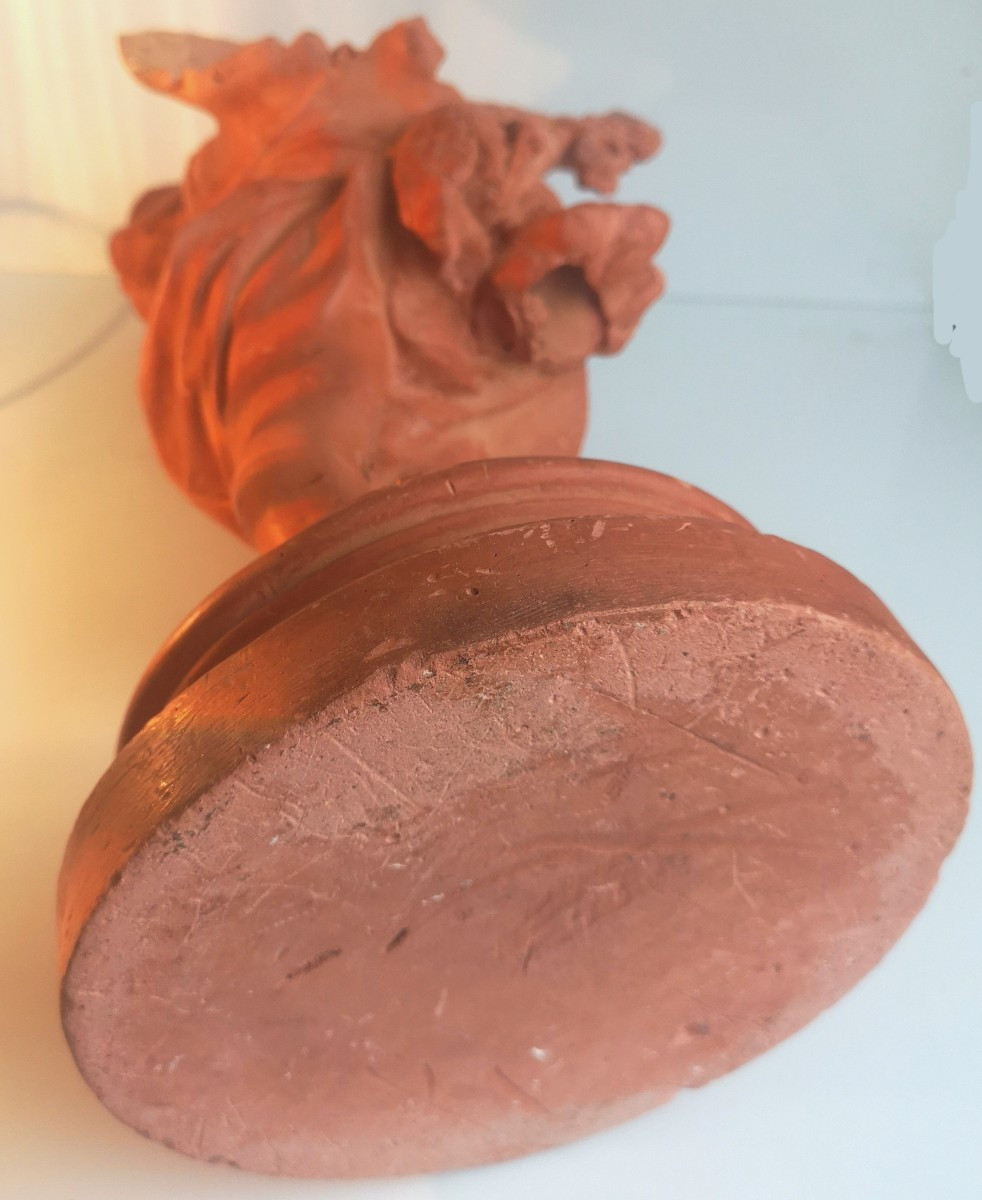
2. Base: modeled directly from the clay, it exhibits slight irregularities in profile and symmetry. This type of base, uncalibrated and unreproducible, is incompatible with a publishing approach, where bases are standardized and rigorously regular.
3. Solid clay sculpture: This modeling in solid clay, unlike the hollow clay used in edition terracotta pieces made from molds, is typical of bozzetti, intended for the study of composition, not for reproduction. Raw clay used in its entirety, and not intended for subsequent firing, is the typical material in sculpture for the research phase.
4. Metal armatures: A gap in the clay at the base of the child's legs revealed the presence of armatures. Their presence rules out the possibility of a kiln-fired terracotta piece that would have broken during firing.
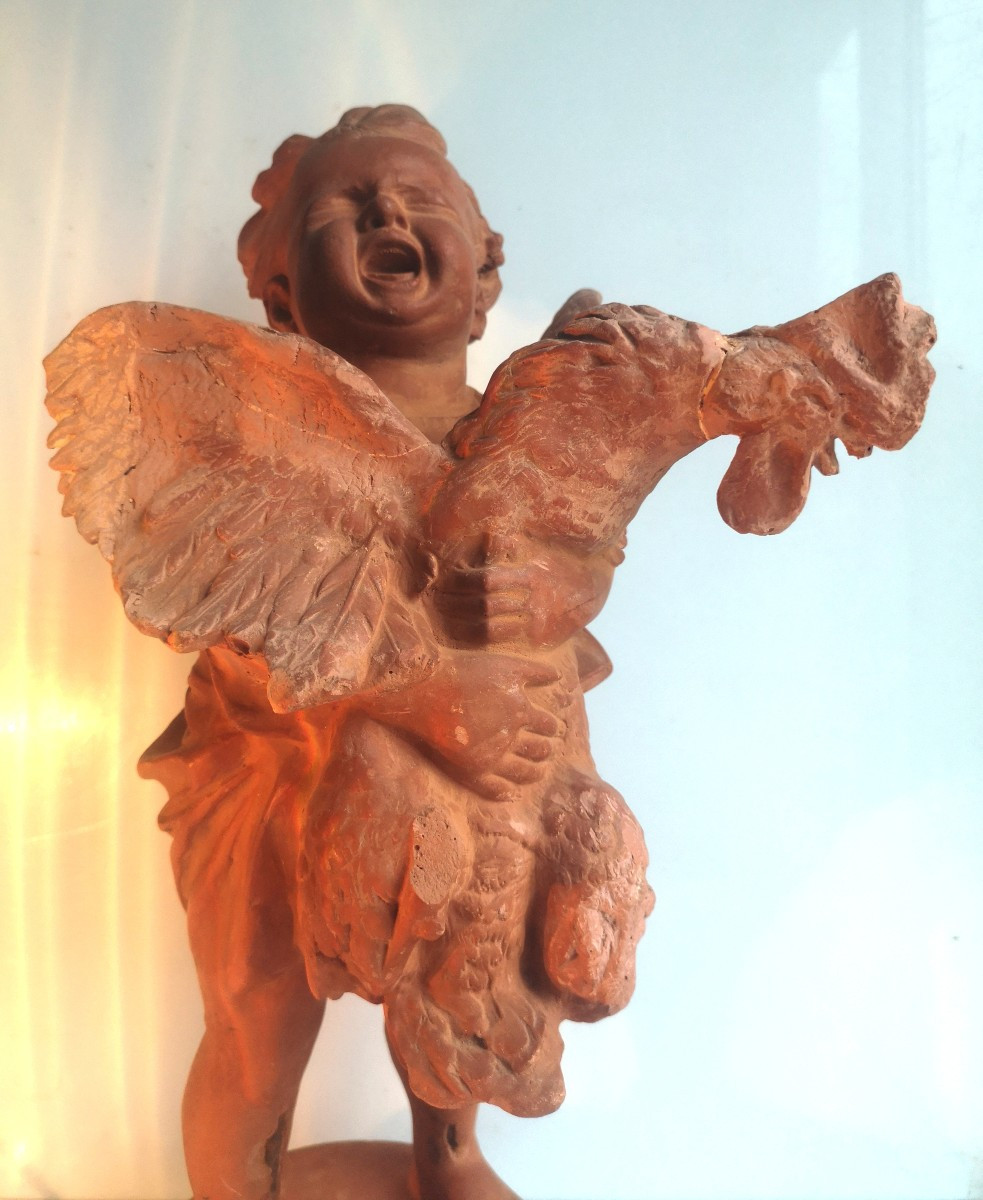
5. Differences Formalwith the Published Works: The sculpture presents numerous differences from the known bronze versions. The most notable is the absence of the box between the child's legs, an element added in the published versions for structural reinforcement (the legs being the weak point).
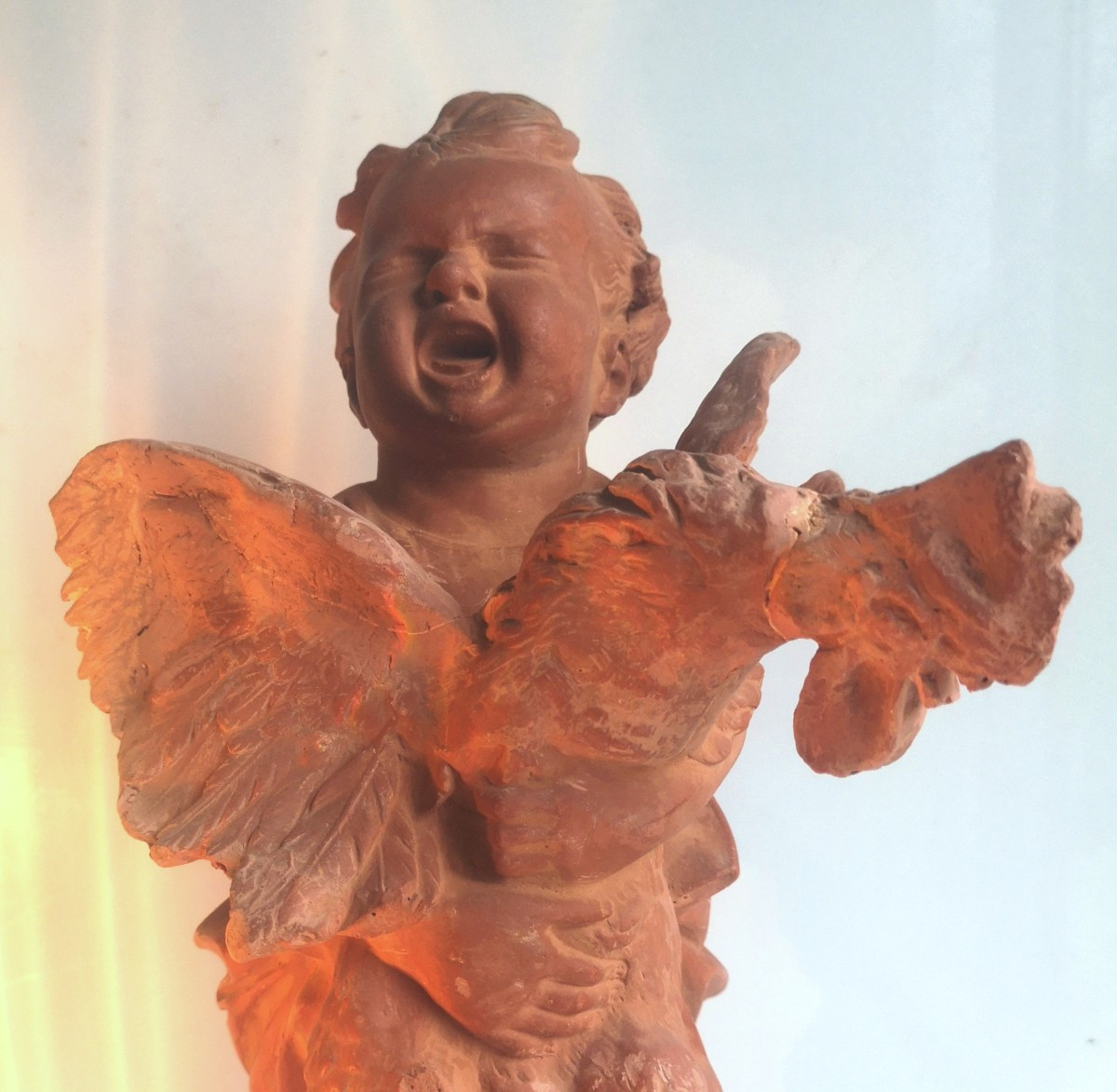
There are also significant variations in the modeling of the fingers, toes, arches of the feet, and other anatomical details. These differences reflect a phase of experimentation with modeling, characteristic of a bozzetto, whereas the published versions present more settled solutions.
Presentation and state of preservation: The group retains all its legibility, expressiveness, and charm despite some minor, old damage to the rooster (losses to the wings and comb, head reattached).
There are also two small, superficial losses of clay near the child's legs, which are minor.
These losses do not affect the stability or the overall clarity of the composition. The clay is sound, stable, and unchanged.
Specific interest:
This rare object, the bozzetto, should be considered a unique work of art, designed to explore composition, movement, and expression, and not a mere edition.
The significant structural and formal differences between this sculpture and the bronze or plaster versions, as well as several material characteristics explained above, are incompatible with an edition.
An object intended for a collector of 19th-century Italian sculpture, bozzetti, or the work of Adriano Cecioni.
Height: 43 cm
This is a finished workshop model (bozzetto finito) that predates the preceding the final plaster prototype of the 1868 sculpture 'Bambino col gallo' (The Child with the Rooster).
This sculpture would be produced in bronze, marble, and plaster after 1870, but never in terracotta, and certainly never in unfired clay.
Several material and formal characteristics confirm that this is an autograph bozzetto, and not a print or a work from an edition:
1. Signature: The work is signed by hand incised on the base 'adriano Cecioni a Firenze'. This sculptor frequently added the location, Florence, to objects made in his studio. The signature was incised into the still-raw clay in a free and uneven manner: letters of varying sizes, alignment not strictly rectilinear.
Fluctuating depth of incision. These characteristics clearly attest to the fact that this is a unique work.
2. Base: modeled directly from the clay, it exhibits slight irregularities in profile and symmetry. This type of base, uncalibrated and unreproducible, is incompatible with a publishing approach, where bases are standardized and rigorously regular.
3. Solid clay sculpture: This modeling in solid clay, unlike the hollow clay used in edition terracotta pieces made from molds, is typical of bozzetti, intended for the study of composition, not for reproduction. Raw clay used in its entirety, and not intended for subsequent firing, is the typical material in sculpture for the research phase.
4. Metal armatures: A gap in the clay at the base of the child's legs revealed the presence of armatures. Their presence rules out the possibility of a kiln-fired terracotta piece that would have broken during firing.
5. Differences Formalwith the Published Works: The sculpture presents numerous differences from the known bronze versions. The most notable is the absence of the box between the child's legs, an element added in the published versions for structural reinforcement (the legs being the weak point).
There are also significant variations in the modeling of the fingers, toes, arches of the feet, and other anatomical details. These differences reflect a phase of experimentation with modeling, characteristic of a bozzetto, whereas the published versions present more settled solutions.
Presentation and state of preservation: The group retains all its legibility, expressiveness, and charm despite some minor, old damage to the rooster (losses to the wings and comb, head reattached).
There are also two small, superficial losses of clay near the child's legs, which are minor.
These losses do not affect the stability or the overall clarity of the composition. The clay is sound, stable, and unchanged.
Specific interest:
This rare object, the bozzetto, should be considered a unique work of art, designed to explore composition, movement, and expression, and not a mere edition.
The significant structural and formal differences between this sculpture and the bronze or plaster versions, as well as several material characteristics explained above, are incompatible with an edition.
An object intended for a collector of 19th-century Italian sculpture, bozzetti, or the work of Adriano Cecioni.
Height: 43 cm
5 800 €
Period: 19th century
Style: Napoleon 3rd
Condition: Some scratches and chips
Material: Other
Height: 43 cm
Reference (ID): 1672357
Availability: In stock
Print