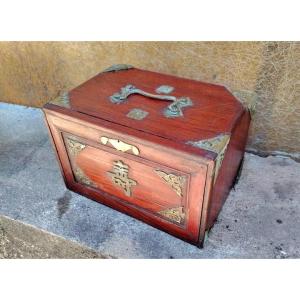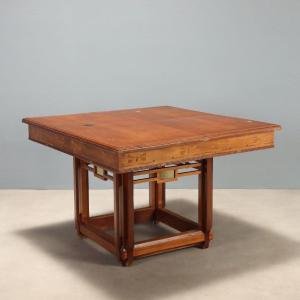


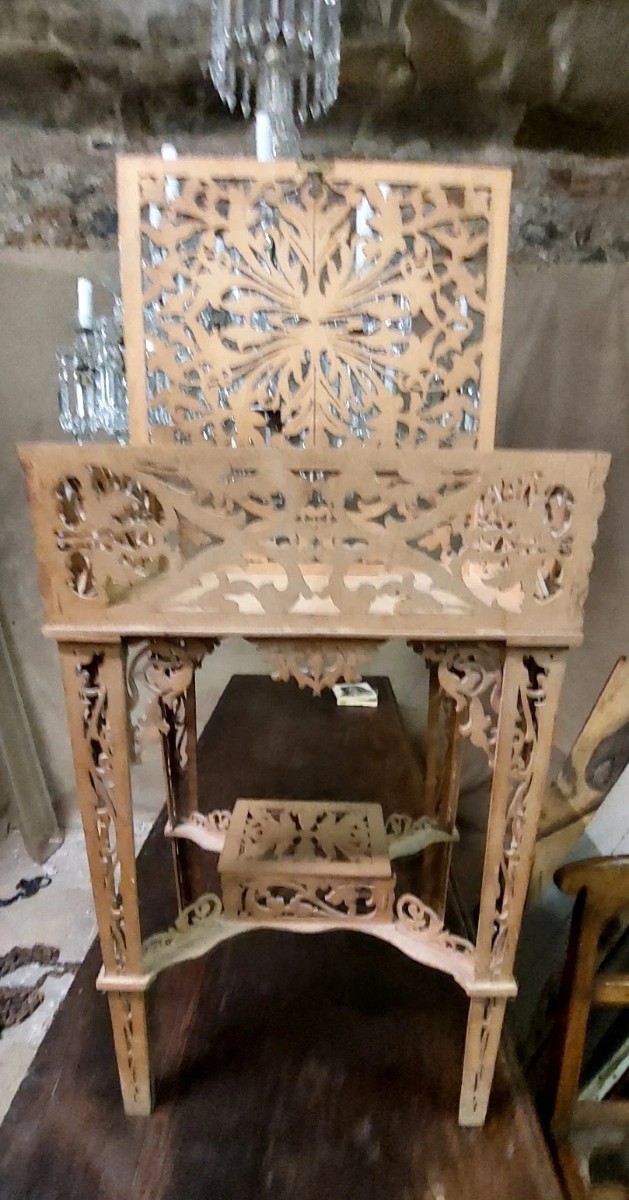


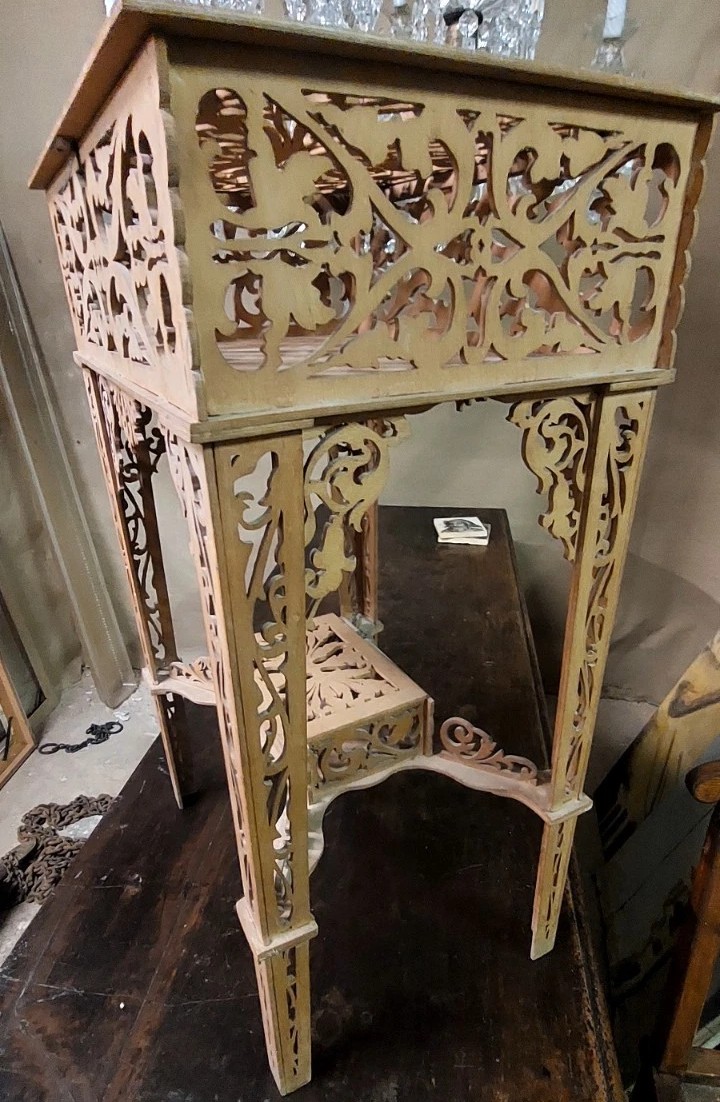

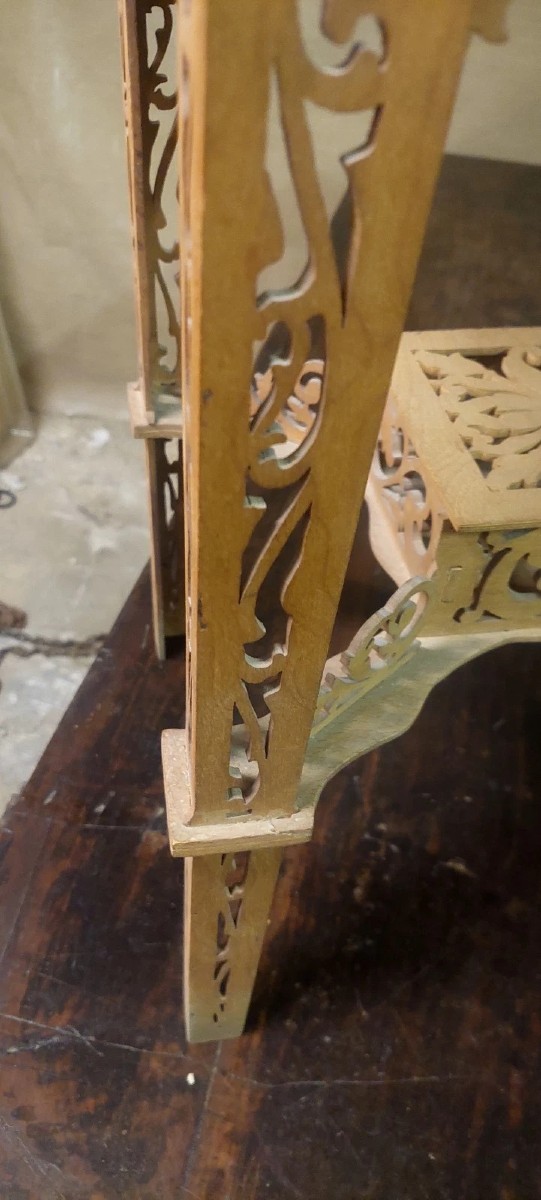


Rare Antique Wooden Fretwork Table By Amati, Turin
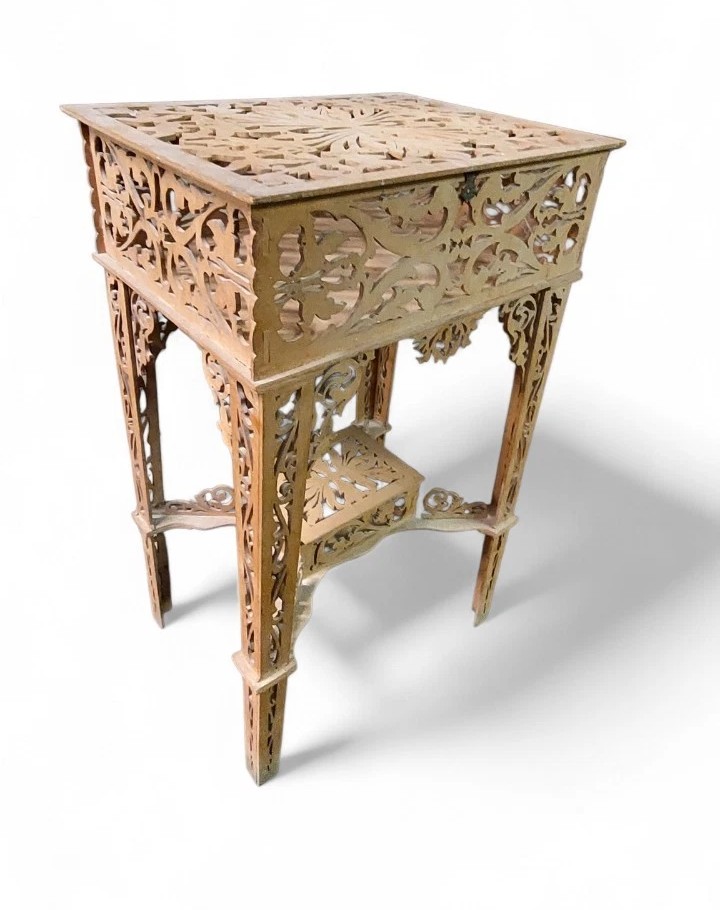
RARE OPENABLE WORK TABLE IN FRETWORK WOOD FROM THE HISTORIC CARLO AMATI COMPANY, EXCELLENT CONDITION WITH NO RESTORATIONS OR DAMAGES. Dimensions: 65 x 40 x 30 cm. 1879. THE BIRTH OF CARLO AMATI
On one of the main streets of the historic center, at number 9 Via Garibaldi, Mr. Carlo Amati opened the workshop for his company, "AMATI CARLO – TRAFORO."
It quickly became a reference point for woodworking: materials of all types, Art Nouveau designs marvelous in their precision and richness, and woodworking tools. And an innovation: the entire range of samples is illustrated in catalogs, making it easier for the public to choose and purchase.
Amati's name became established: his fretwork designs (especially the most beautiful ornaments) were even sought after as models in goldsmith schools in Valenza Po, in the province of Alessandria, one of Italy's main goldsmith districts. They are still in use today.
Meanwhile, the Royal House of Savoy awarded Carlo Amati two diplomas, allowing him to display the royal frieze on his insignia.
BOMBINGS, PLYWOOD OFFSETS, EXPORTS
In the early 1900s, the brand expanded: retailers opened in every Italian city, and exports began to Argentina and Syria, thanks to some Turin-based merchants. In the 1930s, following the Great Depression, Amati was forced to supplement his fretwork with items for the "Fine Arts": famous Turin painters became his regular customers.
During World War II, much of the warehouse was evacuated to the Asti area: the plywood was used to replace glass broken during the bombings, but the scraps were used to make fretwork objects. There was no rope to tie down the packages; parachute harnesses were used instead.
After the war, silkscreen printing began directly on the plywood in color, thanks to a new system imported to Italy by former prisoners in the United States. Fretwork transformed into model making—especially ship modeling—and new construction plans and related accessories, in wood and brass, were developed.
On one of the main streets of the historic center, at number 9 Via Garibaldi, Mr. Carlo Amati opened the workshop for his company, "AMATI CARLO – TRAFORO."
It quickly became a reference point for woodworking: materials of all types, Art Nouveau designs marvelous in their precision and richness, and woodworking tools. And an innovation: the entire range of samples is illustrated in catalogs, making it easier for the public to choose and purchase.
Amati's name became established: his fretwork designs (especially the most beautiful ornaments) were even sought after as models in goldsmith schools in Valenza Po, in the province of Alessandria, one of Italy's main goldsmith districts. They are still in use today.
Meanwhile, the Royal House of Savoy awarded Carlo Amati two diplomas, allowing him to display the royal frieze on his insignia.
BOMBINGS, PLYWOOD OFFSETS, EXPORTS
In the early 1900s, the brand expanded: retailers opened in every Italian city, and exports began to Argentina and Syria, thanks to some Turin-based merchants. In the 1930s, following the Great Depression, Amati was forced to supplement his fretwork with items for the "Fine Arts": famous Turin painters became his regular customers.
During World War II, much of the warehouse was evacuated to the Asti area: the plywood was used to replace glass broken during the bombings, but the scraps were used to make fretwork objects. There was no rope to tie down the packages; parachute harnesses were used instead.
After the war, silkscreen printing began directly on the plywood in color, thanks to a new system imported to Italy by former prisoners in the United States. Fretwork transformed into model making—especially ship modeling—and new construction plans and related accessories, in wood and brass, were developed.
260 €
Period: 20th century
Style: Art Nouveau
Condition: Excellent condition
Material: Solid wood
Reference (ID): 1669350
Availability: In stock
Print