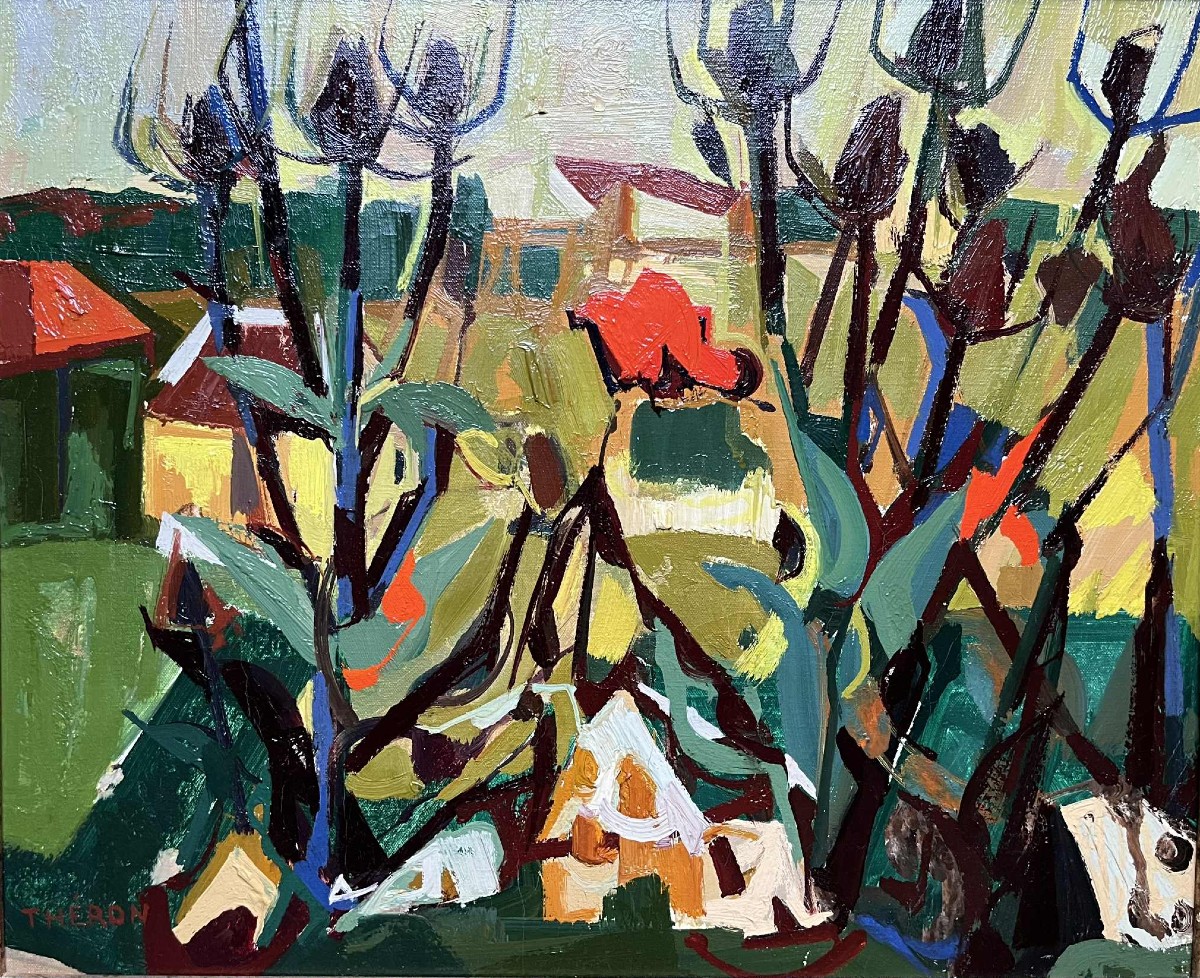
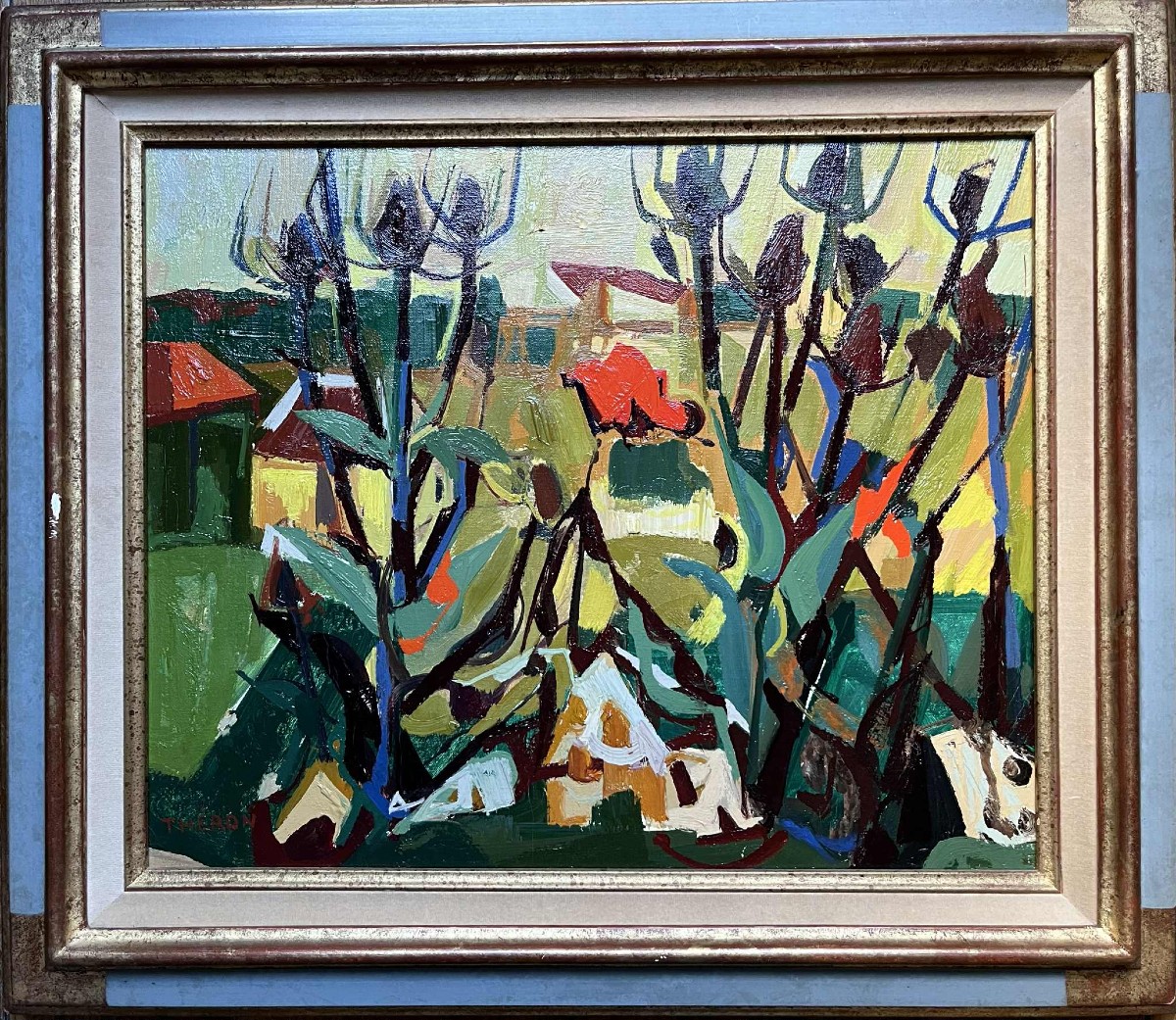


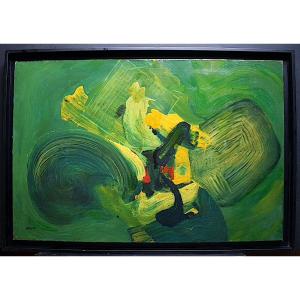
"Pierre Theron (1918 – 2001) - "the Thistles" (1960) Oil/canvas, Signed Lower Left , 38 X 46 Cm"
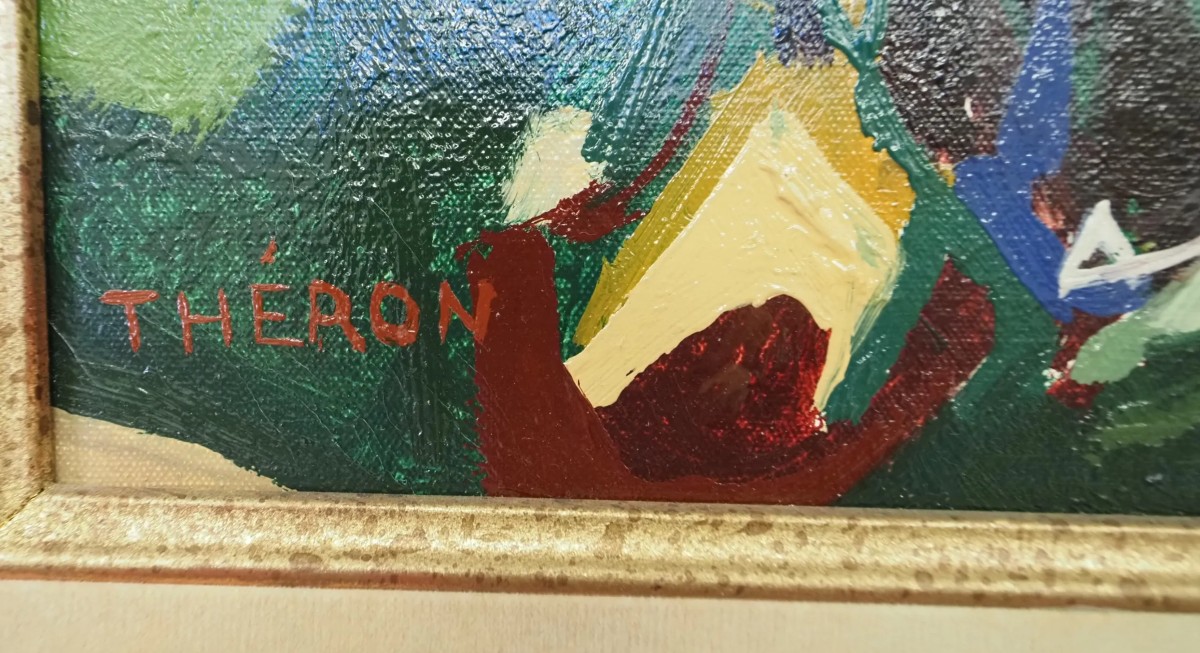
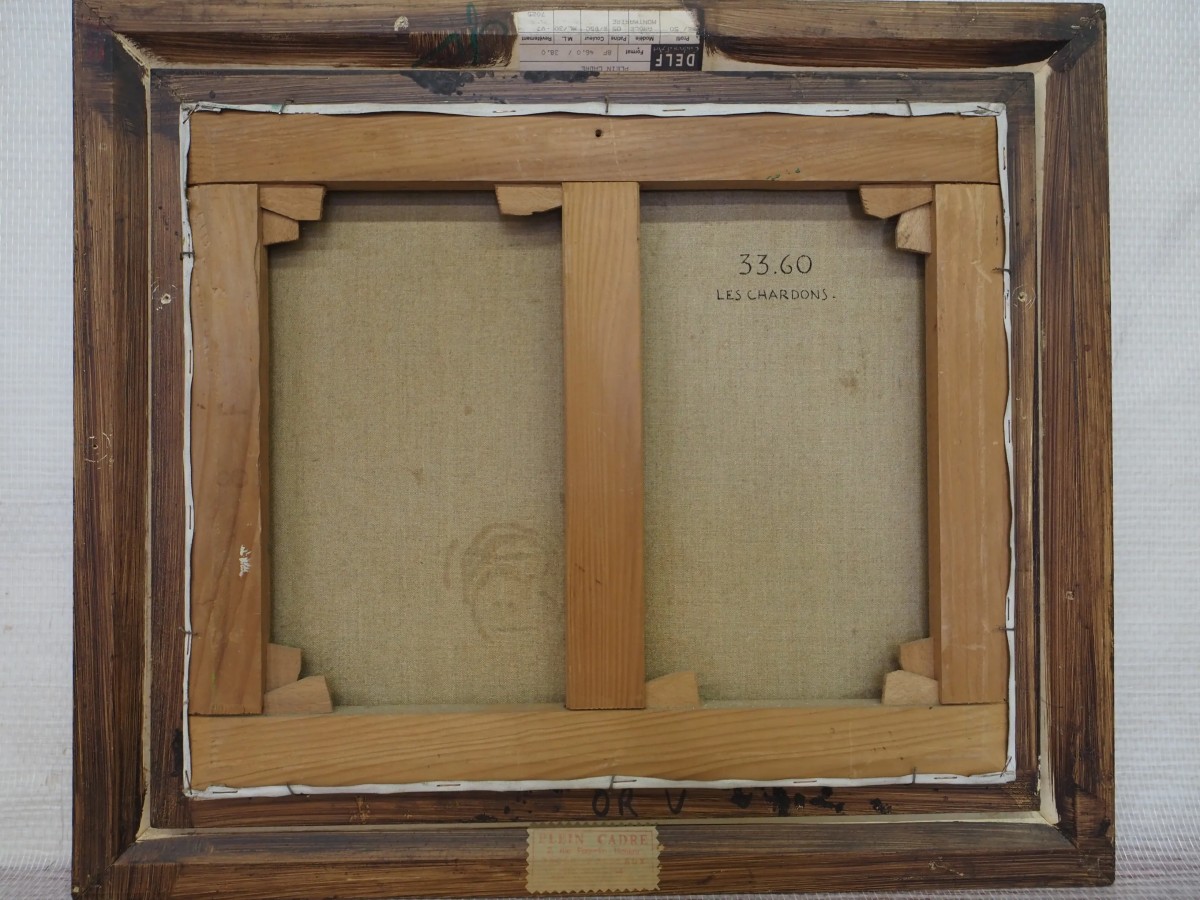
Pierre THERON (Nérac 1918 – Mérignac 2001) "The Thistles" (1960) Oil on canvas, signed lower left, titled and marked 33.60 on the reverse. H: 38 cm x W: 46 cm. Artist's biography:
Pierre Théron was born in 1918 in Nérac. In 1925, he moved with his family to Bordeaux, where his father had been appointed port commander, and there he discovered port life, which became essential to his work. In 1936, he entered the Bordeaux School of Fine Arts, where he studied under Roganeau and René Buthaud. In 1942, he enrolled at the École des Beaux-Arts in Paris. His teachers were two eminent Bordeaux painters: Jean Dupas and André Lhote. Under the latter, he learned the construction of a painting. He would always retain a sense of solid composition, the art of giving an image structure. "I am a builder," he liked to say. After 1945, his style evolved: he moved from realistic landscapes to images belonging to a kind of "poetic reality." A new style emerged, harsher and uncompromising, somber despite its raw colors. This approach firmly places him within the post-war School of Paris. In the 1950s, Pierre Théron was as much a Parisian as a Bordeaux native. He exhibited in various Salons, and the French state purchased his paintings. In 1957, he received the Grand Prix des Beaux-Arts from the City of Paris. A prodigious worker, he divided his time between easel paintings, which he sold to a clientele of art lovers, and commissions for large-scale decorative projects. He also created numerous tapestry cartoons for Aubusson. Part of his work, during the "one percent for art in public buildings" program (established in 1951), was devoted to approaching government agencies and participating in calls for tenders, making him one of the main contributors to this initiative in France. His first major project was in Bordeaux. In 1950, SAFT commissioned him to create decorations evoking the work and games of Aquitaine. In two years, the artist completed nearly 200 meters of paintings, imbued with the modernist lessons of André Lhote, but also with the influence of the Italian primitives. The vigorous gouache sketches that Théron produced in the 1950s seem to reveal a fiery temperament. Yet the man was by no means one of the bohemian artist. A distinguished gentleman, always elegant, courteous, calm, and worldly, he was also incredibly methodical, numbering his canvases with precision. At the end of the 1960s, Théron achieved recognition with a commission to decorate the Maison du Paysan (Peasant's House), an ambitious building that was the pride of Chaban-Delmas, then Prime Minister. He adorned the building with an exterior mosaic, paintings, and large tapestries. The decades that followed were less prosperous for him. He embodies a period—the 1950s—that fell out of favor. Neither classical in a city that cherishes the 18th century, nor contemporary, he was scorned by new connoisseurs who judged only his recent works and ignored the artist he had been earlier. A posthumous vindication came at the beginning of the 21st century, with several exhibitions, recognition from numerous collectors, and that of the Museum of Contemporary Art in Bordeaux, which exhibited his powerful gouaches depicting industrial subjects.










 Le Magazine de PROANTIC
 TRÉSORS Magazine
 Rivista Artiquariato