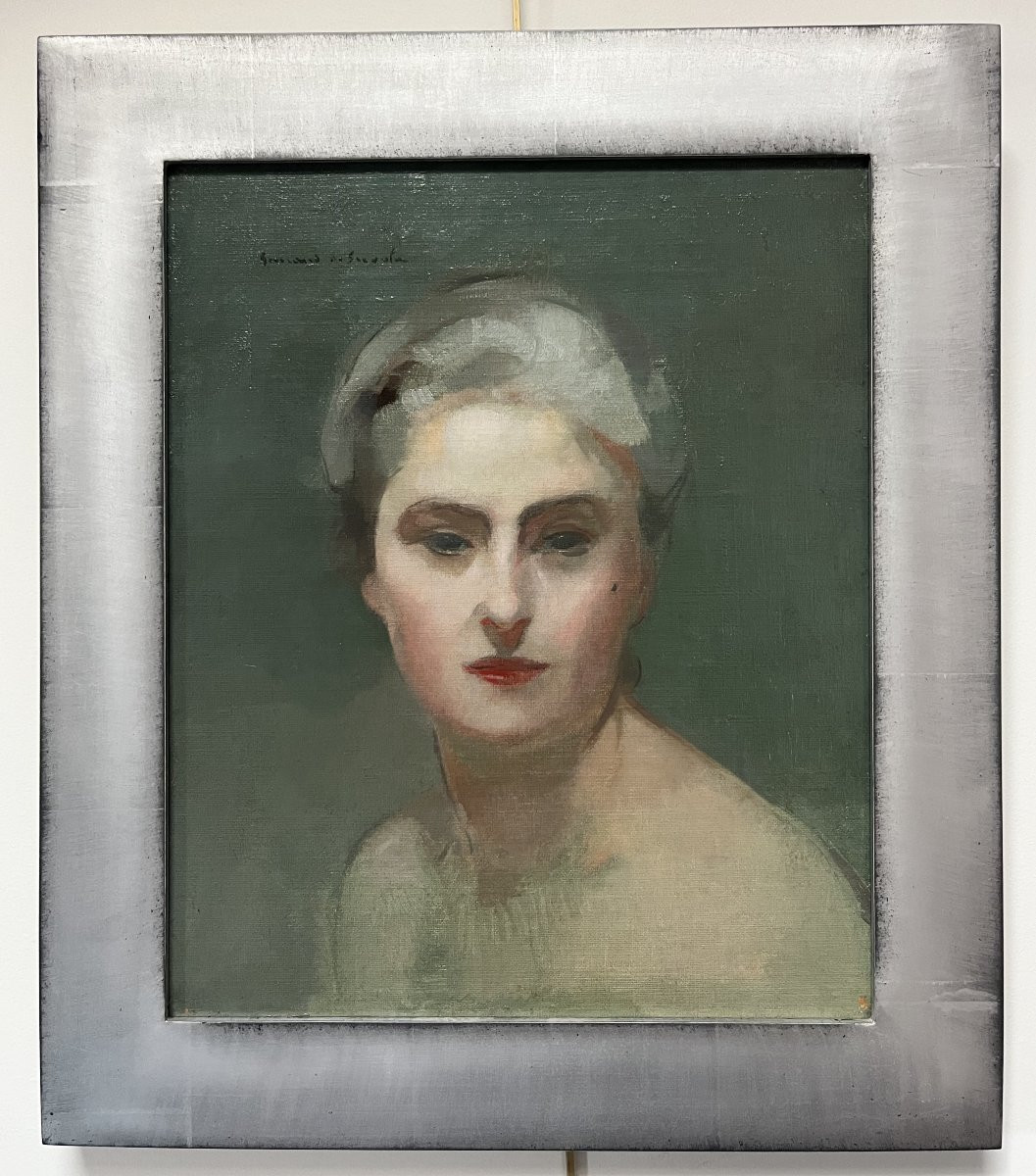

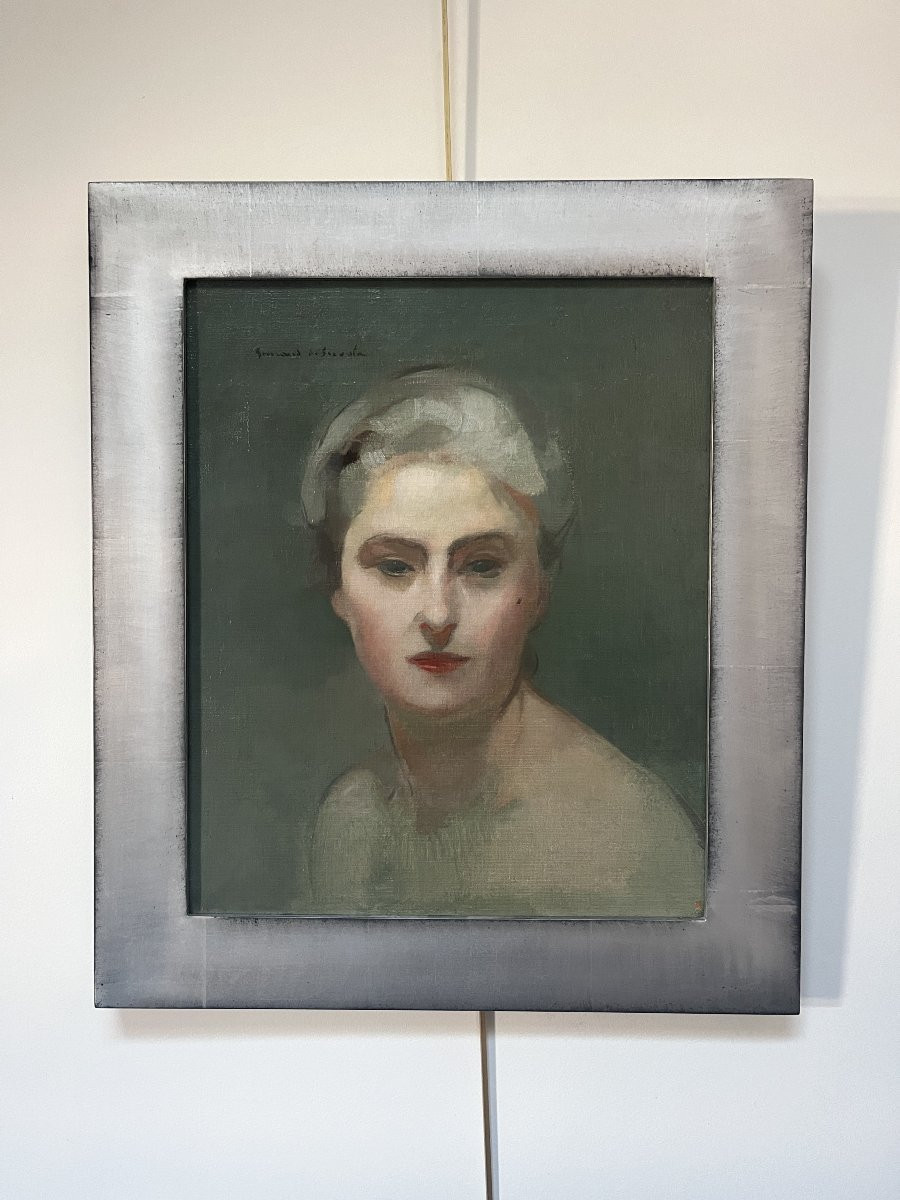


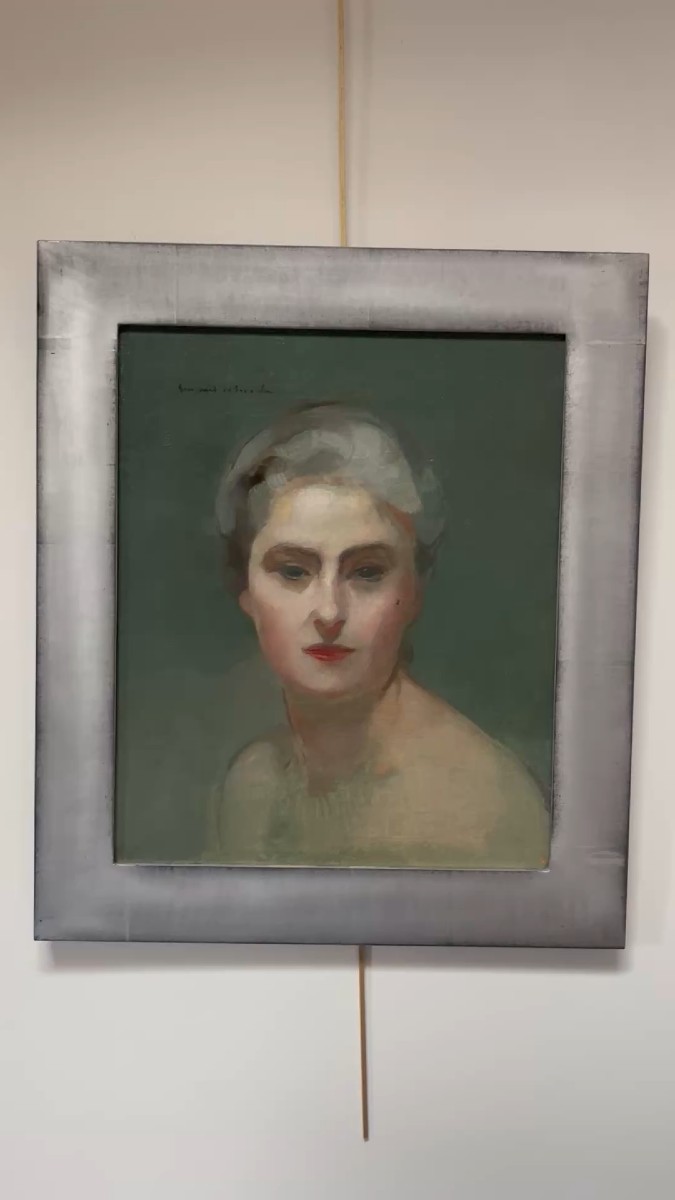

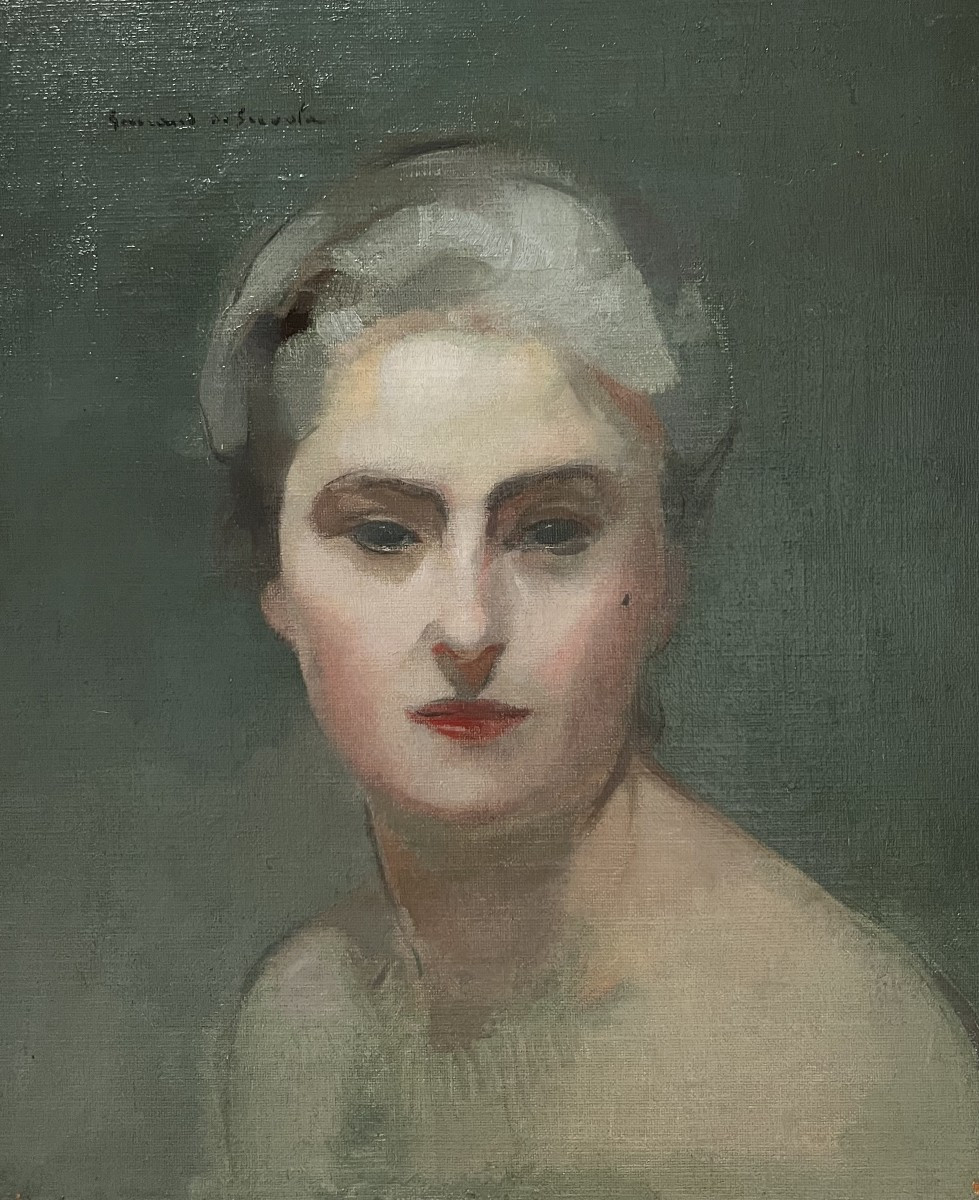
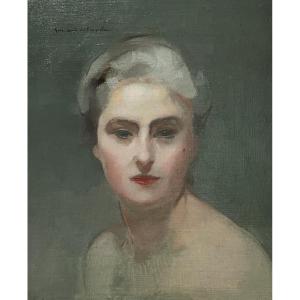


Lucien-victor Guirand De Scévola (1871-1950) Portrait Of His Wife, Oil On Canvas, Signed
Artist: Lucien Victor Guirand De Scevola (1871-1950)
Lucien-Victor Guirand de Scévola (1871-1950)
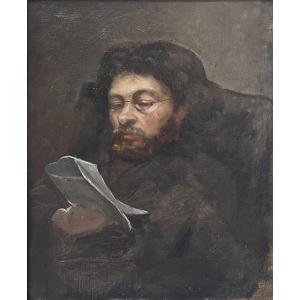
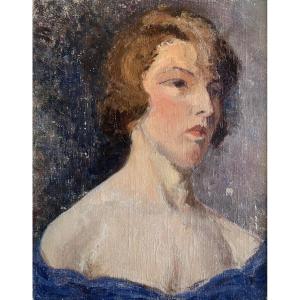
Portrait of his wife, Marie-Thérèse Pierat
signed upper left
oil on canvas
46 x 38 cm
Framed : 57,5 x 49,5 cm
The intensity and unique character of this portrait immediately conveyed an intimate connection between the painter and his subject.
I contacted Mr Rik Wassenaar, a specialist in Guirand de Scévola's work, who has dedicated a comprehensive website to the artist. He immediately identified the model as Marie-Thérèse Pierat, the artist's wife.
I would like to thank Mr Wassenaar for the comprehensive information he provided. He drew my attention to a pastel version of this portrait from 1916, which was published in the magazine L'OEuvre in 1922 (see photo).
A comparison of this version with our painting highlights the superior quality of the latter. However, it is interesting to observe Guirand de Scévola's particular approach to oil painting, which is very light and similar to the pastel technique in its rendering.
It is also worth mentioning the model's personality. Marie-Thérèse Pierat (1883–1934) was a theatre actress who was very famous in her day and became a member of the Comédie Française at the age of 20. In 1919, she became the first female director at the Comédie-Française. Her marriage to Guirand de Scévola in 1906 was a major social event.
Another portrait of her by her husband depicting her in the play Les Marionnettes can be found on this website. It shows the distinctive mole she had on her cheek.
Once again, this painting demonstrates Guirand de Scévola's extraordinary talent as a portrait artist.
Lucien-Victor Guirand de Scévola ( 1871 – 1950) was a French painter.
He was student of Fernand Cormon and Pierre Dupuis at the École des Beaux Arts in Paris.
De Scévola art is remarkable for his silky, velvety and smooth style.
The very first part of his career was marked by symbolism, but he later developped his own language, his Art Deco like bunches of flowers are the best known. He was also a great portraitist for the socialites and aristocrats of the period.
He was involved in several important art movements during his lifetime, and his style evolved to reflect the changing trends in French art during the first half of the 20th century. His work is often described as a fusion of Symbolism, Post-Impressionism, and elements of modernism, though he remained deeply rooted in traditional French artistic practices.
He is also known for his pioneering leadership of the Camoufleurs (the French Camouflage Department) in World War I.
Portrait of his wife, Marie-Thérèse Pierat
signed upper left
oil on canvas
46 x 38 cm
Framed : 57,5 x 49,5 cm
The intensity and unique character of this portrait immediately conveyed an intimate connection between the painter and his subject.
I contacted Mr Rik Wassenaar, a specialist in Guirand de Scévola's work, who has dedicated a comprehensive website to the artist. He immediately identified the model as Marie-Thérèse Pierat, the artist's wife.
I would like to thank Mr Wassenaar for the comprehensive information he provided. He drew my attention to a pastel version of this portrait from 1916, which was published in the magazine L'OEuvre in 1922 (see photo).
A comparison of this version with our painting highlights the superior quality of the latter. However, it is interesting to observe Guirand de Scévola's particular approach to oil painting, which is very light and similar to the pastel technique in its rendering.
It is also worth mentioning the model's personality. Marie-Thérèse Pierat (1883–1934) was a theatre actress who was very famous in her day and became a member of the Comédie Française at the age of 20. In 1919, she became the first female director at the Comédie-Française. Her marriage to Guirand de Scévola in 1906 was a major social event.
Another portrait of her by her husband depicting her in the play Les Marionnettes can be found on this website. It shows the distinctive mole she had on her cheek.
Once again, this painting demonstrates Guirand de Scévola's extraordinary talent as a portrait artist.
Lucien-Victor Guirand de Scévola ( 1871 – 1950) was a French painter.
He was student of Fernand Cormon and Pierre Dupuis at the École des Beaux Arts in Paris.
De Scévola art is remarkable for his silky, velvety and smooth style.
The very first part of his career was marked by symbolism, but he later developped his own language, his Art Deco like bunches of flowers are the best known. He was also a great portraitist for the socialites and aristocrats of the period.
He was involved in several important art movements during his lifetime, and his style evolved to reflect the changing trends in French art during the first half of the 20th century. His work is often described as a fusion of Symbolism, Post-Impressionism, and elements of modernism, though he remained deeply rooted in traditional French artistic practices.
He is also known for his pioneering leadership of the Camoufleurs (the French Camouflage Department) in World War I.
2 400 €
Period: 20th century
Style: Art Deco
Condition: Good condition
Material: Oil painting
Width: 38
Height: 46
Reference (ID): 1669074
Availability: In stock
Print