THIS OBJECT WAS SOLD
Genucilia Plate With Star Decor (4th C. Bc) – Certificate Of Authenticity
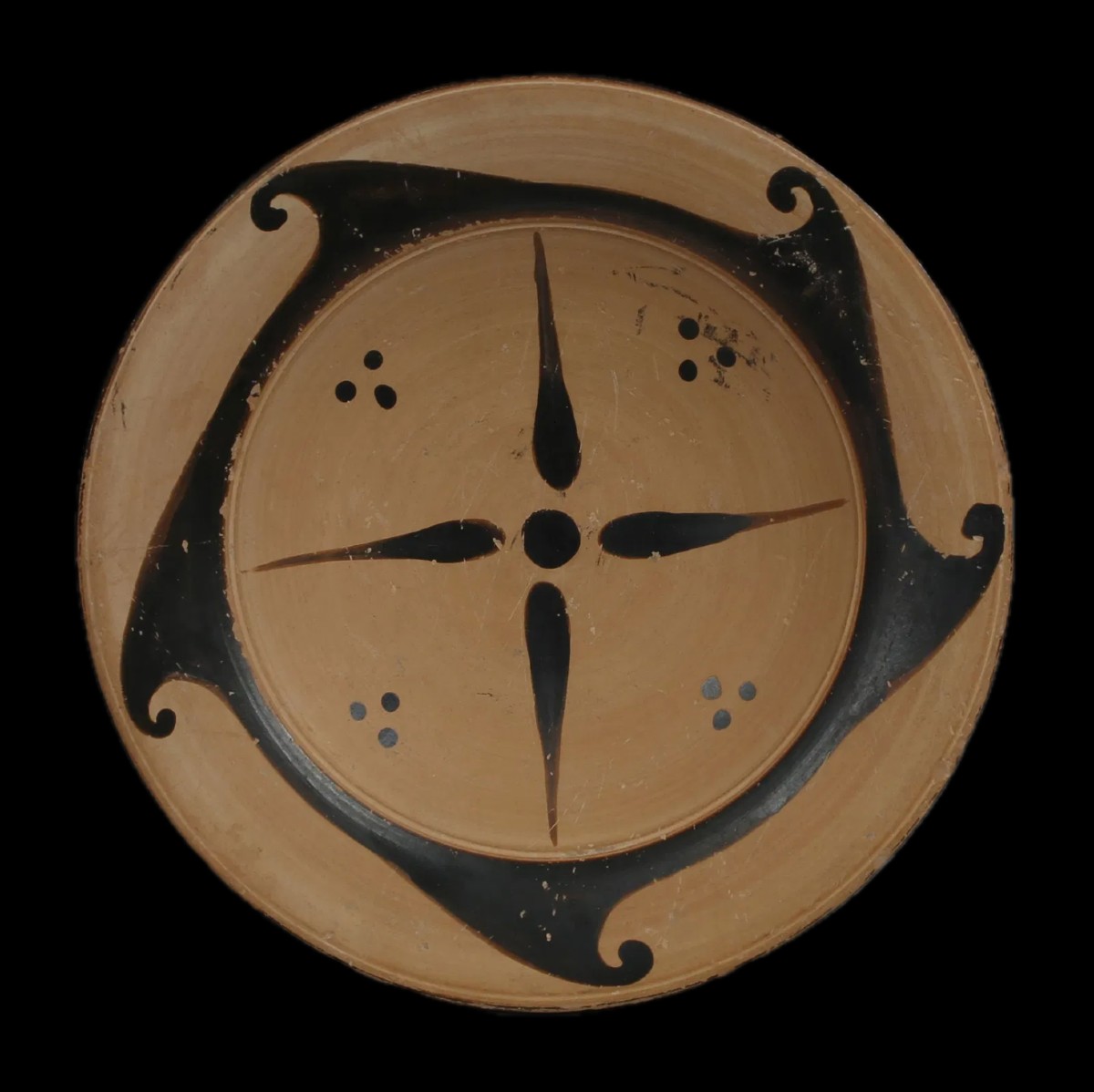
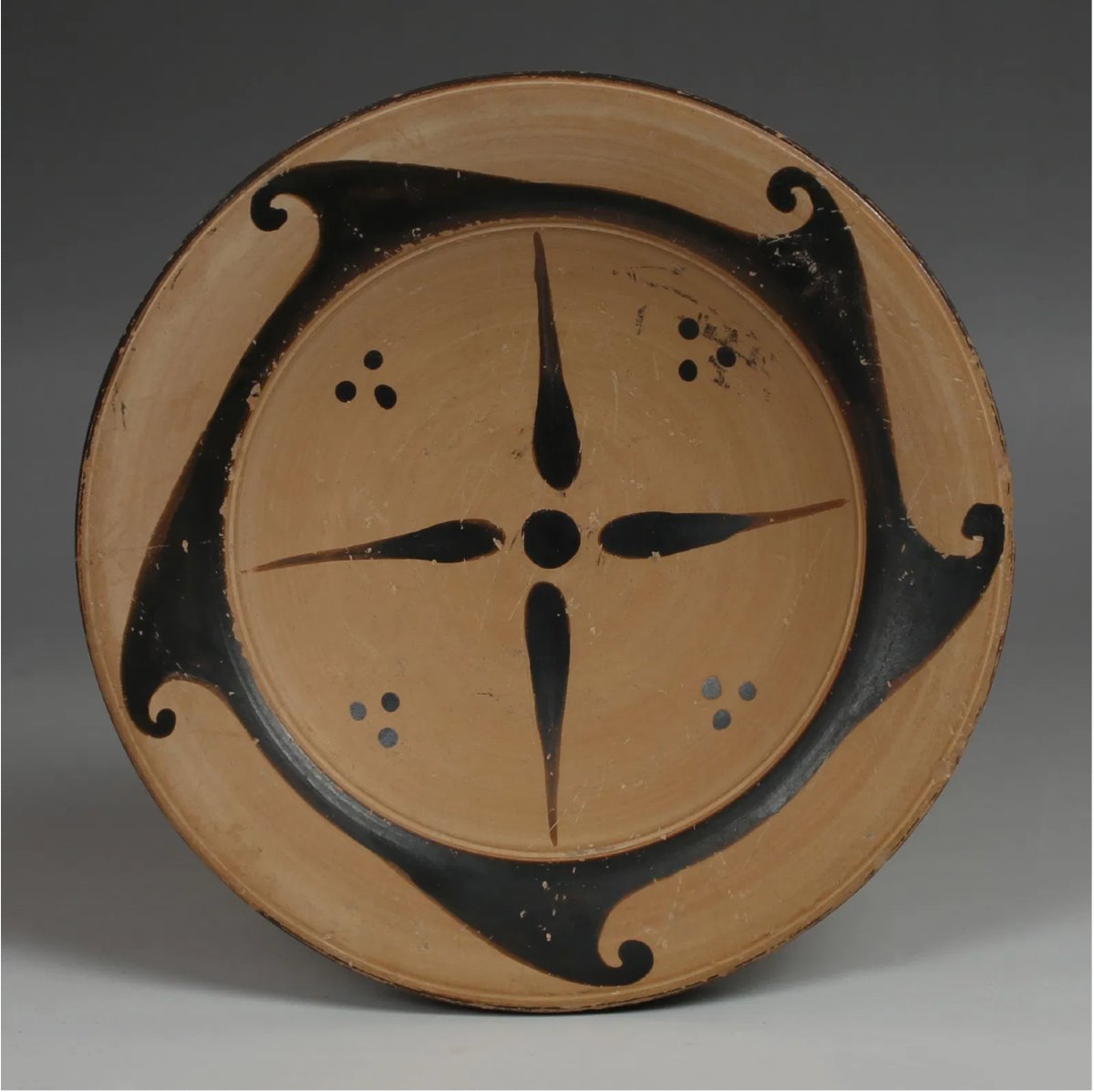
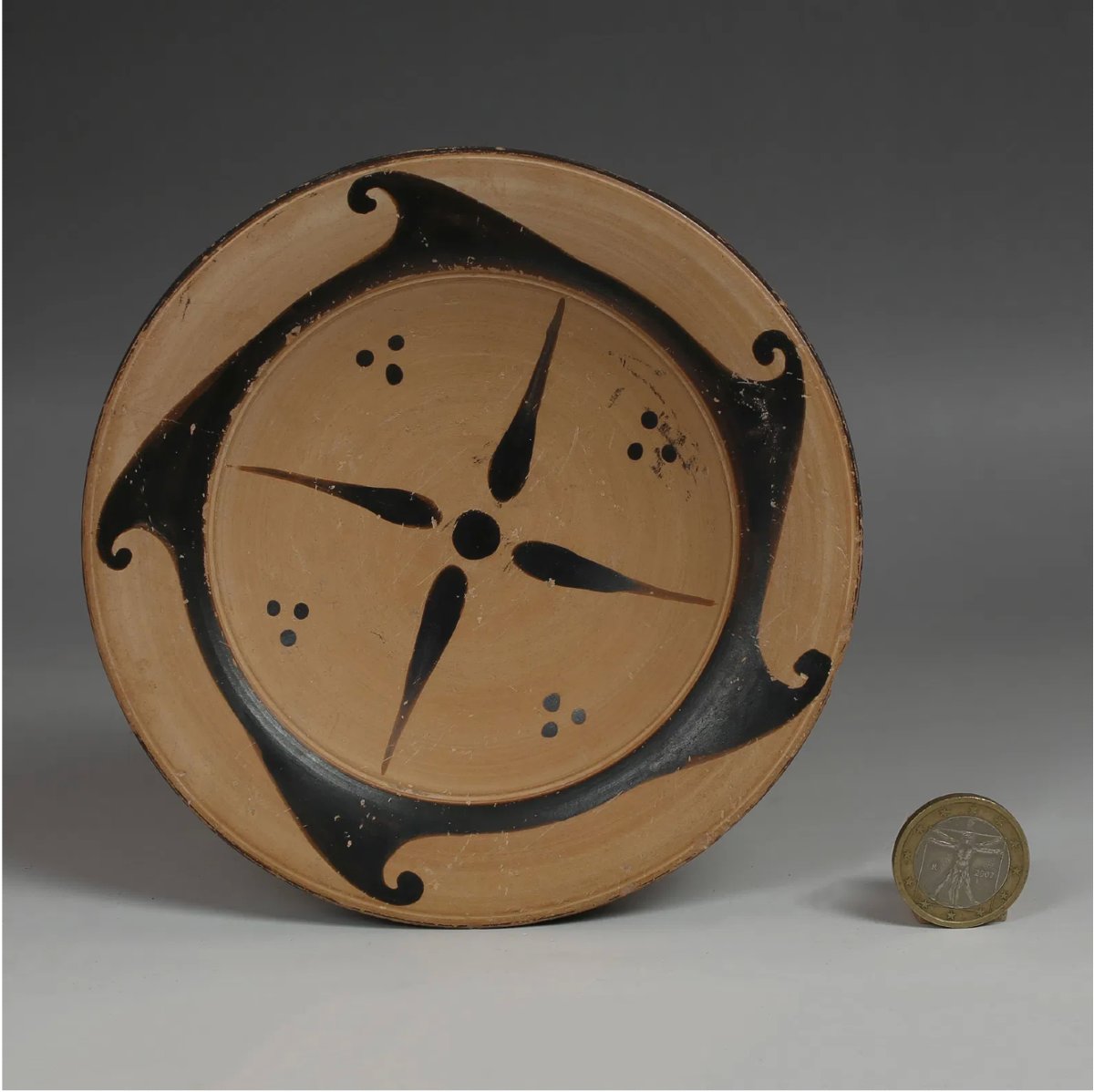
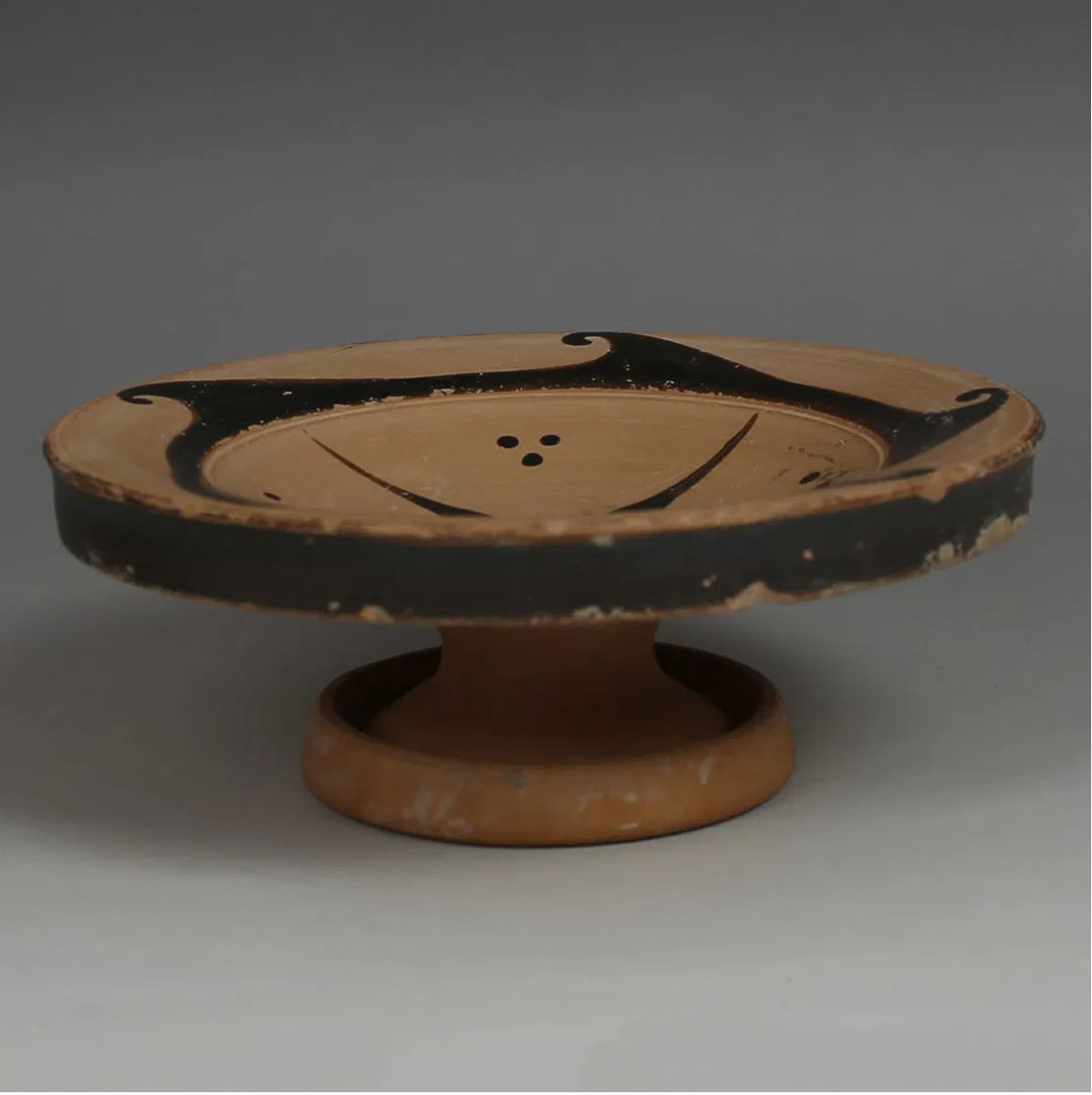


This stemmed plate belongs to the classic corpus of Etruscan "Genucilia" ceramics, specifically the "Star Group." Distinguishing itself from the female profile variants, this specimen favors a symbolic abstraction organized around a central radiant cross. Surface analysis reveals a touching material authenticity: the black varnish, matte and fluid, exhibits areas of abrasion and natural wear that allow the underlying orange fabric to show through. Far from being defects, these losses of matter, combined with fine calcareous concretions lodged in the recesses of the modeling, attest to the absence of modern repainting and confirm prolonged burial in a dry environment.
Characteristics
Object: Stemmed Plate with geometric decor.
Culture: Etruscan, Genucilia Group ("Star" variant).
Period: 4th century BC.
Material: Red-figure ceramic, black varnish highlights.
Dimensions: Height: 52 mm | Diameter: 133 mm.
Condition: Good general condition; wear to the varnish consistent with age; excavation patina preserved.
Provenance: Ex-European private collection; ex-Lakythos SARL (1987); ex-Hydra Gallery, Geneva (1984).
Documentation: Sold with Certificate of Authenticity.
Historical Context Genucilia plates, mass-produced in Southern Etruria (Falerii and Caere) during the 4th century BC, are divided into two main iconographic families: female profiles and abstract decors. This model with a radiant cross illustrates the trend toward graphic stylization in late Etruscan workshops. As markers of Etrusco-Latin identity, these objects served primarily as modest votive offerings in sanctuaries or as funerary goods, witnessing the popular piety of the era.
Formal and Material Analysis
Iconography: The tondo (central medallion) is occupied by a large cross with four lanceolate branches converging toward a central point. The spandrels are adorned with three-dot rosettes, creating a balanced ternary rhythm. The rim (marli) is bordered by the canonical running wave motif (running dog), executed with characteristic gestural speed.
Technique: The piece utilizes the reserve technique: the background is covered in black slip, leaving the motif in the natural color of the clay. The matte quality of the black and the fluidity of the line are typical of medium-series Etruscan productions, prioritizing immediate visual effect.
Material and Patina: The object's epidermis is a pledge of sincerity. Pronounced wear of the black varnish is observed on the ridges and rim, a logical result of millennia of friction. The terracotta, of a warm beige-pink hue, is interspersed with mineral micro-inclusions.
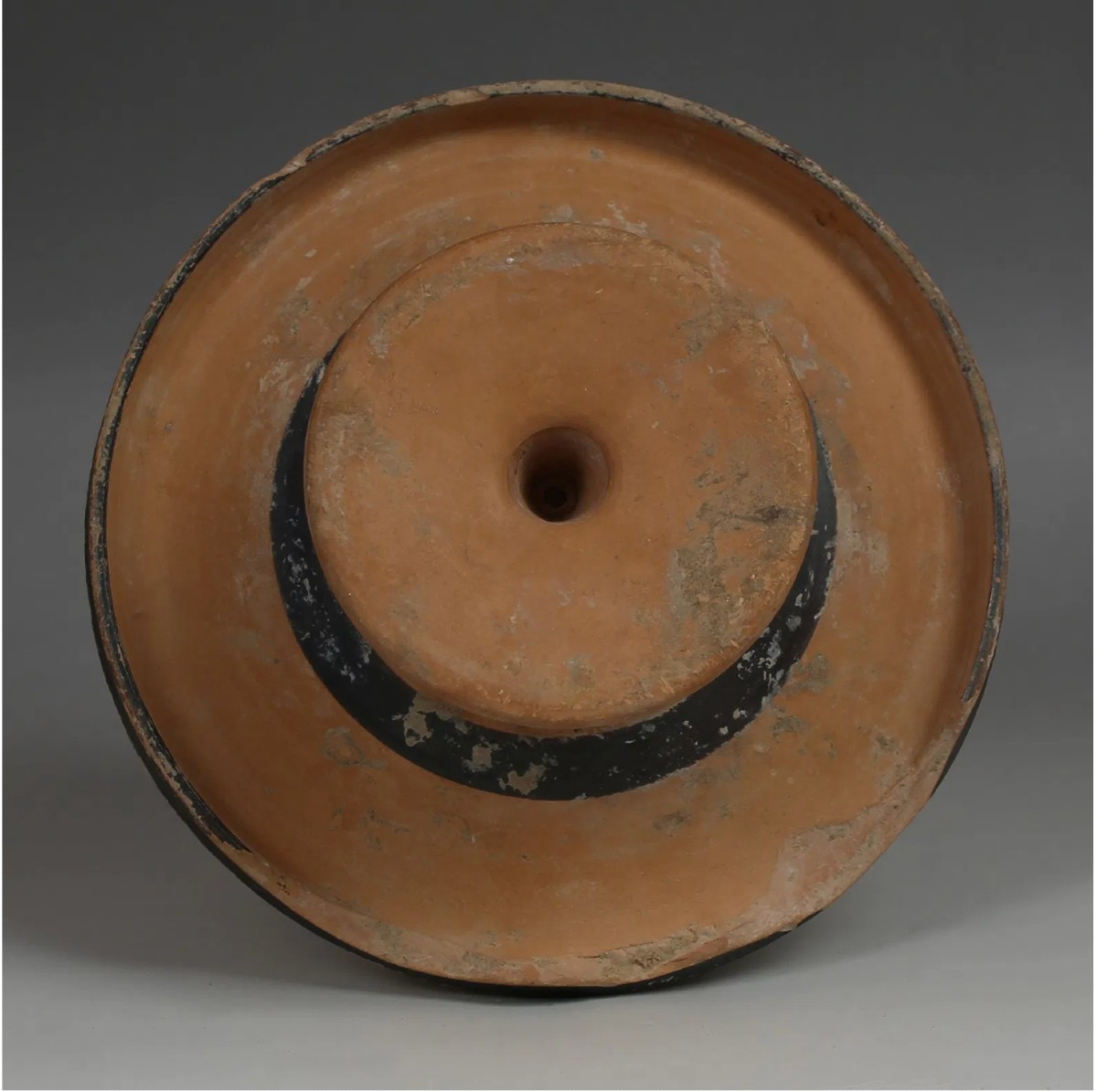
Reverse: The underside is left mostly raw, revealing concentric wheel-turning striae and the bare color of the clay. The short, flared foot features a broad black band, ensuring the visual grounding of the cup.
Cultural and Decorative Value This plate is a compelling example of everyday Etruscan decorative art, documenting the taste for geometric abstraction that coexisted with figuration. Its value lies in its archaeological integrity: the object has undergone no modern cosmetic "beautification," presenting itself with the truth of its material history. Its documented provenance, tracing back to the renowned Hydra Gallery in 1984, offers optimal acquisition security.
Expertise Report Examination of the piece confirms its authenticity on several points:
Typology: The decor perfectly matches the reference corpus for the Star Group of Genucilia production.
Surface Condition: The wear on the varnish is random and located on relief areas, consistent with natural aging.
Traceability: The unbroken collection history spanning nearly 40 years (Hydra, Lakythos) constitutes a strong guarantee of provenance.
Explore similar pieces and discover your ideal find:
archeology