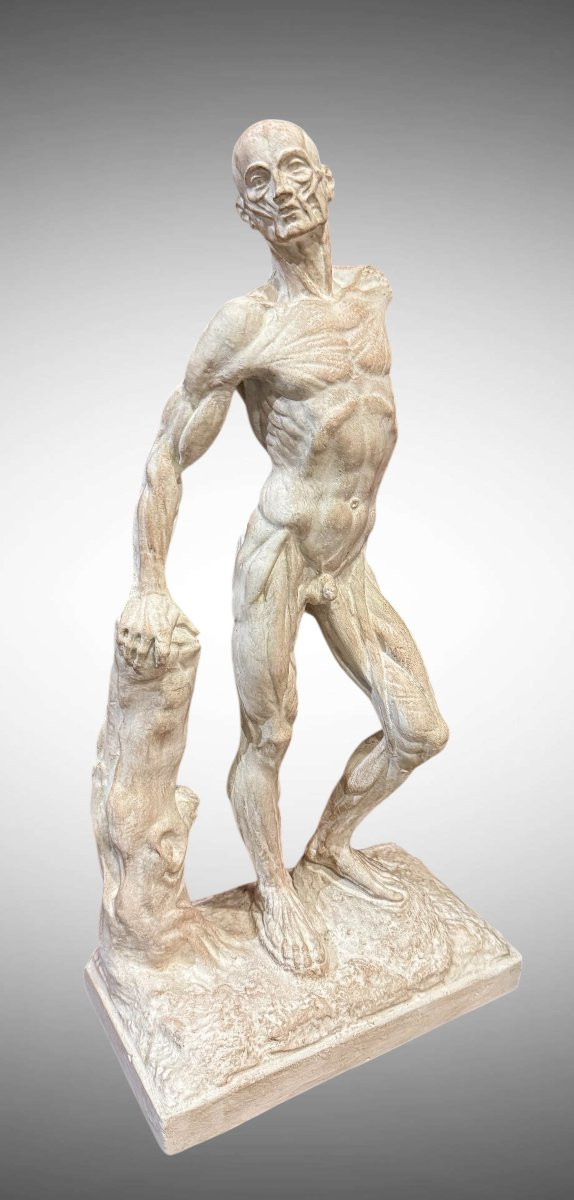
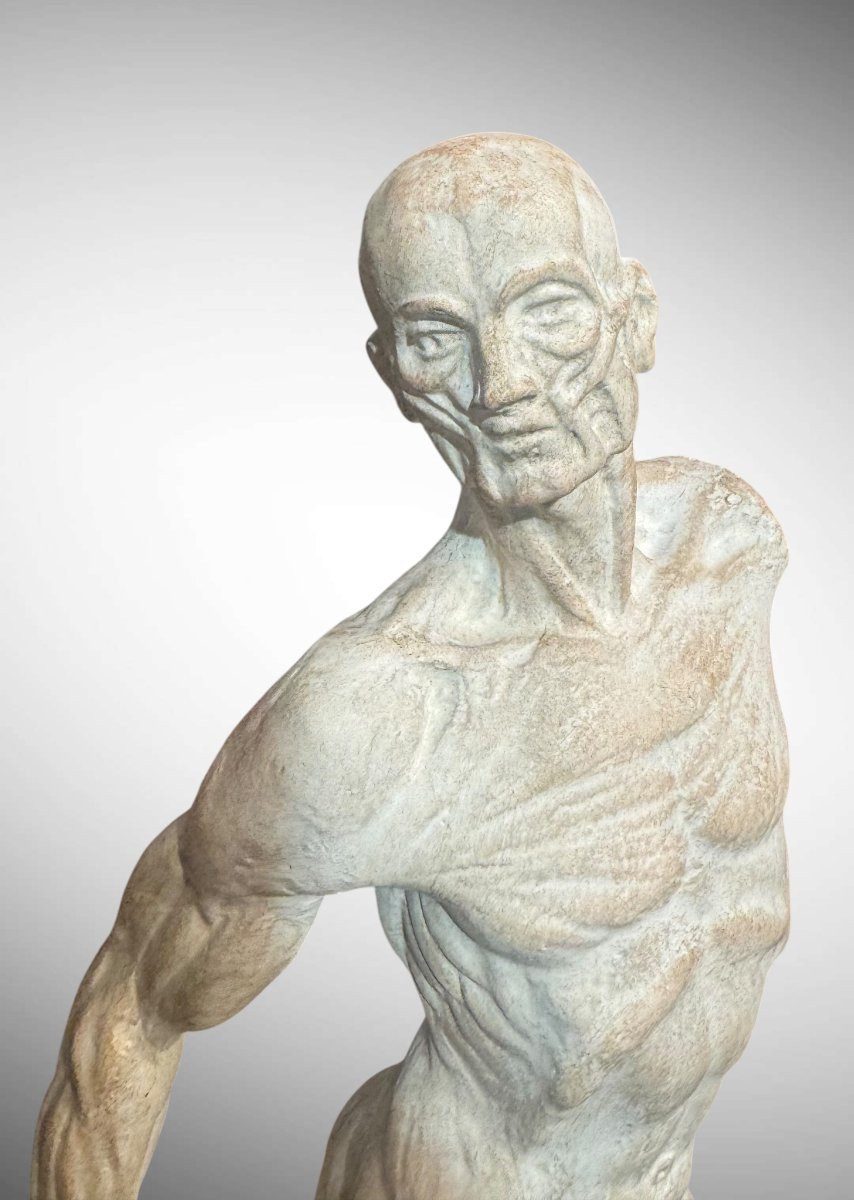
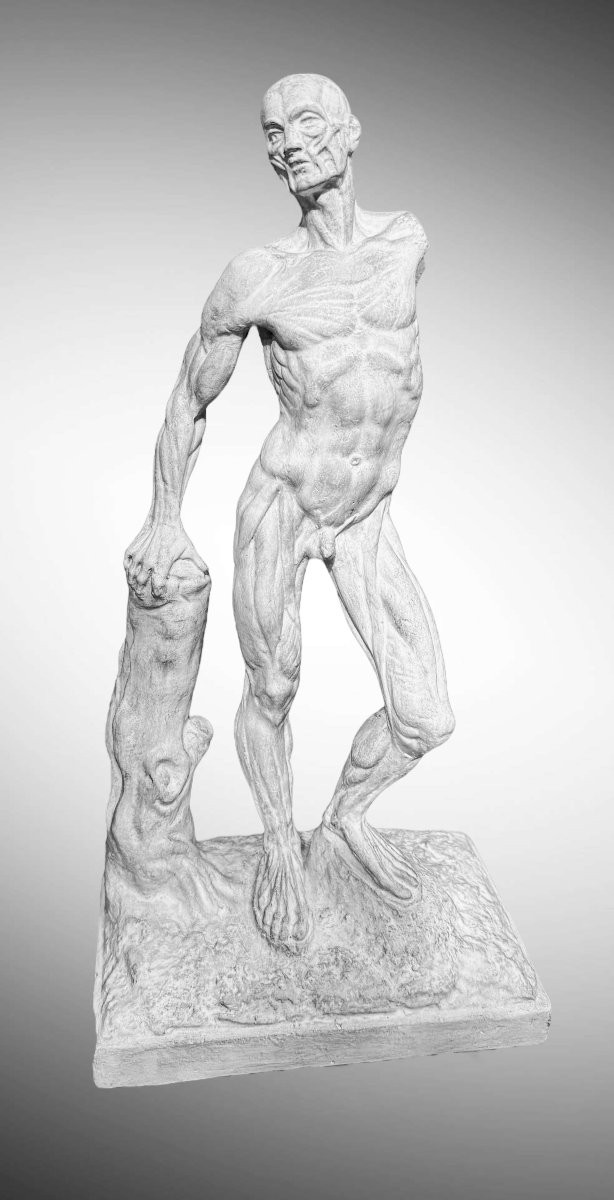
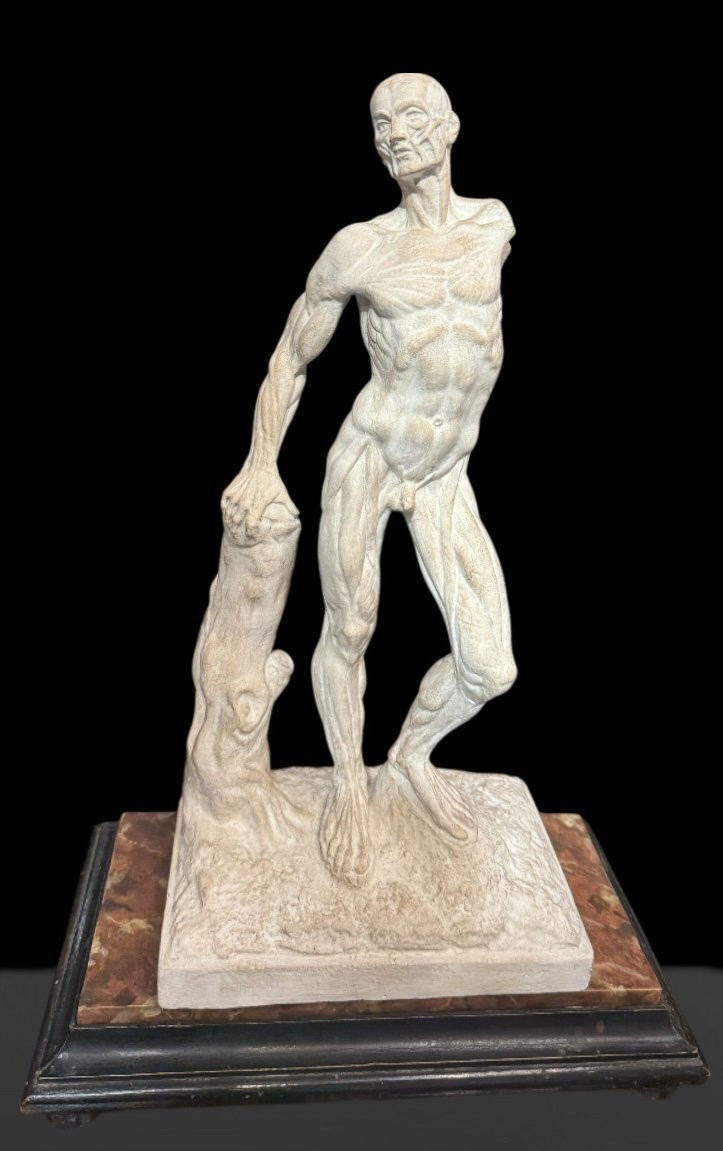


Skinned Or Flayed Plaster Statue – Ercole Lelli
Artist: Ercole Lelli
Ercole Lelli (Bologna, 1702 – 1766) was an Italian anatomist, sculptor, painter, and wax modeler.
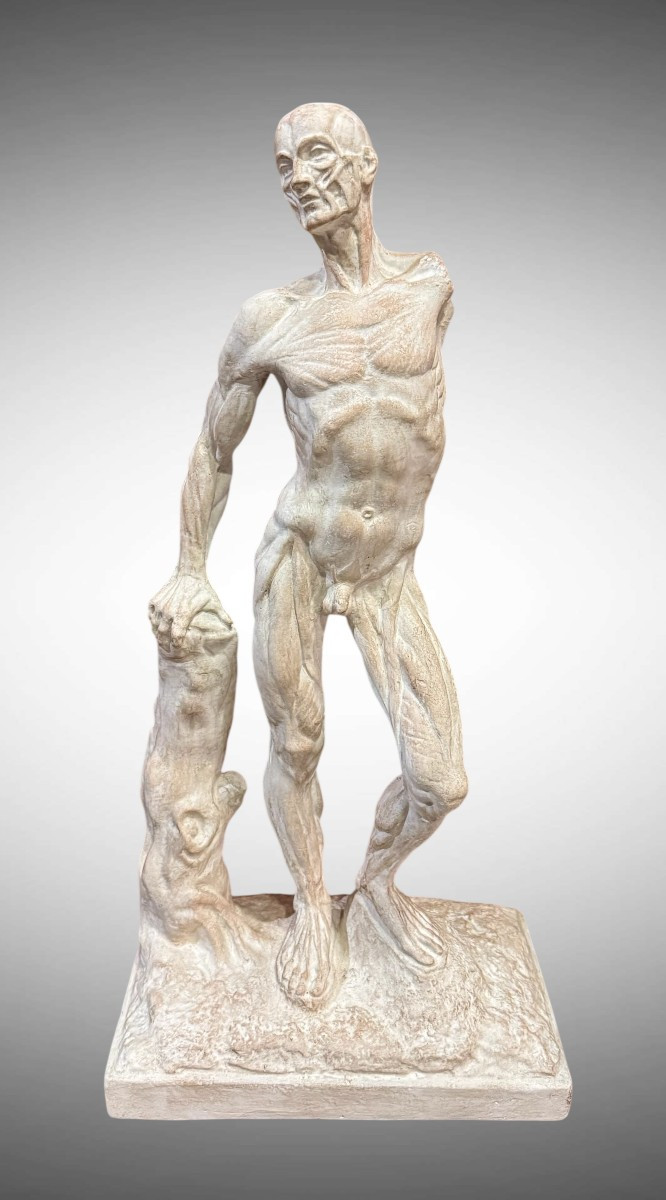
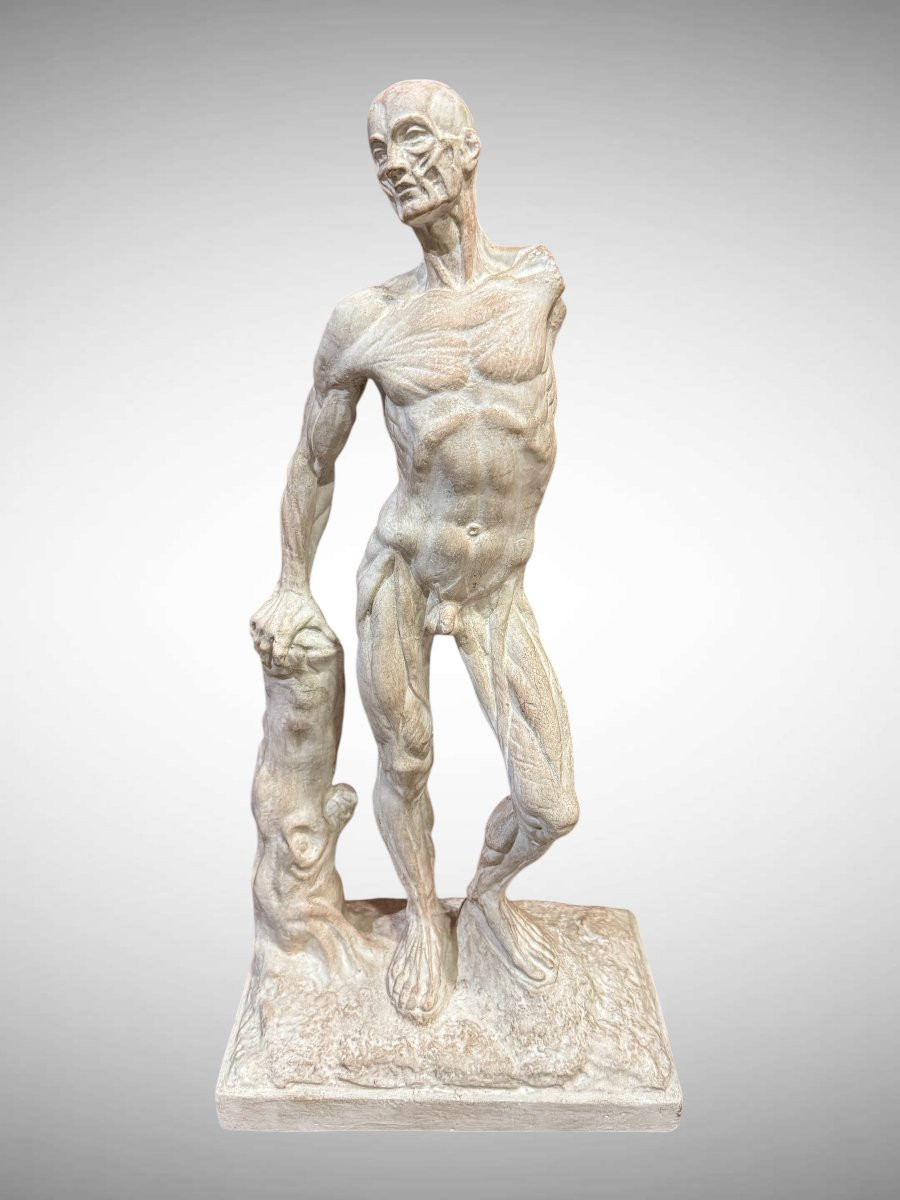
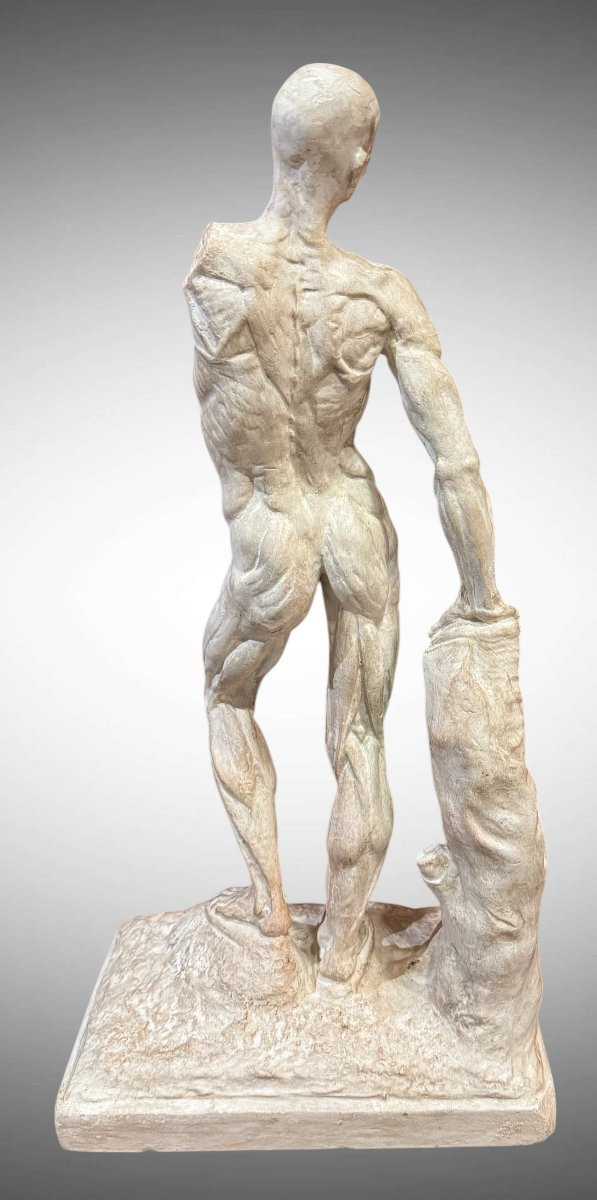
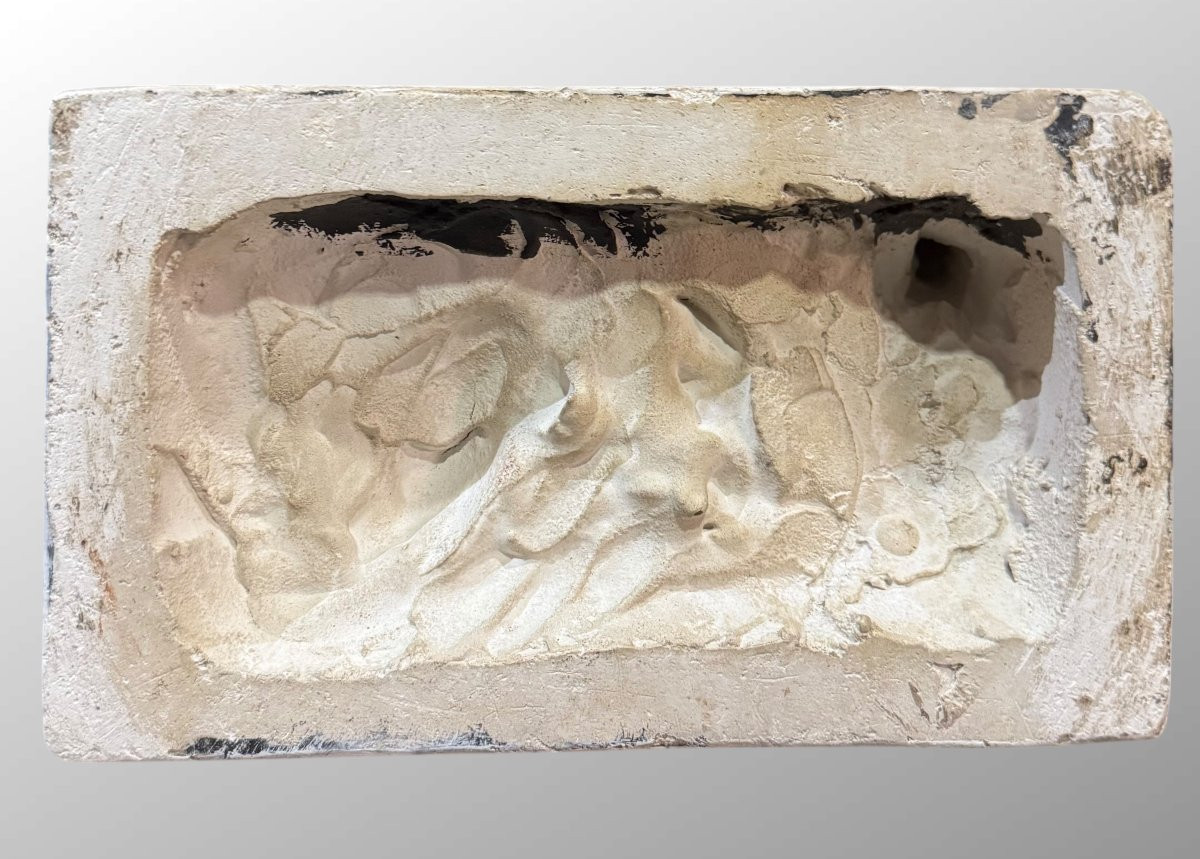
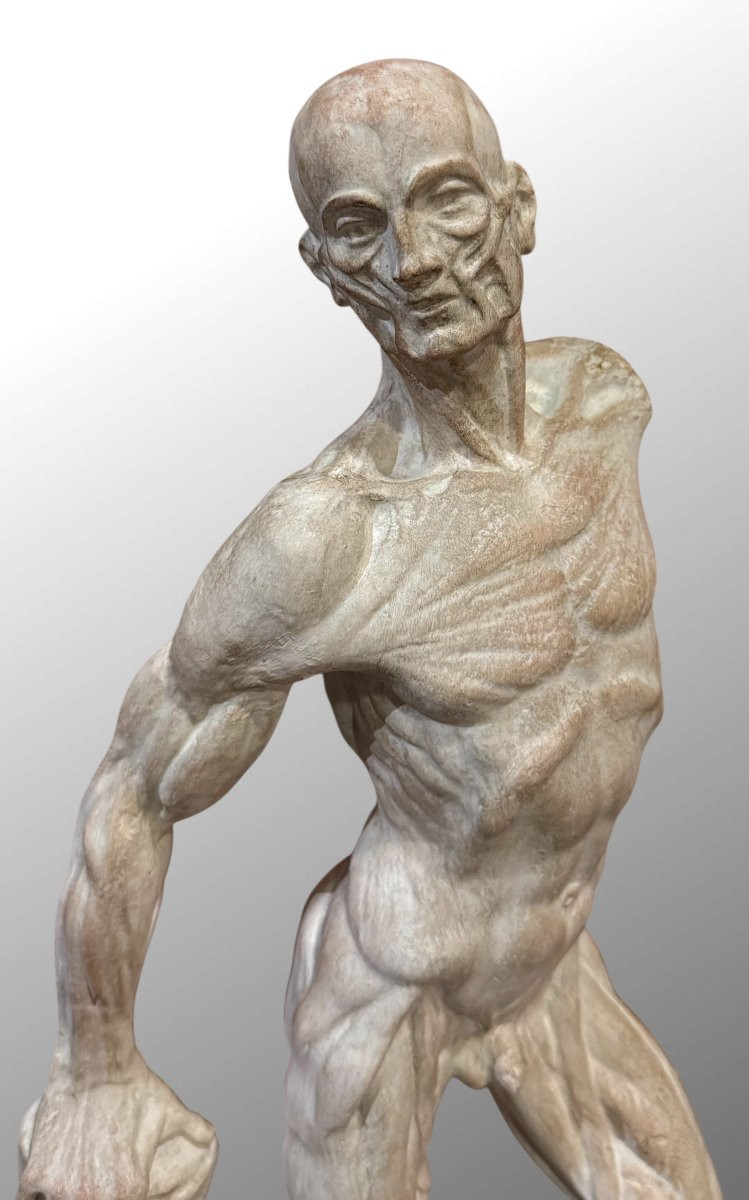
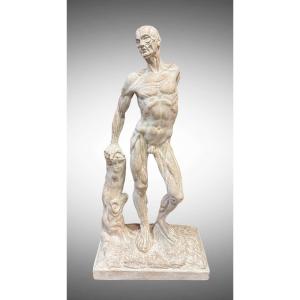
The plaster model was created by Ercole Lelli as a preparatory study for the two larger limewood flayed statues used as telamons supporting the canopy of the Lector's chair at the Anatomical Theatre of the Archiginnasio in Bologna. The statue depicts a "flayed" man, that is, stripped of his skin and fascia, exposing the most superficial muscles.
An artist with an eclectic personality, Lelli experimented with multiple disciplines, from painting to sculpture, from engraving to wax modeling, a field in which he achieved his best and most enduring results. Son of Domenico Maria, one of the most skilled and renowned gunsmiths of the time, he began working in his father's workshop while still a boy. His natural inclination for drawing soon drew him to painting, and after unsuccessfully attempting to enter the school of Giovan Gioseffo Dal Sole, he was taken to study with Giovan Pietro Zanotti. It was he who directed his interests, beyond painting, to anatomical studies. In 1734, following the creation of the two peeled figures, Lelli achieved well-deserved fame, launching him into an intense and lucrative career in public institutions. His institutional activity was closely linked to the figure and cultural policy of the Bolognese Cardinal Lambertini, who became Pope Benedict XIV in 1740. Lelli was included among the Clementine Academicians, appointed "figure director," and his name was proposed by Benedict XIV for the creation of all the wax models, which he completed in 1751. For more than ten years, his reformist ideas contributed to the renewal of the Clementine Academy, but in 1758, following the death of Benedict XIV, his patron, his reputation began to wane and his activities significantly declined.
H 50 cm approx. - base 24 x 14 cm.
The plaster model was created by Ercole Lelli as a preparatory study for the two larger limewood flayed statues used as telamons supporting the canopy of the Lector's chair at the Anatomical Theatre of the Archiginnasio in Bologna. The statue depicts a "flayed" man, that is, stripped of his skin and fascia, exposing the most superficial muscles.
An artist with an eclectic personality, Lelli experimented with multiple disciplines, from painting to sculpture, from engraving to wax modeling, a field in which he achieved his best and most enduring results. Son of Domenico Maria, one of the most skilled and renowned gunsmiths of the time, he began working in his father's workshop while still a boy. His natural inclination for drawing soon drew him to painting, and after unsuccessfully attempting to enter the school of Giovan Gioseffo Dal Sole, he was taken to study with Giovan Pietro Zanotti. It was he who directed his interests, beyond painting, to anatomical studies. In 1734, following the creation of the two peeled figures, Lelli achieved well-deserved fame, launching him into an intense and lucrative career in public institutions. His institutional activity was closely linked to the figure and cultural policy of the Bolognese Cardinal Lambertini, who became Pope Benedict XIV in 1740. Lelli was included among the Clementine Academicians, appointed "figure director," and his name was proposed by Benedict XIV for the creation of all the wax models, which he completed in 1751. For more than ten years, his reformist ideas contributed to the renewal of the Clementine Academy, but in 1758, following the death of Benedict XIV, his patron, his reputation began to wane and his activities significantly declined.
H 50 cm approx. - base 24 x 14 cm.
900 €
Period: 18th century
Style: Other Style
Condition: Some scratches and chips
Material: Plaster
Length: 24
Height: 50
Depth: 14
Reference (ID): 1663766
Availability: In stock
Print