THIS OBJECT WAS SOLD
Neoclassical Civic Table Case. Alsace, Louis XVI Period
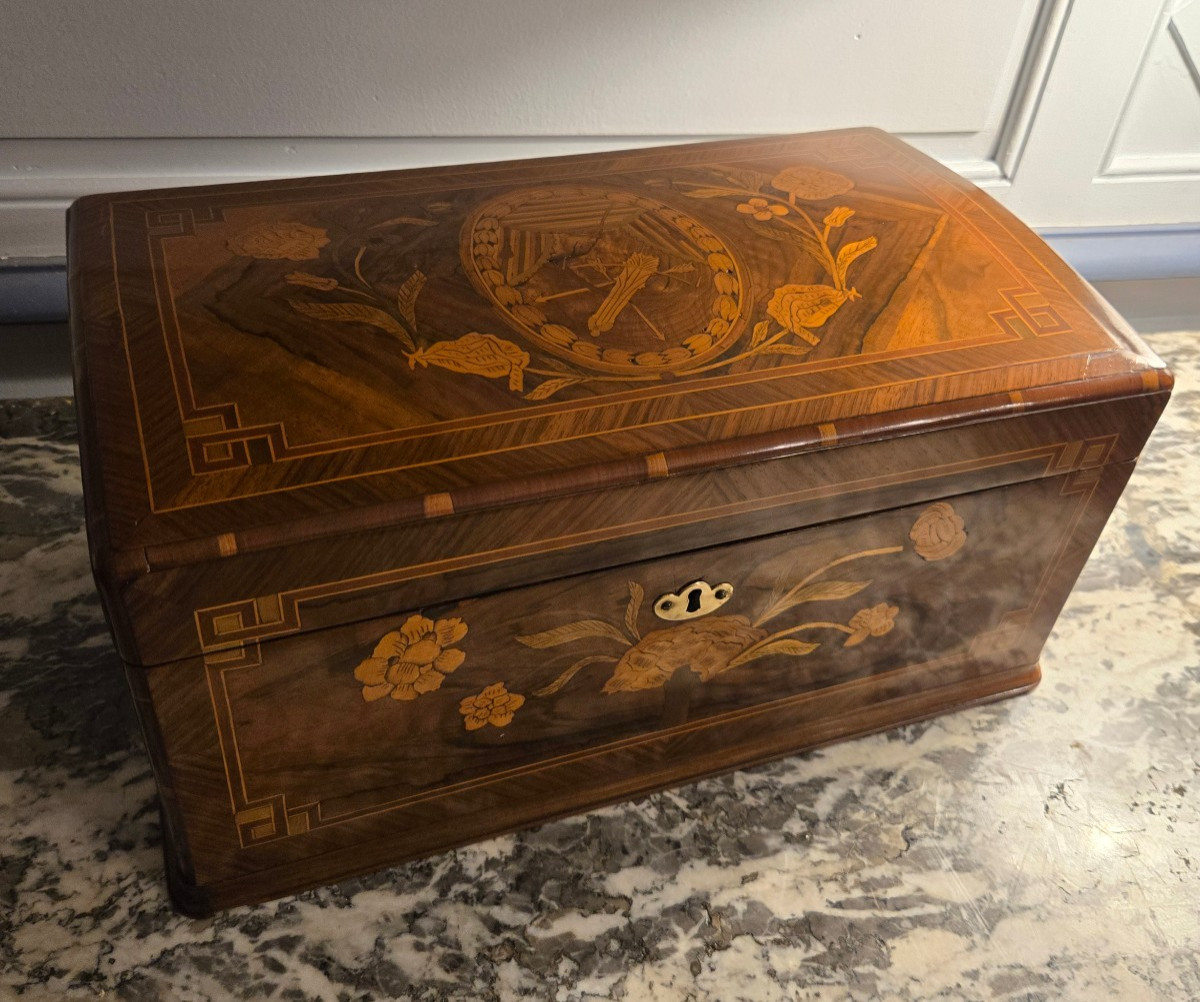
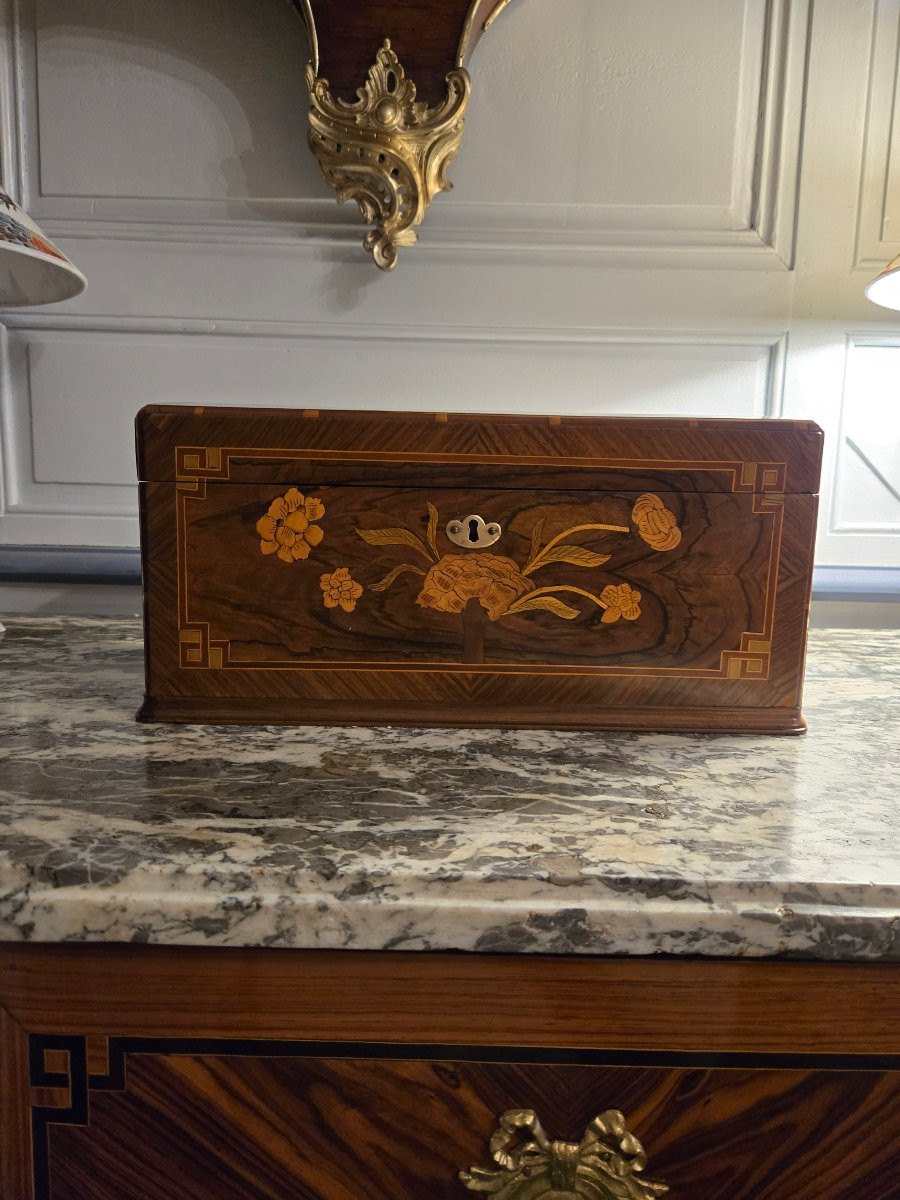
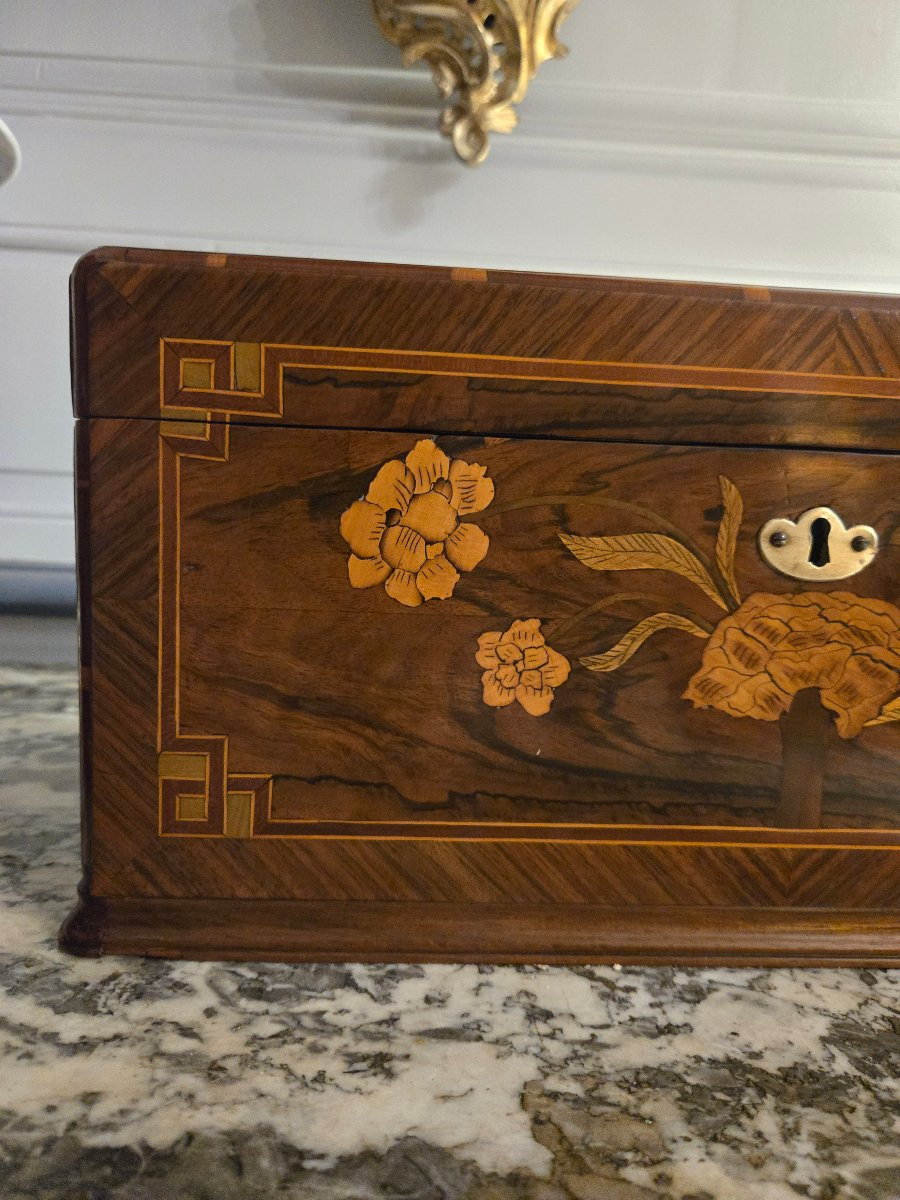
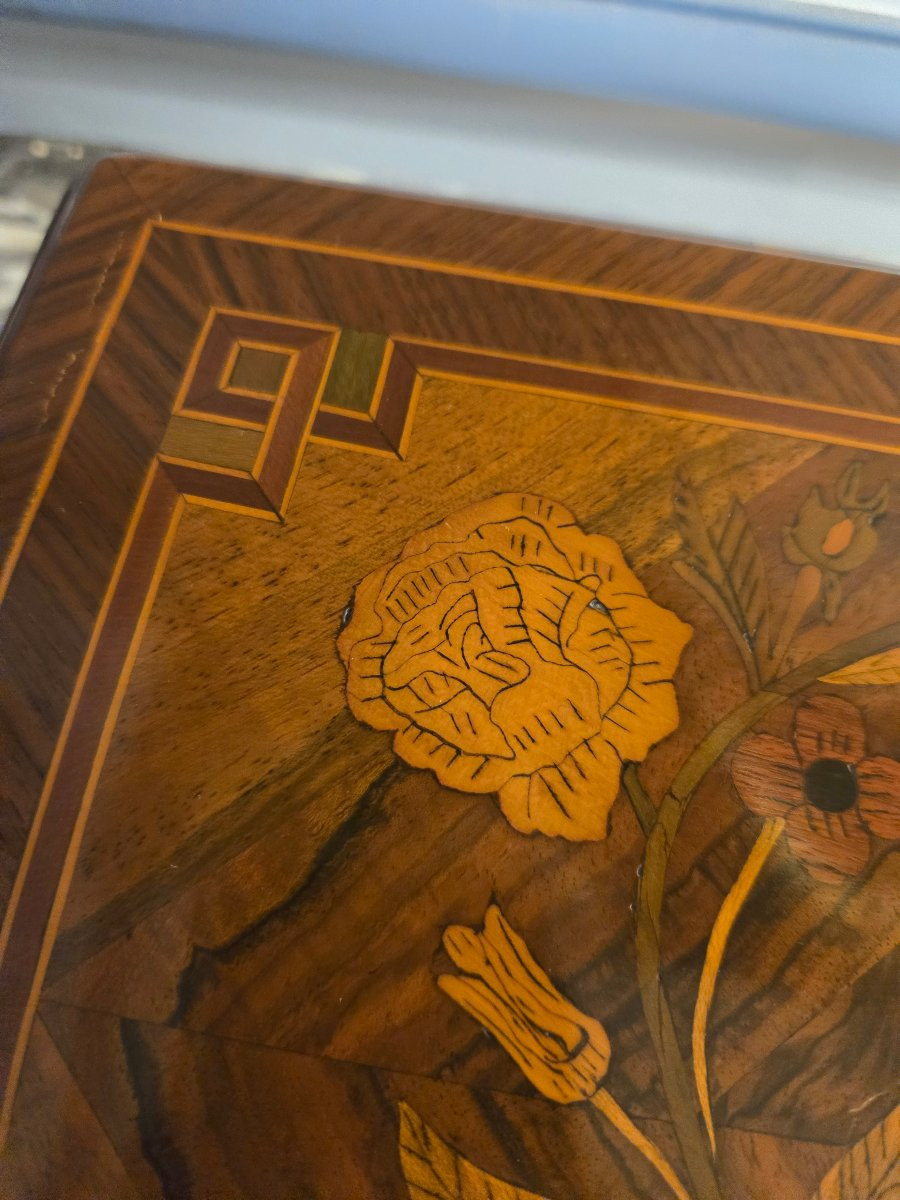
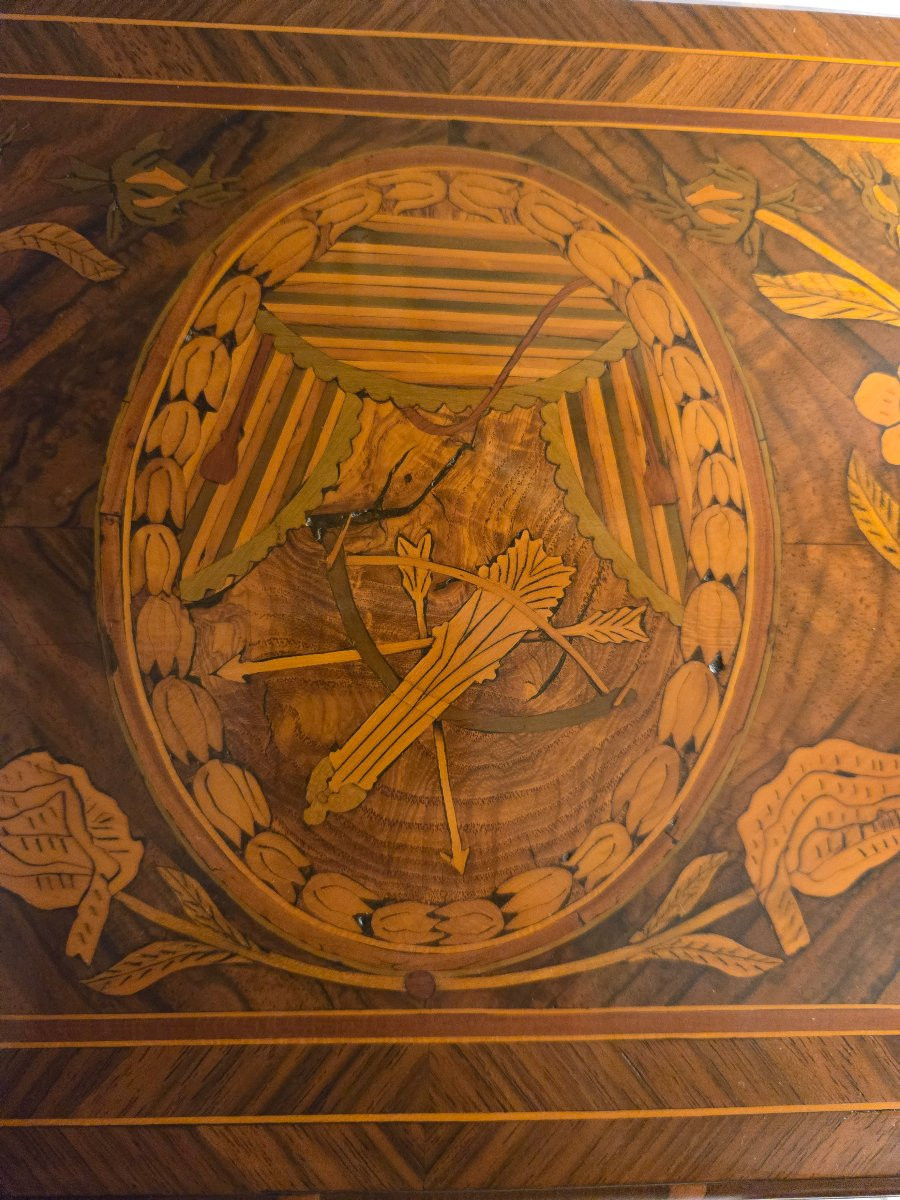
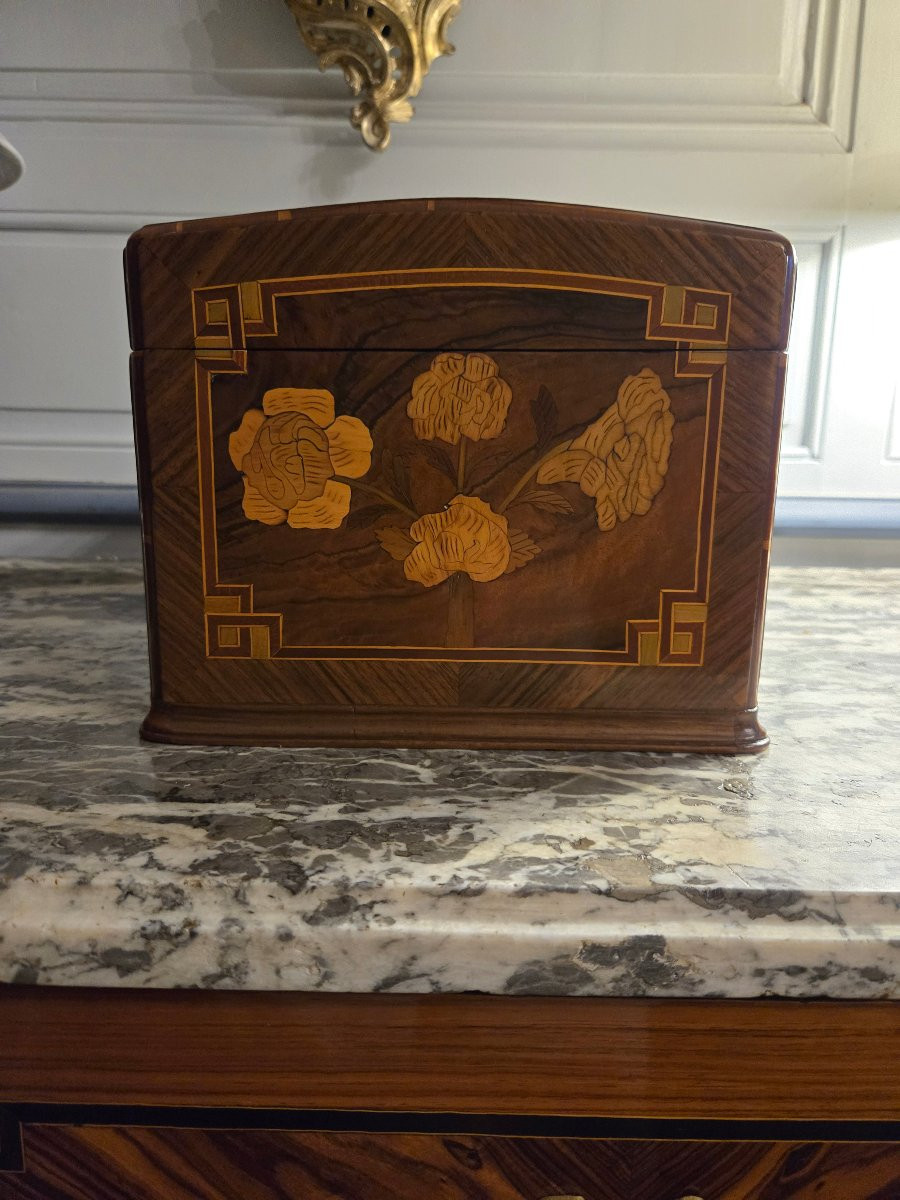
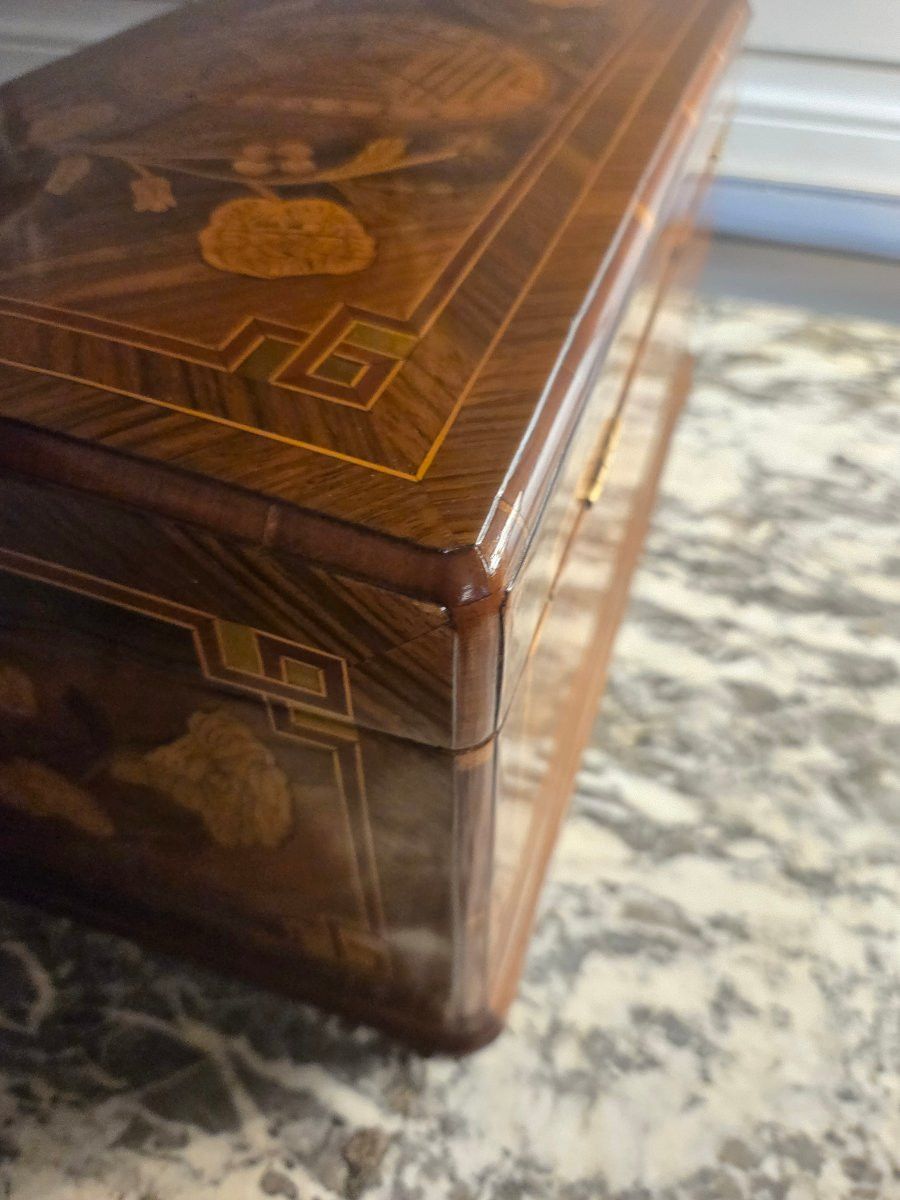
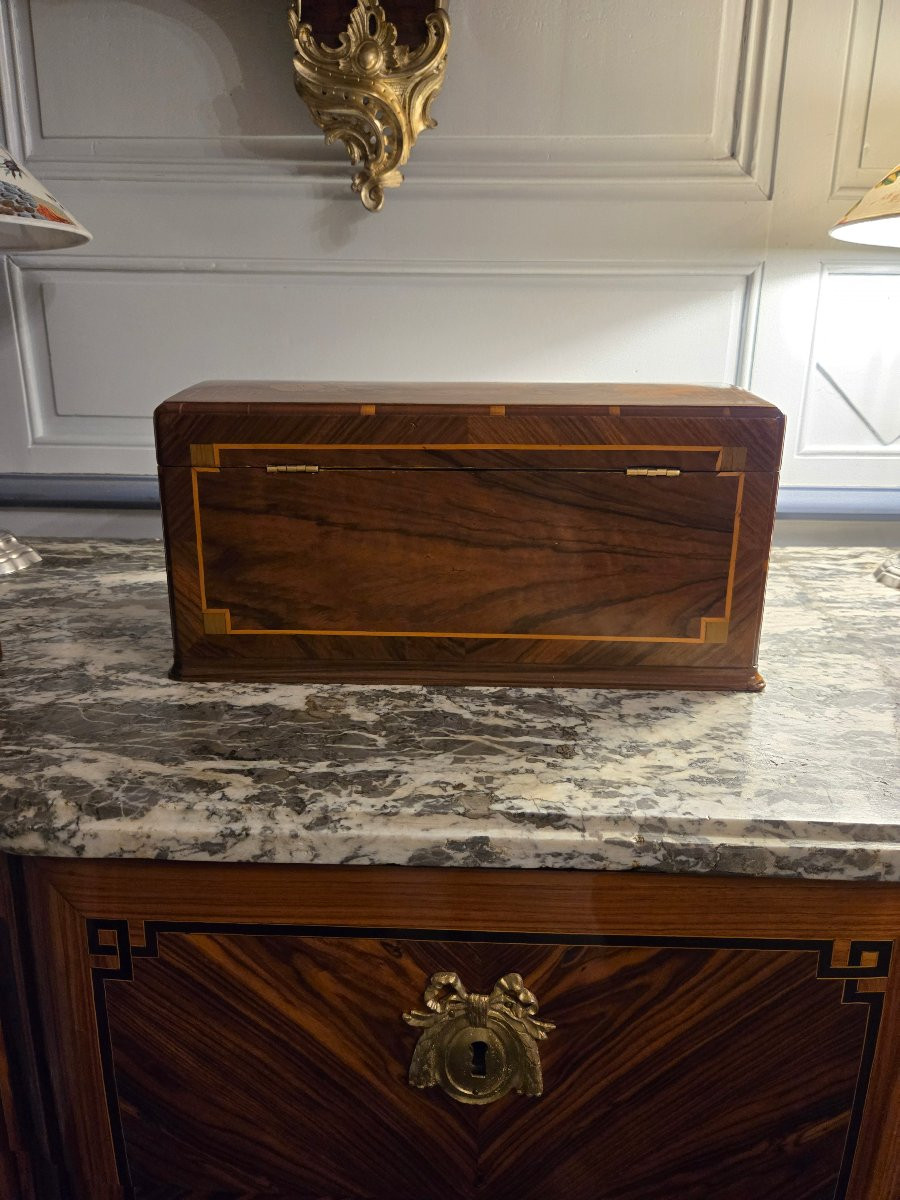

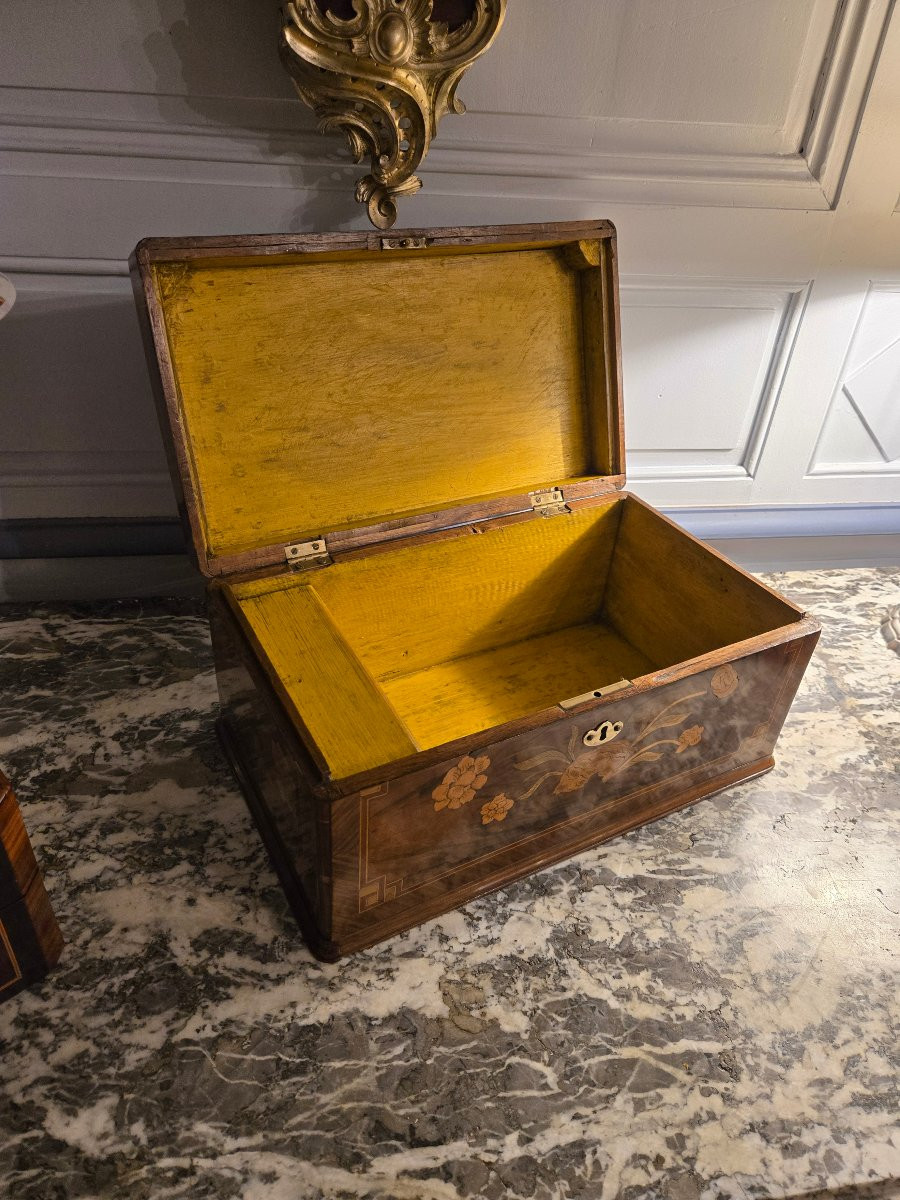
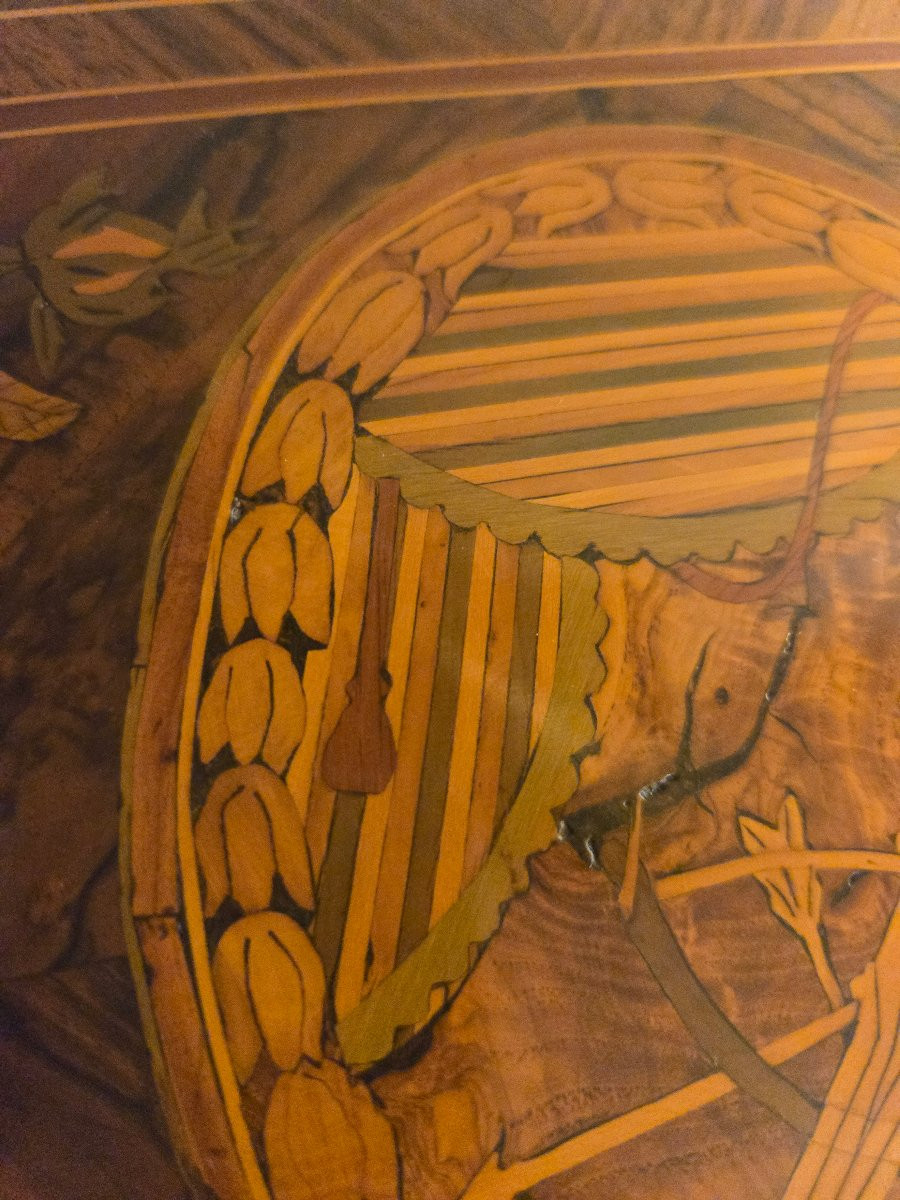
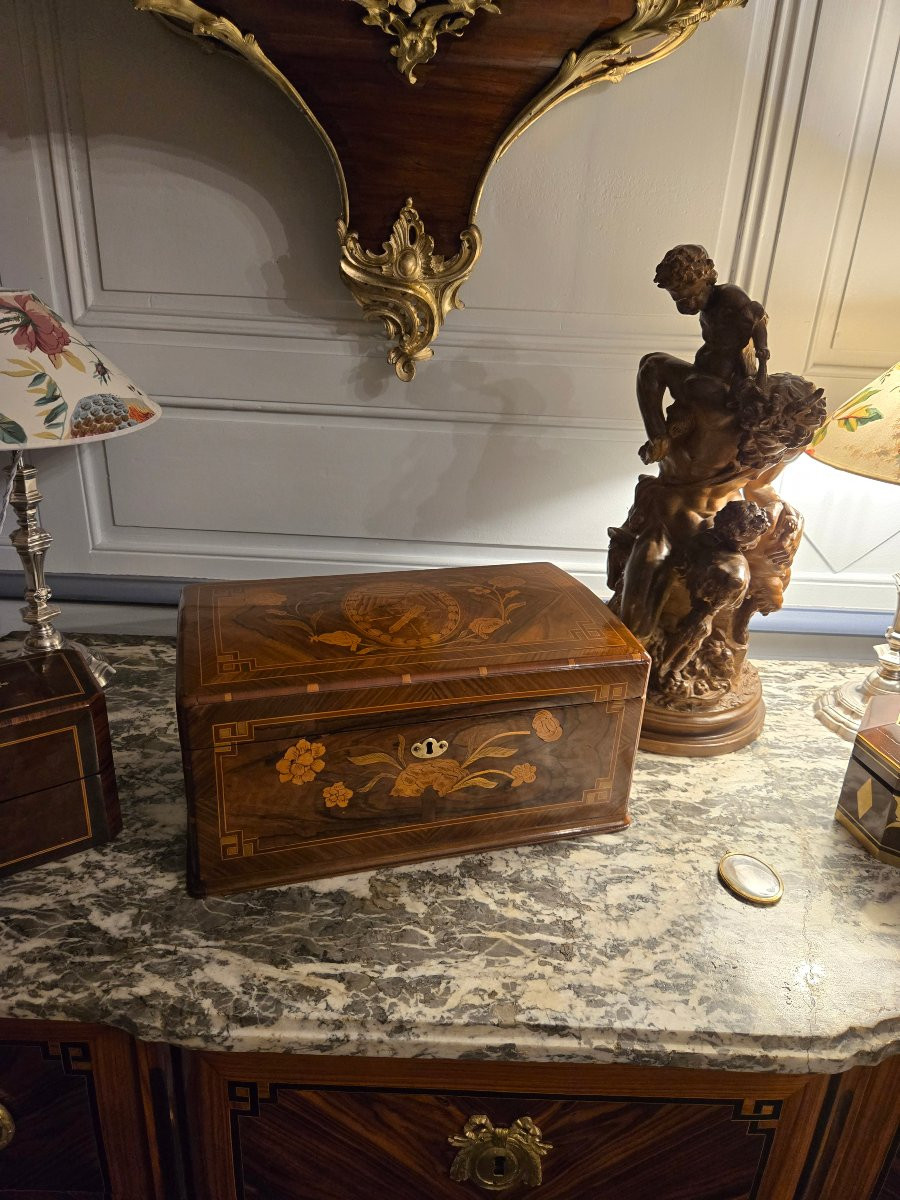


A marquetry table box in European (native) wood veneers—walnut, sycamore, stained maple, and plum—decorated on the lid with a neoclassical civic trophy: a bundle of arms, bow and quiver, beneath a striped tent with cords and tassels, encircled by a laurel wreath. This iconographic pairing of “tent + trophy of arms + laurel” is one of the most characteristic expressions of Rhenish neoclassicism around 1775, precisely the moment when Strasbourg, Colmar, Basel, and Baden produced—on paper as well as in furniture—a “Roman, civic, enlightened” interpretation of Enlightenment modernity. Alsace had been French since 1648, and neoclassicism there was a cultural language of urban erudition, not a rhetoric of war. On all four sides and on the lid, floral bouquets are framed by a series of Greek key lines—another structuring motif of the Neoclassical vocabulary. The flowers are engraved into the marquetry with a burin to achieve the desired effect. The lid is slightly domed—a legacy of early 17th and very early 18th-century chests. The base of the chest is finished with a walnut cyma molding forming a plinth, which elevates the object to the status of a piece of furniture, more refined than a simple functional chest. The corners are not sharp: they are molded with quarter-rounds veneered in plumwood, and the cabinetmaker has taken the skillful care to rhythmically punctuate this molding with the alternating heartwood and sapwood of the plum—a detail of craftsmanship, a detail of the trade—which is typical of a Rhenish workshop. Inside: old yellow paint, with a small inner box with a lid—a feature in keeping with the tradition of internal compartments, also found, on a much larger scale, in the large regional chests known as "salt chests." This is not a marriage chest, but what Enlightenment culture called a table chest: a chest placed on a surface, not a traveling one, kept on a secretary, a console, or a desk—an object belonging to an urban notable, a collector, or a learned society. The current lock is not original: it dates from after the 19th century. Condition: beautiful presentation; the chest has been perfectly restored: only a few minor veneer repairs, invisible from a viewing distance. Dimensions: Height: 19.5 cm Width: 40 cm Depth: 24.5 cm A piece perfectly situated in this very narrow moment when civic neo-classicism penetrates the urban productions of the Upper Rhine — before the Directory codification — and which embodies its most erudite and purest version.
Explore similar pieces and discover your ideal find:
Boxes, Cases