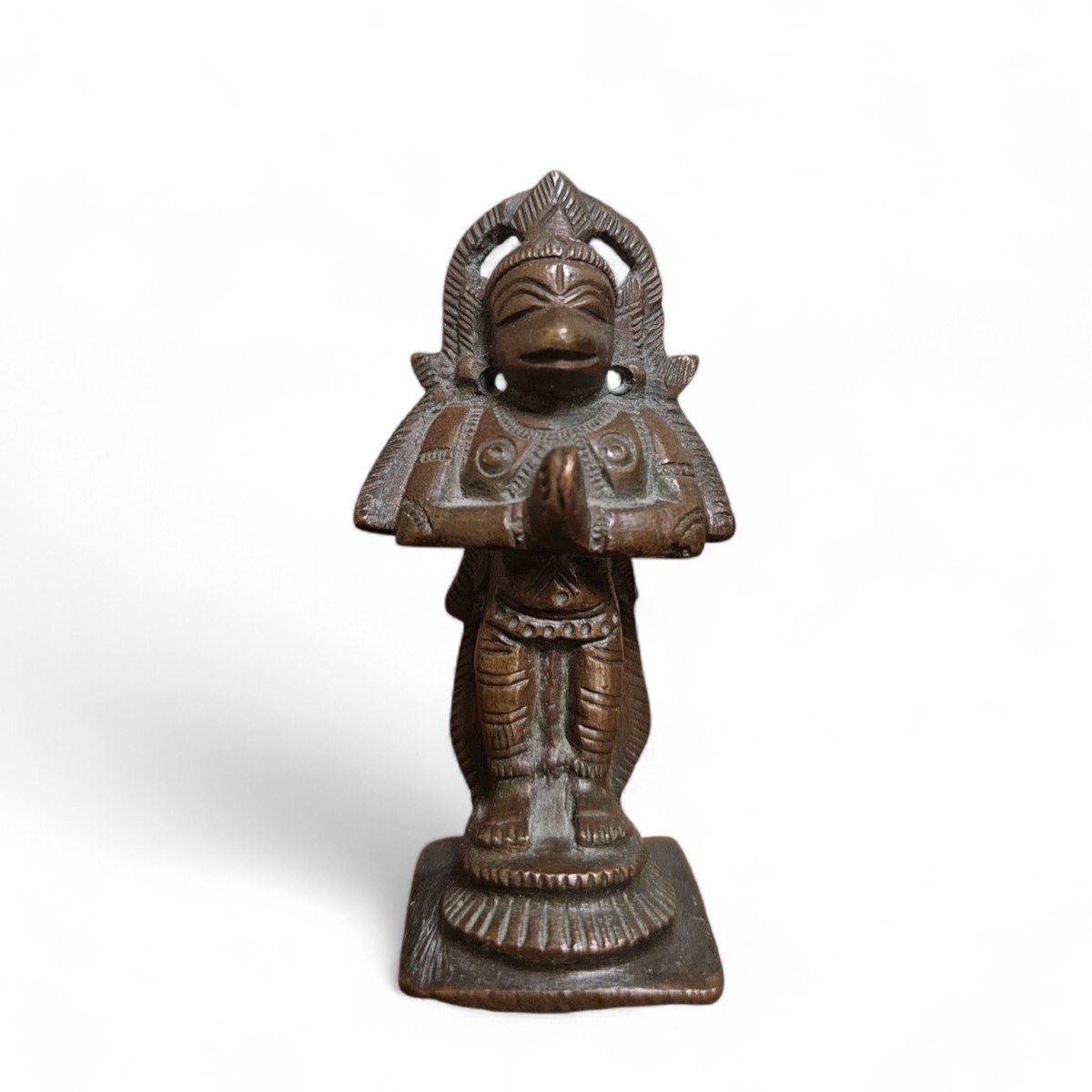
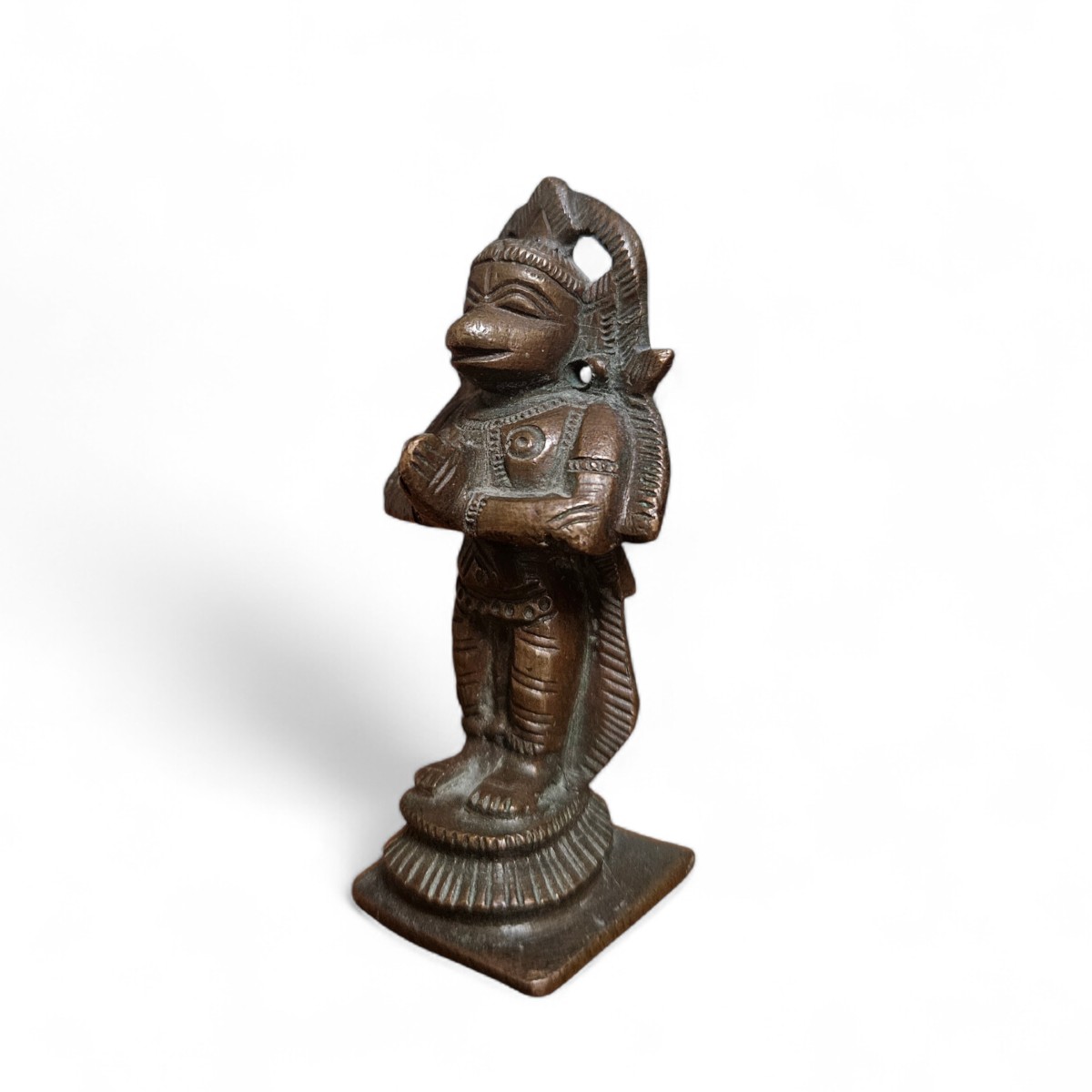
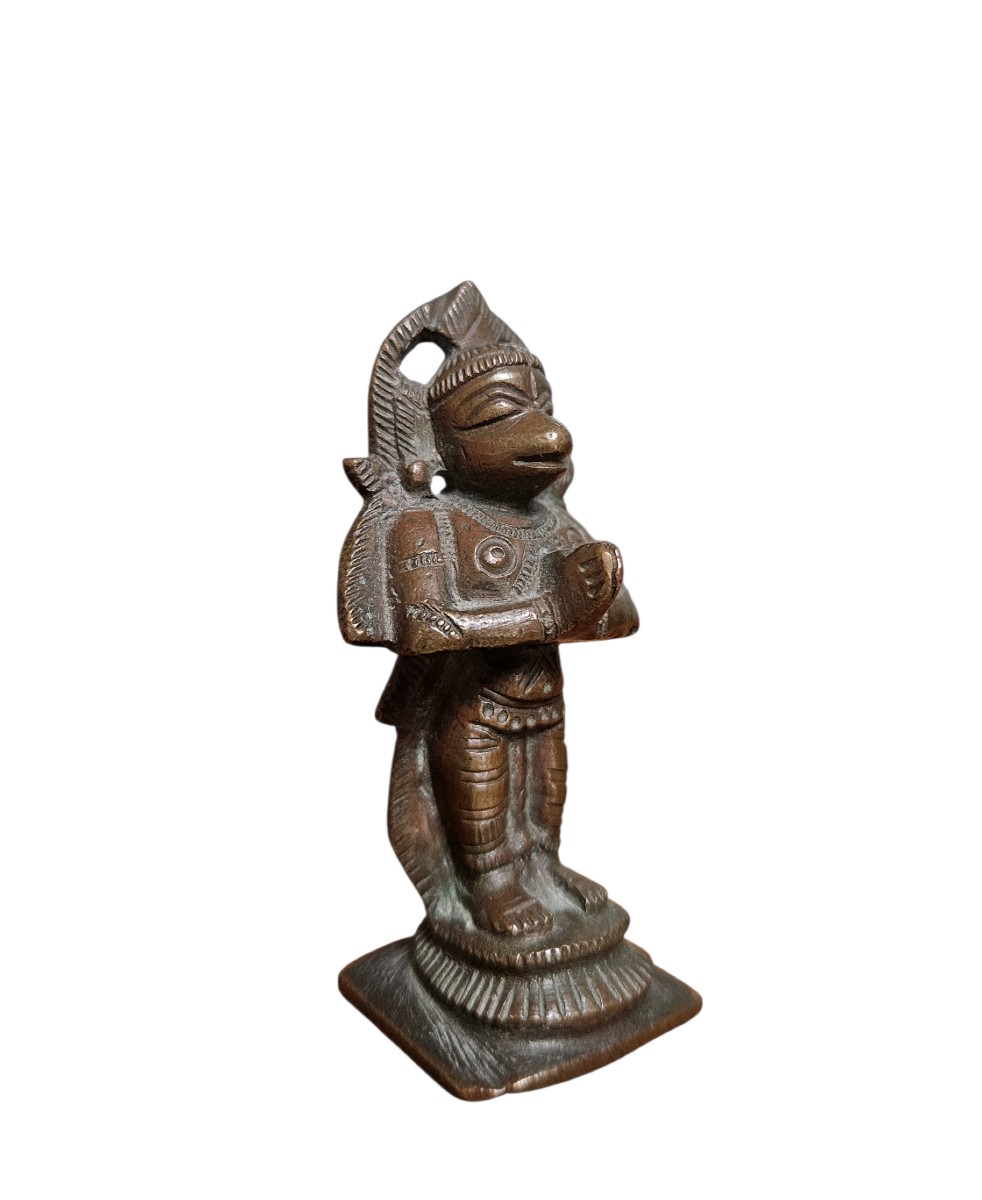
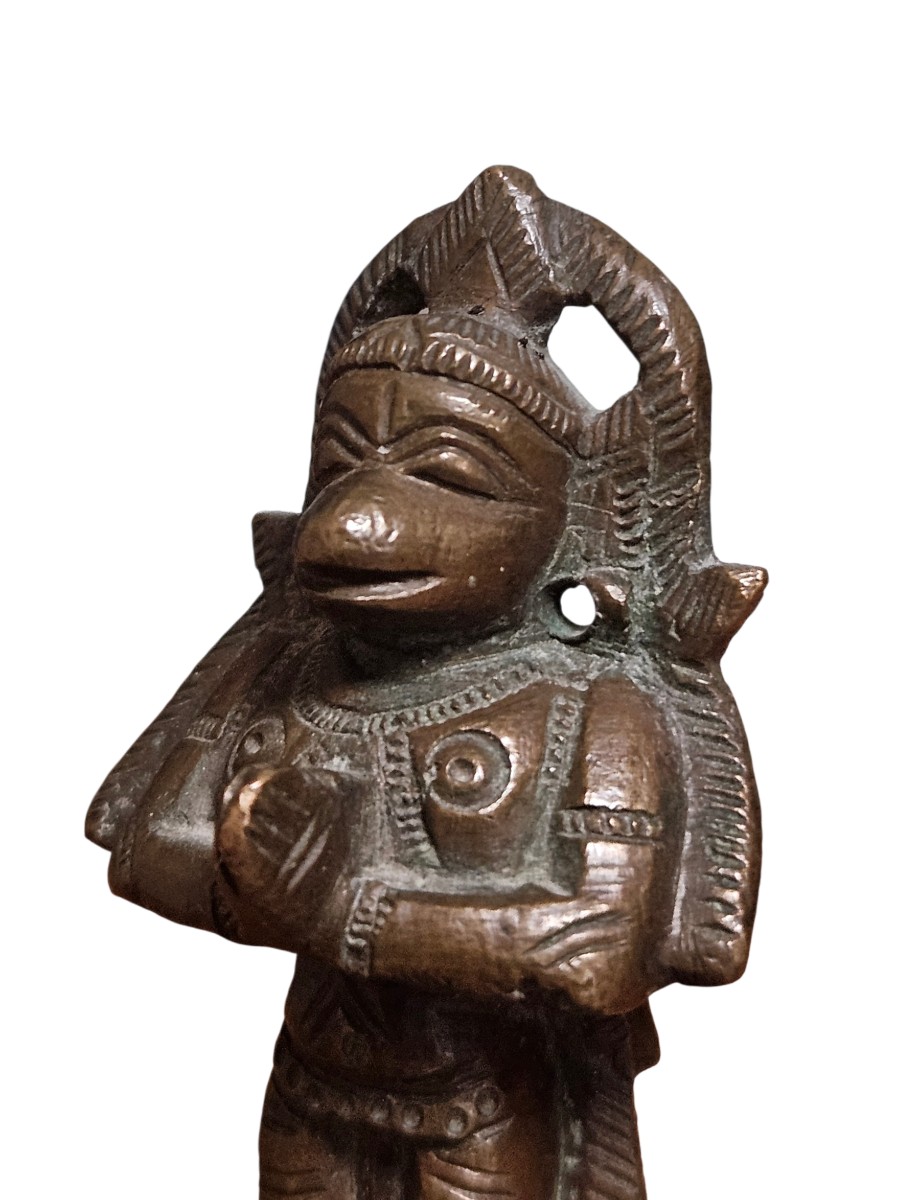
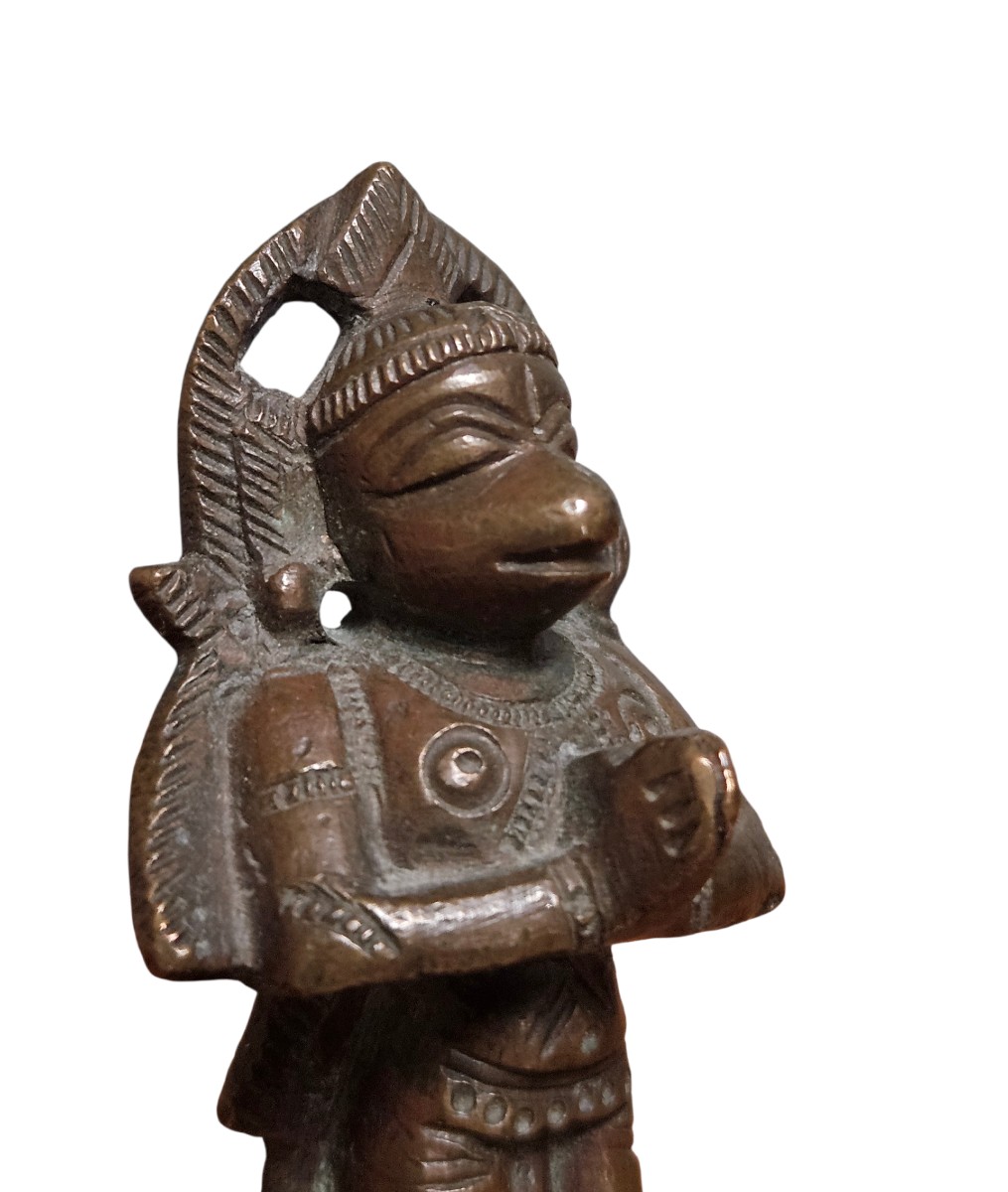
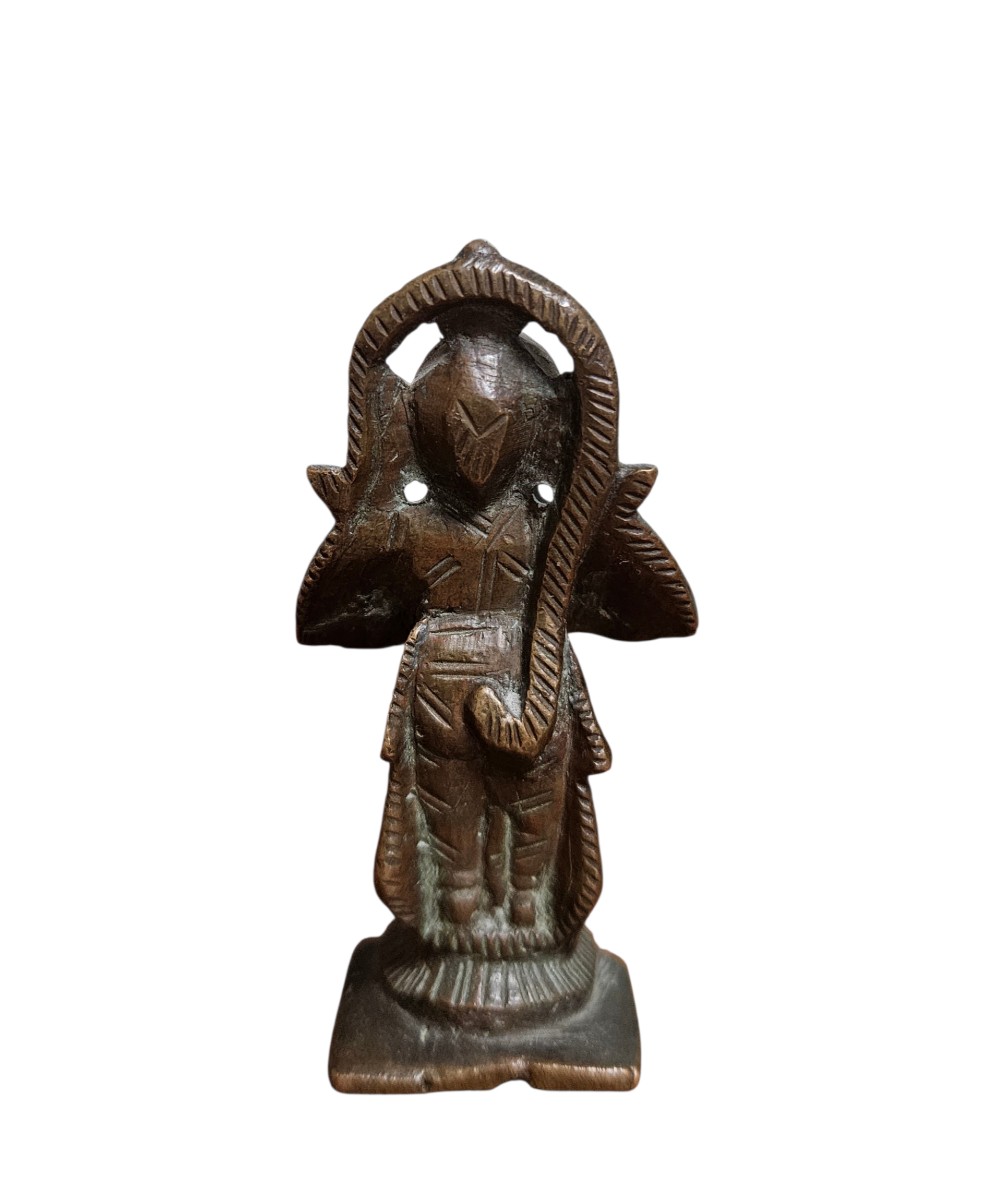
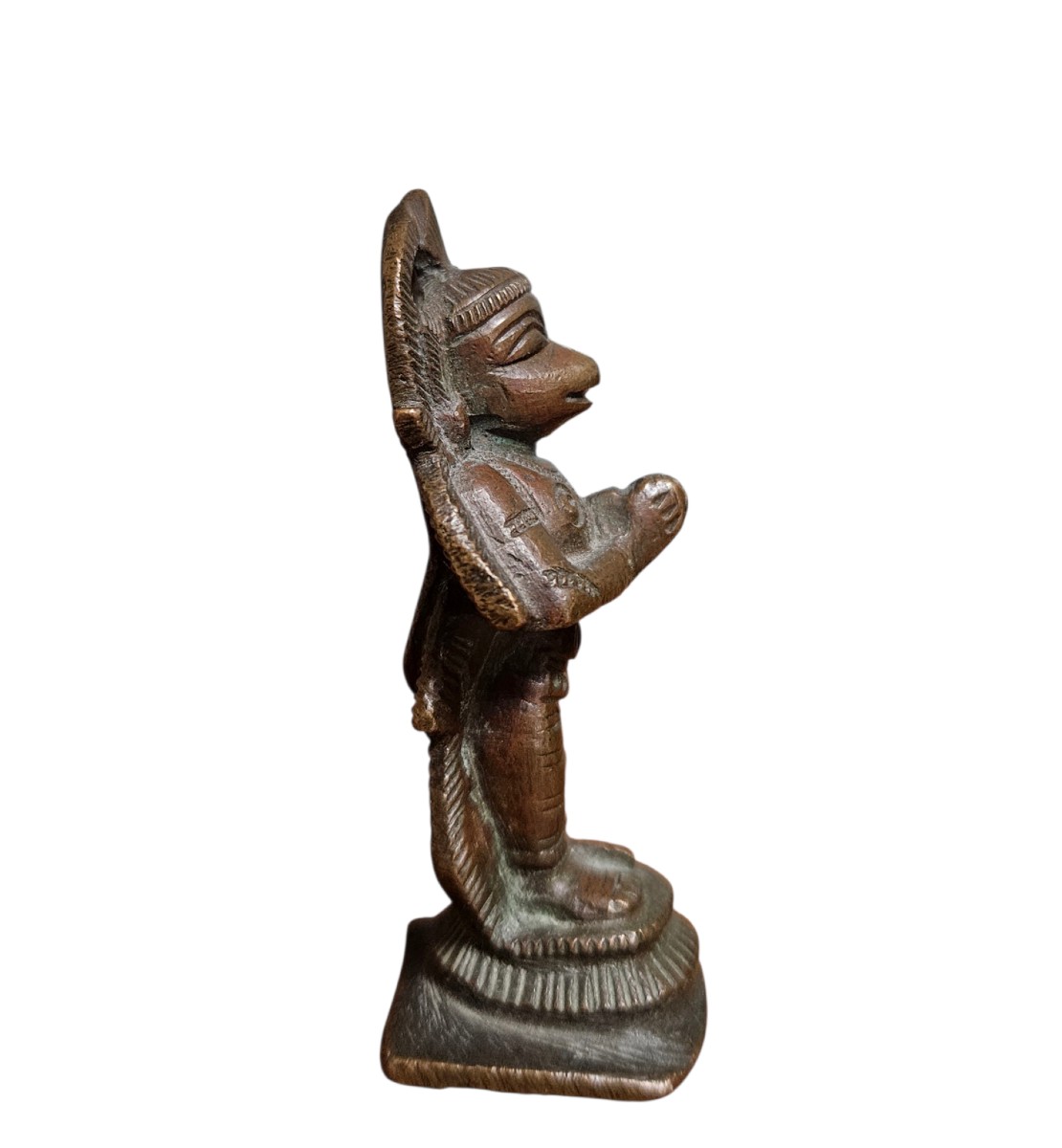

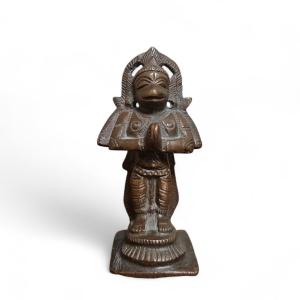


Statuette Of Hanuman South India (tamil Nadu), Late 19th – Early 20th Century.
A small bronze votive statuette depicting Hanuman standing on a stepped, quadrangular pedestal, his hands clasped in namaste before his torso. The simian head, with its rounded muzzle and delicately incised eyes, is framed by a mandorla sculpted with a finely radiating design. The figure wears a loincloth adorned with vertical hatching and simplified ornaments along the shoulders. The frontal modeling, the symmetry of the volumes, and the incised details—particularly around the headdress, face, and garment—attest to meticulous craftsmanship intended for a domestic altar. Bronze, old patina, signs of wear. South India (Tamil Nadu), late 19th – early 20th century. Dimensions: 7 × 4 × 2.8 cm. Sold with an invoice from Galerie Ocarina and a certificate of authenticity from the expert Serge Reynes. * Shipping costs upon request. "In Hinduism, Hanuman embodies strength, loyalty, and exemplary devotion to Rama. Revered as a protector, he is often depicted in a prayerful posture, a symbol of humility and divine service. Small figures of Hanuman were commonly placed on household altars in Tamil Nadu, where they received daily offerings, fumigations, and acts of devotion intended to attract protection and ward off harmful influences."
130 €
Period: 19th century
Style: Other Style
Condition: Excellent condition
Material: Bronze
Height: 7 cm
Reference (ID): 1662888
Availability: In stock
Print