THIS OBJECT WAS SOLD
Anthropomorphic Male Idol, Mehrgarh, Pre-urban Indus Valley.
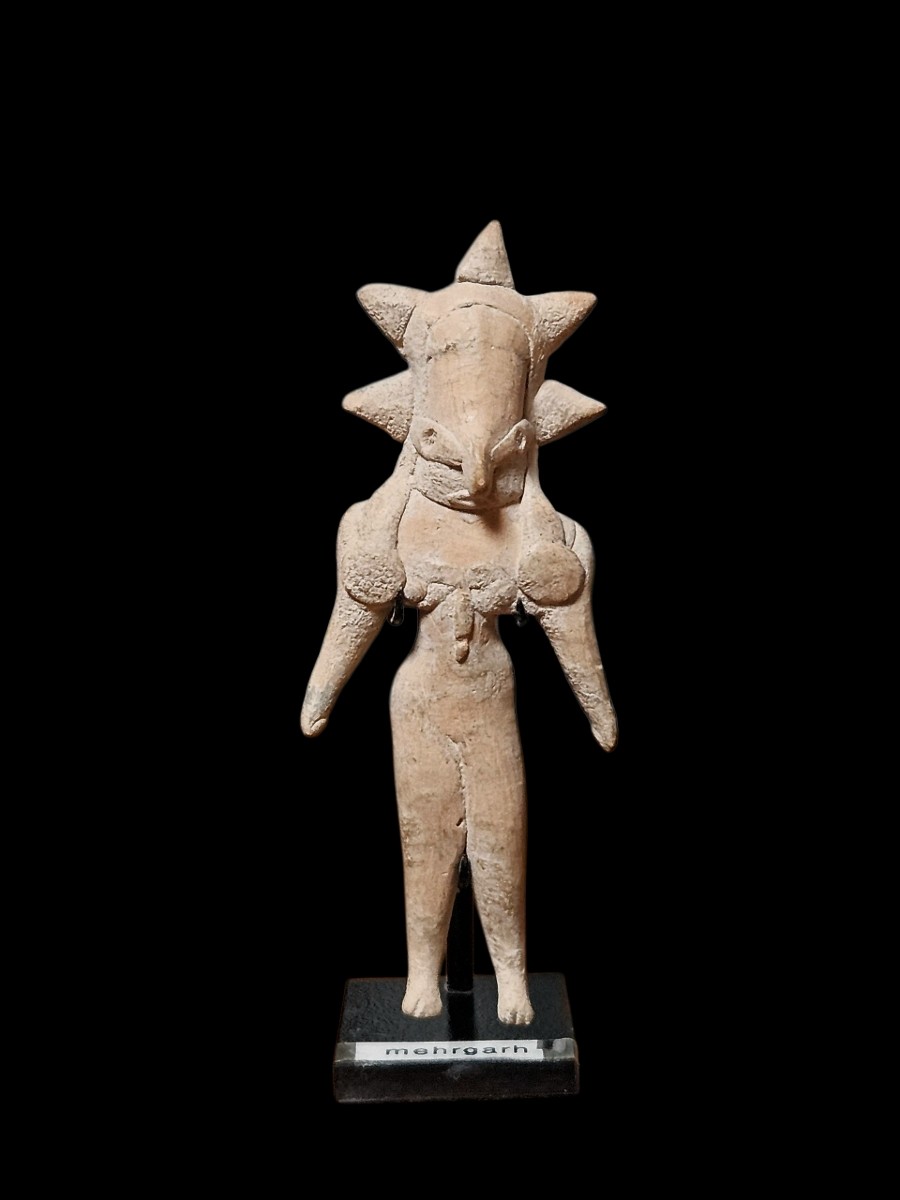
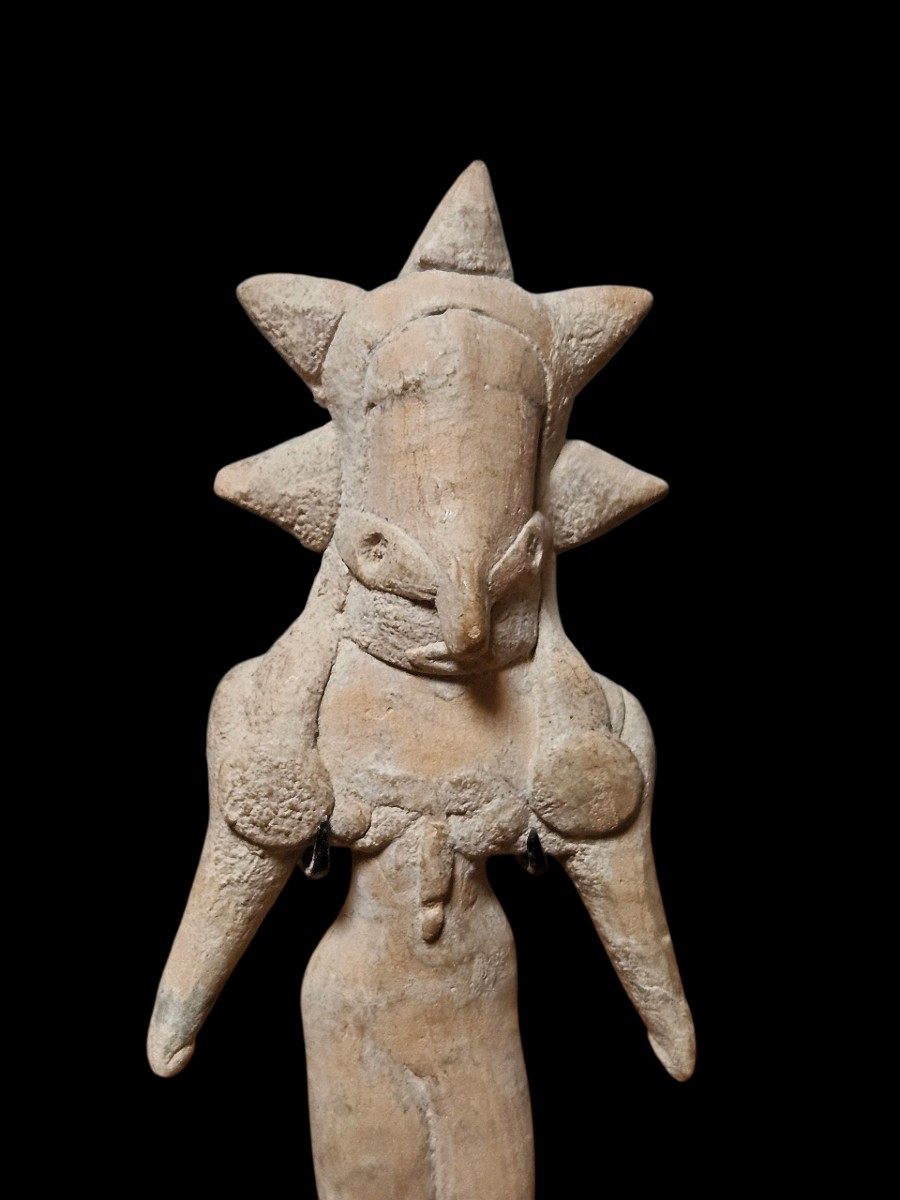
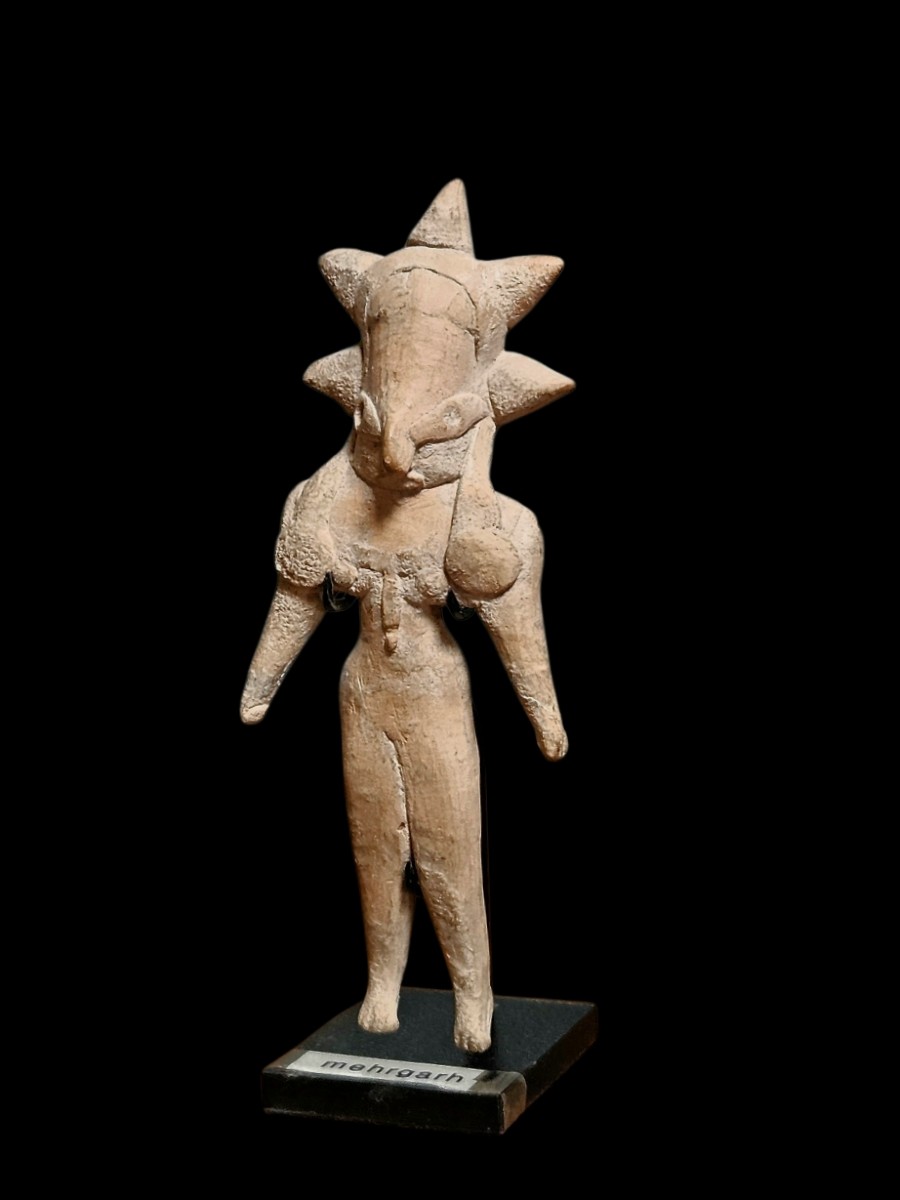
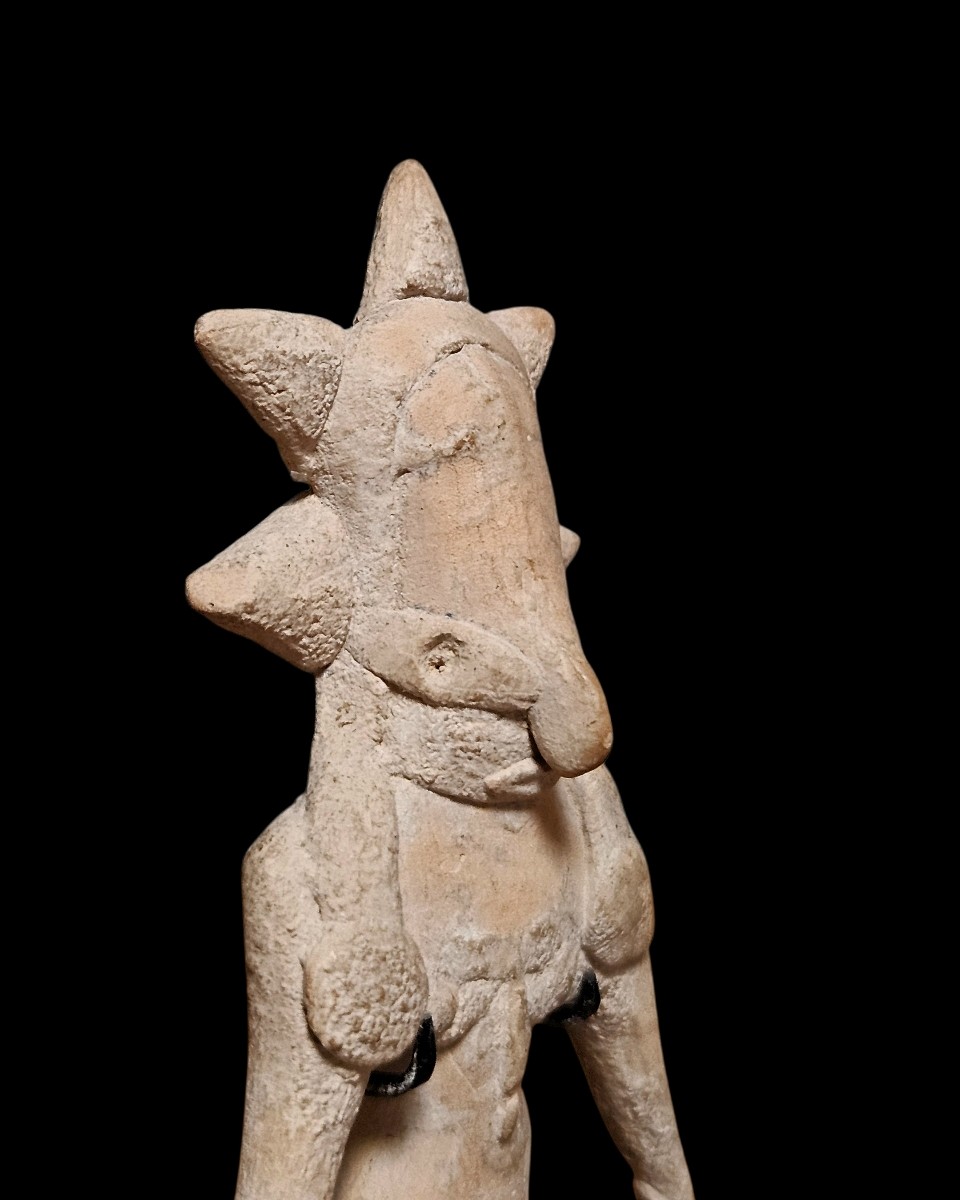
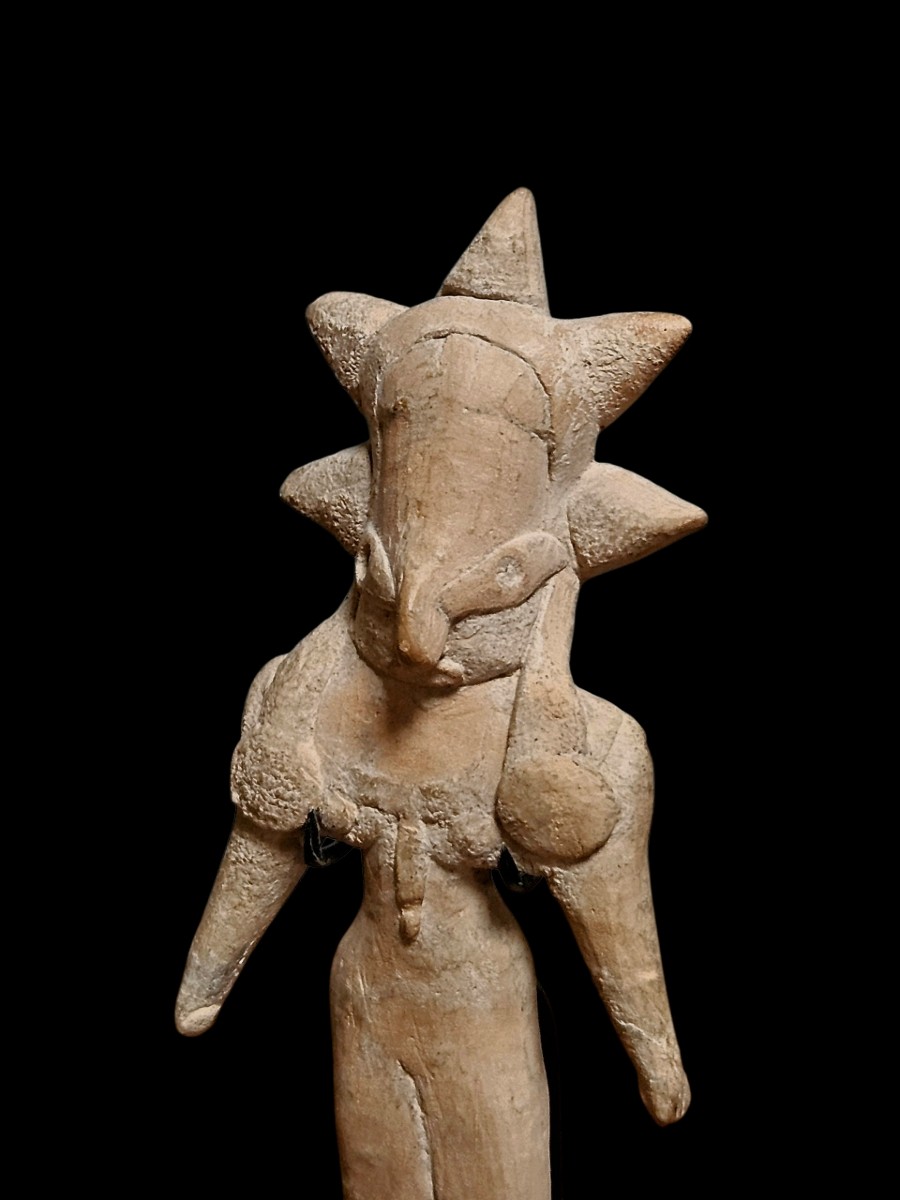
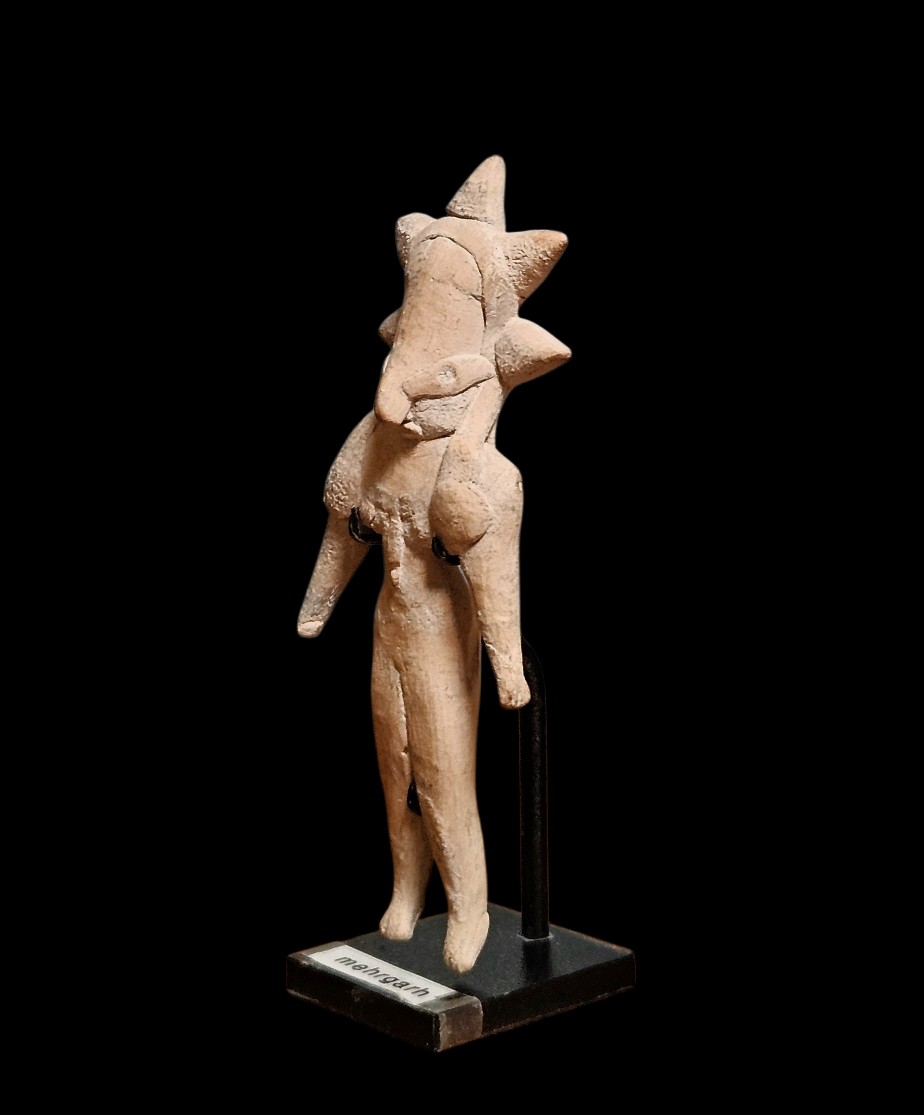
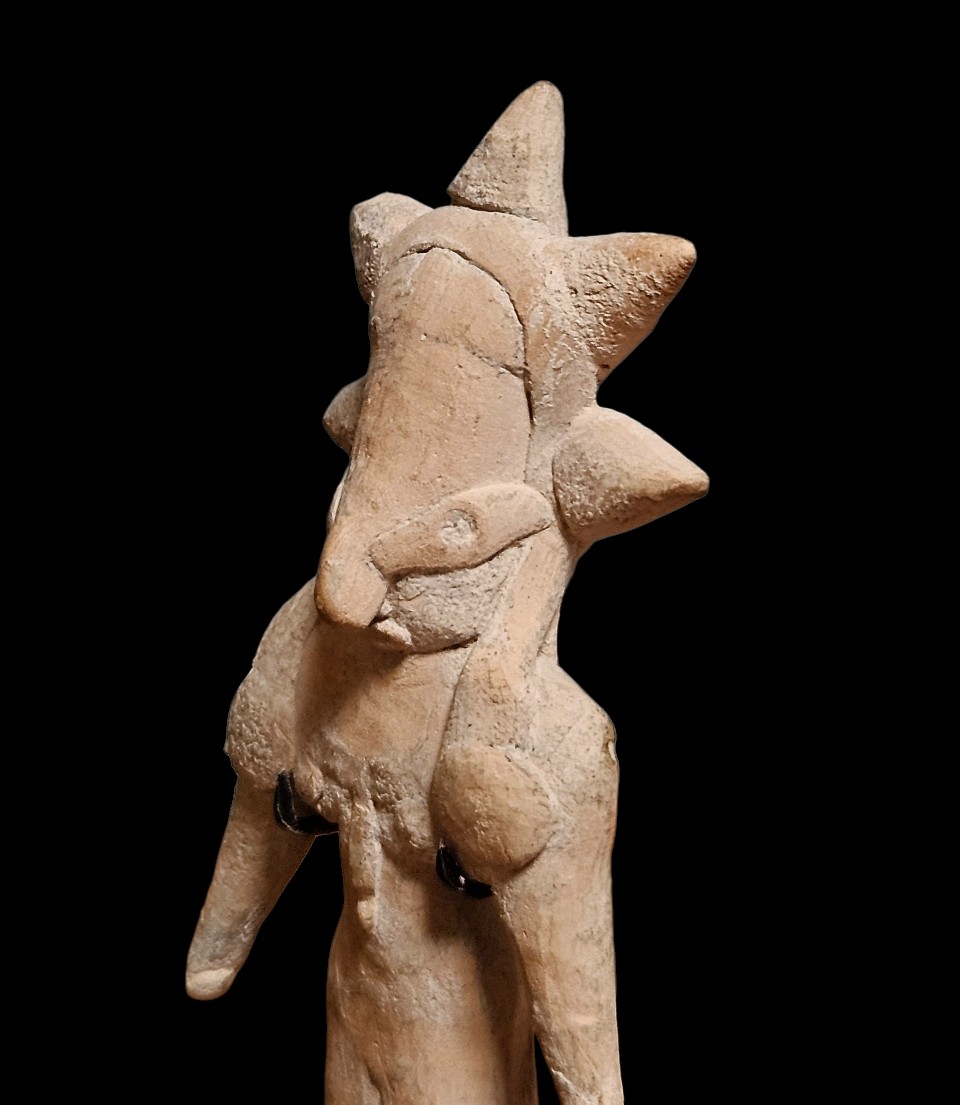
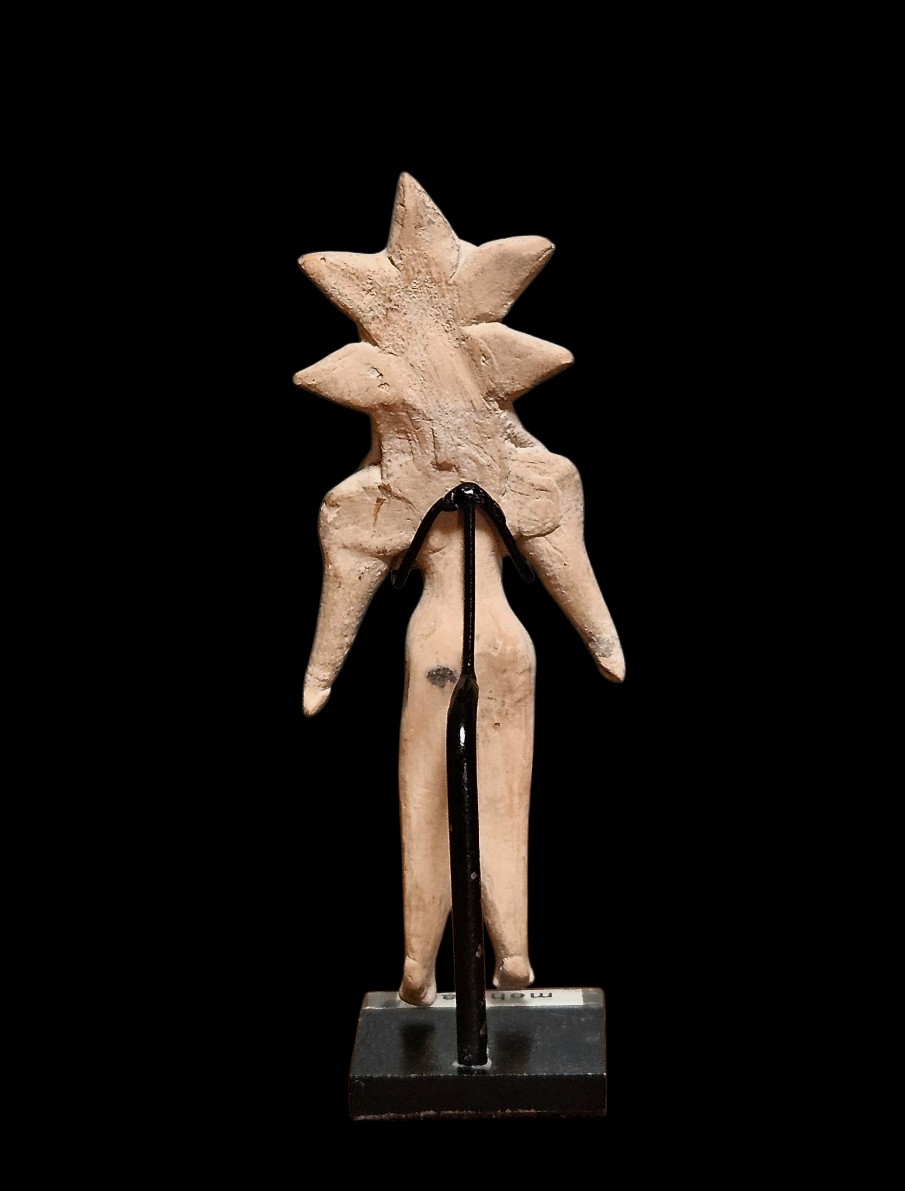
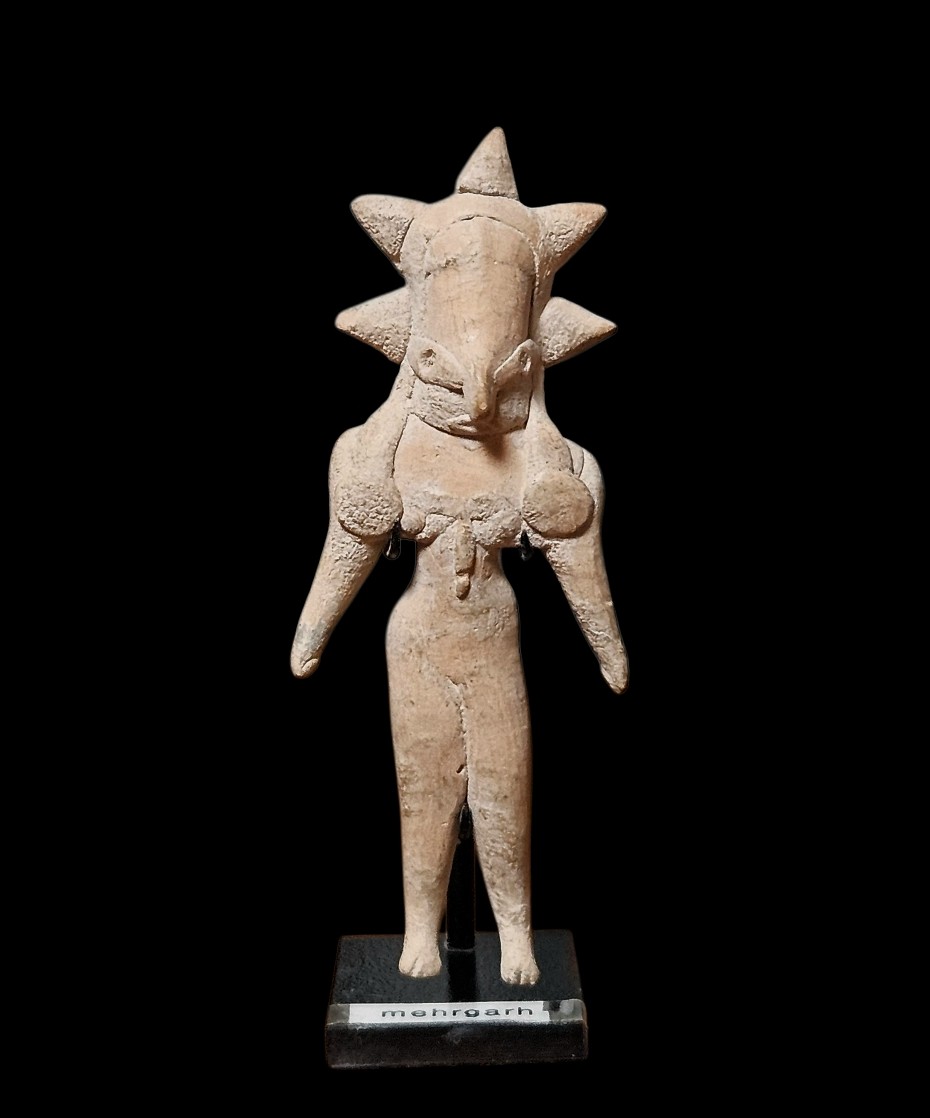


A standing male figure, rendered in a slender vertical pose, with arms detached from the body and tapering downwards, and hands shown in profile. The face features a prominent nose, elongated, pierced eyes that accentuate the intensity of the gaze, and a subtly defined mouth. The head is adorned with a radiating crown of five triangular protrusions. The torso is decorated with a central phallic pendant, framed by two lateral elements ending in circular discs reminiscent of ritual or pectoral ornaments. The simple and hieratic silhouette conveys a strong symbolic intention, rare for a male representation in this cultural context. Beige-orange terracotta with traces of white slip, in good overall condition, with signs of age (see photos). Mehrgarh, Balochistan, pre-urban Indus Valley, Pakistan — Early Bronze Age, circa 3200–2800 BCE. BC. Dimensions 11.5 × 4.5 cm. Sold with base. Provenance: Formerly in the collection of Professor Morel, Paris. Sale by Thierry Desbenoit & Associés, Paris, November 30, 2015, lot no. 2 (expert Jean-Yves Nathan). Sold with a certificate from expert S. Reynes and an invoice from Galerie Ocarina.* Shipping costs upon request via DHL. "Anthropomorphic figures from the Chalcolithic traditions of Mehrgarh predominantly depict female images linked to fertility cycles; male figures are significantly rarer and likely indicate a particular status. The radiant headdress and central pendant refer to an iconography of power or ritual mediation, while the lateral pectoral ornaments evoke ceremonial adornments found in protohistoric Balochistan art. Through its frontal posture and formal simplicity, this effigy belongs to a pre-urban aesthetic where the stylization of the body takes precedence over naturalism, reflecting a symbolic conception of the individual rather than a portrait. Comparisons can be drawn with certain anthropomorphic figures held in institutional collections, notably at the Musée Guimet or the Metropolitan Museum of Art, where similar pectoral ornaments and a similar pursuit of..." sacred verticality".
Explore similar pieces and discover your ideal find:
archeology