THIS OBJECT WAS SOLD
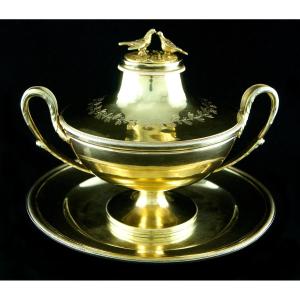
Paris 1809–1819 - Empire Silver And Crystal Sweetmeat Dish/cup By D Garreau
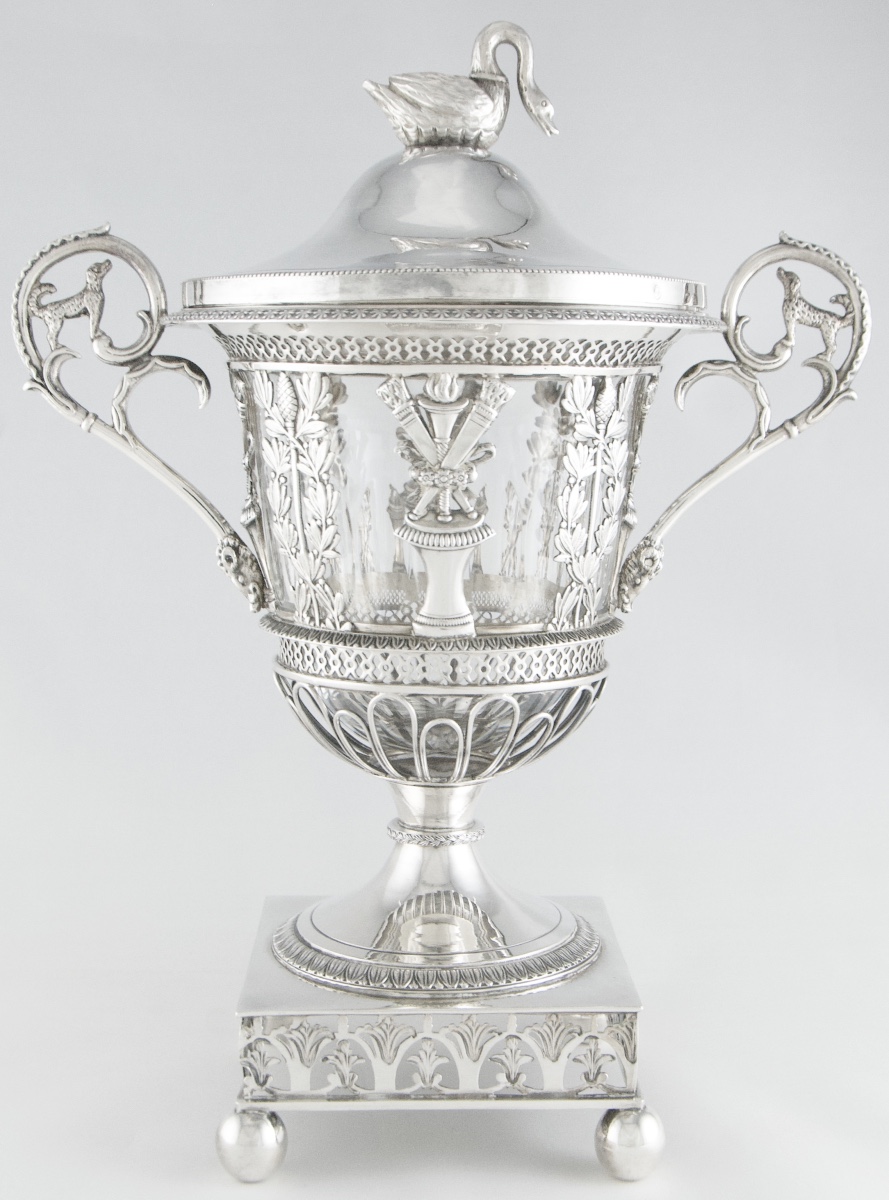
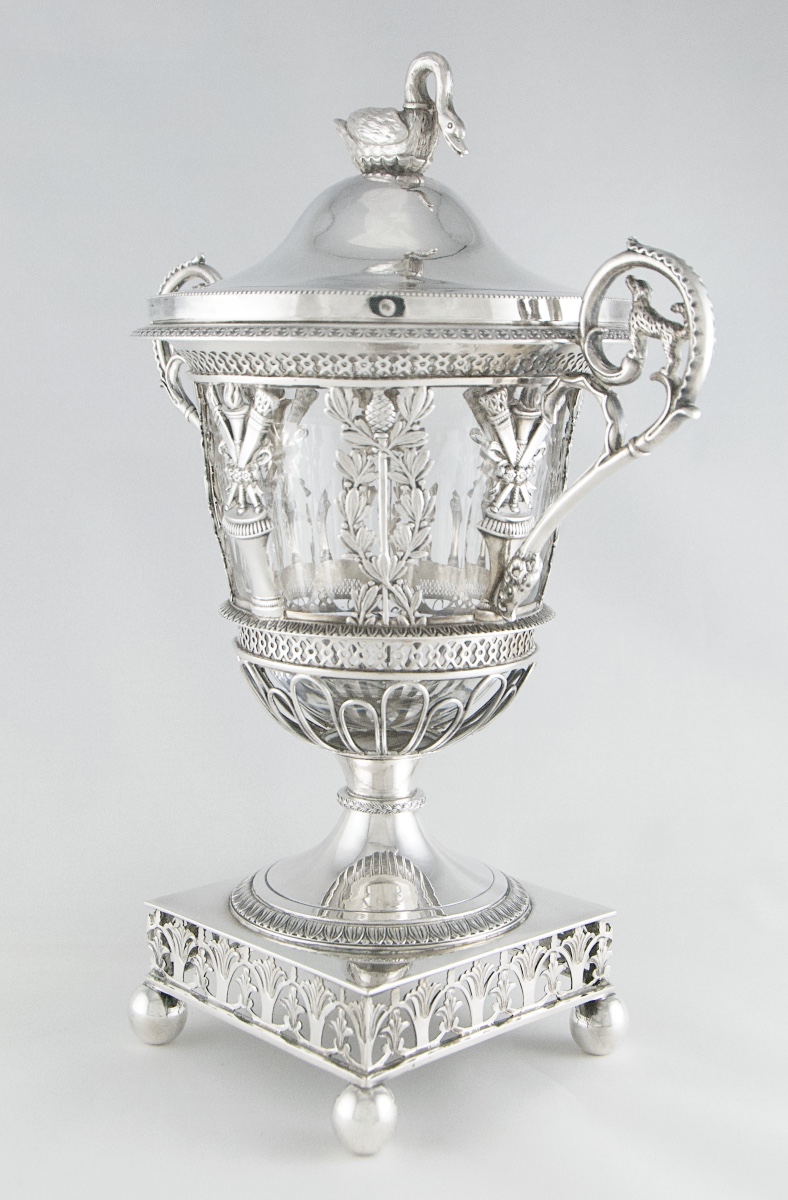
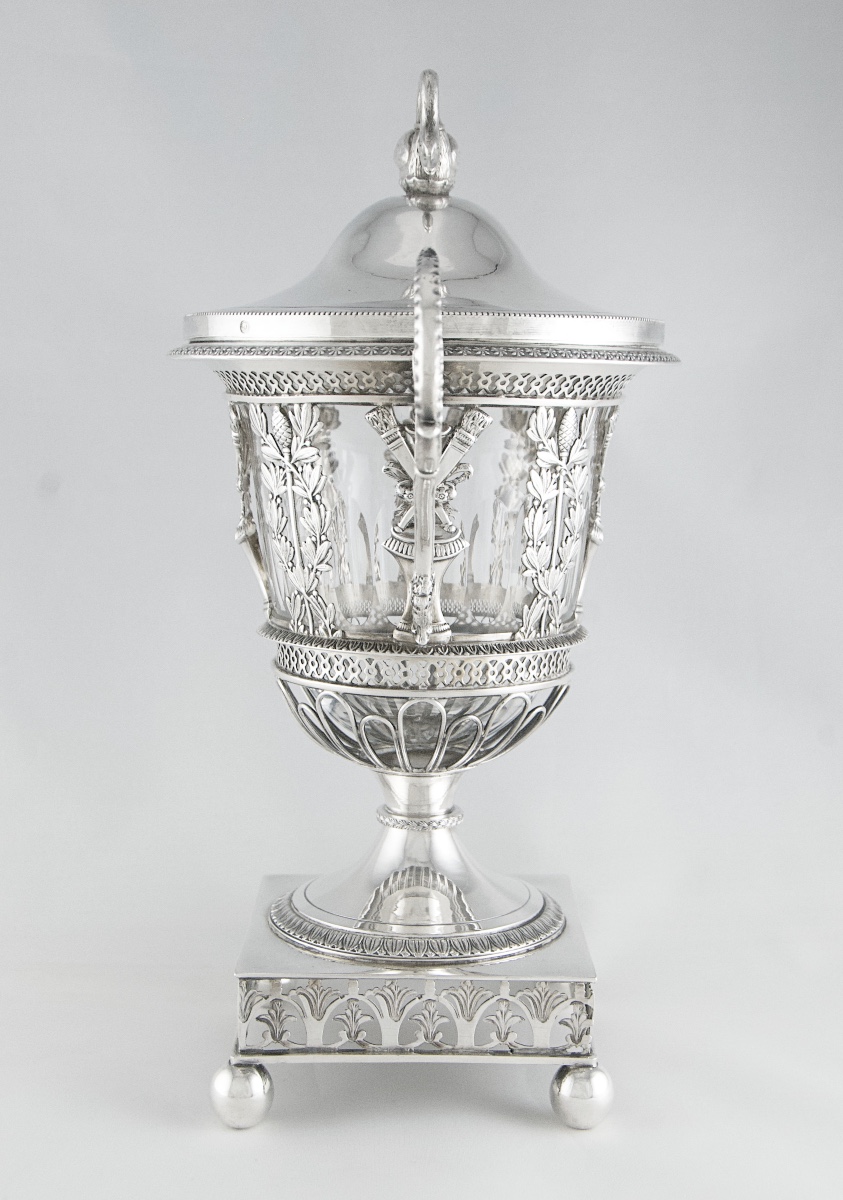
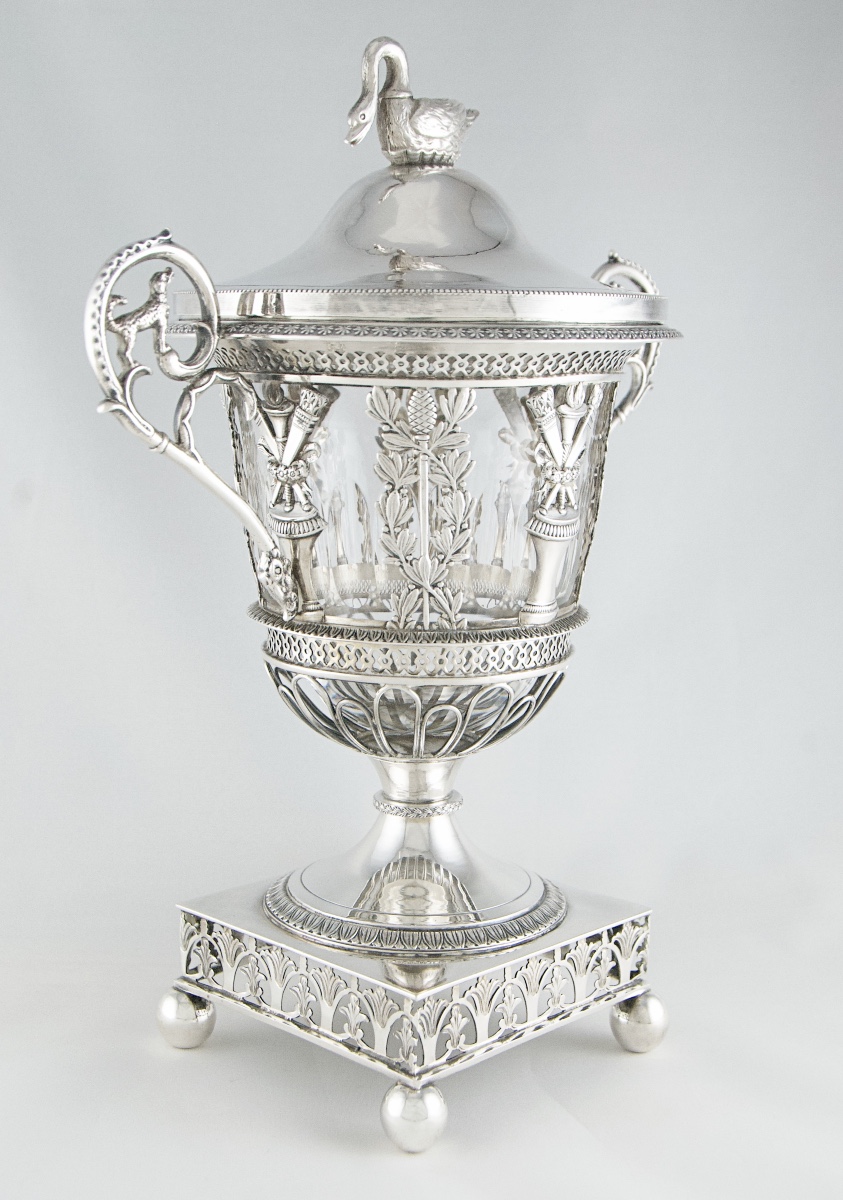
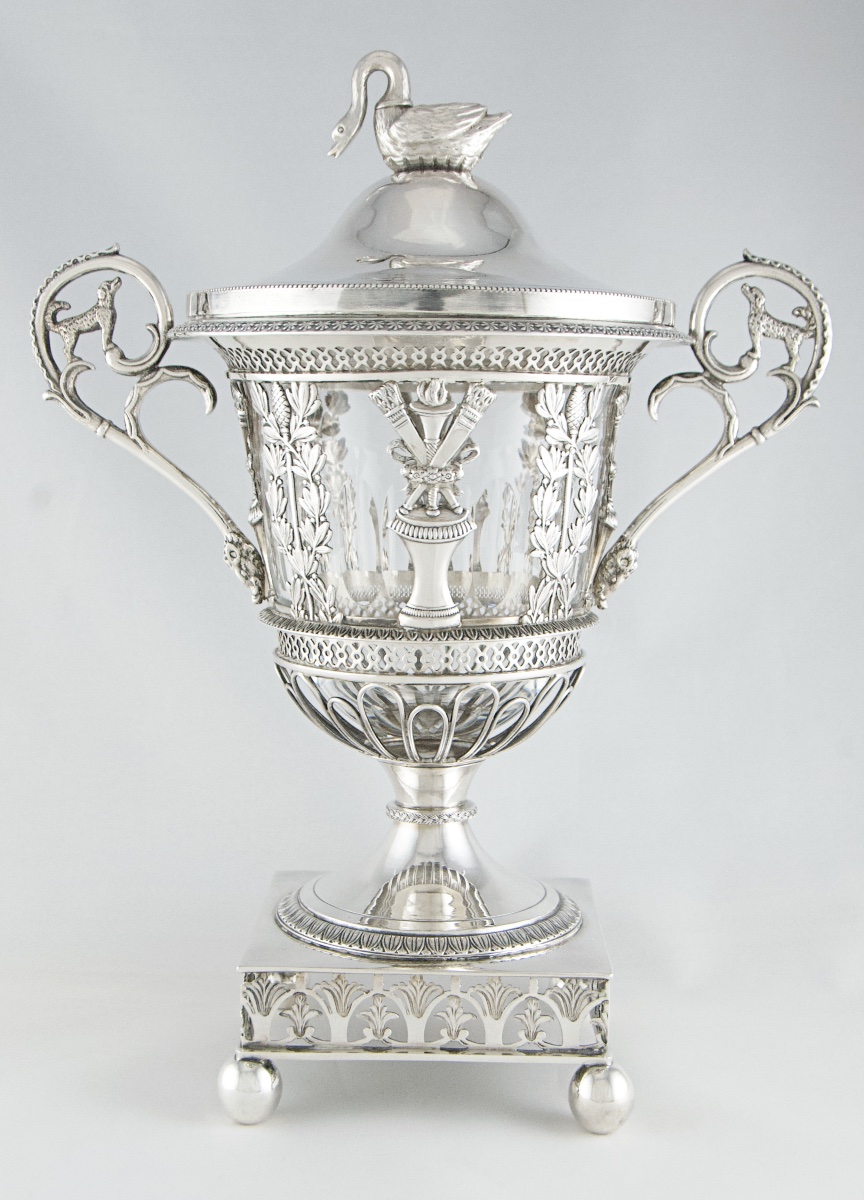
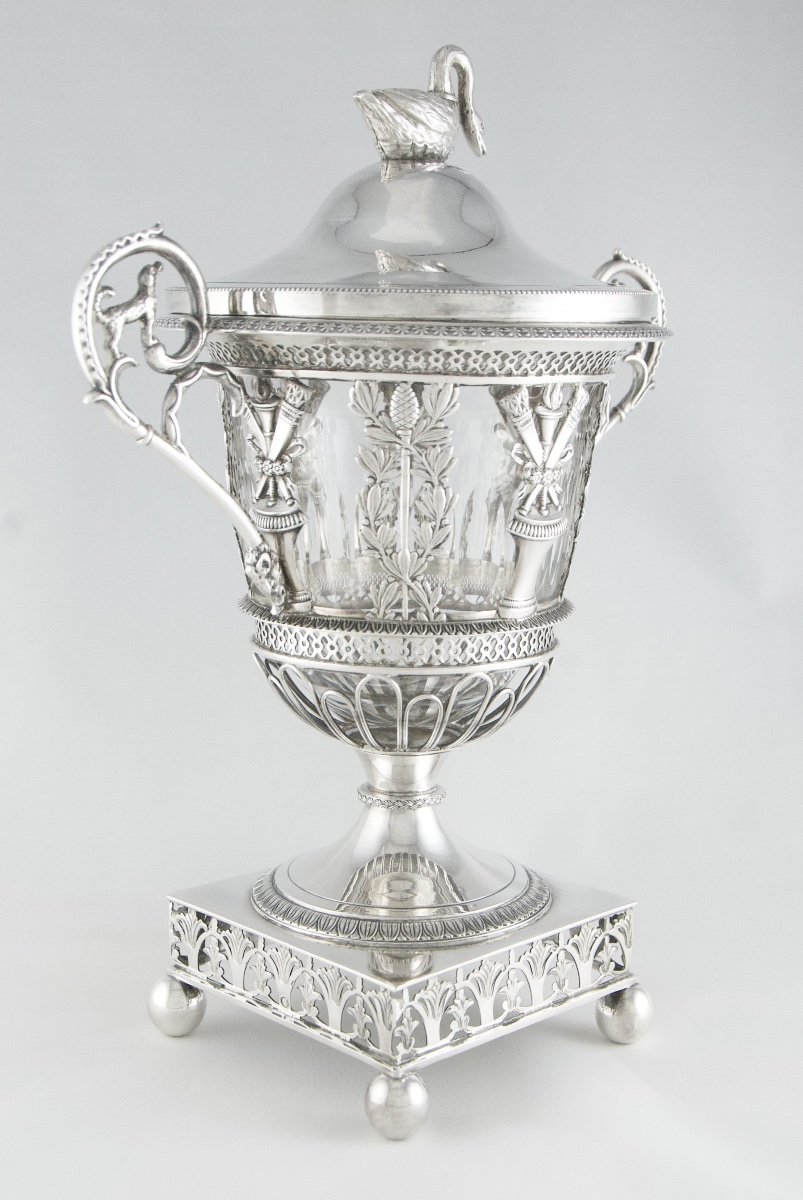
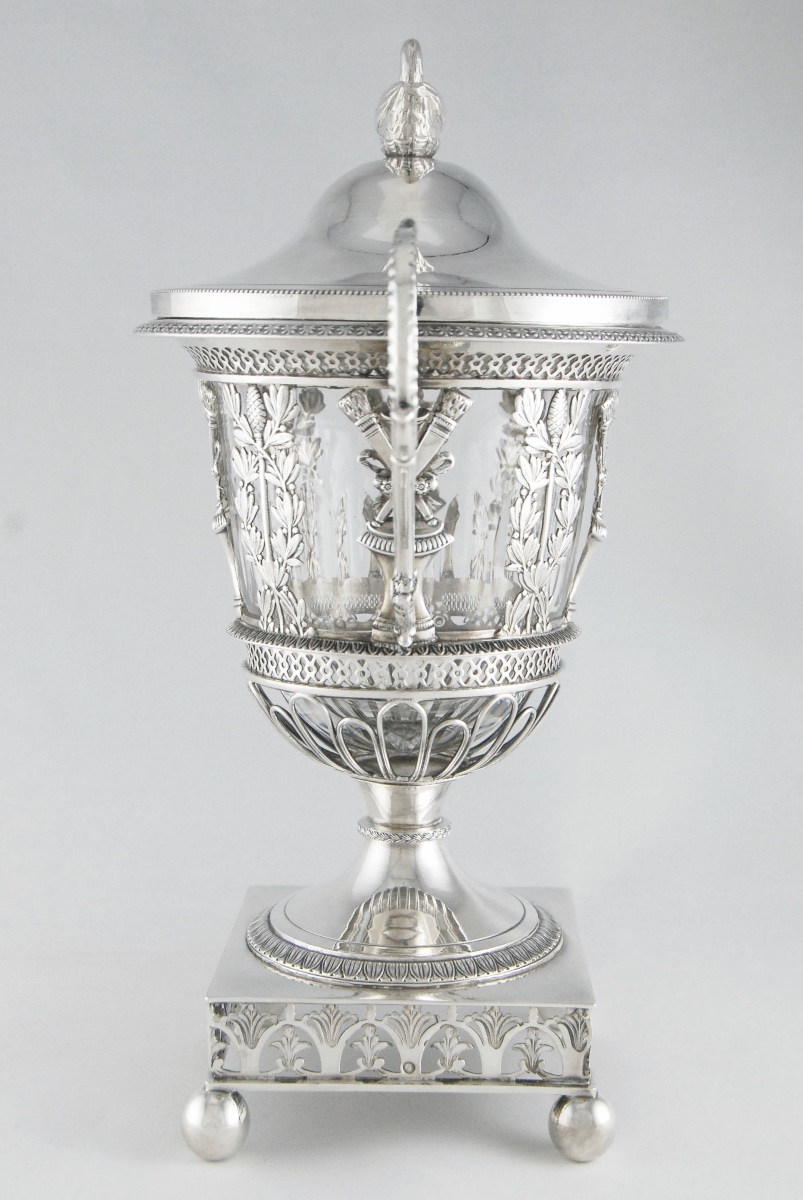



Large sugar bowl in finely chased solid silver with an inner liner in cut crystal.
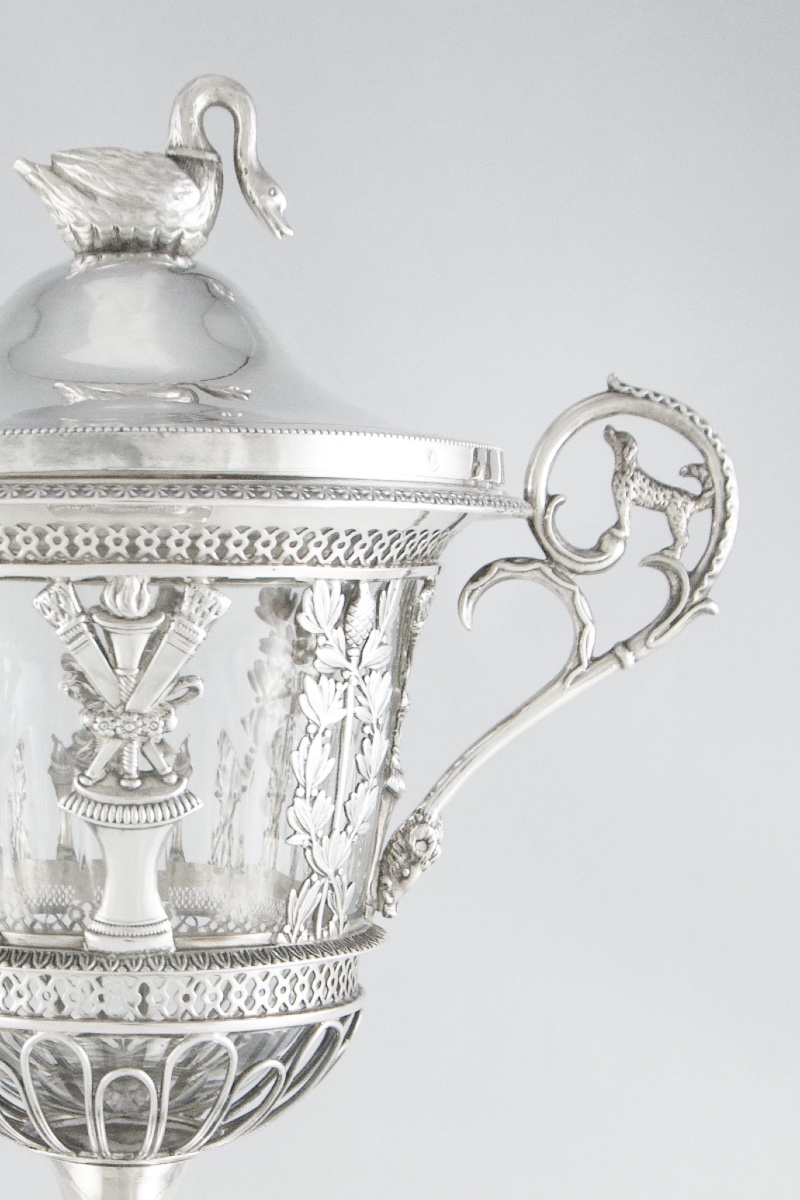
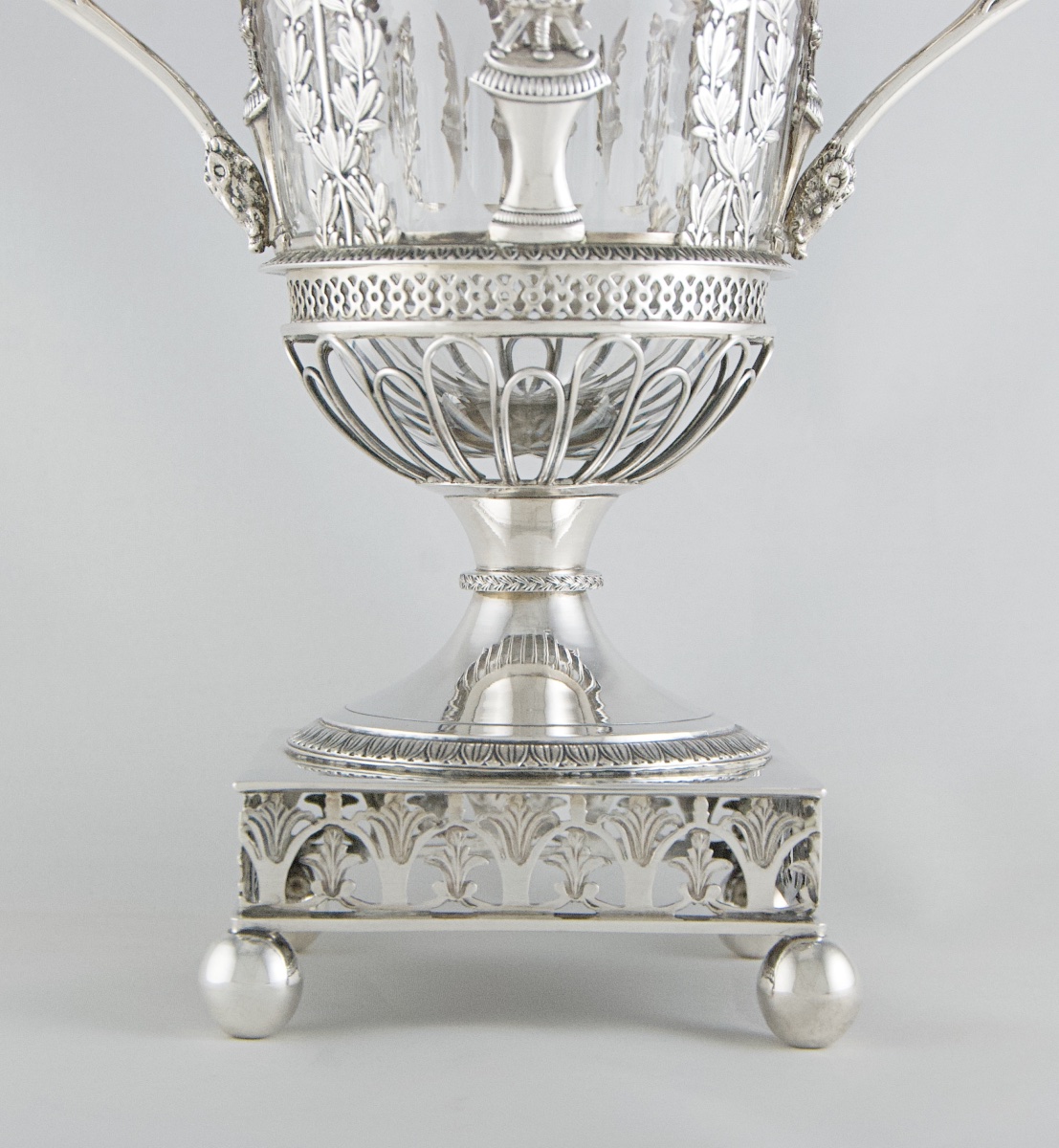
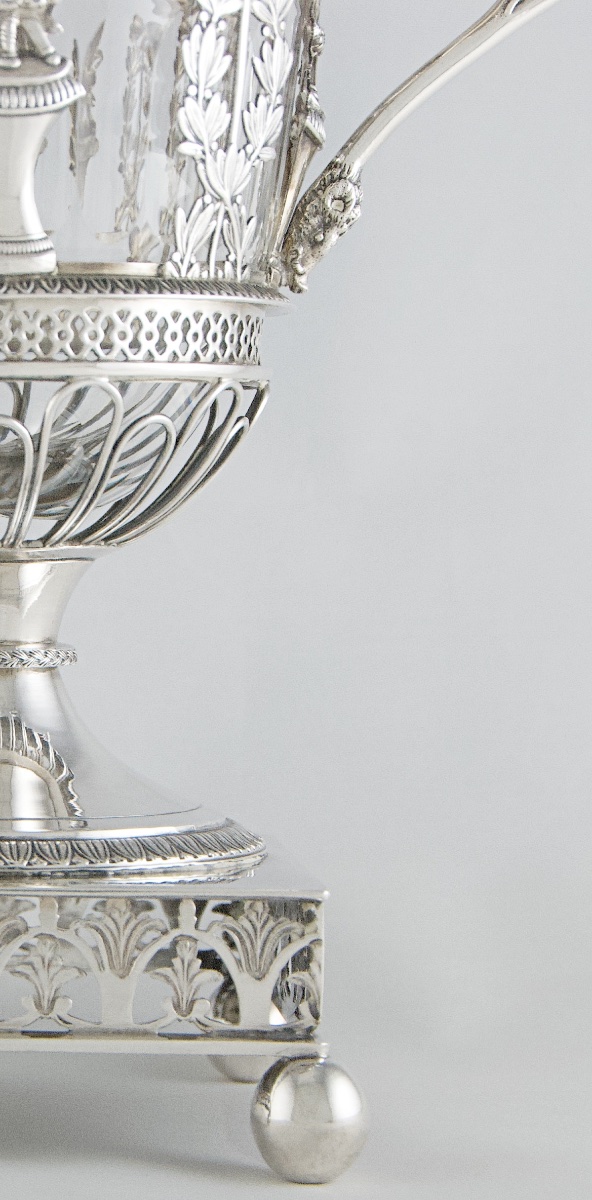
The body displays a rich openwork ornamentation composed of a vertical alternation of panels: some depicting bundles of quivers and flaming torches tied with garlands of ribboned flowers resting on fluted consoles, others showing fasces ending in pine cones entwined with laurel branches. This decoration is surmounted by a pierced frieze crowned with a chased border of small flowers on a matted ground.
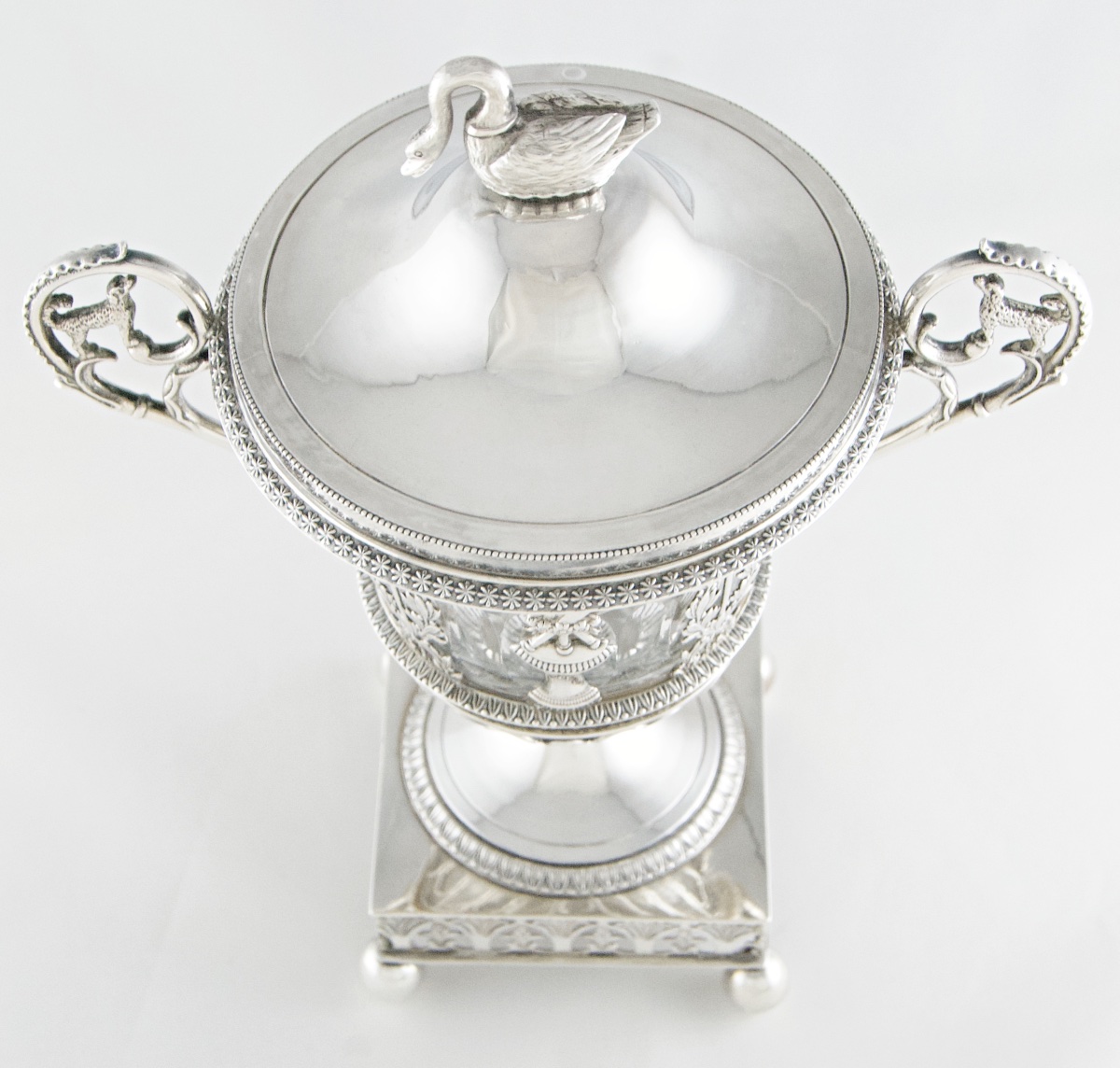
The domed cover, encircled by a beaded frieze, is topped by a finial in the form of a swan resting upon a shell. On either side, the scrolling foliate handles with finely chased boar’s-head attachments are centred with hunting dogs raising their heads towards the swan – a symbol of fidelity – which extends its neck towards its counterpart.
This openwork design reveals the cut-crystal liner beneath, with its band of ovoid motifs and star-shaped radiating base.
The ensemble stands on a circular pedestal foot adorned with a wreath of foliage and a frieze of water-leaves, set on a square base with pierced palm supports and four ball feet.
Hallmarks (body and cover)
• 2nd cockerel, 1st standard (solid silver 950/1000, Paris, 1809–1819).
• Paris guarantee mark.
• Silversmiths’ Association.
• Maker’s mark: Denis GARREAU, 62 rue du Temple, Paris.
Dimensions
• Height: 24.8 cm
• Width: 21 cm
• Diameter: 12.8 cm
Weight: 508 g
Condition report:
Excellent condition, complete and intact.
About the silversmith
Denis GARREAU, admitted as master silversmith in Paris in 1817, works at 62 rue du Temple.
His maker’s mark, a lozenge containing the initials D G accompanied by two men in a boat, is distinctive of his production.
Active until the 1830s, he produces refined table silver distinguished by delicate openwork decoration, friezes of palmettes, water-leaf borders and allegorical figures.
His pieces, often in first-standard silver (950 ‰), embody the transition from the neoclassical austerity of the Empire to the more ornamental elegance of the Restoration.
Through the finesse of its chasing and the originality of its hunting motifs, this sugar bowl stands as a remarkable example of Parisian silversmithing of the early nineteenth century, bridging the Empire and the Restoration.
The body displays a rich openwork ornamentation composed of a vertical alternation of panels: some depicting bundles of quivers and flaming torches tied with garlands of ribboned flowers resting on fluted consoles, others showing fasces ending in pine cones entwined with laurel branches. This decoration is surmounted by a pierced frieze crowned with a chased border of small flowers on a matted ground.
The domed cover, encircled by a beaded frieze, is topped by a finial in the form of a swan resting upon a shell. On either side, the scrolling foliate handles with finely chased boar’s-head attachments are centred with hunting dogs raising their heads towards the swan – a symbol of fidelity – which extends its neck towards its counterpart.
This openwork design reveals the cut-crystal liner beneath, with its band of ovoid motifs and star-shaped radiating base.
The ensemble stands on a circular pedestal foot adorned with a wreath of foliage and a frieze of water-leaves, set on a square base with pierced palm supports and four ball feet.
Hallmarks (body and cover)
• 2nd cockerel, 1st standard (solid silver 950/1000, Paris, 1809–1819).
• Paris guarantee mark.
• Silversmiths’ Association.
• Maker’s mark: Denis GARREAU, 62 rue du Temple, Paris.
Dimensions
• Height: 24.8 cm
• Width: 21 cm
• Diameter: 12.8 cm
Weight: 508 g
Condition report:
Excellent condition, complete and intact.
About the silversmith
Denis GARREAU, admitted as master silversmith in Paris in 1817, works at 62 rue du Temple.
His maker’s mark, a lozenge containing the initials D G accompanied by two men in a boat, is distinctive of his production.
Active until the 1830s, he produces refined table silver distinguished by delicate openwork decoration, friezes of palmettes, water-leaf borders and allegorical figures.
His pieces, often in first-standard silver (950 ‰), embody the transition from the neoclassical austerity of the Empire to the more ornamental elegance of the Restoration.
Through the finesse of its chasing and the originality of its hunting motifs, this sugar bowl stands as a remarkable example of Parisian silversmithing of the early nineteenth century, bridging the Empire and the Restoration.
Explore similar pieces and discover your ideal find:
Serveware