THIS OBJECT WAS SOLD
Japanese Jingasa With A Highly Detailed Lacquered Dragon, Edo Period.
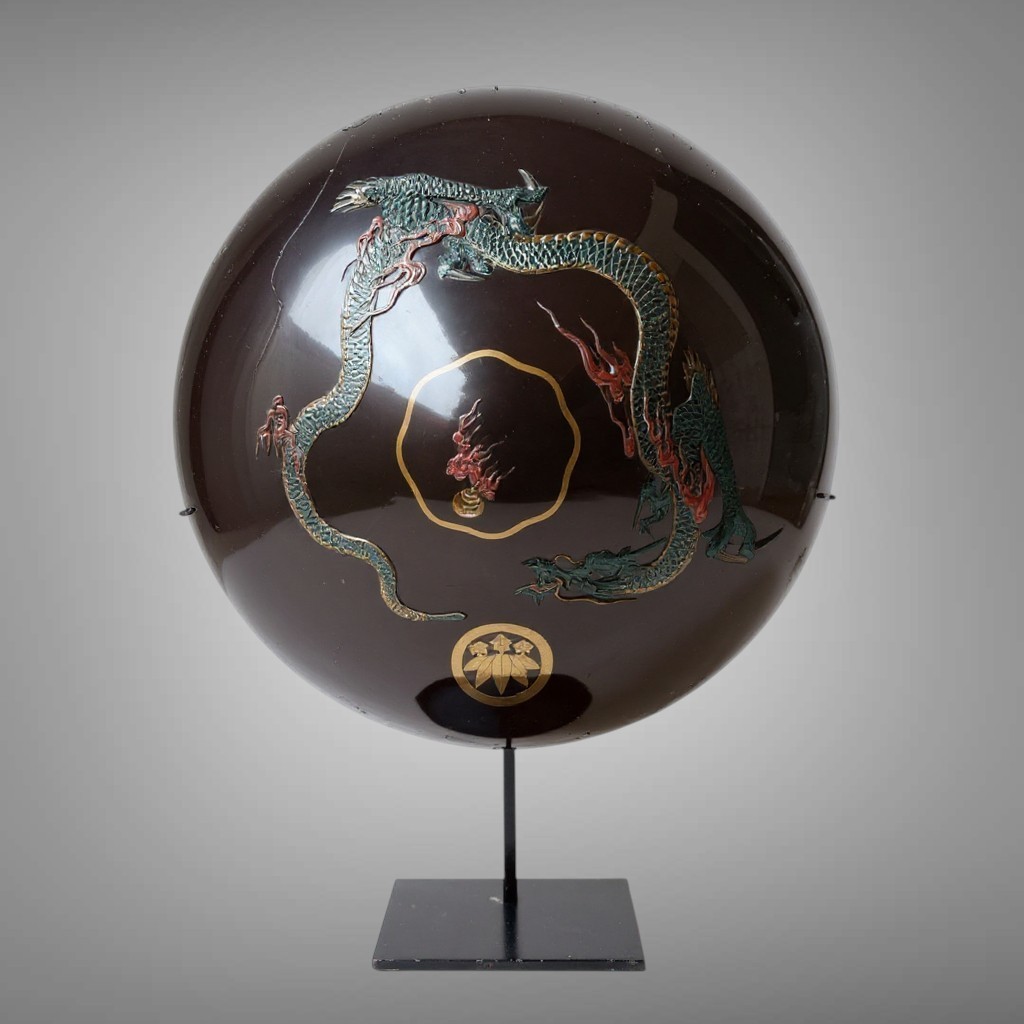
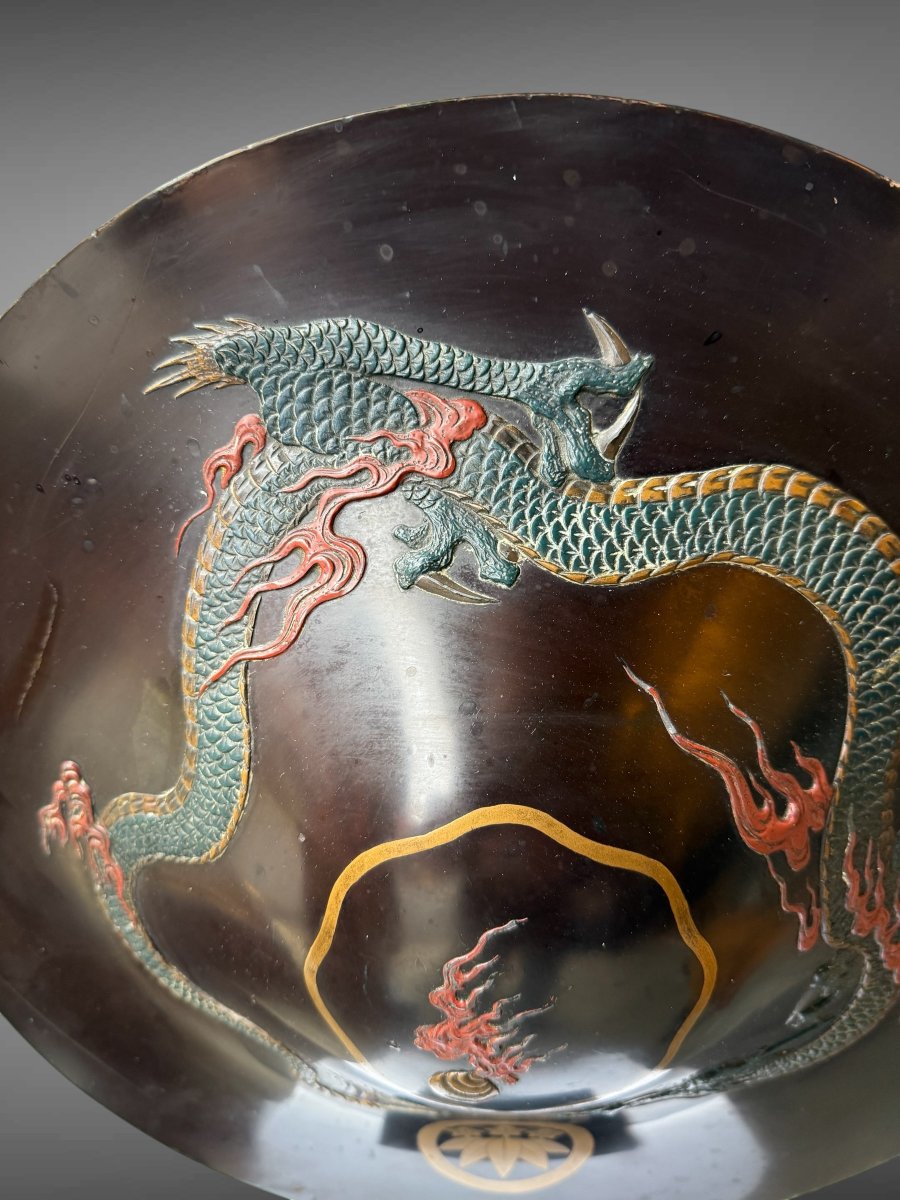
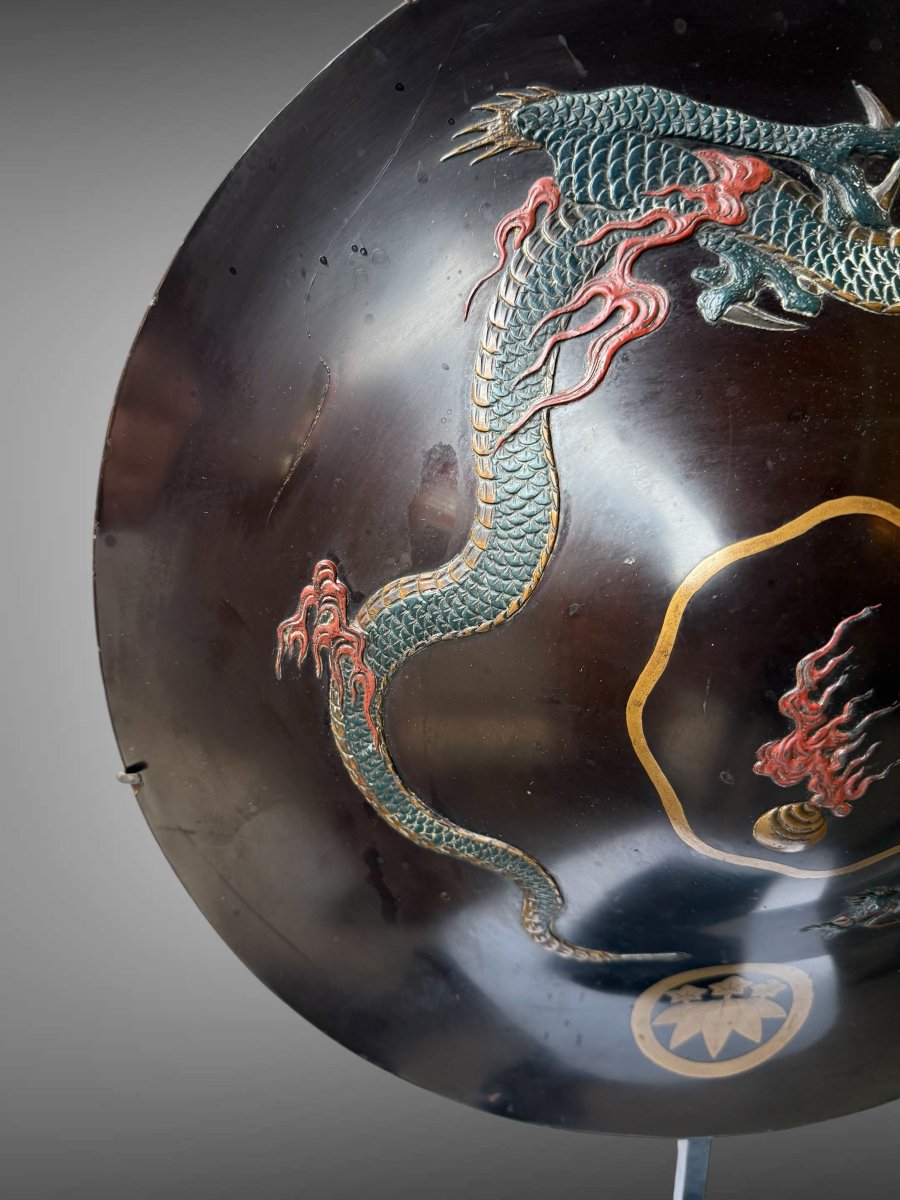
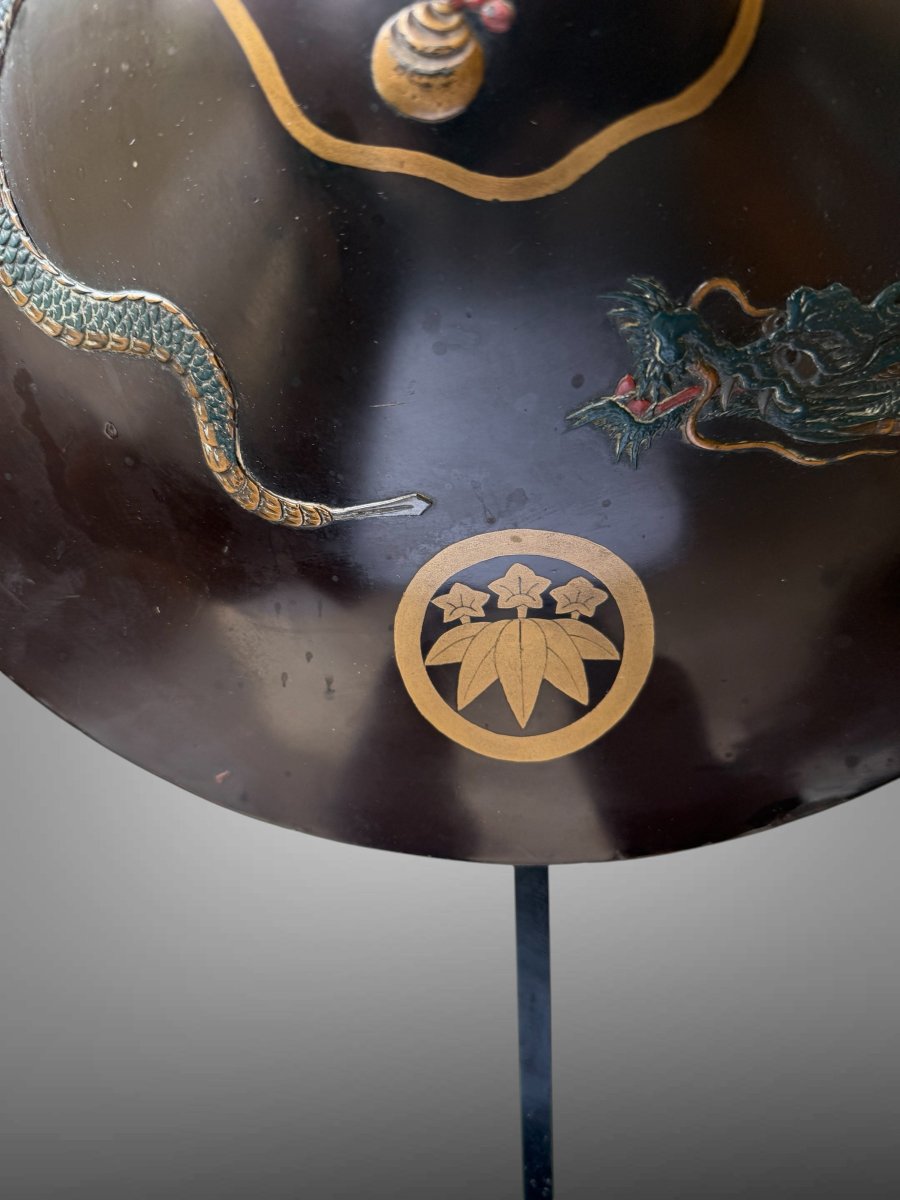
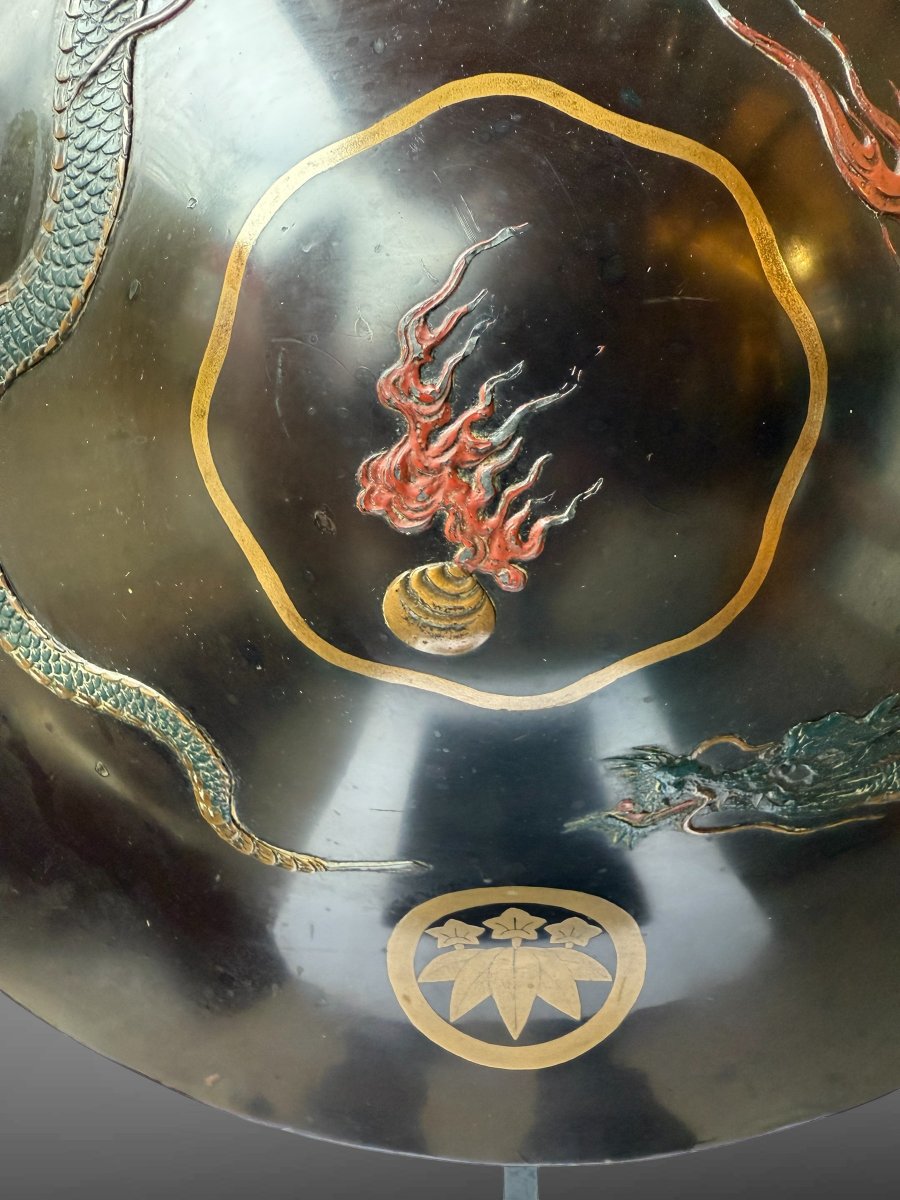
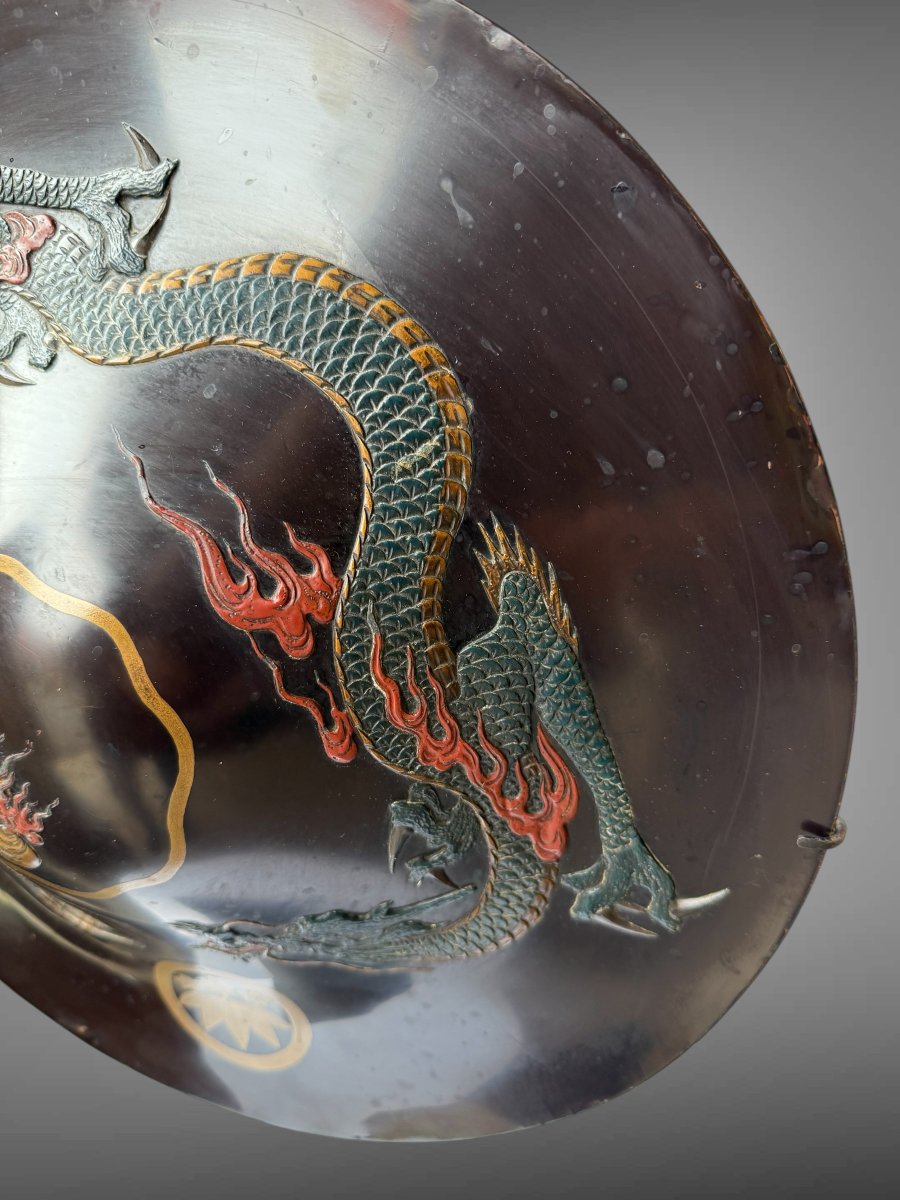
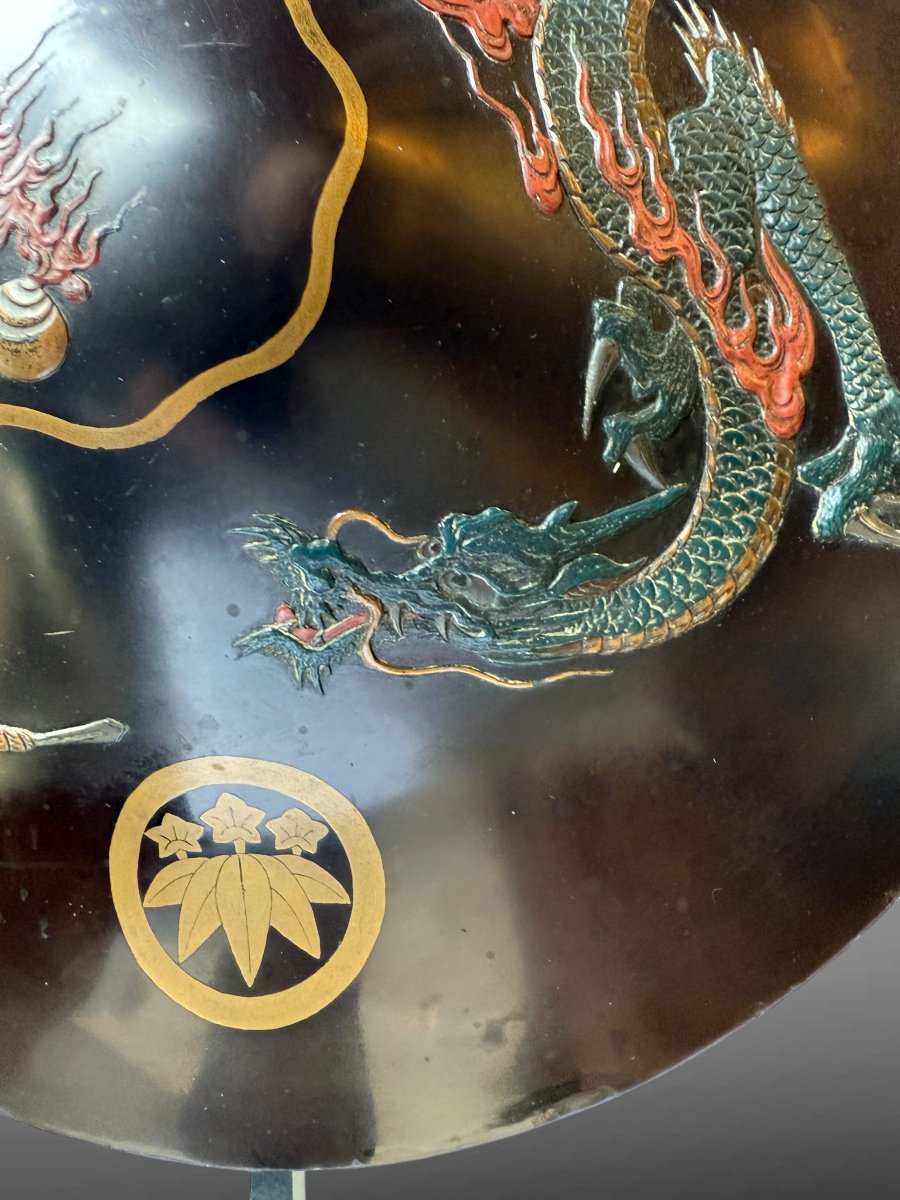
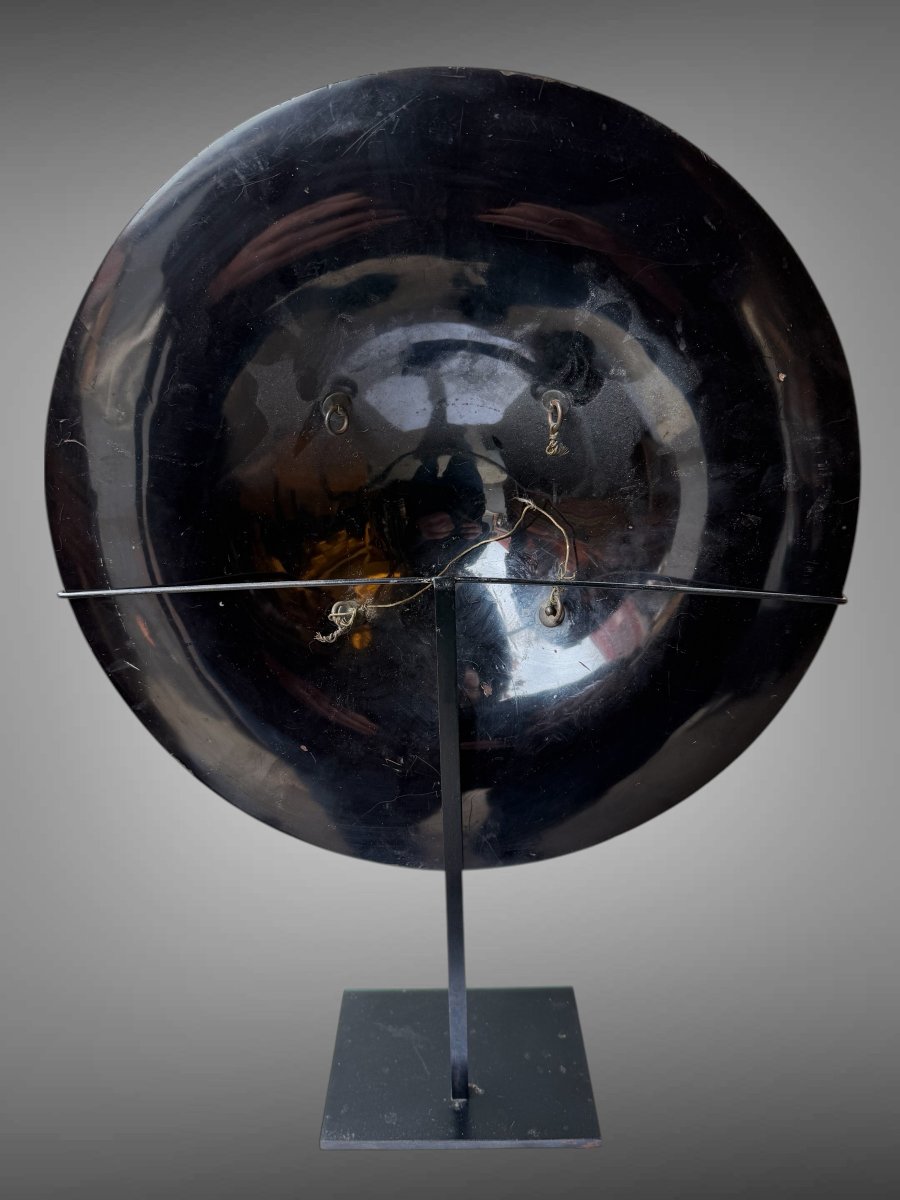


This is a jingasa (陣笠), a Japanese war hat worn primarily by ashigaru (infantrymen) or some samurai during military campaigns, especially during the Edo period (1603–1868). This particular piece dates to the late Edo period (18th–19th century) based on its slightly domed shape (a later development), the quality of the lacquering, and the use of the gilded mon in maki-e, a very common technique at the time. Shape: Conical, slightly domed (a “mokko” shape typical of the 17th–18th centuries). Material: Lacquered wood covered with lacquer (urushi). Decoration: A sinuous dragon encircling the flaming pearl (tamashii), a symbol of power, wisdom, and divine protection. Technique: Polychrome lacquer with inlays or reliefs (maki-e and takamaki-e). My (clan emblem): The one visible in gold at the bottom represents the maru ni go-san kiri (丸に五三桐) — an emblem of the Toyotomi clan (and later of the imperial government). The dragon on a black lacquered background and the Toyotomi mon indicate a ceremonial or parade piece rather than a combat headdress. The dragon (ryū) is an imperial motif, sometimes reserved for elite chiefs or bannermen. The black and gold background with the flaming pearl is characteristic of high-ranking jingasa (ashigaru officers, hatamoto). Very good condition with some minor lacquer flaws and a few very faint scratches. Sold with the base. Height with base: 55 cm
Explore similar pieces and discover your ideal find:
Uniforms, Armors