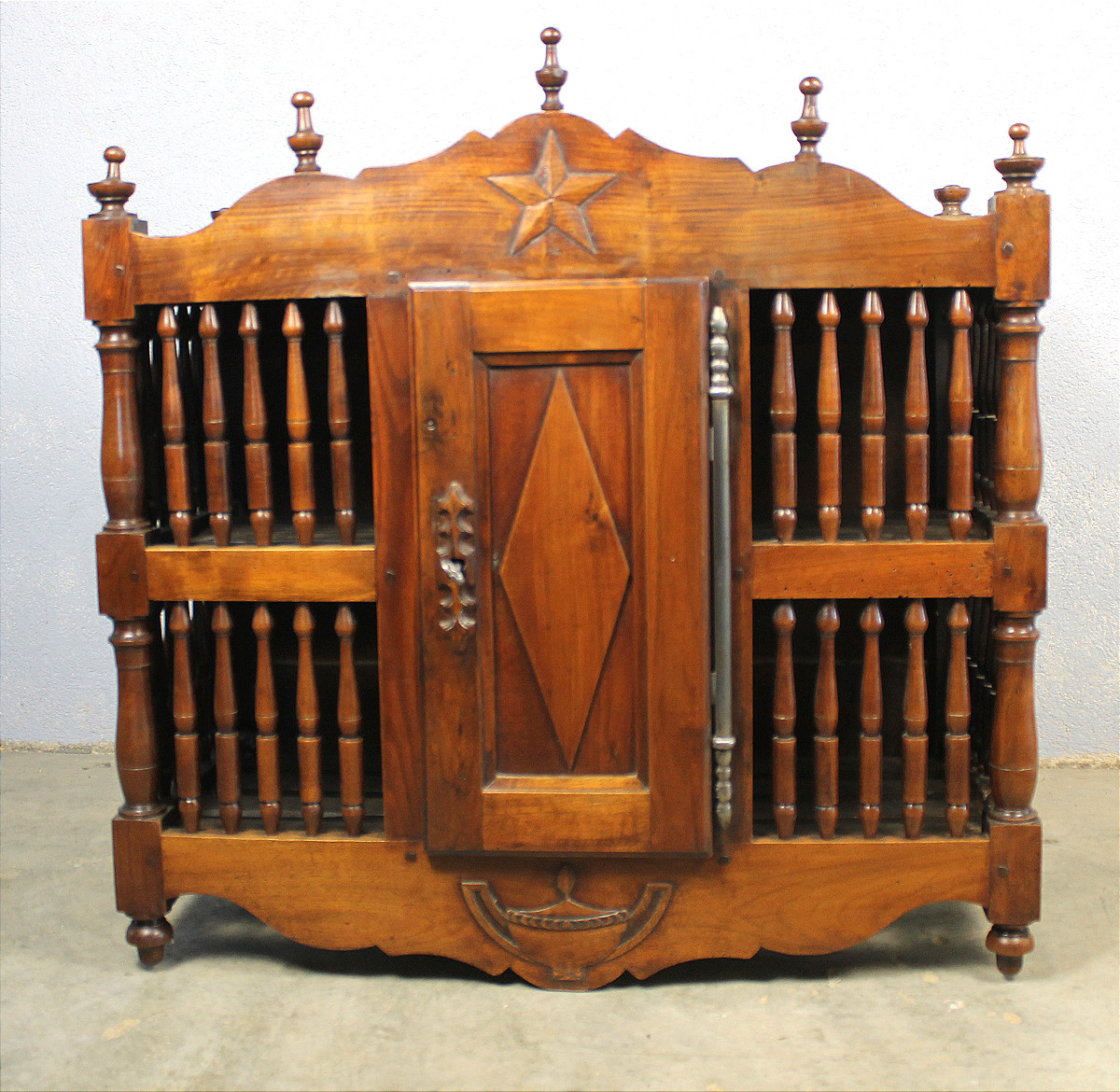
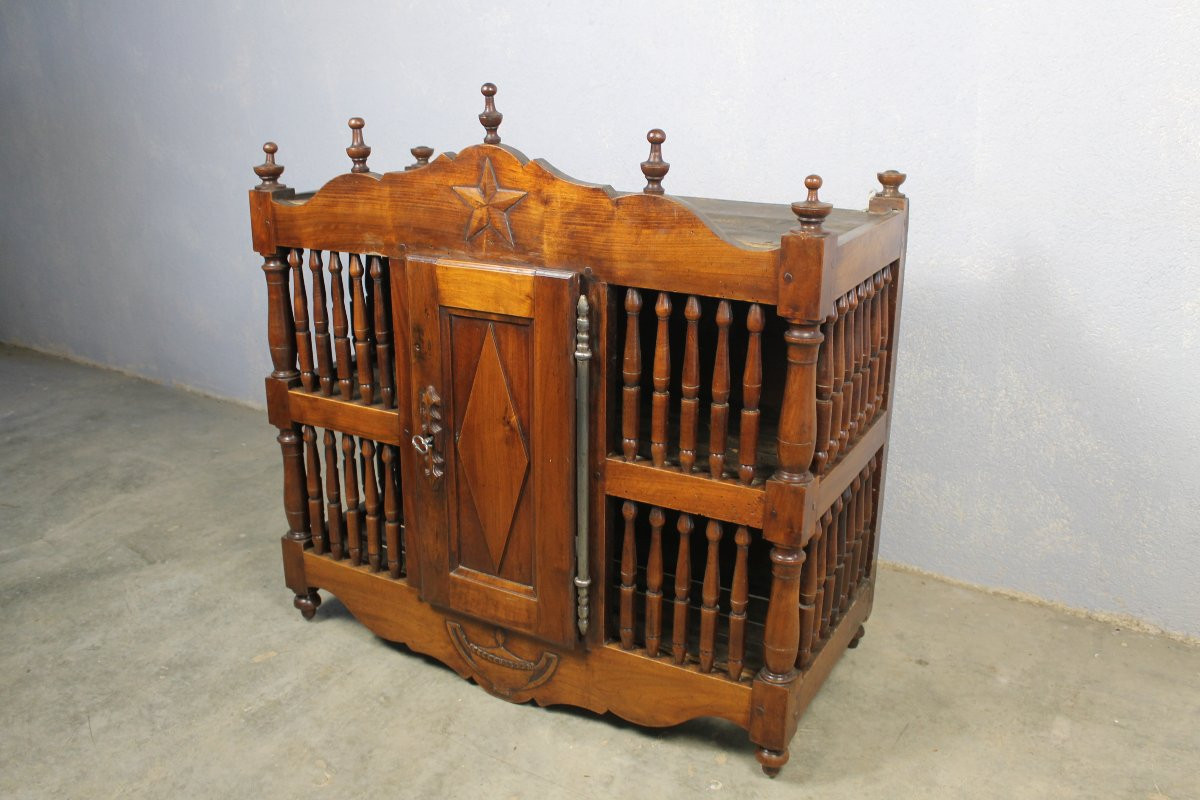




Dauphine Bread Box Made Of Fruitwood, Directoire Period, Late 18th Century
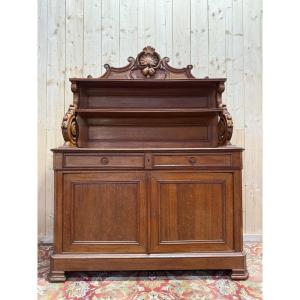
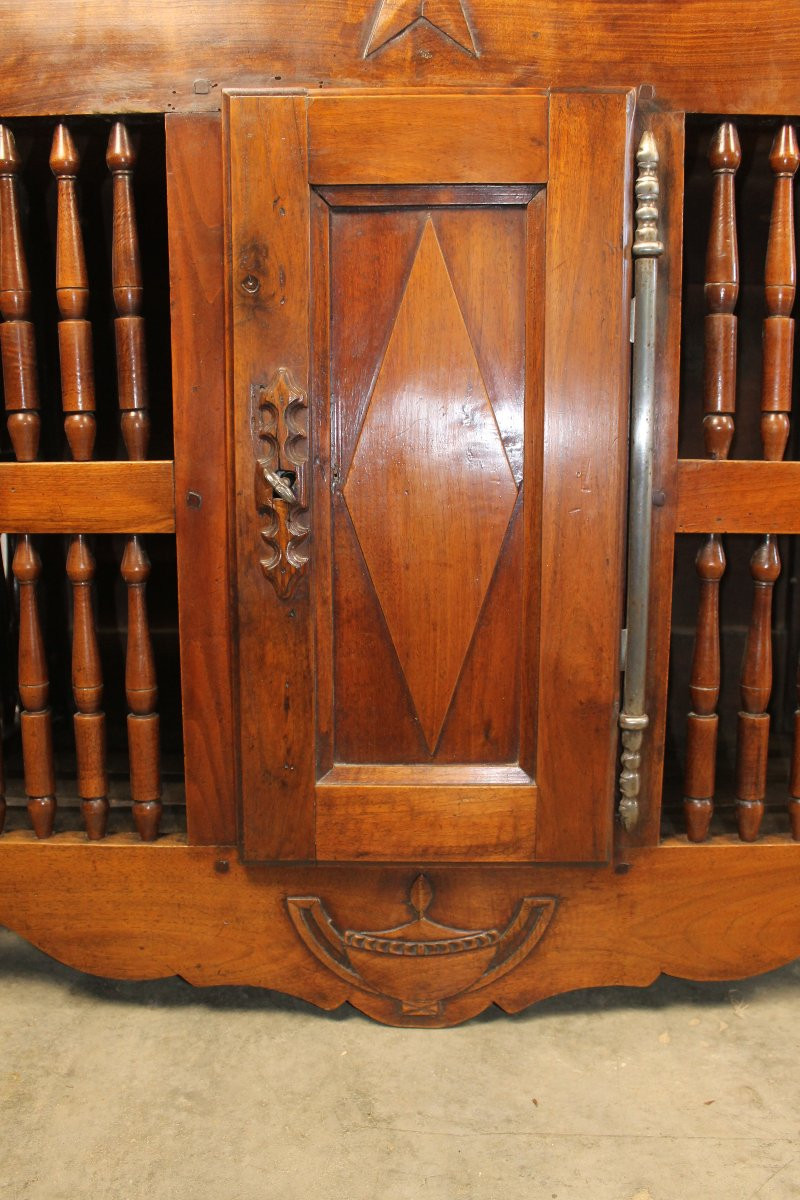
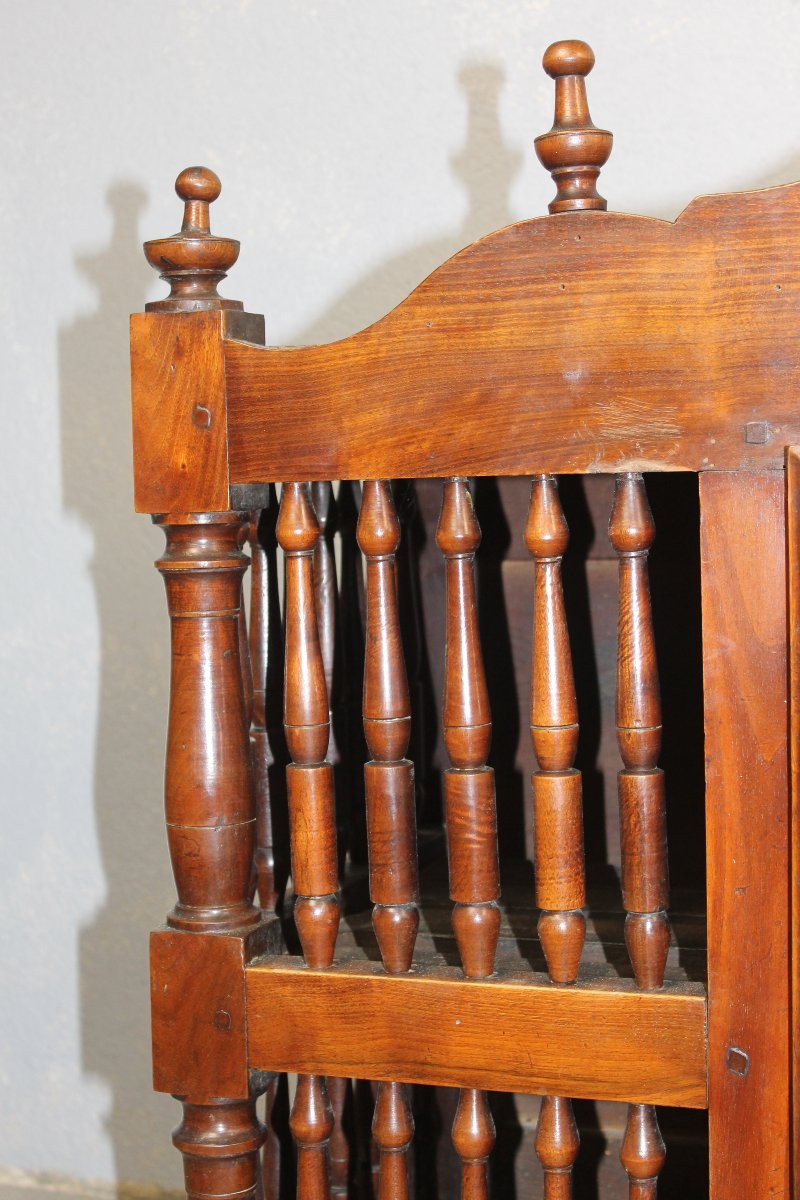
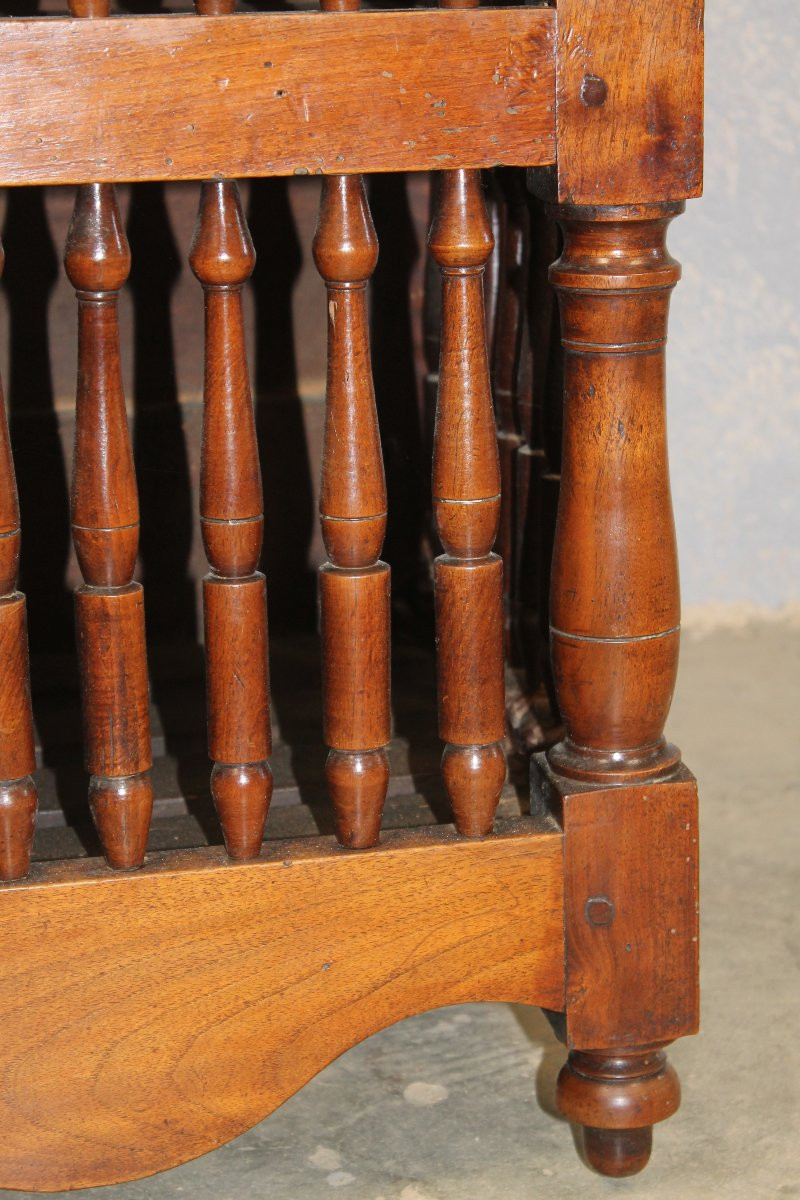
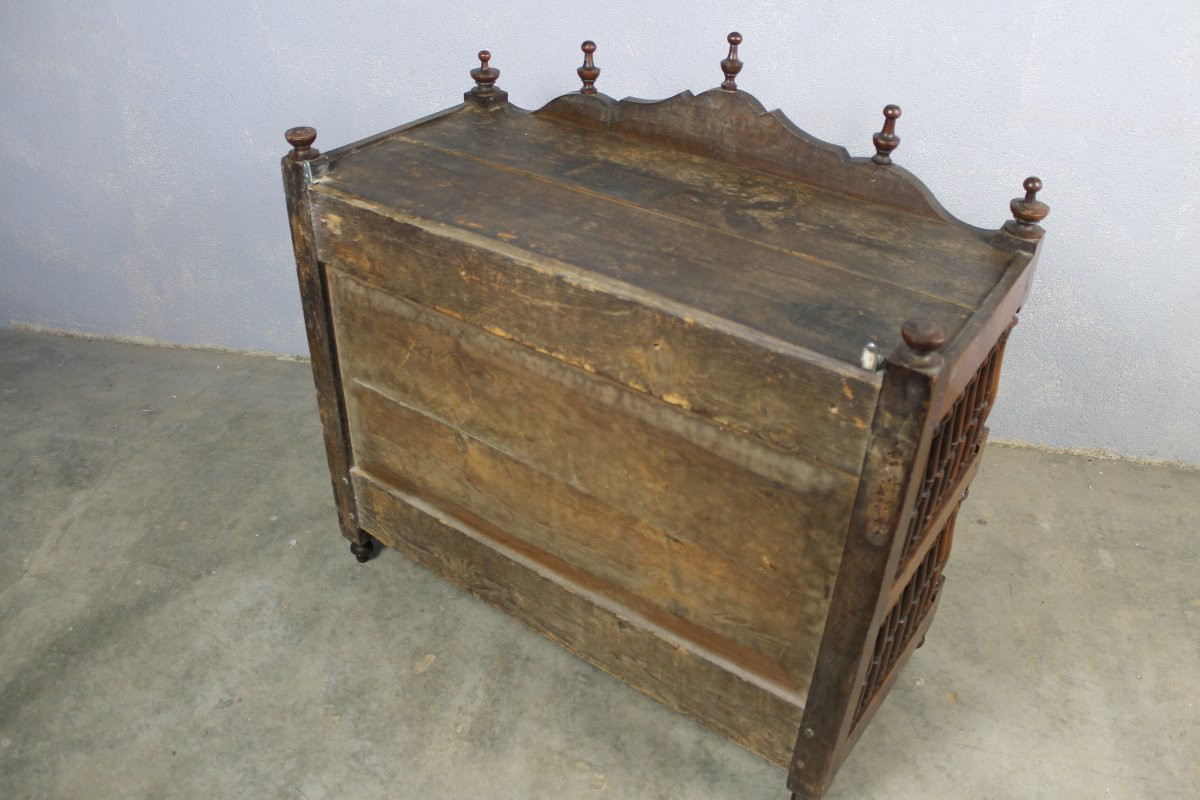
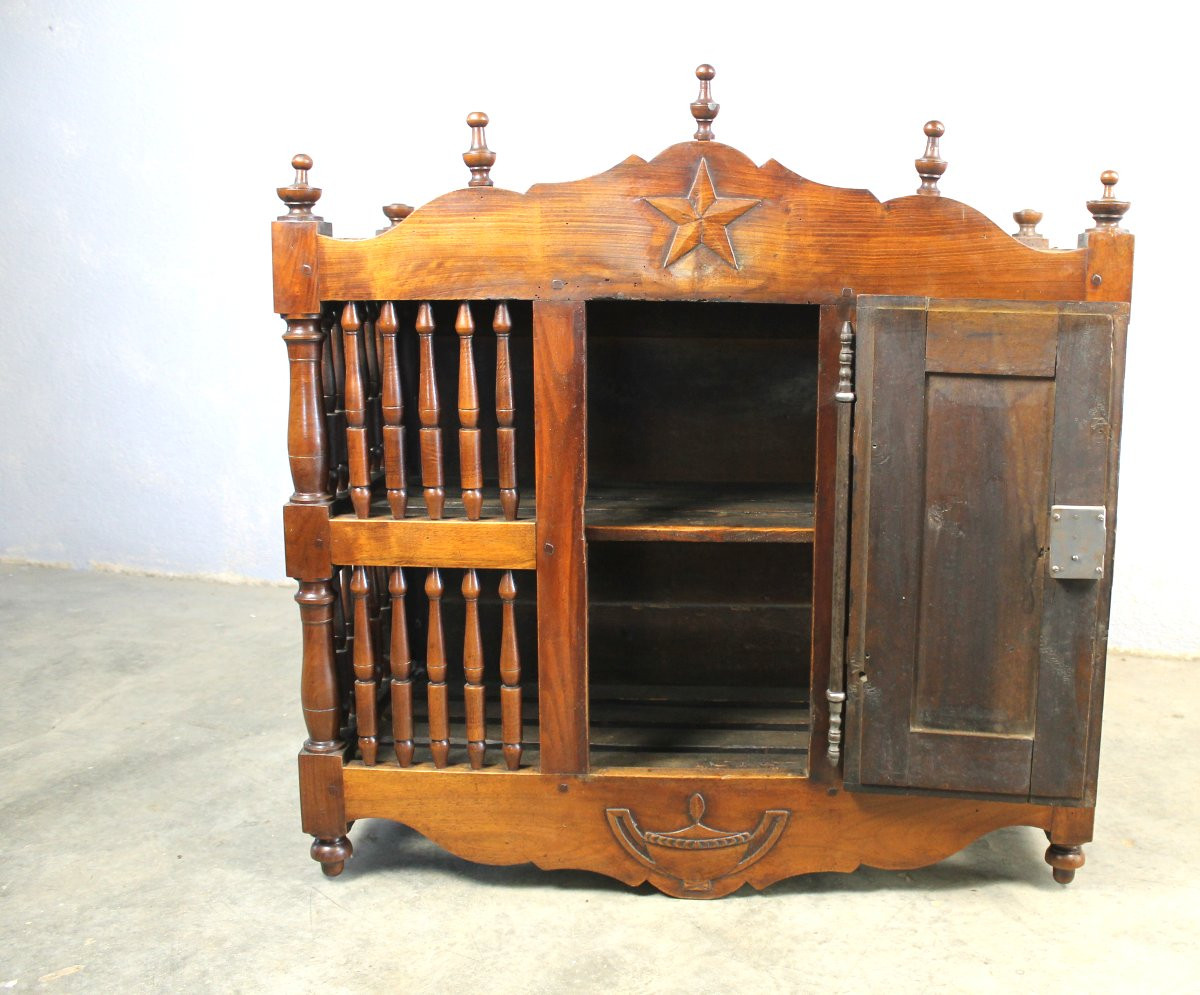
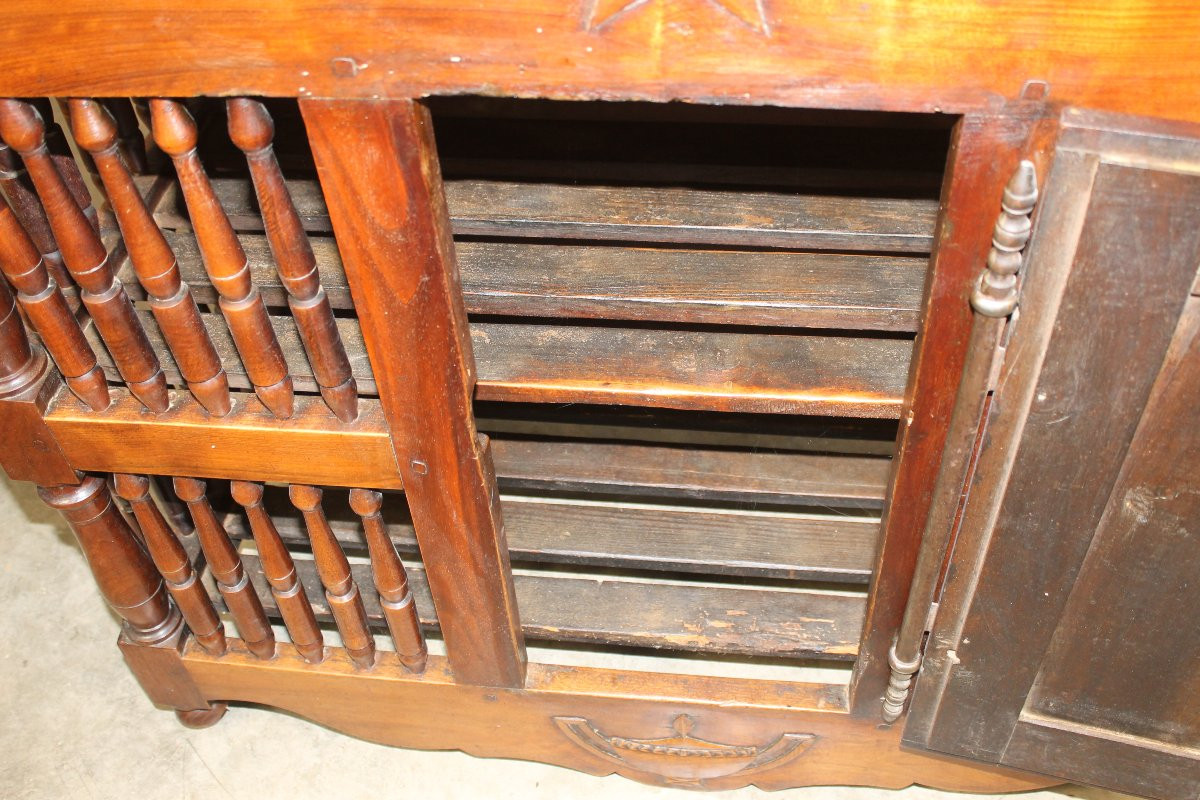
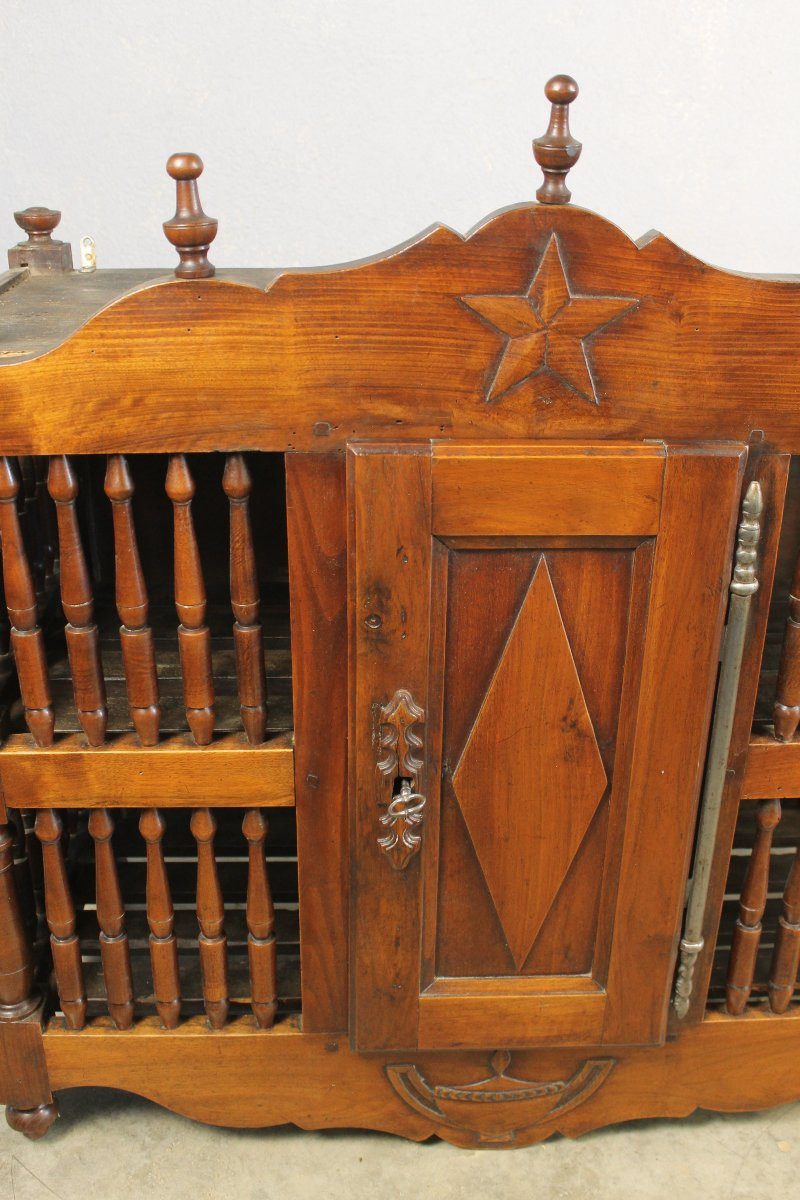
A charming Dauphiné bread box in cherry wood, Directoire period. The front is adorned with a lower, shaped crossbar featuring a sculpted Etruscan vase in its center. The door is decorated with a large lozenge. It is supported by a strong hinge. The upper crossbar is shaped and carved with a star in its center and 5 candle cups on the dado rail. The front and sides are decorated with turned spindle-shaped bars. The shelves are openwork. The top and bottom are made of softwood, as was the custom at the time. Note: the keyhole escutcheon is 19th century, the lock and key are 20th century. The front and back uprights end in turned feet. The bread box is ready to hang: brackets are present on the back. Height: 93.5 cm, Length: 92.4 cm, Width: 44.5 cm. For your information: A bread box is a small piece of furniture used for storing and preserving bread. Initially, these were simple cages suspended from the wall by two hooks or screens hung from the house's beams. The bread bin as we know it only dates back to the 17th century. Its earliest mention is found in the Orange municipal archives and dates from 1620. It was then described as "a simple chest with openwork bars and small feet" and rested on the kneading trough. Some bread bins had a door on the front, allowing the lady of the house to put in or take out the bread. This kind of storage container is characteristic of Provençal interiors, and its usefulness continued until after the First World War, when bread—the staple of meals at the time—was still made by families every week and baked either at home or in the communal oven. Since it had to last several days, it was essential to keep it in the best possible conditions. Bread bins on stands were placed on a low sideboard, the kneading trough, or, more often, hung on a wall to keep the bread out of reach of rats and mice. Even when placed against a wall and detached from its kneading trough, it retained its feet and gained a decorative role. It then became a piece of furniture with openwork bars, generally on three sides, featuring a carved door on the front with a fitting reminiscent of a wardrobe, and, as a final characteristic, it ended in feet, most often snail-shaped.
850 €
Period: 18th century
Style: Louis 16th, Directory
Condition: Excellent condition
Material: Solid wood
Length: 92,4 cm
Width: 44,5 cm
Height: 93,5 cm
Reference (ID): 1645112
Availability: In stock
Print