THIS OBJECT WAS SOLD
Greek Squat Lekythos With Palmettes — Certificate Of Authenticity
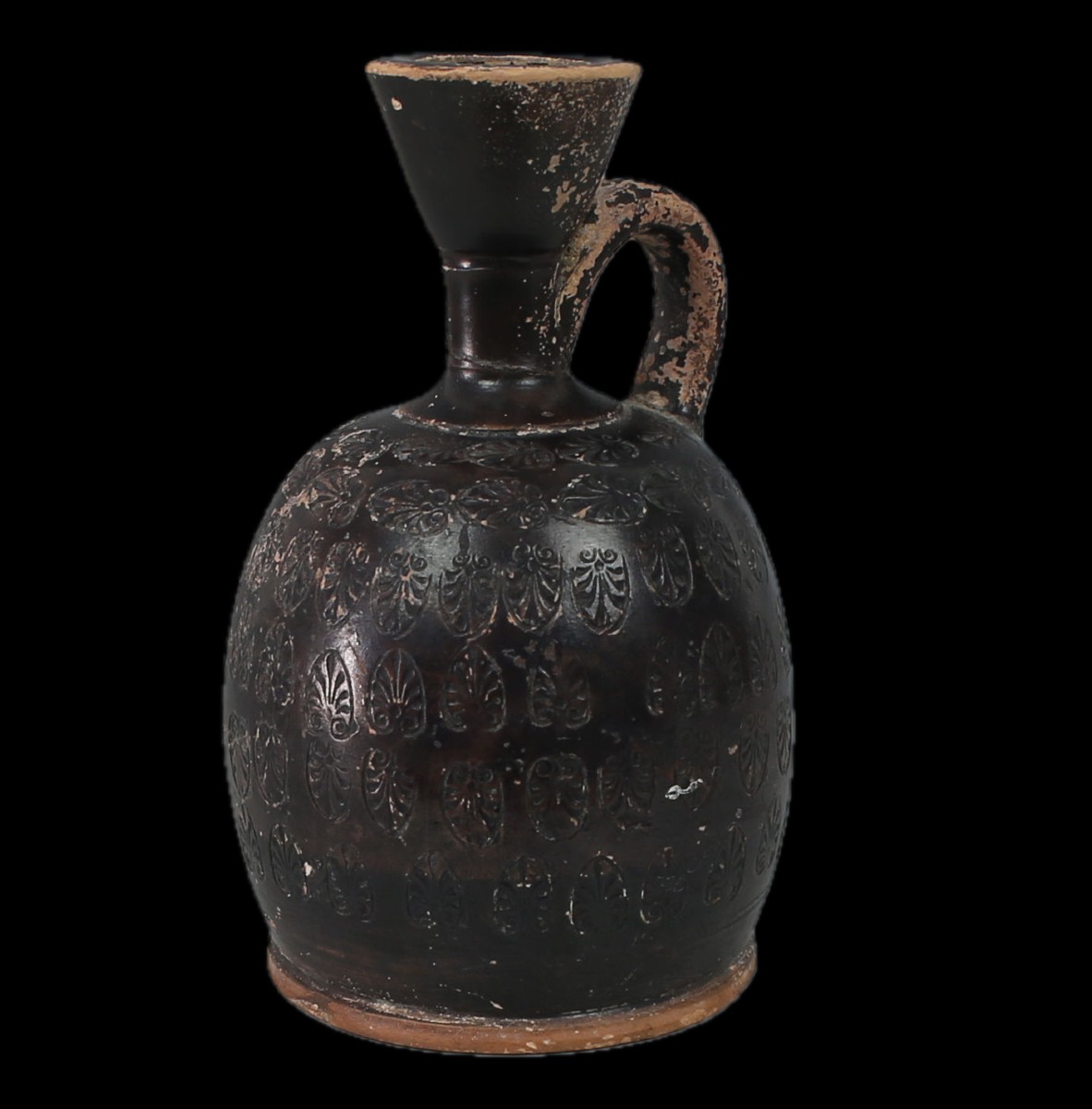

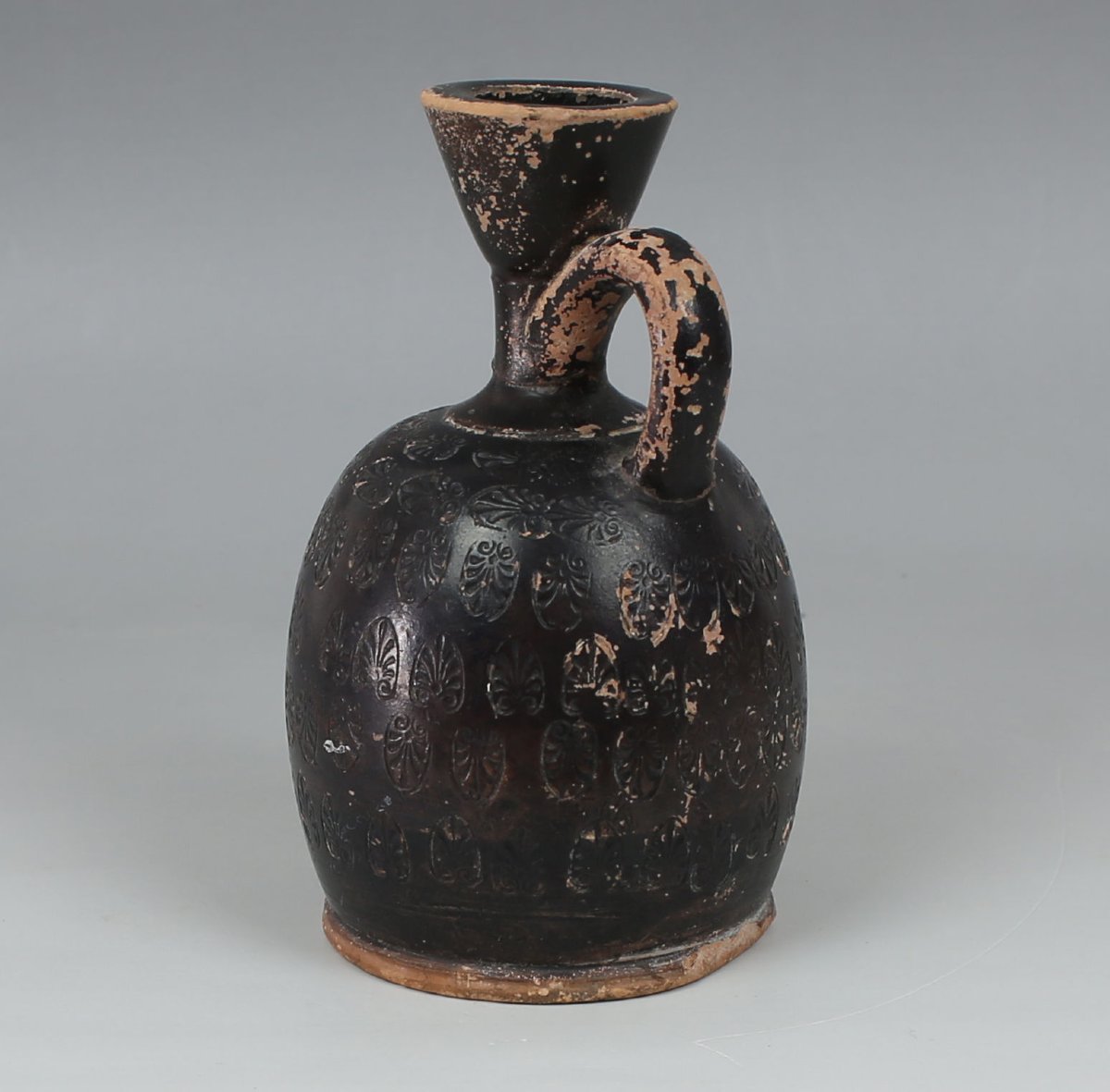
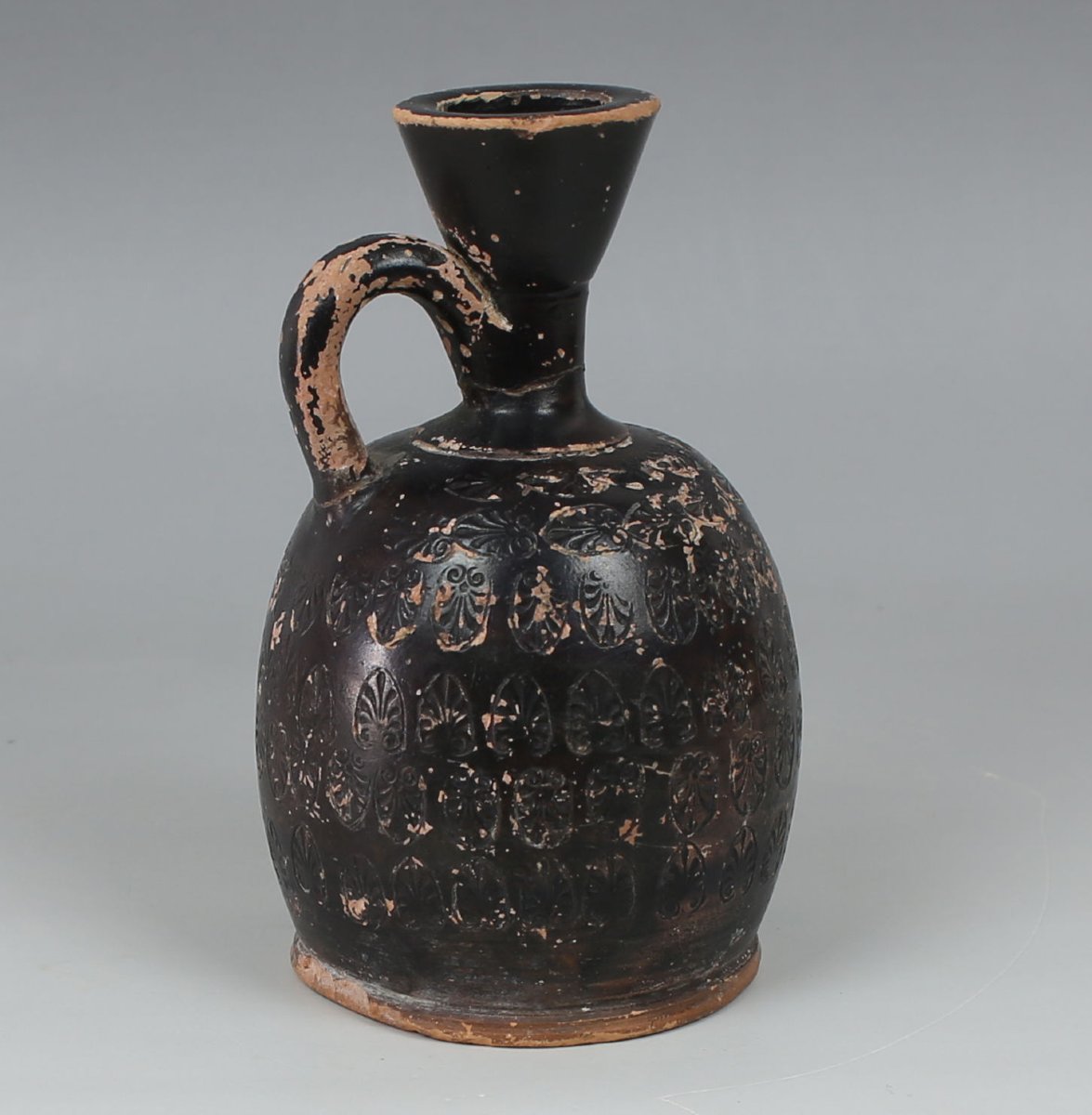
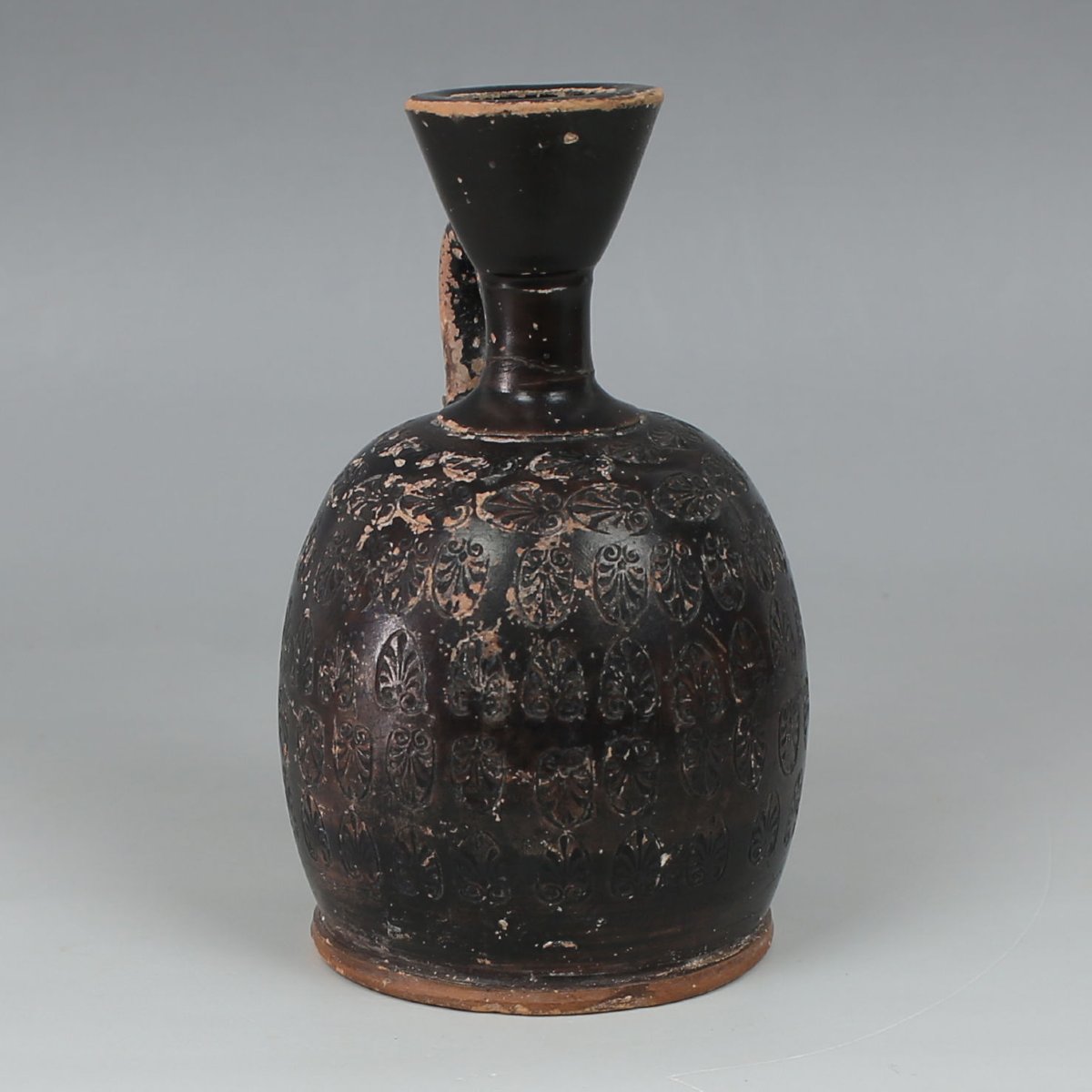


Elegant squat black-glazed lekythos from the Greek Classical period, examined under ×10 magnification and raking light. Its form and firing display a remarkable balance and technical precision: a compact ovoid body, a flaring truncated-conical neck with a slightly rolled lip, and a flat ribbon handle joining the shoulder to the neck.
The original satin black glaze is well preserved, showing minor ancient wear—tiny edge chips, light surface abrasions, and firing pinholes—authentic signs of natural archaeological aging.
The stamped palmette decoration, arranged in horizontal registers, remains sharp and regular, attesting to expert ancient craftsmanship. No repainting, restoration, or filling: the piece retains complete museum integrity.
Technical details
Object: Squat lekythos with palmette decoration
Material: Fine terracotta with black glaze
Culture: Greek
Period: 5th–4th century BC
Dimensions: H. 105 mm × D. 60 mm
Technique: Fine wheel-throwing; reduction firing; stamped decoration applied before firing
Decoration: Stylized palmettes in superposed registers, impressed into the fresh clay
Condition: Very good; consistent wear to the lip and base, uniform stable patina, no visible restoration
Provenance: Ex George Krimitsos Gallery, Paris (1971–1973) → Ex Nina Borowski – Archéologie (1974) → Former European private collection
Authenticity: Certificate of authenticity included; verified under ×10 magnification and raking light, confirming coherence of glaze, patina, and deposits
Historical context
The squat lekythos belongs to the family of small oil vessels used in Classical Greece for toilet rituals, banquets, and votive offerings. It contained perfumed oils dedicated to domestic deities or to the dead.
The palmette motif, emblematic of 5th-century BC Greek ceramics, symbolizes vitality, renewal, and cosmic order. In southern workshops—particularly Apulian—it often replaces figural imagery in favor of a more abstract and decorative language, focused on symmetry and rhythm.
Formal and material analysis
Morphology: Well-rounded ovoid body, flaring neck with a clean lip, proportioned ring base, vertical ribbon handle firmly attached.
Decoration: Palmettes impressed before firing, arranged in neat horizontal registers; sharp relief, confident workmanship.
Surface: Metallic-black glaze, stable and lightly satin; minor edge wear and coherent micro-chipping.
Fabrication: Precise wheel-throwing with concentric traces under glaze; well-controlled reduction firing.
Aging: Stable patina, faint mineral deposits, no modern restoration detected.
Cultural significance
This miniature vessel embodies the aesthetic discipline and measured harmony of Greek Classical pottery. Its pure form, intact original glaze, and documented provenance make it a museum-quality piece, both aesthetic and instructive. It exemplifies the technical and symbolic ideals of 4th-century BC Greek production—a genuine witness to the material culture of Hellenic refinement.
Provenance & guarantees
Provenance: European private collection, certified.
Authenticity: Certificate and expert documentation provided.
Sale: Conducted through a specialized network of accredited antiquities dealers, validated by recognized experts, in accordance with the highest professional standards of the art market.
Explore similar pieces and discover your ideal find:
archeology