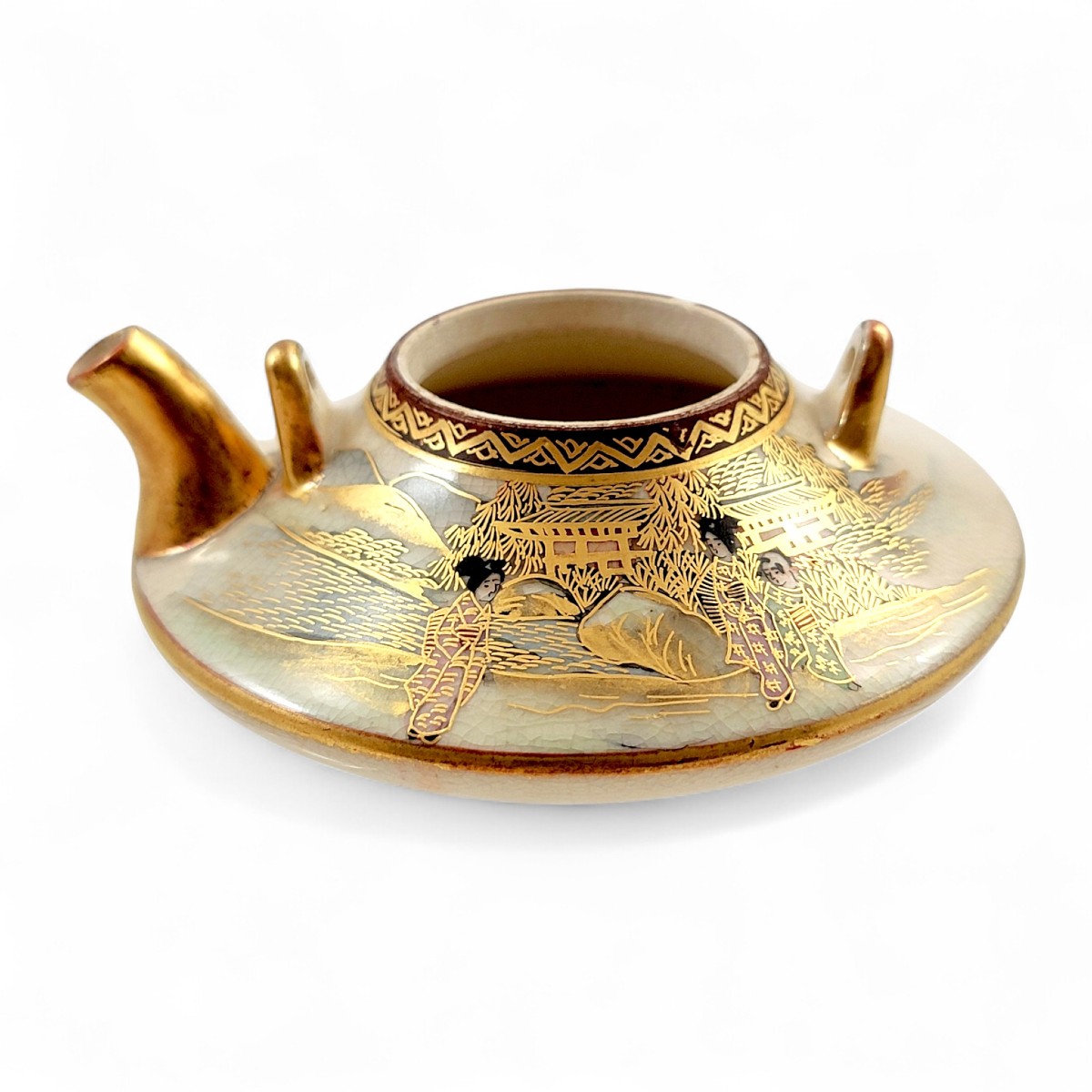
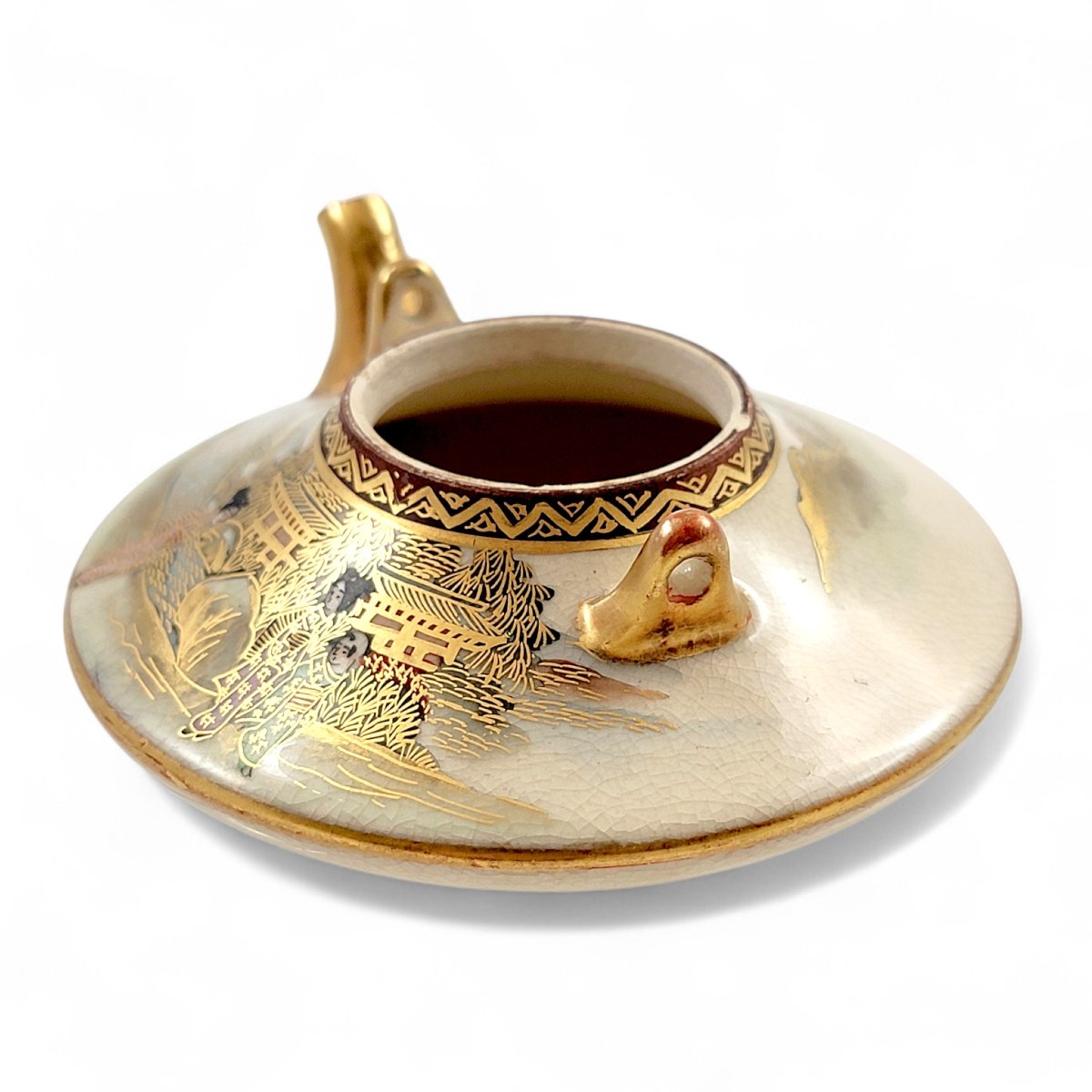
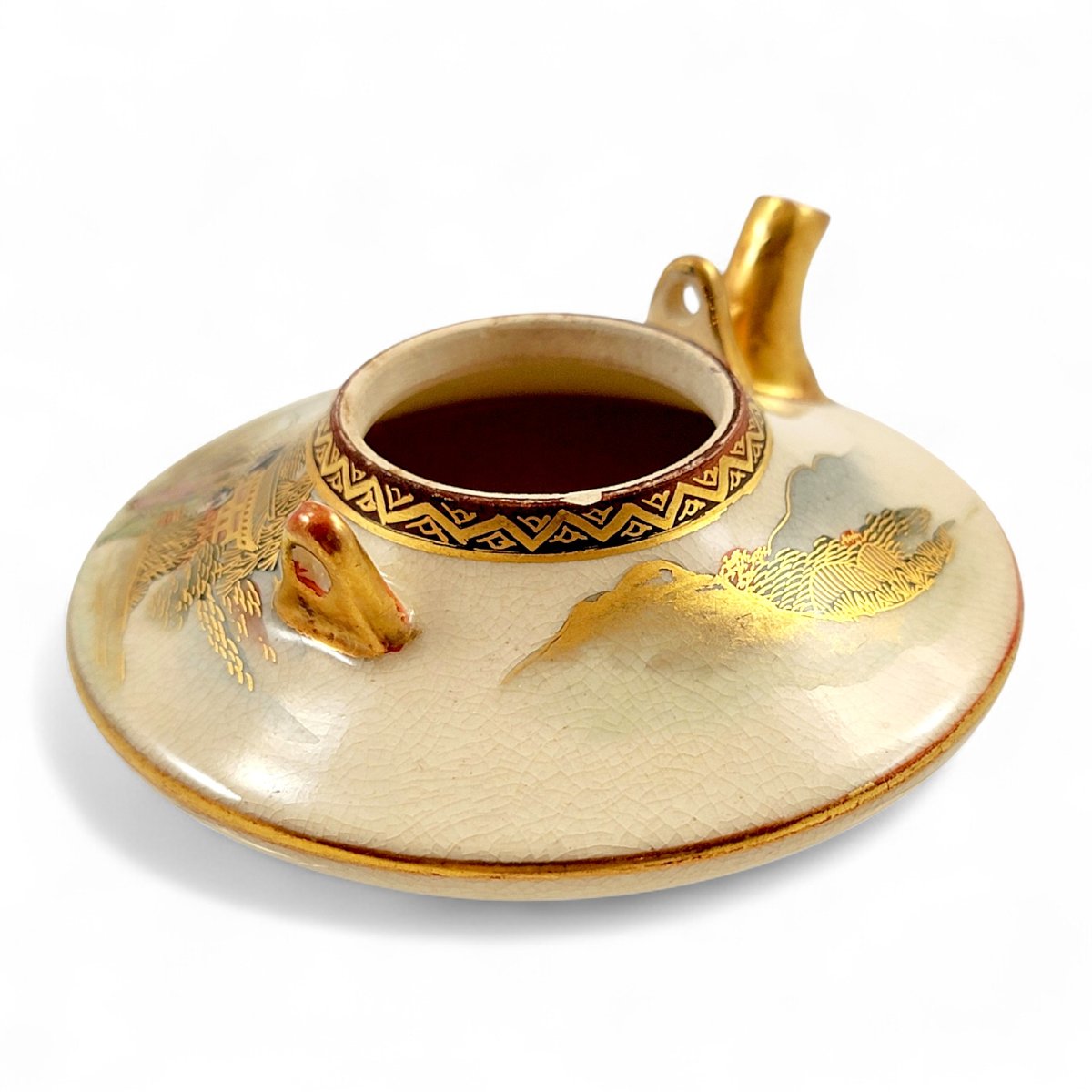
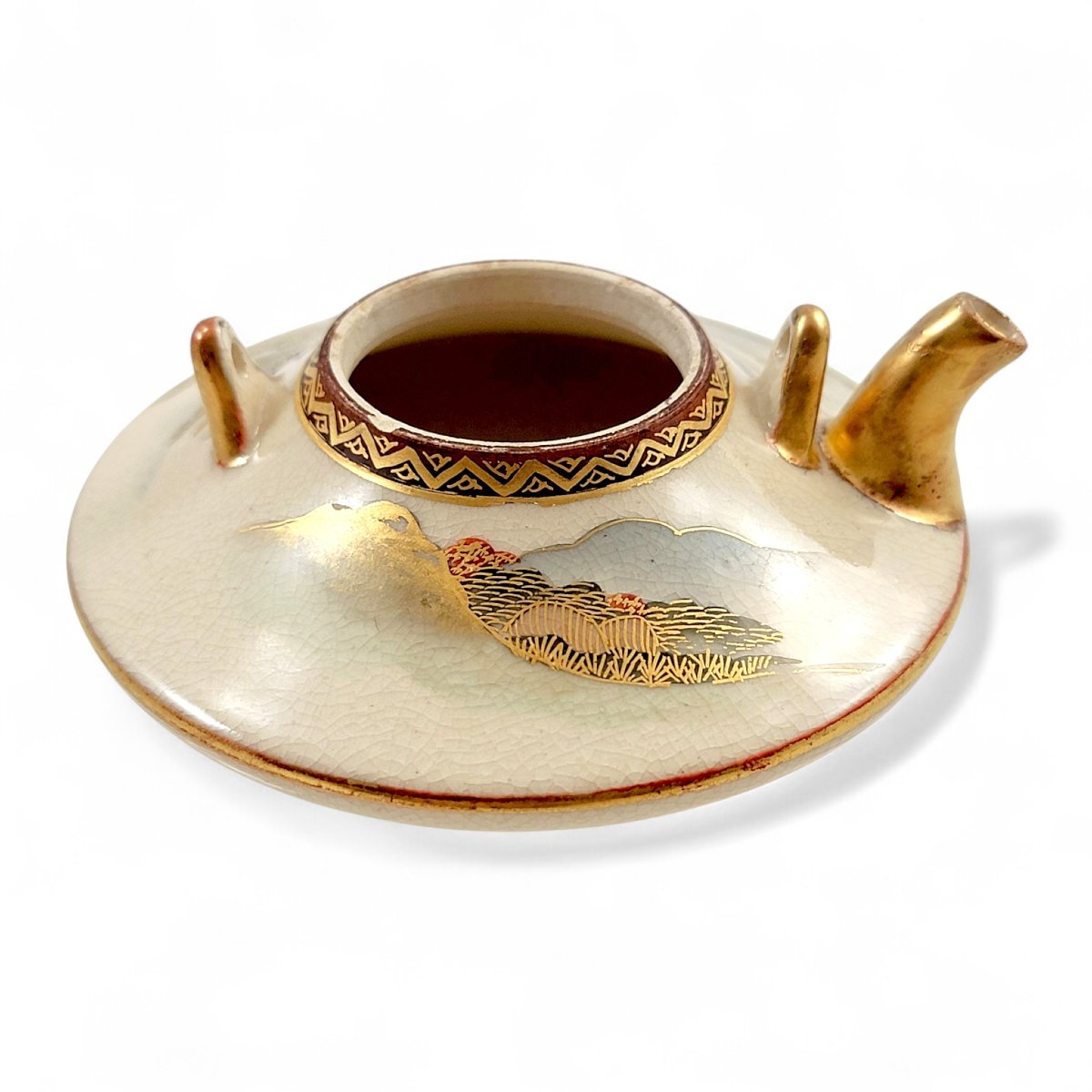
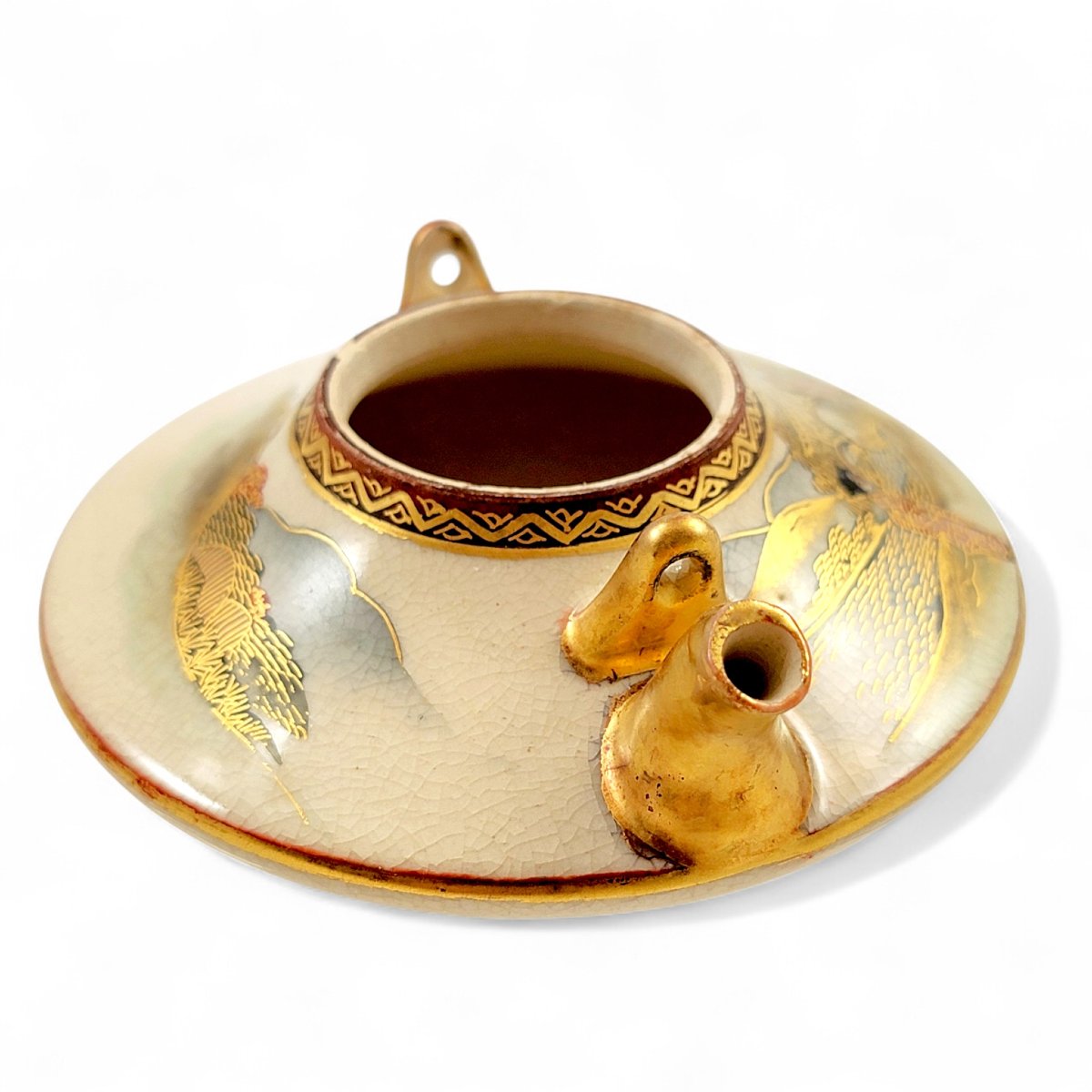
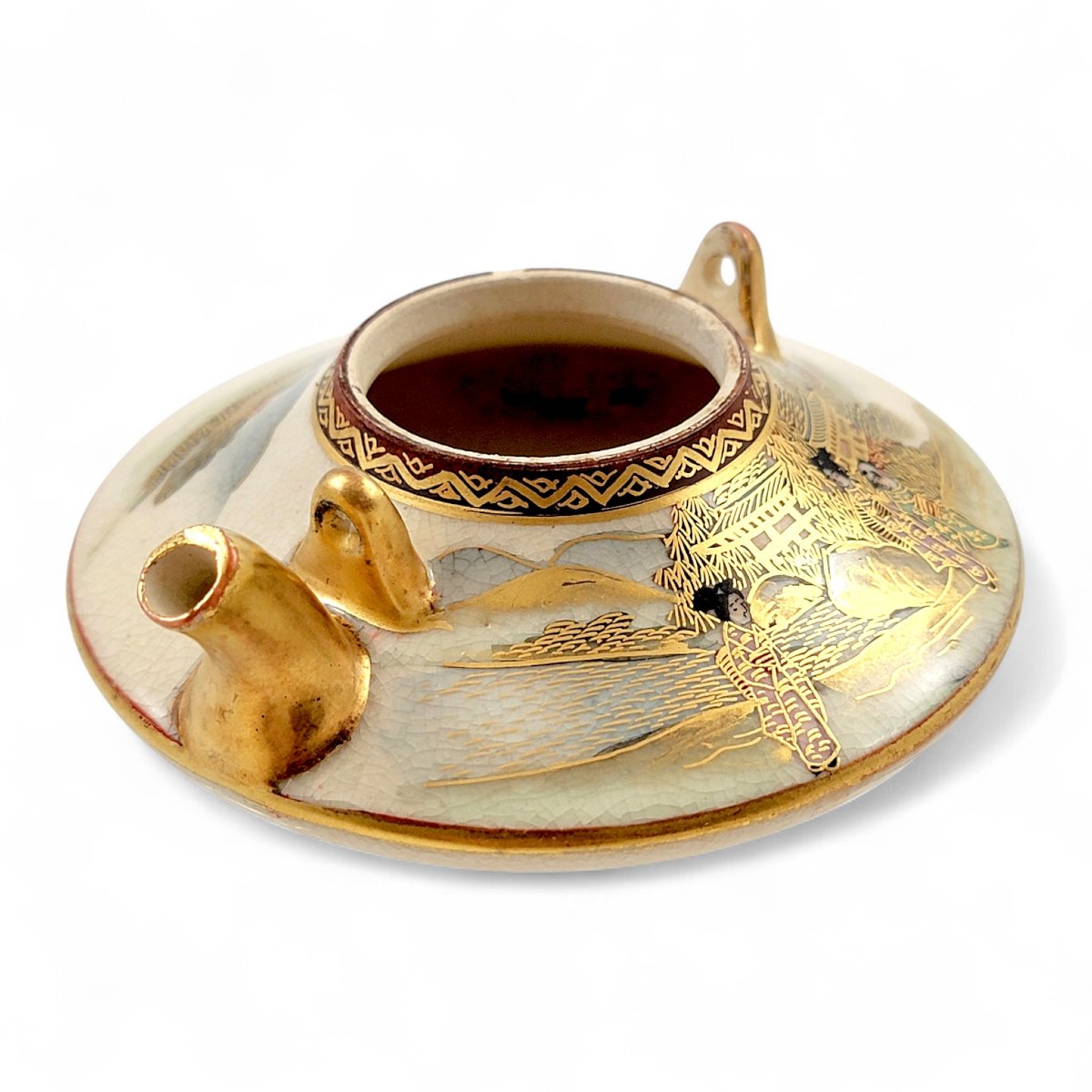
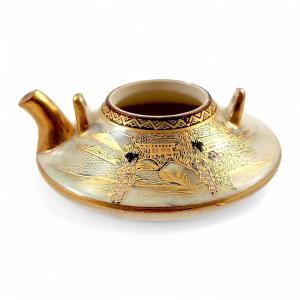


Kyoto Satsuma Koro Incense Burner With Bijin Ladies, Kotobuki-dō Workshop, Meiji Japan C. 1890
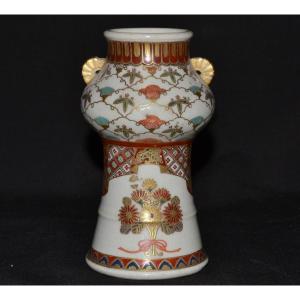
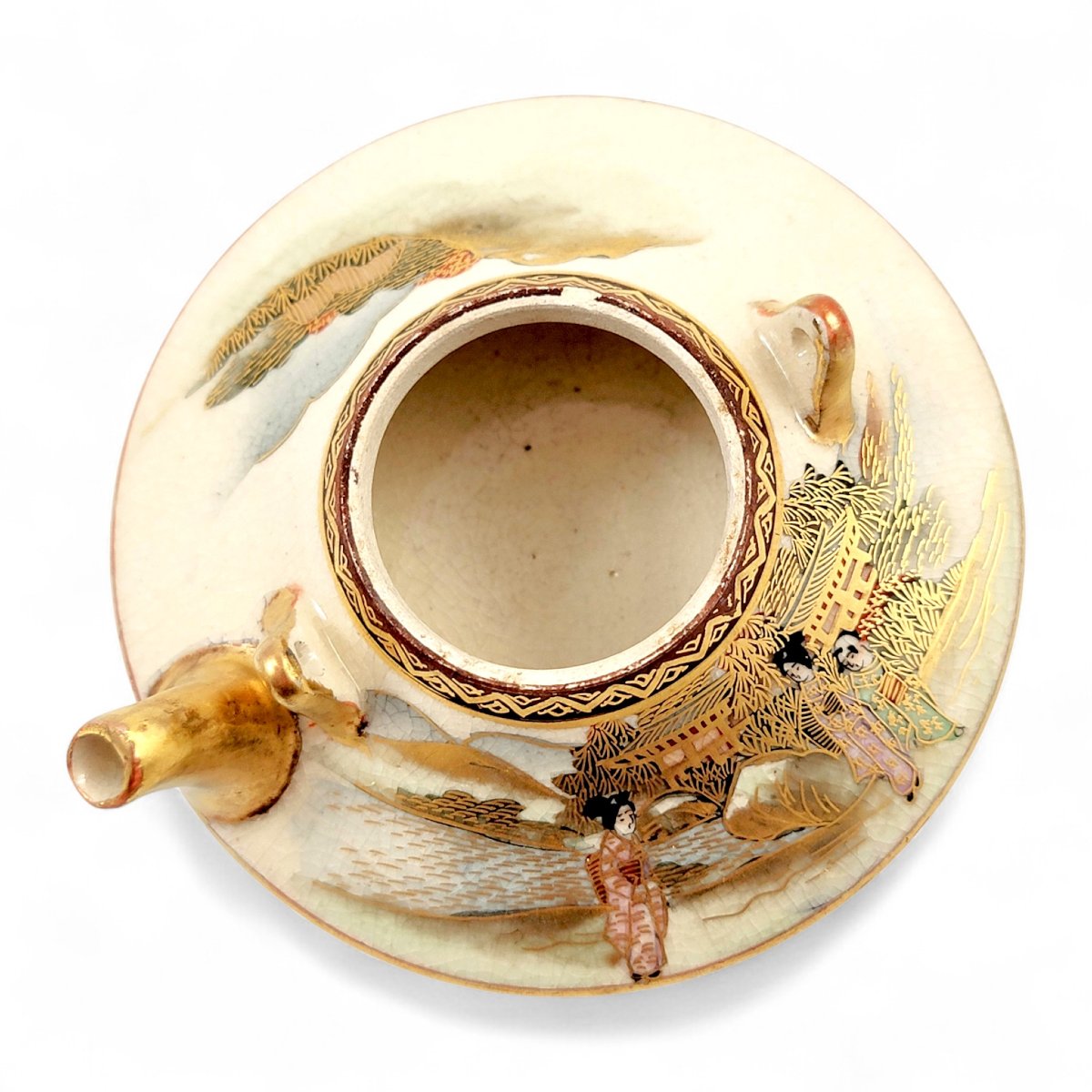
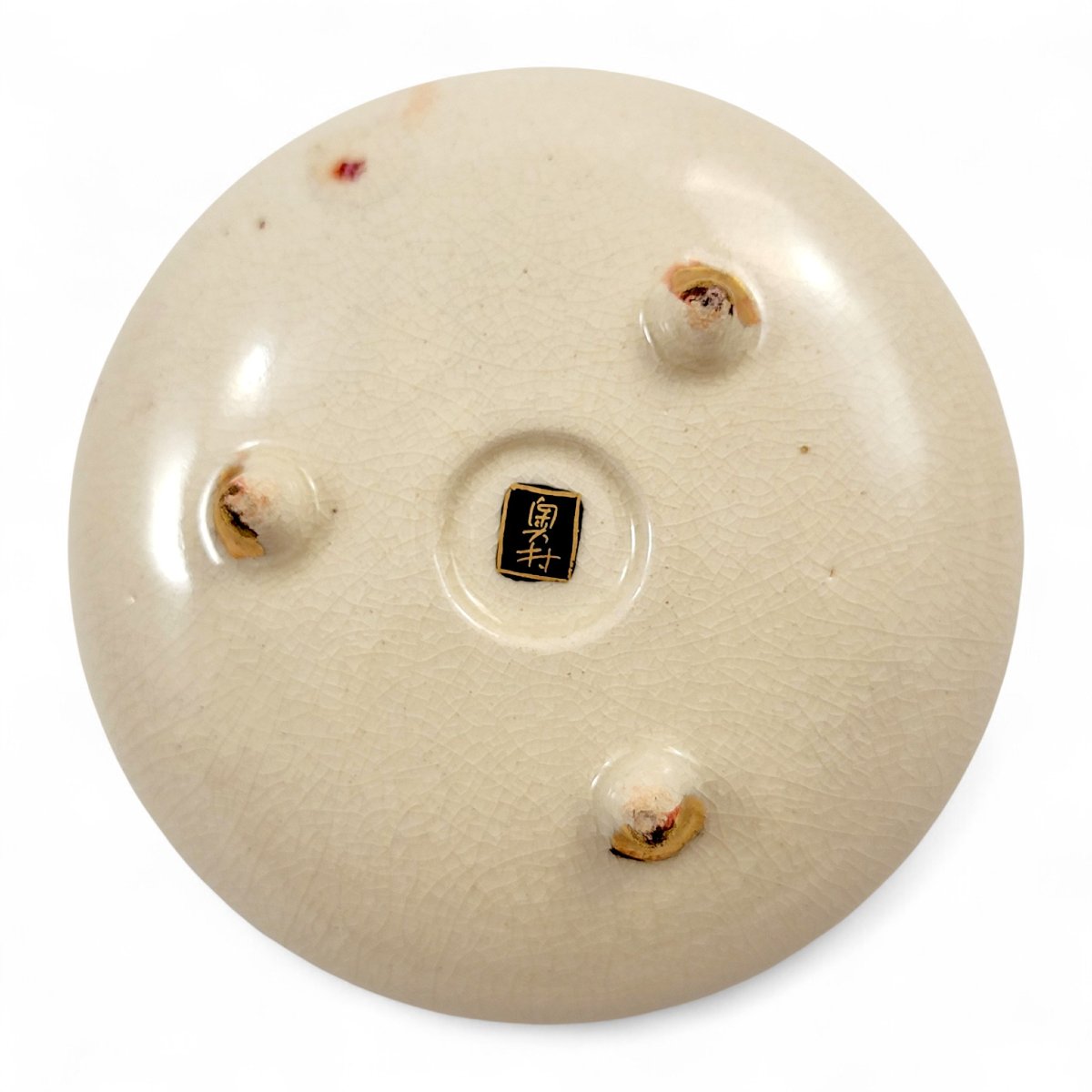
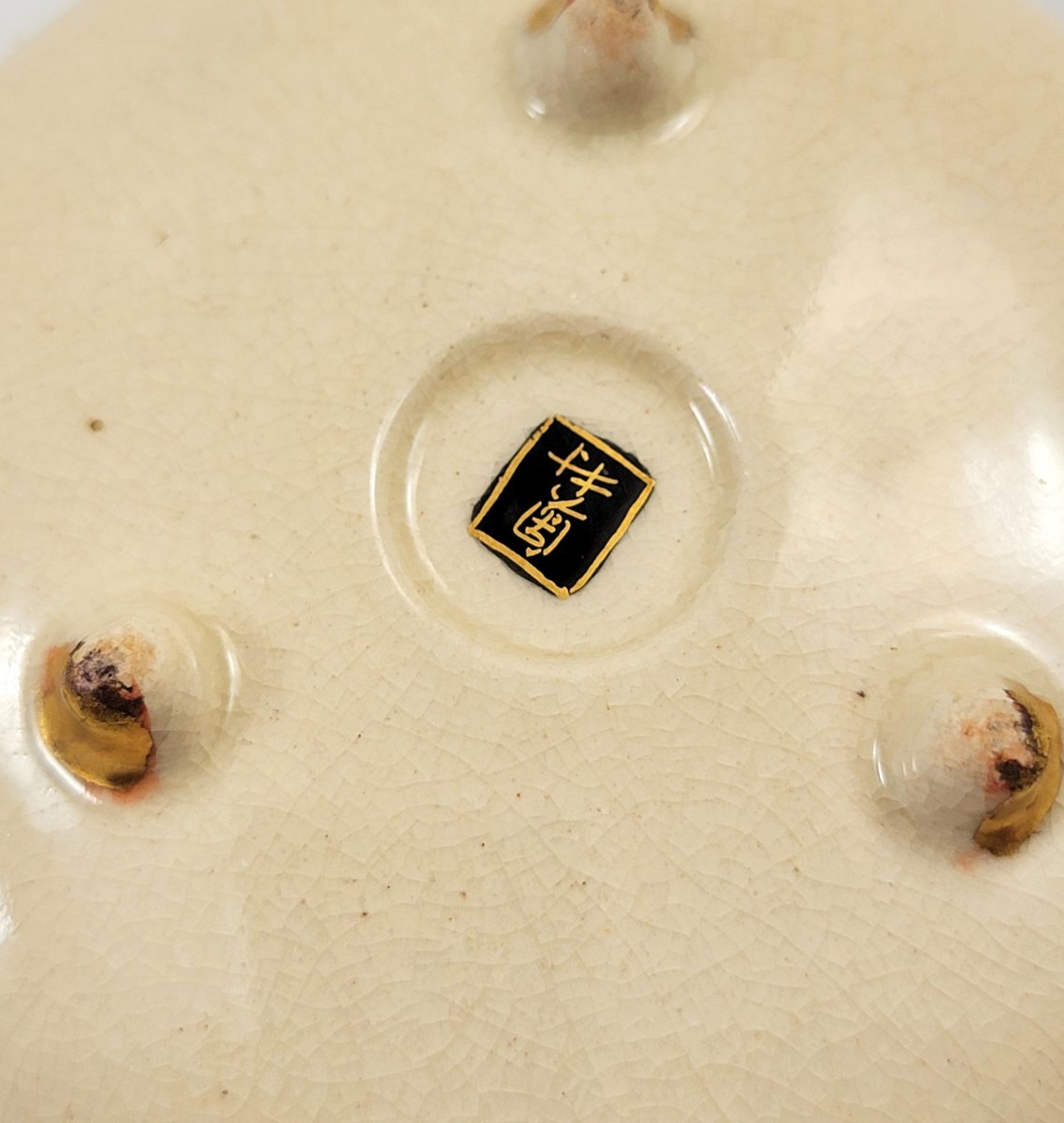
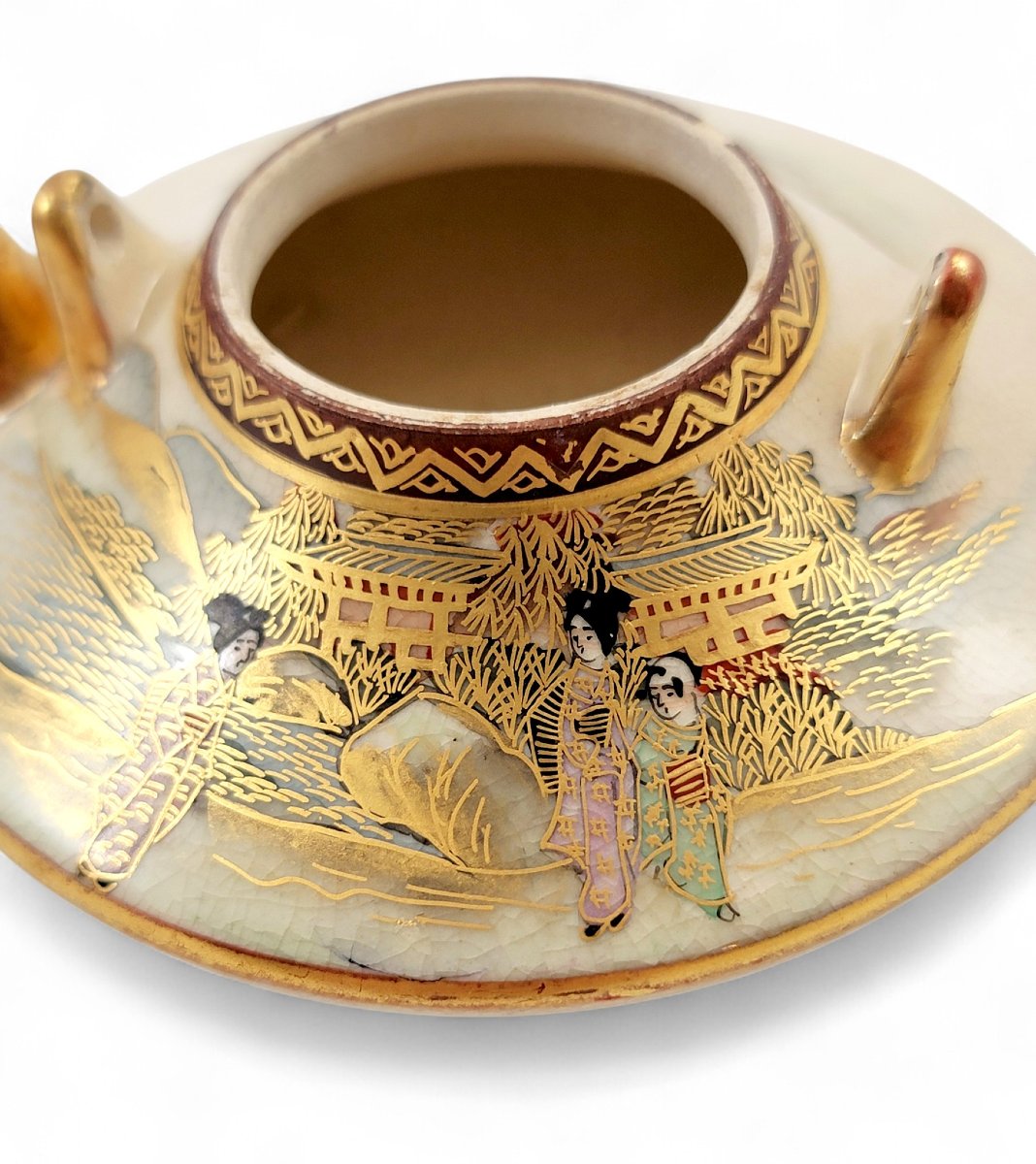
A distinguished Kyoto-Satsuma koro (incense burner) from the respected Kotobuki-dō workshop, created during the late Meiji period (c. 1890). Finely potted in a low, wide tripod form with three raised feet, the piece is richly hand-painted in gilt and soft enamels. The principal decoration shows two elegant bijin (ladies) in patterned kimono strolling beside pavilions and trees along a riverbank — a refined and enduring theme within Meiji decorative arts. A geometric border in gold and iron-red encircles the neck, serving as a unifying design. The warm ivory glaze displays the fine crackle characteristic of high-quality Satsuma ceramics produced in Kyoto ateliers following the Kinkozan tradition. The underside bears a gilded Kotobuki-dō mark, confirming reputable origin.
Historical Background
During the Meiji era (1868–1912), Kyoto workshops achieved international acclaim for their richly detailed Satsuma ware, created for connoisseurs in Japan and abroad. Kotobuki-dō ranked among the more distinguished studios, producing highly finished incense burners and miniature vessels for the elite domestic market. Bijin imagery — graceful women evoking poetry, elegance, and the four seasons — was particularly prized, and remains a focus for collectors of Japanese ceramics today.
Measurements
Diameter: 10 cm / 3.94″
Height: 4 cm / 1.57″
Condition
Good antique condition with strong visual presence. A small rim chip and the original lid is now missing, with some light rubbing to the gilding and minor glaze wear at high points consistent with age. No structural restoration observed. Displays beautifully.
Shipping & Packaging
• Fully tracked and insured worldwide shipping
• Professional, secure packaging with careful handling
• Customs documentation provided where required
• Photographs form part of the description; questions are welcome
Period: 19th century
Style: Asian art
Condition: Good condition
Material: Earthenware
Diameter: 10 cm
Height: 4 cm
Reference (ID): 1640863
Availability: In stock