THIS OBJECT WAS SOLD
Iron Tsuba Aori Gata With Scroll Decoration - Edo Period - H. 8.1 Cm.
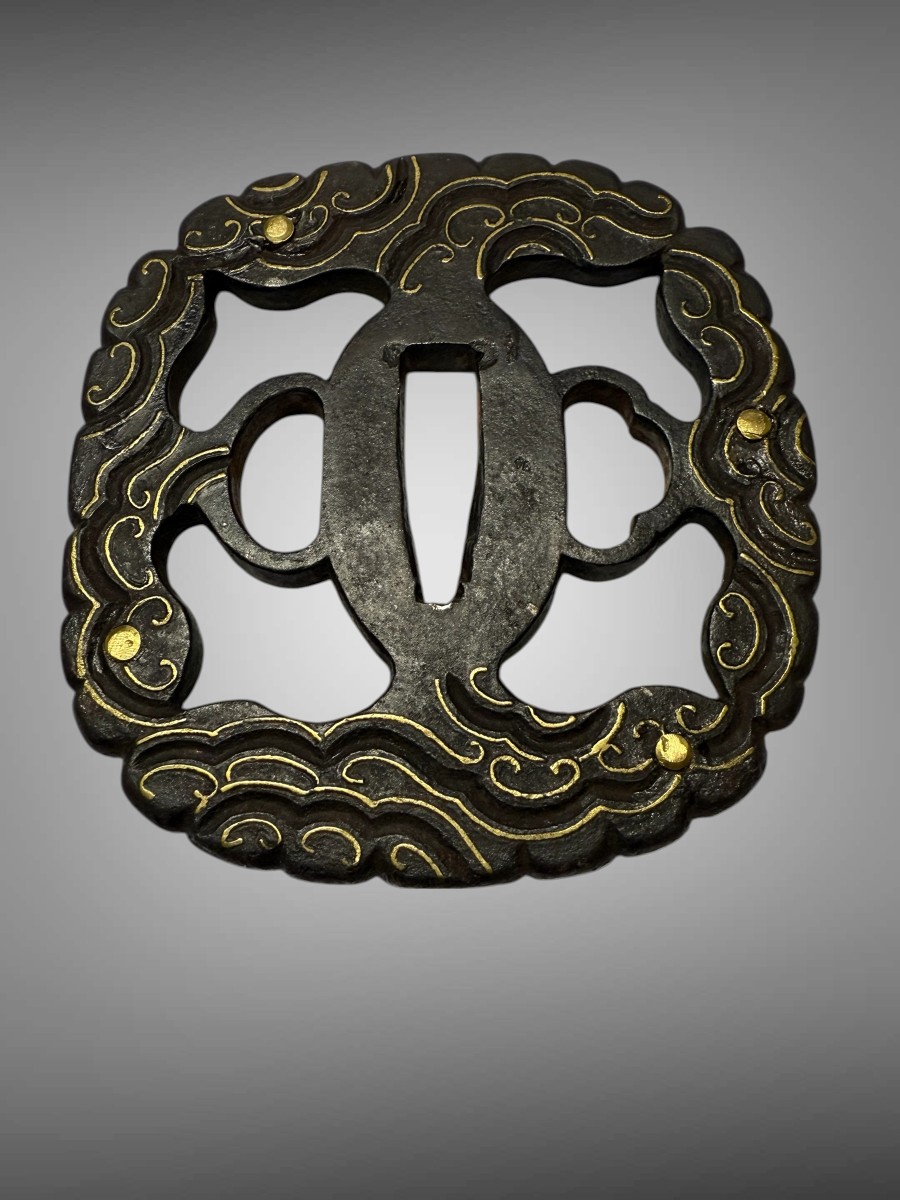
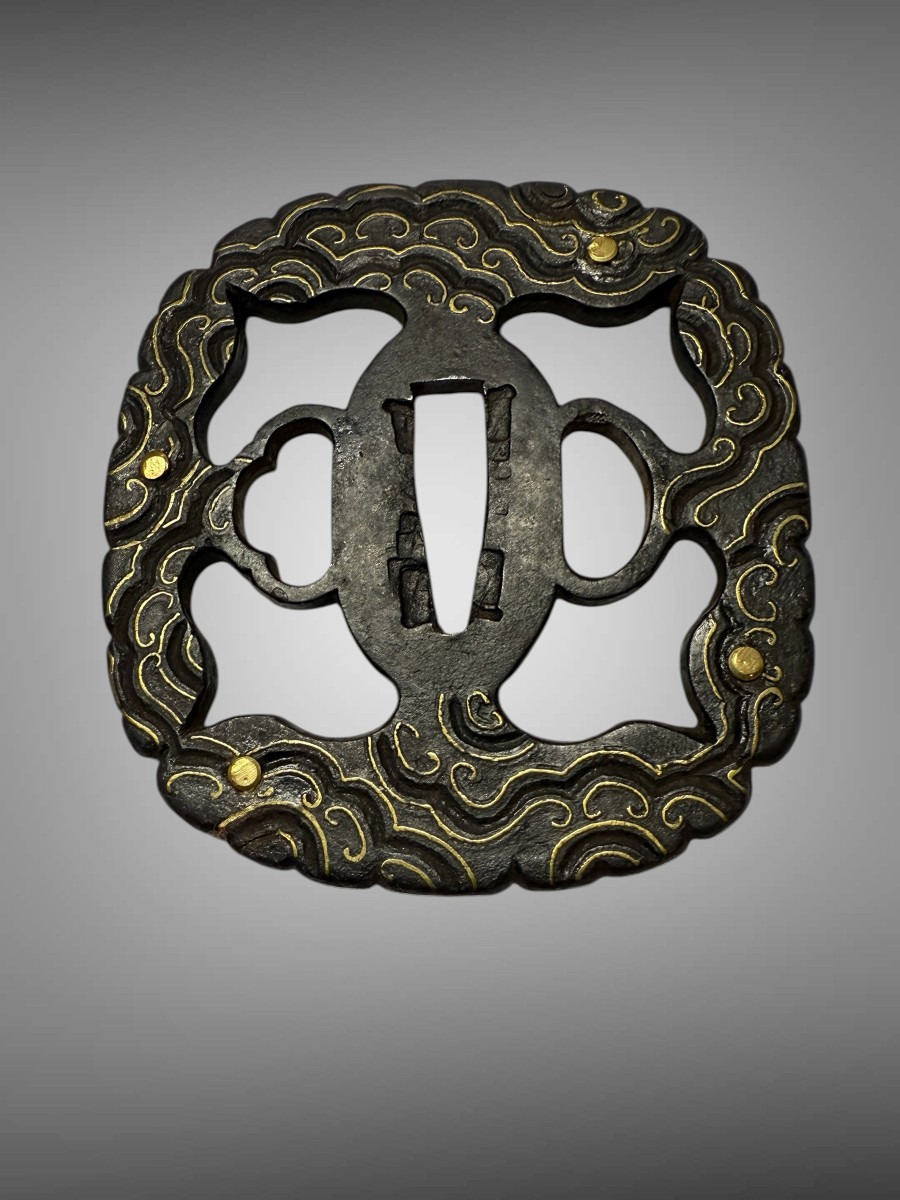
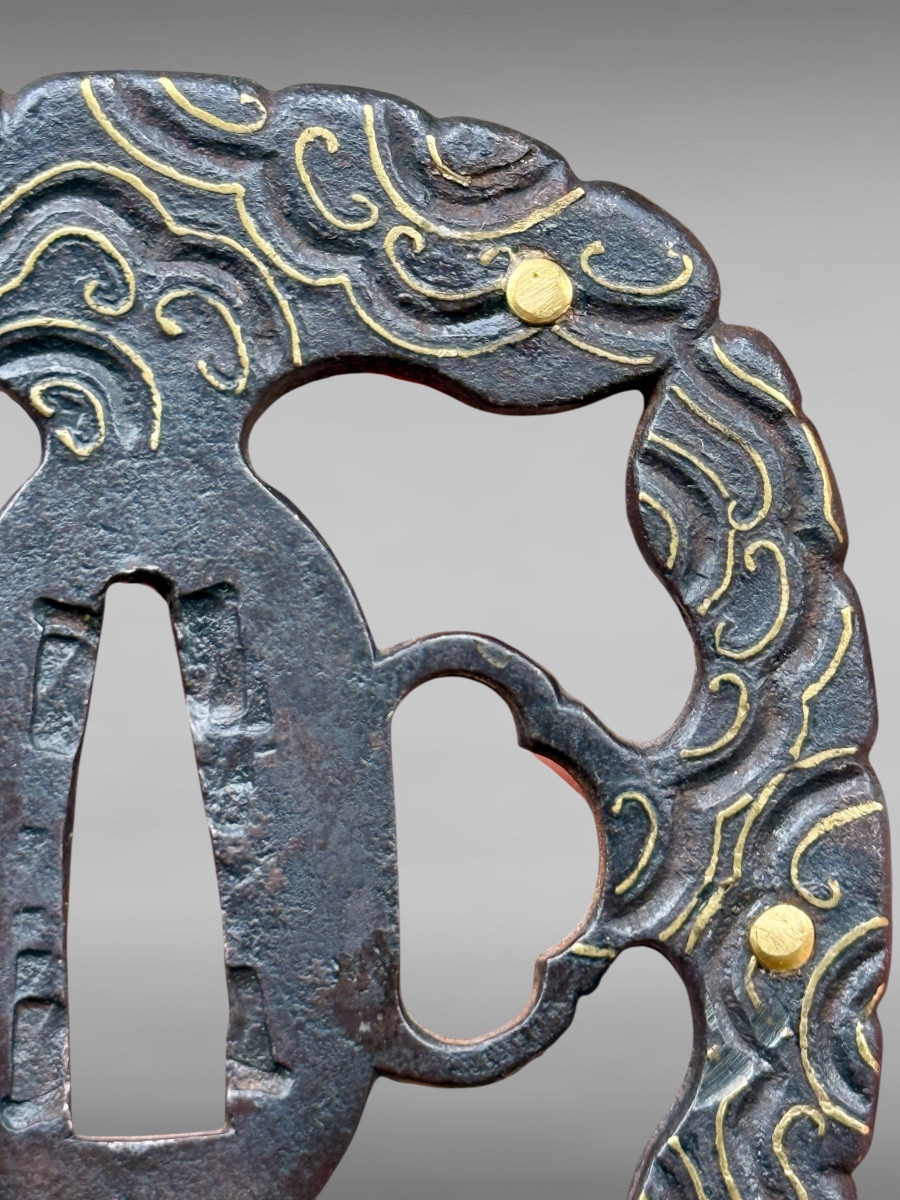
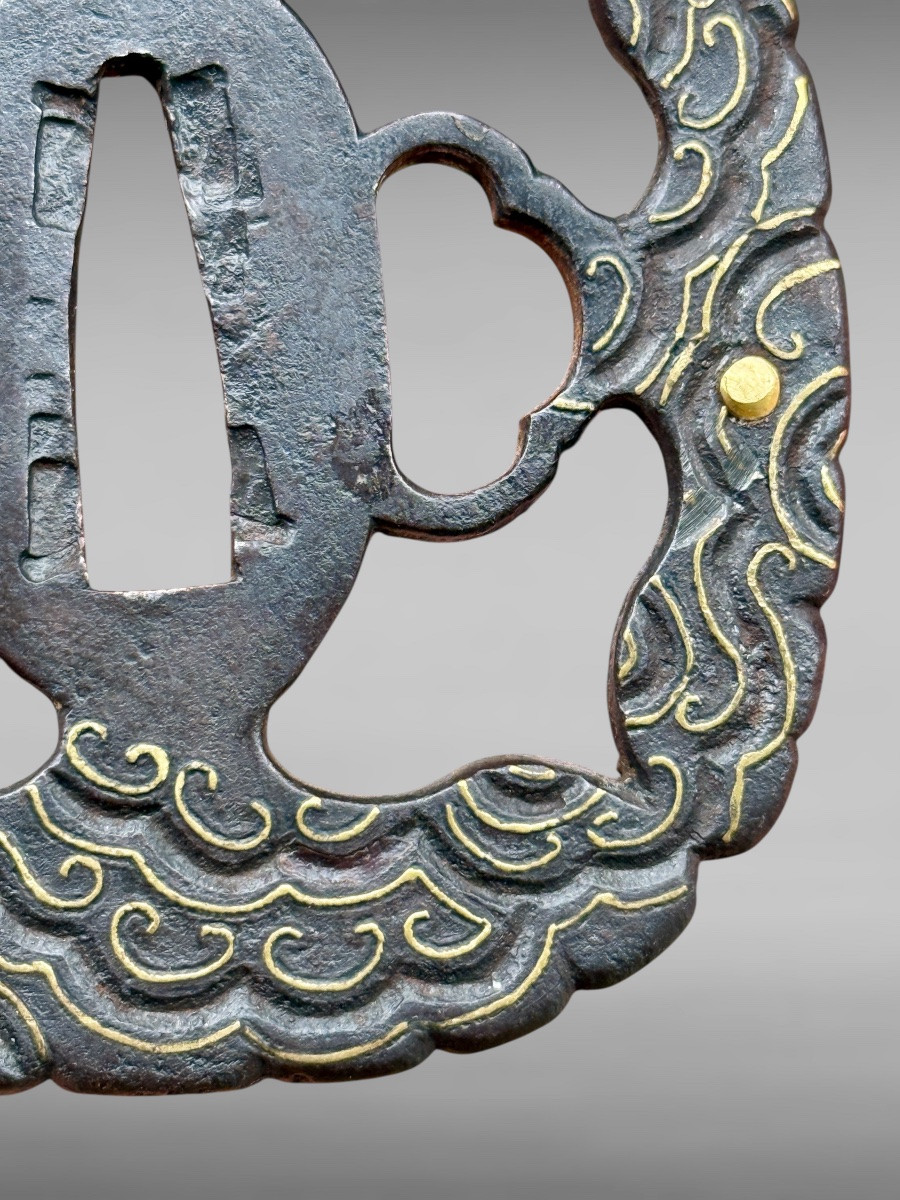
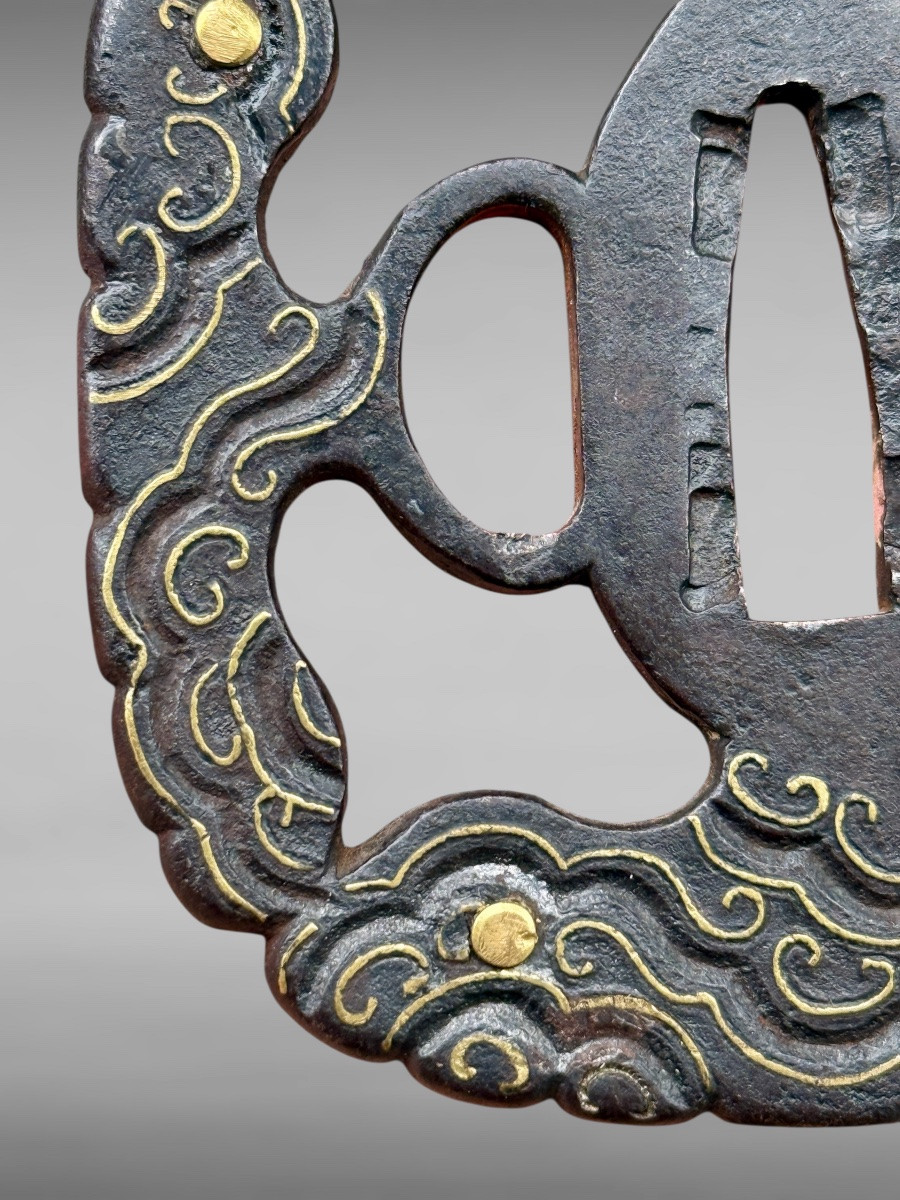
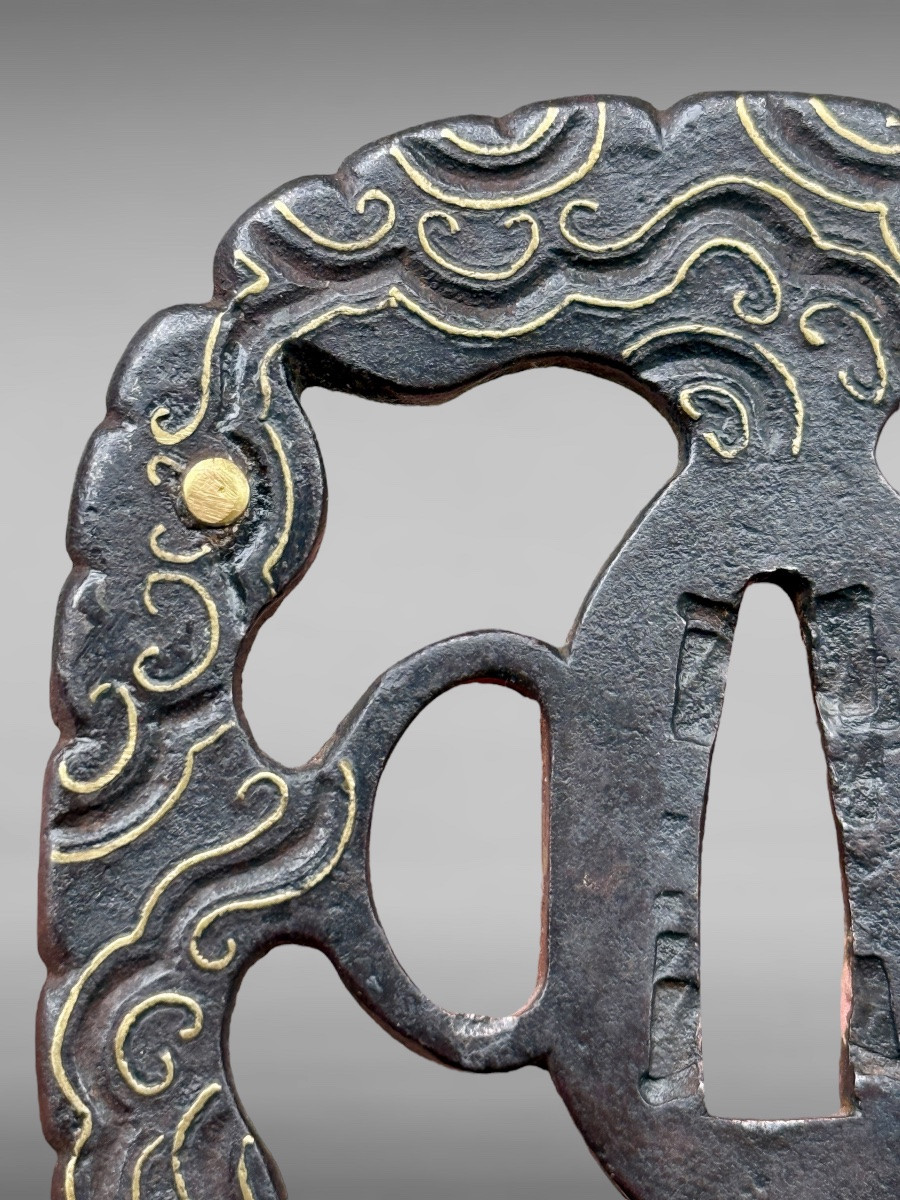
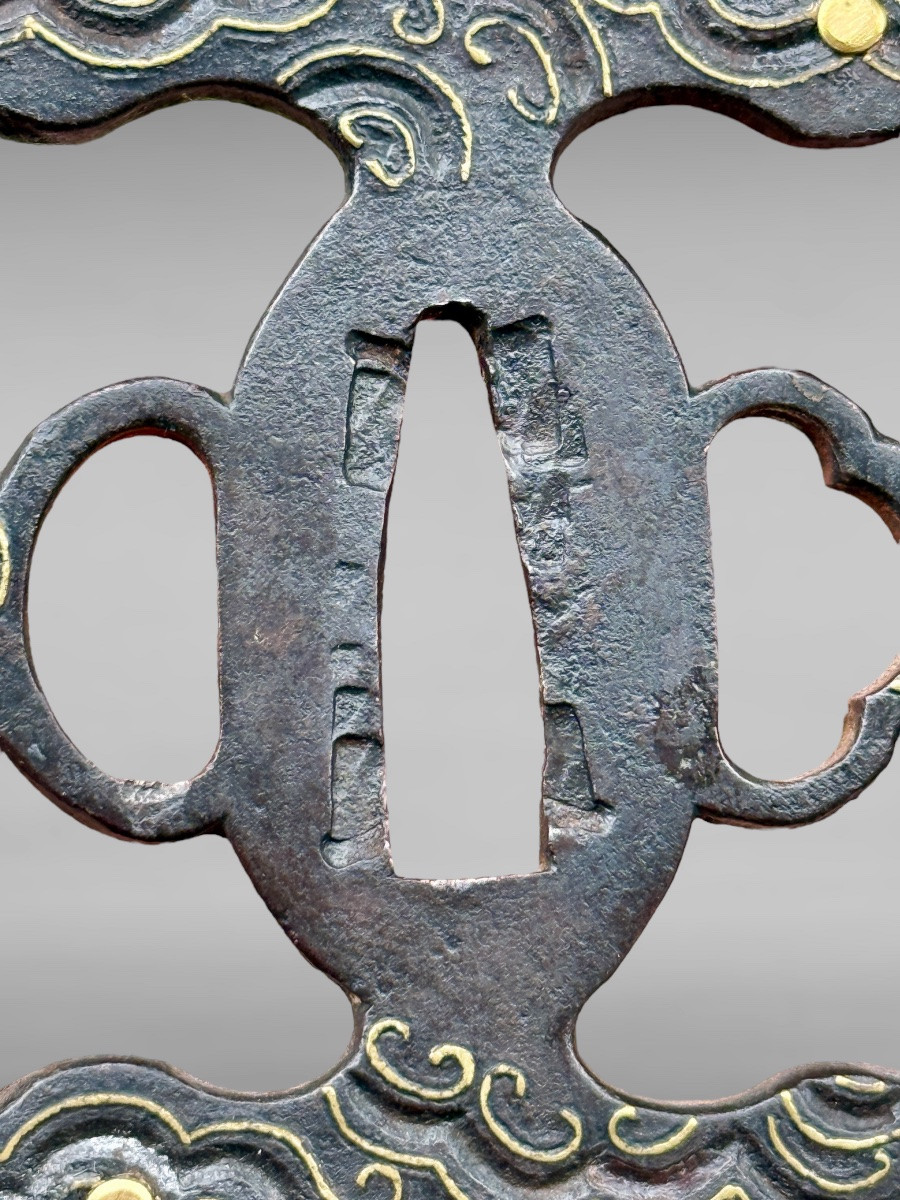
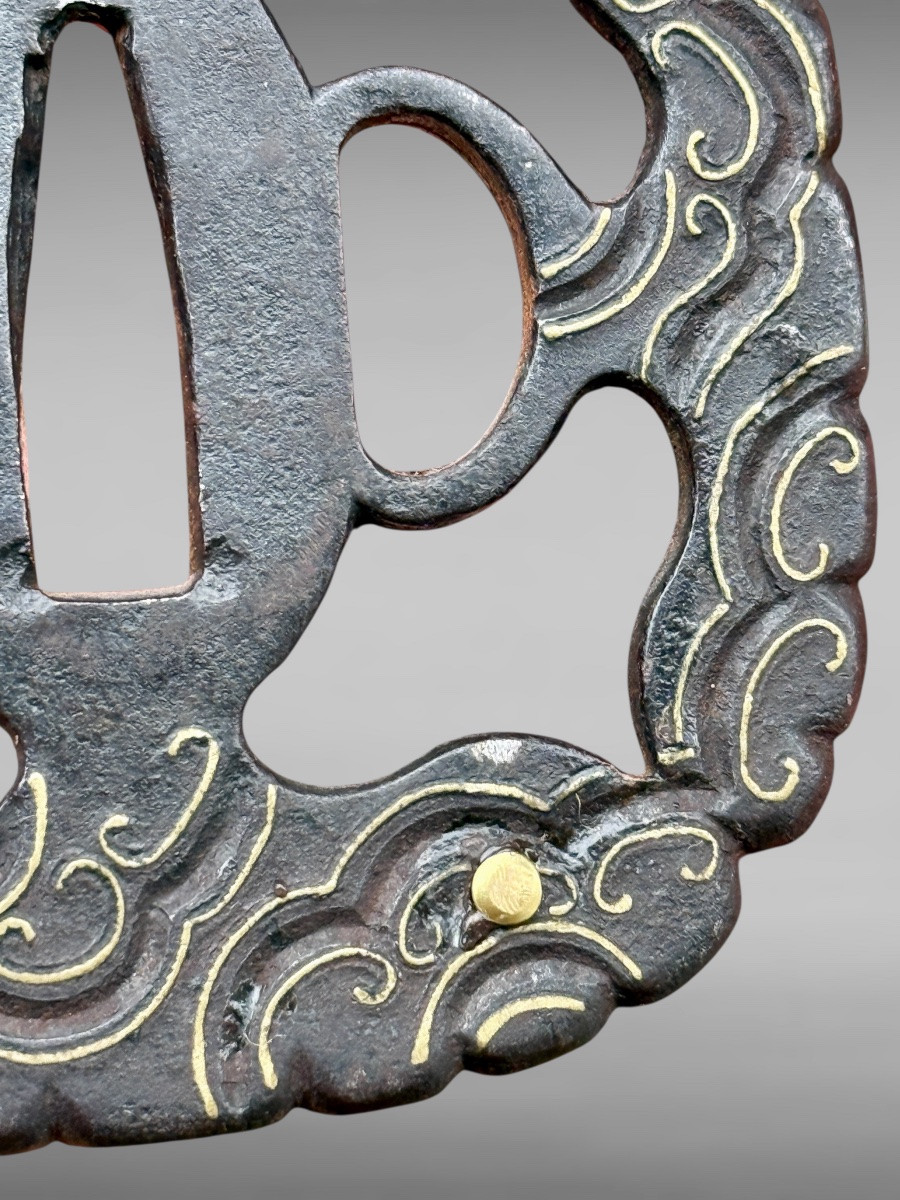
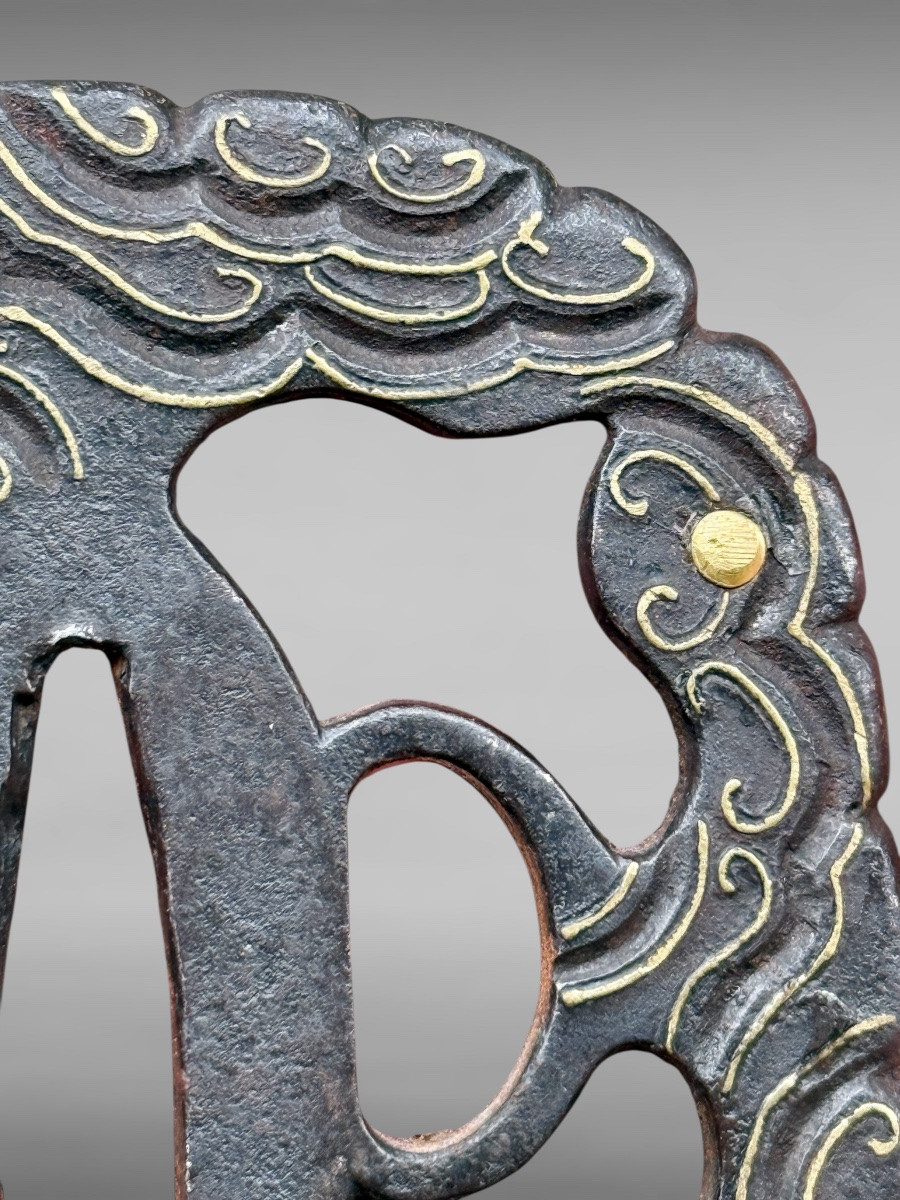
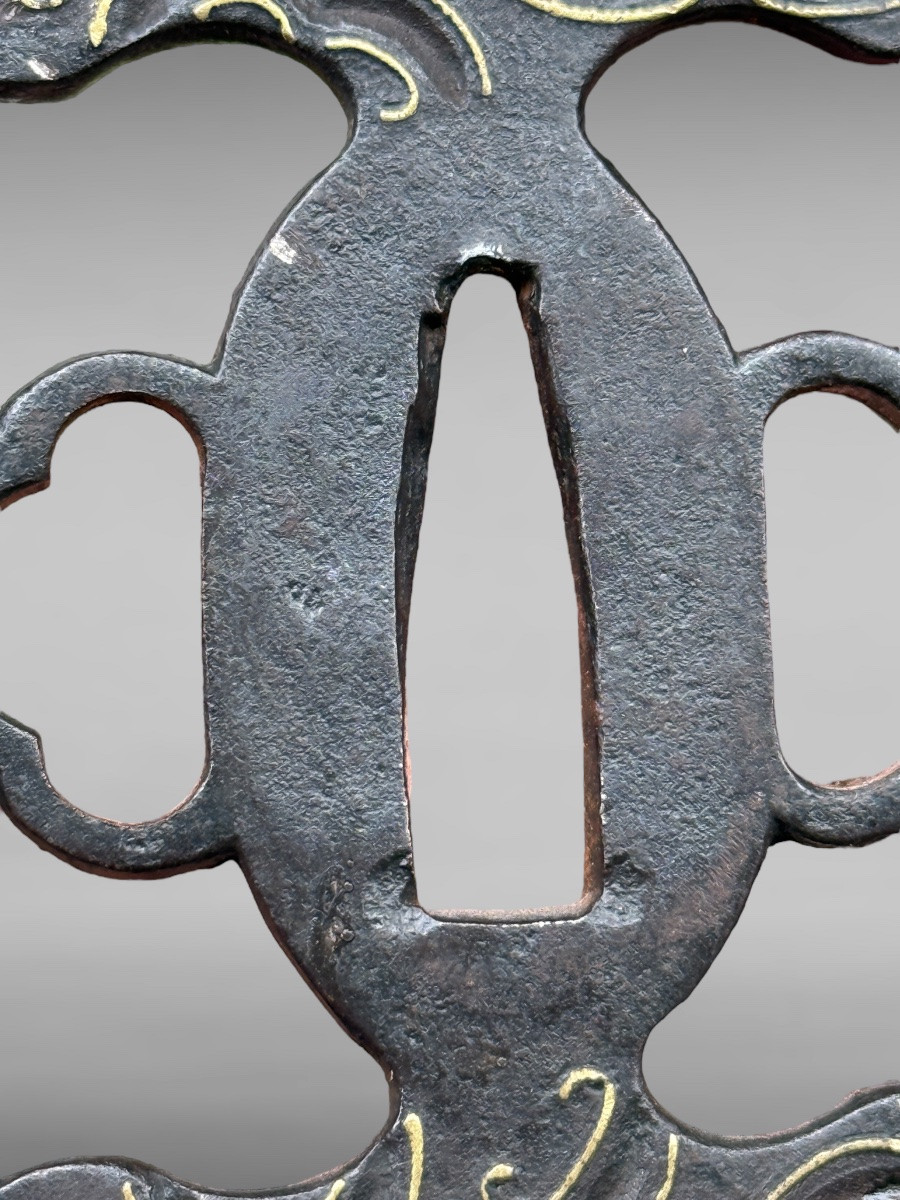
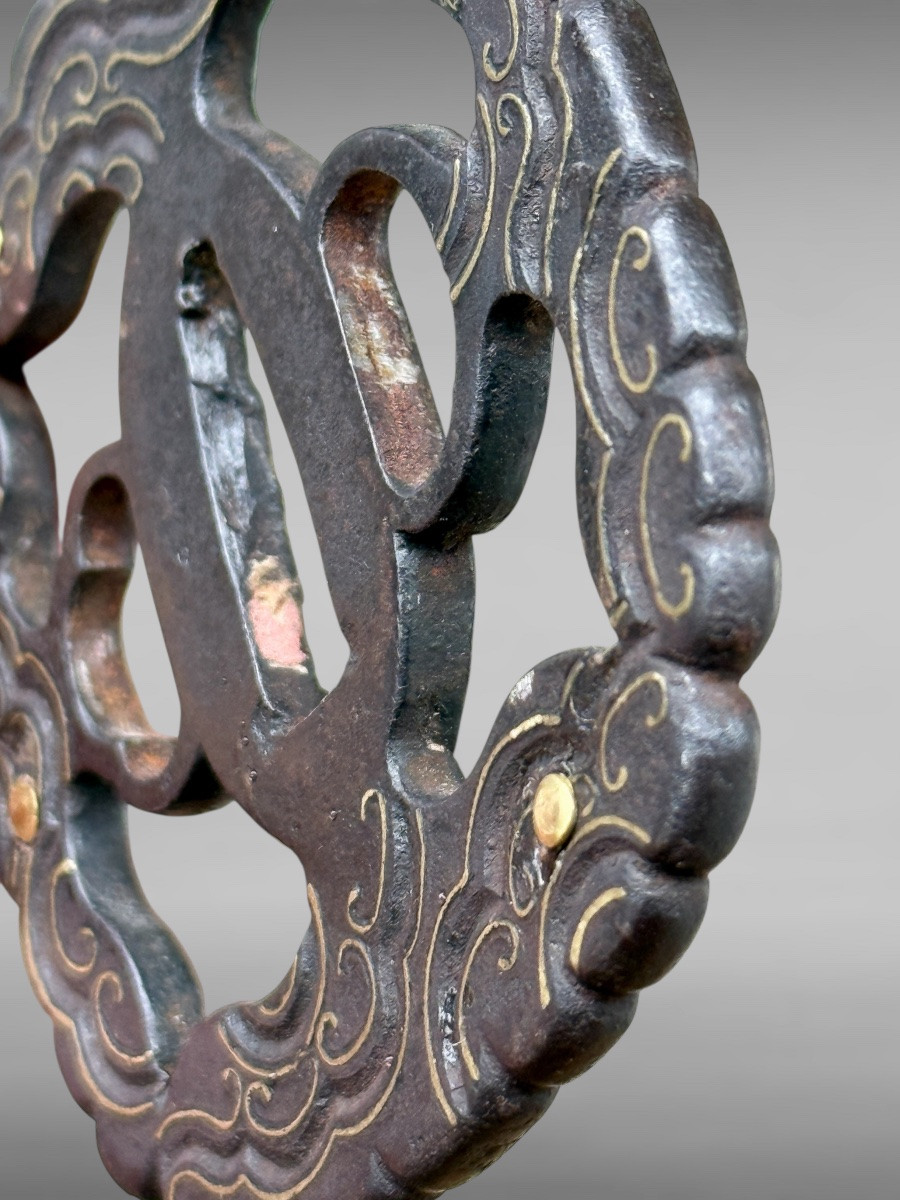
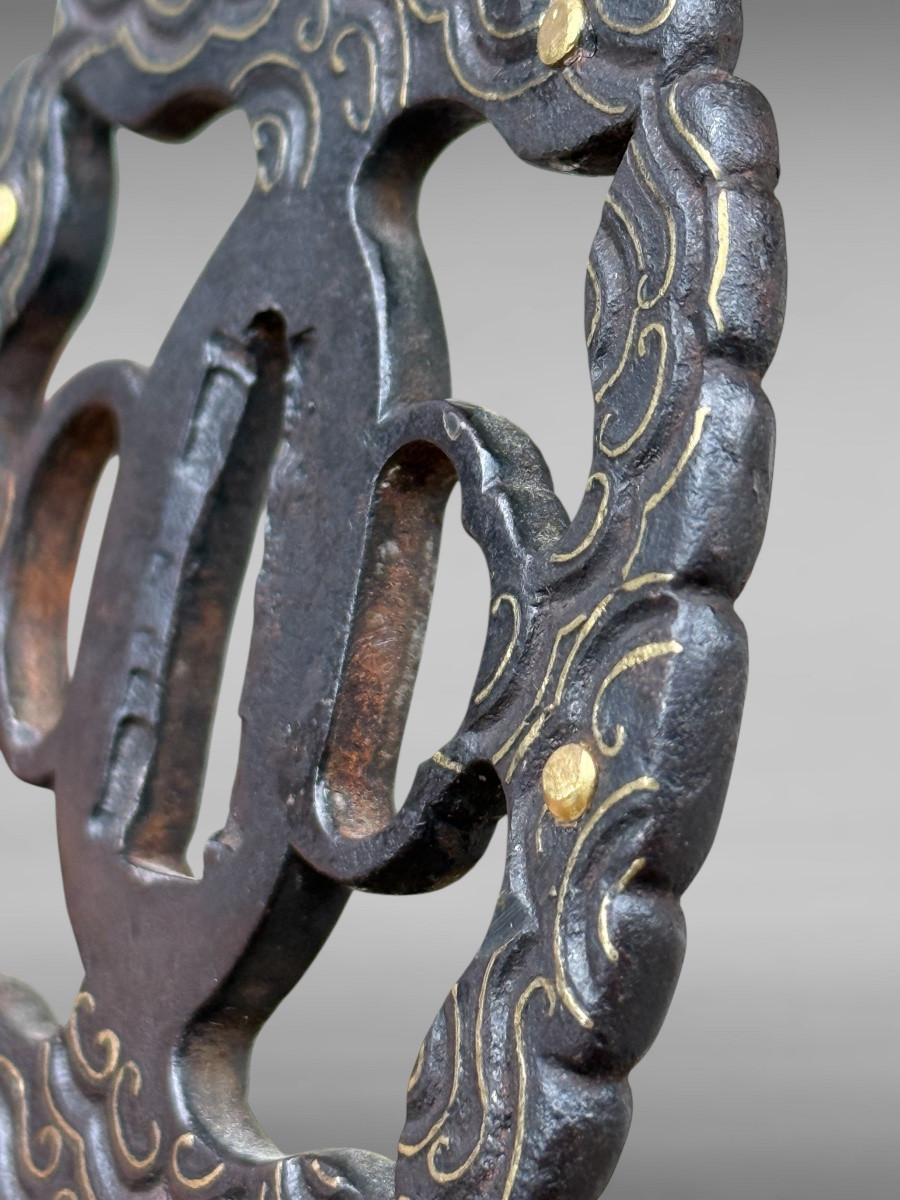


Subject:Tsuba (鍔) – Japanese sabre guard Sabre type: katana Form:Mokko-gata (four-lobed melon shape) School/ Tradition:Heianjō-zōgan Kaga or Aizu Shōami Period:Late Edo Period (circa 1750–1850) Geographical Origin:Japan, Kaga (Kanazawa) or Aizu region (present-day Fukushima prefecture) Main material Wrought iron (tetsu) deep brown-black patina Decor Golden brass inlays (nunome-zōgan) forming a stylized network of clouds and waves (雲 波 図, kumo-nami-zu) Point Ornaments Small Embossed Brass Pellets (hira-zōgan), probably symbols of stars or drops of water Dimensions Height: 80 mm — Width: 74 mm—Thickness: 4–5 mm Weight 121 grams Openings Nakago-ana (central) : trapezoidal, slightly worn; Ryōhitsu (lateral) : symmetrical, of elongated oval type Edge (mimi) Rounded and slightly shaped, continuous decoration; hammered appearance and homogeneous patina Seppa-dai (mounting area) Flat surface with slight marks of wear, consistent with a real slide montage The pattern of clouds and waves (雲 波, kumo-nami) belongs to classical Japanese vocabulary. It symbolizes: the perpetual movement of the natural world, celestial and aquatic duality, sometimes divine protection or fluid power (often associated with dragons). This decoration was particularly appreciated in the provinces of Kaga and Aizu, regions renowned for their elegant and peaceful ornamental tsuba themes. The Heianjō-zōgan schools (Kyōto, 15th century) were the first to introduce the use of brass and copper inlays on iron. Their style was transmitted: to the Kaga-zōgan school (Kanazawa), which refined the technique in the 17th century, to the Aizu Shōami school (late Edo), where the patterns became more decorative and symmetrical.
.
.
Explore similar pieces and discover your ideal find:
Edged Weapons