THIS OBJECT WAS SOLD
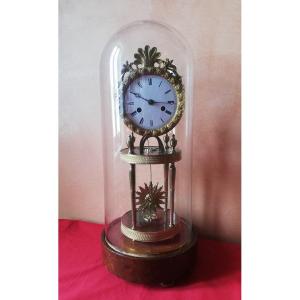
Gilt Bronze Clock, Empire Restoration Period, Signed Ravrio
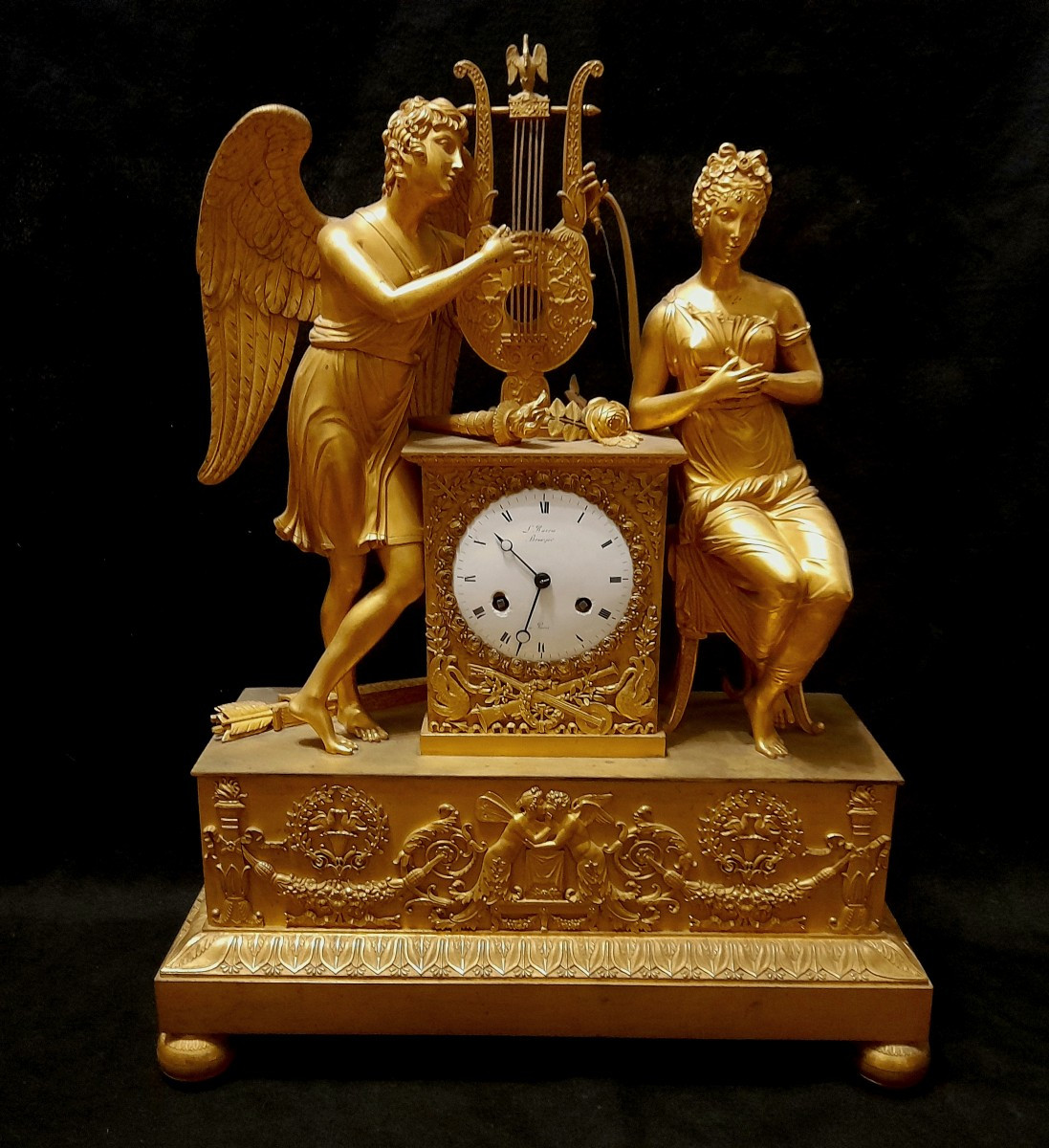

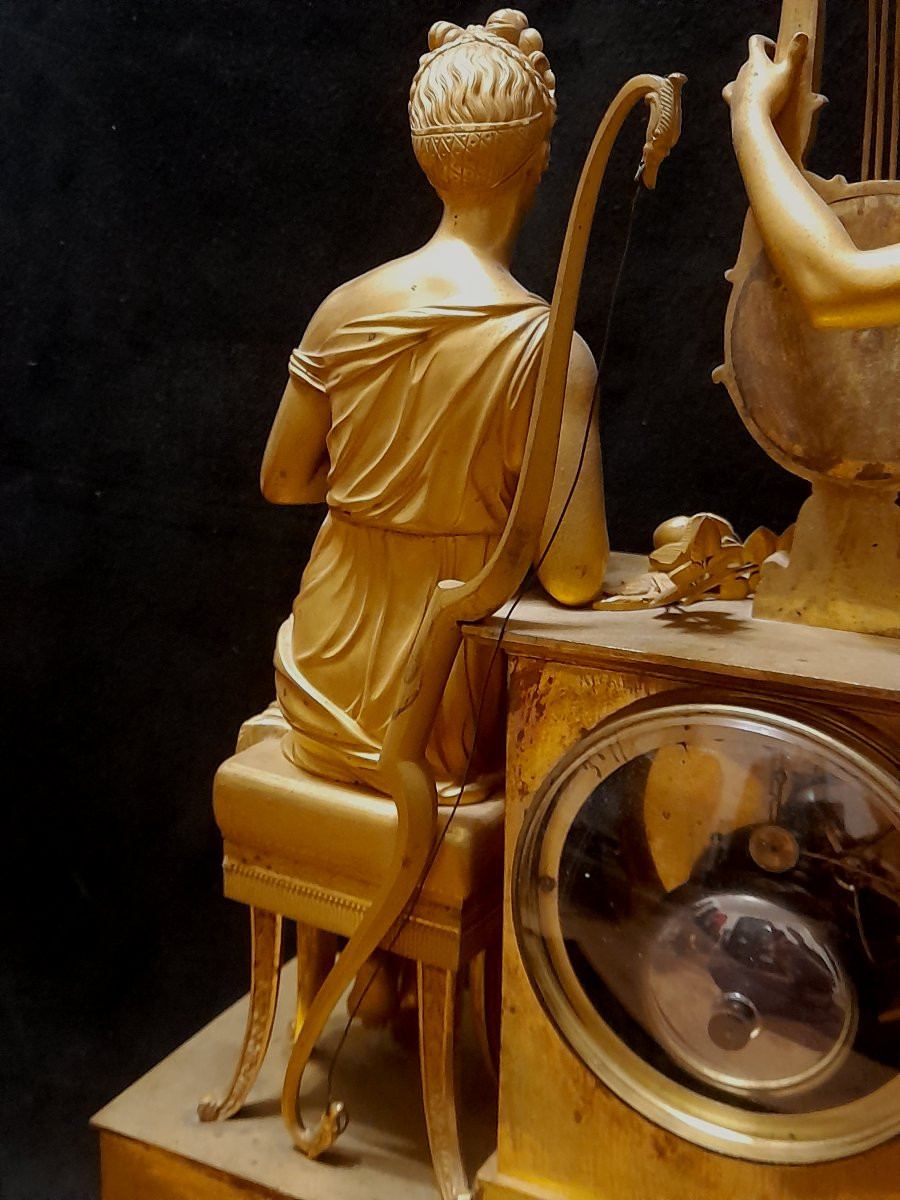
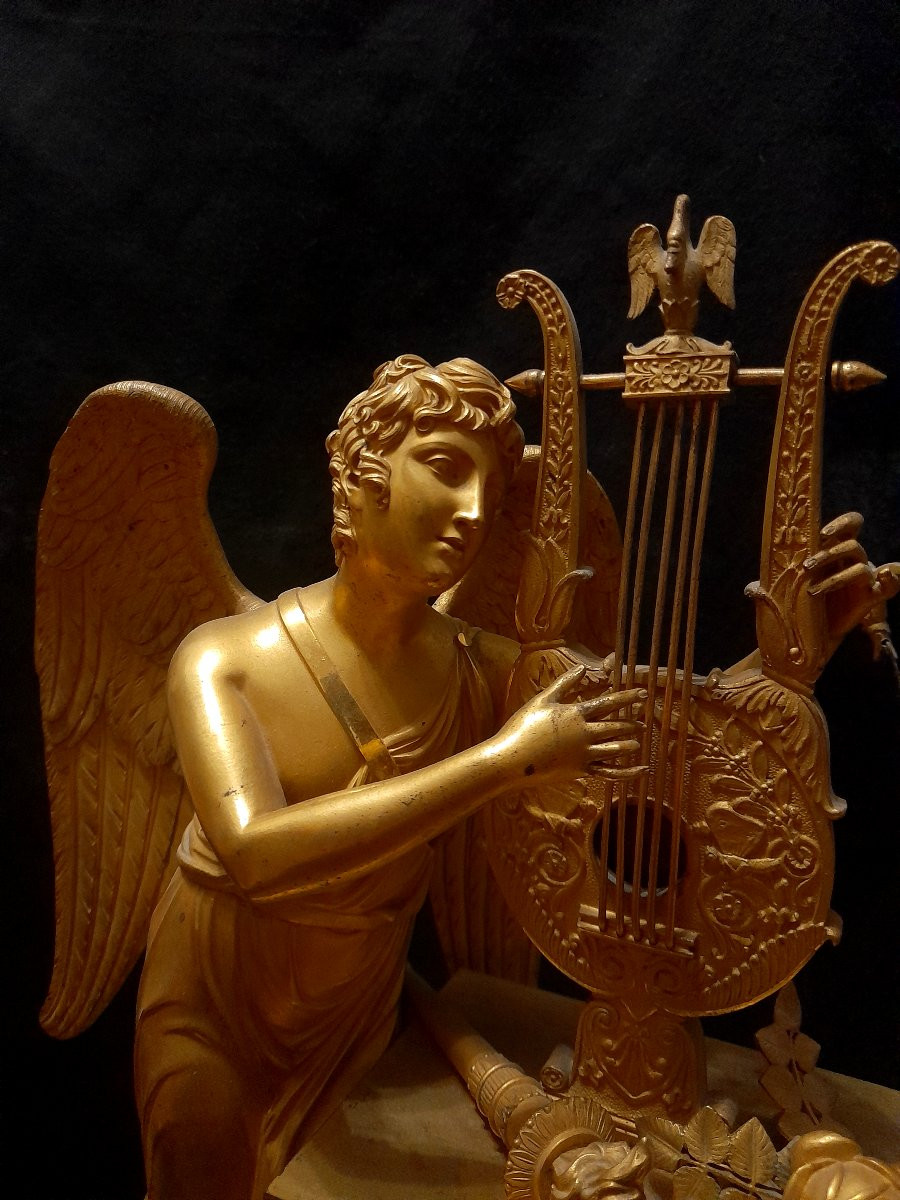


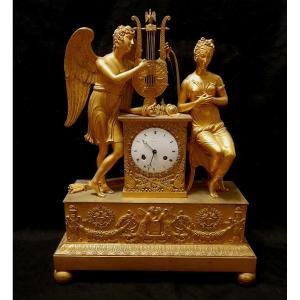


Restoration period clock circa 1820-1825 representing Love and Innocence, by the bronzier Louis-Stanislas Lenoir-Ravrio.
An identical, but anonymous, model is kept at the Metropolitan Museum of Art in New York (inv. 1981.50a, b). The preparatory drawing for this clock is also kept at the Metropolitan (inv. 67.548.3) with an old attribution to Thomire.
Louis-Stanislas Lenoir-Ravrio (1783-1846) is considered the illegitimate son of André-Antoine Ravrio (1759-1814) with whom he was associated. Upon the latter's death, he continued his adoptive father's work and signed "L. Ravrio". At the 1819 Exhibition of French Industrial Products, the firm was hailed as a "manufacturer of excellent taste". Unmodified movement, wire suspension.
Mechanism needs servicing and gilding needs cleaning
Similar works: - Museum of the Royal Palace of Turin, inv. 1821, signature Musy Père et Fils, watchmaker of SAS in Turin - Collection of the Spanish Crown, signature Lepine
An identical, but anonymous, model is kept at the Metropolitan Museum of Art in New York (inv. 1981.50a, b). The preparatory drawing for this clock is also kept at the Metropolitan (inv. 67.548.3) with an old attribution to Thomire.
Louis-Stanislas Lenoir-Ravrio (1783-1846) is considered the illegitimate son of André-Antoine Ravrio (1759-1814) with whom he was associated. Upon the latter's death, he continued his adoptive father's work and signed "L. Ravrio". At the 1819 Exhibition of French Industrial Products, the firm was hailed as a "manufacturer of excellent taste". Unmodified movement, wire suspension.
Mechanism needs servicing and gilding needs cleaning
Similar works: - Museum of the Royal Palace of Turin, inv. 1821, signature Musy Père et Fils, watchmaker of SAS in Turin - Collection of the Spanish Crown, signature Lepine
Explore similar pieces and discover your ideal find:
Mantel Clocks