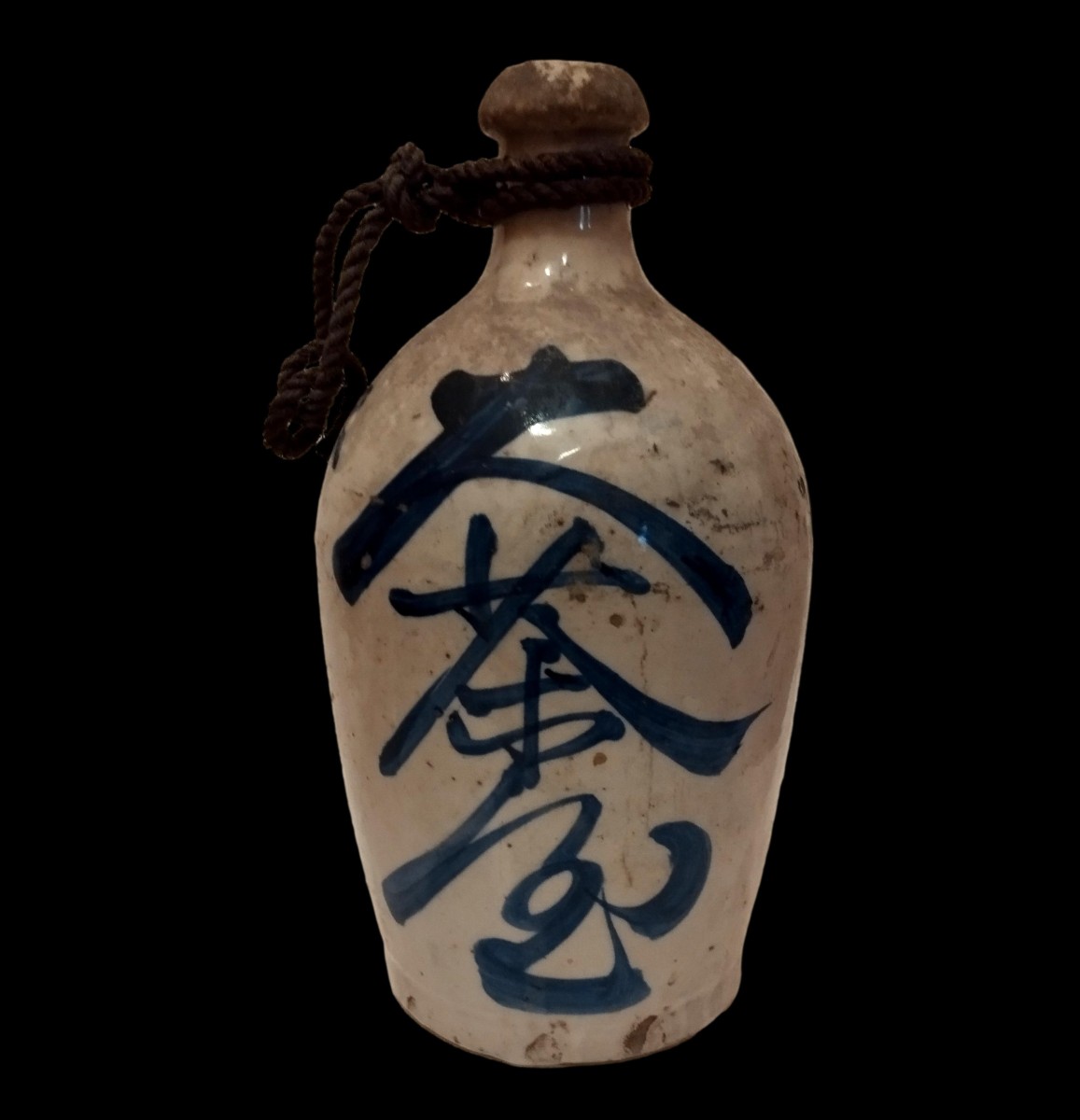
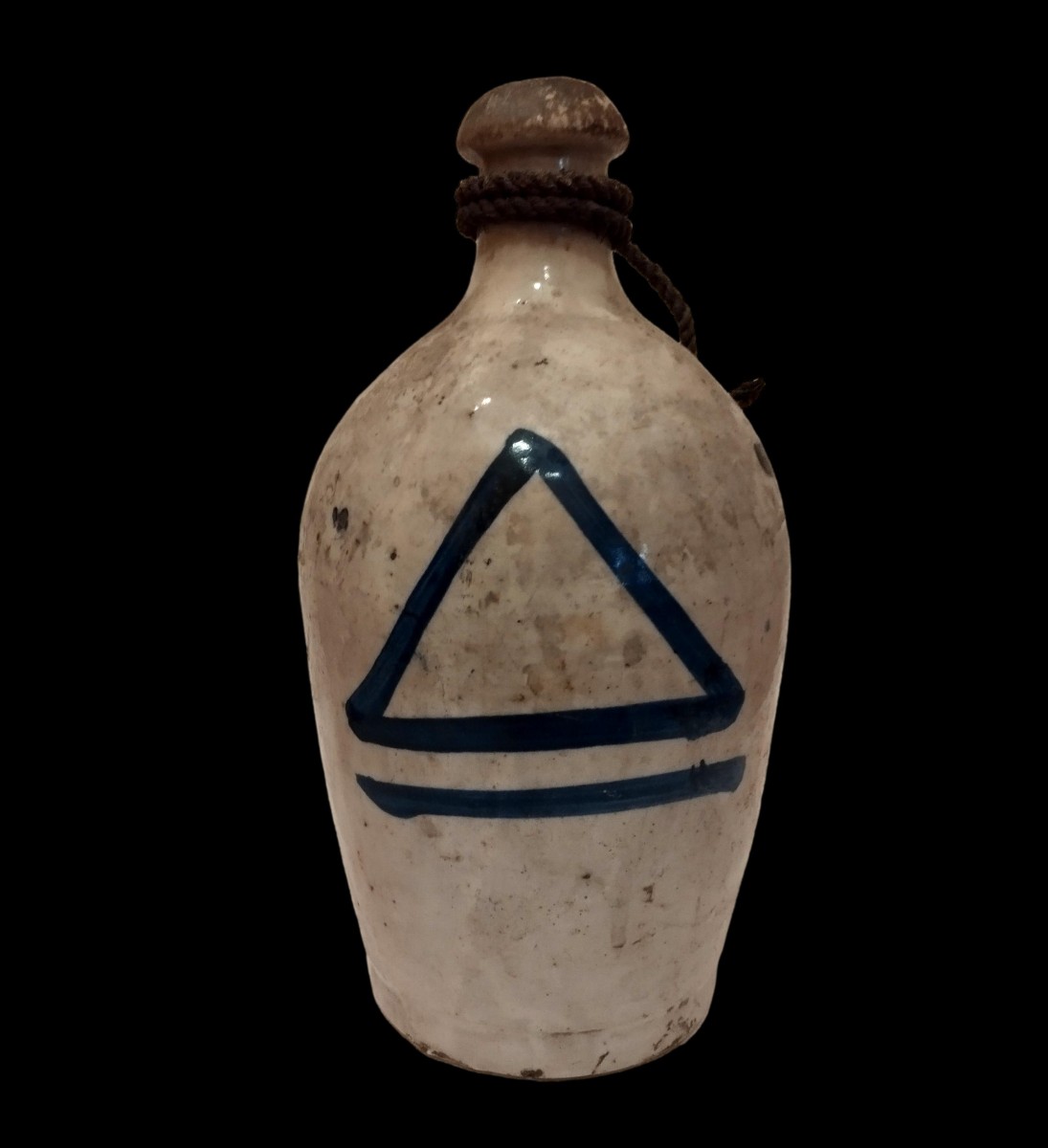
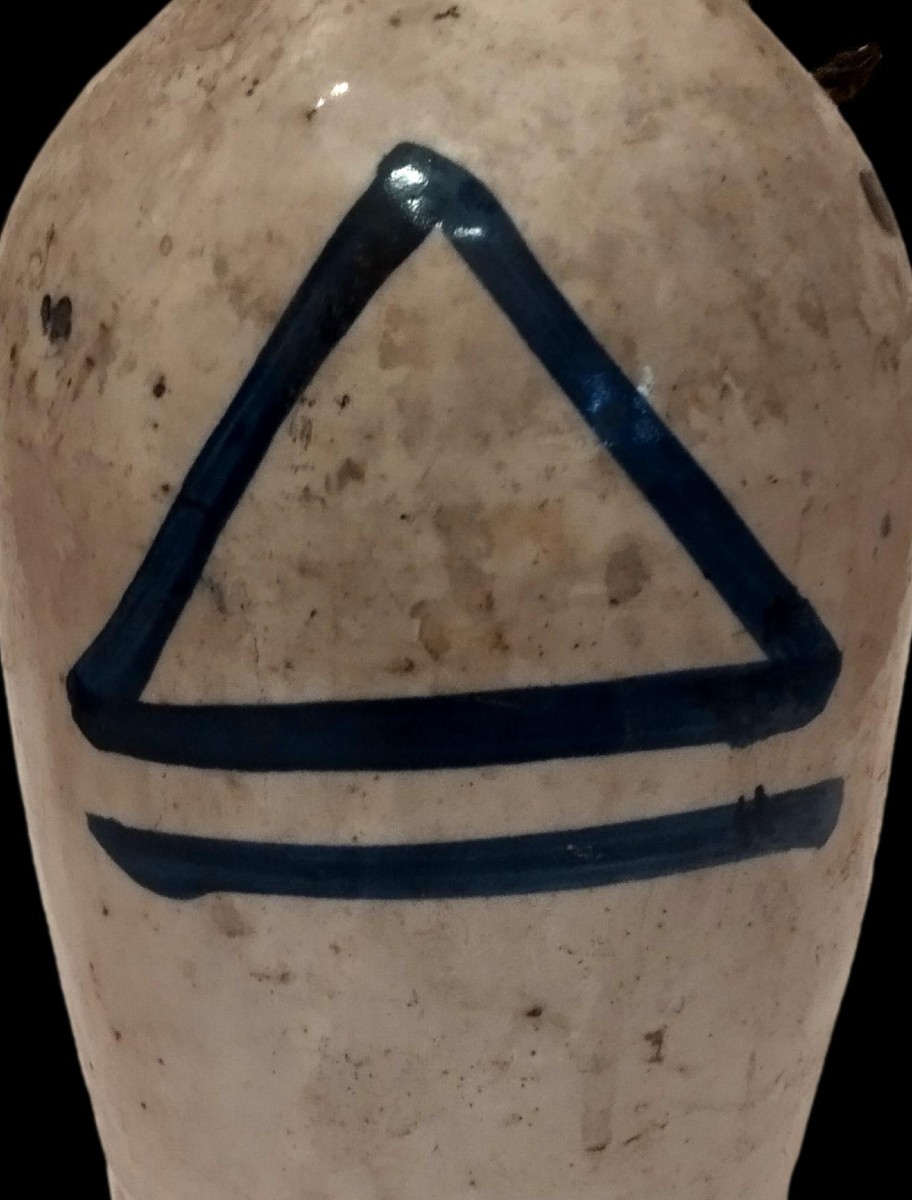
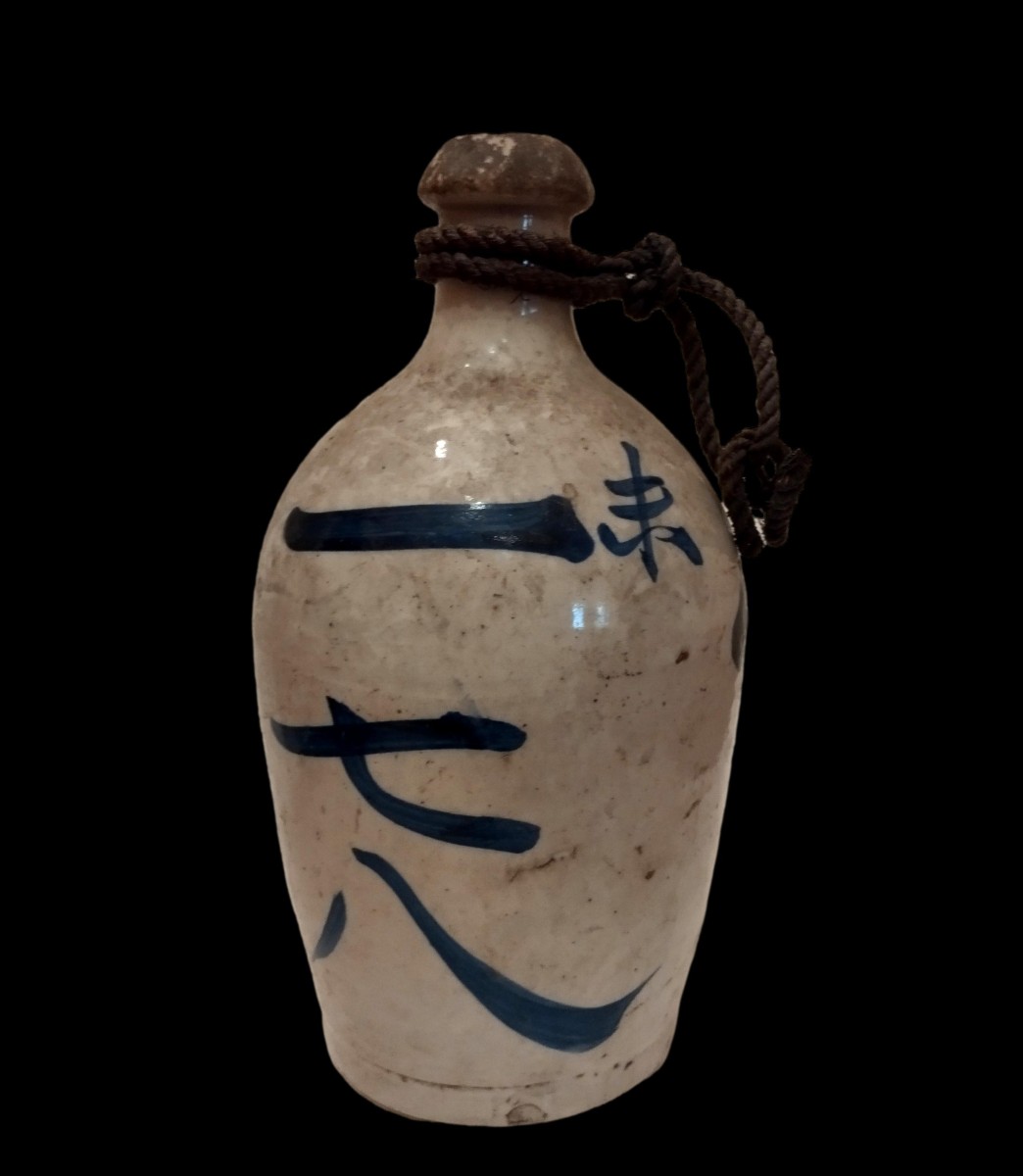
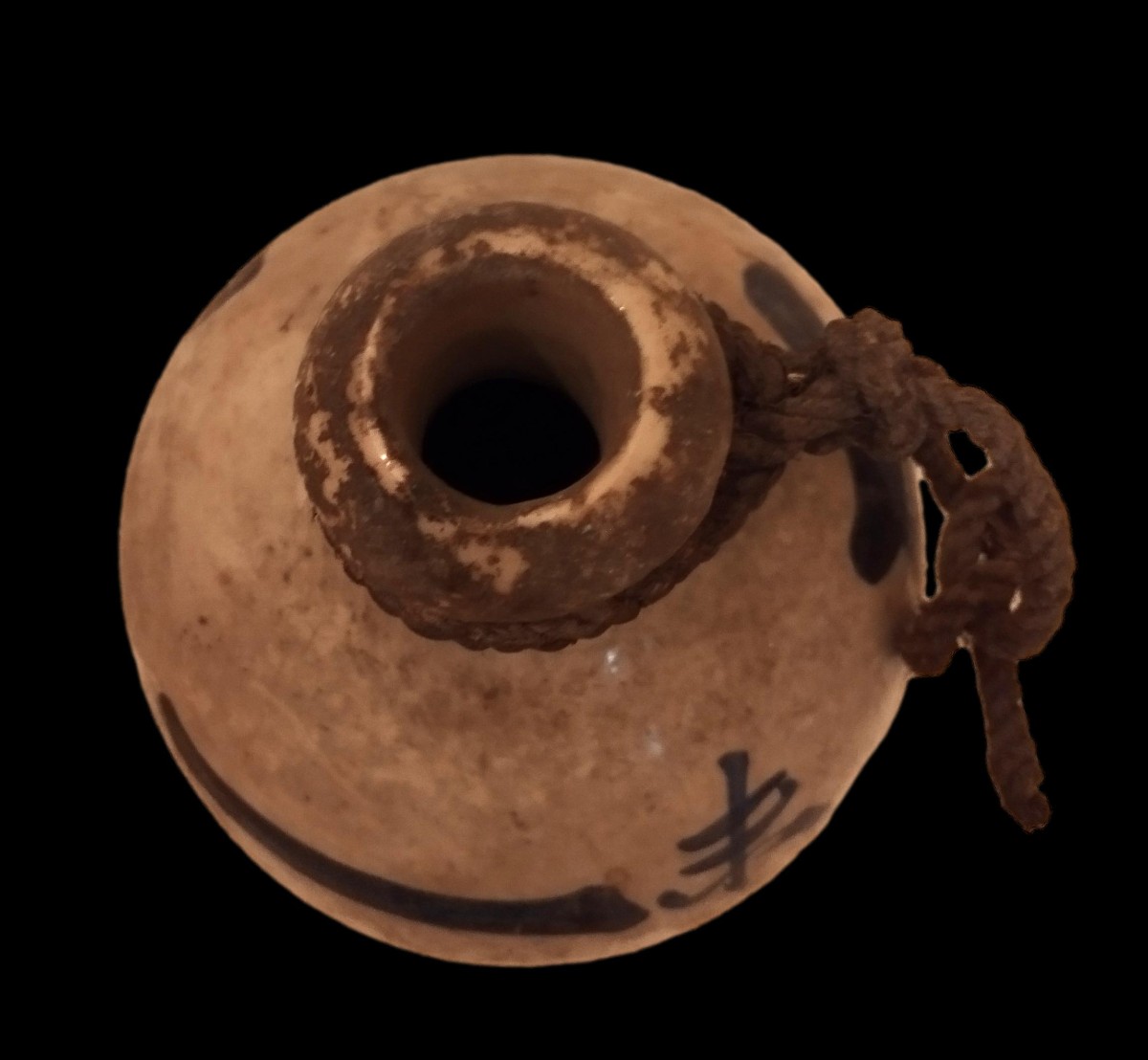
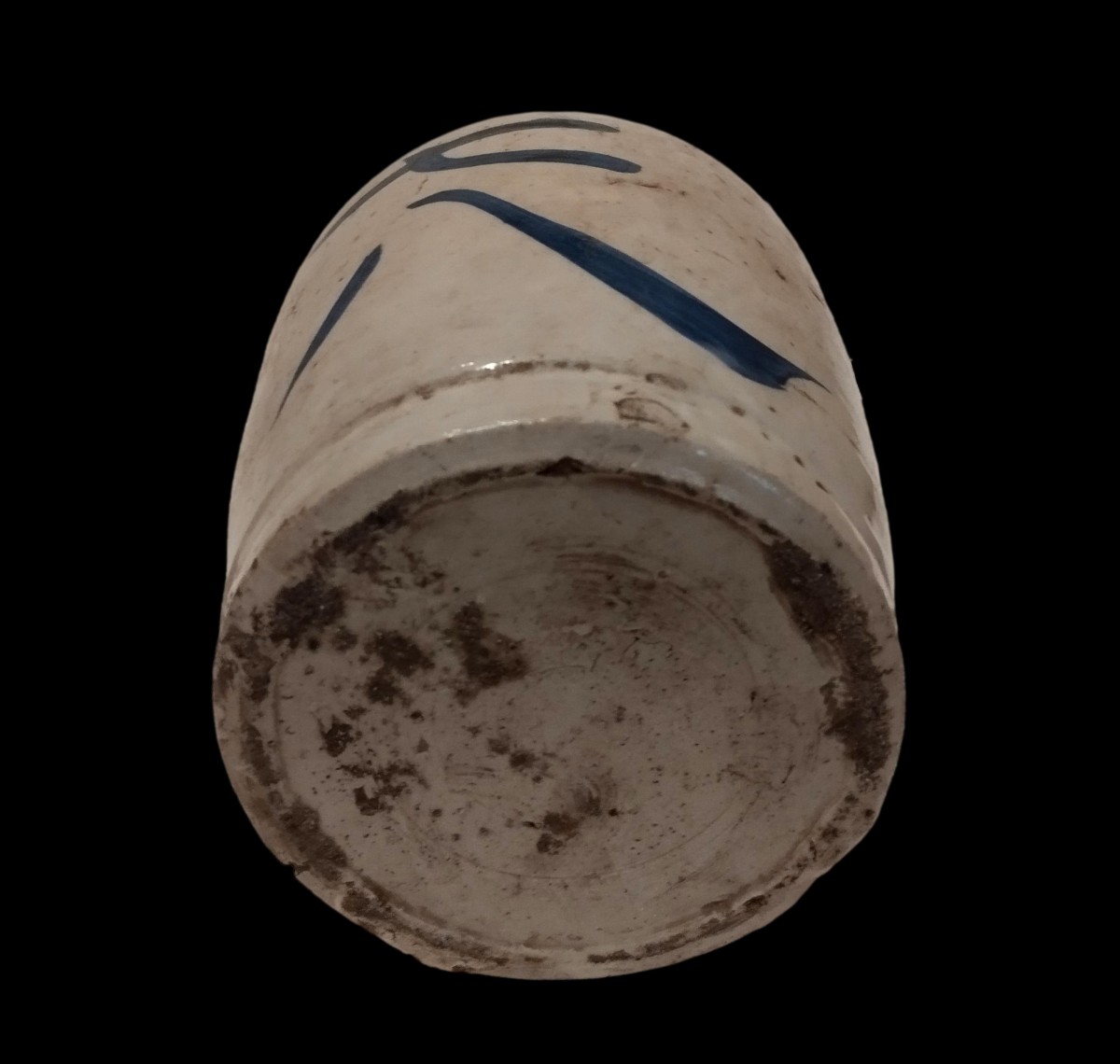

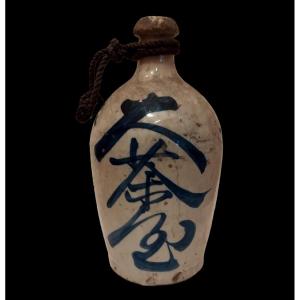


Porcelain Tokkuri For Sake, Japan, 19th Century, Very Good Condition
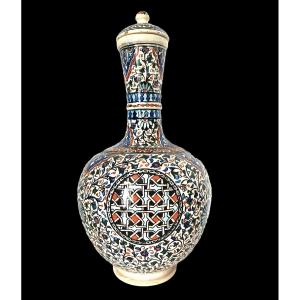
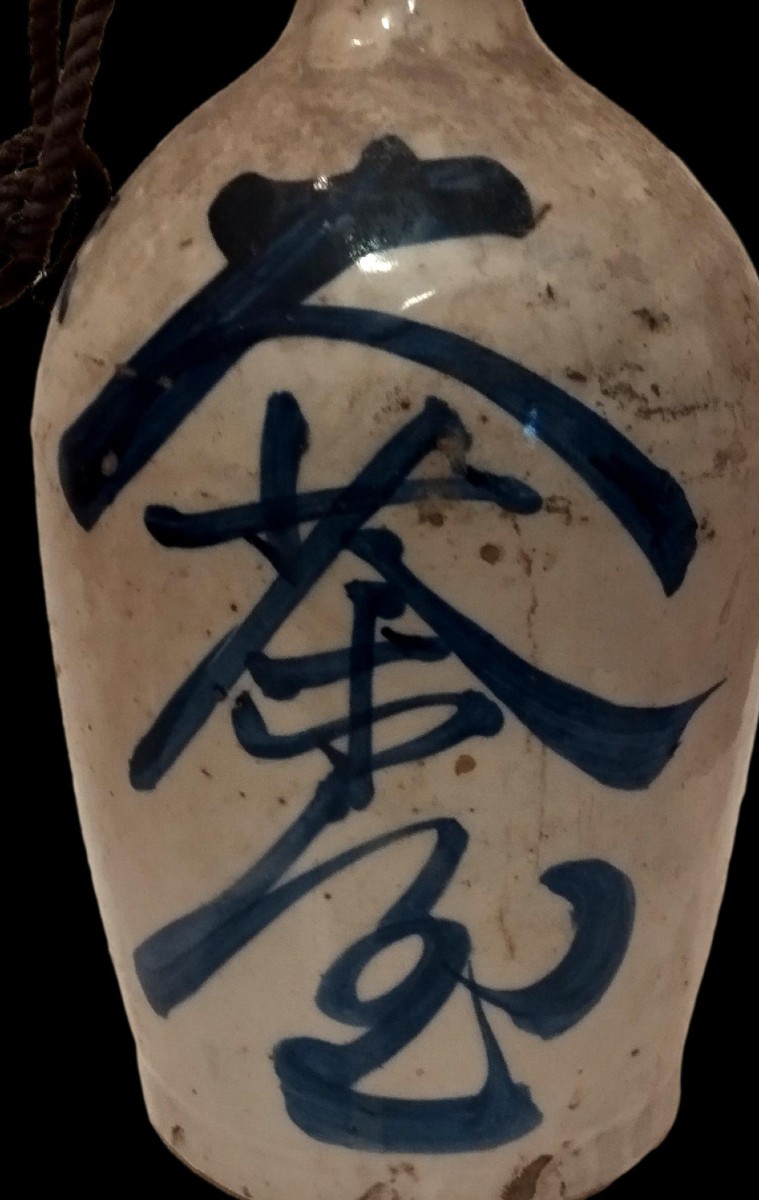
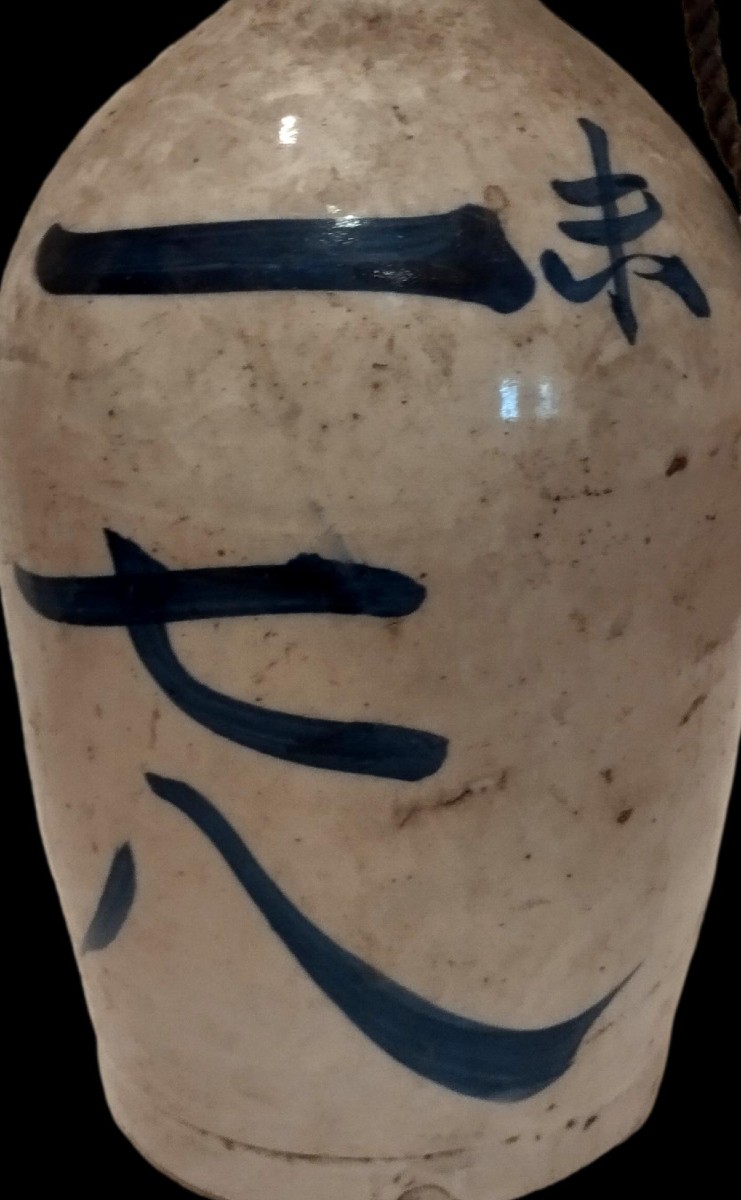
Japanese tokkuri, antique ceramic, rare and authentic, traditional, decorated and kiln-fired, with a beautiful ivory feldspar glaze. The makers and location names are calligraphed in kanji characters.
Three vertical bands of calligraphy.
I deliberately leave this bottle in its own juice, it is possible of course to wash it very cleanly!
Japanese tokkuri :
A tokkuri is a ceramic (or porcelain, glass or bamboo) bottle intended for serving sake, the traditional Japanese rice beer.
The shape of the tokkuri is generally that of a bulb with a narrow neck to prevent loss of freshness.
The sake is then poured into small ceramic cups called: choko, guinomi, sakazuki, or even wooden masu.
Normal signs of use related to age Japan Traditional Japanese manufacturing Early 19th century Japanese cultural object Japanese art Calligraphy Arts and crafts
Ø 14 cm x Height 27 cmWeight: 1,500 grs
##Sake, although sometimes wrongly called Japanese wine by the Japanese themselves, sake, in the strict sense of nihonshu, is a "rice beer".
It is spring water in which rice has been steamed and fermented, after saccharification using a mold called kōji-kin (麹菌, literally "microbe-yeast".
This ascomycete fungus, whose scientific name is Aspergillus flavus var. oryzae, makes it possible to dispense with the malting used for other alcohols.
Unlike beer, only a fraction of the sake produced is sparkling.
The quality of a sake depends on three essential factors defined by the formula waza-mizu-kome: the know-how (技, waza) of the master brewer . the quality of the water (水, mizu) .
the quality of the rice (米, kome) and the degree of its polishing.
The required proportions are 80% water and 20% rice.
FREE SHIPPING FOR FRANCE by colissimo 0€ / EUR 25 € / WORLD 50€
For further information you can contact me at 06 13 36 09 30 or at winsteinprovence@gmail
www.winsteinprovence.com
Texts and photos WINSTEIN, rights reserved
REF WINSTEIN 1534
Three vertical bands of calligraphy.
I deliberately leave this bottle in its own juice, it is possible of course to wash it very cleanly!
Japanese tokkuri :
A tokkuri is a ceramic (or porcelain, glass or bamboo) bottle intended for serving sake, the traditional Japanese rice beer.
The shape of the tokkuri is generally that of a bulb with a narrow neck to prevent loss of freshness.
The sake is then poured into small ceramic cups called: choko, guinomi, sakazuki, or even wooden masu.
Normal signs of use related to age Japan Traditional Japanese manufacturing Early 19th century Japanese cultural object Japanese art Calligraphy Arts and crafts
Ø 14 cm x Height 27 cmWeight: 1,500 grs
##Sake, although sometimes wrongly called Japanese wine by the Japanese themselves, sake, in the strict sense of nihonshu, is a "rice beer".
It is spring water in which rice has been steamed and fermented, after saccharification using a mold called kōji-kin (麹菌, literally "microbe-yeast".
This ascomycete fungus, whose scientific name is Aspergillus flavus var. oryzae, makes it possible to dispense with the malting used for other alcohols.
Unlike beer, only a fraction of the sake produced is sparkling.
The quality of a sake depends on three essential factors defined by the formula waza-mizu-kome: the know-how (技, waza) of the master brewer . the quality of the water (水, mizu) .
the quality of the rice (米, kome) and the degree of its polishing.
The required proportions are 80% water and 20% rice.
FREE SHIPPING FOR FRANCE by colissimo 0€ / EUR 25 € / WORLD 50€
For further information you can contact me at 06 13 36 09 30 or at winsteinprovence@gmail
www.winsteinprovence.com
Texts and photos WINSTEIN, rights reserved
REF WINSTEIN 1534
220 €
Period: 19th century
Style: Asian art
Condition: Good condition
Material: Porcelain
Diameter: 14 cm
Height: 27 cm - 10,5"
Reference (ID): 1611621
Availability: In stock
Print