THIS OBJECT WAS SOLD
Silver Tazza Cup, Vermeil Minerva Silver, 19th Century France - Neo Renaissance
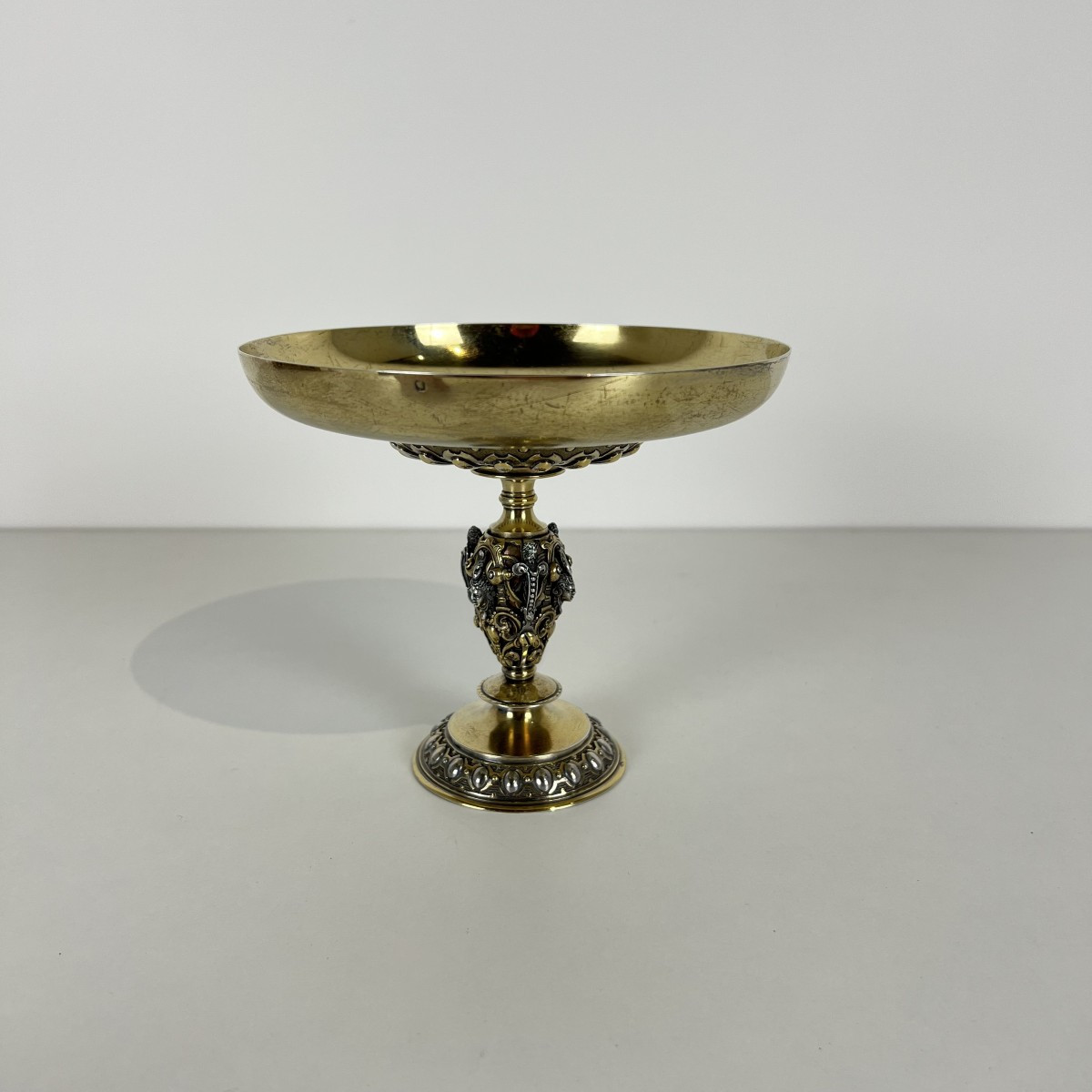





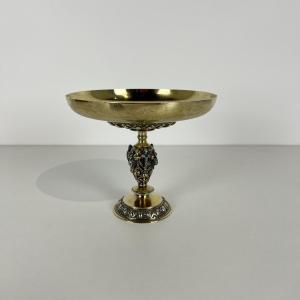


Cup known as a “Tazza” in solid gilded silver, late 19th century, Minerva 1st standard hallmark
Neo-Renaissance style, richly decorated – Vermeil, 19th century
Do not hesitate to contact us with any questions.
Very good overall condition, with minor wear consistent with age and use.
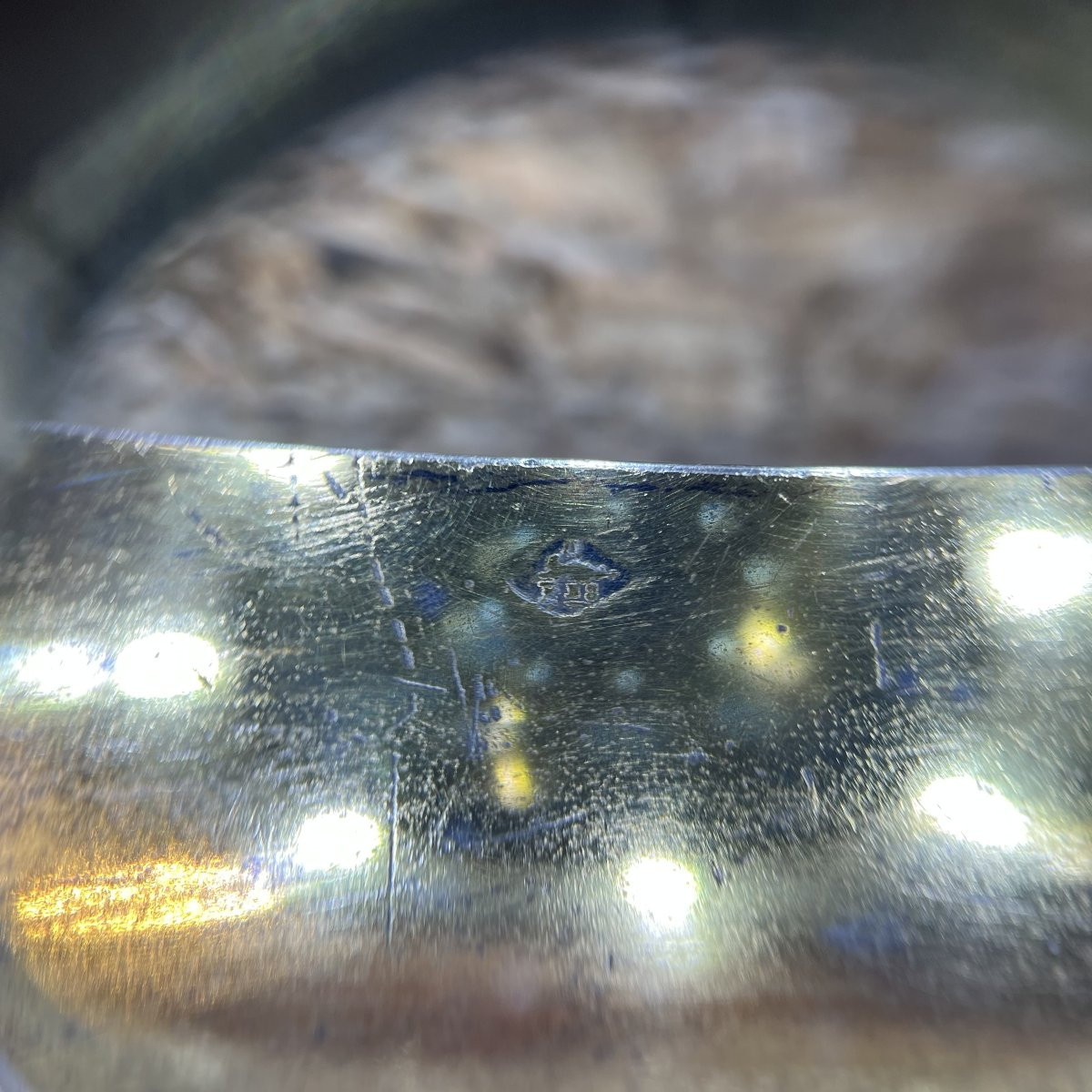
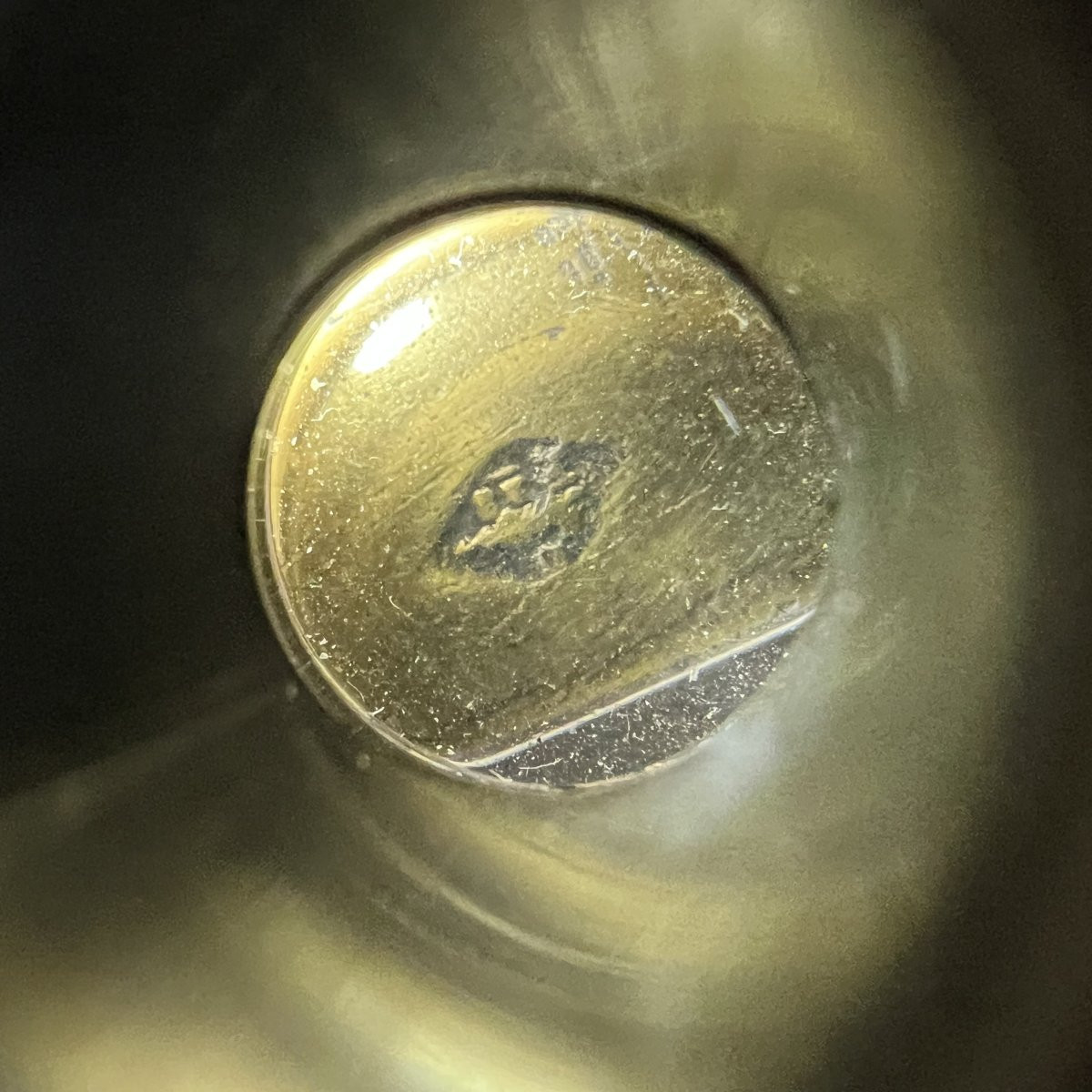
Minerva 1st standard hallmark (950/1000 silver) and another, illegible hallmark.
Dimensions:
• Height: 13.4 cm
• Diameter: 45.5 cm
• Weight: 350 grams
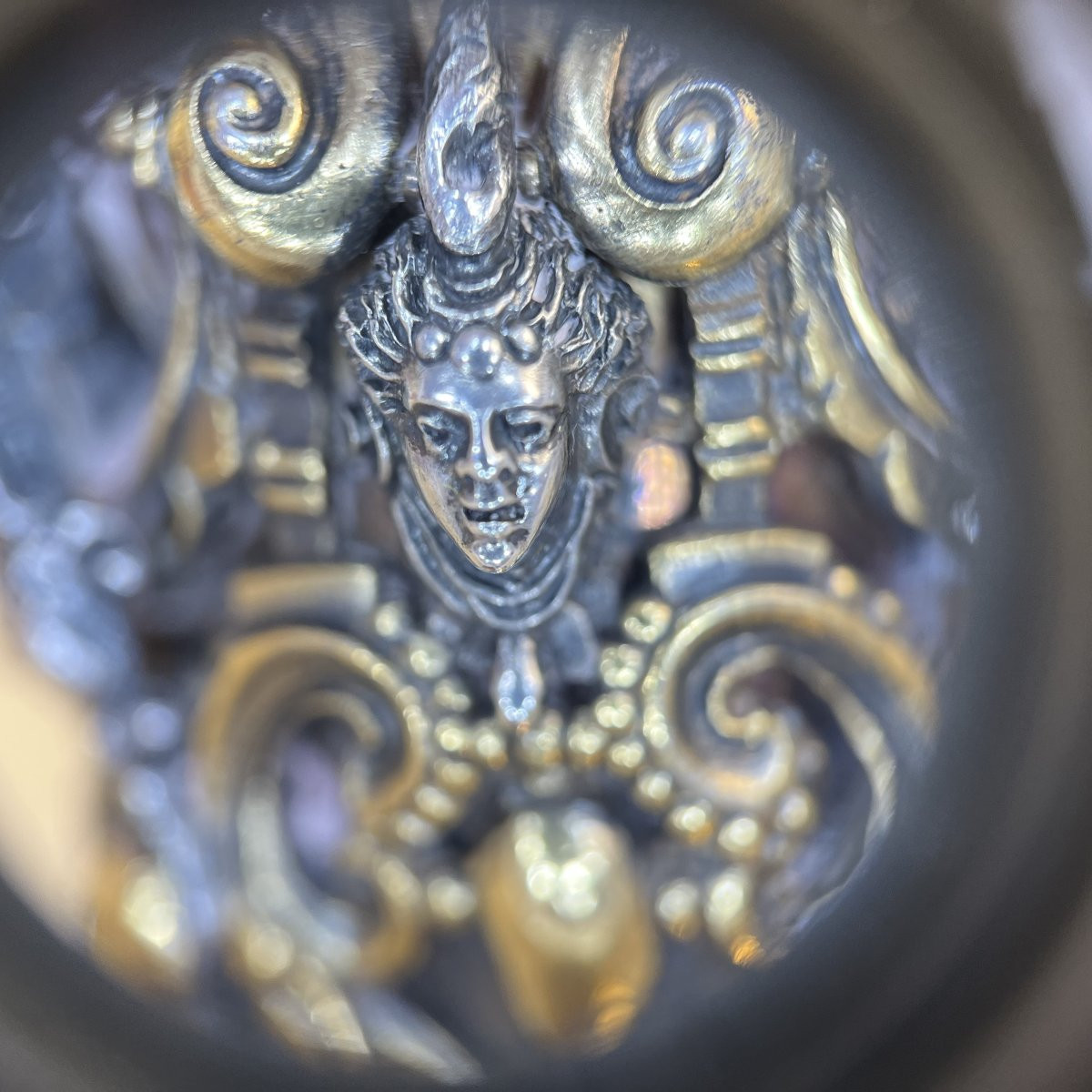
The decoration is highly elaborate in relief, featuring a series of sculpted mythological or allegorical faces, surrounded by vegetal motifs, scrolls, volutes, pearls, and finely engraved decorative cartouches. The contrast between the gilded and silvered surfaces enhances the depth of the reliefs. This type of decoration was intended to impress through the complexity of the silversmith’s art and to demonstrate refined technical craftsmanship. The Minerva 1st standard hallmark (950/1000 silver) attests to high-quality French manufacture.
The term “tazza” comes from Italian and means cup or bowl. Precious metal tazzas emulate the more delicate creations of Venetian glassmakers. Such stemmed cups in silver or vermeil enjoyed great popularity in the 16th and 17th centuries in France, the Netherlands, Germany, Switzerland, Spain, etc., but not in Italy where glass remained the preferred medium.
In general, a tazza consists of a wide, shallow basin set on a more or less elevated central foot. Due to its shallow depth, its original function as a drinking vessel evolved into that of a decorative object or, as seen in period paintings, a display piece for flowers, fruits, or confections. The earlier pieces intended for drinking are identifiable by the richly decorated relief work inside the basin, designed to enhance the appearance of wine. As its function evolved, the decoration shifted to the exterior of the basin, which became the focal point while the interior was concealed by food.
Safe and secure shipping :
• France: 14€
• Europe (Schengen area): 38 €
• International: 98 €
• Does this item pique your interest or curiosity? Feel free to contact us, we would be delighted to discuss it with you. We are available from Monday to Saturday, from 8 a.m. to 7 p.m., at +33 652 43 97 82
We are fluent in English and have been shipping a wide variety of items internationally for many years. Please feel free to contact us with any questions you may have. Excellent customer service, we accept returns up to 14 days, 100% positive customer reviews.
Visit our store to check all our amazing products
Neo-Renaissance style, richly decorated – Vermeil, 19th century
Do not hesitate to contact us with any questions.
Very good overall condition, with minor wear consistent with age and use.
Minerva 1st standard hallmark (950/1000 silver) and another, illegible hallmark.
Dimensions:
• Height: 13.4 cm
• Diameter: 45.5 cm
• Weight: 350 grams
The decoration is highly elaborate in relief, featuring a series of sculpted mythological or allegorical faces, surrounded by vegetal motifs, scrolls, volutes, pearls, and finely engraved decorative cartouches. The contrast between the gilded and silvered surfaces enhances the depth of the reliefs. This type of decoration was intended to impress through the complexity of the silversmith’s art and to demonstrate refined technical craftsmanship. The Minerva 1st standard hallmark (950/1000 silver) attests to high-quality French manufacture.
The term “tazza” comes from Italian and means cup or bowl. Precious metal tazzas emulate the more delicate creations of Venetian glassmakers. Such stemmed cups in silver or vermeil enjoyed great popularity in the 16th and 17th centuries in France, the Netherlands, Germany, Switzerland, Spain, etc., but not in Italy where glass remained the preferred medium.
In general, a tazza consists of a wide, shallow basin set on a more or less elevated central foot. Due to its shallow depth, its original function as a drinking vessel evolved into that of a decorative object or, as seen in period paintings, a display piece for flowers, fruits, or confections. The earlier pieces intended for drinking are identifiable by the richly decorated relief work inside the basin, designed to enhance the appearance of wine. As its function evolved, the decoration shifted to the exterior of the basin, which became the focal point while the interior was concealed by food.
Safe and secure shipping :
• France: 14€
• Europe (Schengen area): 38 €
• International: 98 €
• Does this item pique your interest or curiosity? Feel free to contact us, we would be delighted to discuss it with you. We are available from Monday to Saturday, from 8 a.m. to 7 p.m., at +33 652 43 97 82
We are fluent in English and have been shipping a wide variety of items internationally for many years. Please feel free to contact us with any questions you may have. Excellent customer service, we accept returns up to 14 days, 100% positive customer reviews.
Visit our store to check all our amazing products
Explore similar pieces and discover your ideal find:
Footed Bowls, Urns, Cassolettes