THIS OBJECT WAS SOLD
Mokko-gata Dragon Tsuba
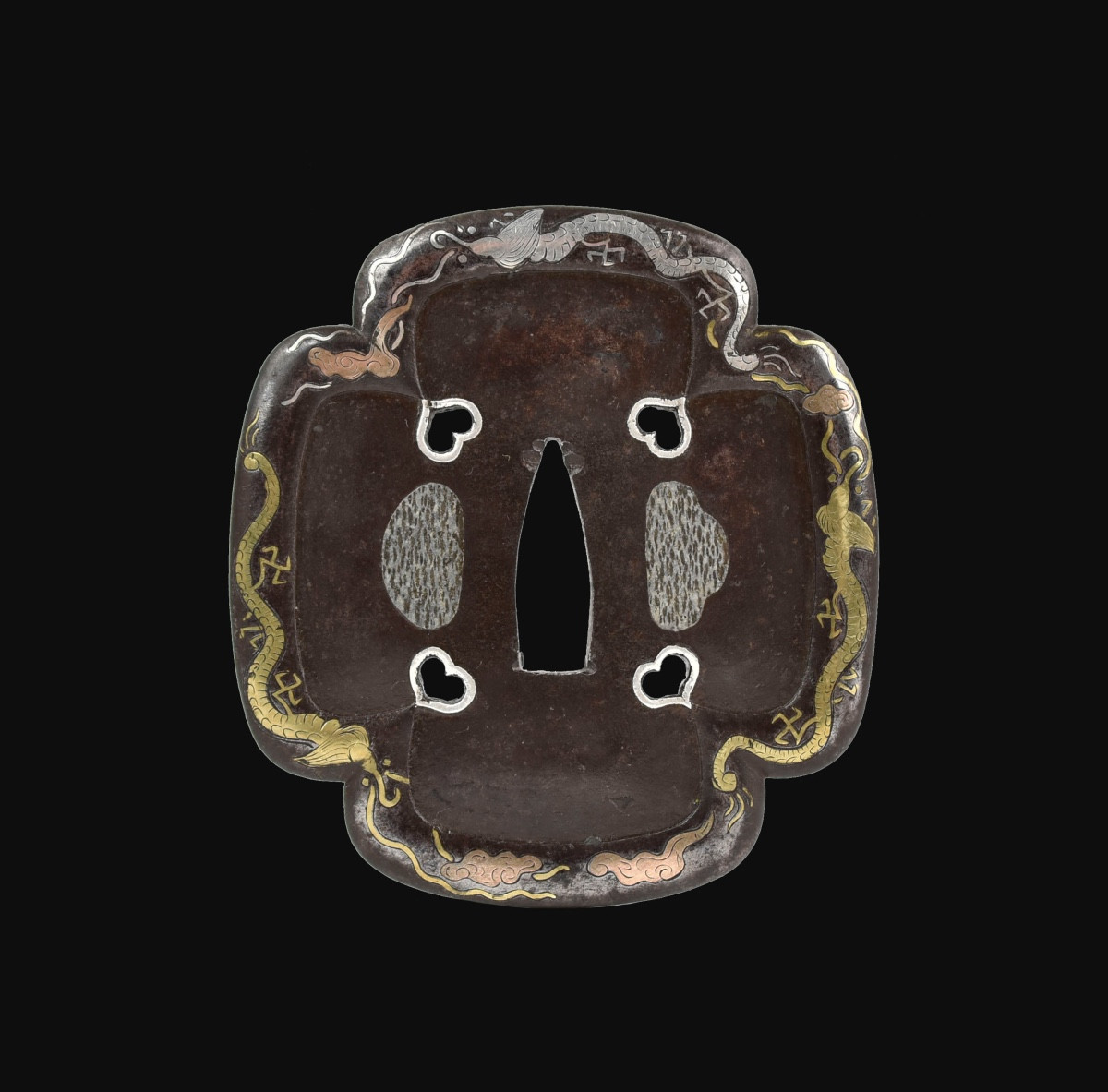
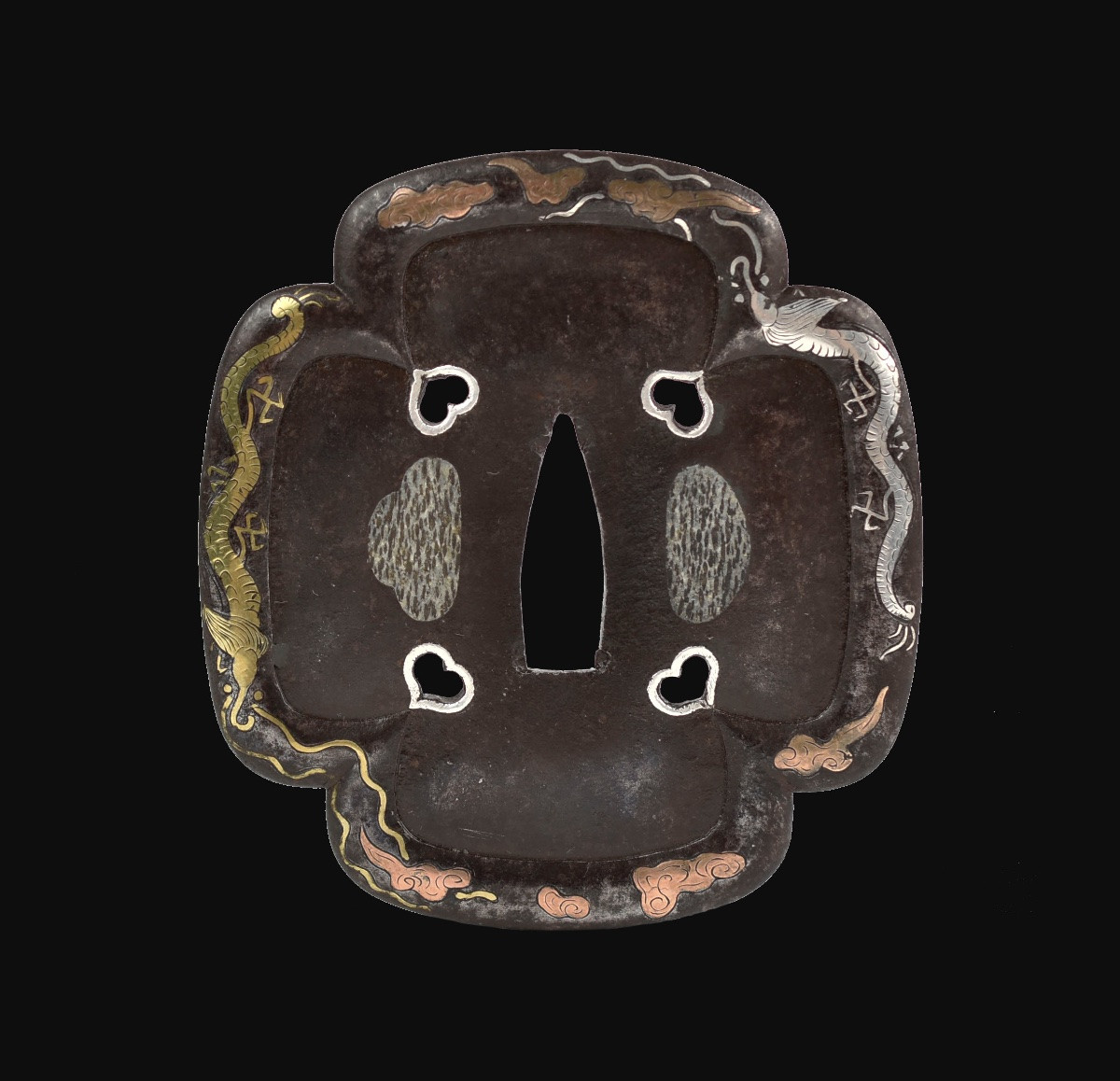



This finely crafted tsuba (鍔) dates from the Edo period (1603-1868), a time marked by peace and the flourishing of samurai culture and art. It serves both as a functional sword hilt and as a display of fine craftsmanship.
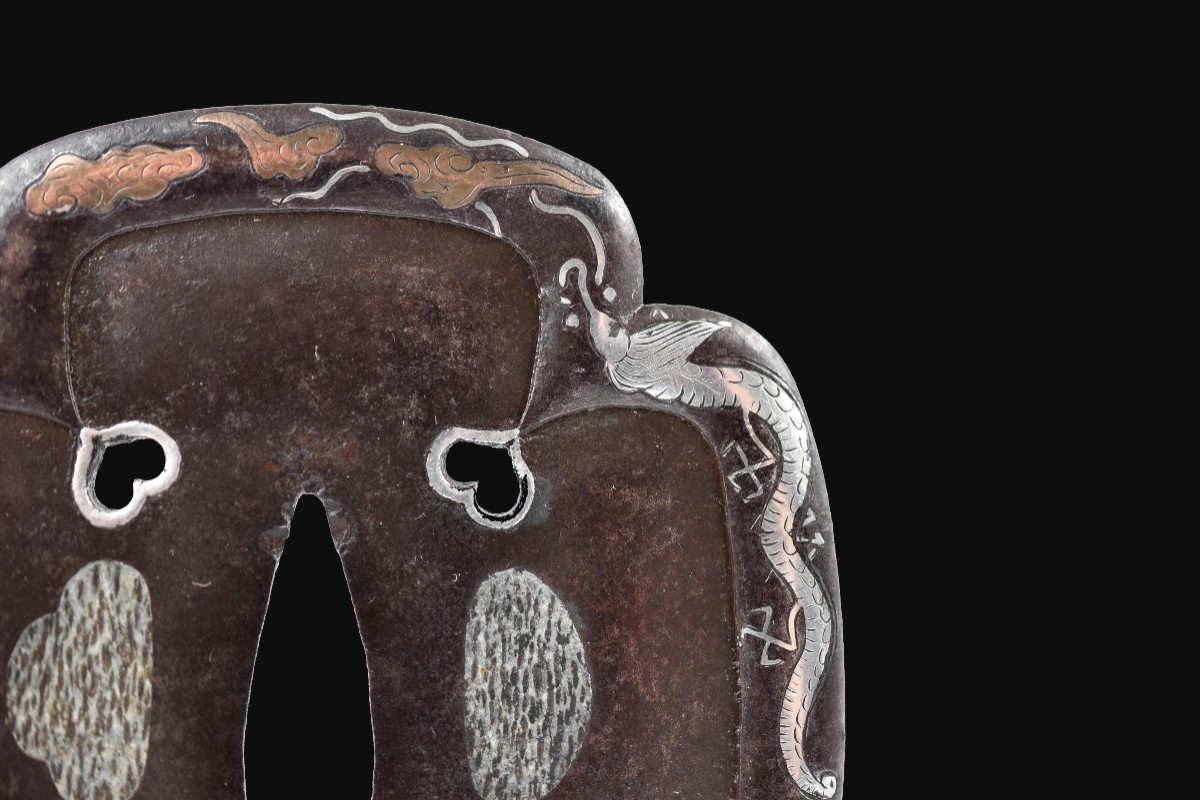
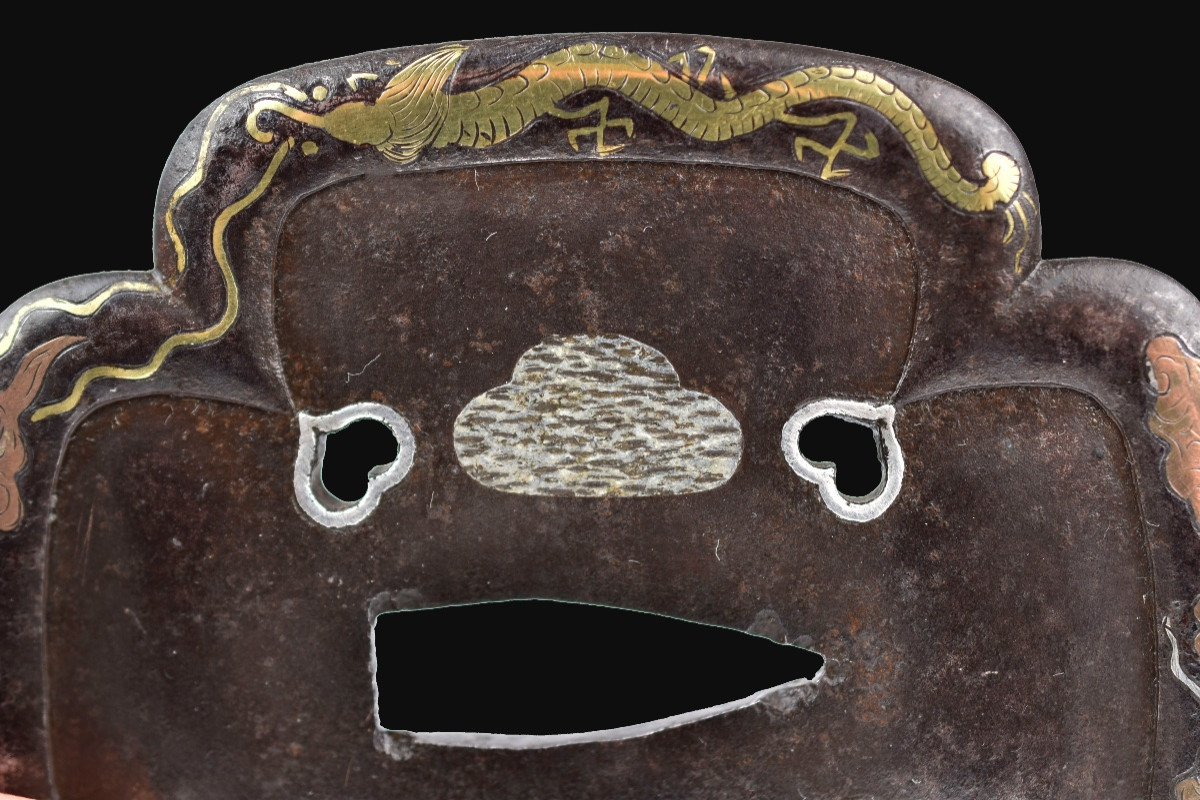
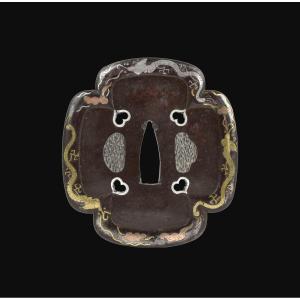
The iron tsuba is shaped like a "mokko-gata" (lobed or quince), with gently rounded edges and symmetrical lobes on all four sides. Its surface is richly decorated with inlays of various metals, including brass, silver, and copper, depicting brass and silver dragons, whose slender, elongated bodies gracefully curl around the tsuba, surrounded by copper clouds.
The center is adorned with the traditional "nakago-ana" and features a "Kozuka" and "Kogai-ana" on the sides, filled with a lead alloy. The tsuba is pierced with four heart-shaped openings, called "Inome" (猪目), which represent the eyes of the boar. An auspicious sign often seen on Tachi swords, which has persisted in tsuba culture for centuries.
more info at our website.
The iron tsuba is shaped like a "mokko-gata" (lobed or quince), with gently rounded edges and symmetrical lobes on all four sides. Its surface is richly decorated with inlays of various metals, including brass, silver, and copper, depicting brass and silver dragons, whose slender, elongated bodies gracefully curl around the tsuba, surrounded by copper clouds.
The center is adorned with the traditional "nakago-ana" and features a "Kozuka" and "Kogai-ana" on the sides, filled with a lead alloy. The tsuba is pierced with four heart-shaped openings, called "Inome" (猪目), which represent the eyes of the boar. An auspicious sign often seen on Tachi swords, which has persisted in tsuba culture for centuries.
more info at our website.
Explore similar pieces and discover your ideal find:
Edged Weapons