THIS OBJECT WAS SOLD
Porcelain Group, Paris Porcelain, Eugène-marx Clauss (1870-1880)


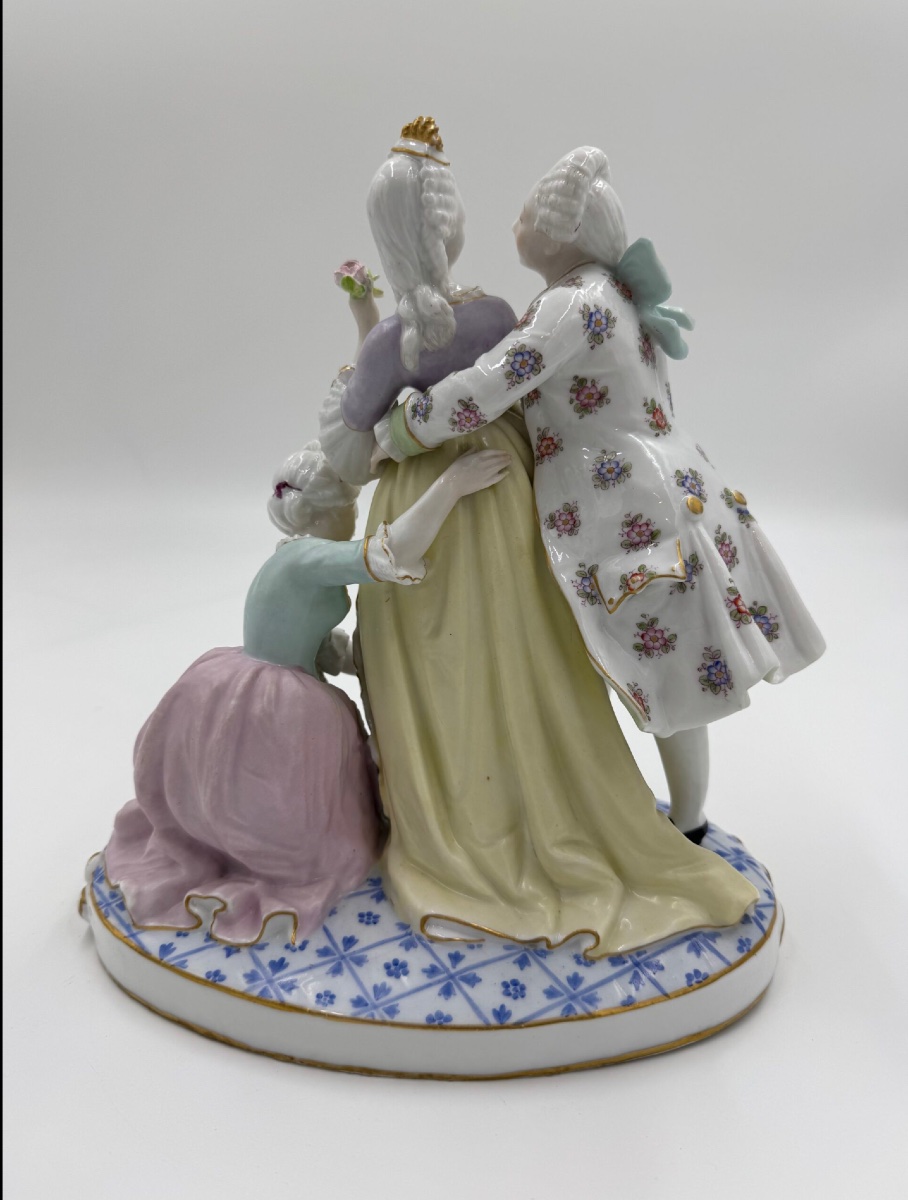
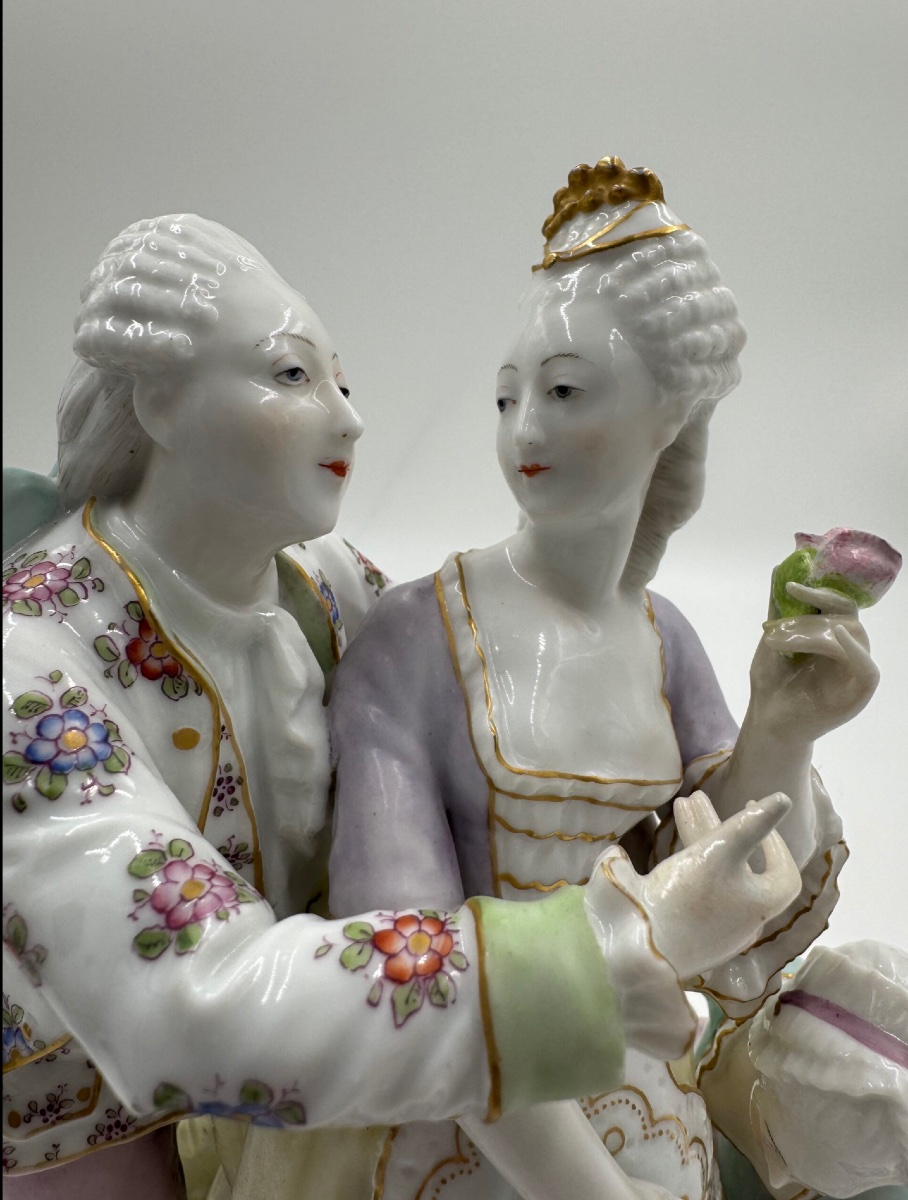

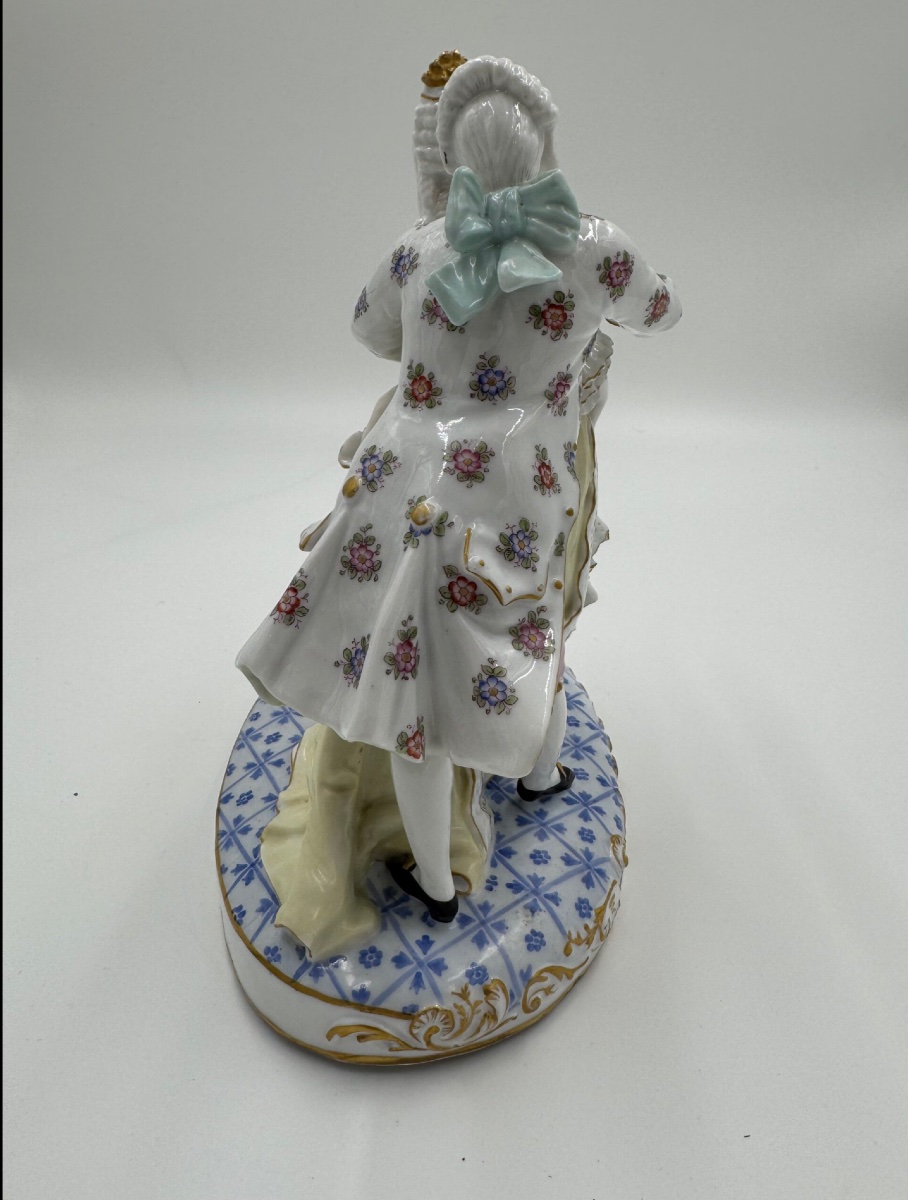


This group of hard-paste porcelain sculptures depicts a romantic scene in which a noblewoman is being wooed while a lady-in-waiting folds her impressive hoop skirt one last time. The figures are dressed in costumes typical of the best social circles of the late 18th century. This piece is marked with two crossed swords with the initials 'E' and 'C'.
About the maker:
Eugène-Marx Clauss (1829-1900) was an influential French porcelain painter associated with the renowned Porcelaine de Paris factory. He was the grandson of Jean-Marx Clauss, who had founded the factory in 1822. Eugène took over the business in 1846 and ran it until 1887. Under his direction, the factory produced high-quality porcelain figurines, often featuring vibrant polychromy. His work drew inspiration from both European and Oriental styles and was renowned for its technical finesse and artistry.
About the factory:
Porcelaine de Paris was a French porcelain factory founded in 1822 by Jean-Marx Clauss. The factory was located on Rue de la Pierre-Levée in Paris and was known for its high-quality porcelain ornaments and tableware. Clauss was originally from Trier and was inspired by the famous Meissen porcelain. Under the direction of his son Eugène, the factory flourished. He combined contemporary styles with classical motifs from the heyday of the French porcelain industry. This group of sculptures from the third quarter of the 19th century is a good example. The use of glazed geometric decorations and polychrome floral motifs, often with gilded details, is a notable feature of the production. In 1887, Achille Bloch and Léon Bourdois bought the company. Under their direction, the collection was enriched with fireplace decorations, vazens, busts and decorative plates. In 1922, the Paris factory closed and production was transferred to Orval, in the Cher department.Conservation condition: This group of sculptures is in excellent condition and shows no visible signs of damage.
About the maker:
Eugène-Marx Clauss (1829-1900) was an influential French porcelain painter associated with the renowned Porcelaine de Paris factory. He was the grandson of Jean-Marx Clauss, who had founded the factory in 1822. Eugène took over the business in 1846 and ran it until 1887. Under his direction, the factory produced high-quality porcelain figurines, often featuring vibrant polychromy. His work drew inspiration from both European and Oriental styles and was renowned for its technical finesse and artistry.
About the factory:
Porcelaine de Paris was a French porcelain factory founded in 1822 by Jean-Marx Clauss. The factory was located on Rue de la Pierre-Levée in Paris and was known for its high-quality porcelain ornaments and tableware. Clauss was originally from Trier and was inspired by the famous Meissen porcelain. Under the direction of his son Eugène, the factory flourished. He combined contemporary styles with classical motifs from the heyday of the French porcelain industry. This group of sculptures from the third quarter of the 19th century is a good example. The use of glazed geometric decorations and polychrome floral motifs, often with gilded details, is a notable feature of the production. In 1887, Achille Bloch and Léon Bourdois bought the company. Under their direction, the collection was enriched with fireplace decorations, vazens, busts and decorative plates. In 1922, the Paris factory closed and production was transferred to Orval, in the Cher department.Conservation condition: This group of sculptures is in excellent condition and shows no visible signs of damage.
Explore similar pieces and discover your ideal find:
Porcelain Figurines, Biscuit Porcelain