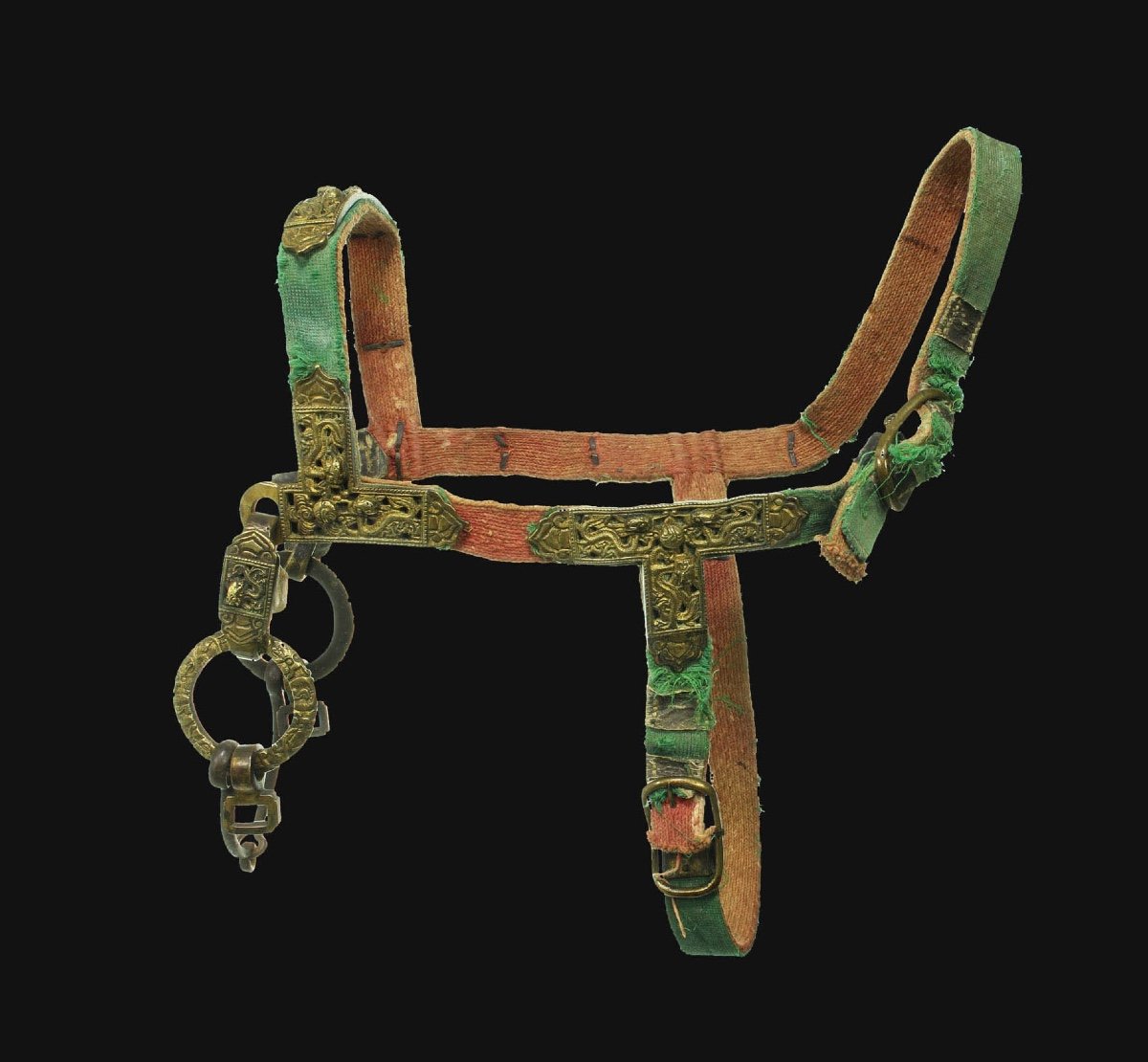


Gilded Copper Horse Bridle And Rump
Tibetan and Himalayan equestrian equipment are distinguished by their aesthetic design. A combination of the same materials was used from the early 1500s until the mid-20th century and their techniques changed little over this long period. The main techniques were gold damascened metalwork and fire-gilded copper, the latter of which appears to be the method of manufacture of our bridle and rump set. The Tibetan style, primarily originating in Derge, was popular for centuries, including in China where similar equestrian equipment was made for the local and Tibetan market. High-quality saddles, stirrups and bridles were given and presented to nobles and dignitaries to imply rank and social status.
Bridle and Bit: Gives the mounted rider control over his horse by understanding the horse's head. It consists of a strip of cloth decorated with cast and chased repoussé gilded copper mounts. The mounts depict dragons chasing a flaming pearl, a popular motif that shows deeper Buddhist auspicious symbolism. The iron bit is called "srab lcags" in Tibetan and the two large bit rings are called "srab sgor". The mounts are "T" and "L" shaped and feature "ruyi" shaped finials. The rump: A part of the horse's mount that is essential to prevent the saddle from slipping. The rump includes the horse's tail and is attached to its back, behind the saddle. It consists of four strips of cloth, shaped like an "X" and decorated with the same style accessories as on the bridle. The middle part of the rump has a domed finial to which are attached four straps, also in gilded repoussé copper depicting a fearsome dragon. A rather rare piece of 19th century Tibetan style equestrian art, depicting auspicious symbols indicating good luck, prosperity and good fortune.
Comparable articles – The Metropolitan Museum of Art New York acc.nr. 2005.427.7 – The Metropolitan Museum of Art New York acc.nr. 2003.230.3a–e
Bridle and Bit: Gives the mounted rider control over his horse by understanding the horse's head. It consists of a strip of cloth decorated with cast and chased repoussé gilded copper mounts. The mounts depict dragons chasing a flaming pearl, a popular motif that shows deeper Buddhist auspicious symbolism. The iron bit is called "srab lcags" in Tibetan and the two large bit rings are called "srab sgor". The mounts are "T" and "L" shaped and feature "ruyi" shaped finials. The rump: A part of the horse's mount that is essential to prevent the saddle from slipping. The rump includes the horse's tail and is attached to its back, behind the saddle. It consists of four strips of cloth, shaped like an "X" and decorated with the same style accessories as on the bridle. The middle part of the rump has a domed finial to which are attached four straps, also in gilded repoussé copper depicting a fearsome dragon. A rather rare piece of 19th century Tibetan style equestrian art, depicting auspicious symbols indicating good luck, prosperity and good fortune.
Comparable articles – The Metropolitan Museum of Art New York acc.nr. 2005.427.7 – The Metropolitan Museum of Art New York acc.nr. 2003.230.3a–e
4 200 €
Period: 19th century
Style: Asian art
Condition: Good condition
Material: Brass
Length: 115cm
Width: 12cm
Reference (ID): 1498661
Availability: In stock
Print