




Amida Buddha In Carved Gilded And Lacquered Wood, Japan, Edo Period, 19th Century
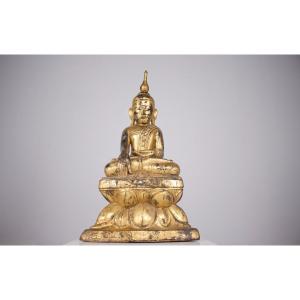
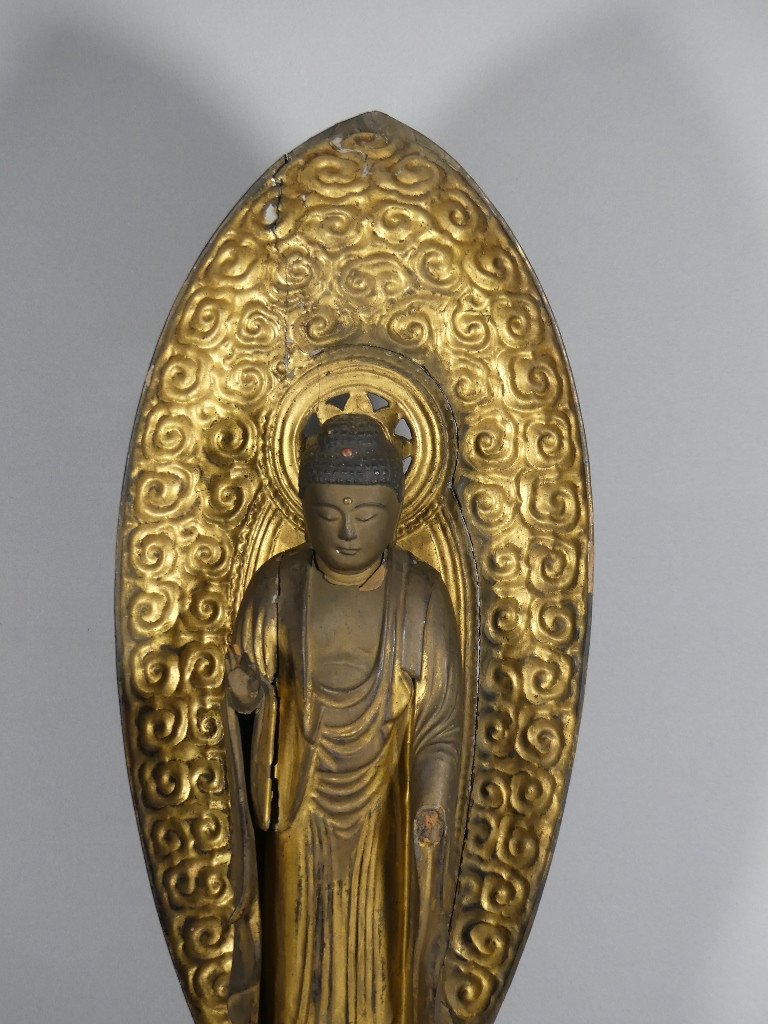
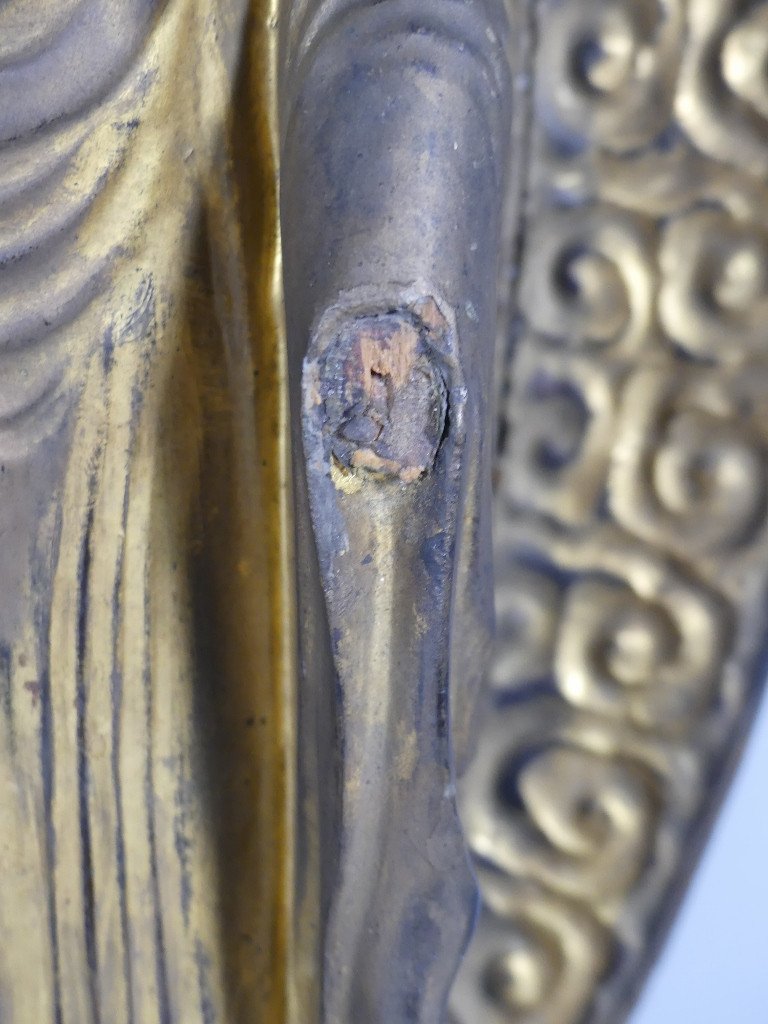
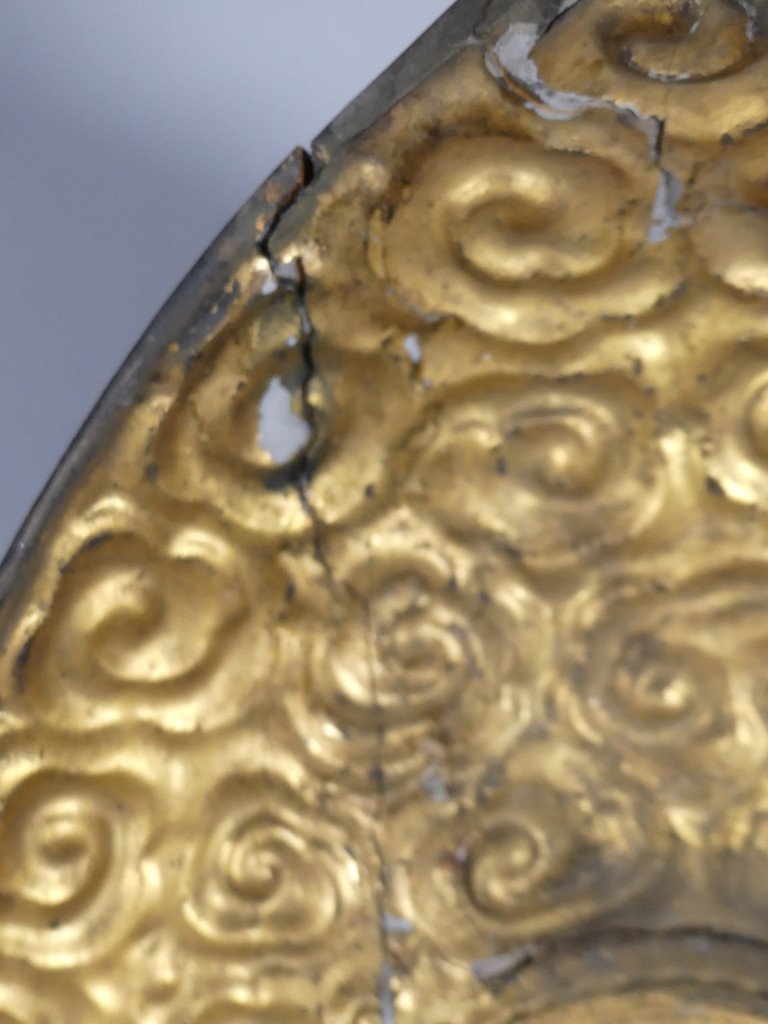
Superb and large sculpture in gilded and lacquered wood representing Buddha Amida. He is represented standing on a lotus flower blooming on an architectural base in front of a mandorla. Very decorative large work. Some gaps and breaks in the wood, patina of time, gilding and lacquer in average condition. The whole is very fragile.
Japan, Edo period (1603-1868), early 19th century.
Delivery by carrier, 100 euros in France, 200 euros in the EU and 500 euros rest of the world.
More pictures on our website here: https://legrenierdaugustine.com/boutique/style/arts-dasie/70-5-cm-bouddha-amida-en-bois-sculpte-dore-et-laque-japon-periode-edo-xix-eme-siecle/
The cult of Amida, very widespread in China, was introduced to Japan from the 10th century to develop mainly in the Tendai sect. The deity is represented here standing on a single lotus flower, in the posture chosen to welcome those who pronounce his name with fervor. She makes the gesture of preaching, one of her distinctive signs. The frontality of the sculpture accentuates the solemn character of the divinity and dominates the faithful who must approach to obtain his graces. The face with the collected expression is marked with the umâ, sign of divine belonging; the cranial protuberance is also depicted. The boat-shaped mandorla, slightly curved in its upper part, presents a radiant halo. (Extract from: Marie-Dominique Labails, La collection japonaise de Georges-Labit, 1994)
Japan, Edo period (1603-1868), early 19th century.
Delivery by carrier, 100 euros in France, 200 euros in the EU and 500 euros rest of the world.
More pictures on our website here: https://legrenierdaugustine.com/boutique/style/arts-dasie/70-5-cm-bouddha-amida-en-bois-sculpte-dore-et-laque-japon-periode-edo-xix-eme-siecle/
The cult of Amida, very widespread in China, was introduced to Japan from the 10th century to develop mainly in the Tendai sect. The deity is represented here standing on a single lotus flower, in the posture chosen to welcome those who pronounce his name with fervor. She makes the gesture of preaching, one of her distinctive signs. The frontality of the sculpture accentuates the solemn character of the divinity and dominates the faithful who must approach to obtain his graces. The face with the collected expression is marked with the umâ, sign of divine belonging; the cranial protuberance is also depicted. The boat-shaped mandorla, slightly curved in its upper part, presents a radiant halo. (Extract from: Marie-Dominique Labails, La collection japonaise de Georges-Labit, 1994)
3 500 €
Period: 19th century
Style: Asian art
Condition: En l'etat
Material: Gilted wood
Width: 21 cm
Height: 70.5 cm
Depth: 17 cm
Reference (ID): 1459752
Availability: In stock
Print