





Follower Of Giovanni Paolo Panini, The Pyramid Of Caio Cestio, 18th Century
Artist: Disciple De Giovanni Paolo Panini
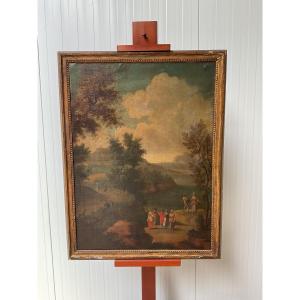
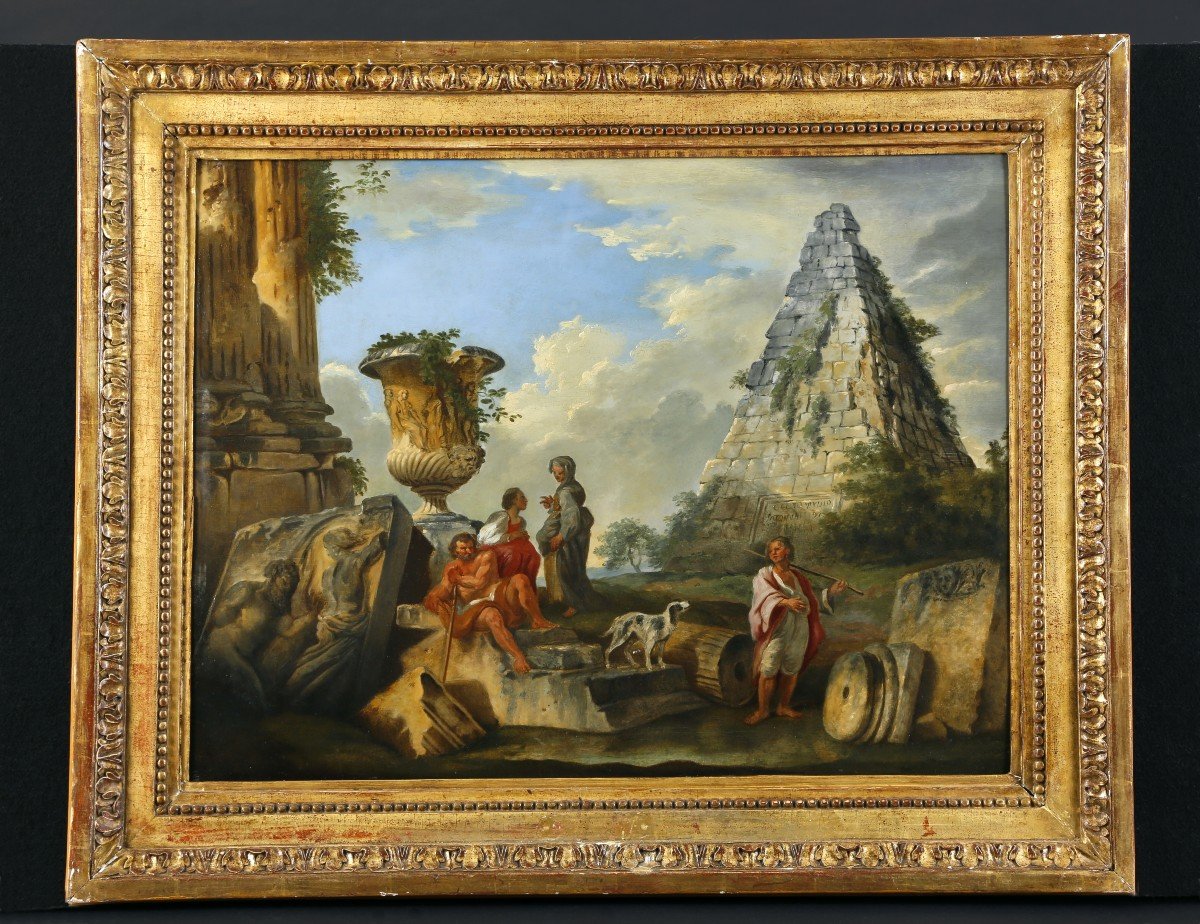
18th century, Italian Painting Architectural Capriccio with the Pyramid of Caio Cestio, Roman painter, follower of Giovanni Paolo Panini
Dimensions: cm H 48 x W 63.5, frame H 65 x W 80.5 x D 4.4
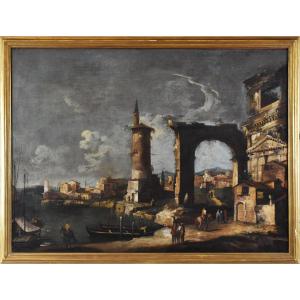
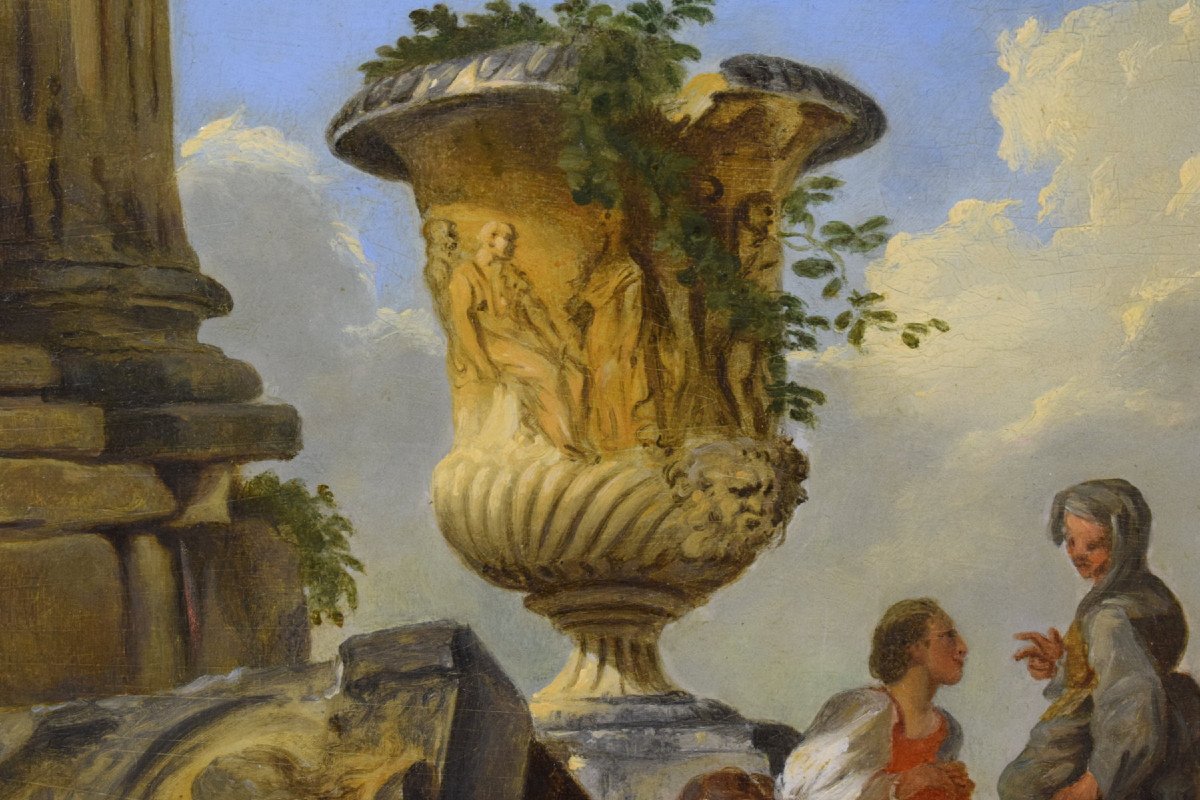
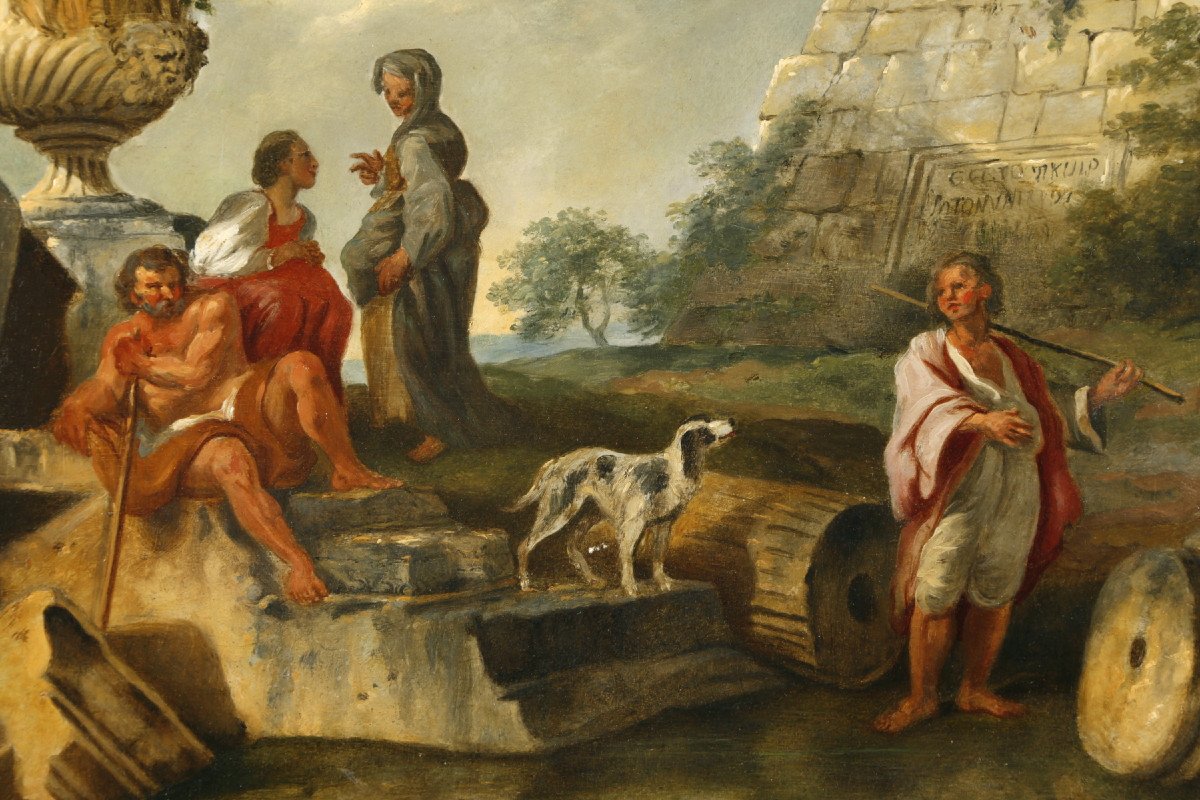
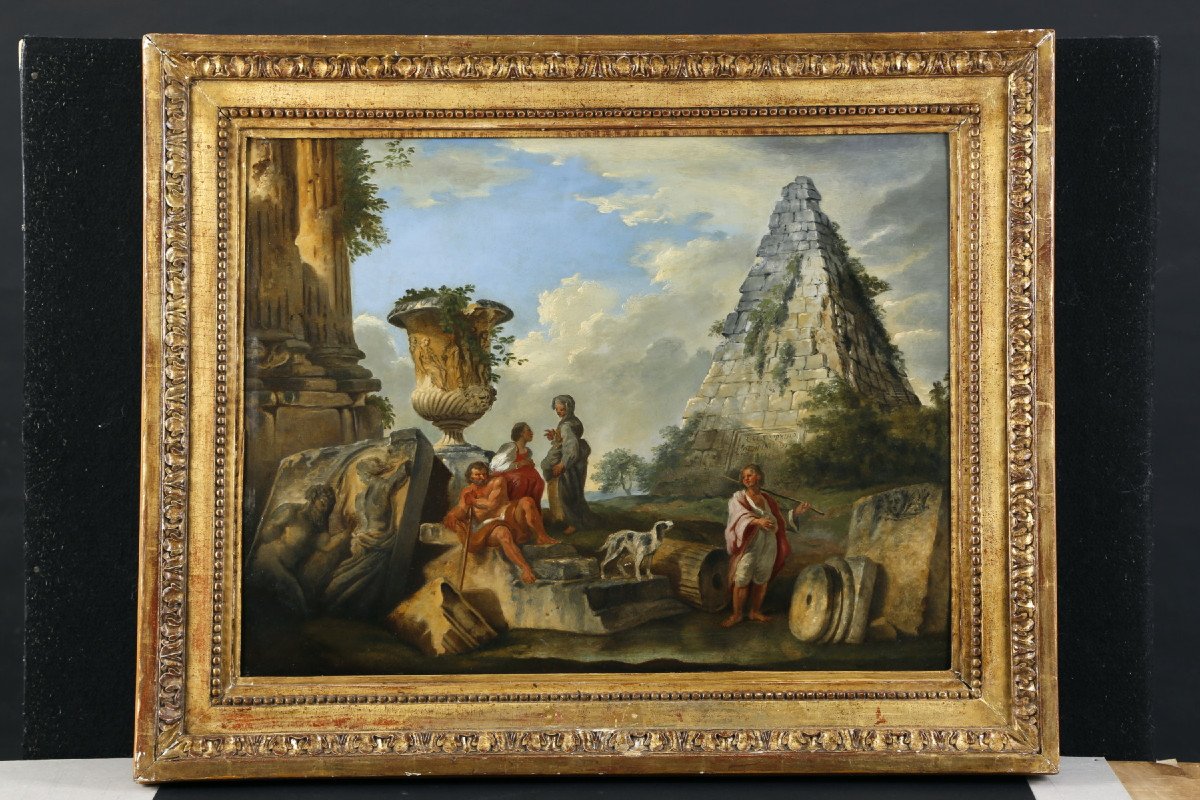
The work, made in oil on canvas, depicts an architectural caprice with classical ruins, four figures, a dog and the Pyramid of Caio Cestio in the background on the right. The painting is inspired by one of the many versions with a similar subject that made Giovanni Paolo Panini. In particular, there are convincing comparisons with the canvas made by Panini in the 1840s and now kept at the Louvre Museum in Paris.
Giovanni Paolo Pannini (or Panini; Piacenza, 1691 - Rome, 1765) was a painter, architect and set designer. He studied in Piacenza and in 1711 went to Rome where he studied drawing with Benedetto Luti becoming famous as a decorator of palaces. His fortune as a painter is due to his views of Rome; he was particularly interested in the antiquities of the city, becoming one of the great masters of the Grand Tour. In 1718 Panini was admitted to the Congregation of the Virtuosi at the Pantheon. He taught in Rome at the Accademia di San Luca from 1719 and at the Académie de France from 1732. He became one of the greatest exponents of metapainting.
His works were very successful and became a source of inspiration for many artists. It is in this context that the work in question, of beautiful pictorial quality and in good state of conservation, presented within a frame in carved and gilded wood.
Dimensions: cm H 48 x W 63.5, frame H 65 x W 80.5 x D 4.4
The work, made in oil on canvas, depicts an architectural caprice with classical ruins, four figures, a dog and the Pyramid of Caio Cestio in the background on the right. The painting is inspired by one of the many versions with a similar subject that made Giovanni Paolo Panini. In particular, there are convincing comparisons with the canvas made by Panini in the 1840s and now kept at the Louvre Museum in Paris.
Giovanni Paolo Pannini (or Panini; Piacenza, 1691 - Rome, 1765) was a painter, architect and set designer. He studied in Piacenza and in 1711 went to Rome where he studied drawing with Benedetto Luti becoming famous as a decorator of palaces. His fortune as a painter is due to his views of Rome; he was particularly interested in the antiquities of the city, becoming one of the great masters of the Grand Tour. In 1718 Panini was admitted to the Congregation of the Virtuosi at the Pantheon. He taught in Rome at the Accademia di San Luca from 1719 and at the Académie de France from 1732. He became one of the greatest exponents of metapainting.
His works were very successful and became a source of inspiration for many artists. It is in this context that the work in question, of beautiful pictorial quality and in good state of conservation, presented within a frame in carved and gilded wood.
18 500 €
Period: 18th century
Style: Louis 15th - Transition
Condition: Good condition
Material: Oil painting on wood
Width: 80,5
Height: 65
Depth: 4,4
Reference (ID): 1398446
Availability: In stock
Print