THIS OBJECT WAS SOLD
Rare And Very Powerful Mumei Shinshinto Katana Blade, Late Edo And Its Very Beautiful Koshirae
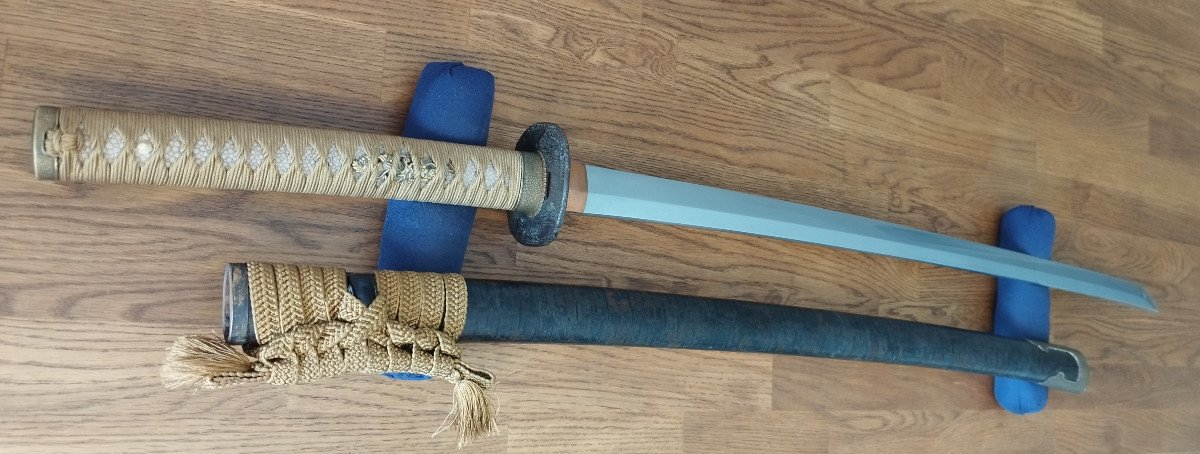
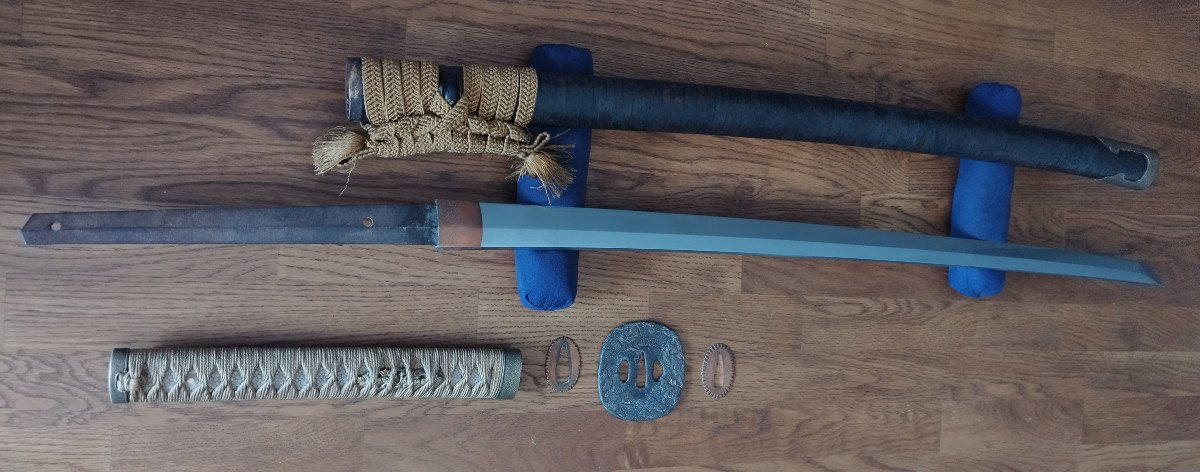

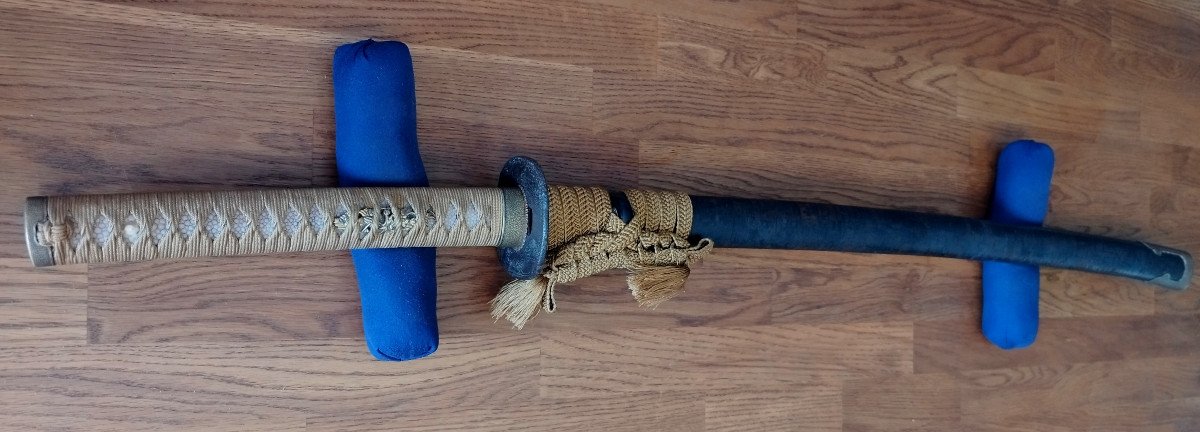

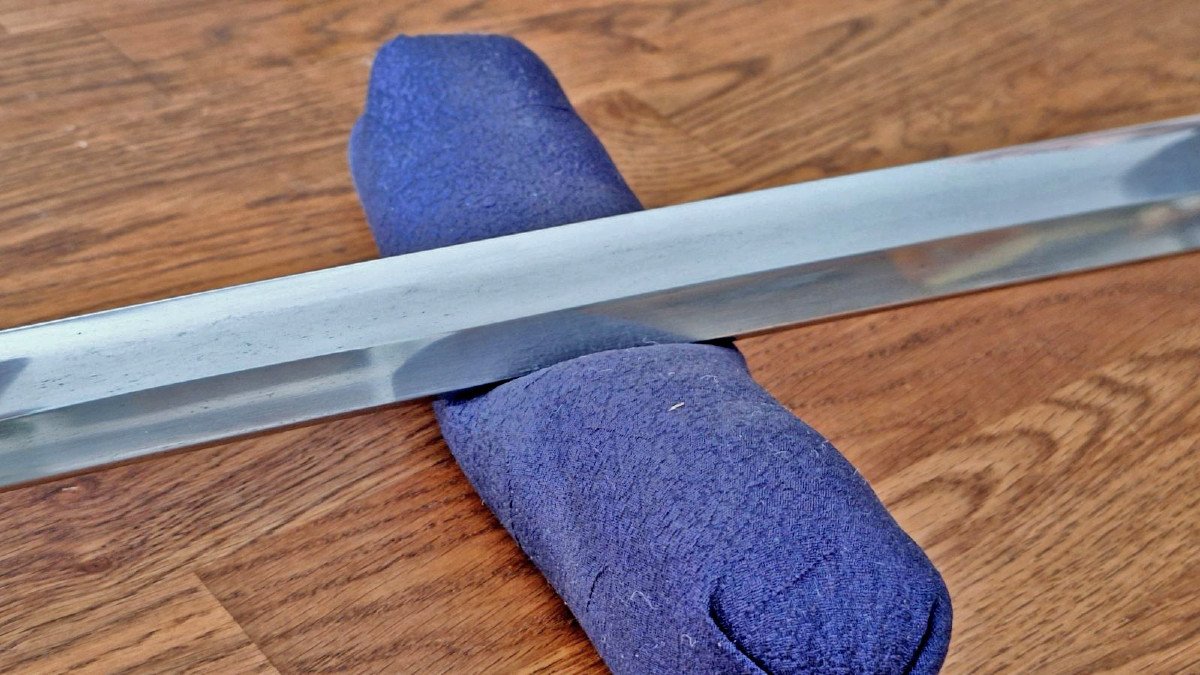




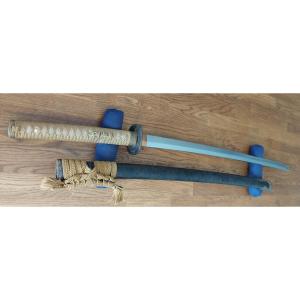


Rare, long and very powerful Katana Mumei Shinshinto blade (19th century), from the end of the Edo period, “Boshin War” (1868/1869), with a Hamon Hiro-Suguha (wide) and a Masame-hada. The blade is mounted in a very beautiful period Koshirae.
To date, very few such imposing blades have been produced, making it a fairly rare piece.
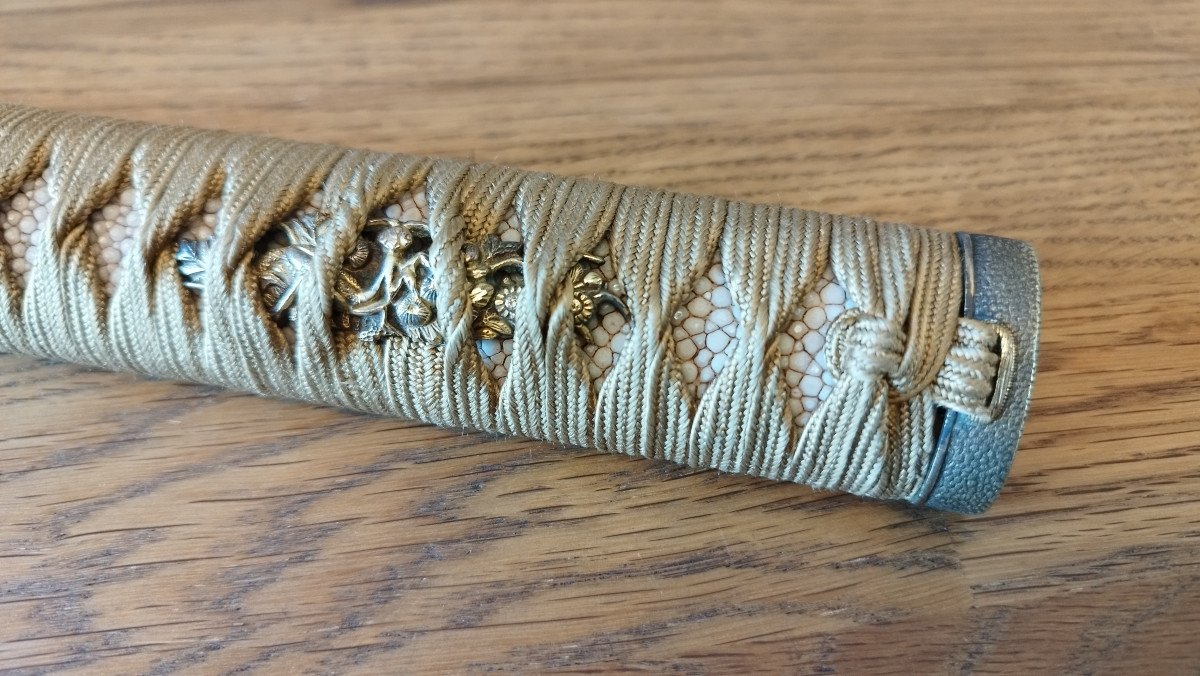
The Tsuka is braided in Hineri-maki with a Golden Ito in natural Japanese silk and a Same with Oya-tsubo (emperor nodules). All in a very beautiful Japanese brocade cover. The Saya is lacquered with a magnificent pattern imitating red Chinese birch bark and equipped with a Sageo in natural Japanese Golden silk, braided in Ronin-musubi.
This Shinshinto blade was forged in the manner of those forged during the Momoyama Period (1573-1643). It is for this reason that this imposing blade, long (77.7cm at Nagasa) and heavy (1280grs, bare blade) is particularly rare.
Mumei blade (unsigned)
Period: End of the Edo period, “Boshin War” (1868/1869)
CHARACTERISTICS:
Total blade length: 106cm
Nagasa: 77.7cm
Weight: 1280grs
Sori: Height: 1.2cm - Type: Koshi-zori Mekugi-ana: 2 Nakago type: Standard – Sobata-gata - End type: Iriyama -gata - Of “Ubu” origin - Yasurime (parallel horizontal lines) of type: Kiri, Ichimonji – length of Nakago: 28.3cm.
Mune type: Iori Mune.
Sugata type: Shinogi-zukuri – Dimensions: Ha: Moto-haba: 3.69cm – Saki-haba: 2.59cm – Blade thickness: Moto-gasane: 0.76mm – Saki-gasane: 0.53cm. No-hi (with throats).
Jihada type: Masame hada.
Hamon type: Hiro-Suguha (Large straight temper), visible, but not very contrasted. Crystal structure of Hamon type: Nioi Deki.
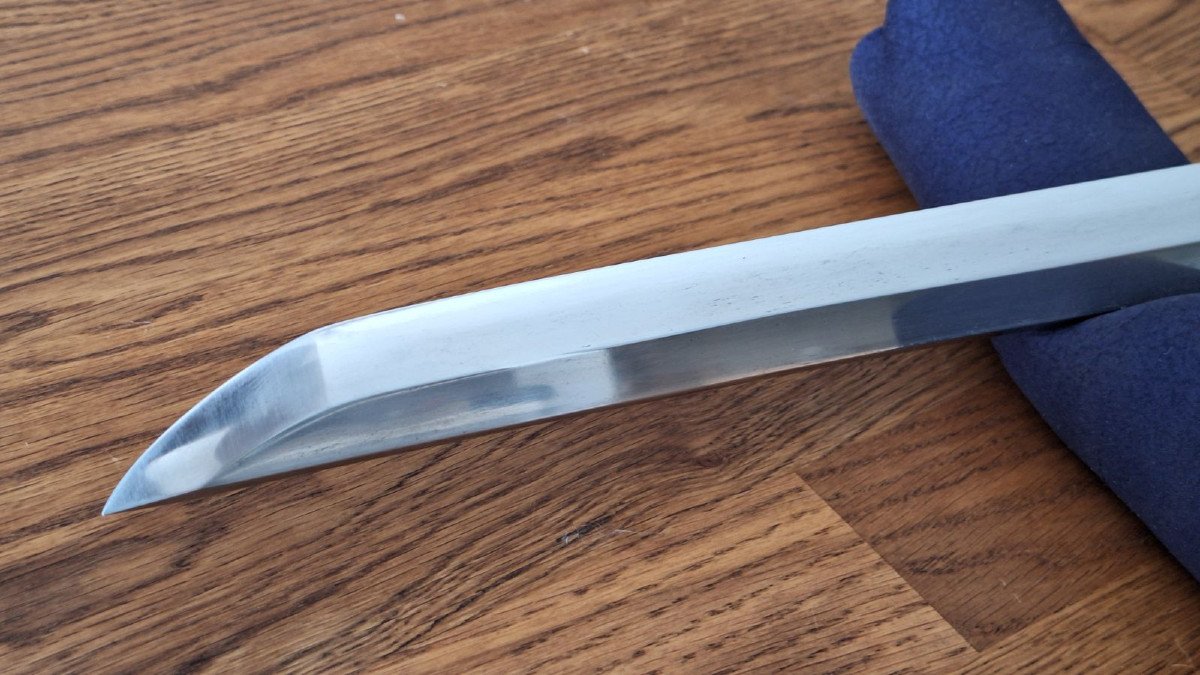
Kissaki type: Chu-Kissaki. Medium sized kissaki.
Boshi type: Midare Komi.
Steel type: Tamahagane - Blade with correct polishing and good sharpness.
Defects: Some scratches and impacts due to the age of the blade.
KOSHIRAE:
Tsuba (Edo Period): In Shakudo/Iroe-zogan - Theme: Mountain landscape in the moonlight, with 2 walkers and a ferryman's boat. Type: Kaku Maru Gata – Border: Maru Mimi – Presence of Kogai Hitsu Ana and a Kozuka Hitsu Ana. Weight: 172grs – Diameter 8.2cm x 8.6cm – Thickness: 3.9mm Fuchi/Kashira: Theme: Texture resembling Same – Material: Brass
Habaki: In 1 piece – Type: Honshoku Yujo – Material: Copper
Menuki: Very large Menuki (6.7cm) - Theme: Praying mantis in the middle of a decoration of flowers - Material: Brass
Braiding of the Tsuka in Hineri Maki (2 twists of Ito) on the Tsuka and in Yori Maki (4 twists of Ito) on the 2 Menuki, in natural Japanese silk, gilded with Hishigami
Saya: It is lacquered with a magnificent pattern imitating red Chinese birch bark and equipped with a brass Kojiri with the same pattern as the whole Fuchi/Kashira (en suite) of a Sageo in natural Japanese Golden silk, braided in Ronin-musubi.
To date, very few such imposing blades have been produced, making it a fairly rare piece.
The Tsuka is braided in Hineri-maki with a Golden Ito in natural Japanese silk and a Same with Oya-tsubo (emperor nodules). All in a very beautiful Japanese brocade cover. The Saya is lacquered with a magnificent pattern imitating red Chinese birch bark and equipped with a Sageo in natural Japanese Golden silk, braided in Ronin-musubi.
This Shinshinto blade was forged in the manner of those forged during the Momoyama Period (1573-1643). It is for this reason that this imposing blade, long (77.7cm at Nagasa) and heavy (1280grs, bare blade) is particularly rare.
Mumei blade (unsigned)
Period: End of the Edo period, “Boshin War” (1868/1869)
CHARACTERISTICS:
Total blade length: 106cm
Nagasa: 77.7cm
Weight: 1280grs
Sori: Height: 1.2cm - Type: Koshi-zori Mekugi-ana: 2 Nakago type: Standard – Sobata-gata - End type: Iriyama -gata - Of “Ubu” origin - Yasurime (parallel horizontal lines) of type: Kiri, Ichimonji – length of Nakago: 28.3cm.
Mune type: Iori Mune.
Sugata type: Shinogi-zukuri – Dimensions: Ha: Moto-haba: 3.69cm – Saki-haba: 2.59cm – Blade thickness: Moto-gasane: 0.76mm – Saki-gasane: 0.53cm. No-hi (with throats).
Jihada type: Masame hada.
Hamon type: Hiro-Suguha (Large straight temper), visible, but not very contrasted. Crystal structure of Hamon type: Nioi Deki.
Kissaki type: Chu-Kissaki. Medium sized kissaki.
Boshi type: Midare Komi.
Steel type: Tamahagane - Blade with correct polishing and good sharpness.
Defects: Some scratches and impacts due to the age of the blade.
KOSHIRAE:
Tsuba (Edo Period): In Shakudo/Iroe-zogan - Theme: Mountain landscape in the moonlight, with 2 walkers and a ferryman's boat. Type: Kaku Maru Gata – Border: Maru Mimi – Presence of Kogai Hitsu Ana and a Kozuka Hitsu Ana. Weight: 172grs – Diameter 8.2cm x 8.6cm – Thickness: 3.9mm Fuchi/Kashira: Theme: Texture resembling Same – Material: Brass
Habaki: In 1 piece – Type: Honshoku Yujo – Material: Copper
Menuki: Very large Menuki (6.7cm) - Theme: Praying mantis in the middle of a decoration of flowers - Material: Brass
Braiding of the Tsuka in Hineri Maki (2 twists of Ito) on the Tsuka and in Yori Maki (4 twists of Ito) on the 2 Menuki, in natural Japanese silk, gilded with Hishigami
Saya: It is lacquered with a magnificent pattern imitating red Chinese birch bark and equipped with a brass Kojiri with the same pattern as the whole Fuchi/Kashira (en suite) of a Sageo in natural Japanese Golden silk, braided in Ronin-musubi.
Explore similar pieces and discover your ideal find:
Edged Weapons