THIS OBJECT WAS SOLD
Altar Bells , Liège 1729, Sterling Silver, Guillaume Dirick
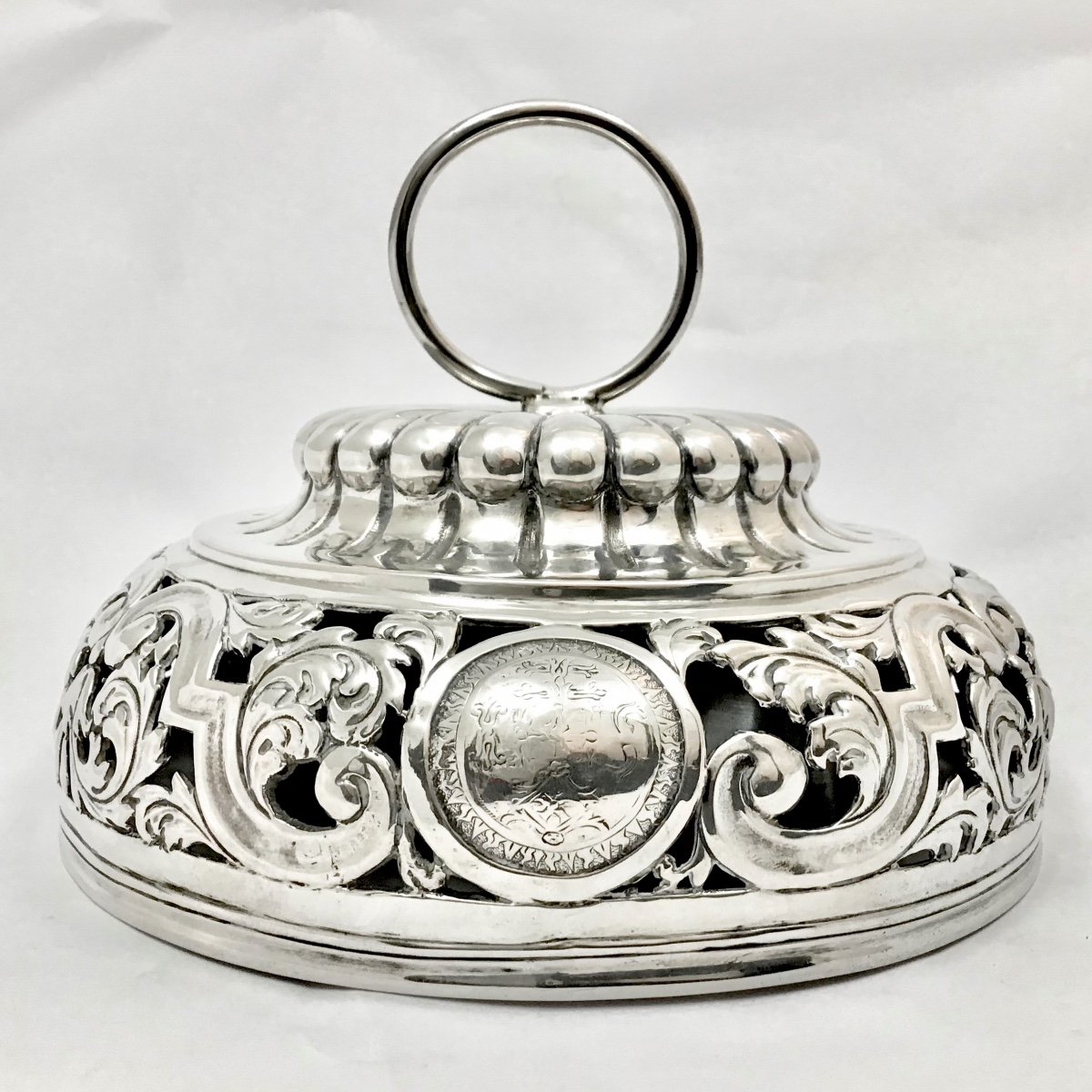

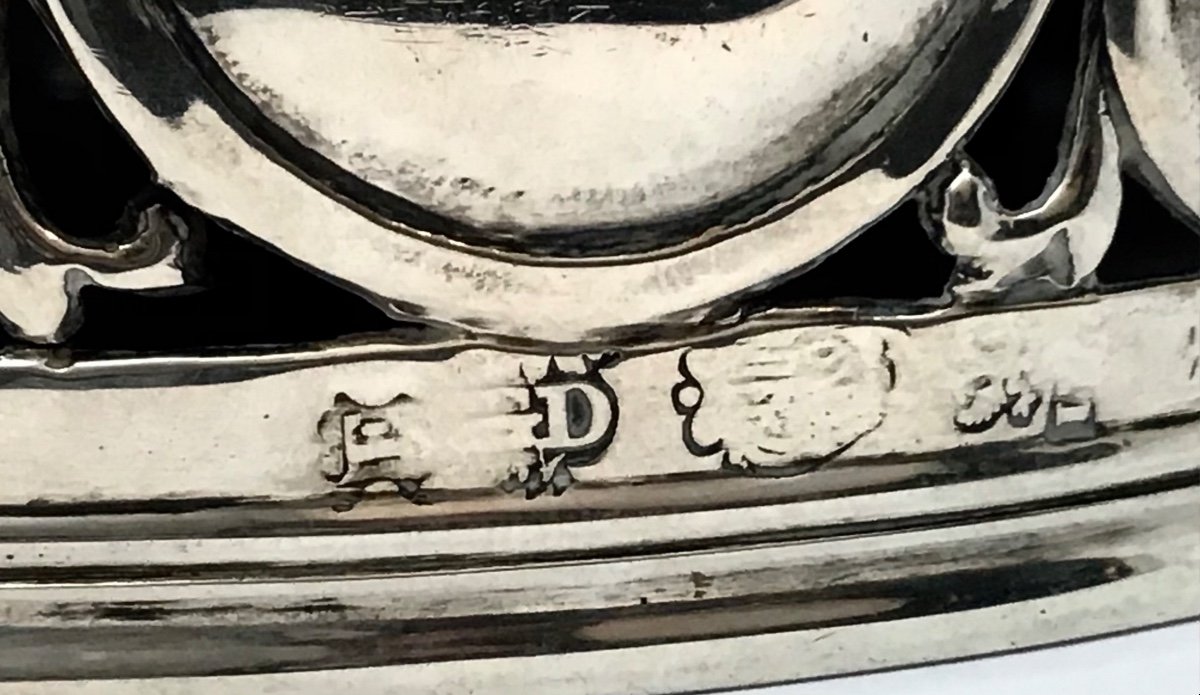
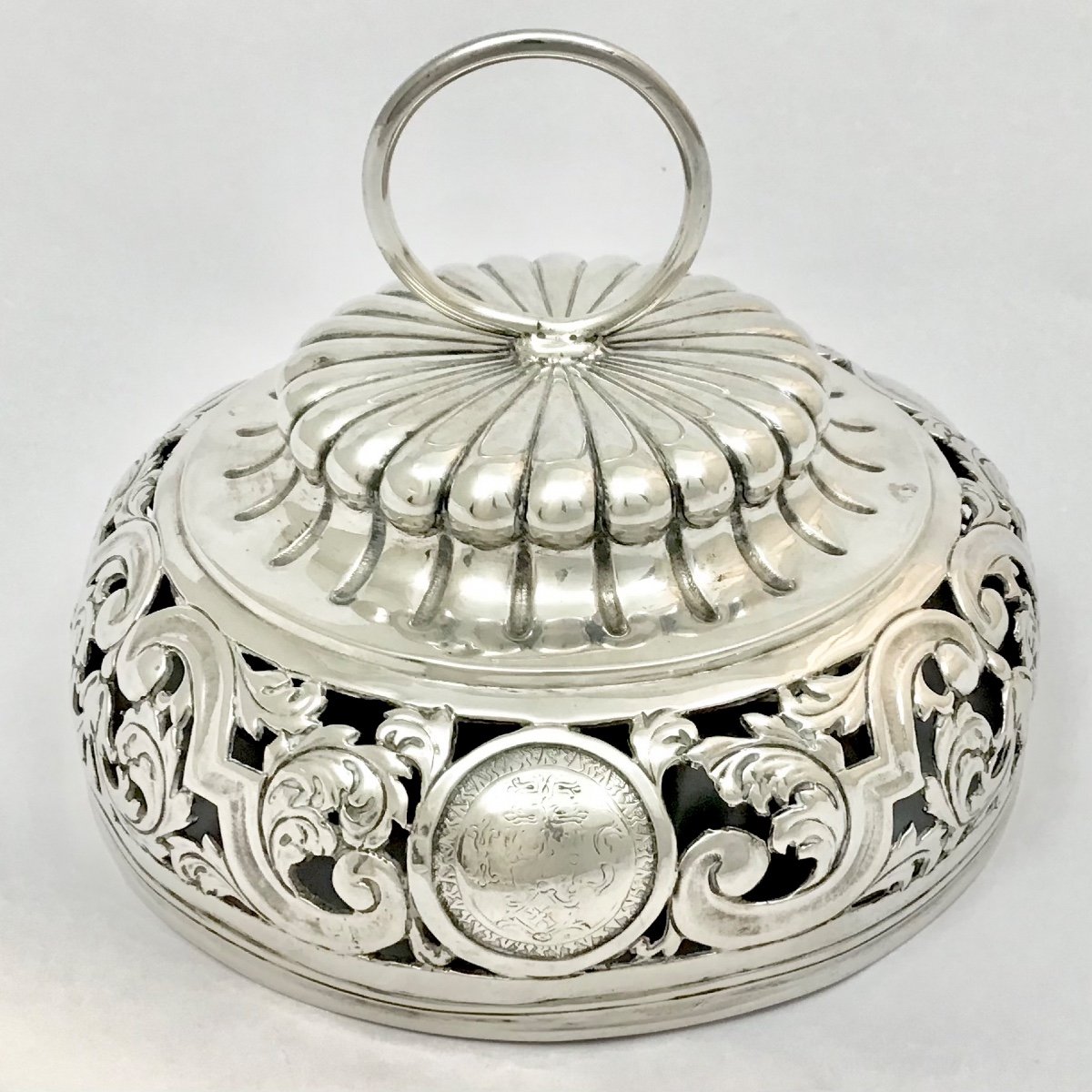


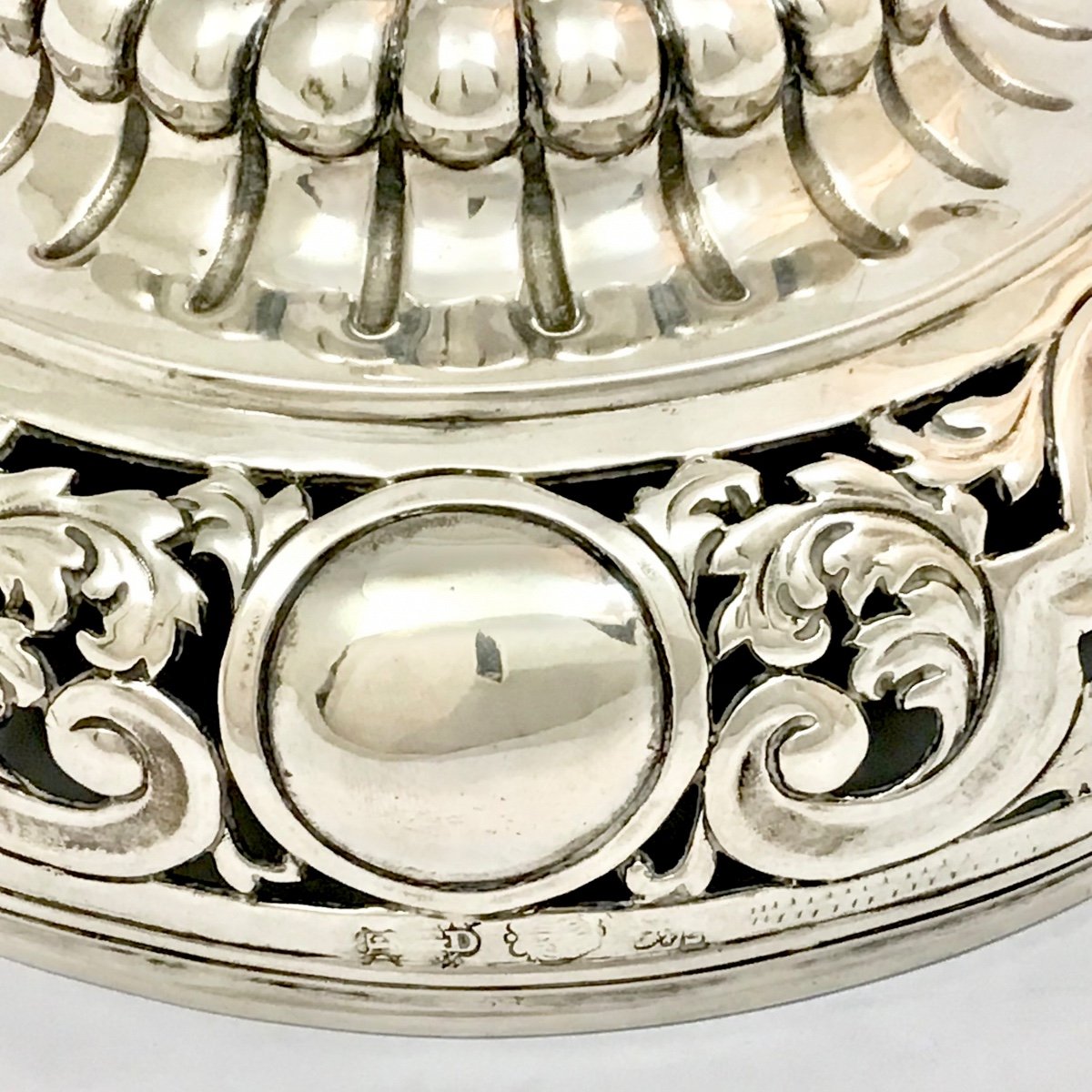
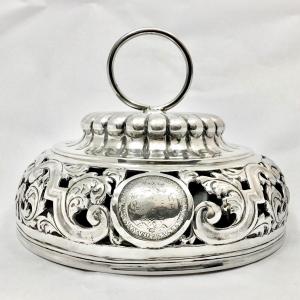


Extremely rare altar bells in sterling silver with the hallmarks of the city of Liège (arms of the prince bishop de Berghes) for the year 1729-30 and of the master goldsmith Guillaume Dirick (1668-1737). Generously decorated with typically Baroque motifs, it is a perfect example of Liège religious goldsmithery from the beginning of the eighteenth century. A large solid silver ring crowns the fluted dome and allows the use of the four brass bells concealed inside the dome. Three cartouches are present in a frieze of rich foliage, two are empty, one is engraved with the capital letters IHS, a christogram which finds its origin in the first three letters of the name of Jesus in classical Greek. The use of Latin having become dominant, these letters found new meanings such as Iesus Hominum Salvator, In Hoc Signo (vinces....) or for the Jesuits: Iesus habemus socium (Pope Francis chose them as main feature of his papal arms) . Their presence on the piece most likely points to a Jesuit sponsor. The appearance of the altar bells during the consecration dates from the end of the sixteenth century and is more recent than that of the simple altar bell whose use has been attested since the thirteenth century. Its name is derived from Old French careignan or quaternary, in turn derived from the Latin quaternio: a set of four. And these first carillons indeed have four bells.... The bells inside this carillon date from a time after its manufacture, probably from the nineteenth century. Silver altar bells dating from before 1800 are very rare on the market.
Explore similar pieces and discover your ideal find:
Serveware