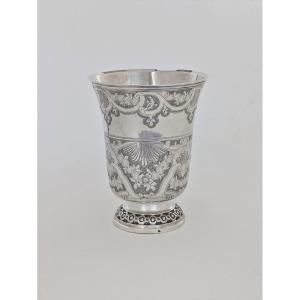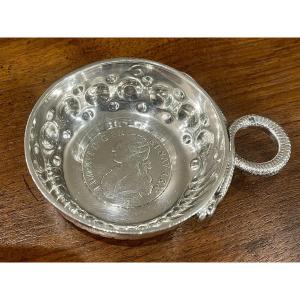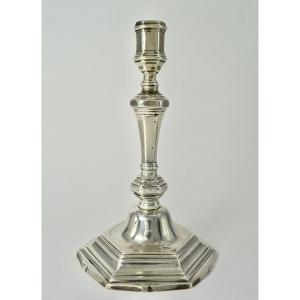



Paris 1776-1777, Charles Spriman , Ewer And Bassin , Marques Of Soyécourt
Artist: Charles Spriman (mons 1737-paris 1809)
There are some pieces of goldsmith's work that could fill an entire doctoral thesis, so much do they have to tell us.
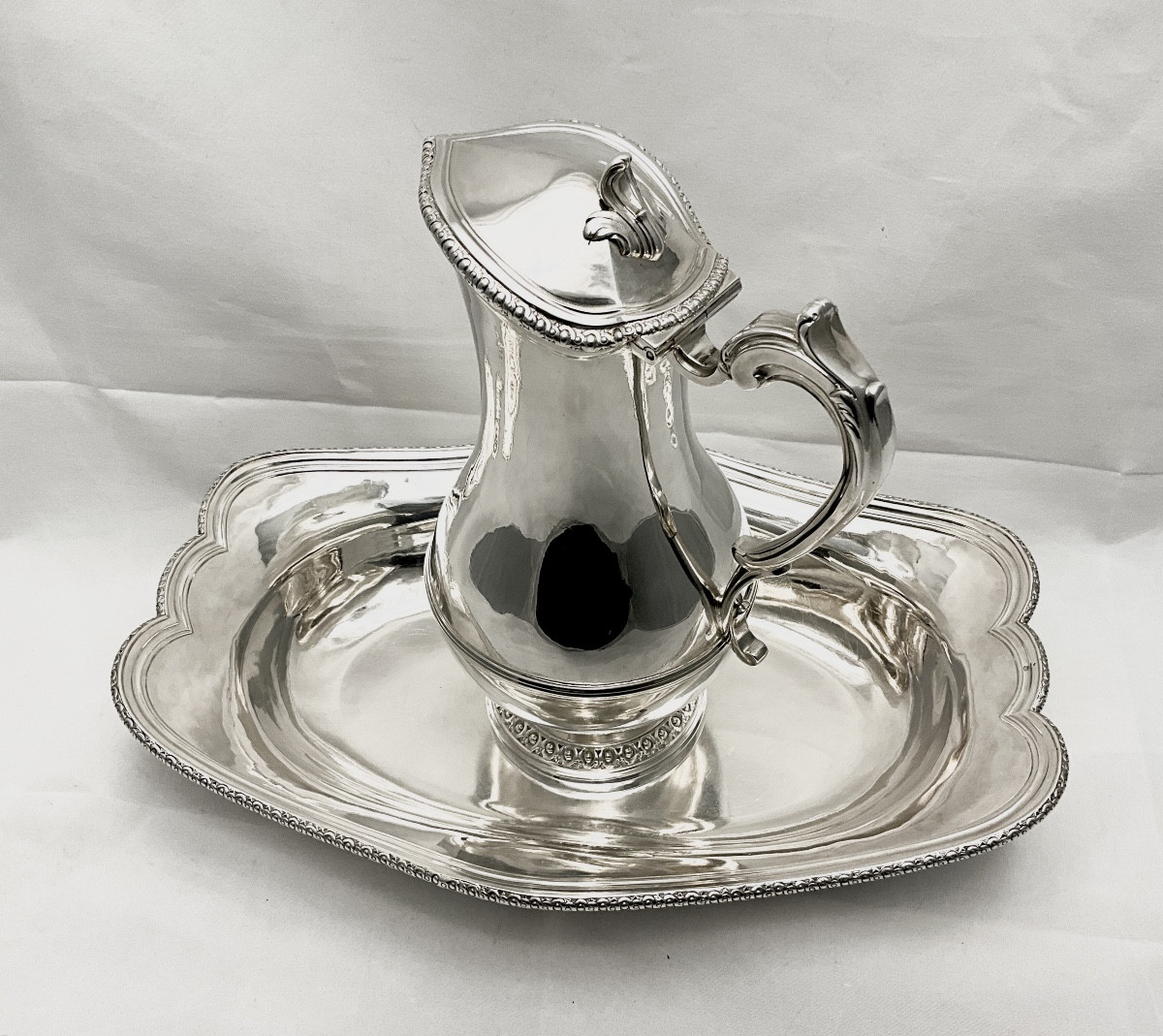
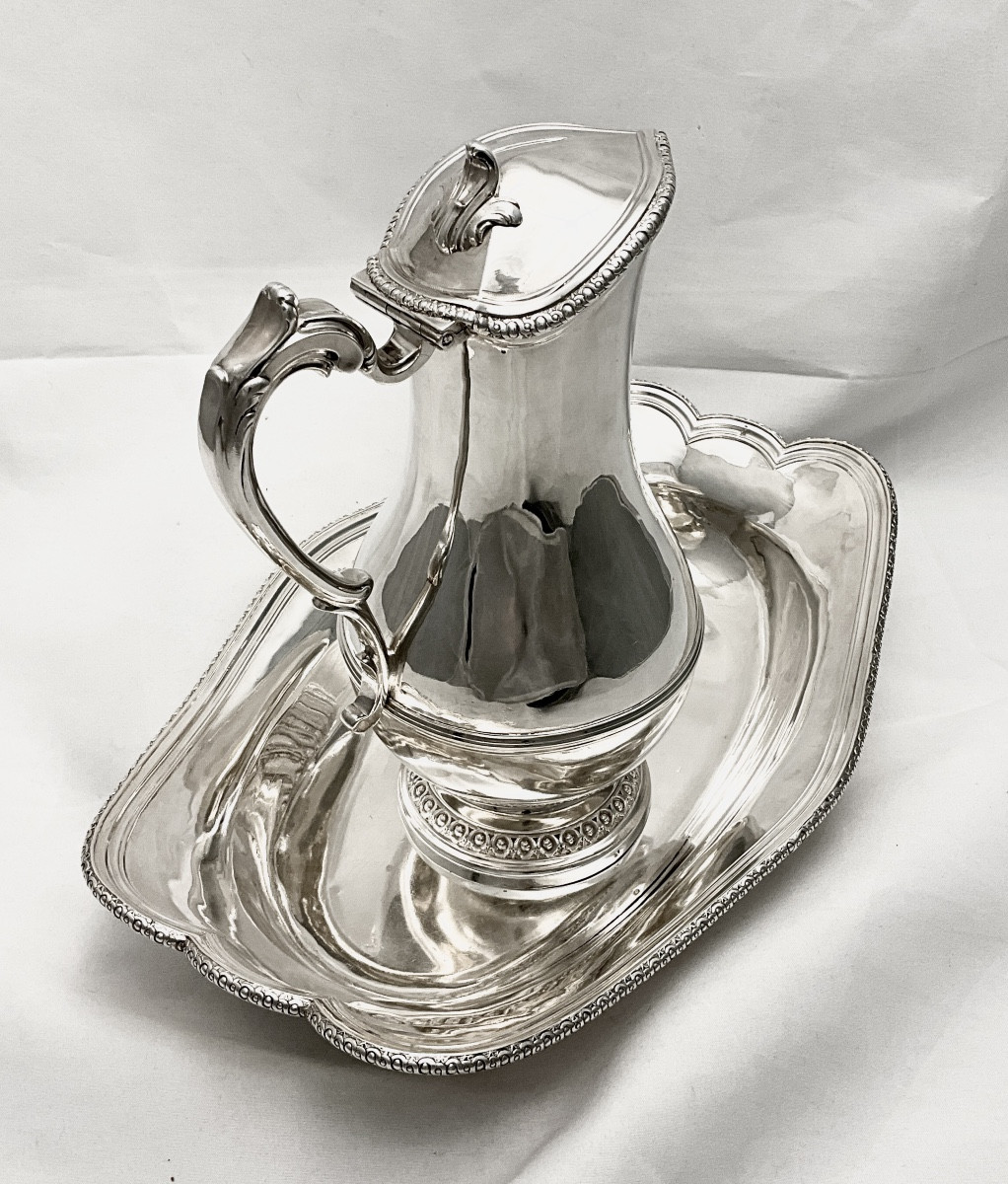
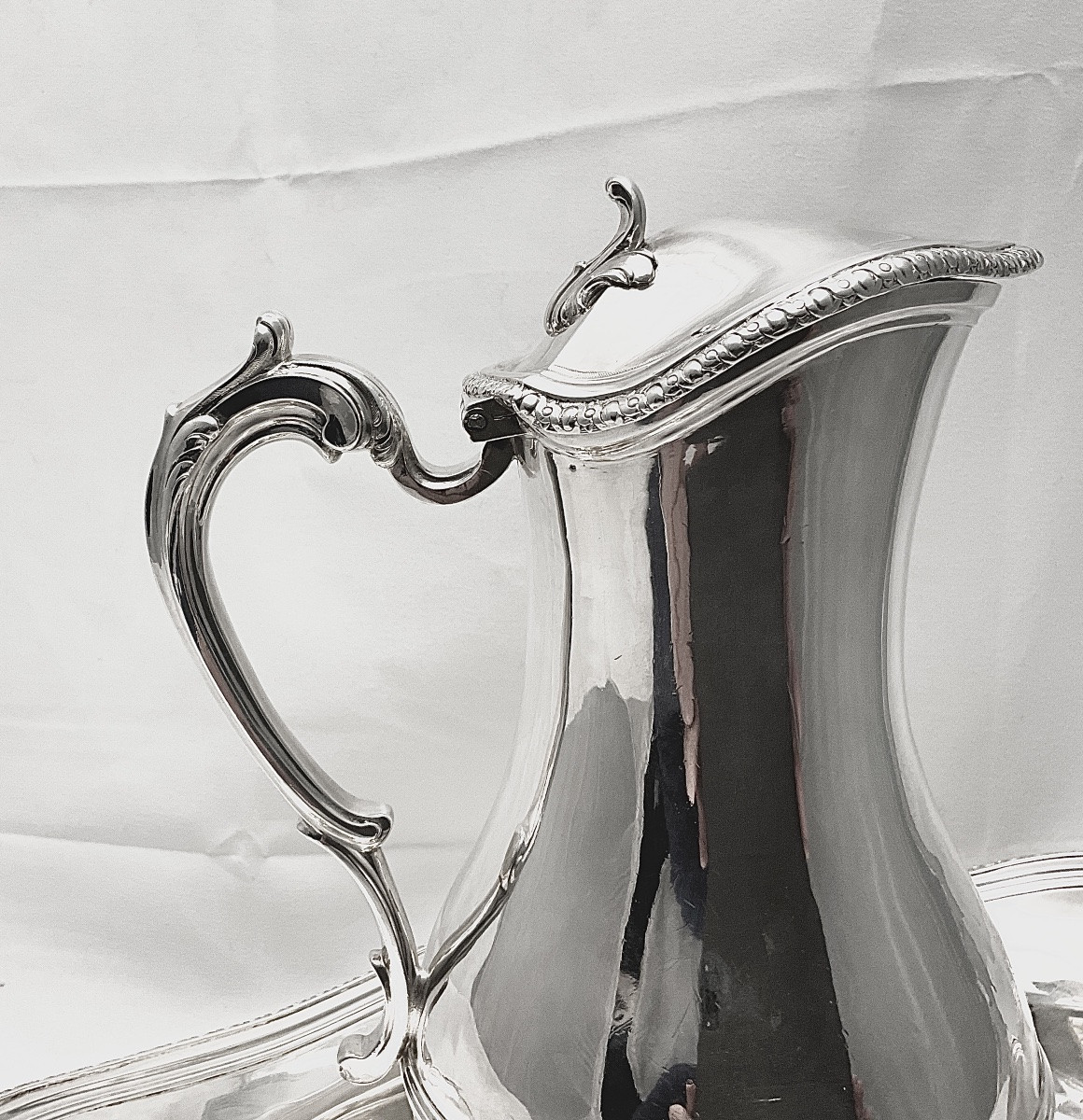
Such is the case with this majestic ewer and basin that I present to you here.
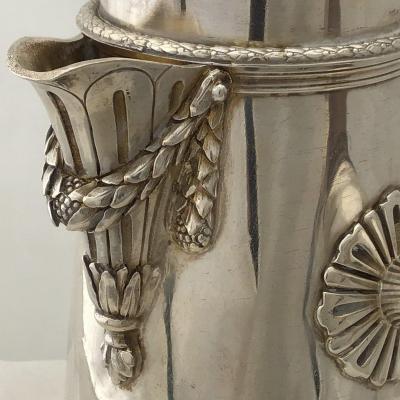
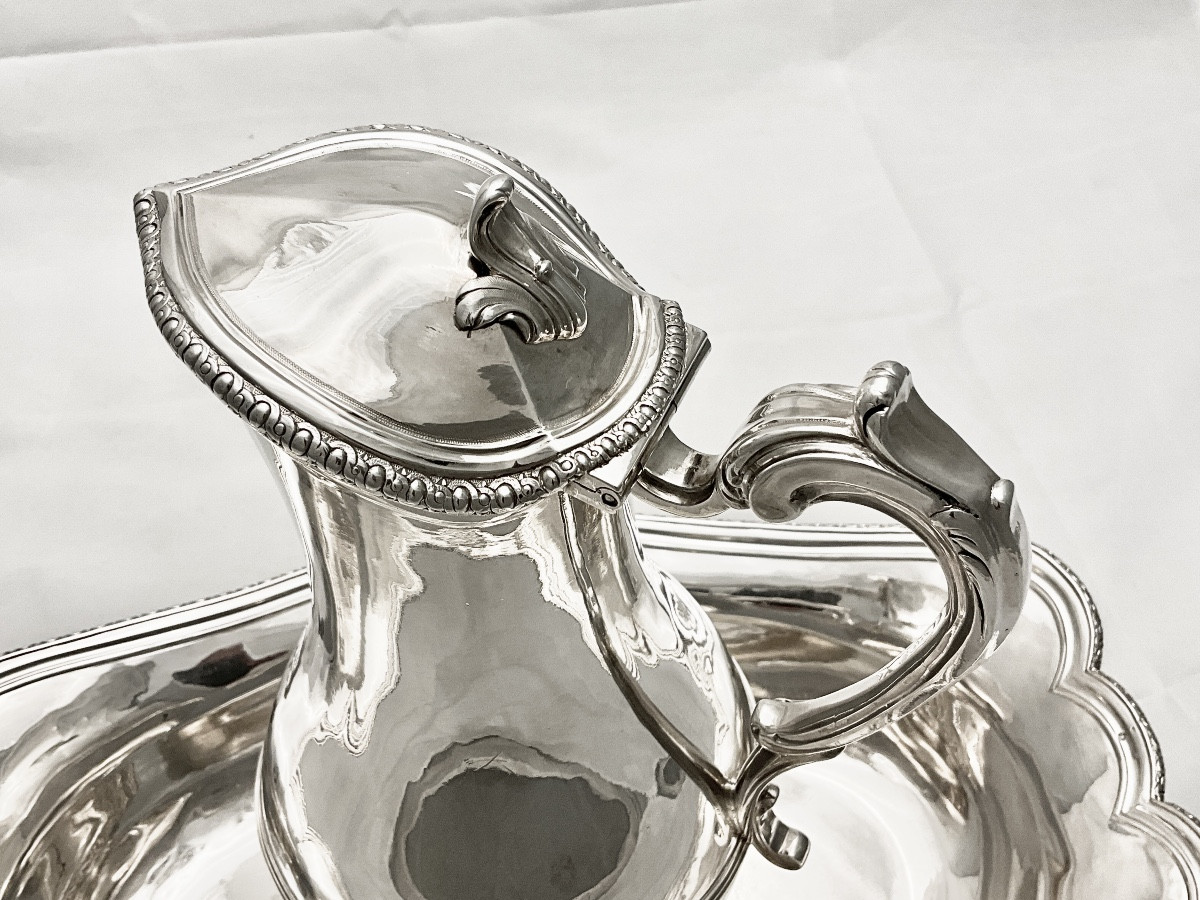
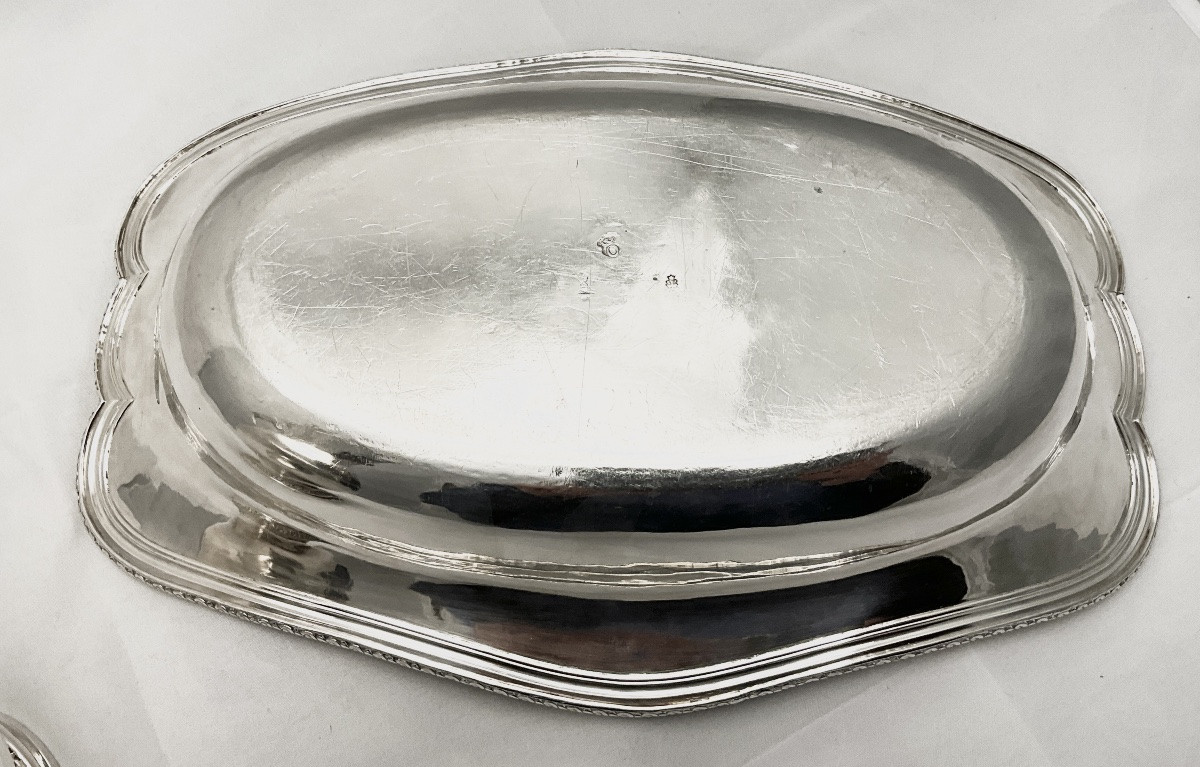
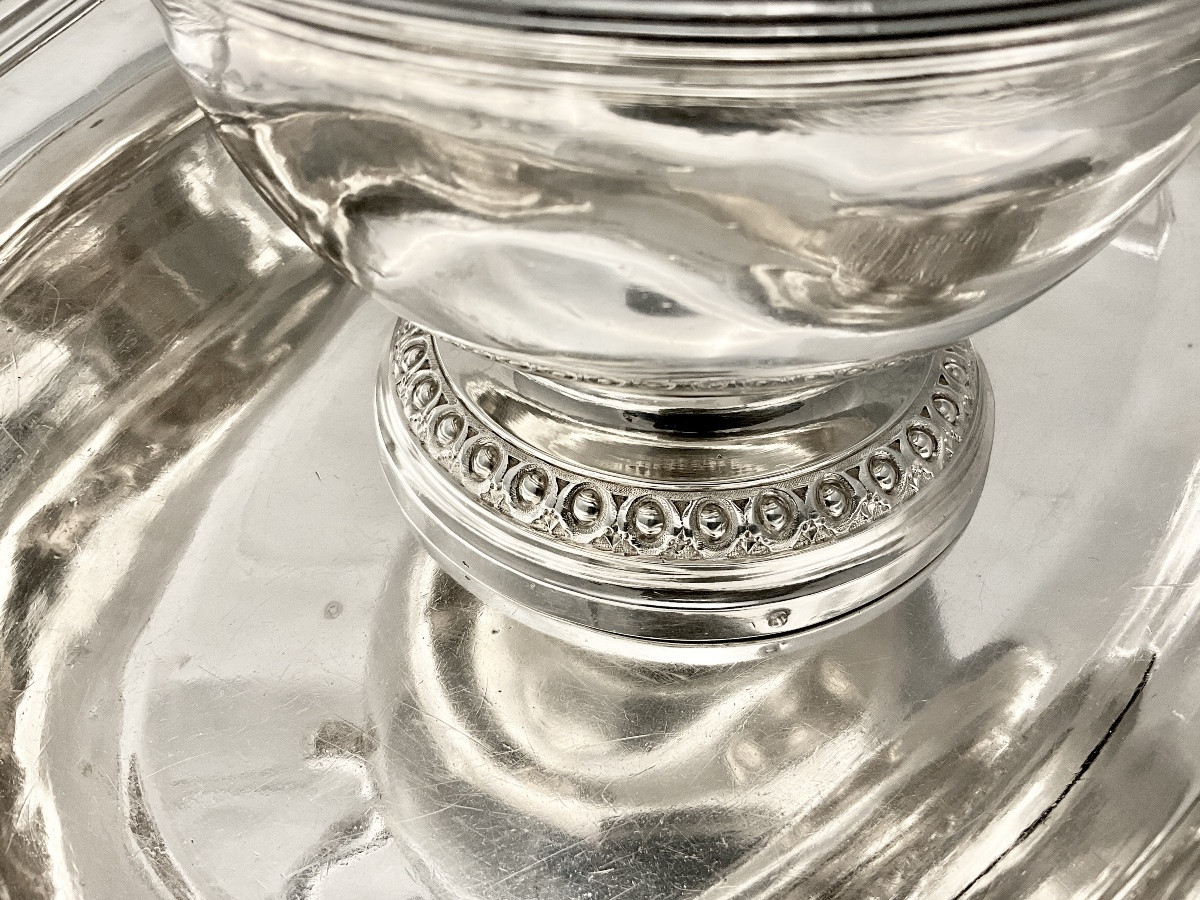
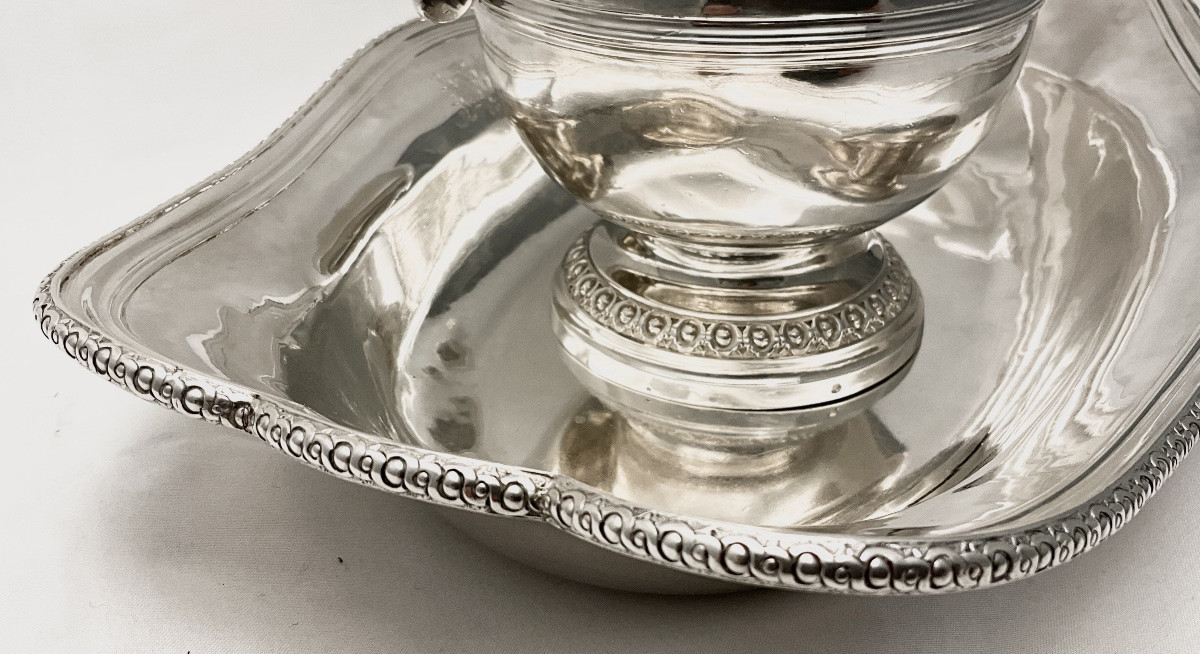
At first glance, they are very elegant but fairly understated, decorated with a simple moulded border of ovals, a design introduced by Nicolas Besnier in the early eighteenth century.
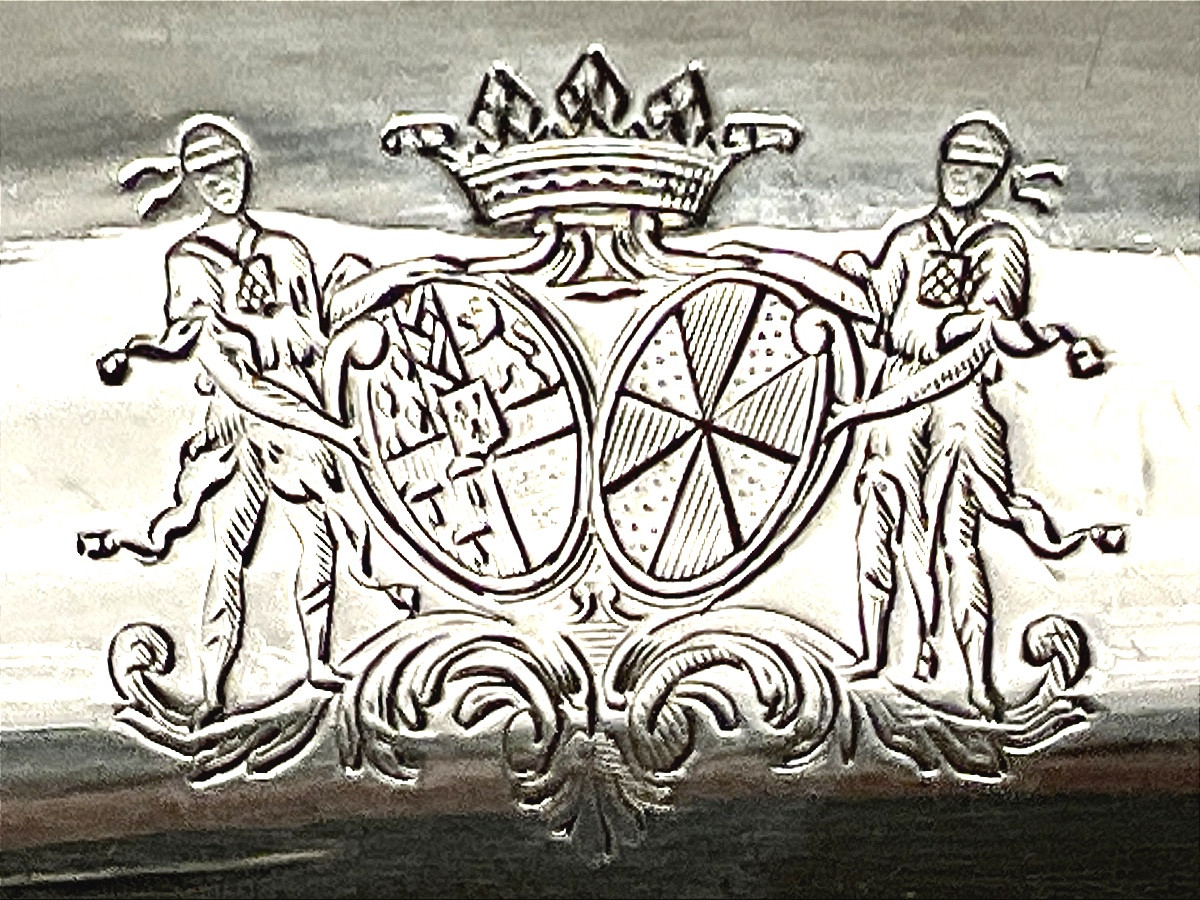
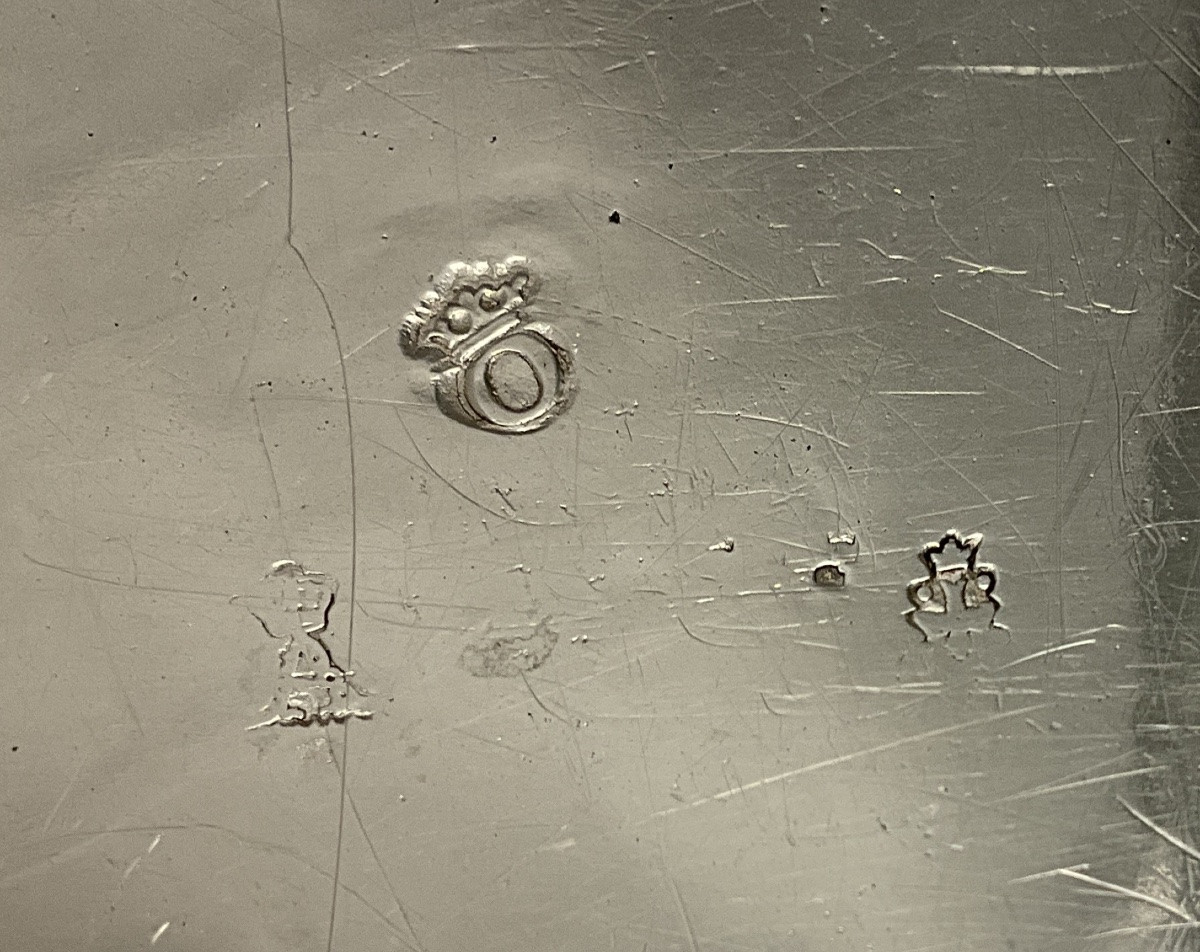
It is the hallmarks and coats of arms engraved on the belly of the ewer and on the rim of the basin that tell us the whole story.
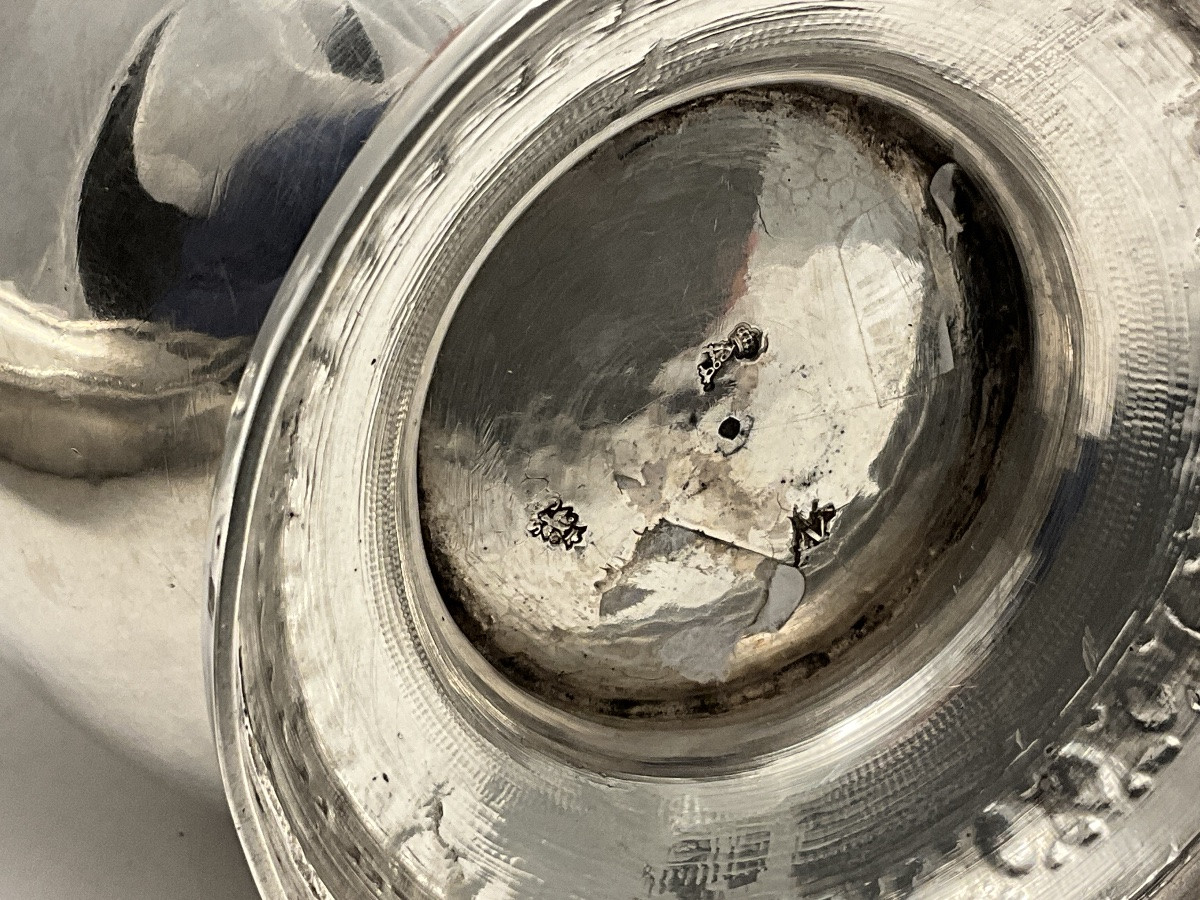
The hallmarks are those of the city of Paris, 1776 (N) for the ewer and 1777 (O) for the basin. The silversmith's mark is the same on both the basin and the ewer:
Charles-Louis-Auguste Spriman (or Sprimant or Spriment) was born in Mons, Belgium, in 1737.
He completed his apprenticeship there and was admitted to the guild in Mons in 1762, presenting a spectacular fountain with three taps.
To date, his Mons master's mark is unknown and no pieces from his Belgian period have been identified at this stage.
In 1775, he moved to Paris as a master craftsman. We can assume that he had already been working there as a journeyman silversmith for many years. His success was meteoric and almost immediate.
His oldest known Parisian soup tureen, dating from 1775-1776, is kept at the Louvre and features a finial representing a hunting dog and game.
In 1777-1778, he supplied pieces for the “Ekaterinoslav” service intended for Catherine IIof Russia ,commissioned from Robert-Joseph Auguste, also born in Mons.
Louis Lenhenrick, who lived near Spriman on the Notre-Dame bridge, also collaborated in this service.
These associations placed Spriman at the center of sophisticated Parisian production.
Spriman seems to have specialized in soup tureens, judging by the number of examples that have survived (32!).
His works are always of masterful and sumptuous quality.
The first owners of this beautiful set also left their mark. Their alliance coat of arms is engraved on the basin and on the belly of the ewer.
They are Marquis Joaquim Charles de Seiglière de Belleforière de Soyécourt (1726-1794) and his wife Marie Sylvine de Béranger du Gua (17?-1794).
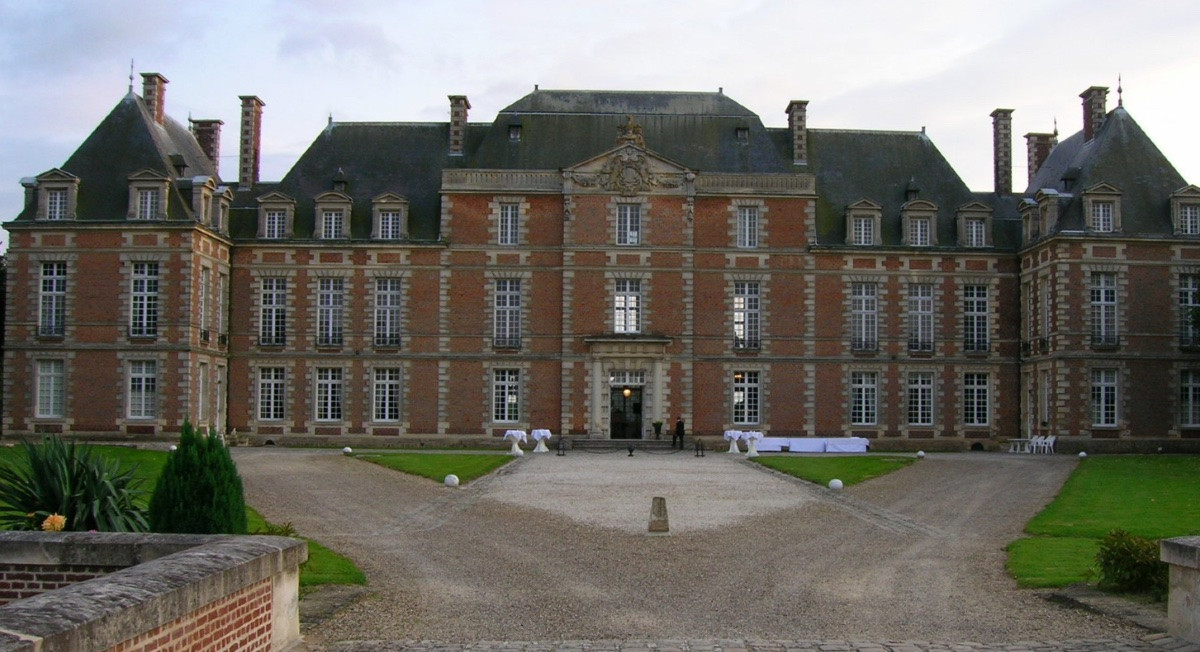
In their day, they were the lords of Tilloloy, Regnière-Ecluse, Harbonnières, Eaucourt-sur-Somme, and the Moulineaux farm near Paris, and owned countless lands in Picardy and the Dauphiné.
They were also the Marquises of Feuquieres.
The marquis was a captain of dragoons in the Asfeld Regiment.
The family owned the chateaux of Tilloloy and Maisons-Laffitte and several mansions in Paris, including the one where a certain Karl Lagerfeld lived in the 20th century.
The year 1794 sounded the death knell for this illustrious lineage, as the marquise died of grief and illness in the prison of Sainte-Pelagie, and the marquis and his daughter were guillotined a few days before the fall of Robespierre, despite the efforts of a delegation of Tilloloy residents who came to Paris to plead for their lord's release.
The only survivor of the family was their daughter, the Carmelite nun Camille de Soyécourt. As a non-immigrant noblewoman, she asked the Pope for permission to recover her parents' colossal fortune. She used it throughout her long life to work for the Catholic cause in France. Her ultramontane convictions and unlimited means made her a dangerous enemy for Emperor Napoleon I, who exiled her to Guise in 1812.
She bought the prison where her father had been held, transformed it into a Carmelite convent, and lived in her cell for decades.
Until her death at the age of 93, Mother Soyécourt worked tirelessly for the restoration of the Catholic religion and the return of the Carmelites to France. I highly recommend reading her biography on Wikipedia.
At the end of her life, she bequeathed her possessions to her nephews, the Hinnisdaëls, whose descendants still own the Château de Tilloloy near Roye....
The set weighs 1700 grams.
Such is the case with this majestic ewer and basin that I present to you here.
At first glance, they are very elegant but fairly understated, decorated with a simple moulded border of ovals, a design introduced by Nicolas Besnier in the early eighteenth century.
It is the hallmarks and coats of arms engraved on the belly of the ewer and on the rim of the basin that tell us the whole story.
The hallmarks are those of the city of Paris, 1776 (N) for the ewer and 1777 (O) for the basin. The silversmith's mark is the same on both the basin and the ewer:
Charles-Louis-Auguste Spriman (or Sprimant or Spriment) was born in Mons, Belgium, in 1737.
He completed his apprenticeship there and was admitted to the guild in Mons in 1762, presenting a spectacular fountain with three taps.
To date, his Mons master's mark is unknown and no pieces from his Belgian period have been identified at this stage.
In 1775, he moved to Paris as a master craftsman. We can assume that he had already been working there as a journeyman silversmith for many years. His success was meteoric and almost immediate.
His oldest known Parisian soup tureen, dating from 1775-1776, is kept at the Louvre and features a finial representing a hunting dog and game.
In 1777-1778, he supplied pieces for the “Ekaterinoslav” service intended for Catherine IIof Russia ,commissioned from Robert-Joseph Auguste, also born in Mons.
Louis Lenhenrick, who lived near Spriman on the Notre-Dame bridge, also collaborated in this service.
These associations placed Spriman at the center of sophisticated Parisian production.
Spriman seems to have specialized in soup tureens, judging by the number of examples that have survived (32!).
His works are always of masterful and sumptuous quality.
The first owners of this beautiful set also left their mark. Their alliance coat of arms is engraved on the basin and on the belly of the ewer.
They are Marquis Joaquim Charles de Seiglière de Belleforière de Soyécourt (1726-1794) and his wife Marie Sylvine de Béranger du Gua (17?-1794).
In their day, they were the lords of Tilloloy, Regnière-Ecluse, Harbonnières, Eaucourt-sur-Somme, and the Moulineaux farm near Paris, and owned countless lands in Picardy and the Dauphiné.
They were also the Marquises of Feuquieres.
The marquis was a captain of dragoons in the Asfeld Regiment.
The family owned the chateaux of Tilloloy and Maisons-Laffitte and several mansions in Paris, including the one where a certain Karl Lagerfeld lived in the 20th century.
The year 1794 sounded the death knell for this illustrious lineage, as the marquise died of grief and illness in the prison of Sainte-Pelagie, and the marquis and his daughter were guillotined a few days before the fall of Robespierre, despite the efforts of a delegation of Tilloloy residents who came to Paris to plead for their lord's release.
The only survivor of the family was their daughter, the Carmelite nun Camille de Soyécourt. As a non-immigrant noblewoman, she asked the Pope for permission to recover her parents' colossal fortune. She used it throughout her long life to work for the Catholic cause in France. Her ultramontane convictions and unlimited means made her a dangerous enemy for Emperor Napoleon I, who exiled her to Guise in 1812.
She bought the prison where her father had been held, transformed it into a Carmelite convent, and lived in her cell for decades.
Until her death at the age of 93, Mother Soyécourt worked tirelessly for the restoration of the Catholic religion and the return of the Carmelites to France. I highly recommend reading her biography on Wikipedia.
At the end of her life, she bequeathed her possessions to her nephews, the Hinnisdaëls, whose descendants still own the Château de Tilloloy near Roye....
The set weighs 1700 grams.
11 500 €
Period: 18th century
Style: Louis 15th - Transition
Condition: Excellent condition
Material: Sterling silver
Length: bassin 34 cm
Width: bassin 23 cm
Height: aiguière 26 cm
Reference (ID): 1647188
Availability: In stock
Print