THIS OBJECT WAS SOLD
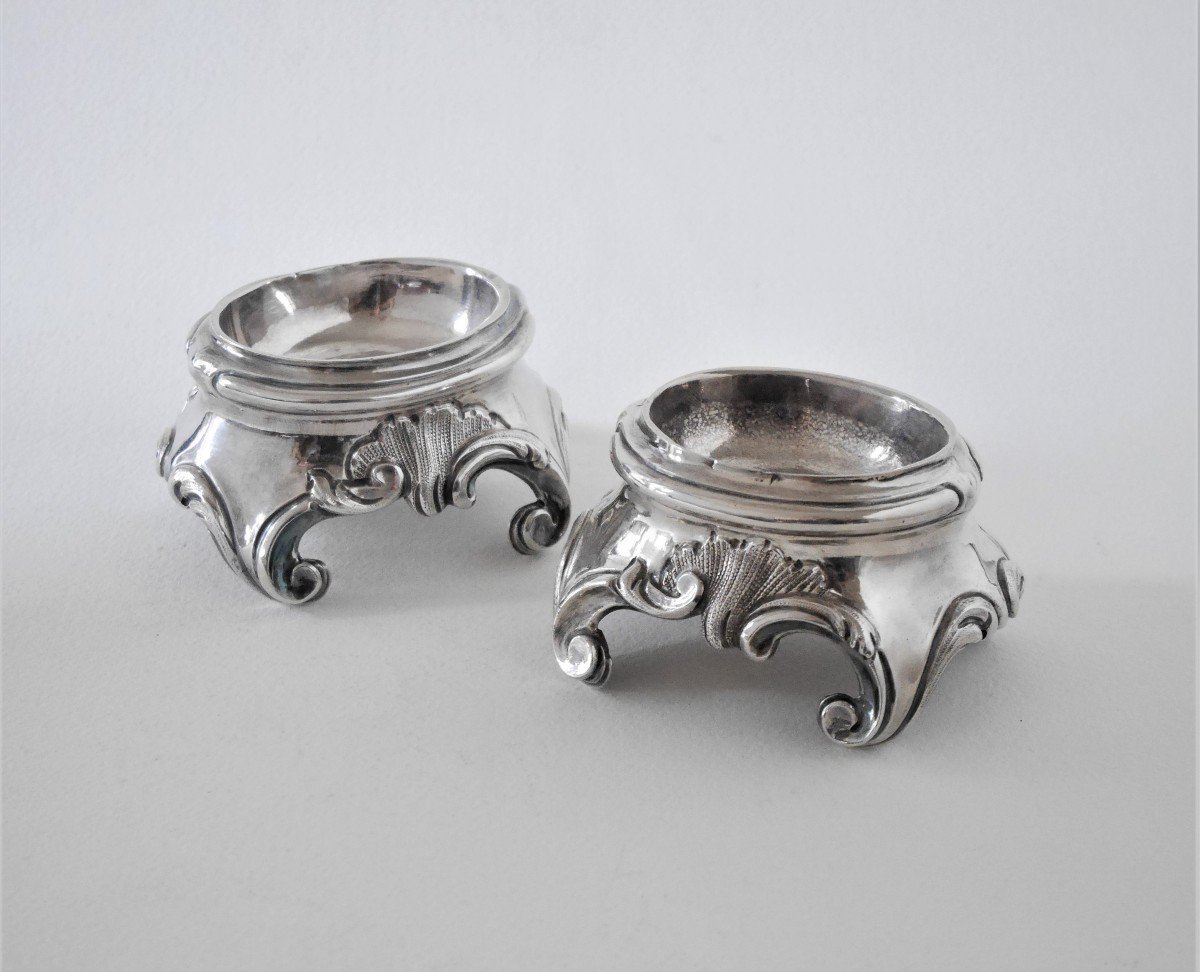
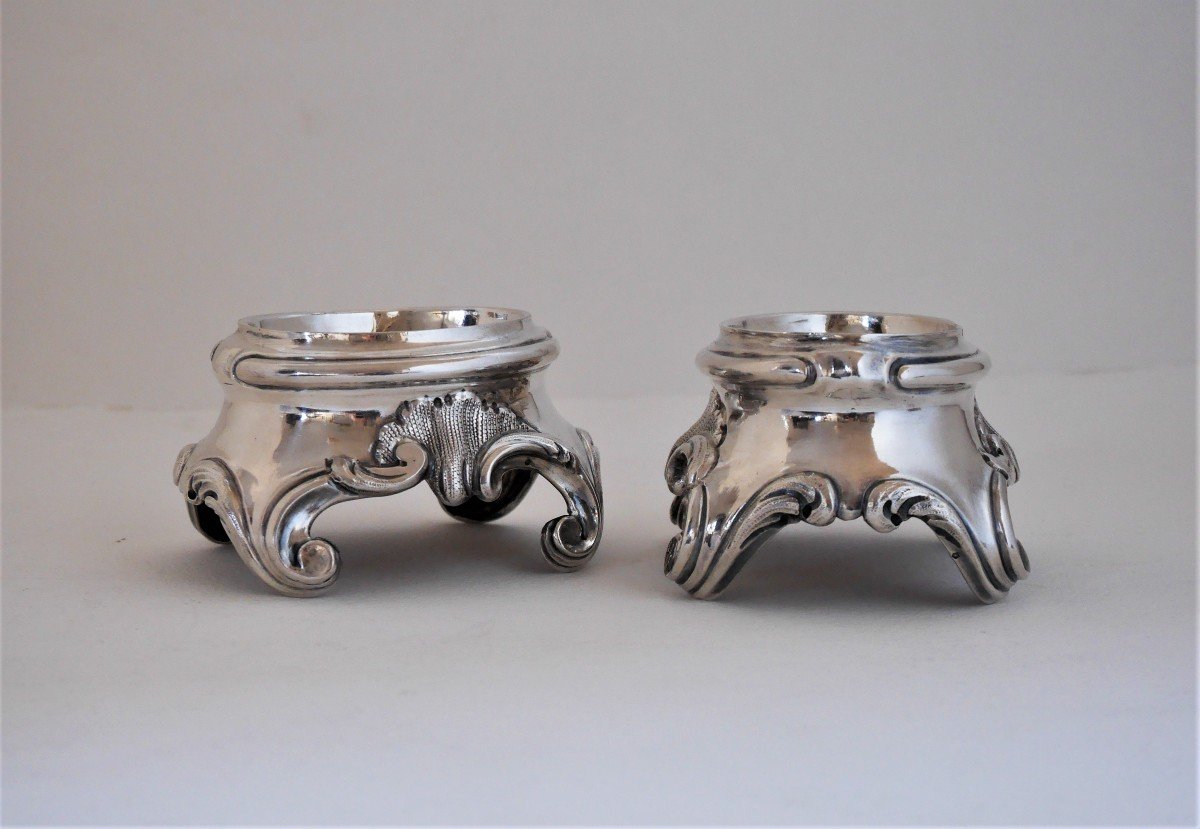
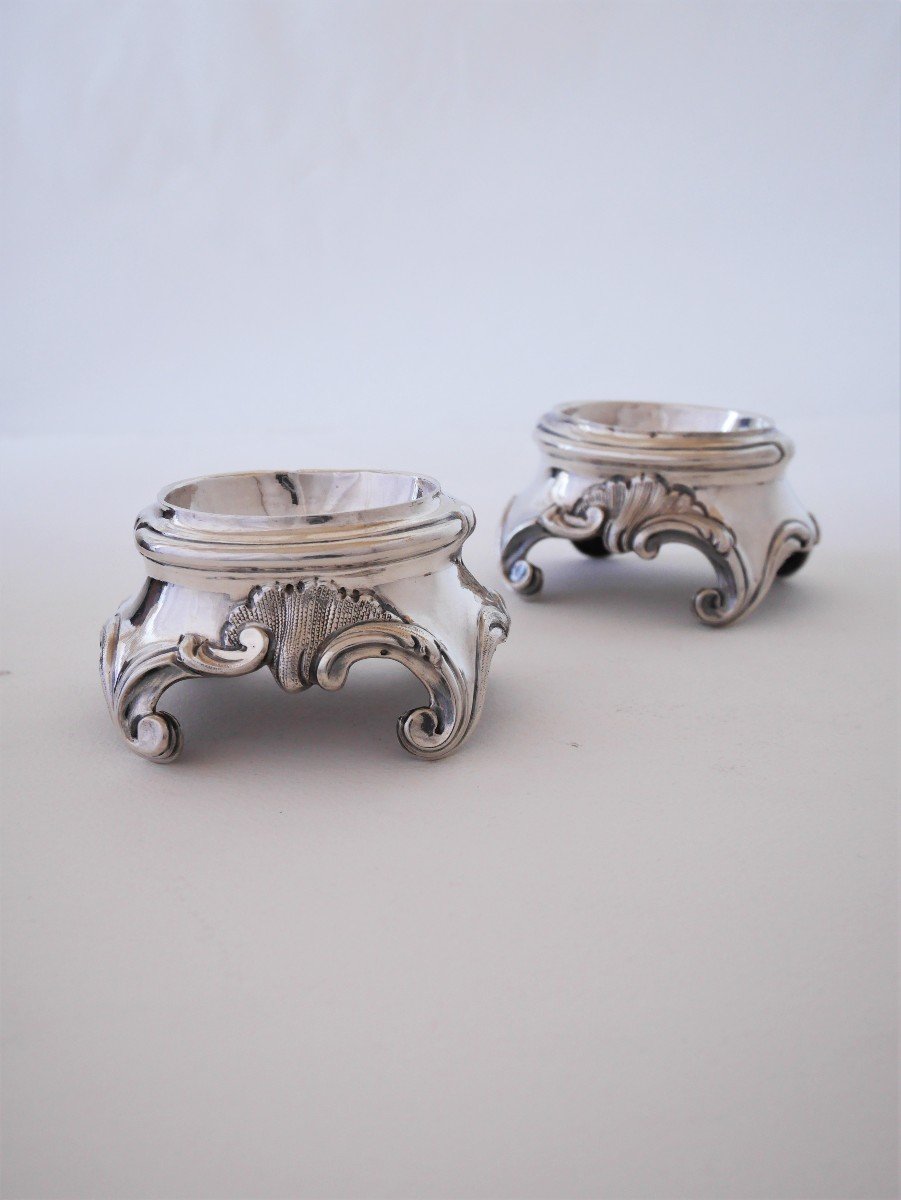
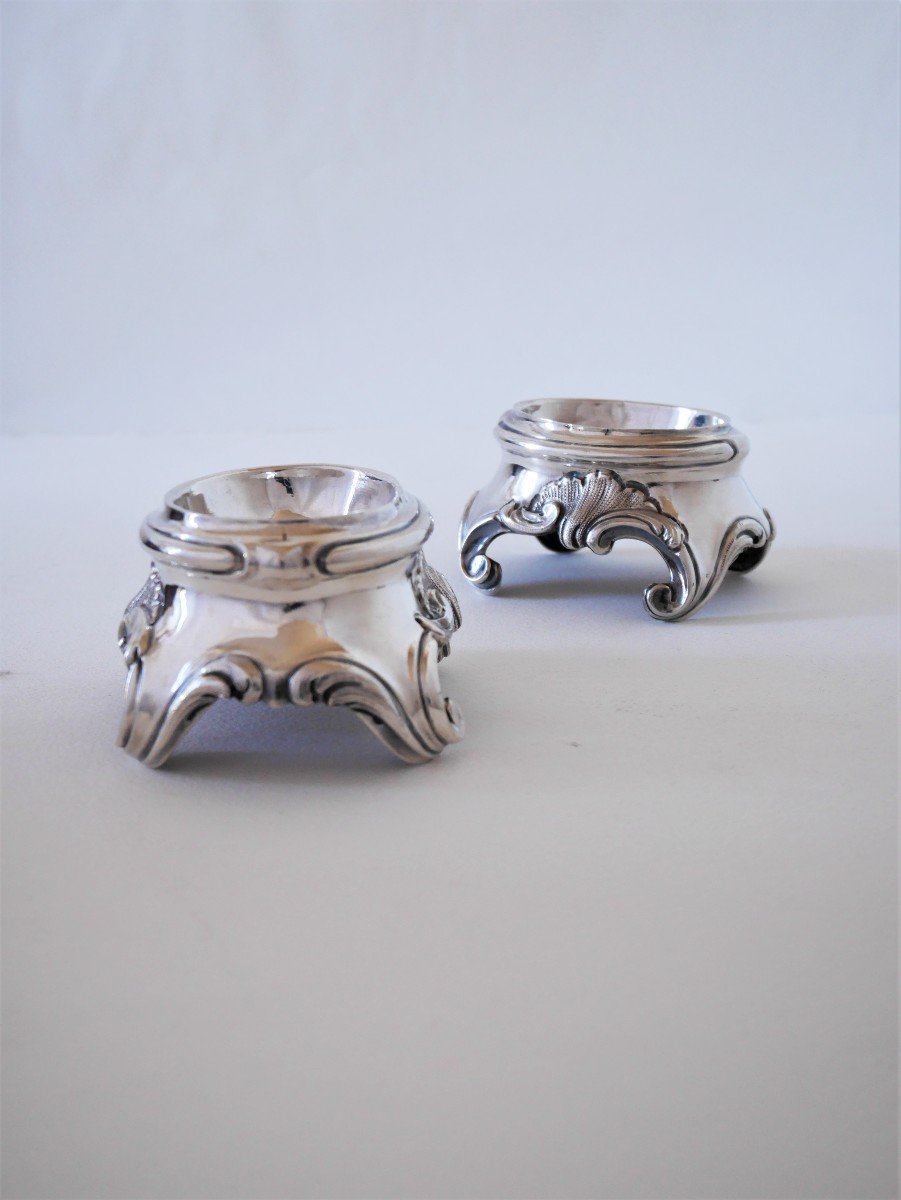
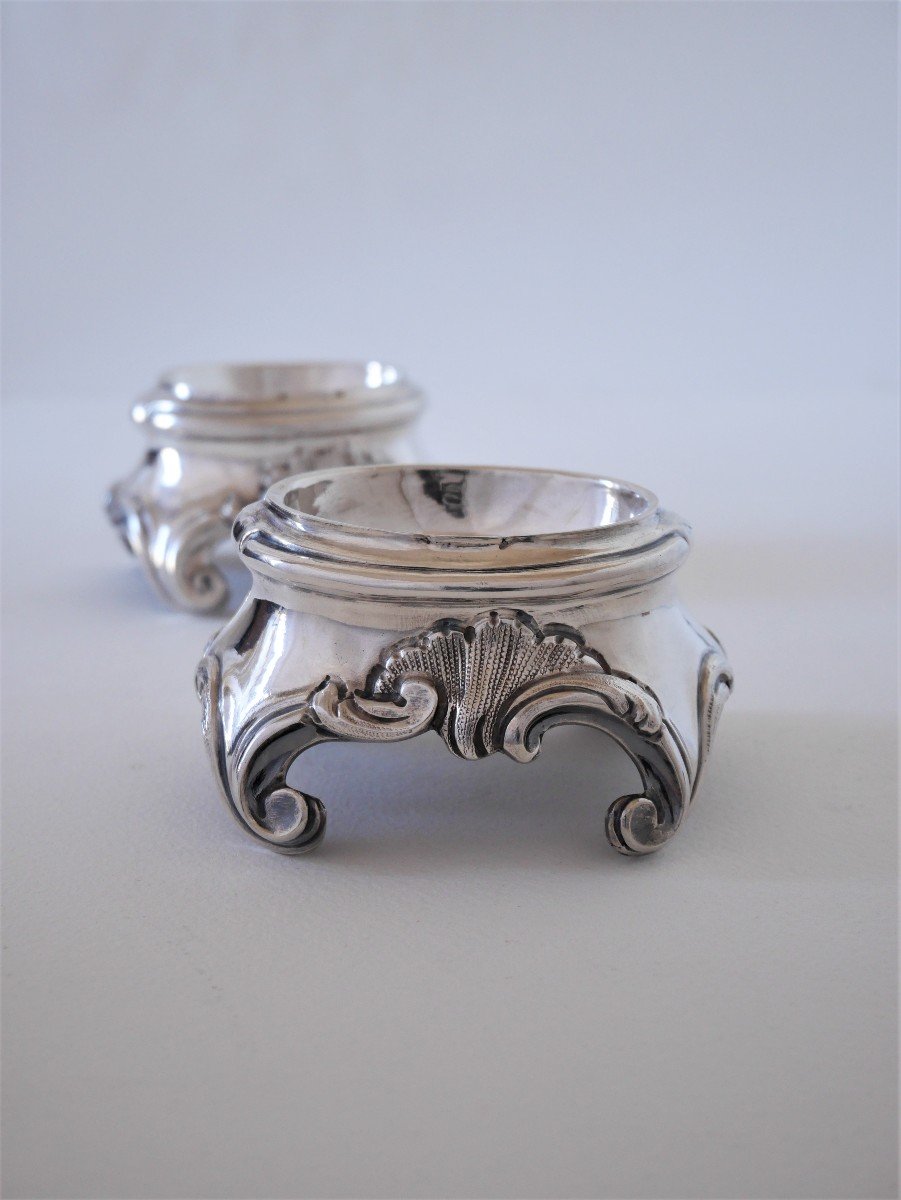
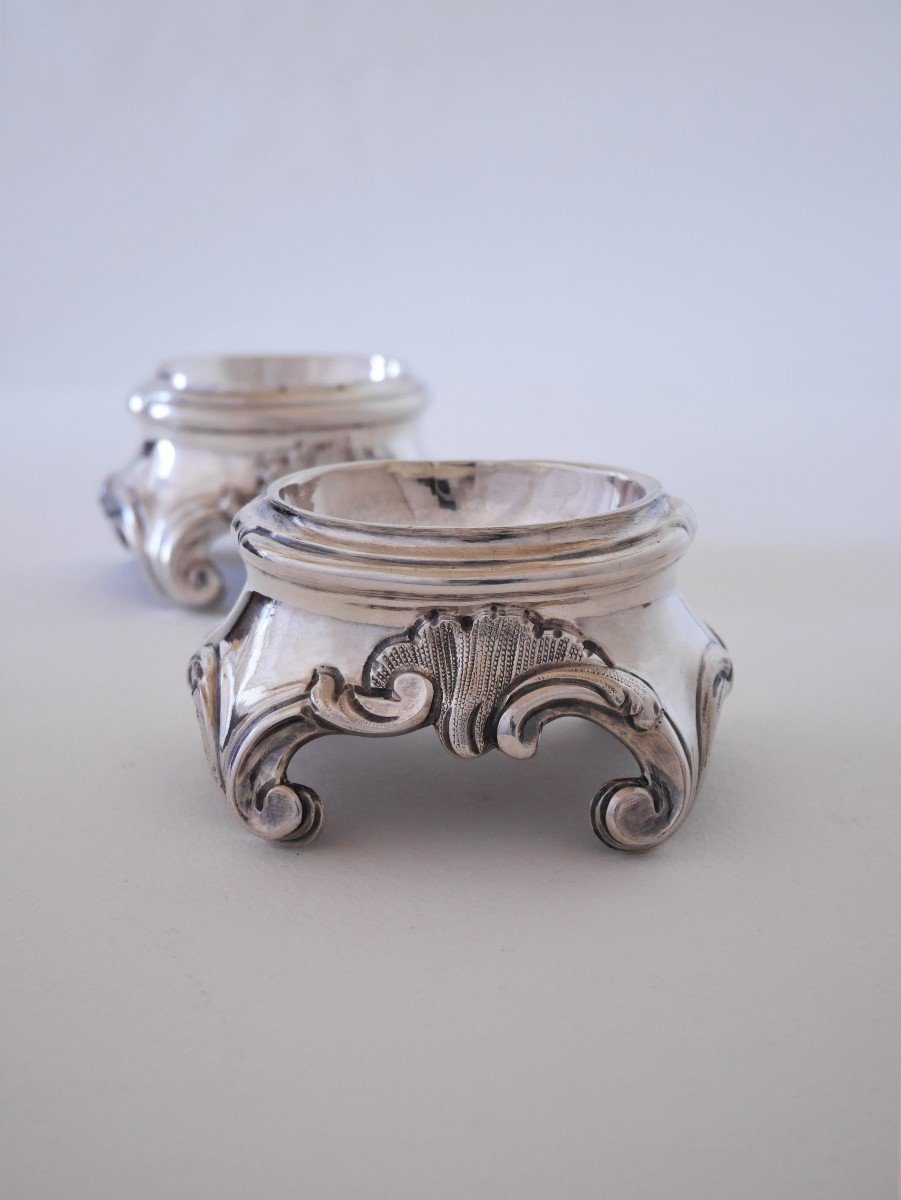
Pair Of Salt Cellars, Sterling Silver, Avignon (france), 1750-1770

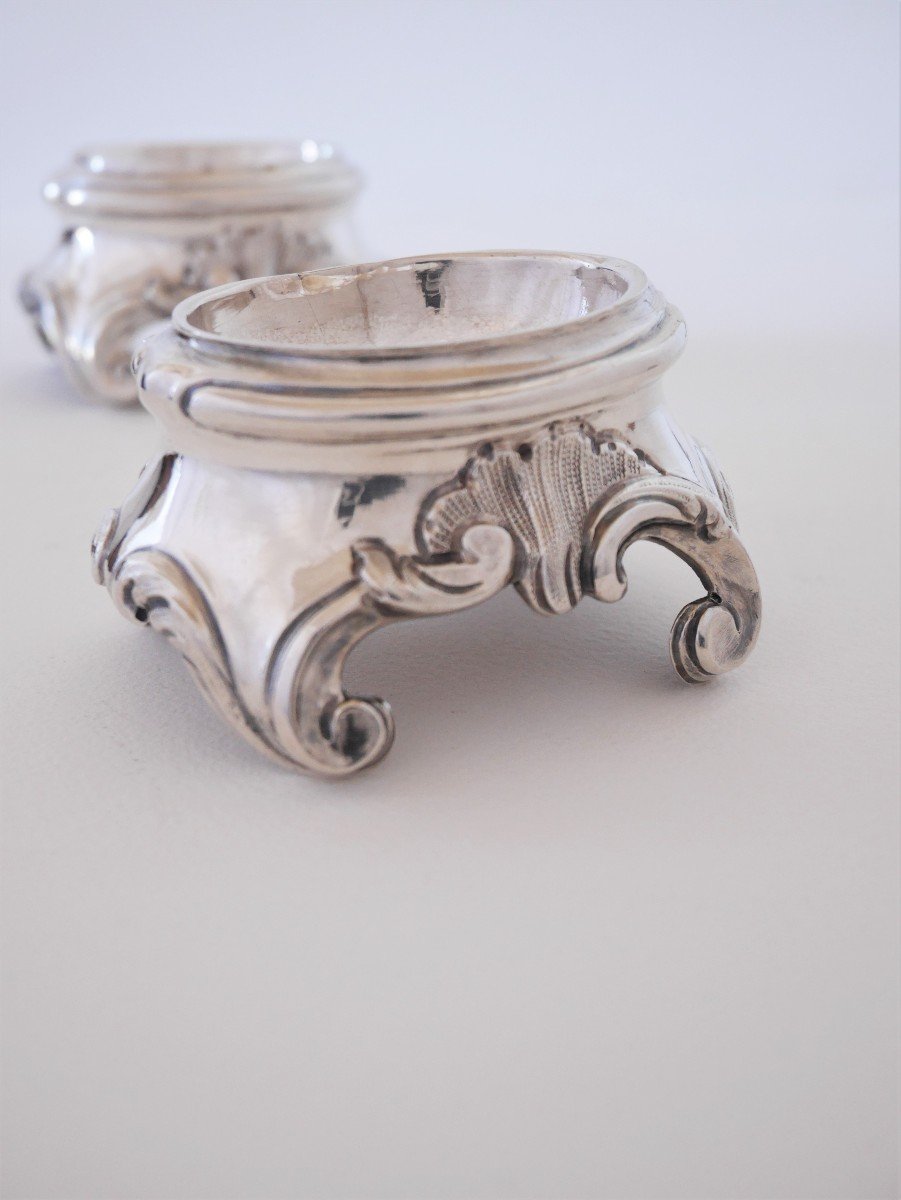


- Pair of saltcellars
- Cast, welded and chiseled silver
- Avignon (France), circa 1750-1770
- Master silversmith IR, attributed to Jean-Etienne Reynault (1755-1781)
- Length: 83 mm; width: 70mm; height: 50 mm - Weight: 180 g (97 g & 83 g)
- Condition: Superb condition, very fresh carving and mate, traces of agate on the flat parts.
- Pair of large oval salt cellars consisting of a salt cellar set in a base. Under a molded border, the ogee plinth is extended by rolled volutes forming the feet joined by a jagged shell. Each foot molding is lined with acanthus leaves.
- This very beautiful model of salt cellar derives from the Parisian model of Aymé Joubert ([5, p.128 n°66-71]), but differs from it by an assumed rocaille style made of curves and counter-curves underlined by a decoration of acanthus leaves, a local interpretation of the rocaille style. They differ nevertheless from the local production by a cast technique instead of the usual repoussé and a rich chiseled decoration, which make these salt cellars one of the most beautiful referenced models. An identical pair, from the same goldsmith, is photographed in Claude-Gérard Cassan's book “Les orfèvres d'Avignon et du Comtat Venaissin”.
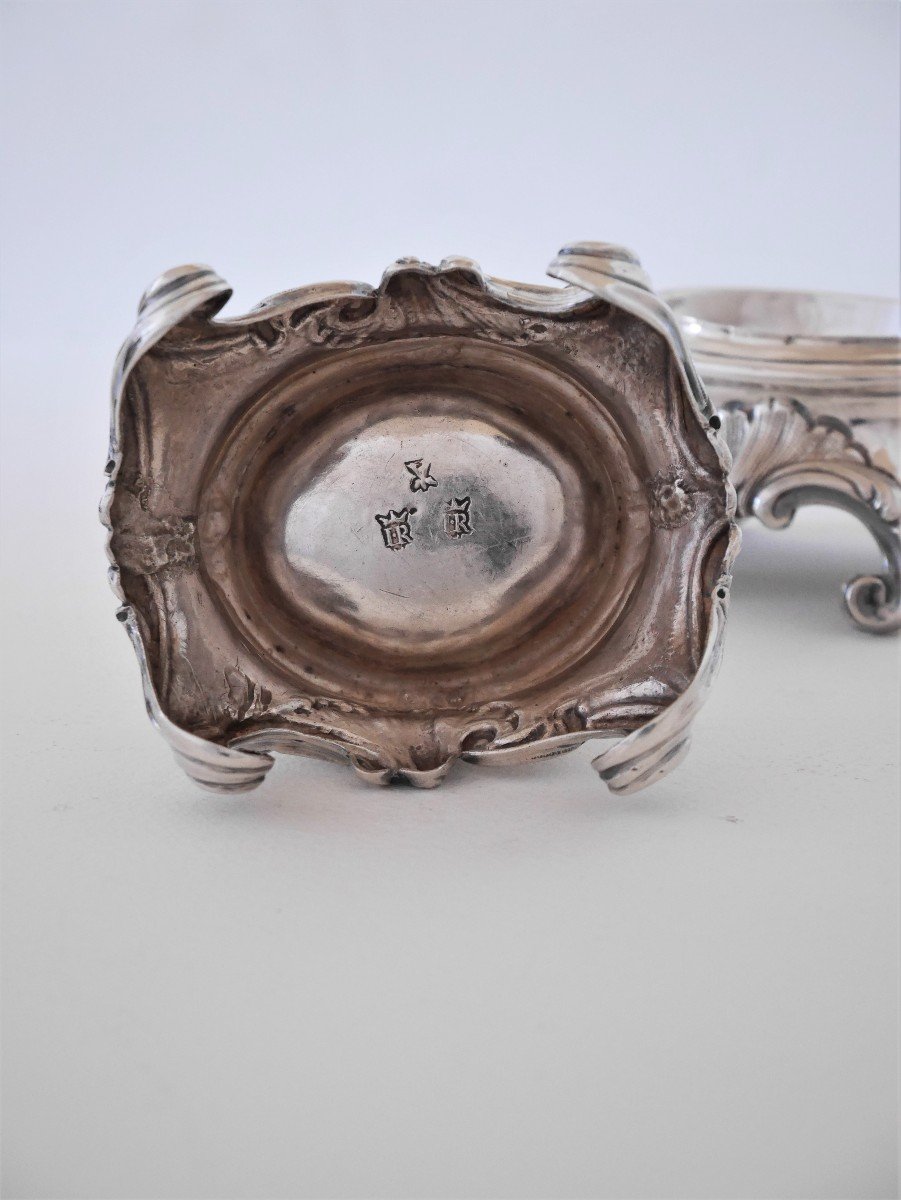
- Hallmarks (under the salerons): Town hallmark d'Avignon: A with three-point crown [1, p.10]; Master goldsmith: I, R with three-pointed crown [1, p.10]. Hallmarks made during the 17th and 18th centuries bear the goldsmith's mark struck twice, indicating that the silver grade is at the highest grade, and a town hallmark, a crowned letter A. It seems that each goldsmith had his own stamp of recognition of the city
- [1] Cassan, Claude-Gérard: “Les orfèvres d'Avignon et du Comtat Venaissin”, Eléonore Paris, 1984; [2] Collective: “L'orfèvrerie en Provence au XVIIIe siècle”, Ed. Barthélemy, Avignon, 2005, exhibition at the Musée Grobet-Labadié in Marseille from November 26, 2005 to February 26, 2006; [3] Dennis, Faith: “Three centuries of French domestic silver”, 2 Vol., Metropolitan Museum of Art, 1960; [4] Jourdan-Barry, Raymond: “Les orfèvres en Provence du XIVe siècle au début du XIXe siècle ”, Ed. F. de Nobele, 1974; [5] Mabille, Gérard & Ole Villumsen Krog: “A king's table. Eighteenth-century silversmithing at the court of Denmark”, Exhibition catalog at the Musée des Arts Décoratifs in Paris, November 1986-January 1987, 1987
- Cast, welded and chiseled silver
- Avignon (France), circa 1750-1770
- Master silversmith IR, attributed to Jean-Etienne Reynault (1755-1781)
- Length: 83 mm; width: 70mm; height: 50 mm - Weight: 180 g (97 g & 83 g)
- Condition: Superb condition, very fresh carving and mate, traces of agate on the flat parts.
- Pair of large oval salt cellars consisting of a salt cellar set in a base. Under a molded border, the ogee plinth is extended by rolled volutes forming the feet joined by a jagged shell. Each foot molding is lined with acanthus leaves.
- This very beautiful model of salt cellar derives from the Parisian model of Aymé Joubert ([5, p.128 n°66-71]), but differs from it by an assumed rocaille style made of curves and counter-curves underlined by a decoration of acanthus leaves, a local interpretation of the rocaille style. They differ nevertheless from the local production by a cast technique instead of the usual repoussé and a rich chiseled decoration, which make these salt cellars one of the most beautiful referenced models. An identical pair, from the same goldsmith, is photographed in Claude-Gérard Cassan's book “Les orfèvres d'Avignon et du Comtat Venaissin”.
- Hallmarks (under the salerons): Town hallmark d'Avignon: A with three-point crown [1, p.10]; Master goldsmith: I, R with three-pointed crown [1, p.10]. Hallmarks made during the 17th and 18th centuries bear the goldsmith's mark struck twice, indicating that the silver grade is at the highest grade, and a town hallmark, a crowned letter A. It seems that each goldsmith had his own stamp of recognition of the city
- [1] Cassan, Claude-Gérard: “Les orfèvres d'Avignon et du Comtat Venaissin”, Eléonore Paris, 1984; [2] Collective: “L'orfèvrerie en Provence au XVIIIe siècle”, Ed. Barthélemy, Avignon, 2005, exhibition at the Musée Grobet-Labadié in Marseille from November 26, 2005 to February 26, 2006; [3] Dennis, Faith: “Three centuries of French domestic silver”, 2 Vol., Metropolitan Museum of Art, 1960; [4] Jourdan-Barry, Raymond: “Les orfèvres en Provence du XIVe siècle au début du XIXe siècle ”, Ed. F. de Nobele, 1974; [5] Mabille, Gérard & Ole Villumsen Krog: “A king's table. Eighteenth-century silversmithing at the court of Denmark”, Exhibition catalog at the Musée des Arts Décoratifs in Paris, November 1986-January 1987, 1987
Explore similar pieces and discover your ideal find:
Dinnerware