THIS OBJECT WAS SOLD
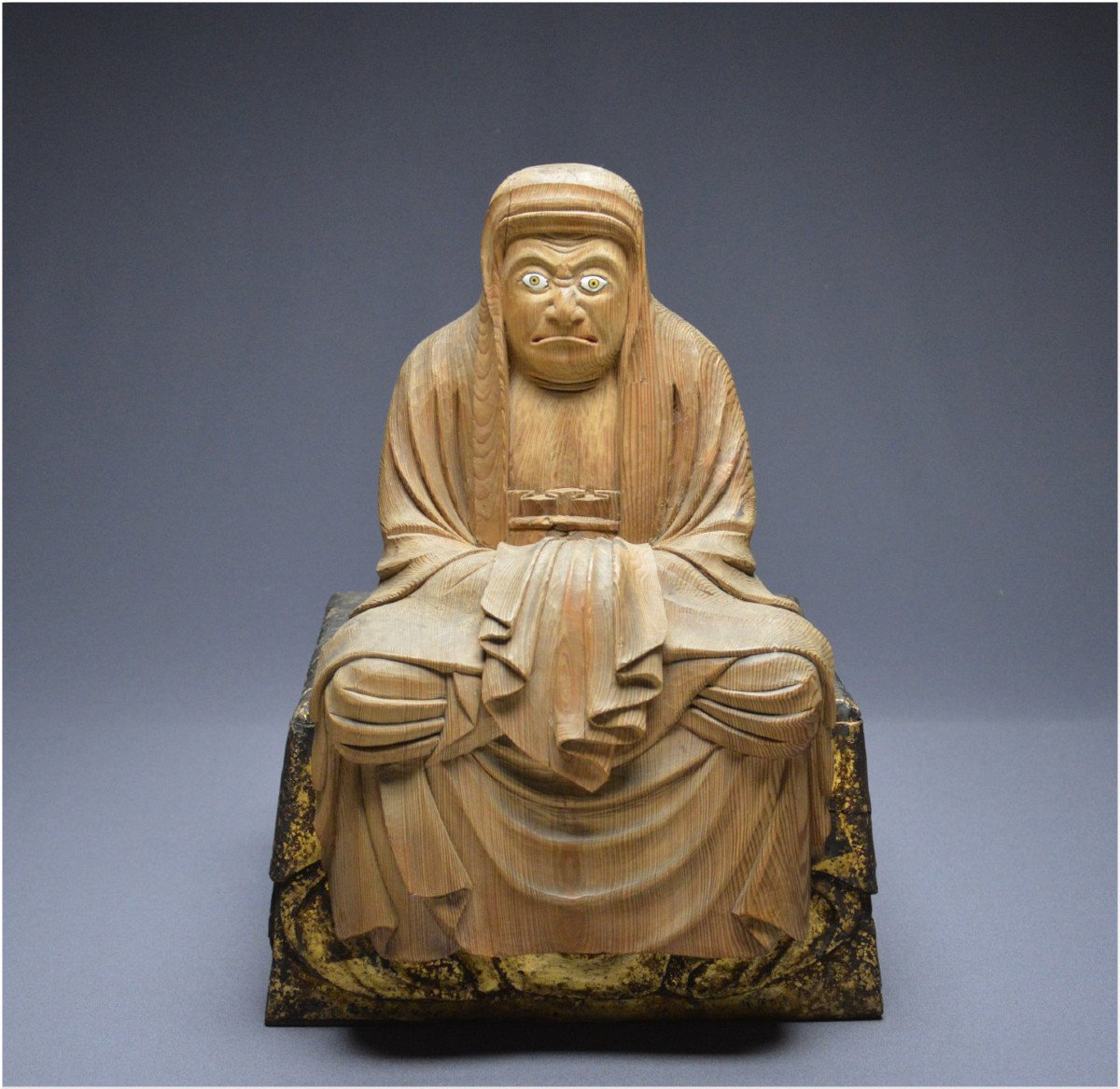
Zen Buddhism, Japan, Edo Period (1616–1868), Important Wooden Group Representing Bodhidharma And An Arhat

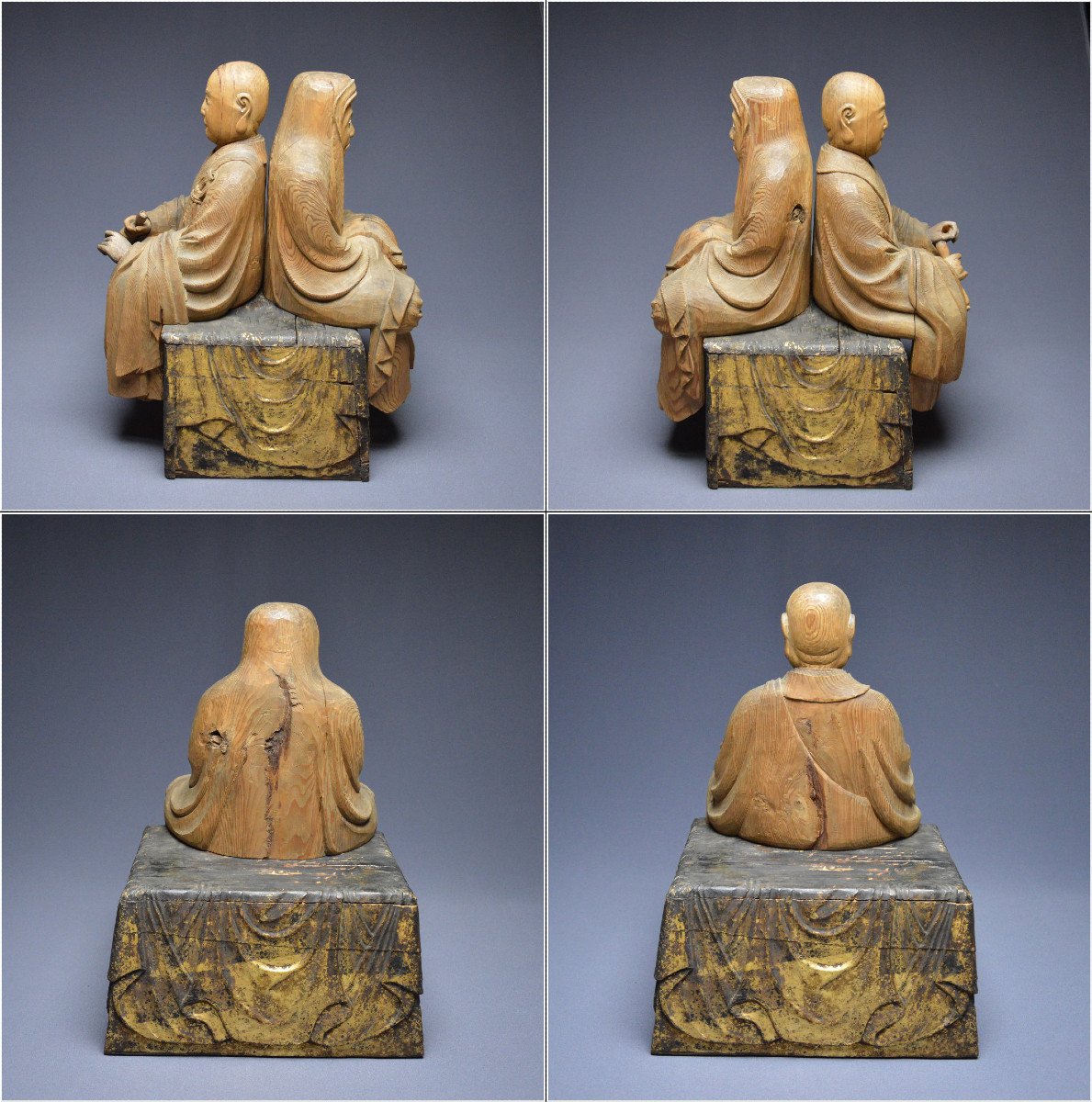
Origin: Japan
Period: Edo (1616 - 1868), possibly earlier
Material: Cypress wood
Dimensions: 47.5 x 33 cm for the set
Condition: See below
Provenance: European private collection
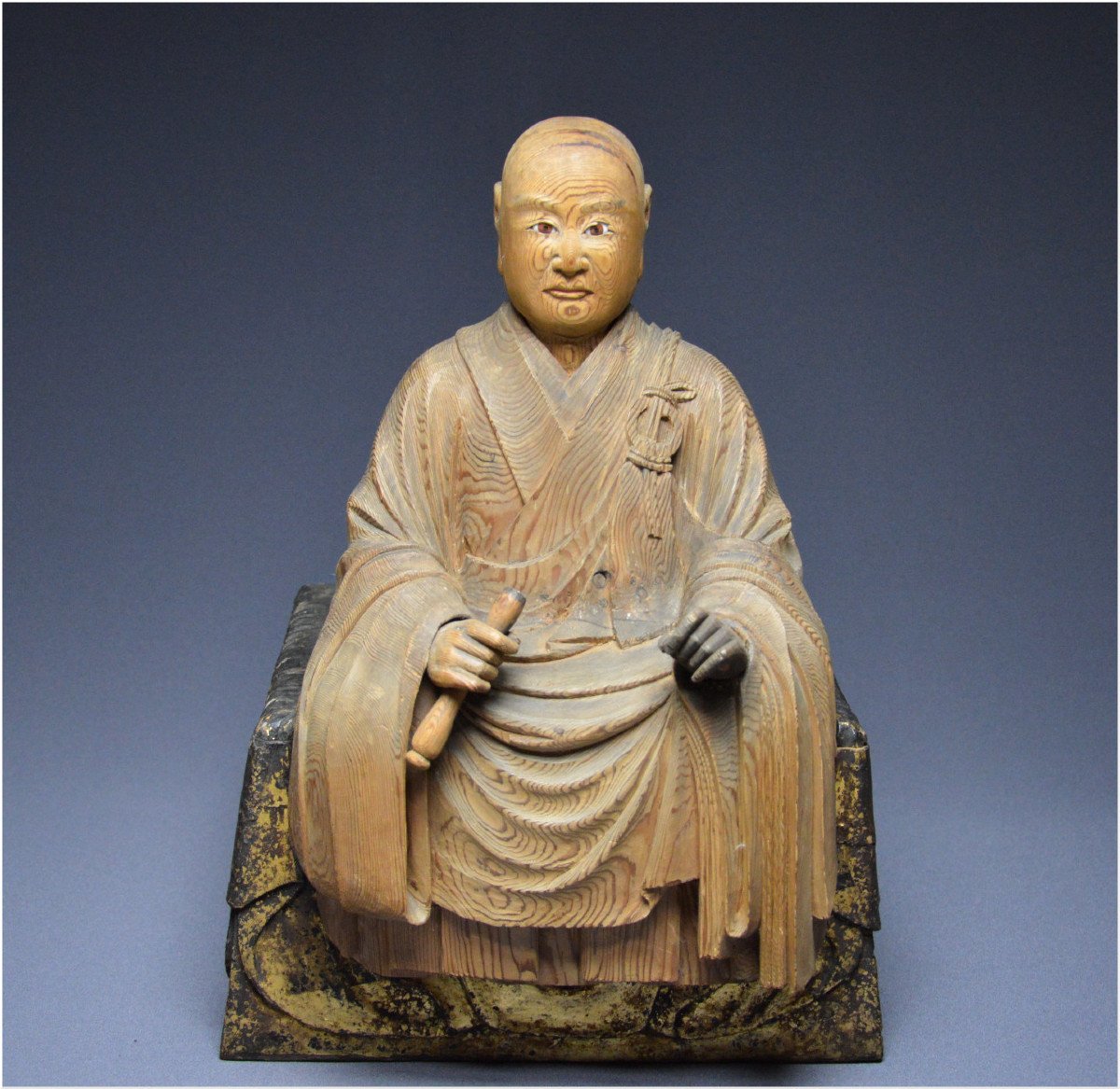
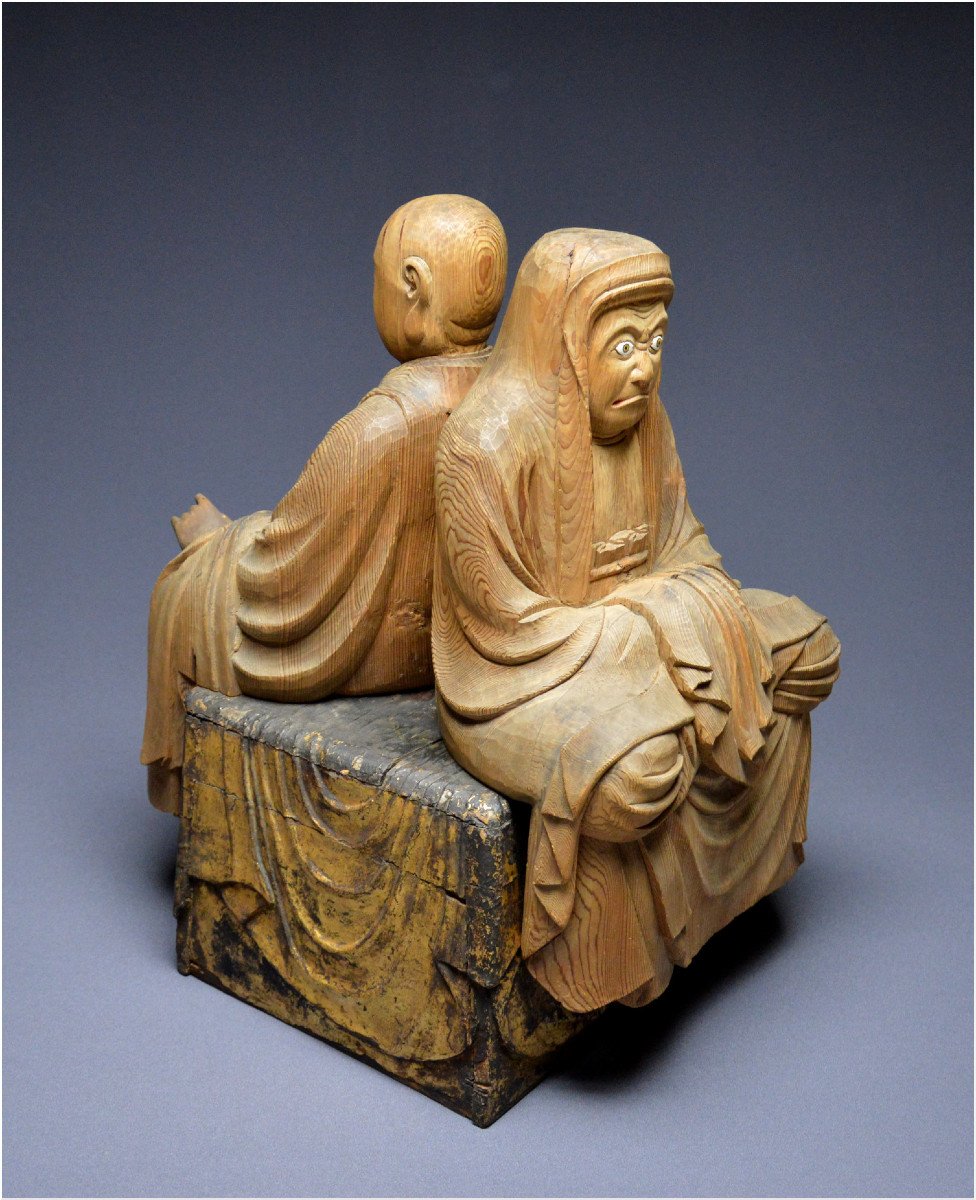
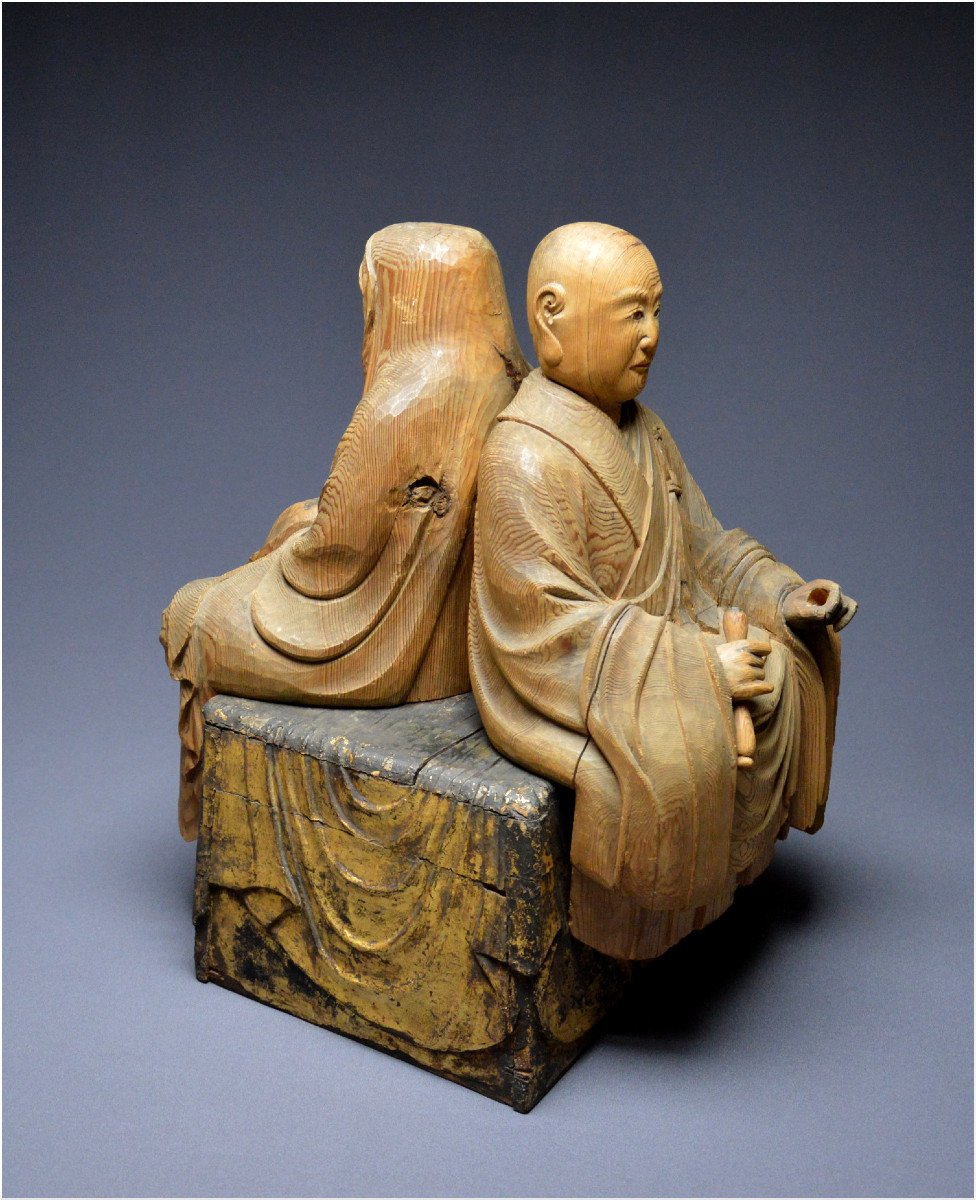
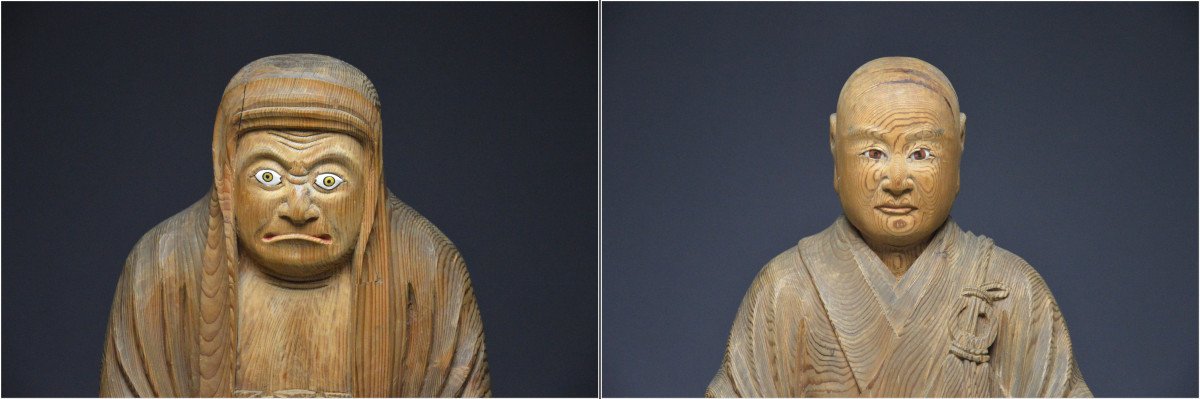
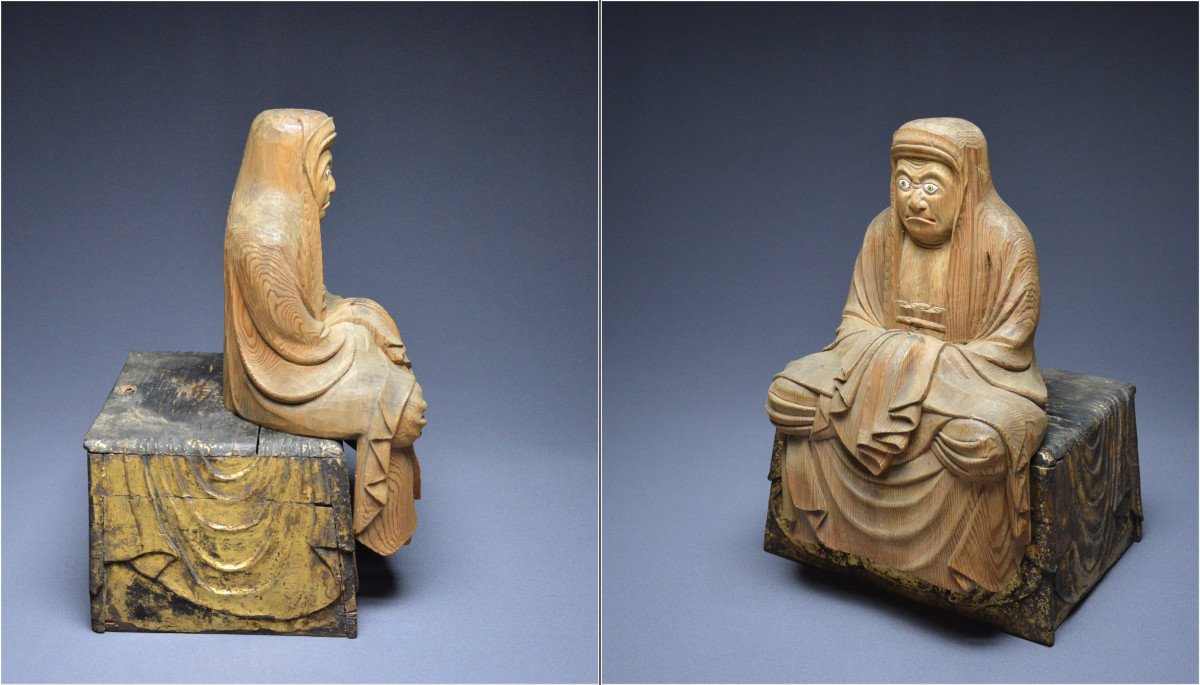
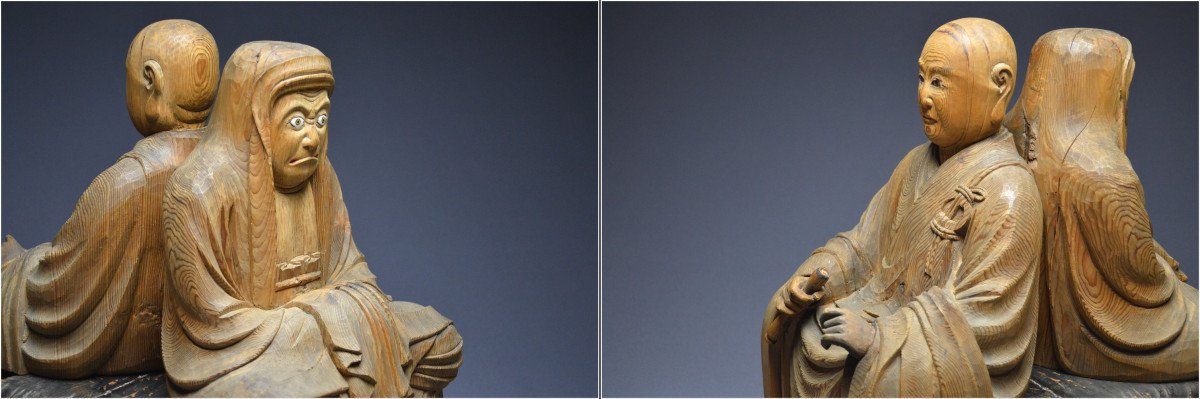
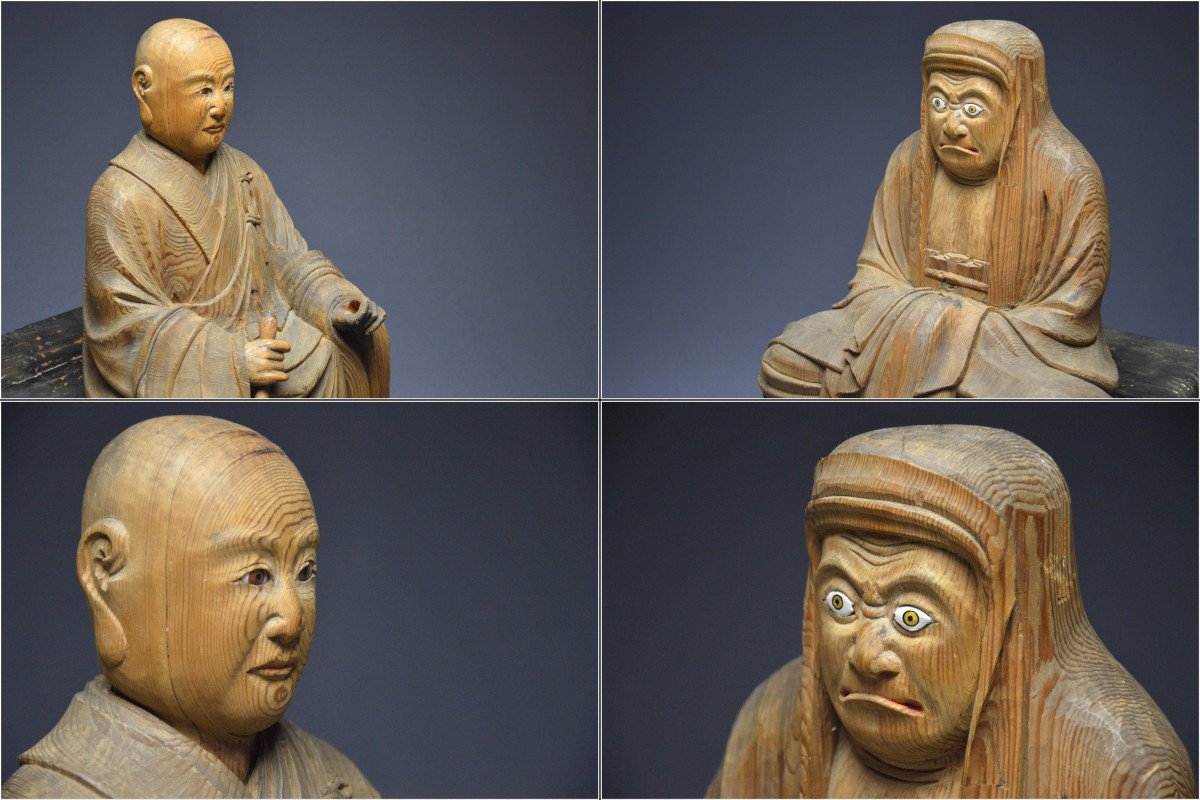
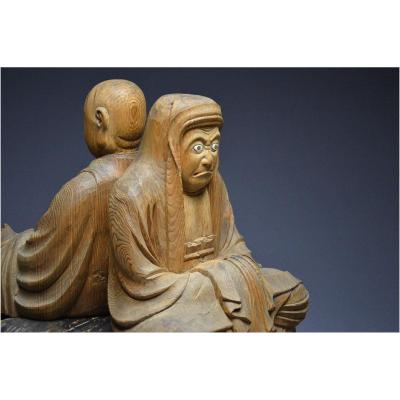
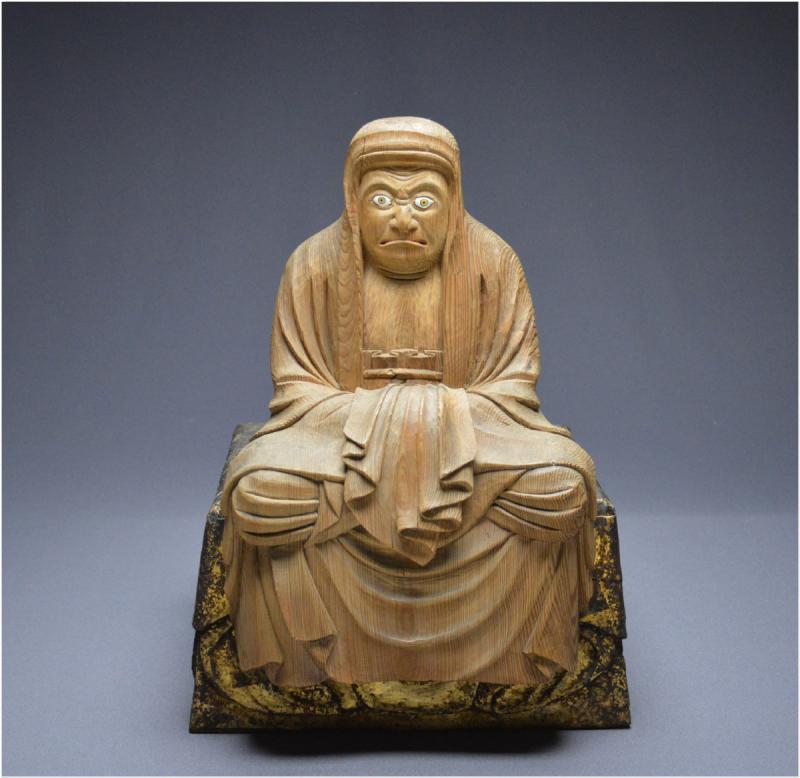
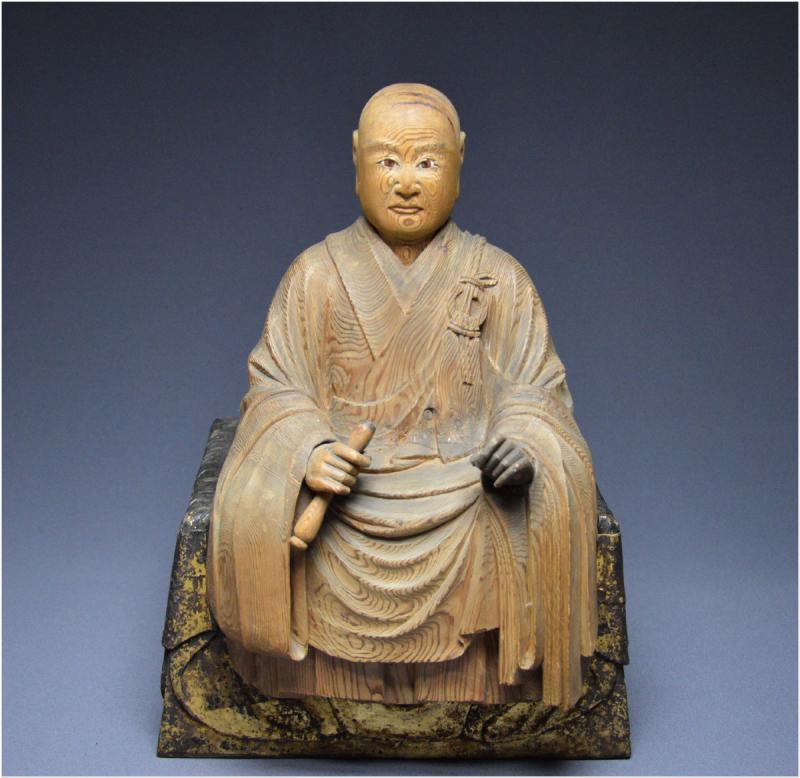
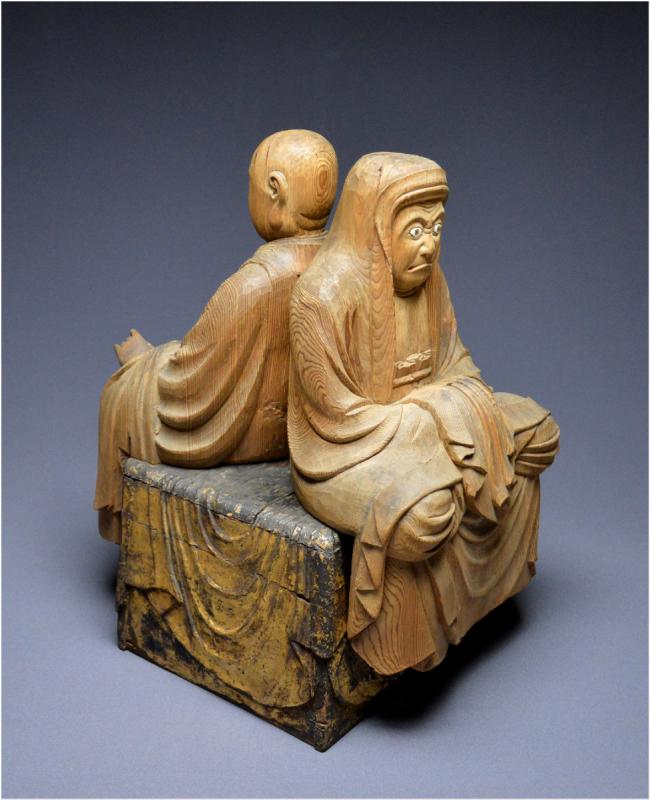
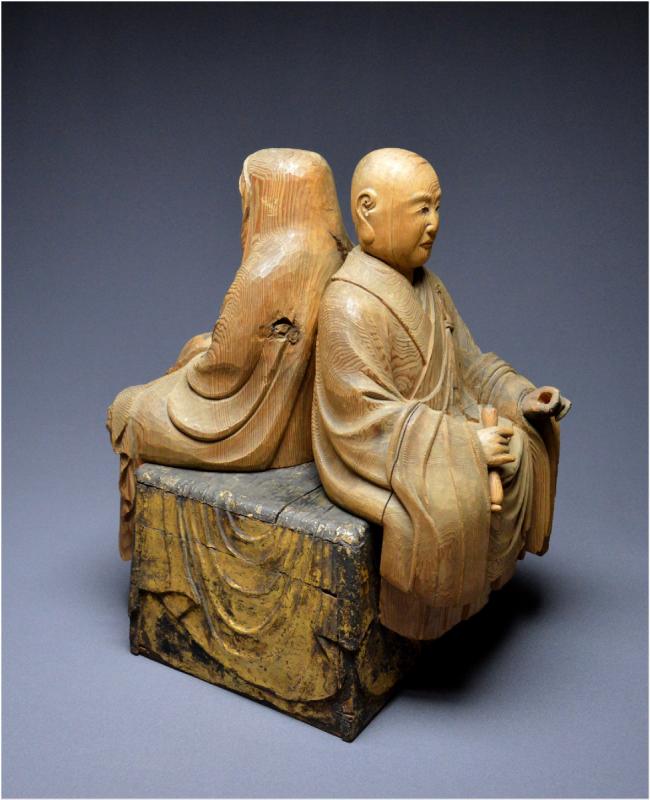
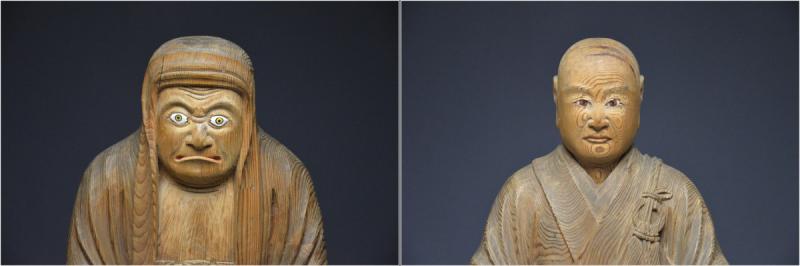
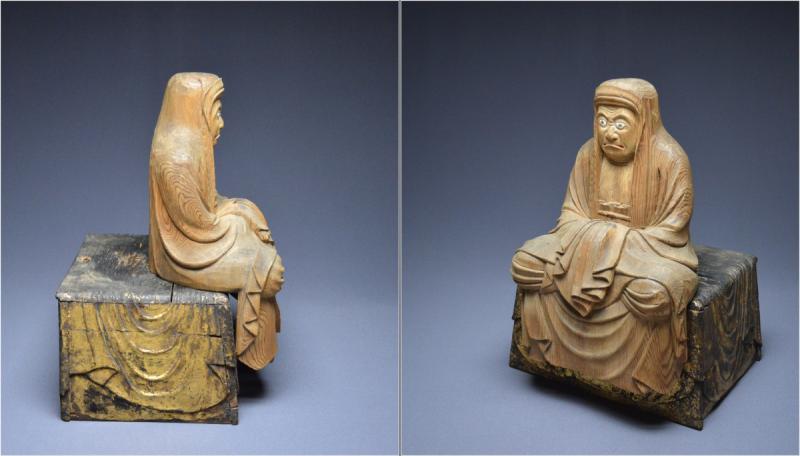
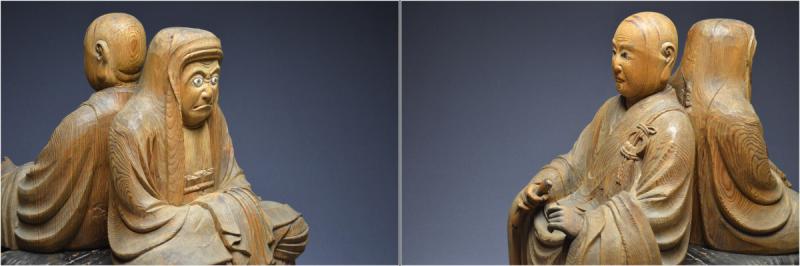
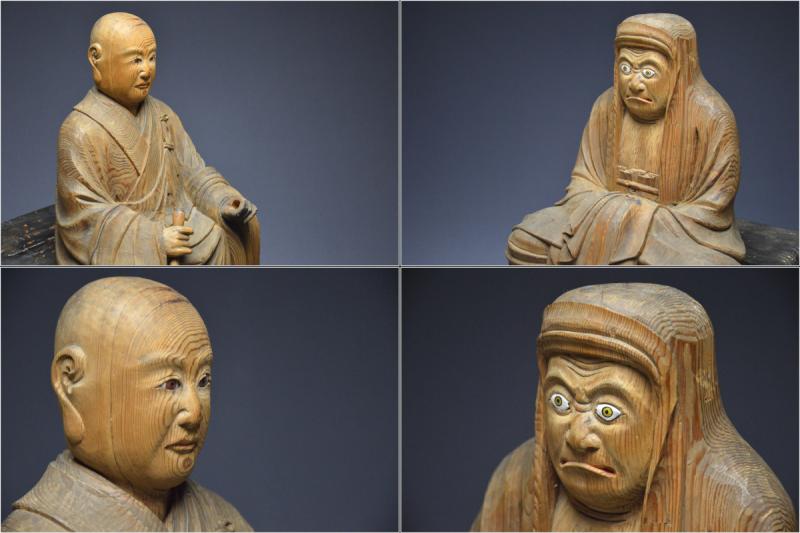
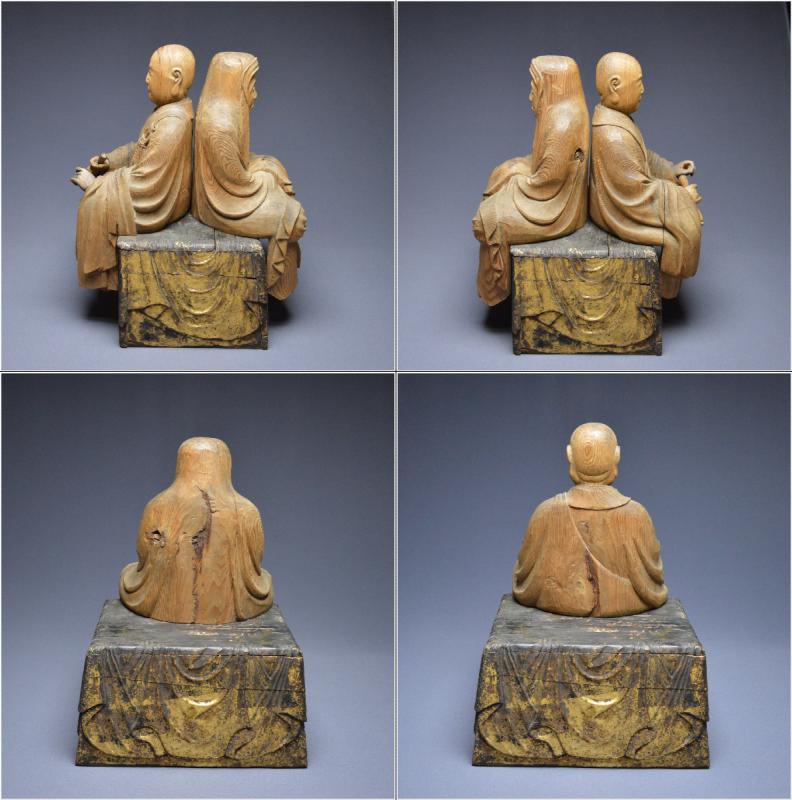
Large group representing Bodhidharma, the founder of Zen Buddhism (Daruma in Japan) and an Arhat, both carved from Japanese cypress wood. The traditional technique used here for shaping the two figures, called Yosegi-Zukuri, involves putting together different separately designed pieces before the statue is made (here the lower body and face of the two figures as well as the hands for the statue of the Arhat). Another technique also used for our two subjects, called Gyokugan, consists of hollowing out the face in order to insert the crystal or glass eyes, thus making the gaze very realistic. Bodhidarma is depicted with a massive body, seated in a meditation position and wearing his traditional garment consisting of a long piece of cloth covering him almost entirely and showing only the face and part of the torso. He also wears a cloth covering his legs, tied at the abdomen with a cord. The traditional technique used here for the rendering of the drape and the pleating of the garment is called Hompa Shiki Emon and evokes a rolling wave. The almost rigid appearance of the sculpture is reinforced by the wrathful features of Bodhidharma who presents a face with a forehead crossed by deep furrows overhanging two large raised eyebrow arches meeting at the base of the nose. The latter short and flattering, with dilated nostrils, is framed by two large polychrome eyes giving a face a hypnotic gaze. The mouth forms an accentuated pout, thus reinforcing the severe aspect of the character.
Bodhidharma dimensions: 39 x 26 cm
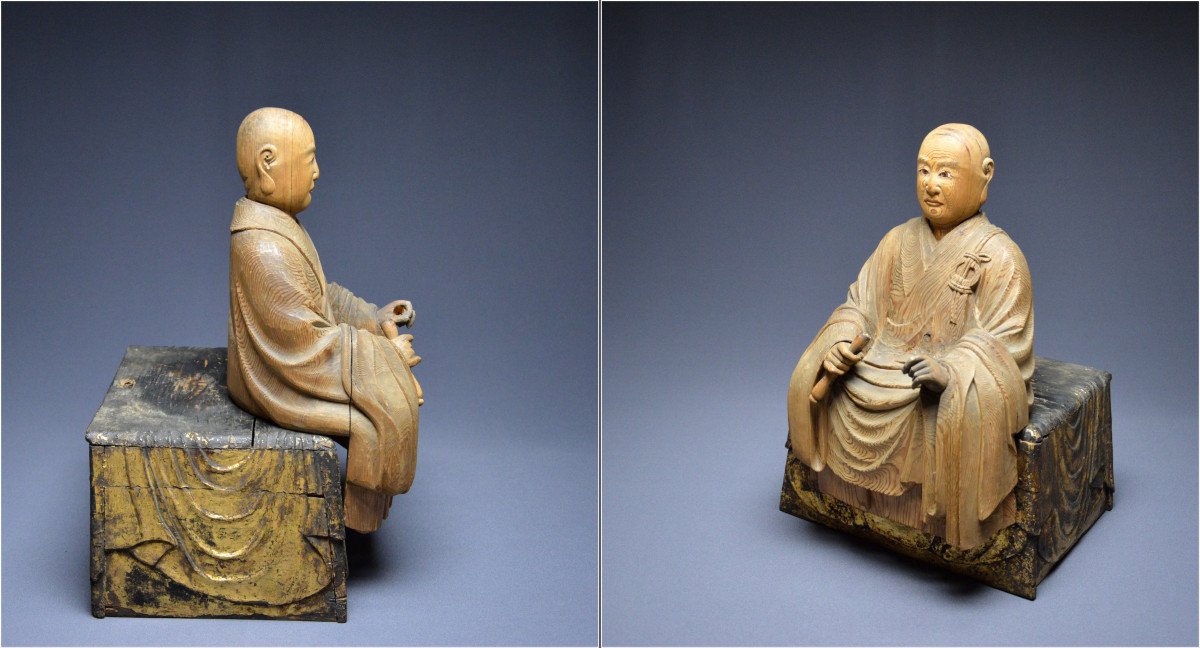
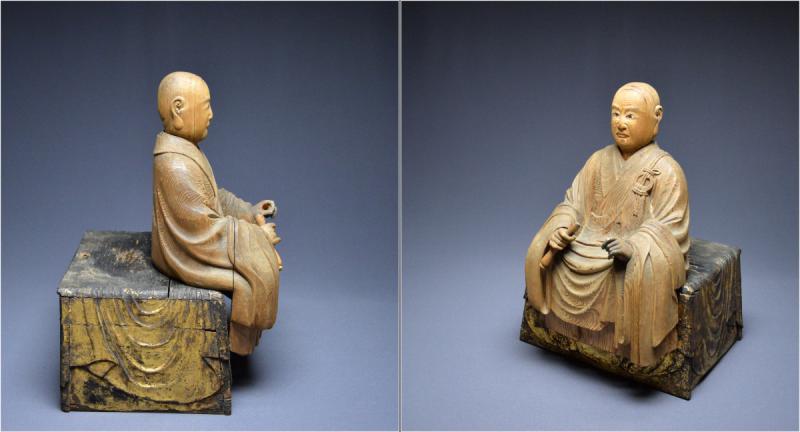
The Arhat is depicted seated, wearing the Kesa and Kolomo, the traditional attire of Buddhist monks in Japan, covering him almost entirely except for the hands and face, his kesa is held by a ring (Kan) on the left shoulder.The arms are positioned along the thighs, the right hand holding one attribute (the second missing). The rendering of the drape is materialized by the same Hompa Shiki Emon pleating technique, reinforced here by the wide flared sleeves extending to the floor, the one on the left receiving a fabric placed on the arm. The realistic-looking (removable) head features raised eyebrow arches overhanging almond-shaped eyes. Here also the technique known as Gyokugan (face sculpted separately and hollowed out in order to insert the eyes) was applied for a most realistic rendering. The fine and flattering nose overlooks a half-open mouth with thin lips, the ears with large lobes.
Dimensions of the Arhat: 39.2 x 26 cm
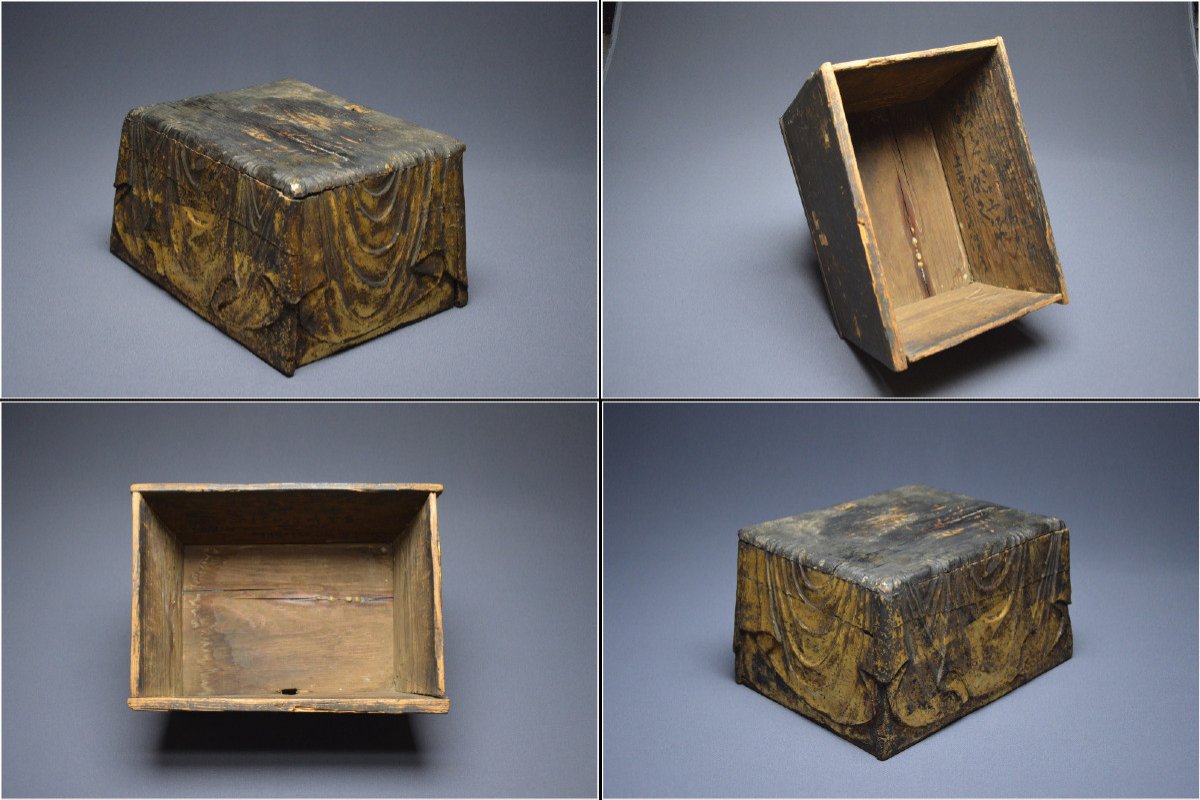
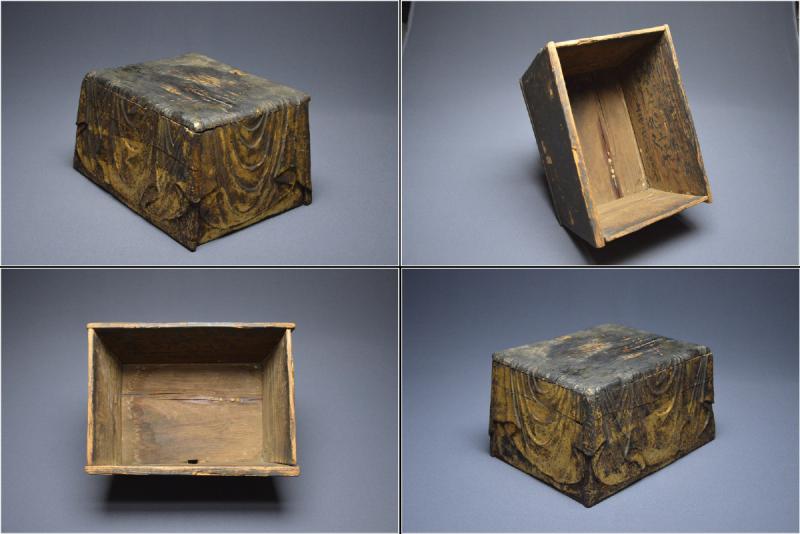
The partially gilded quadrangular base (probably reported) evokes an altar covered with a fabric.
Base dimensions: 33.3 x 17.3 cm
General condition: For both subjects, we will note a few splits and alterations to be related to age. Bodhidharma's eyes probably posterior. The attribute of the Arhat is rugged in its upper part and shows a small weakness, the second is missing. The base with wear and alteration of the gilding and there is an inscription in Japanese inside. Presence of an old label from the beginning of the 20th century indicating an art gallery located in Stockholm.
For an illustarion of the Yosegi-Zukuri technque:
https://www.carvingthedivine.com/blog/4-woodcarving-techniques-for-scale
Explore similar pieces and discover your ideal find:
Wood Sculptures