THIS OBJECT WAS SOLD
Very Rare Set Of 3 Suriken, Engraved Having Belonged To An Important Member Of The D.n.b.k
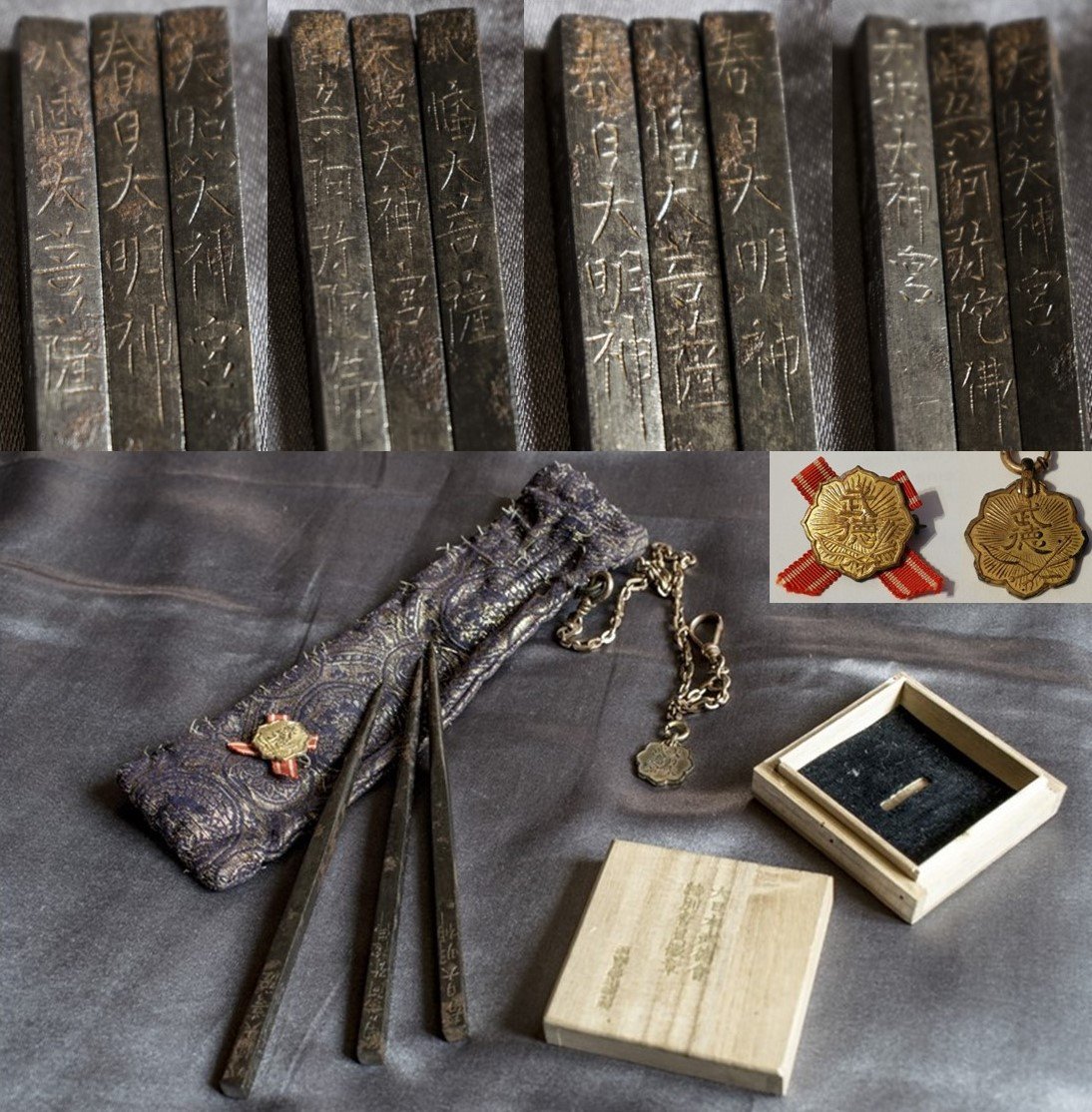
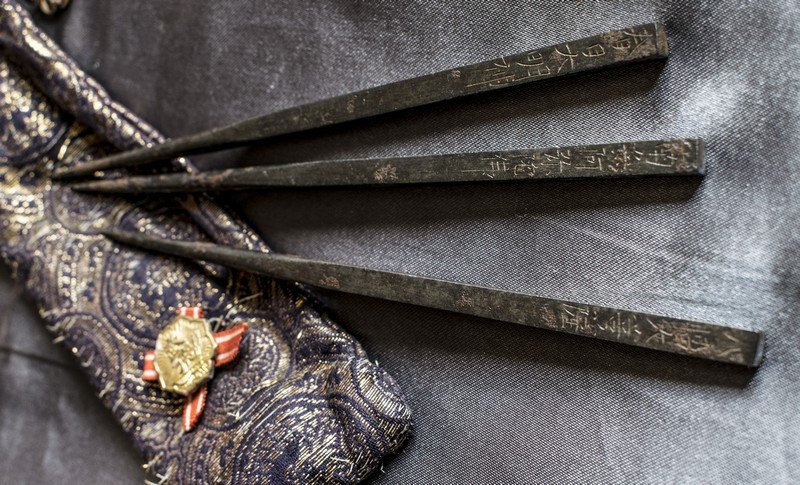


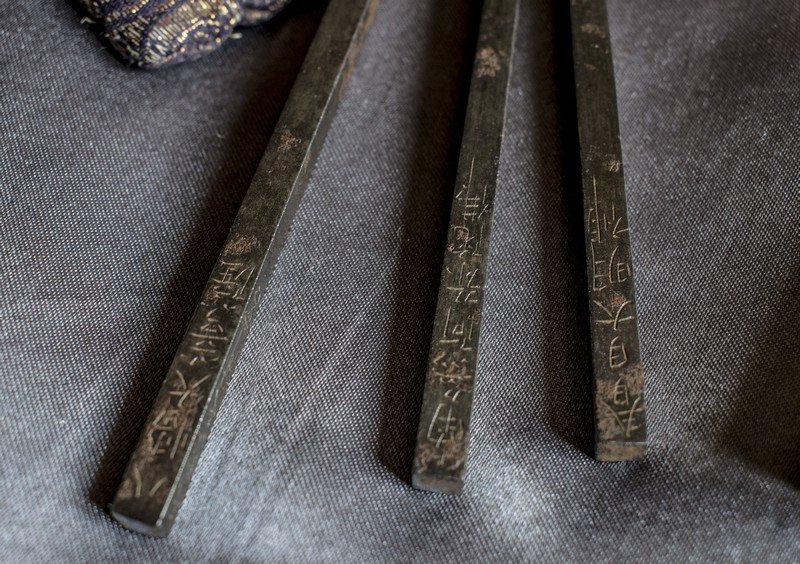
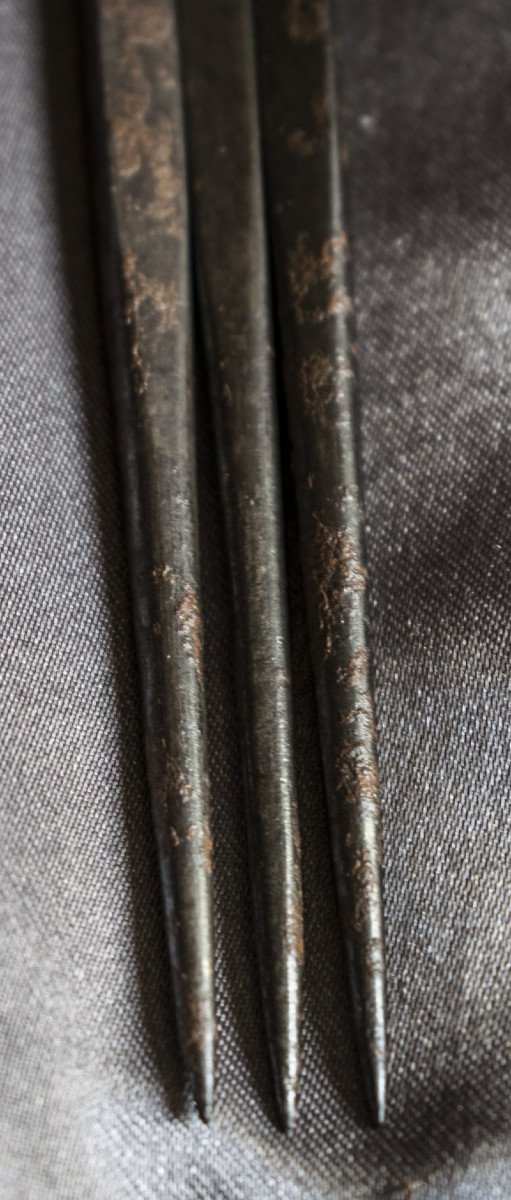


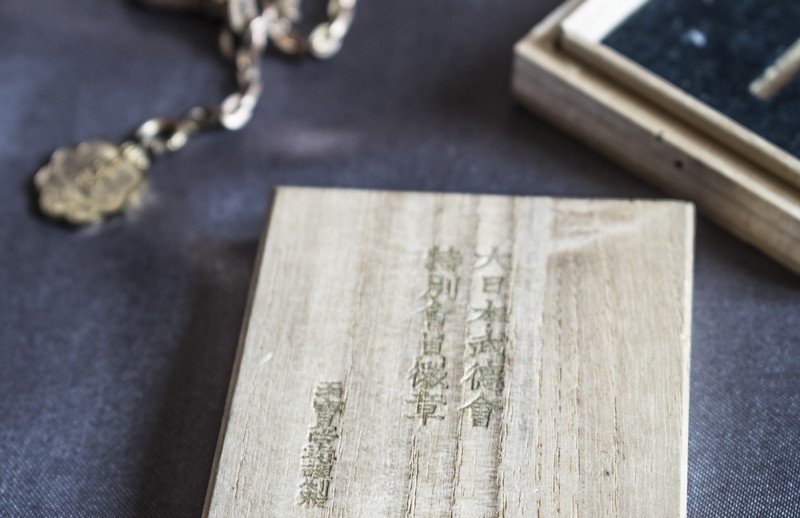
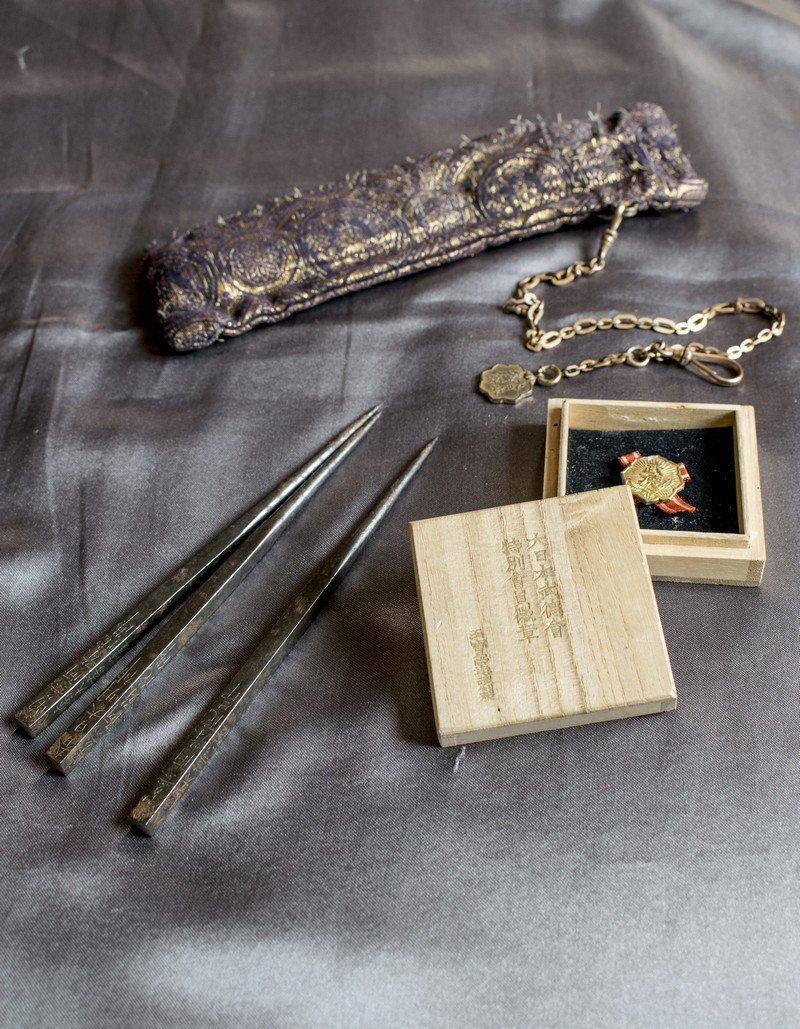
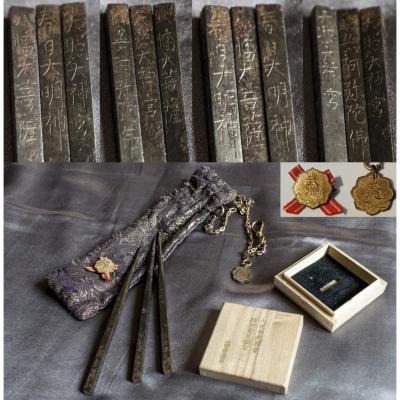


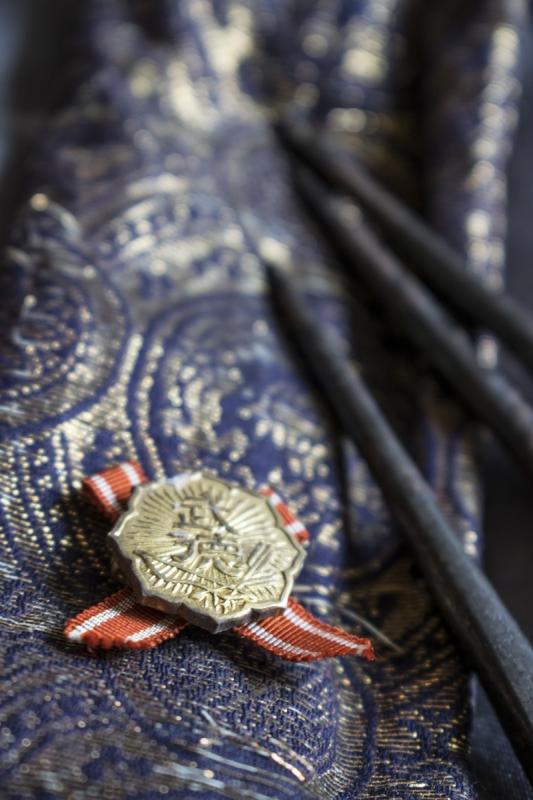

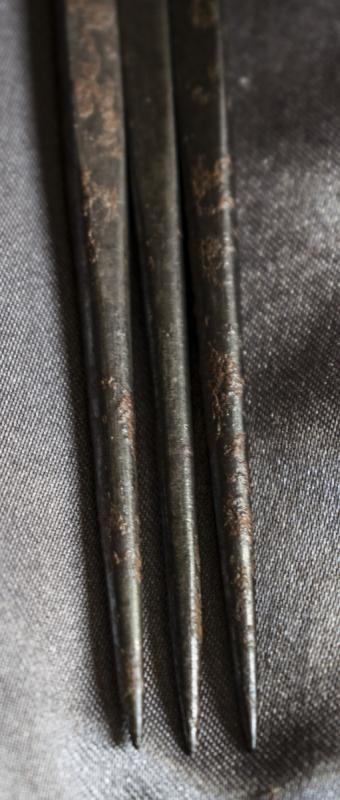
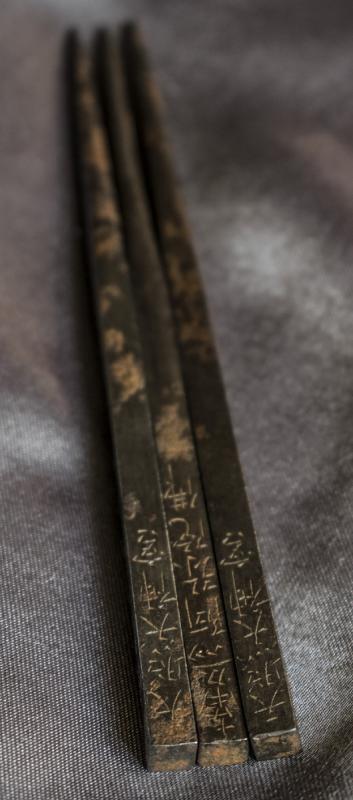
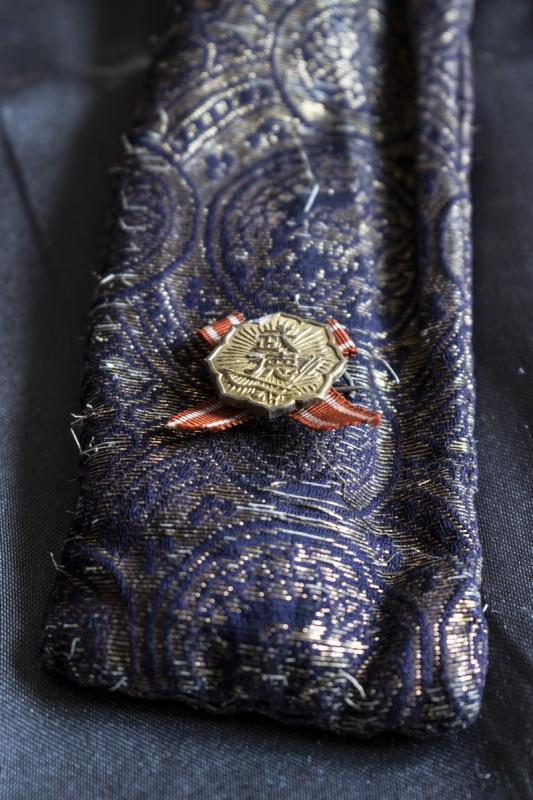
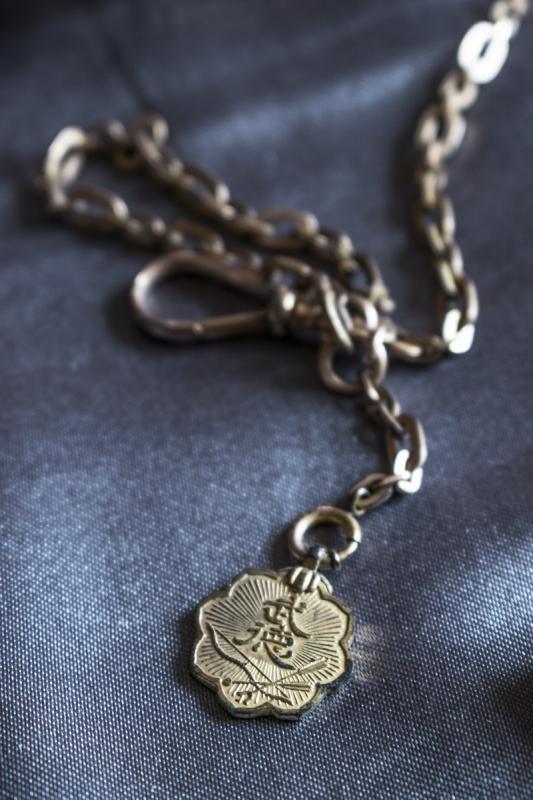
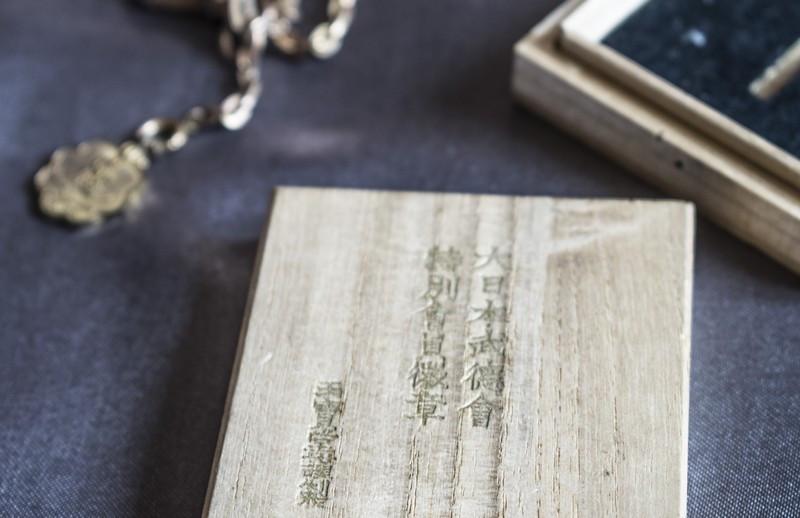
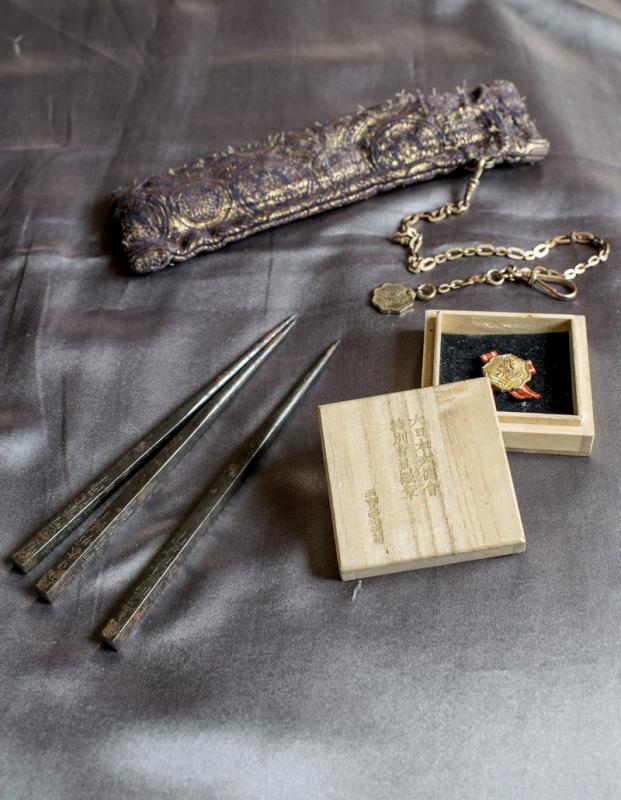
Very rare set of 3 old Bo-Shuriken Kugi-gata, each engraved with Kanji on the 4 sides, stored in their mini Bukuro which is closed by a chain. These Shuriken belonged to an important member of the “Dai Nippon Butoku-kai” D.N.B.K (2 badges, including 1 with its box).
A Regular Member badge is attached to the chain and a Special Member badge (gold plated with a red and white ribbon, with its storage box) is affixed to the little Bukuro, indicating that the owner of his Shuriken was among the practitioners, who excelled in Martial Arts (Shurikenjutsu) and who were honored and recognized by the "Dai Nippon Butoku Kai".
Dimensions :
The inscriptions in Kanji on the 4 sides of the Shuriken are quite often found on some saber blades. These inscriptions in Kanji correspond to the names of great Buddhist or Shintoist temples depending on the case :
(Amaterasu) Tensho Kotai Jingu (Is a Shrine in Kyushu where people had the habit of coming to pray for peaceful resolution of conflicts and to avoid war)
Kasuga Dai Myojin (Shrine where a famous Shinto deity who among many things is prayed for good health. There are several shrines dedicated to this deity. The most famous is in Nara. But also on the island of Sado in the former domain of Echigo.
Historical reminder : The prestigious "Dai Nippon Butoku-kai" DNBK, was created on April 17, 1895 with the support of the Emperor of Japan. The stated purpose of this organization (about 2 million members) was to promote martial arts and educate people in the fighting arts. Of course, the larger objective was to strengthen bodies and minds of the Japanese through the practice of various c martial skills. Bu means "Martial" and Toku means "Moral". Kai means "Association".
A Regular Member badge is attached to the chain and a Special Member badge (gold plated with a red and white ribbon, with its storage box) is affixed to the little Bukuro, indicating that the owner of his Shuriken was among the practitioners, who excelled in Martial Arts (Shurikenjutsu) and who were honored and recognized by the "Dai Nippon Butoku Kai".
- Date : forged in April-May 1868, late Edo (19th century)
- Material : Steel
- Weight : About 30 grams per Shuriken, or about 90 grams for the whole
Dimensions :
- Length : 15 cm
- Square section of : 0.6 x 0.6 cm
- In good condition, presence of oxidation zones.
The inscriptions in Kanji on the 4 sides of the Shuriken are quite often found on some saber blades. These inscriptions in Kanji correspond to the names of great Buddhist or Shintoist temples depending on the case :
- 南 無 阿 弥陀 仏 Translated into: Namu Amida Butsu - Buddhist Mantra of the Nichiren School, Tendai.
- 春日 大 明 神 Translated to: Kasuga Dai Myojin - Nara
- 天 照 大 神宮 Translated to: Tenshou Dai Jingu - Kyushu
- 八 幡 大 菩薩 Translated to: Hachiman - Dai Bosatsu
(Amaterasu) Tensho Kotai Jingu (Is a Shrine in Kyushu where people had the habit of coming to pray for peaceful resolution of conflicts and to avoid war)
Kasuga Dai Myojin (Shrine where a famous Shinto deity who among many things is prayed for good health. There are several shrines dedicated to this deity. The most famous is in Nara. But also on the island of Sado in the former domain of Echigo.
Historical reminder : The prestigious "Dai Nippon Butoku-kai" DNBK, was created on April 17, 1895 with the support of the Emperor of Japan. The stated purpose of this organization (about 2 million members) was to promote martial arts and educate people in the fighting arts. Of course, the larger objective was to strengthen bodies and minds of the Japanese through the practice of various c martial skills. Bu means "Martial" and Toku means "Moral". Kai means "Association".
Explore similar pieces and discover your ideal find:
Edged Weapons