




Polychrome Wooden Sculpture, Depicting A Holy Monk Or Hermit (st. Anthony The Abbot?)—17th Century
Polychrome wooden sculpture, holy monk or hermit (St. Anthony the Abbot?) – 17th century
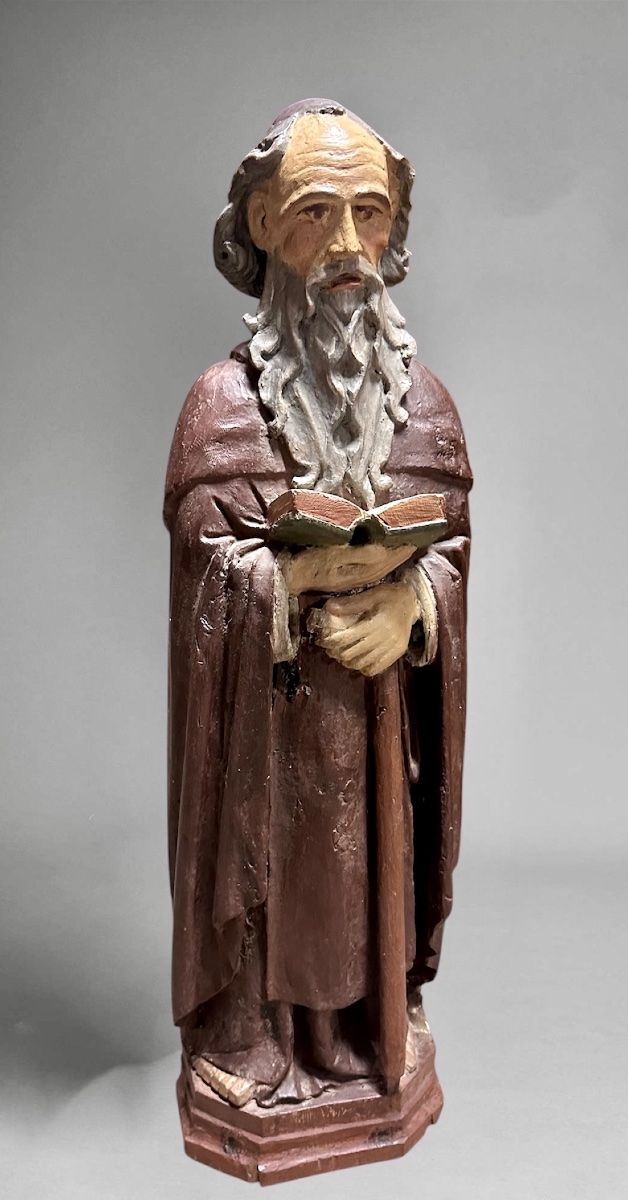
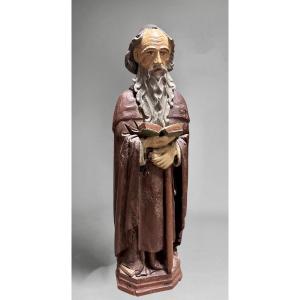
A beautifully proportioned wooden sculpture depicting a holy monk or hermit holding a book; carved and polychromed, it is in the folk style and displays intense expressiveness.
This saint was the father of monasticism, and in depictions of him, the book symbolizes the Word of God as lived and meditated upon.
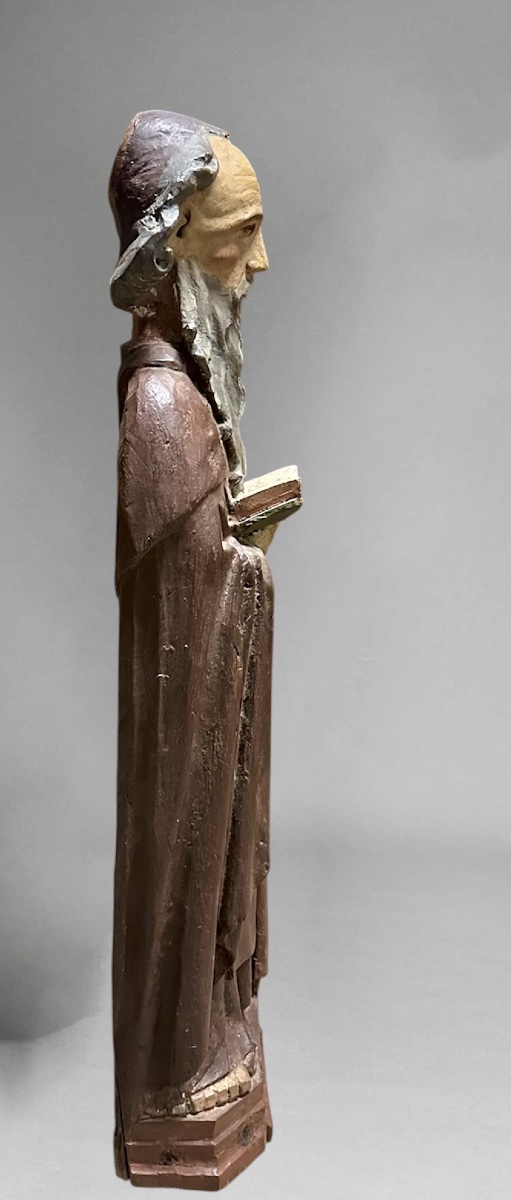
Notably, in this statue, there are no words on the open pages of the book. The artist simply sought to convey the idea of an open book and, it seems, created it with the understanding that viewers would see the statue not from the front but from below.
The saint is depicted standing, in religious garb, with a long beard and a face marked by a composed austerity.
He holds an open book in his hands—an iconographic attribute associated with wisdom, preaching, and spirituality—while his robe, with its broad, simplified folds, conveys a minimalist sculptural rendering typical of popular devotional sculpture.
The figure stands out for the incisive modeling of its facial features, the simplified rendering of its volumes, and the vibrant polychromy—a play of brown, burgundy, and light tones—with evident traces of time and wear that bear witness to its ancient devotion.
The sculpture rests on a molded polygonal base.
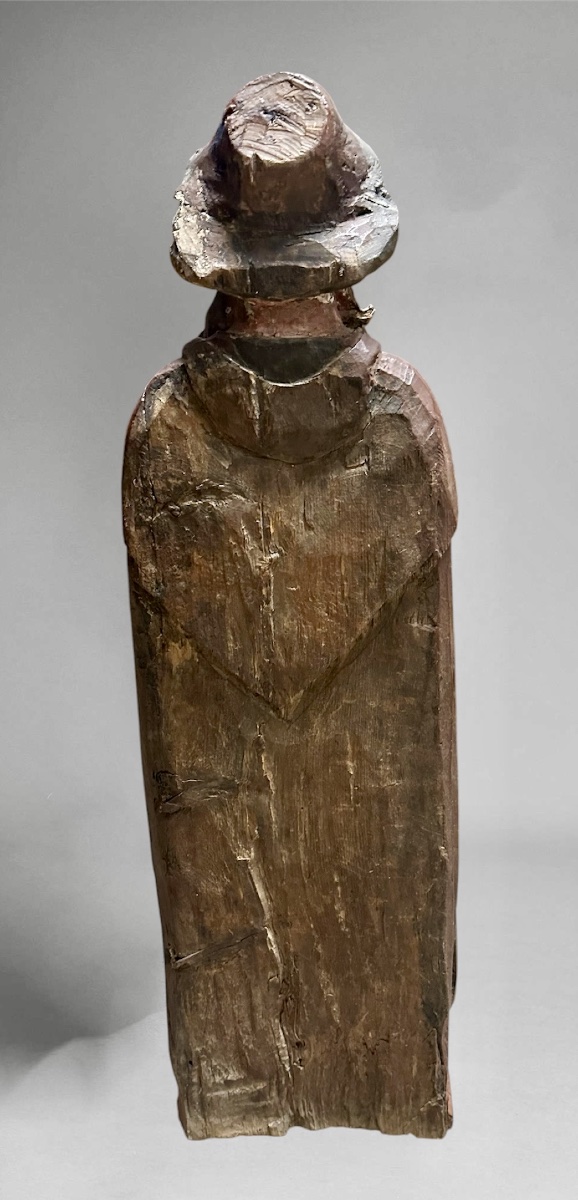
The back, characterized by a more rough-hewn finish and a surface left in its raw state, reveals the artisanal nature of the piece and its original purpose, likely intended to be placed against a wall or within a votive setting.
An interesting example of folk religious sculpture, rich in authenticity and charm, capable of evoking the devotional traditions and religious sensibilities of a bygone era.
Dimensions: height 91 cm – base 27.5 x 15 cm
Period: 17th century
980 €
Period: 17th century
Style: Louis 14th, Regency
Condition: Condition of use
Material: Painted wood
Height: cm. 91
Reference (ID): 1863275
Availability: In stock
Print