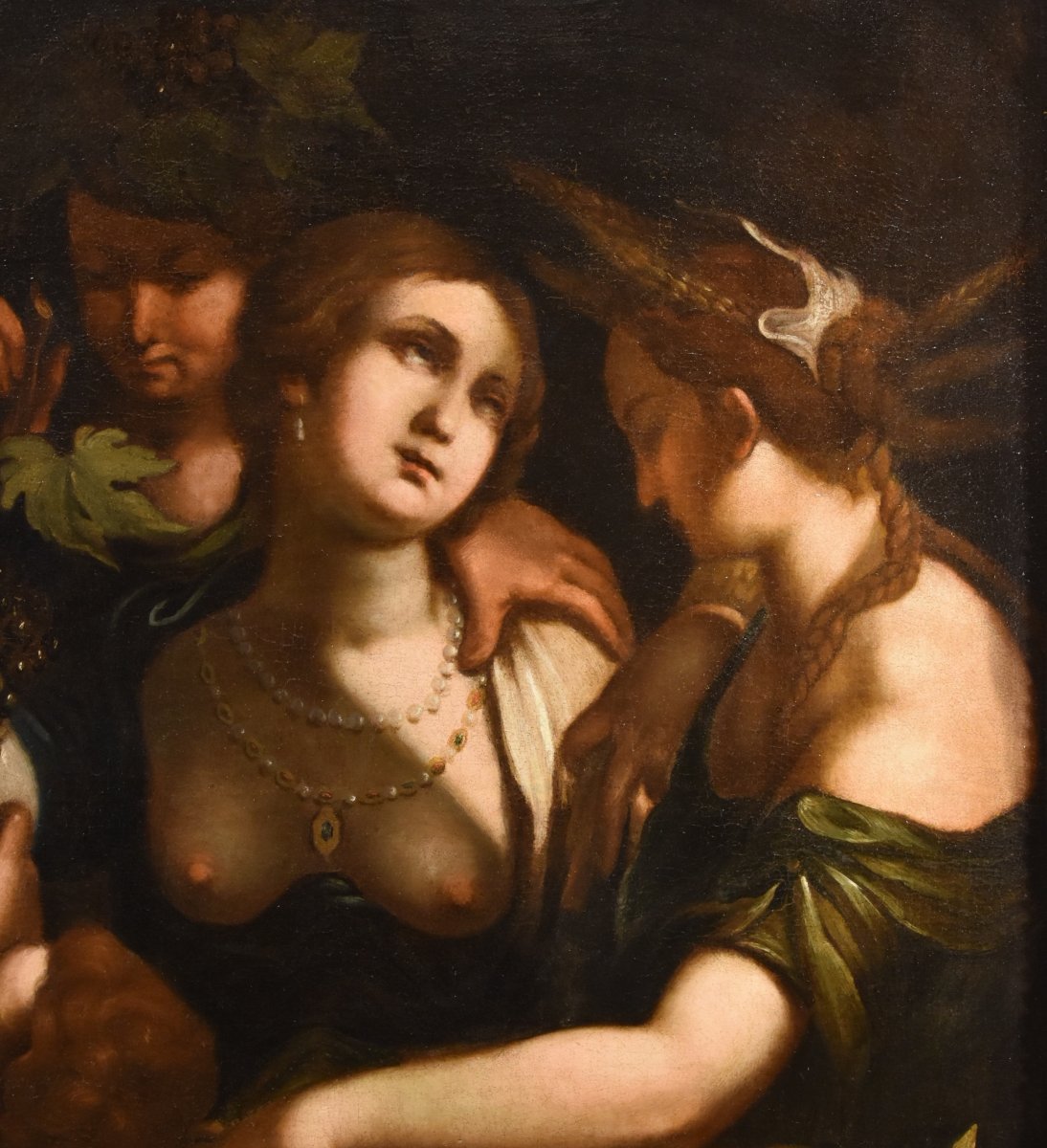




Venus, Bacchus, And Ceres, Giovanni Battista Paggi (genoa 1554–1627)
Artist: Giovanni Battista Paggi (gênes 1554 - Gênes 1627)
Giovanni Battista Paggi (Genoa 1554 – Genoa 1627)
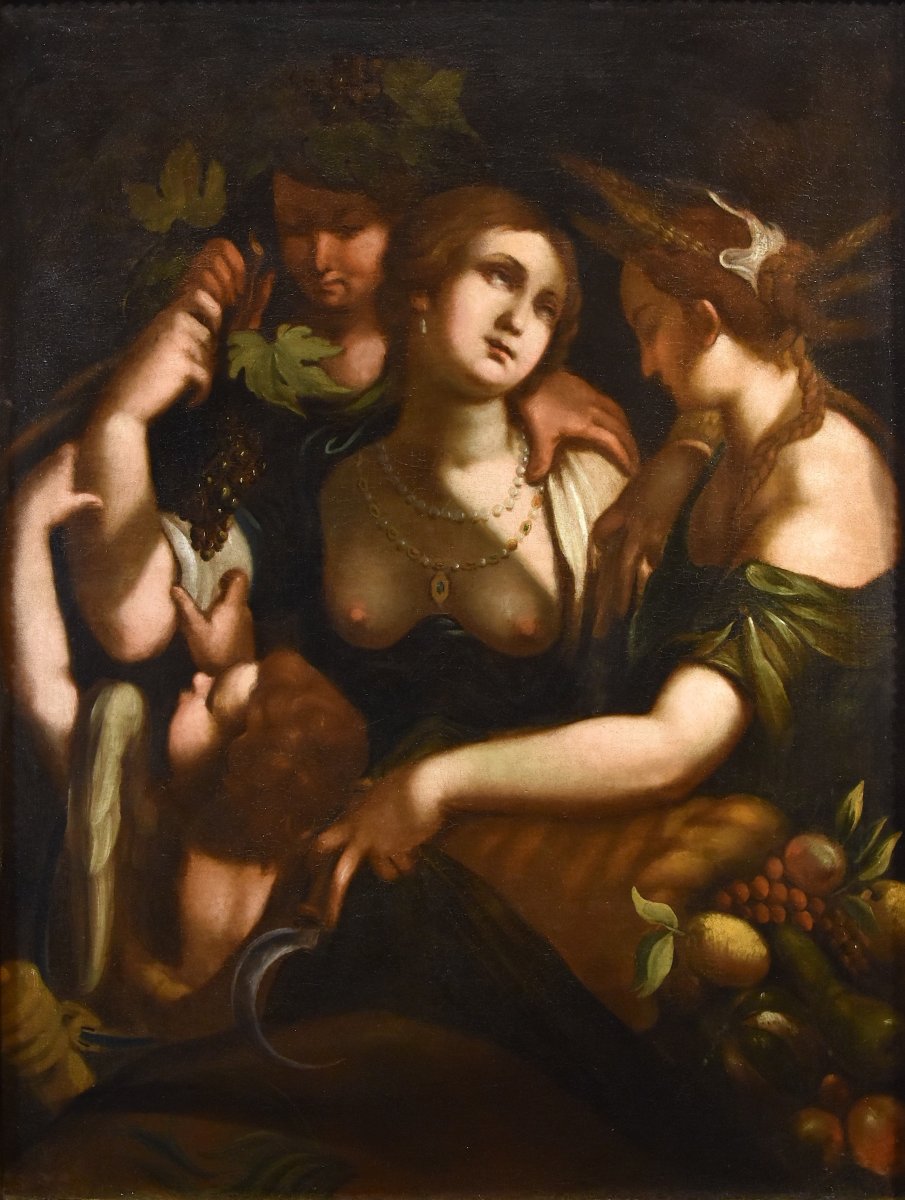
Venus, Bacchus, and Ceres (Alternative title: 'Sine Cerere et Baccho, friget Venus')
Oil on canvas
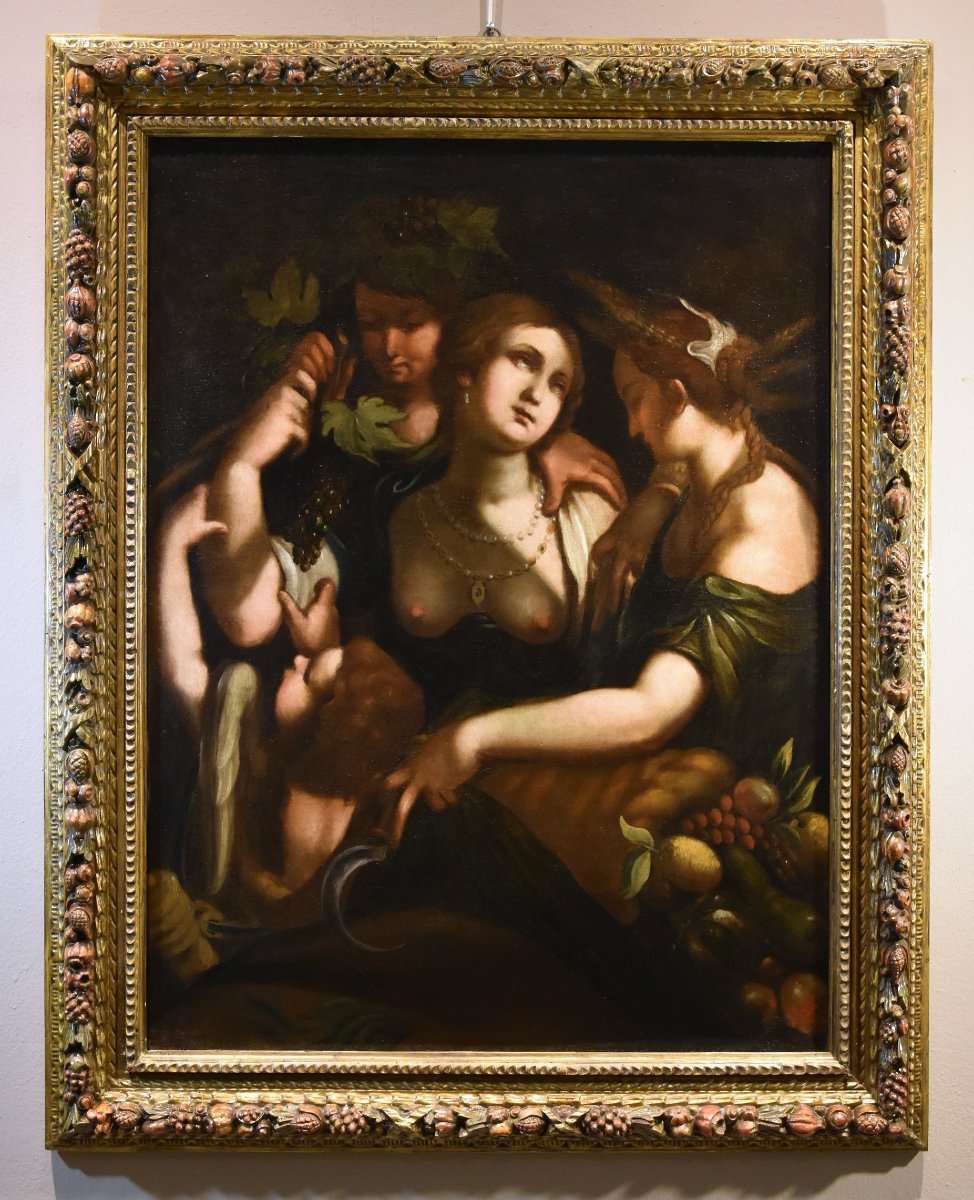
103 x 78 – Framed 125 x 100
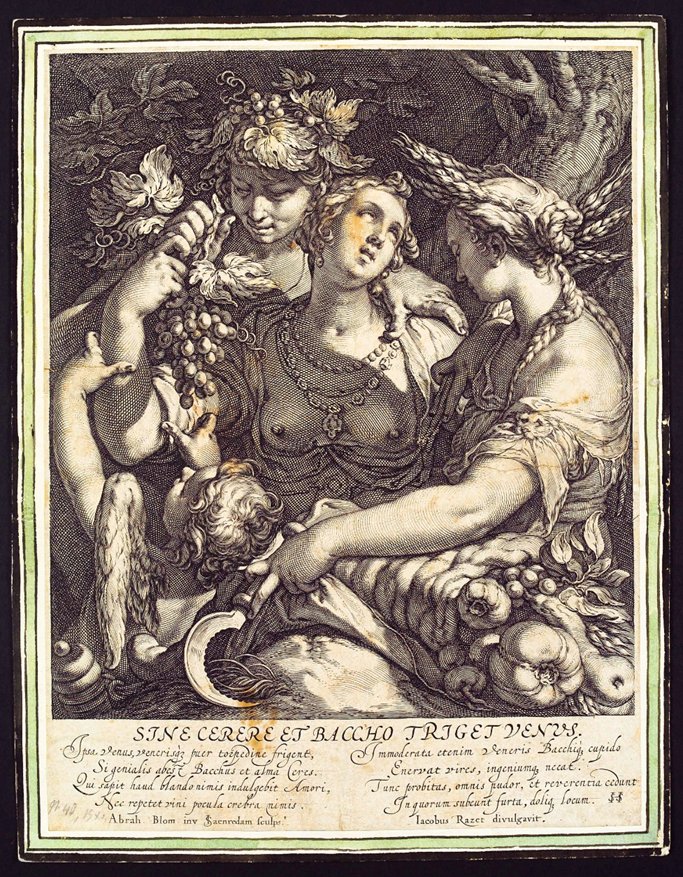
‘Sine Cerere et Baccho, friget Venus’ is a Latin quotation from a comedy by Terence (2nd century B.C.), which became a popular Dutch proverb and gave this painting its title. It literally translates as ‘Without Ceres and Bacchus, Love Fades,’ and its simplest—and naturally ironic—meaning is that love in its carnal sense needs food and wine to thrive.
In art, it became a very popular theme, especially between the 16th and 17th centuries in the Netherlands and among the circle of Mannerist artists at the court of Emperor Rudolf II in Prague, as it offered a combination of a relatively intriguing classical reference and the opportunity to depict abundant nudity.
Regardless of their decorative nature, these types of paintings therefore also had an erotic connotation, which was not unusual even in a culture dominated by the restrictions of the Counter-Reformation.
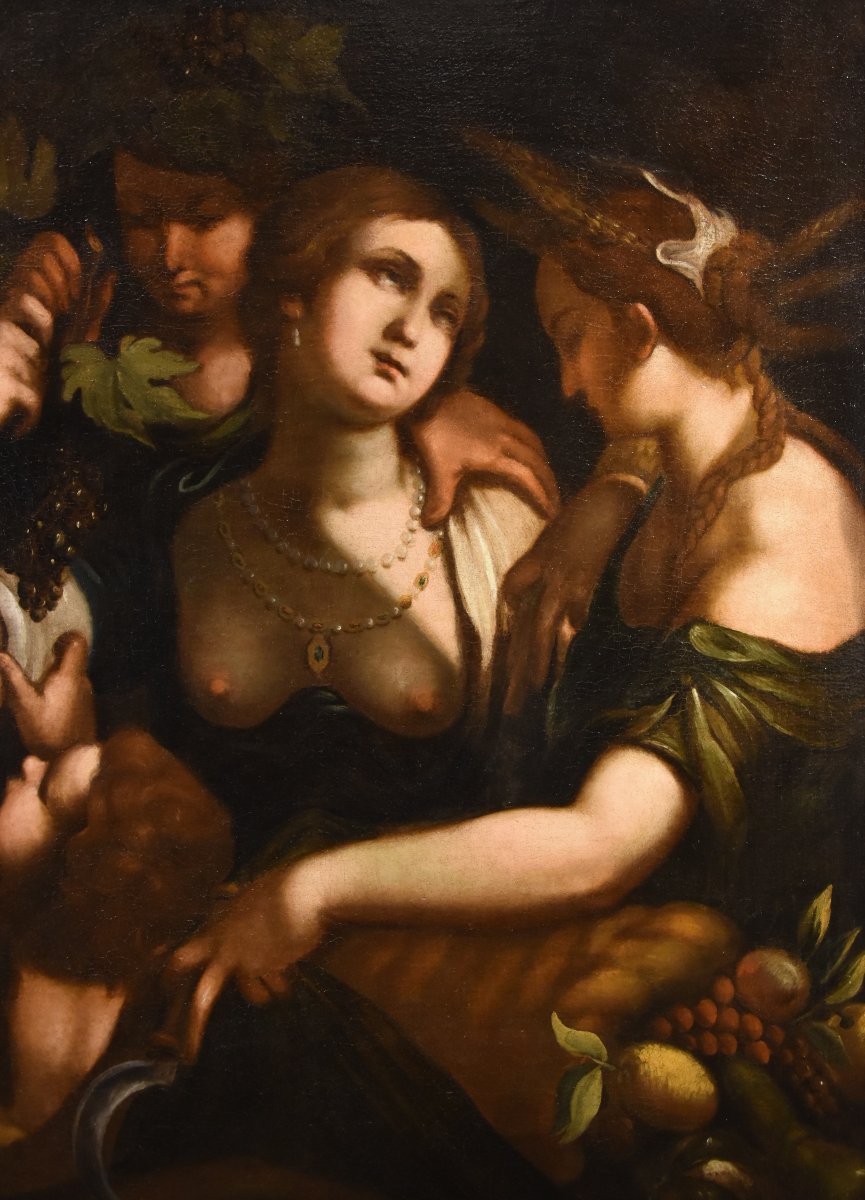
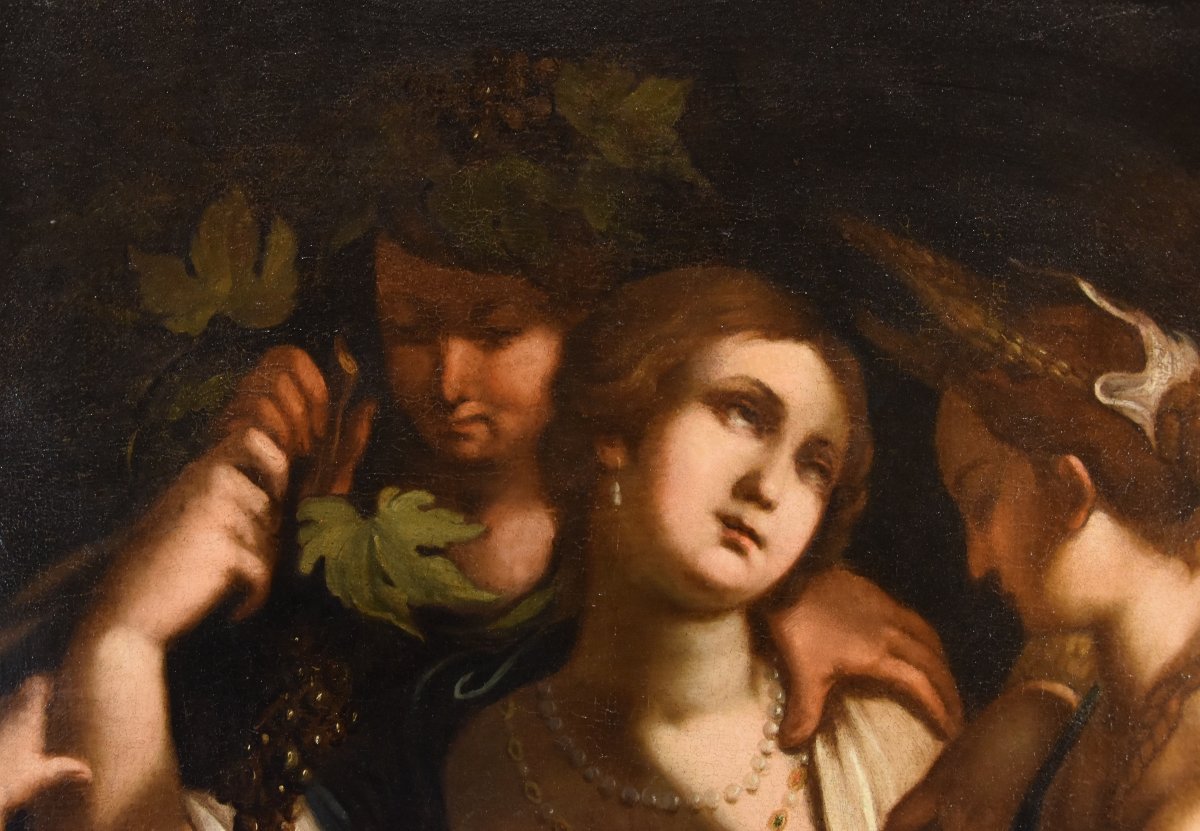
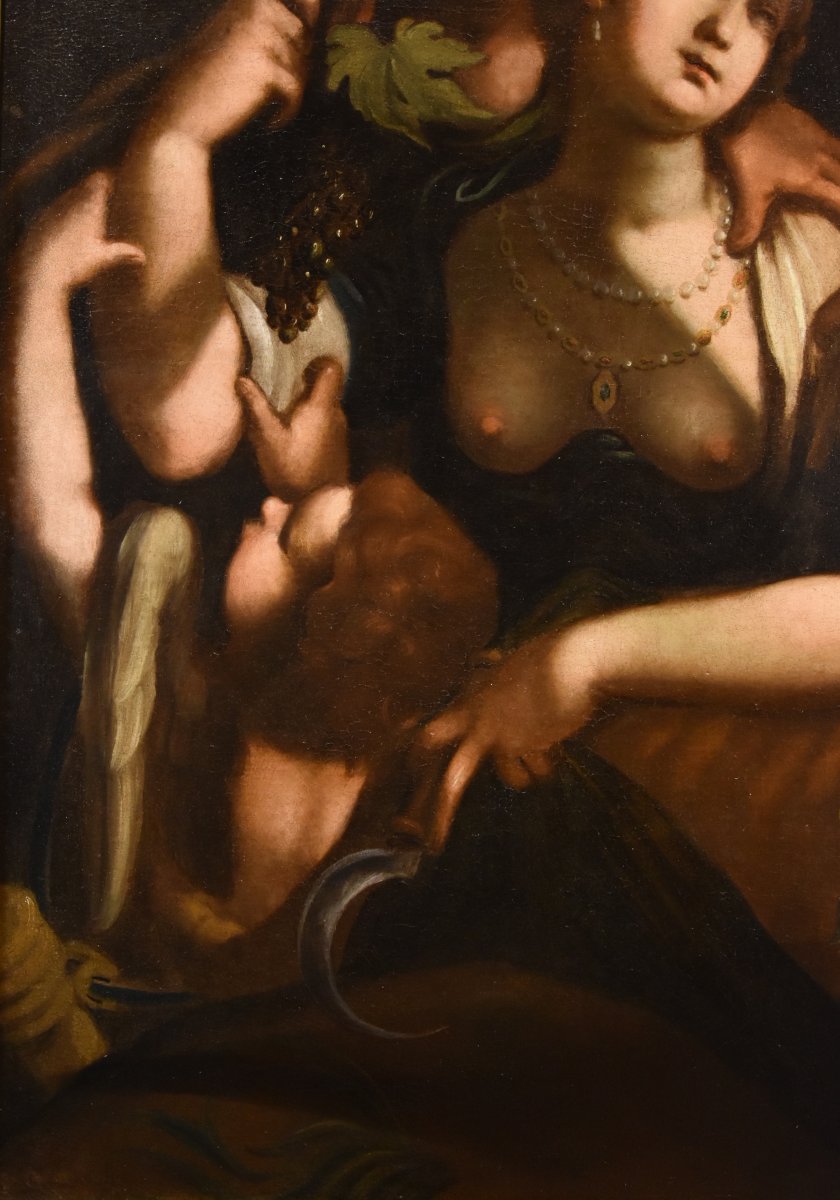
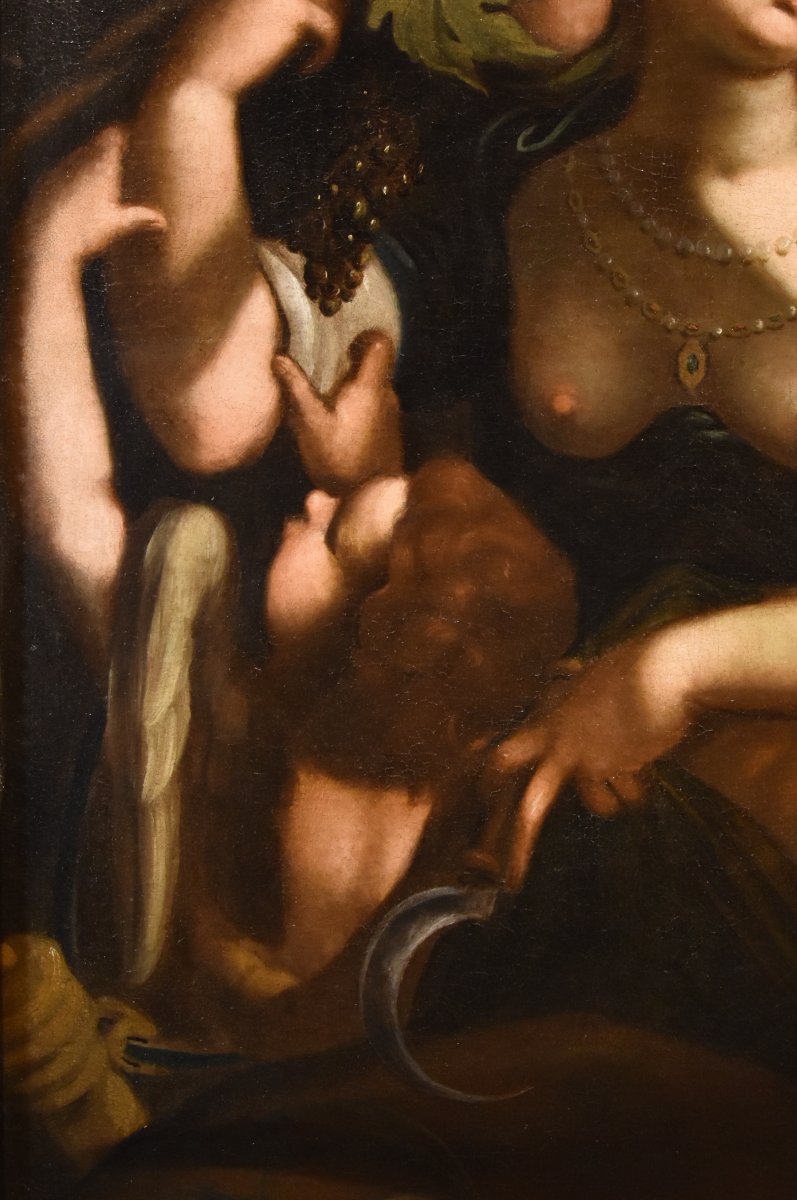
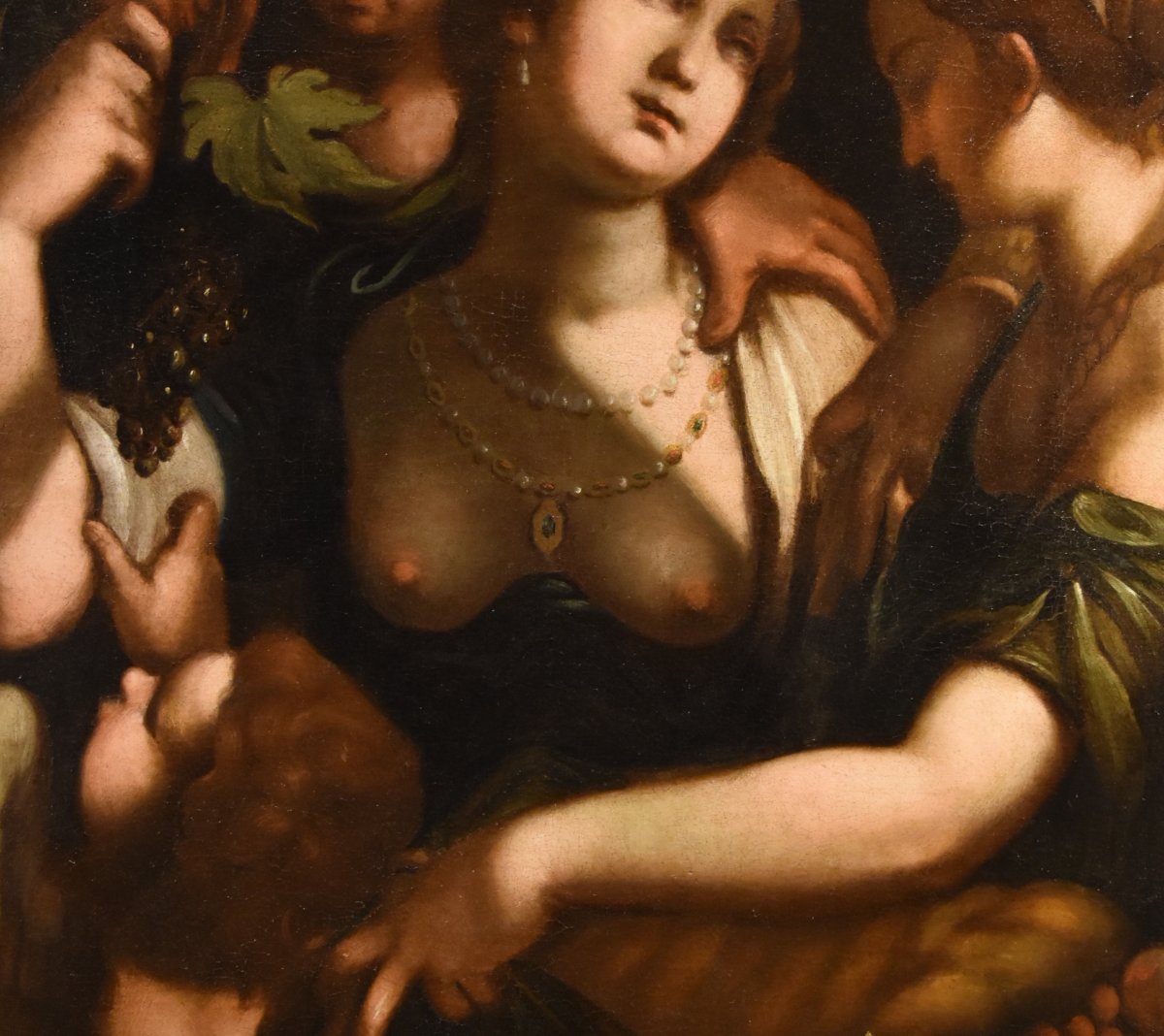
In our painting, the seductive Venus, hungry and thirsty, is surrounded by the god Bacchus, entwined in vine branches as he passes her a bunch of grapes, and Ceres, wearing a wreath of wheat and holding a cornucopia overflowing with fruit; Cupid, at her side, also appears hungry as he reaches toward his mother’s arm to voraciously grab the grapes.
Specifically, we are looking at a very famous iconographic invention by the painter Abraham Bloemart (c. 1600), which had already been popularized in its time by an engraving by Jan Saenredam (1565–1607), and later taken up by numerous artists such as J. Saenredam, Joachim von Sandrart, and Bartholomäus Spranger
URL: https://www.lombardiabeniculturali.it/stampe/schede/MZ020-00017/
In Italy as well, especially in the northern regions influenced by Flemish art, the subject was particularly appreciated, as in this case, a work by an artist from the Genoese school of the early seventeenth century. More specifically, the painting is attributed to the Genoese artist Giovanni Battista Paggi (Genoa 1554 – Genoa 1627), who here rendered the subject in his characteristic refined style, well balanced against Baroque exuberance.
In this work, we find a pleasing blend of the typical Genoese style, the Flemish style—absorbed from the large community of other Northern European artists active in Genoa—and the Tuscan style, assimilated during his stay in Florence, which lasted over a decade. We also find a Caravaggesque use of light that particularly highlights the theatricality of the scene.
Although the artist primarily created works with religious themes, his collection also includes splendid pieces of a mythological nature (see *Venus in Vulcan’s Forge*, private collection, or *Venus and Cupid Kissing*, Banca Carige Art Collection).
ADDITIONAL INFORMATION:
The painting is sold complete with an attractive frame and comes with a certificate of authenticity and a descriptive iconographic sheet.
We handle and arrange the shipping of purchased works, both within Italy and internationally, using professional, insured carriers.
If you would like to view this or other works in person, we would be delighted to welcome you to our new gallery in Riva del Garda, located at Viale Giuseppe Canella 18. We look forward to seeing you!
Please contact us for any information or to schedule a visit; we’ll be happy to assist you.
Follow us on:
https://www.instagram.com/galleriacastelbarco/?hl=it
https://www.facebook.com/galleriacastelbarco/
9 500 €
Period: 17th century
Style: Louis 14th, Regency
Condition: Excellent condition
Material: Oil painting
Width: encadré 100 cm.
Height: encadré 125 cm.
Reference (ID): 1862022
Availability: In stock
Print