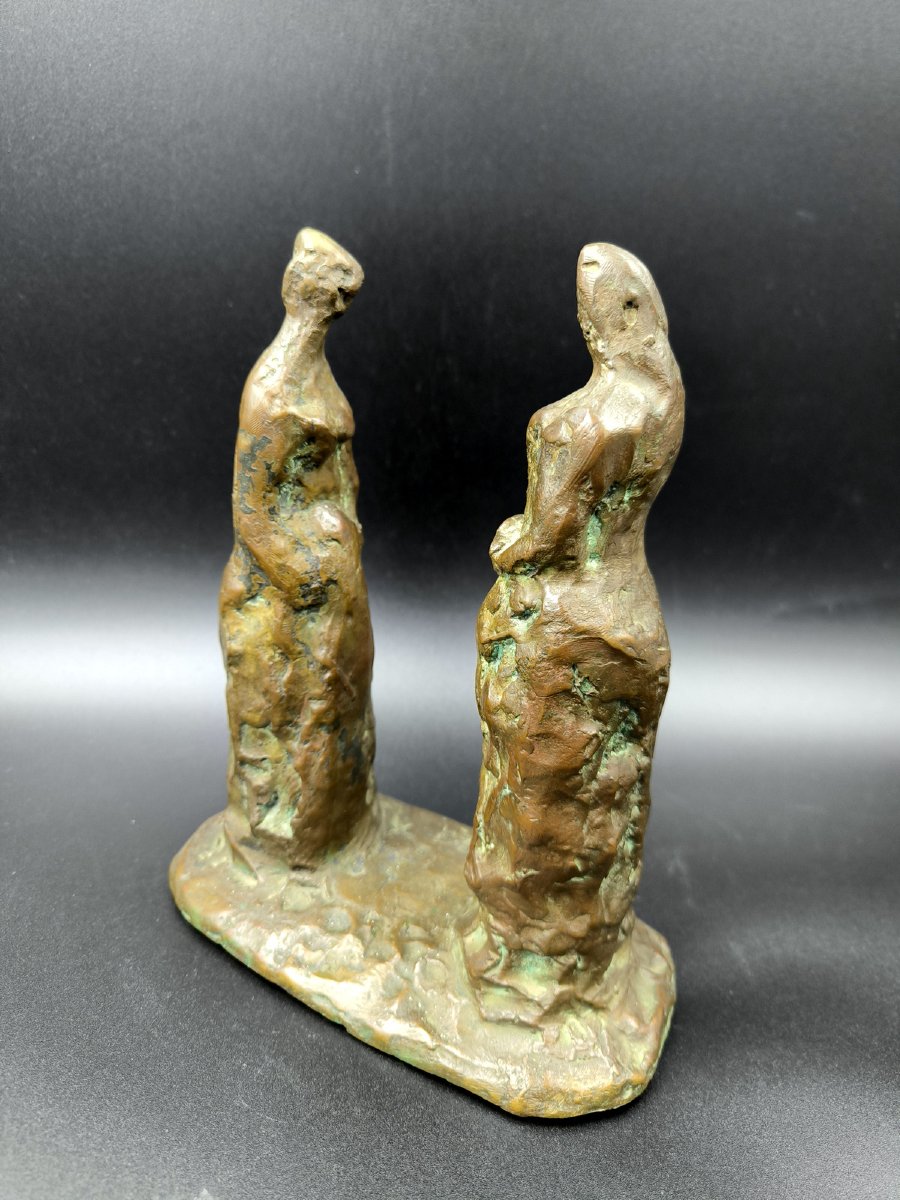

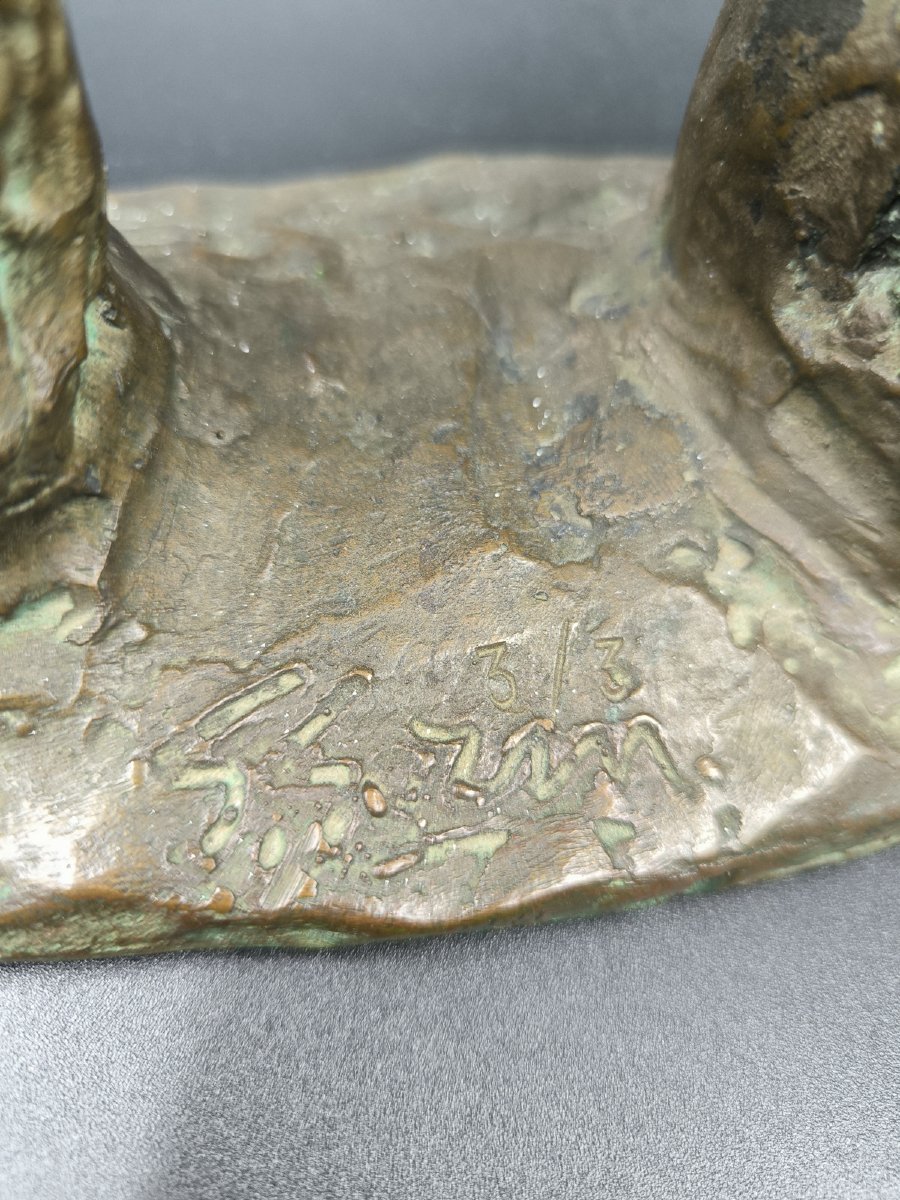


"conversation" Giuseppe Gorni (1894 - 1975)
Artist: Giuseppe Gorni (1894 - 1975)
The artistic
vision and style of Giuseppe Gorni are rooted in the reality of the Po Valley,
transforming the world of the peasantry into a universe imbued with archaic
dignity and civic engagement. Marked by his wartime experiences and his staunch
opposition to the Fascist regime, the artist sought a direct, accessible
language—one capable of expressing the hardships and inner strength of the
humble through the eloquence of their gestures and gazes. Stylistically, he
combined a solid academic background with a vibrant, concise, and energetic
approach to modeling. He favored modest, local materials—such as clay gathered
directly from the Po River, often left in its raw state—so that his powerful,
essential figures would appear to emerge physically from the very earth they
represented. His subjects are rooted in the world of the peasantry and the
daily labor defined by the rhythm of the seasons.
Giuseppe Gorni
was born on March 27, 1894, in Quistello, in the province of Mantua.
He served in
the First World War on the Asiago Plateau, where he was taken prisoner and
interned in the Hajmasker camp in Hungary. After the war, he pursued his
studies; upon earning a teaching qualification for middle schools from the
Academy of Fine Arts in Bologna, he founded the Technical Schools in Quistello.
Forced by the Fascist regime to step down from his position due to his
political opposition to the regime, Gorni turned his focus to drawing,
engraving, and sculpture.
On May 24,
1940, he was called up for military service once again. He served on the French
front and subsequently on the Russian front—where he remained from 1941 to
1943—before eventually ending up in Switzerland, where he was interned in a
military camp. Following the conflict, he resumed his teaching career in
Quistello and Mantua in 1945.
During the
1950s, Gorni left his hometown, relocating with his family near Milan for
professional reasons; it was not until 1961 that he returned to live in
Nuvolato di Quistello. From this point on, Gorni was able to dedicate himself
entirely to his art. At the age of 71, he held his first exhibition in Milan,
which met with great success among both critics and the public. This marked the
beginning of a re-evaluation of Gorni’s body of work. The artist passed away on
August 6, 1975.
1 600 €
Period: 20th century
Style: Modern Art
Condition: Excellent condition
Material: Bronze
Width: 18
Height: 25
Depth: 8
Reference (ID): 1858538
Availability: In stock
Print