

Bulle-clock Electromechanical Clock, 1920s, Model Xc, With Marquetry, Sbx26bul001
BULLE-CLOCK electromechanical grandfather clock, circa 1920–1930, model XC No. 95279, mahogany case with garland marquetry, Danton & Fontaine Paris dial
Bulle-Clock, an invention of French electric clockmaking
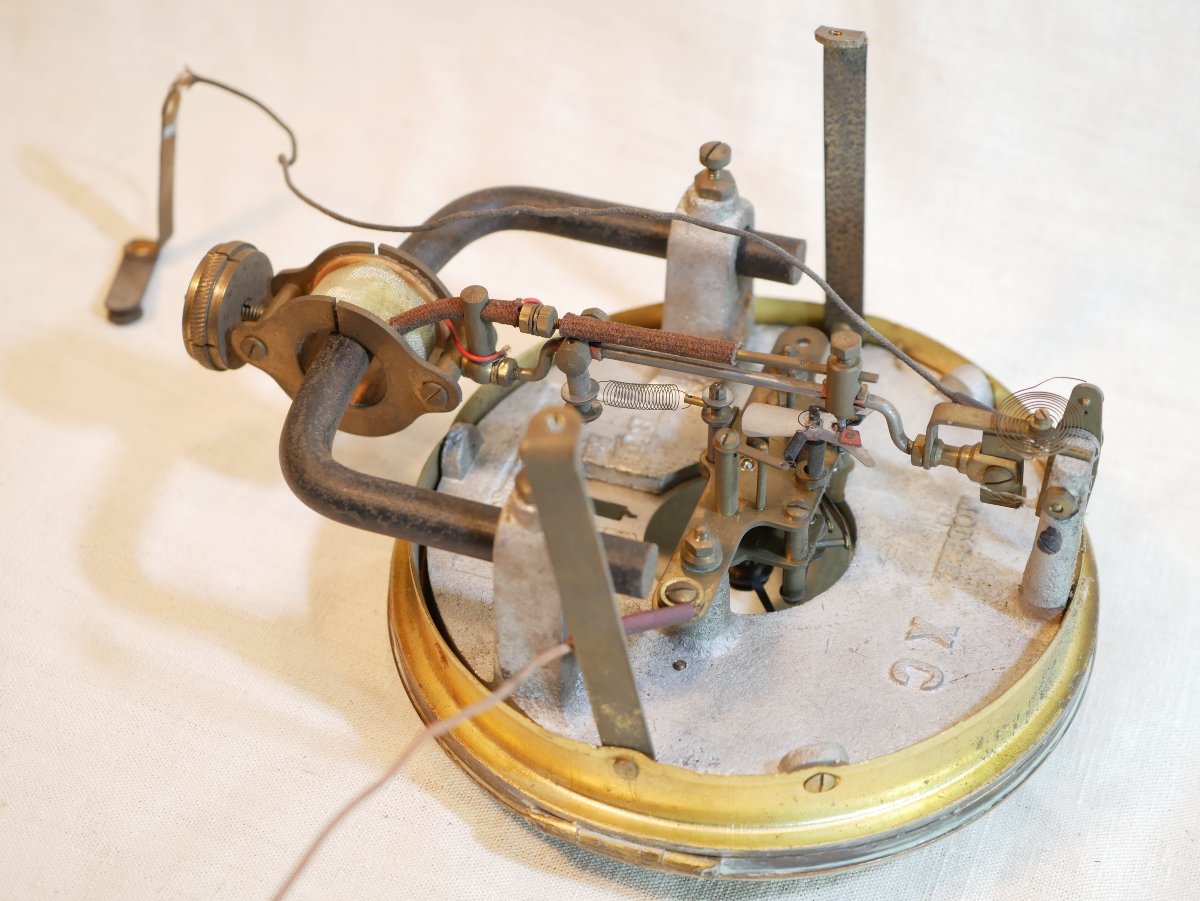
The Bulle electromagnetic system was developed by Maurice Favre-Bulle, a member of a family of watchmakers from Besançon, based on the research of physicist Marcel Moulin. The patent was filed in 1920 in the names of Favre-Bulle and Moulin’s widow. The clock is battery-powered and requires no winding: an electrical pulse keeps the pendulum moving. Today, these clocks are among the most sought-after examples of the early days of electric clockmaking.
A pedestal-style mantel clock in a rounded mahogany case, known as a “headboard” or “lancet” style. The front is adorned with beautiful light wood marquetry: framing moldings, a large garland of knotted drapery, and tassels. This neoclassical decoration, drawing on Louis XVI taste and the English “Sheraton” style, gives the case a late 19th-century character, while the movement dates from the 1920s–1930s. The case rests on a molded base and four small brass ball feet.
Silver-colored dial with black Arabic numerals and a railway-track minute track, signed BULLE-CLOCK – S.G.D.G. Patent – Patented – France, with the retailer’s name Danton & Fontaine, 21 rue Auber, Paris. Blued hands, brass bezel with domed glass. The center of the dial reveals the movement’s gears. At the bottom of the dial, a small pointed weight serves as a plumb bob for setting the clock.
The mechanism is marked Model XC and bears the number 95279. The clock bears its original Bulle-Clock label on the side.
Dimensions: height 26 cm – width 18 cm – depth 11 cm
Materials: mahogany, light wood marquetry, brass, glass
Period: circa 1920–1930
Reference: SBX26BUL001
Condition: good overall condition, warm, aged patina on the wood, marquetry intact. All parts are present. Sold untested; requires servicing. Servicing by a clockmaker specializing in electric timepieces is recommended before putting it back into operation. It is sold “as is” and without a guarantee of functionality; all mechanical and electrical components are present and original.
Period: 20th century
Style: Art Deco
Condition: Good condition
Material: Wood marquetry
Height: 26 cm
Reference (ID): 1850559
Availability: In stock