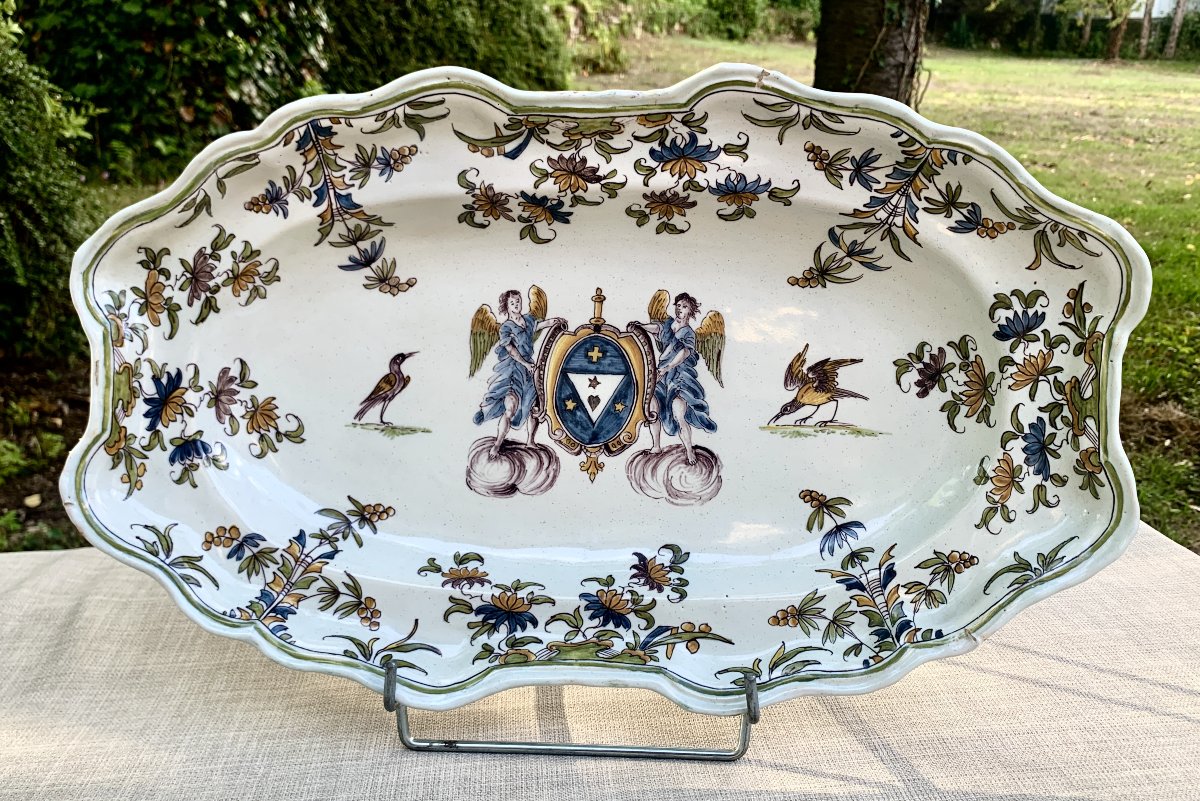



Circa 1760 Large Lyon Earthenware Oblong Serving Dish, Coat Of Arms Brenot
Artist: Manufacture Royale De Faïence De Lyon (1732-1770)
FRENCH FAÏENCE
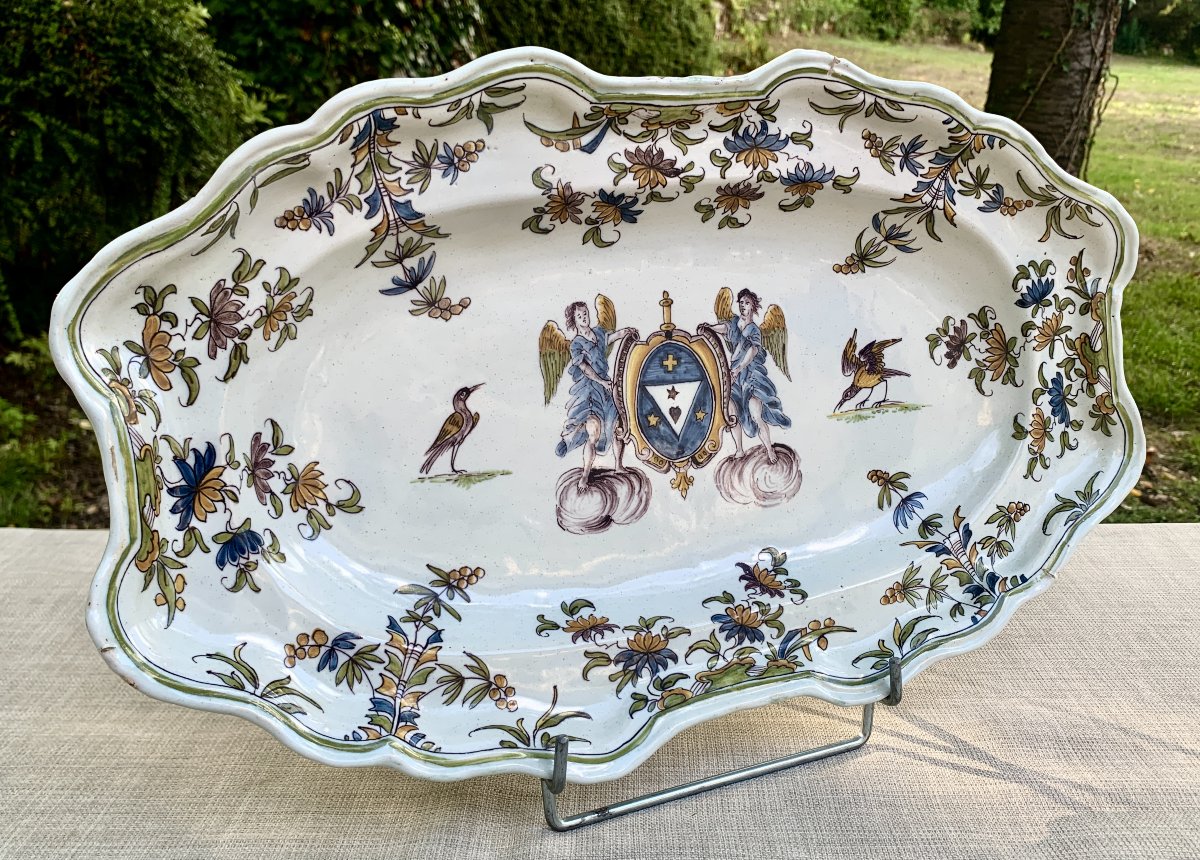
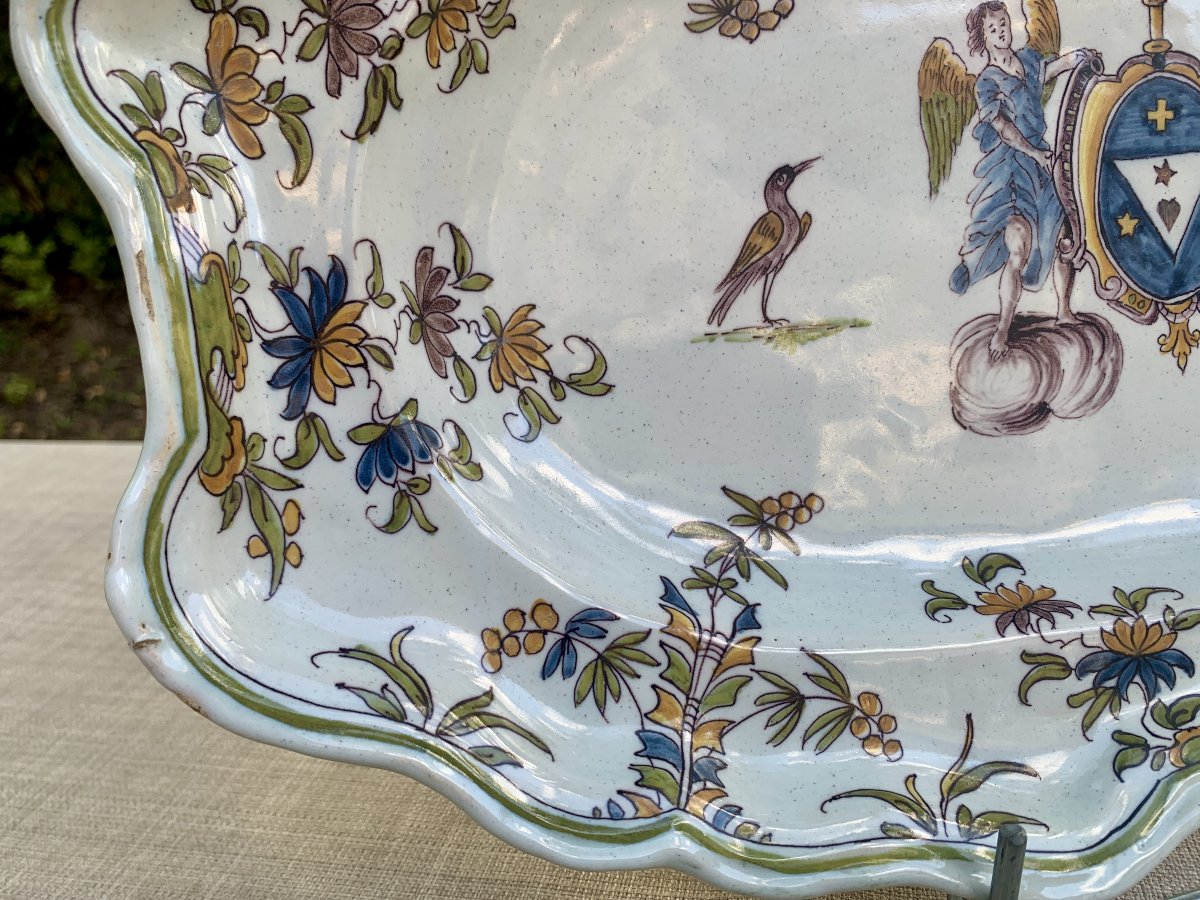
Large scalloped serving platter from a tableware order, featuring in its center a large coat of arms,
Lyon around 1760.
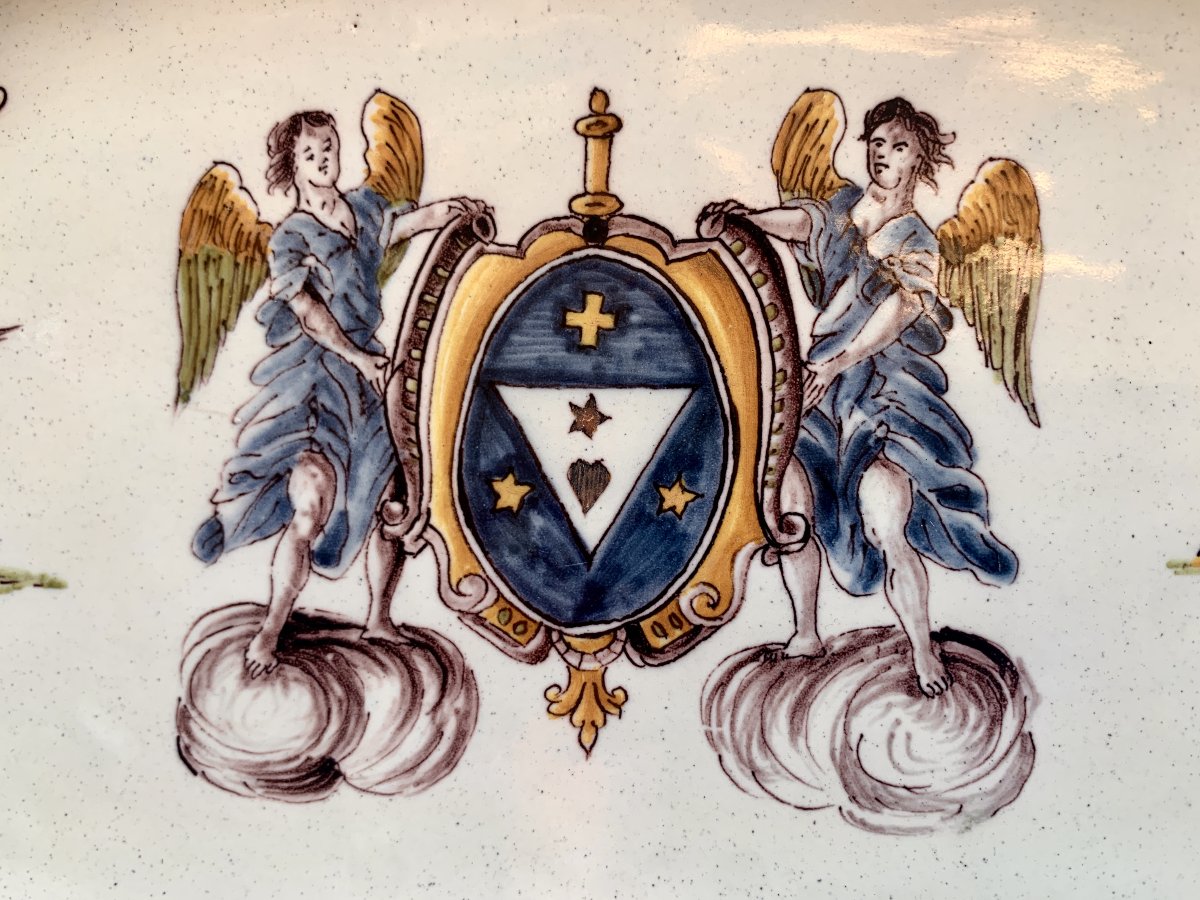
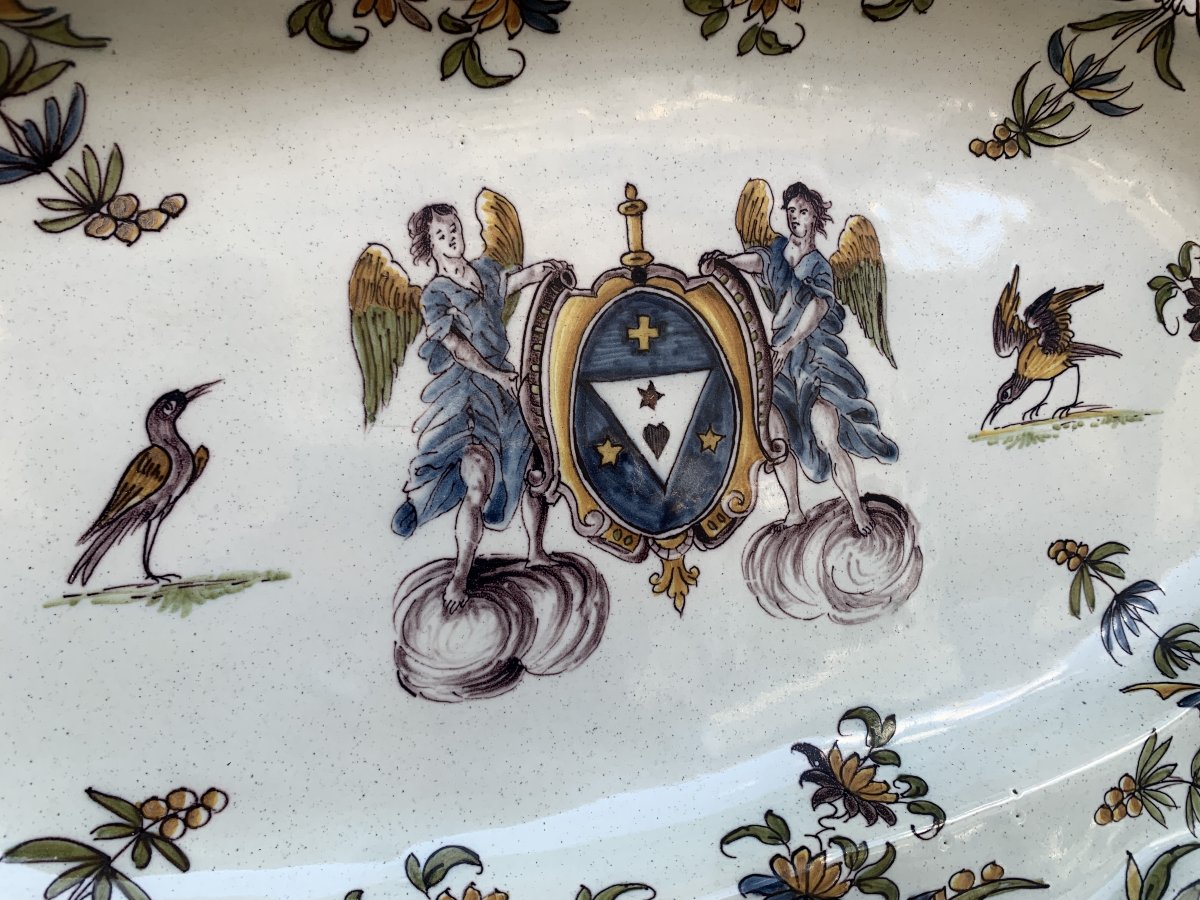
Coat of arms of HENRI-François BRENOT (circa 1725 -?), a cleric belonging to the Dominican convent of Lyon (which explains the ecclesiastical attributes like the cross above the shield).
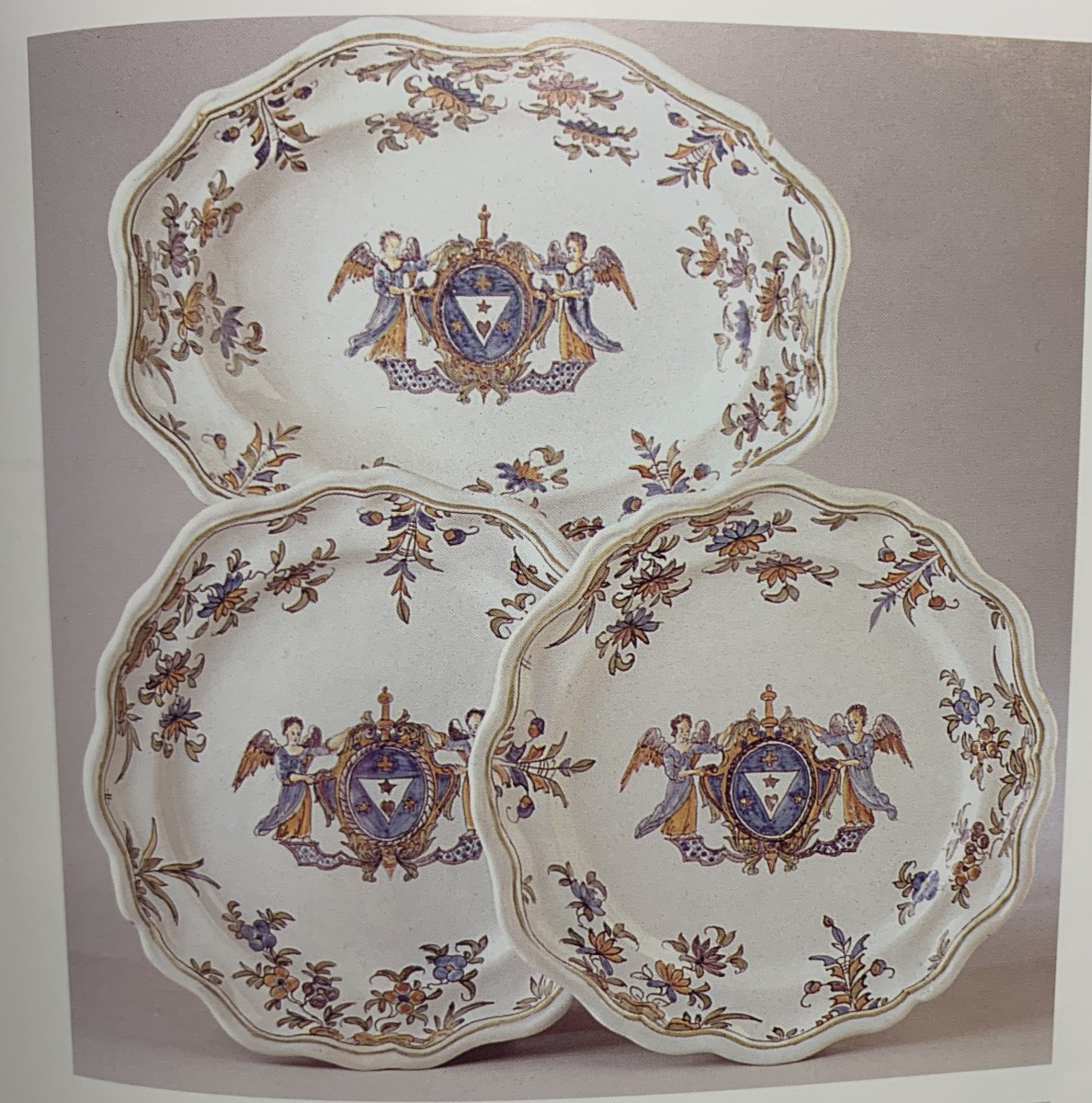
This platter, with its particularly refined scalloped shape, can be linked to other pieces from the same set with the same decoration (see the last photo), some of which are preserved at the GADAGNE Museum, Museum of the History of the City of Lyon.
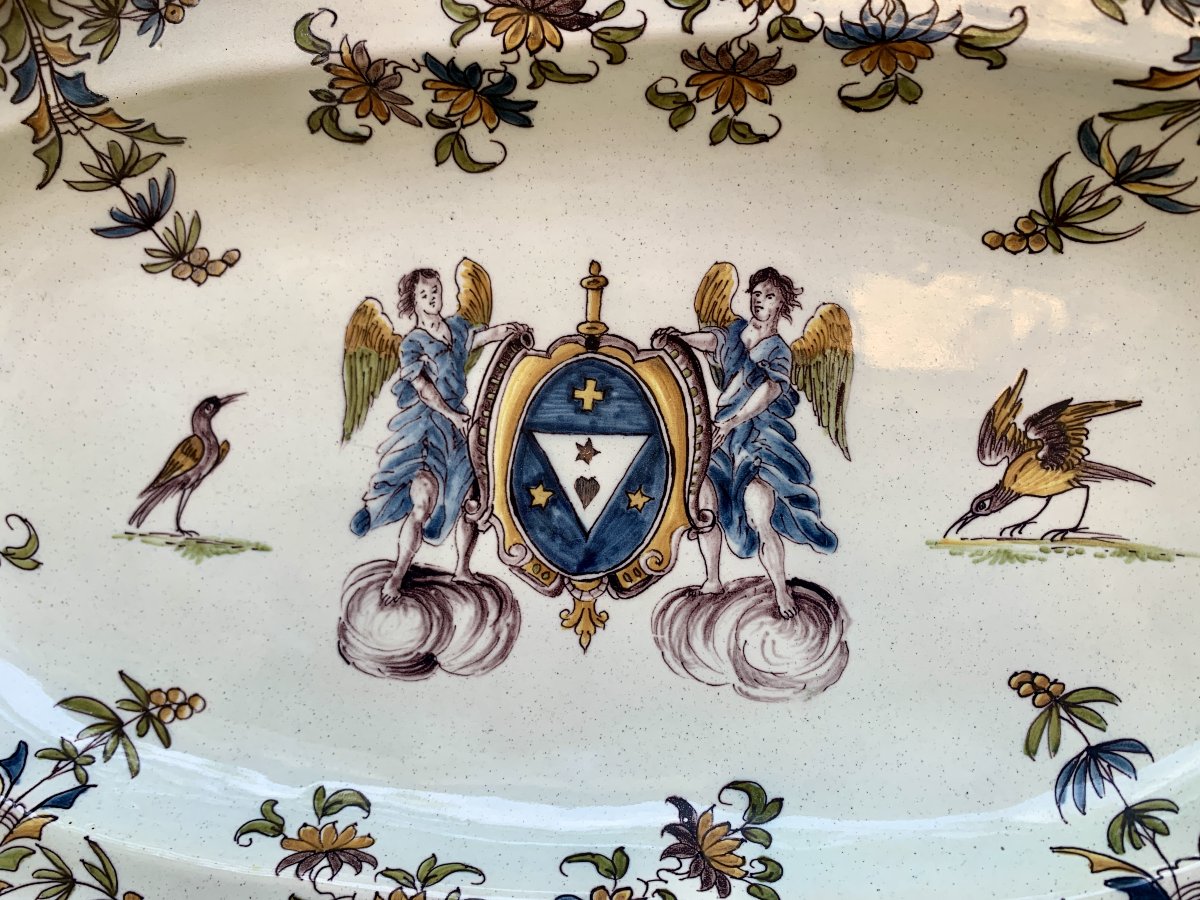
COAT OF ARMS "Azure, a silver delta charged with a red heart, and in chief a small gold cross."
The blazon used to describe this composition is written according to a strict grammar. One distinguishes between the arms (the shield itself) and the external ornaments:
* The shield, or central blazon, is oval in shape (very common for clerics and pieces of goldsmithing or ceramics in the 18th century).
The field—or background—is described as "azure" (a bright blue), the central figure shows an inverted triangle in silver (white/silvery) sometimes resembling a delta shape or a symbol of the Trinity. The motif framed within this triangle is said to be "charged at its heart" with a heart in gules (red). At the top, that is the upper part or top of the shield, it is crowned with a small gold (yellow) crosslet.
* The exterior decorations surrounding the shield confirm the status of the commissioner, Henry-François BRENOT, and enhance the artistic dimension of the piece with the ecclesiastical attribute: behind the shield, placed vertically (“in pale”), stands a pastoral or processional staff topped with a gold cross that rises above the whole. It is this specific insignia that heraldically indicates that the service belonged to a clergyman.
The supporters on each side of the shield are two angels with golden wings, dressed in blue drapery. They are shown in profile, facing the coat of arms.
They rest on a terrace of clouds, painted in violet tones, typical of the use of manganese by Lyonnais faience makers.
(Note: The two birds painted on either side of the clouds are part of the landscape and animal decoration typical of the piece’s style, but they are independent of the family coat of arms).
Dimensions :
48 cm long
* 28 cm high
* 7 cm deep
Condition :
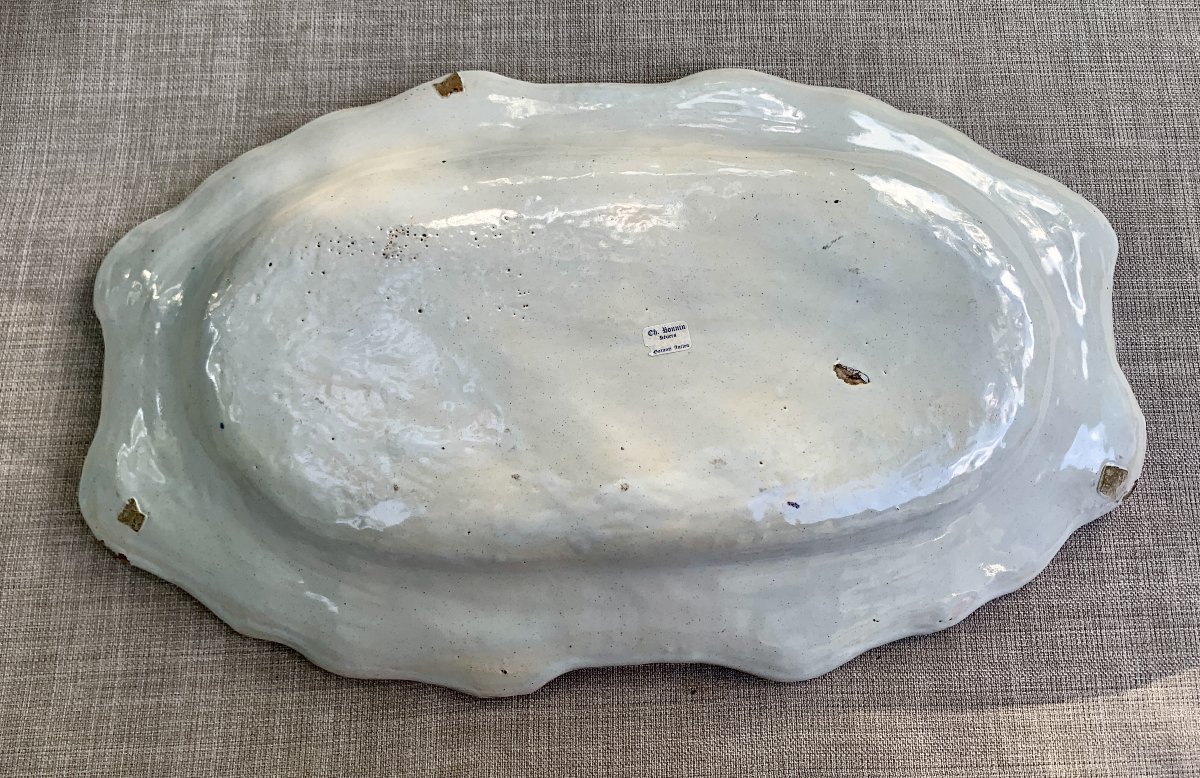
An unattractive firing flaw at the edge, at 10:30, was repaired by our professional restoration workshop (photo before restoration available upon request).
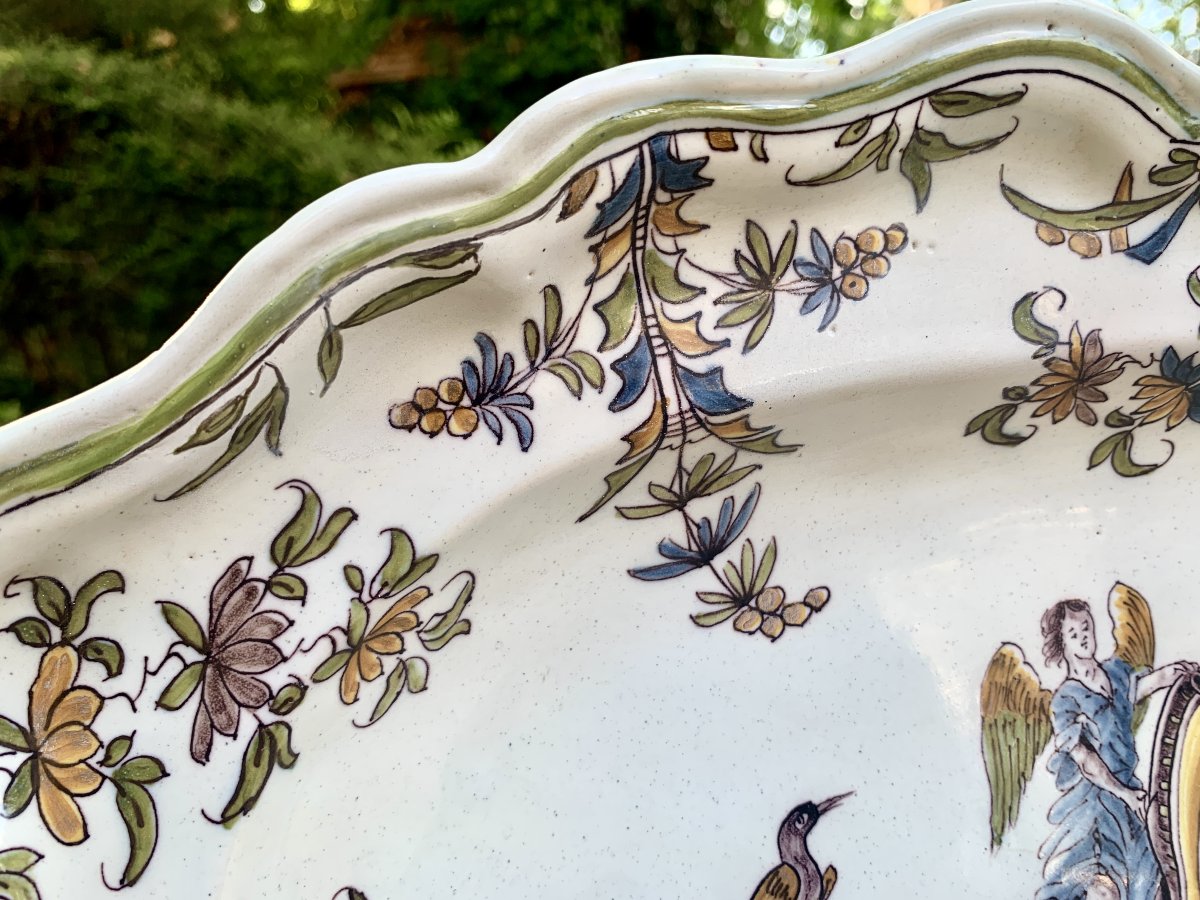
Very beautiful enamel, very white and superbly glossy glazing.
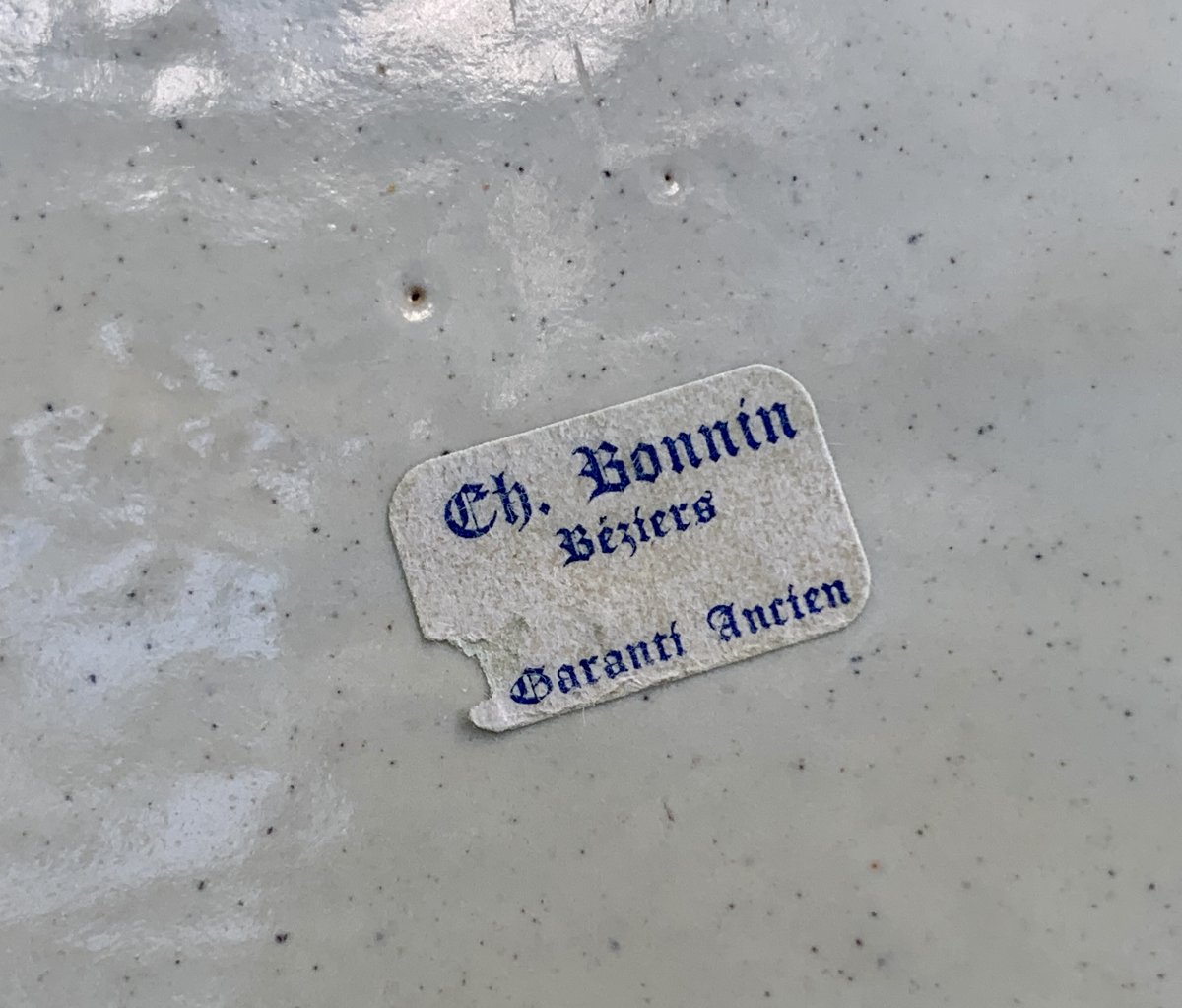
Old label on the back of the dish from the Galerie Charles BONNIN in Béziers.
The earthenware factory de Lyon was founded in 1732 in the Faubourg de la Guillotière by Joseph COMBE, a craftsman trained in Moustiers and Marseille, in partnership with Jacques-Marie RAVIER.
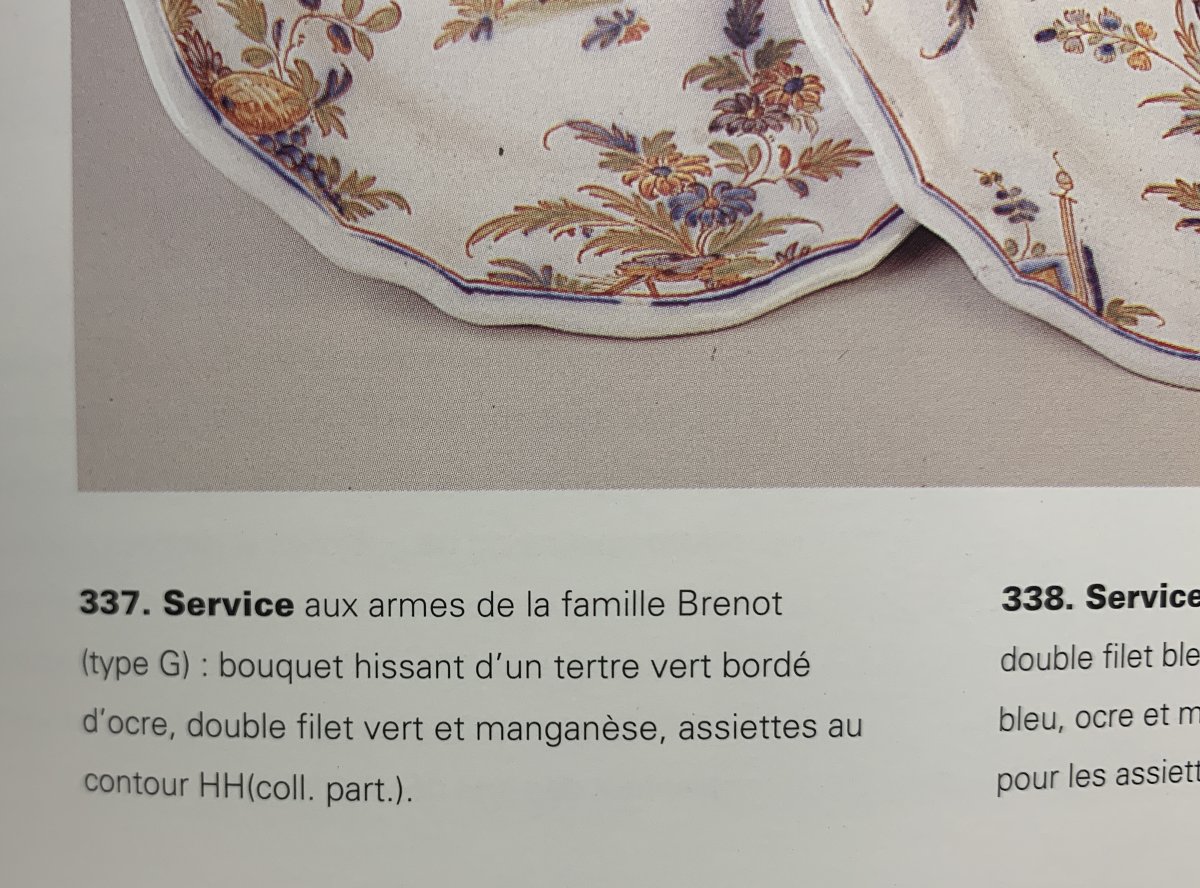
The factory obtained in 1733 the title of Royal Manufacture by patent letters from King Louis XV. This strategic status gave them an exclusive 10-year privilege to produce "fine faience" in Lyon and prohibited any local competition. This period, 1760-1780, marks the peak of producing rich ceremonial sets. It was during this period of full technical maturity that the famous "type G" decoration was produced (classification due notably to the major university reference study conducted by Jean ROSEN, Research Director at the CNRS and an essential specialist in Lyon faience), with bird and flower motifs, as well as the large custom heraldic orders for the bourgeoisie and high clergy of Lyon, like this Brénot service.
The manufactory is particularly distinguished by "the brilliant whiteness of its glaze and the finesse of its hand-painted decorations, blending delicate floral stems with animal scenes or prestigious coats of arms."
The morphological code used to designate specific templates or profiles of scalloped or curved edges here is the "HH contour." This mold template and its border relief used here are characteristic of the productions from Dauphiné and, in particular, of the Lyon faience makers of the period.
Henry-François BRENOT was born around 1725. He carried out his duties as a clergyman within the community of preaching brothers (the Dominican Order) in Lyon during the middle and second half of the 18th century.
The historical and heraldic research conducted when pieces of this set were acquired by the Lyon museums provides two important details: in 18th century, there were in fact two clergymen in BRENOT family, but only Henry-François lived and served in Lyon, at the Jacobin/Dominican convent, which was then located on Rue Confort. This is what allowed historians to formally attribute the commission of this tableware to him.
1 900 €
Period: 18th century
Style: Louis 15th - Transition
Condition: Good condition
Material: Earthenware
Length: 48 cm
Height: 28 cm
Depth: 7 cm
Reference (ID): 1850177
Availability: In stock
Print