




Antique Painting Religious Subject Oil On Canvas XVII Century
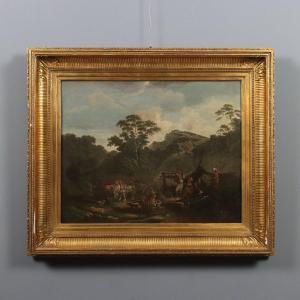
Oil on canvas. 17th-century Roman school.
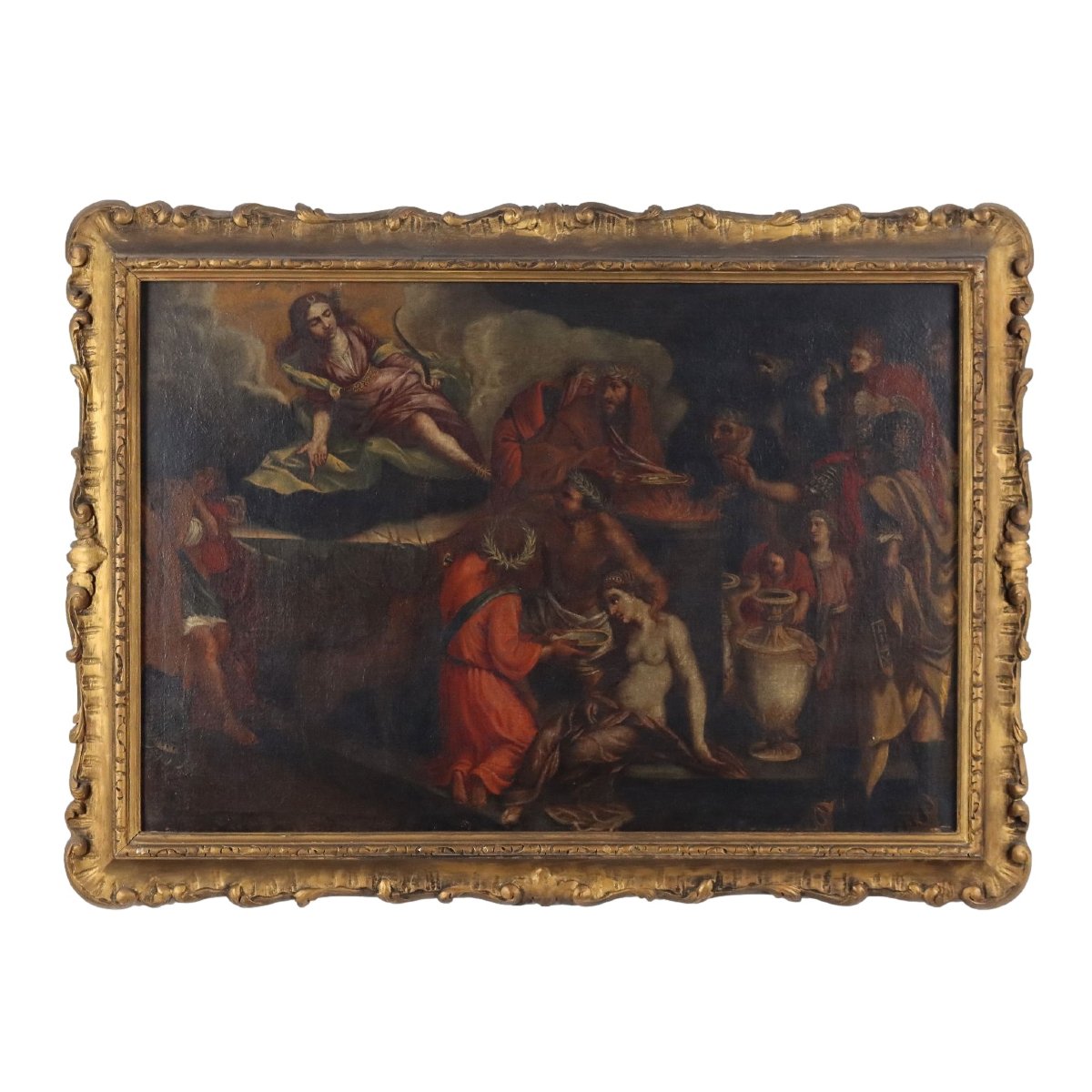
The bloody episode of the sacrifice of Iphigenia, also recounted in the Iliad, stems from the wrath of Artemis, goddess of the hunt, who—offended by Agamemnon’s boasts as a hunter—prevents the Greek fleet from setting sail for Troy; The seer Calchas then prophesies that the goddess’s wrath can be appeased only by sacrificing King Agamemnon’s youngest daughter, Iphigenia, and so it comes to pass.
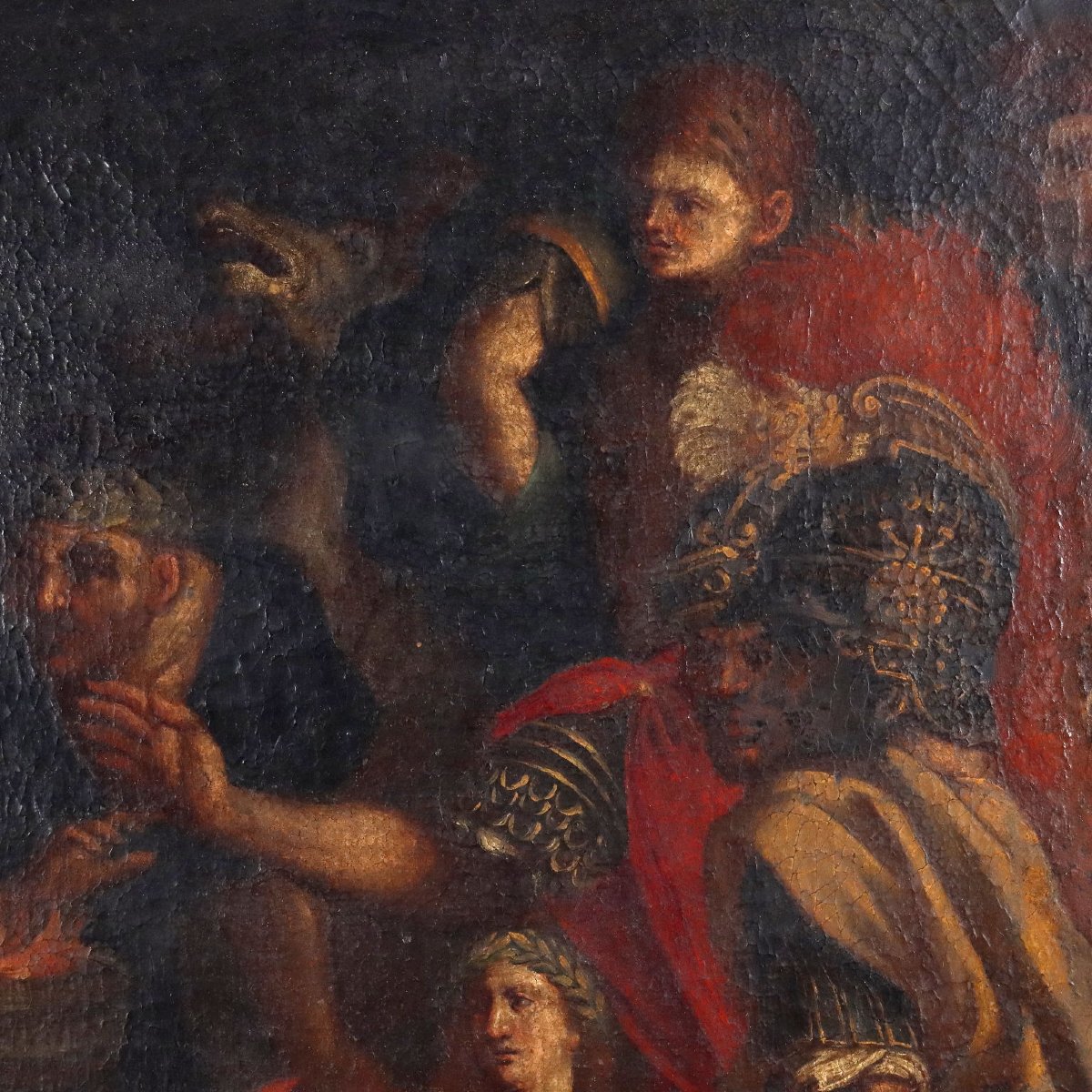
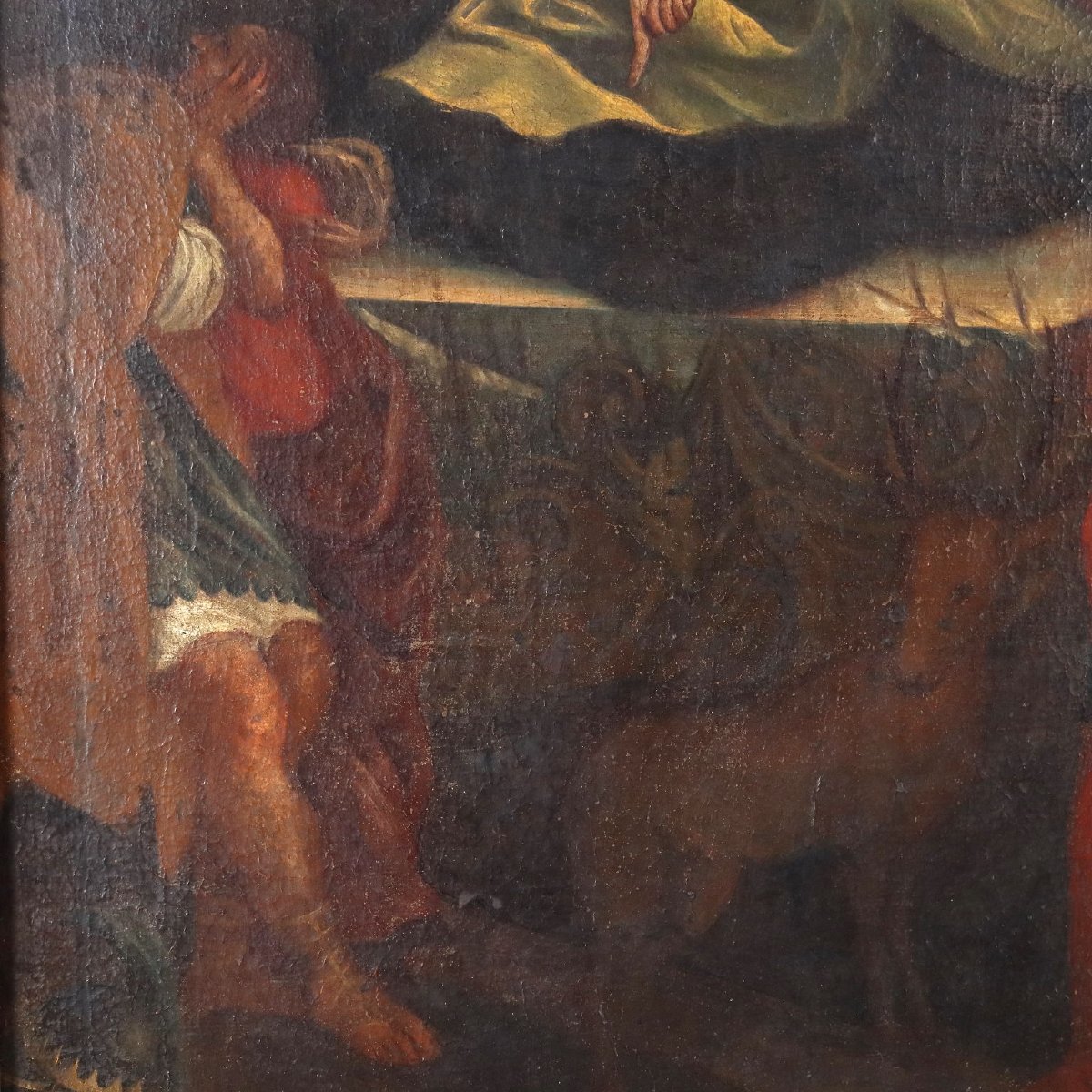
At the center of the scene, the maiden is depicted prostrate at the foot of the sacrificial altar, while the priests prepare her according to the rituals; in the left corner, one can glimpse her father Agamemnon (with his crown lying at his feet) and her mother Clytemnestra, who, in their despair, dare not look.
Above, the goddess Artemis watches the scene; she is recognizable by the moon in her hair, the bow she holds in her hand, and a deer—her symbolic animal—at the foot of the canopy: according to a less violent version of the myth, at the moment of the sacrifice, Artemis substitutes a doe for Iphigenia, as the presence of the animal in this depiction might suggest.
The work presented here is based on Pietro Testa’s painting, published between 1640 and 1642 (now in the Galleria Spada in Rome), and on his engravings: the entire composition of the figures is taken from it, although their clothing, colors, and various details have been modified.
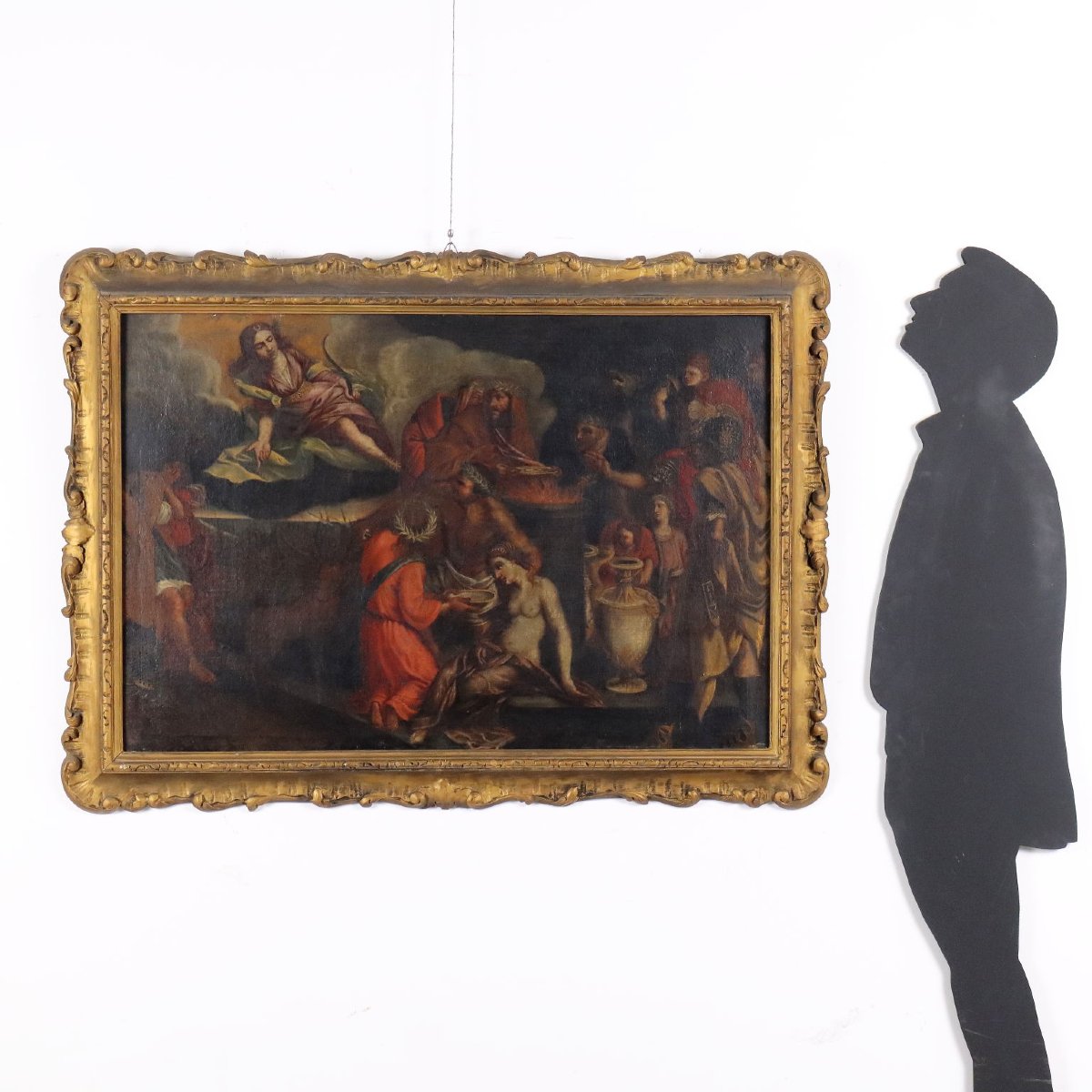
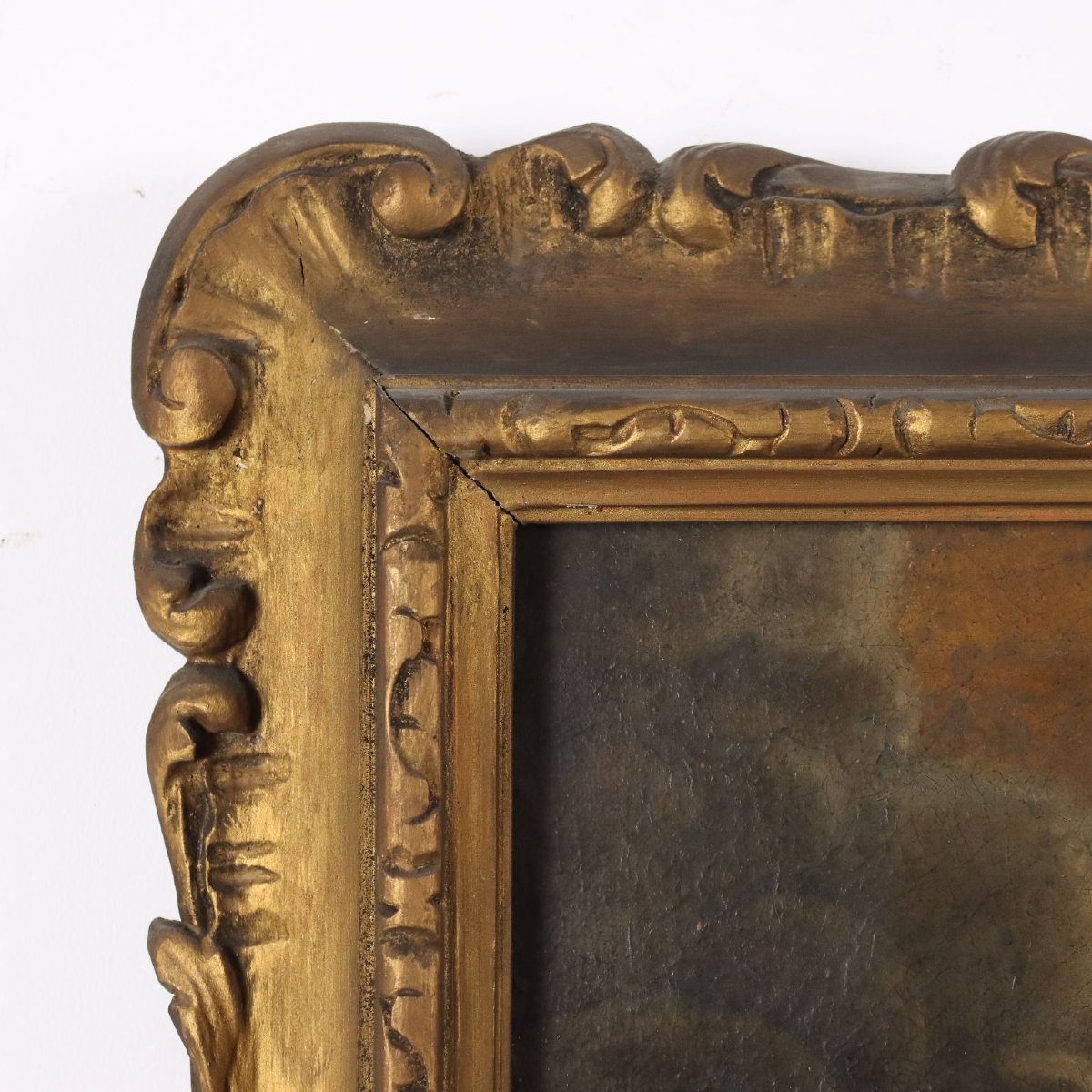
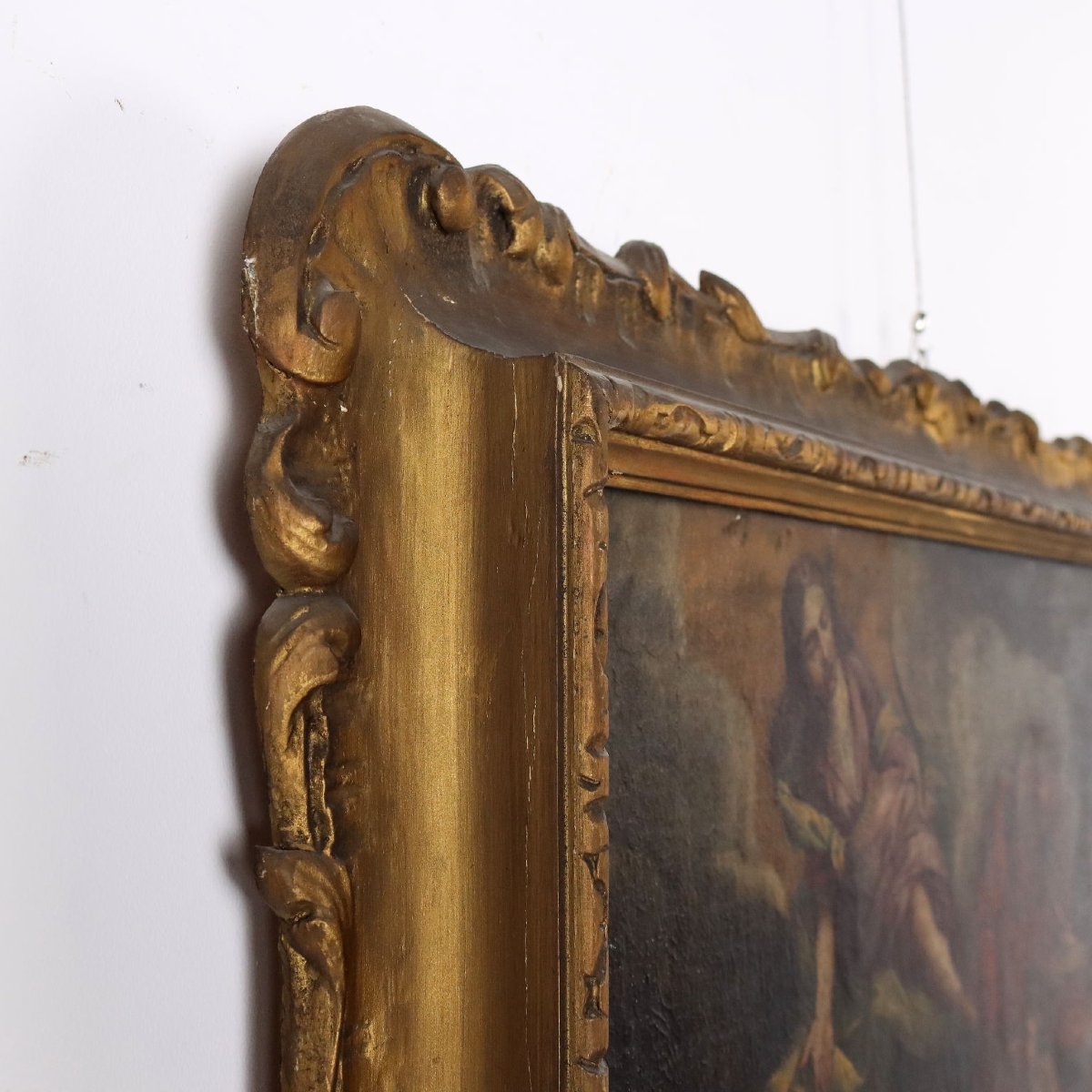
Restored and re-glazed, the painting is presented in an early 20th-century frame, contemporary to the restoration.
ARARPI0262151
2 370 €
Period: 17th century
Style: Other Style
Condition: Good condition
Material: Oil painting
Width: 110
Height: 74
Depth: 7
Reference (ID): 1848125
Availability: In stock
Print