


Knight's Sword 15th Century
Knight's Sword, 15th Century, of French or Italian origin.
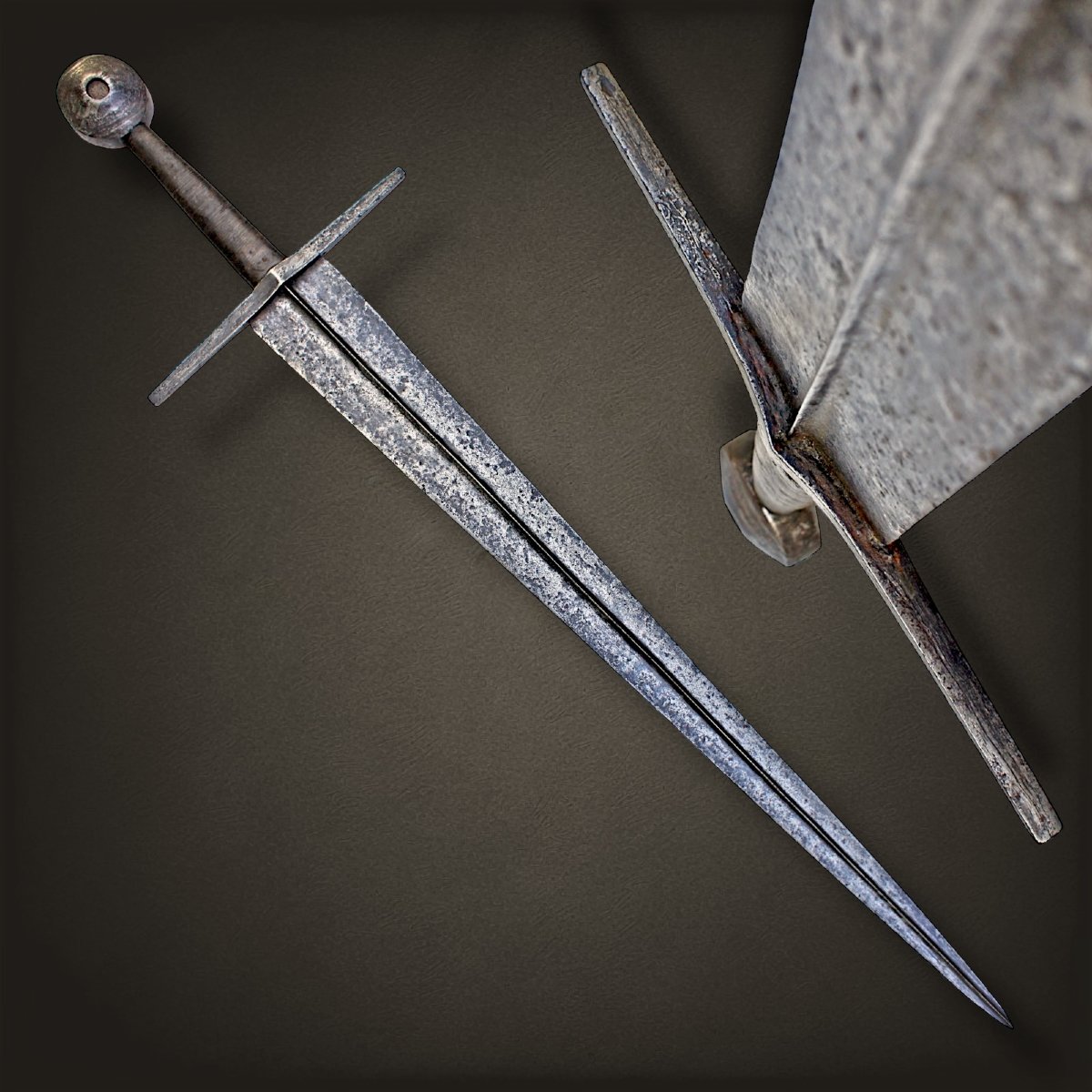
This sword can be classified in categories XIV or XVIII; these two types share many similarities, particularly in terms of their dimensions, style, and blades.
Swords from this period are extremely rare when well-preserved. Most examples found in the ground or in bodies of water are little more than metal skeletons. This piece, however, shows no play in its joints; it is what is commonly referred to as a combat sword (or one-handed sword), designed for both thrusting and cutting.
The hilt has retained its original covering; although the leather may have been replaced at some point during its long history, it appears to be an early restoration.
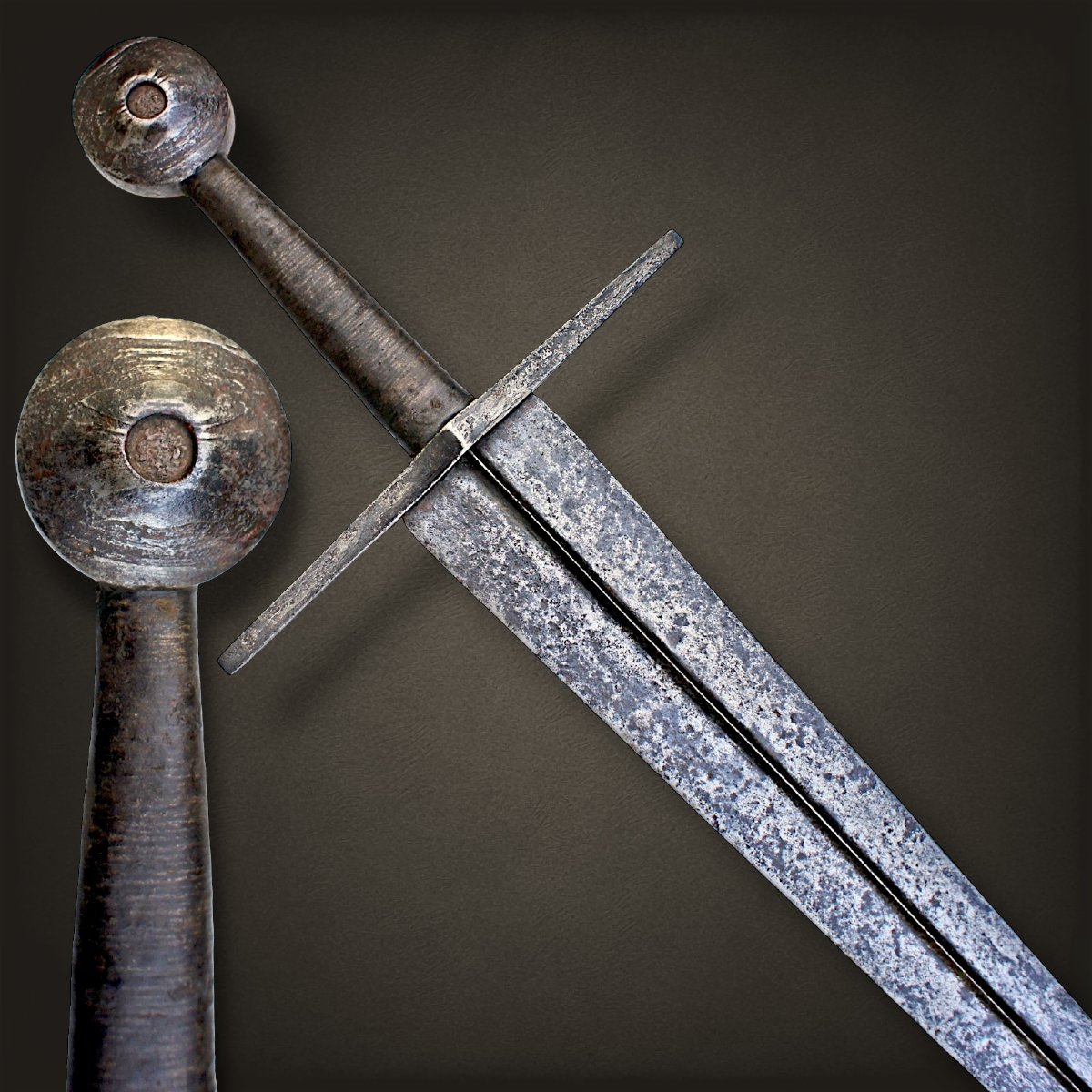
The guard features straight quillons.
The blade and pommel fit together perfectly, with no play or instability.
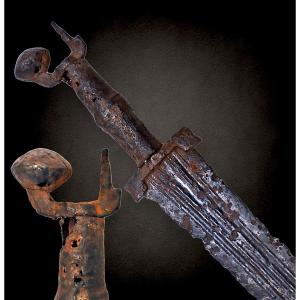
The pommel, wide and rounded, incorporates two period coins (or tokens). It fits perfectly with the rest of the sword, providing a very effective counterweight. It is one of the best-balanced and most maneuverable swords I have ever held.
The double-edged blade features a hollowed-out section (central groove) and a very pronounced central ridge; its overall condition is excellent.
The blade is impressive, measuring 8.2 cm in width, while the crossguard has a total span of 26 cm.
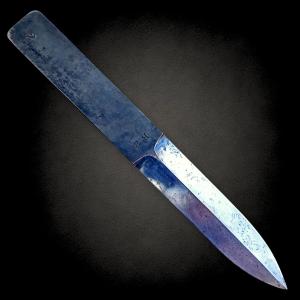
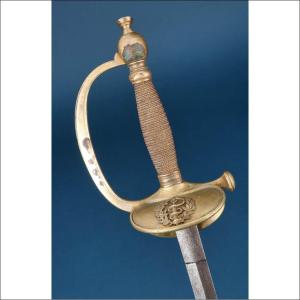
Comparable examples can be found in some of Europe’s most prestigious collections and museums. They share very similar characteristics, particularly regarding the incorporation of elements into the pommels as well as the blade’s morphology. Please note that the photographs presented here were compiled as part of a study and are sourced from the Internet; credit is due to the original photographers.
Characteristics:
Total length: 104.5 cm
Blade length: 82 cm
16 800 €
Period: Before 16th century
Style: Other Style
Condition: Excellent condition
Material: Metal
Length: 104.5 cm
Reference (ID): 1847976
Availability: In stock
Print