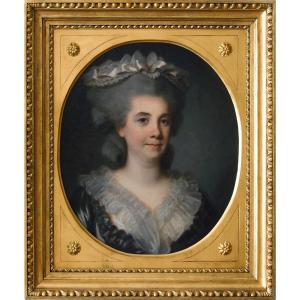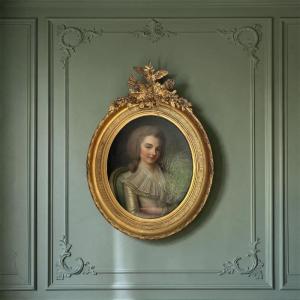



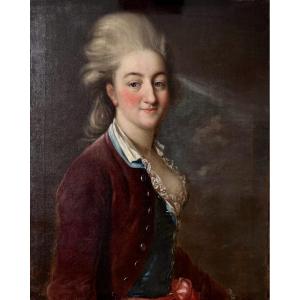


Johann Georg Weikert – Portrait Of A Woman, Probably Aleksandra Potocka, C. 1780
JOHANN GEORG WEIKERT
Vienna, 1743/1745–1799
PORTRAIT OF A LADY, PROBABLY ALEKSANDRA POTOCKA, NÉE LUBOMIRSKA
Circa 1779–1780
Oil on canvas
68 × 53.5 cm / 26.8 × 21.1 in
Signed “Weikert” lower left
The eighteenth century witnessed the gradual emergence of a new type of woman, conscious of her individuality, intelligence and place in society. At the intersection of aristocratic culture, Enlightenment philosophy and a new morality valuing education and personal merit, salons, collecting and patronage offered certain women a genuine sphere of authority. Yet portraits in which an independent female personality is openly asserted remained rare.
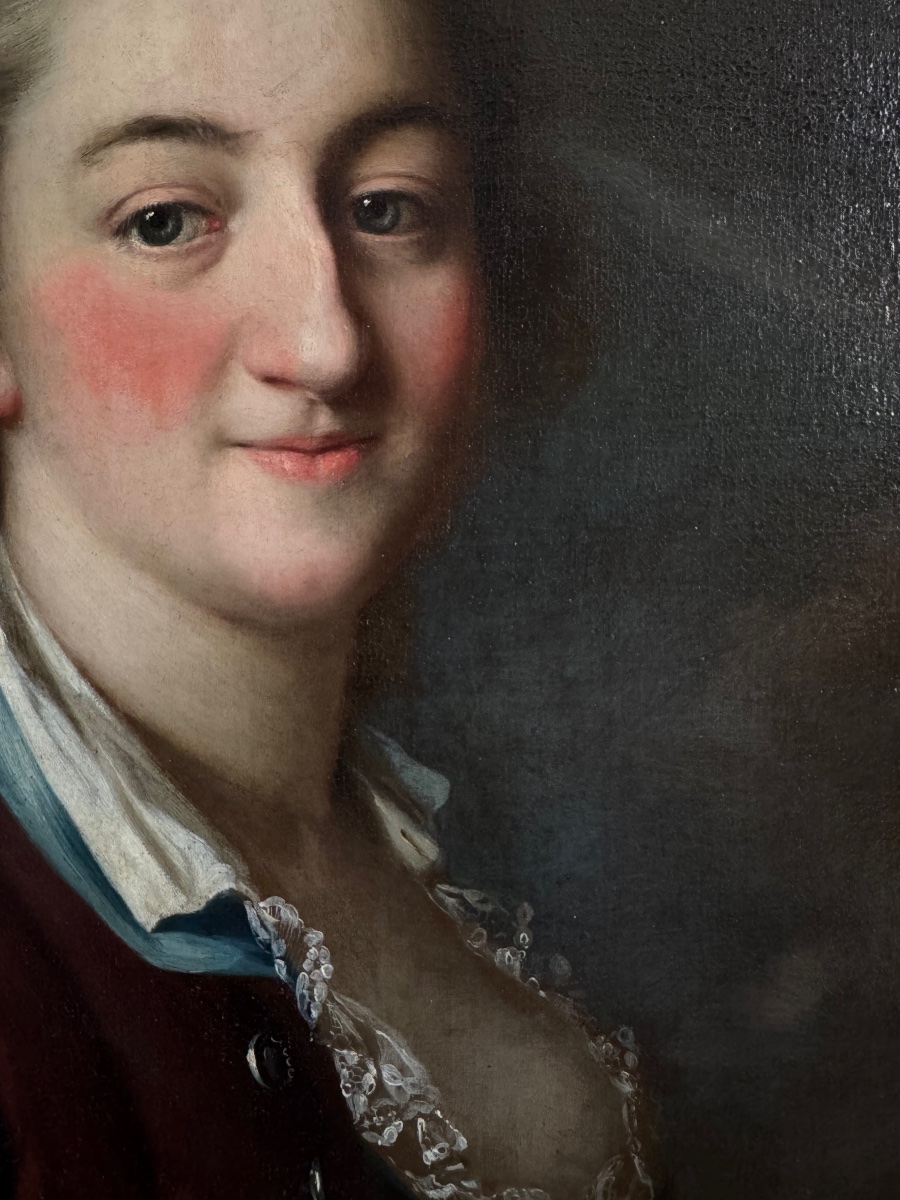
The present portrait belongs precisely to this exceptional category. The attentive, subtly ironic expression, the barely perceptible smile and the assured position of the head create the image of a woman who appears, in turn, to observe and judge the viewer.
A wine-red velvet jacket, almost masculine in its cut, opens over a blue satin bodice and a chemise edged with lace. The décolletage, rendered with unusual frankness, lends the sitter an almost Voltairean sense of freedom. She does not appear passively offered to the gaze: she chooses how she wishes to be seen.
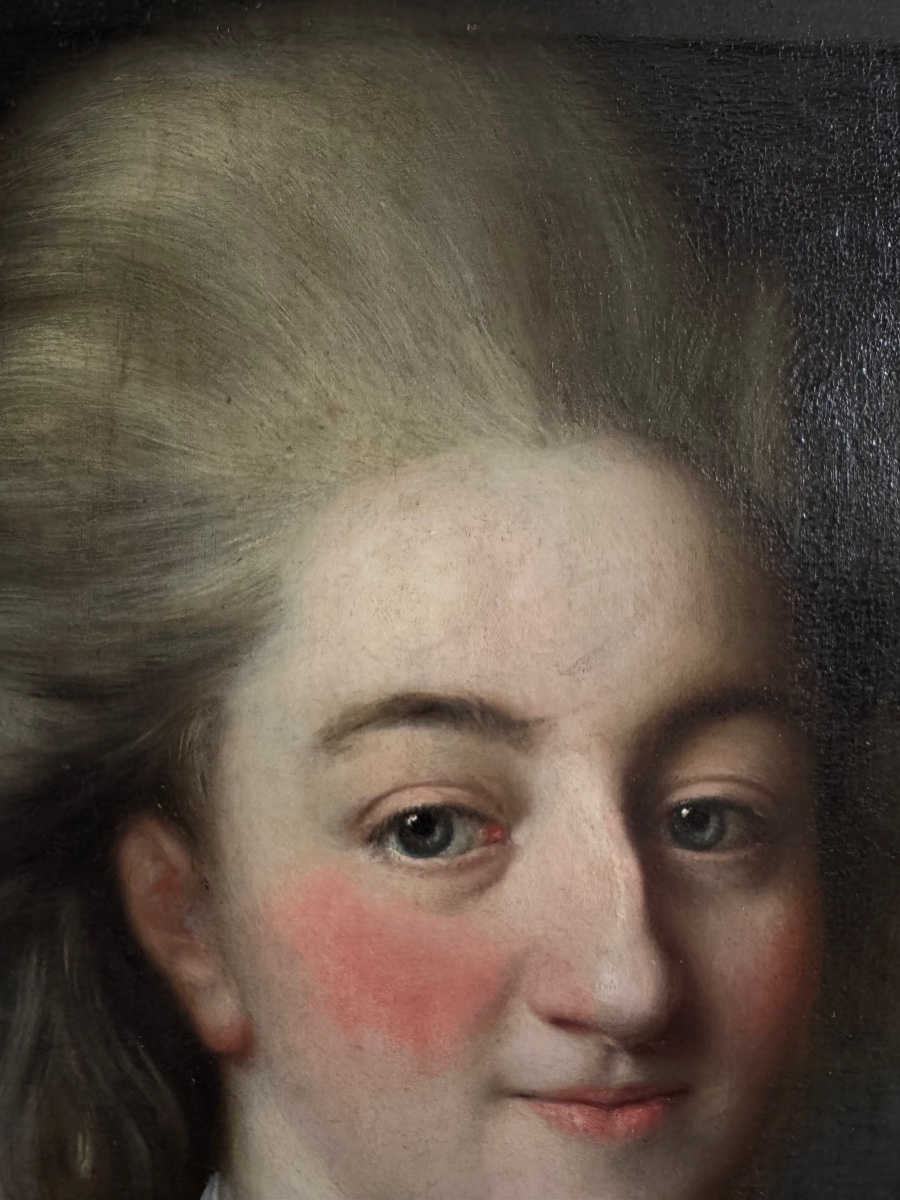
The pictorial qualities of the work are remarkable. The softness of the flesh tones contrasts with the freer handling of the hair and clothing. The cool shadows around the eyes, the vivid colour of the complexion and the variations of velvet, satin and lace reveal exceptional virtuosity. The painting’s essential achievement, however, lies in its psychological presence: the artist does not merely depict a face but reveals a character.
This female type found particular resonance within the aristocratic society of the Polish–Lithuanian Commonwealth, where the great families included women capable of administering vast estates, hosting salons and playing a decisive role in patronage, architecture and the formation of collections.
The sitter may therefore be Aleksandra Potocka, née Princess Lubomirska (1758 or 1760–1831), daughter of Izabela Lubomirska and wife of Stanisław Kostka Potocki. Cultivated and deeply interested in the arts, she shared her husband’s collecting interests, hosted a salon in Warsaw, participated in adoptive Freemasonry, took an interest in the education of girls and contributed to the creation of the Wilanów Museum, opened to the public in 1805.
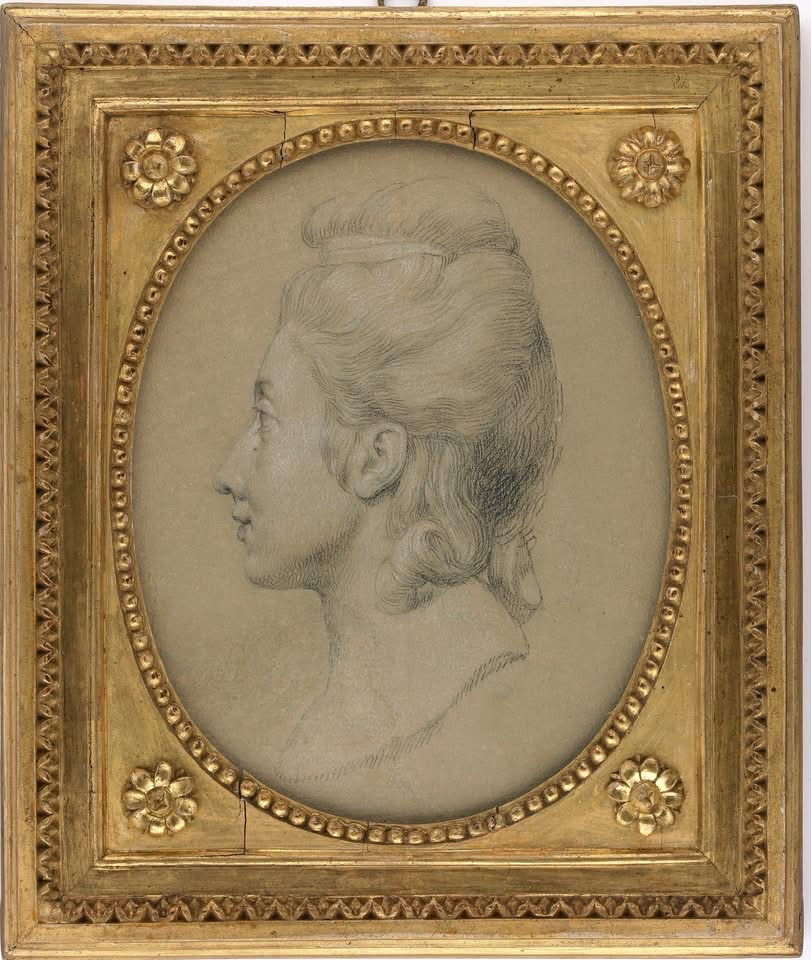
Her physiognomy presents convincing correspondences with known portraits of Aleksandra Potocka: the facial oval, the elongated eyes with slightly heavy lids, the line of the nose, the finely drawn mouth and the raised position of the head.
In 1779–1780, Aleksandra travelled through Europe with her husband and her sister Izabela. In Rome, she sat for Pompeo Batoni and was also portrayed with her sister by Carlo Labruzzi near Lake Albano. In the latter composition, her open bodice, lace trimming and blue accents bear a striking resemblance to the costume seen in the present portrait. The convergence of physiognomy, dress and dating therefore permits this identification to be proposed.
Johann Georg Weikert trained under Martin van Meytens and became one of the most sought-after portrait painters at the Habsburg court. In the present work, he moves away from the solemnity of official portraiture and approaches the French portrait of sentiment, then becoming increasingly fashionable in Austria. The intelligence of the characterisation and the virtuosity of the execution make it one of his most expressive and accomplished portraits.
The identification of the sitter as Aleksandra Potocka nevertheless remains a hypothesis. Only further study of family inventories, correspondence and the archives of Wilanów Palace could provide definitive confirmation.
Period: 18th century
Style: Louis 16th, Directory
Condition: Good condition
Material: Oil painting
Length: 53,5 cm
Height: 68 cm
Reference (ID): 1847956
Availability: In stock