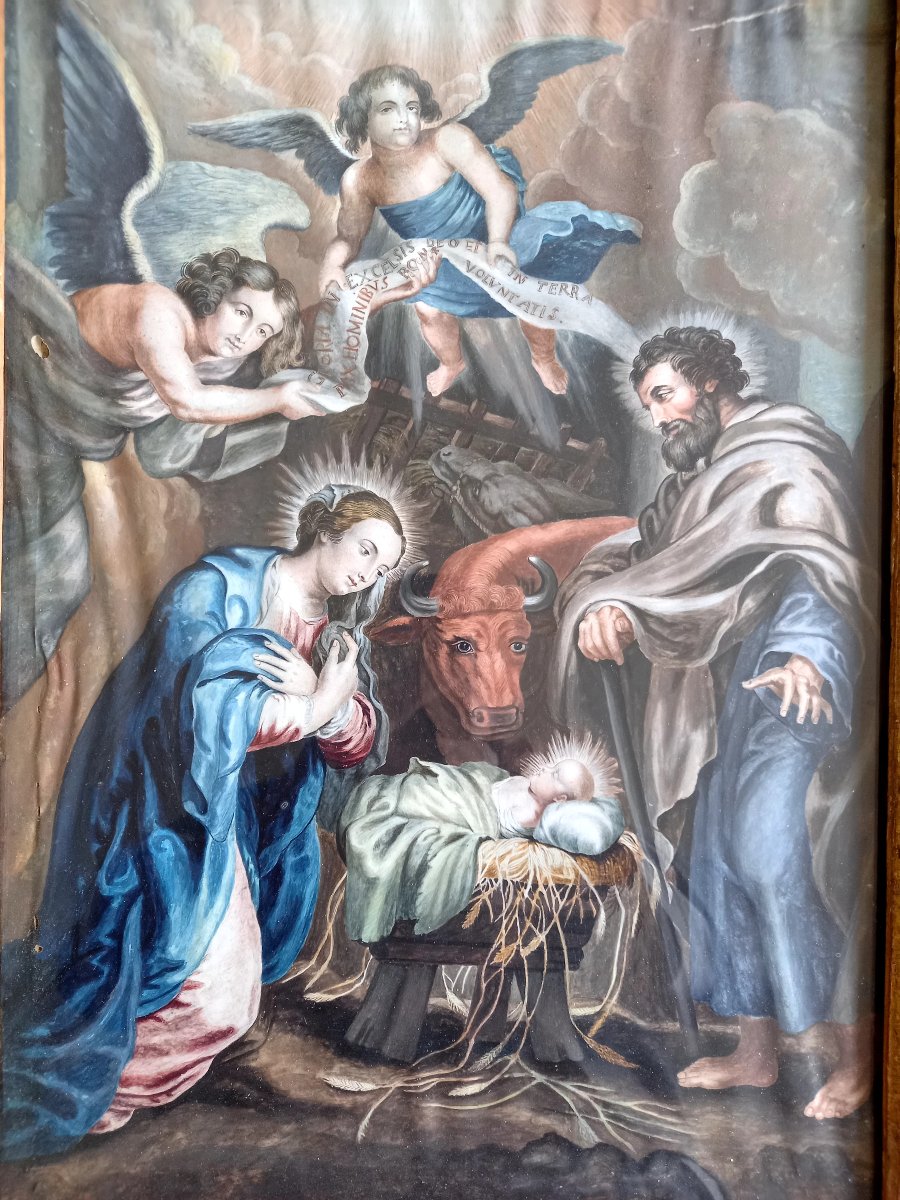
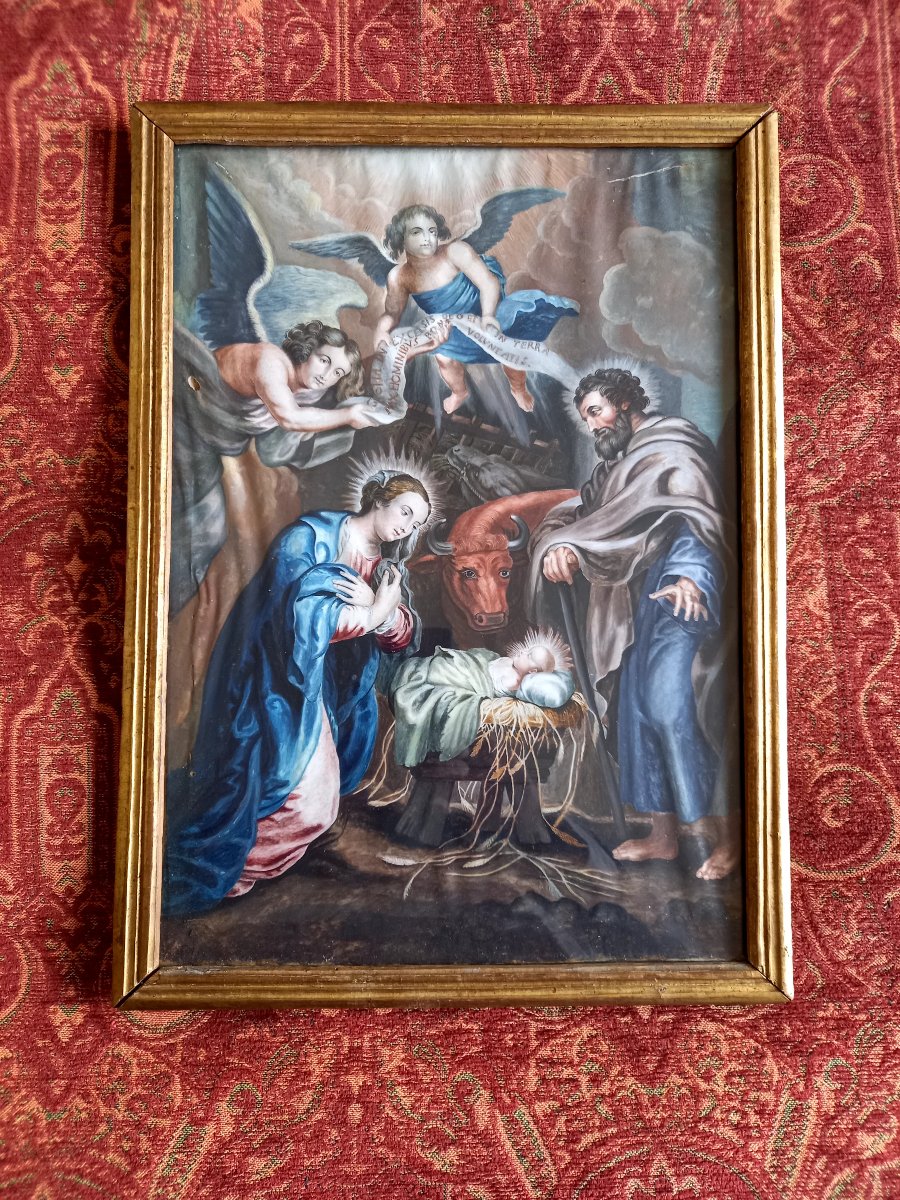
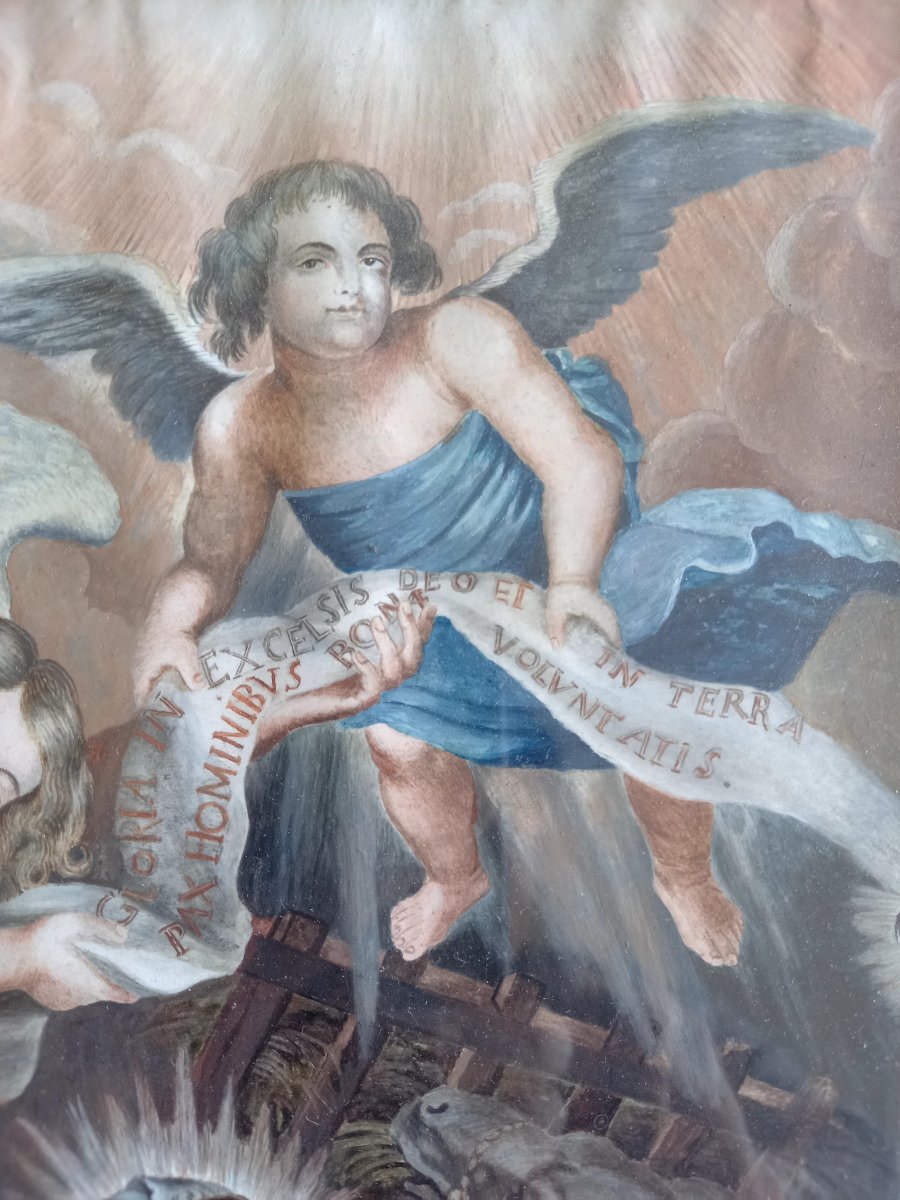

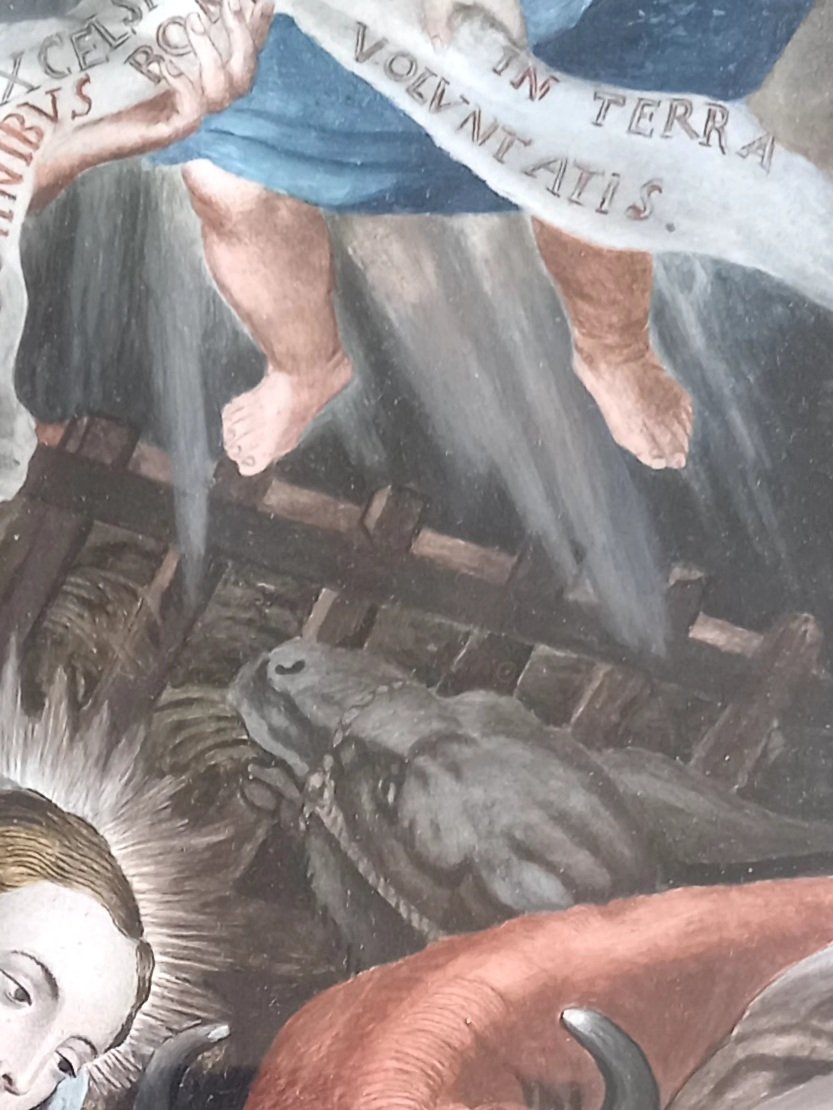

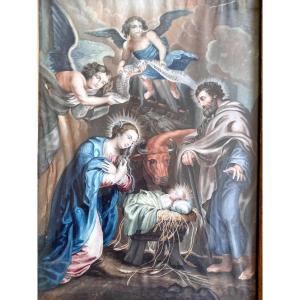


18th Century. Gouache On Vellum. The Nativity, Based On An Engraving By L. Vorsterman
Artist: D'apres Rubens
Under the Ancien Régime, engraving was the primary medium for disseminating the great works of the most famous painters; these works circulated freely throughout society and allowed local artists to copy them or draw inspiration from them.
In a world where the artist takes a back seat to religion (Soli Deo....only God is great)—in a world where copyright was barely emerging, copying was considered a tribute to talent or, as in this case, the pure creation of a sacred image.
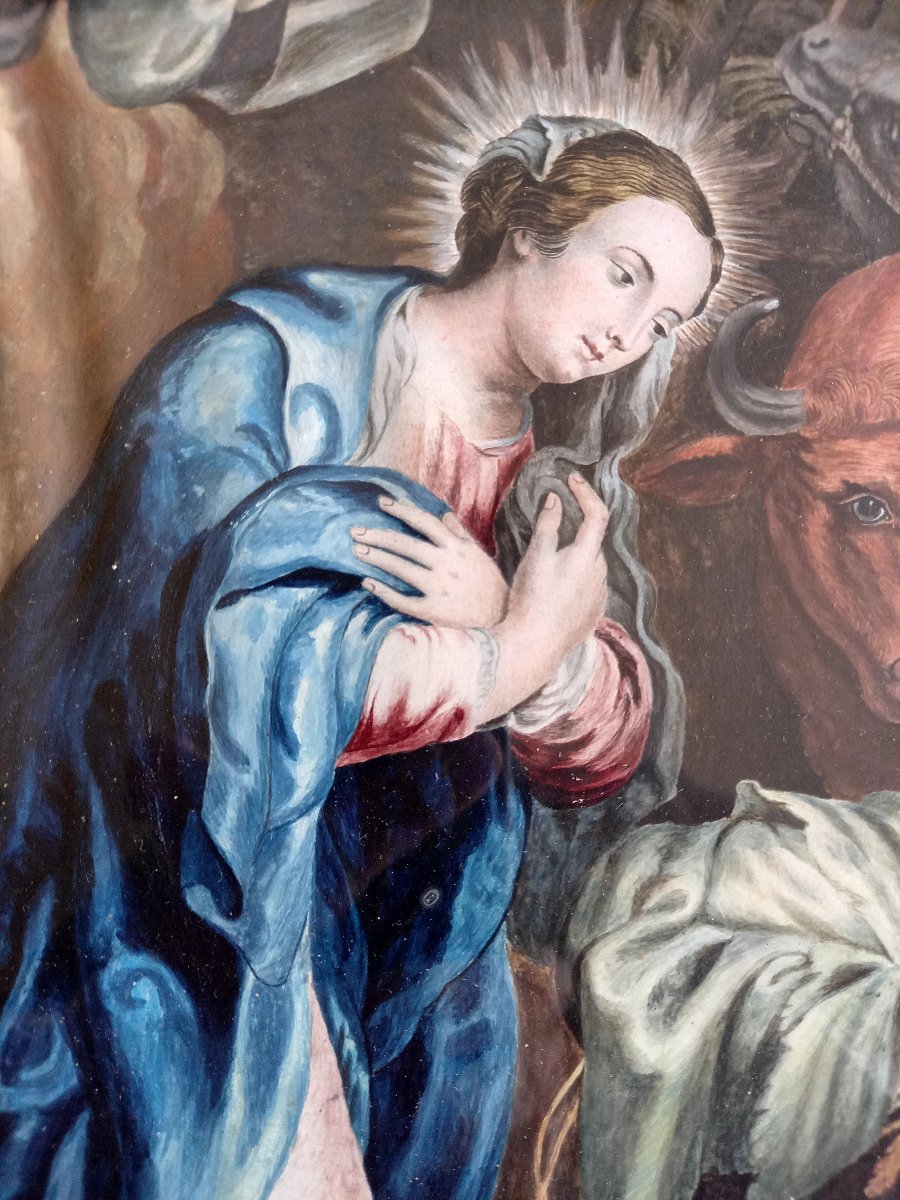
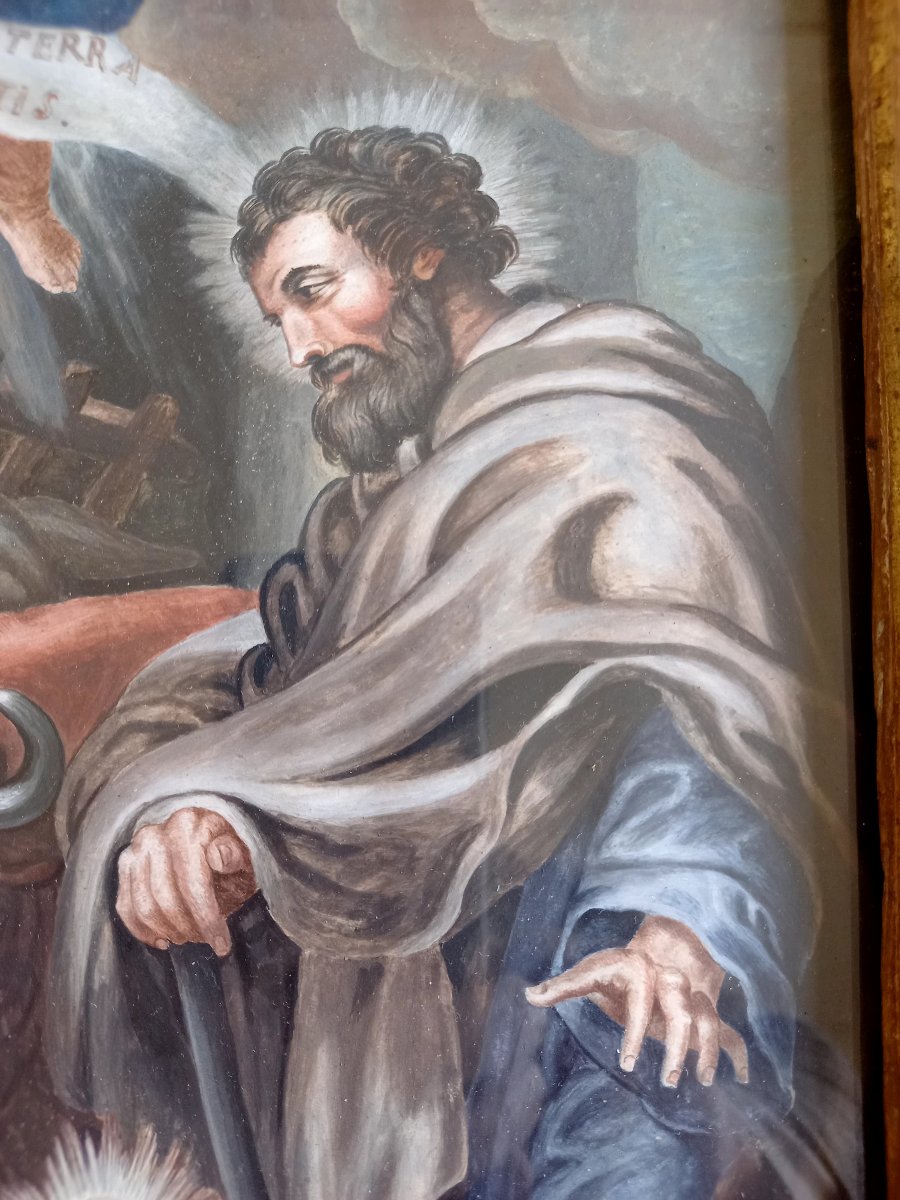
The original painting is by Paul Rubens; it was disseminated through an engraving by Lucas Vorsterman, and here it has been reproduced from that engraving with remarkable skill in gouache on vellum, which explains why the colors have survived with such freshness—almost unreal.
It is likely the work of a particularly gifted monastic artist.
The artist inscribed with a certain pride on the back of the pine panel that closes and protects the piece: “completed in 1784.”
One can imagine that this work took an immense amount of time.
It is important to understand that the significance of this object lies first and foremost in its status as a sacred work of art integrated into the life of the devout artist who created it, and then given to someone to serve as a medium for prayer in their private chapel.
Beyond the actual quality of the workmanship lies the testimony of a world steeped in religion.
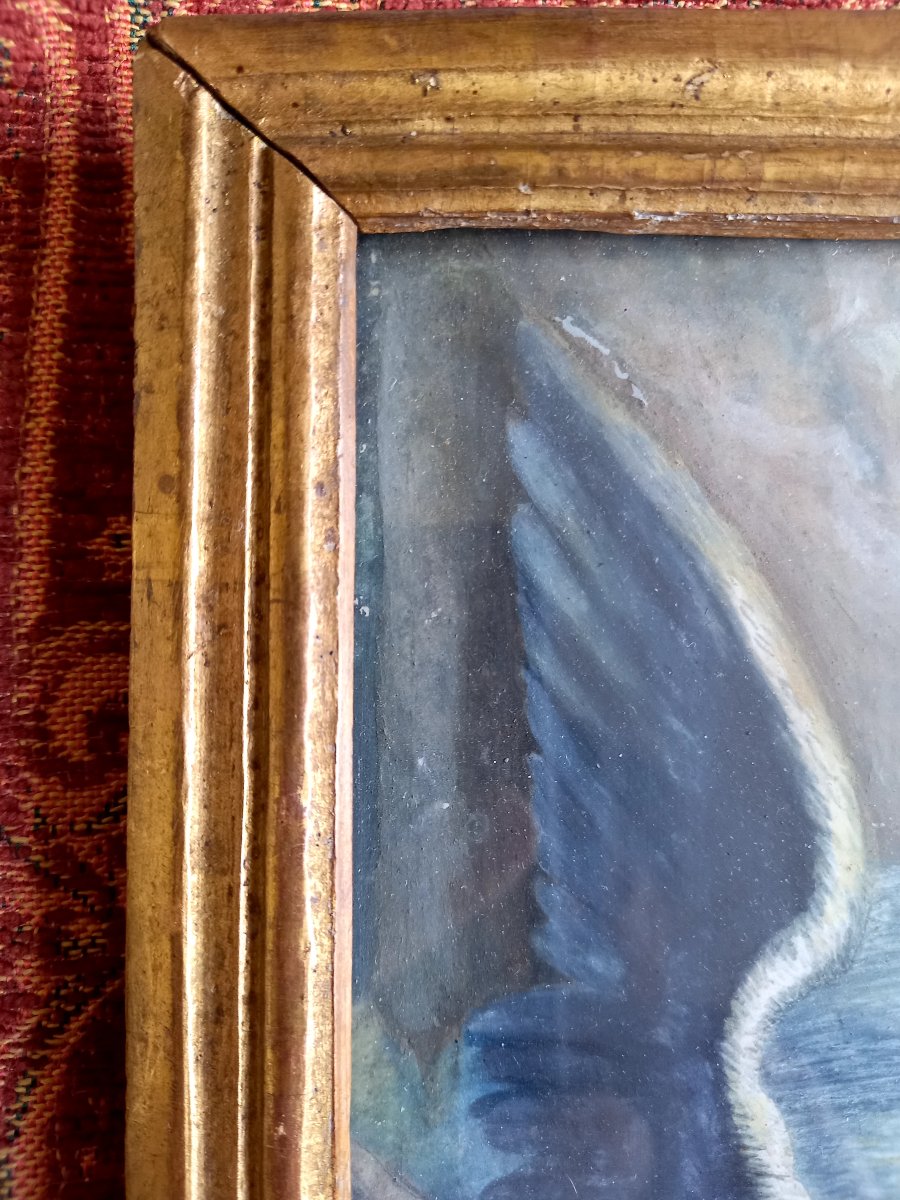
Presented in its original, very simple gilded wooden frame, the glass must have been replaced over a century ago.
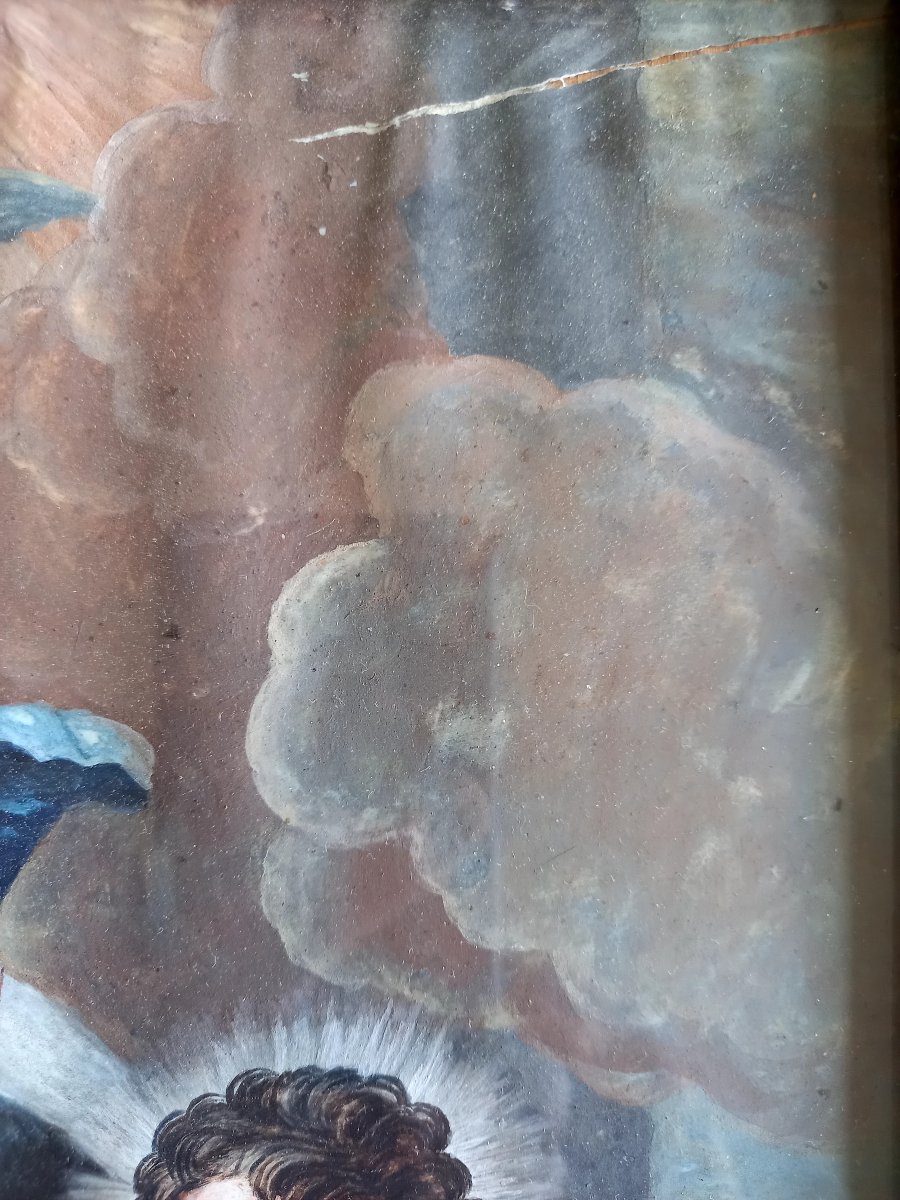
There are a few minor imperfections on the edges of the gouache that are barely visible; overall, the piece is in very good condition.
780 €
Period: 18th century
Style: Louis 15th - Transition
Condition: Excellent condition
Material: Parchment
Width: 33 cm (cadre compris)
Height: 45 cm ( cadre compris)
Reference (ID): 1847652
Availability: In stock
Print


