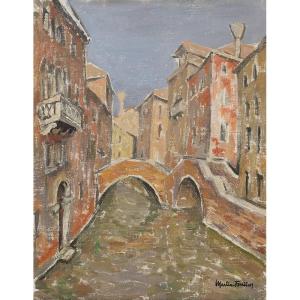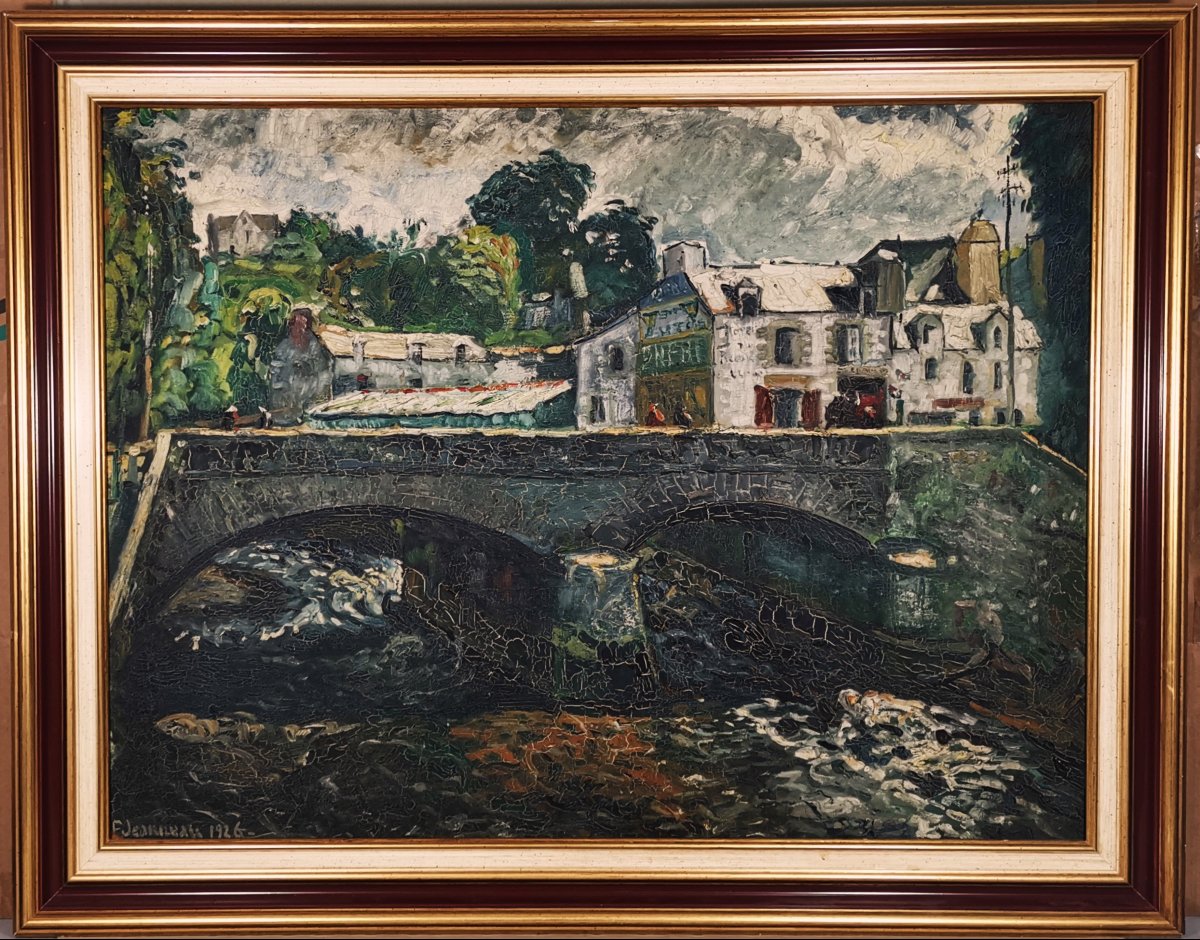
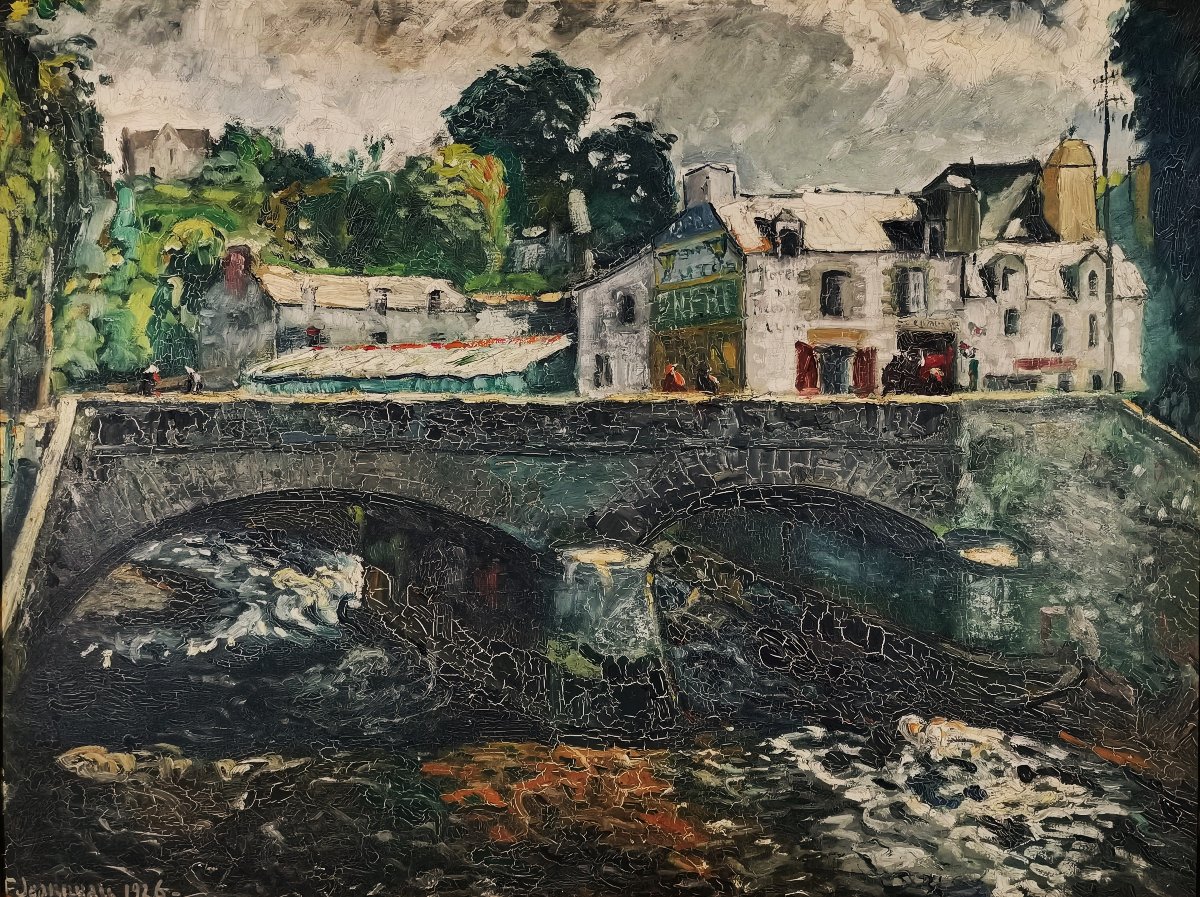
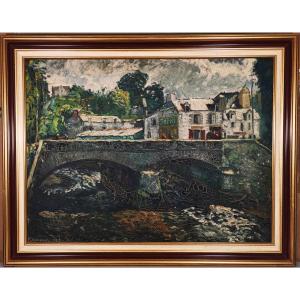


Fernand Jeanneau, Beautiful Oil Painting, The Lovignon Bridge At Quimperlé, Finistère, Brittany
Artist: Fernand Jeanneau (1884-1966).
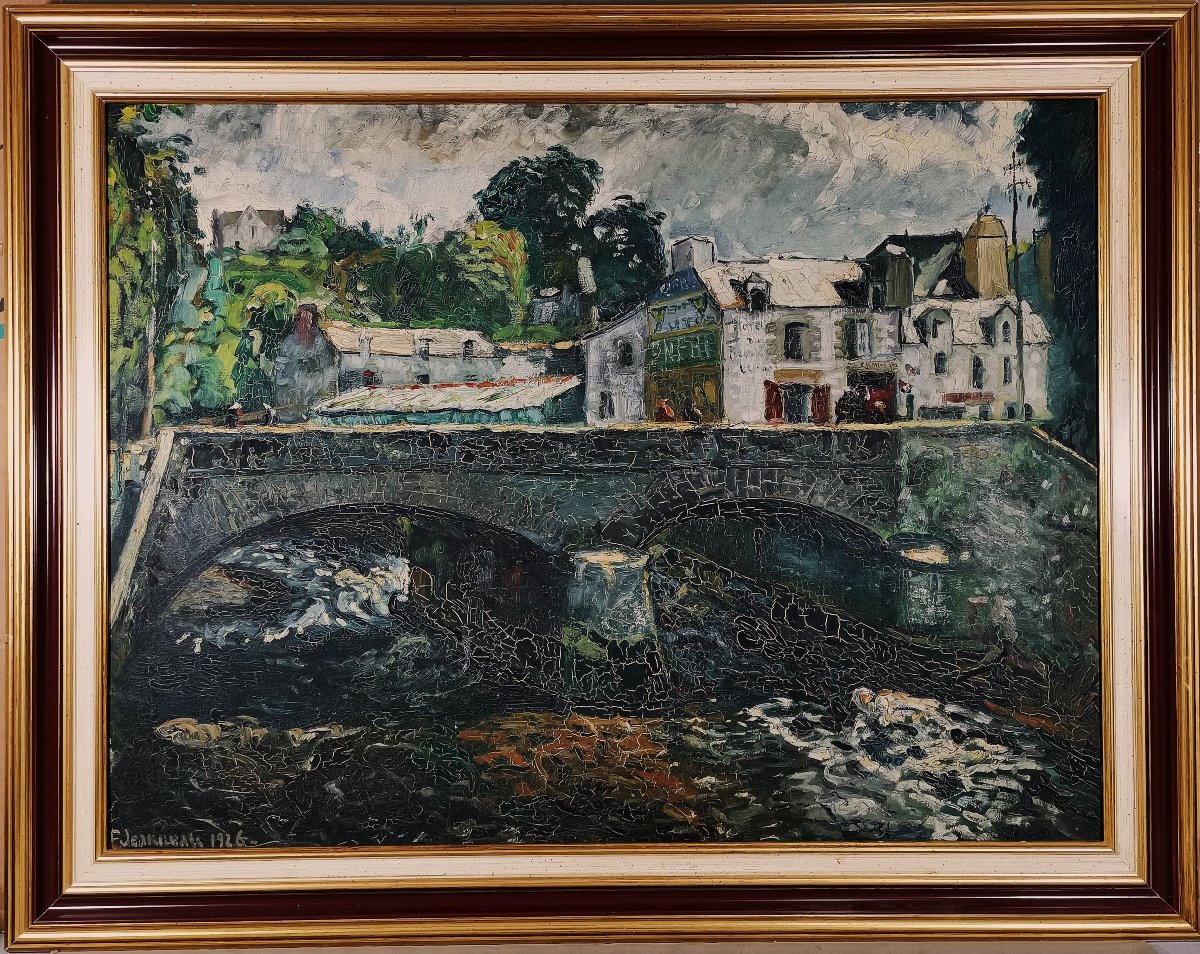
Fernand Jeanneau (1884–1966), a beautiful oil painting in the Post-Impressionist style.
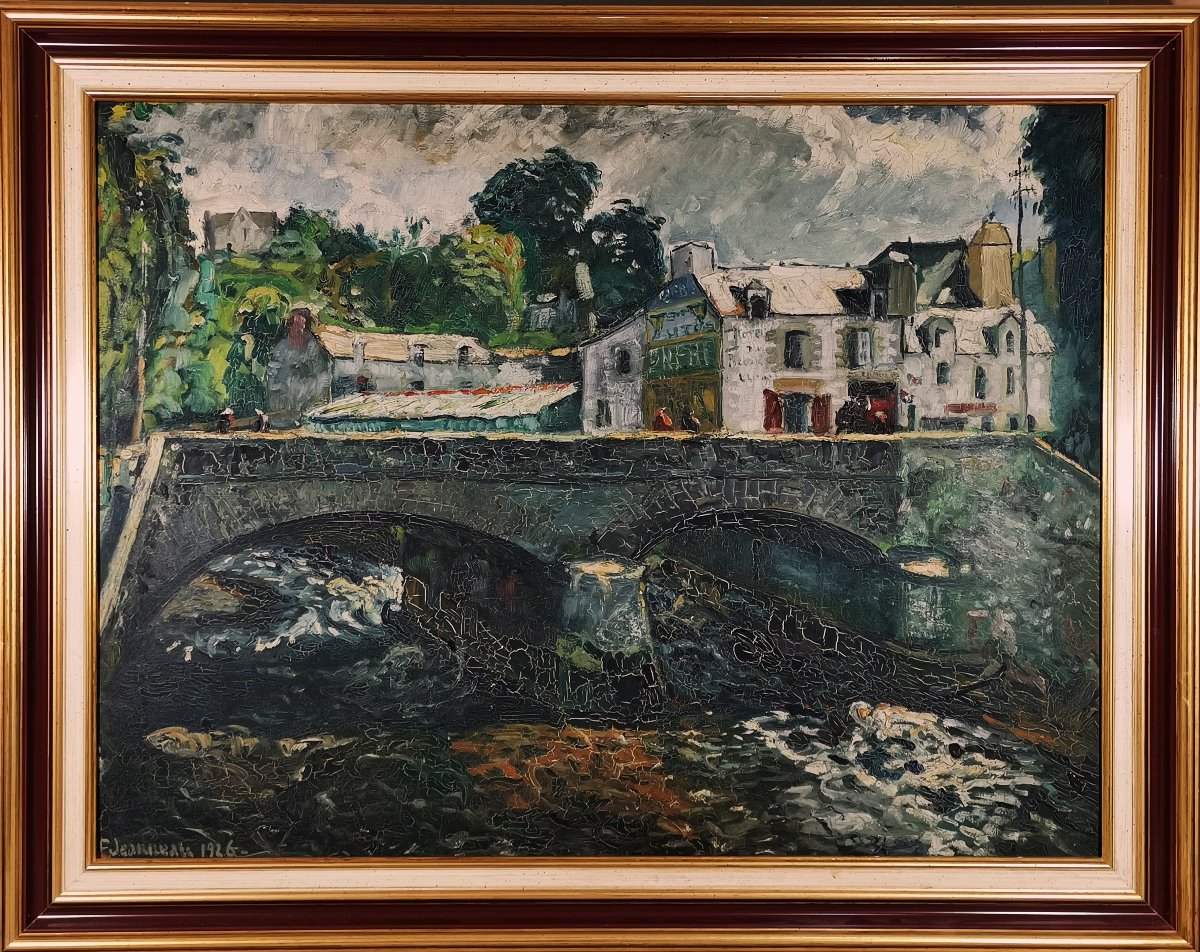
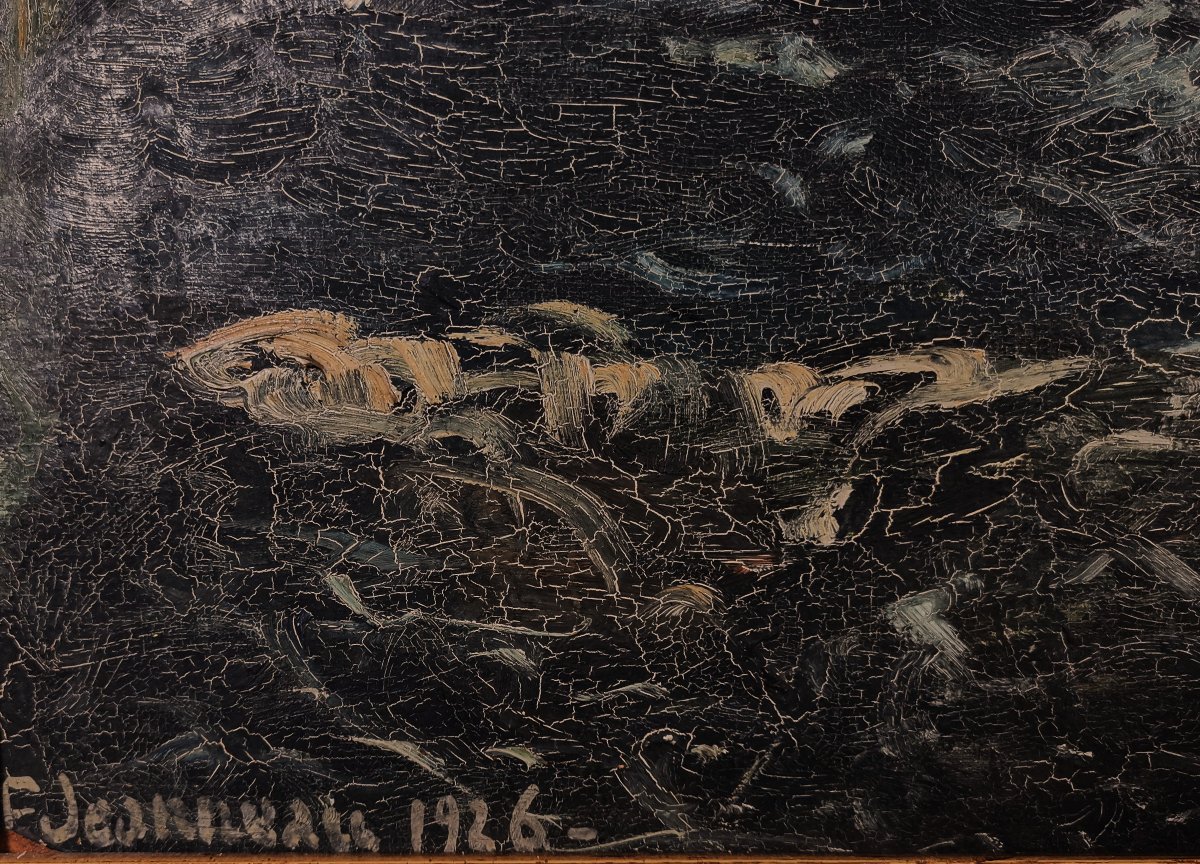
The signature of the famous Breton painter is located at the bottom left.
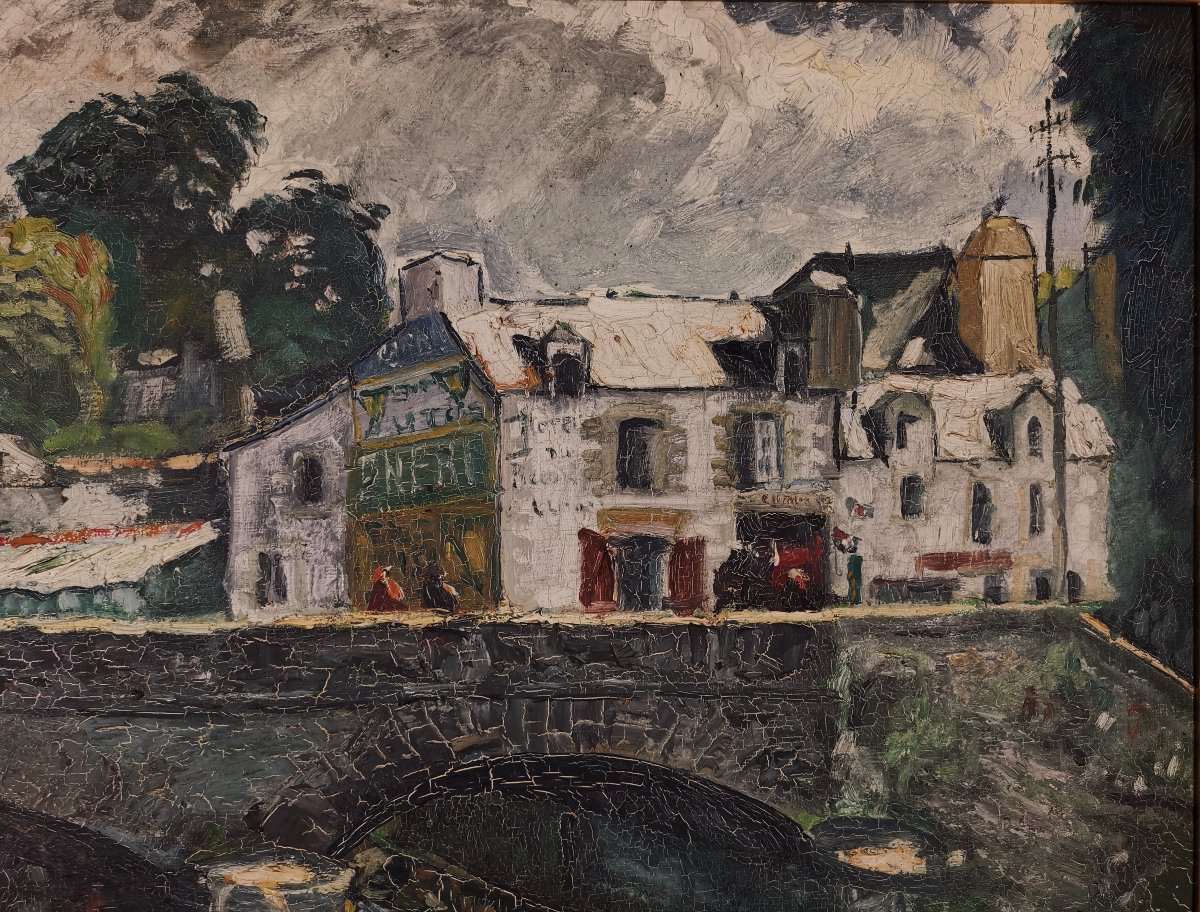
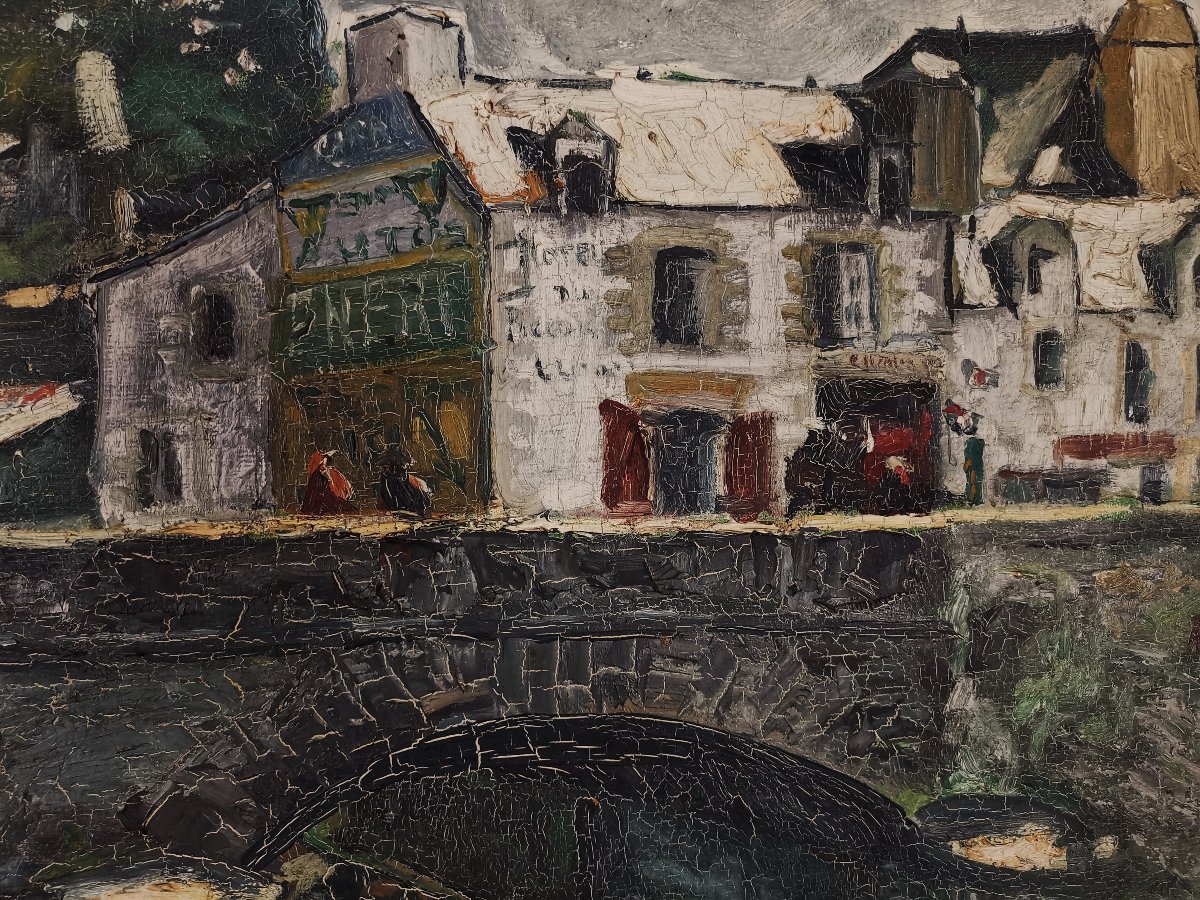
Our painting seems to depict the Lovignon Bridge in Quimperlé, situated in the Finistère department in Brittany.
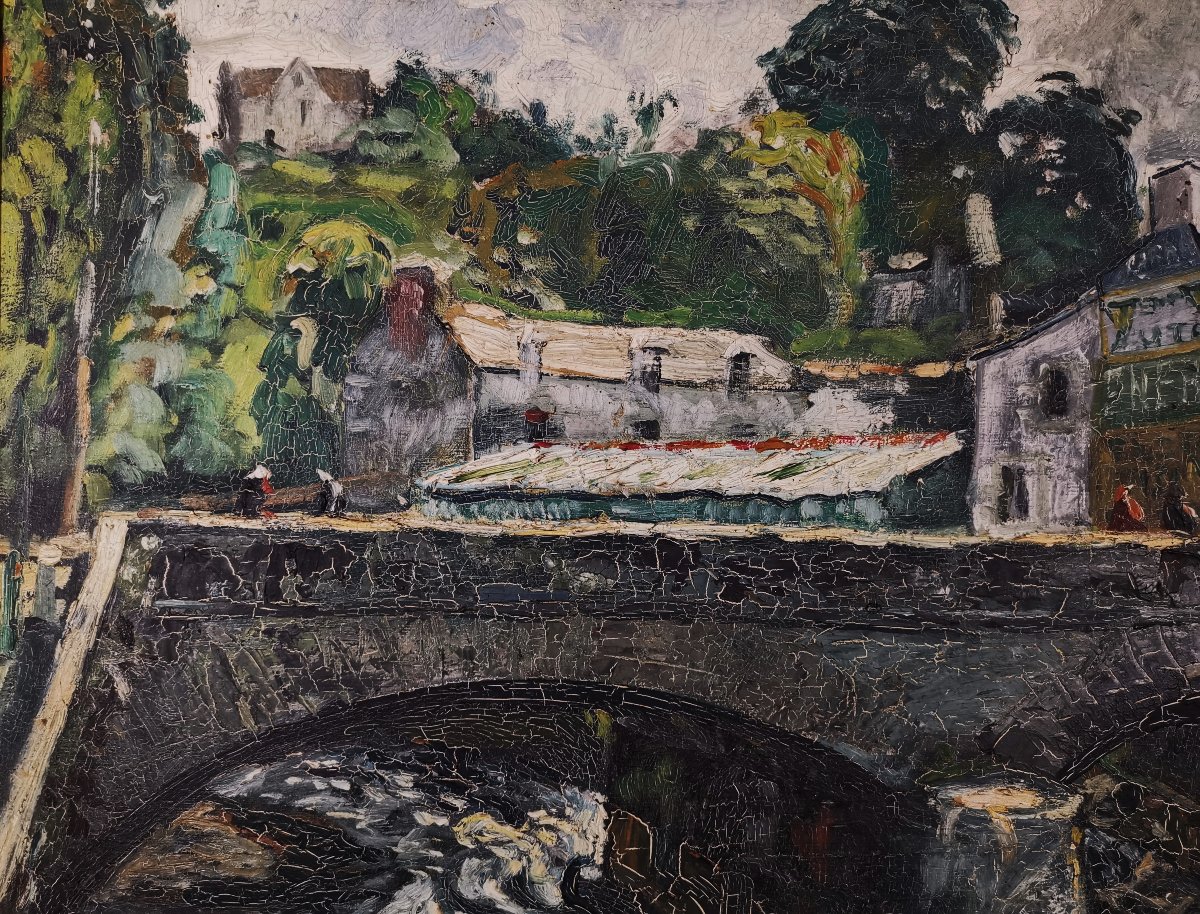
The subject: This appears to be a view of the famous two-arched stone bridge – known as the Lovignon Bridge or the ‘flower-adorned bridge’ – which spans the River Ellé in the heart of the historic village of Quimperlé. The artist positioned themselves on the riverbank or along the quay to capture the swirling water in the foreground and the row of half-timbered houses with granite façades that characterise this place.
The Artist and Date: As indicated by the signature visible in the lower left corner, the painting was created by F. Jeanneau in 1926.
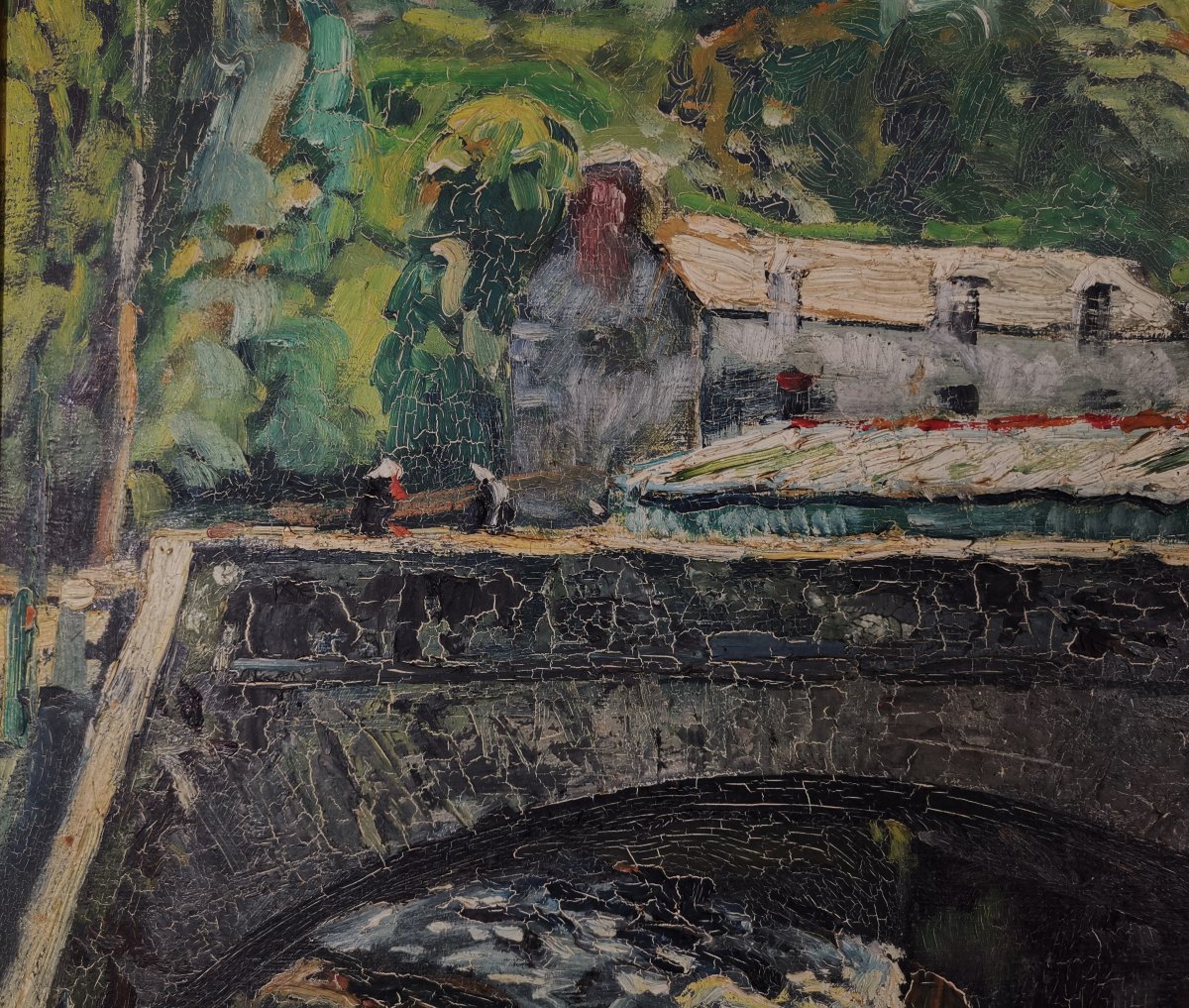
The Style: The painter uses a generous, textured brushstroke (visible impasto that has created slight surface crackling), typical of the tradition of landscape artists who traveled throughout Brittany in the early 20th century, fascinated by the changing light and the picturesque character of Breton ports.
Who was Fernand Jeanneau?
The Magician of Water: Art critics of the time often gave him this nickname because of his technical mastery in painting the reflections, eddies, and movement of Breton rivers and harbors. This signature style is perfectly evident in the swirling water beneath the bridge in the foreground of your painting.
His career: Born in Châtellerault, he joined the French Navy as a pharmacist in 1907 and spent much of his career in Lorient. After World War II, he settled in Quimperlé, where he devoted himself entirely to his art.
Artistic Affiliation: Close in sensibility to the Pont-Aven School, his style is characterized by broad, generous brushstrokes and bold blocks of vivid color that beautifully capture daily life and the landscapes of Brittany (specifically, harbor scenes and the rivers Ellé and Loch).
Our painting, dated 1926, marks a pivotal period when the artist was fully asserting his Post-Impressionist style, using thick impasto to give depth to his works—as seen here in the architecture of the bridge and the surrounding landscape.
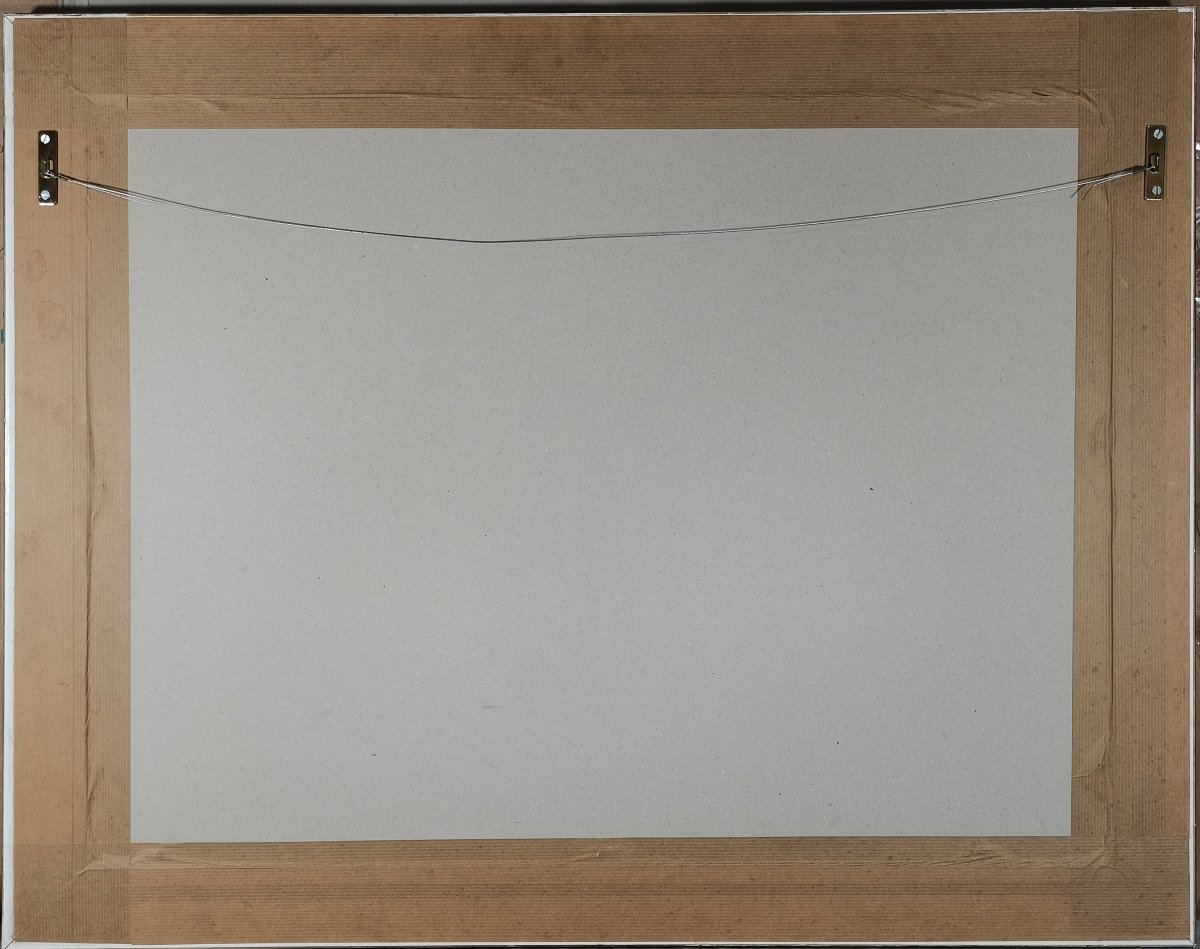
This oil painting, on a wooden panel – plywood, I believe – has been framed in the style of a drawing, even though it does not have a glass pane.
If you have any questions, please do not hesitate to contact us.
_______________________________________________________
I ship all over the world, please ask me for the shipping cost.
780 €
Period: 20th century
Style: Modern Art
Condition: Good condition
Material: Painted wood
Width: à vue : 69,5 cm / cadre : 82,3 cm
Height: à vue : 52,2 cm / cadre : 65 cm
Reference (ID): 1846463
Availability: In stock
Print