
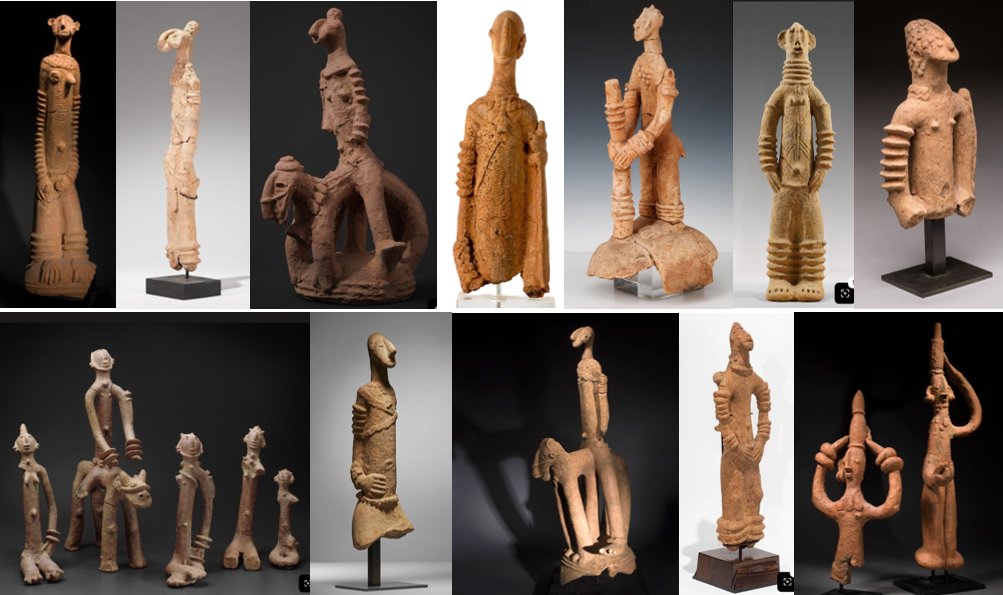


Mali 13–15th Cty, Bankoni Terracotta Sculpture Of A Male Figure
Artist: Bankoni, Mali Xiie - Xve S
AFRICAN ARCHAEOLOGY / TRIBAL ART
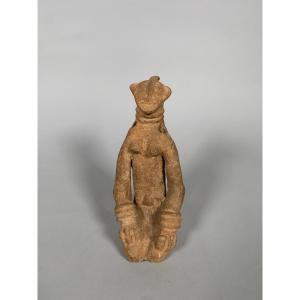
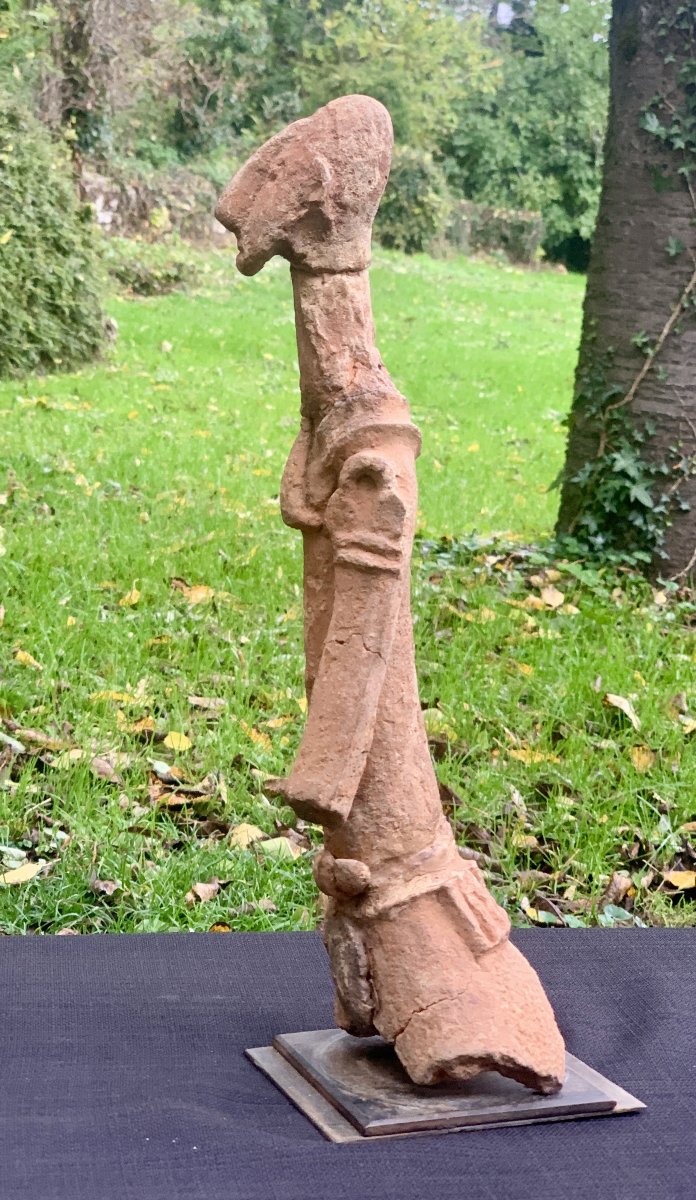
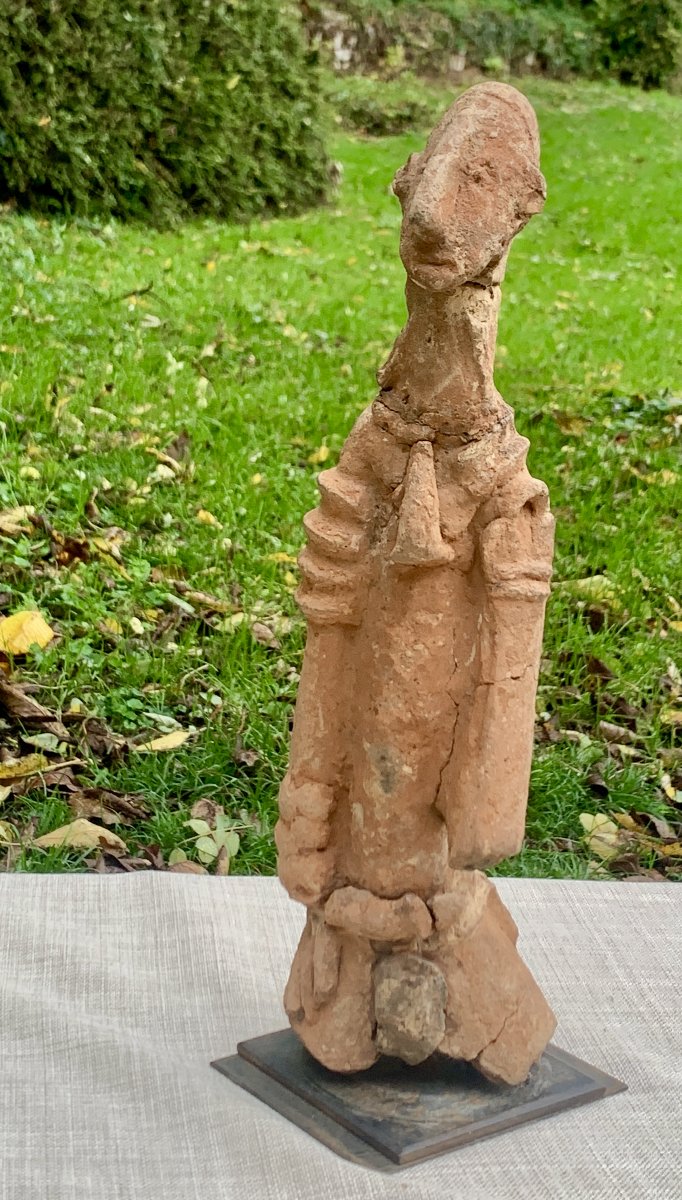
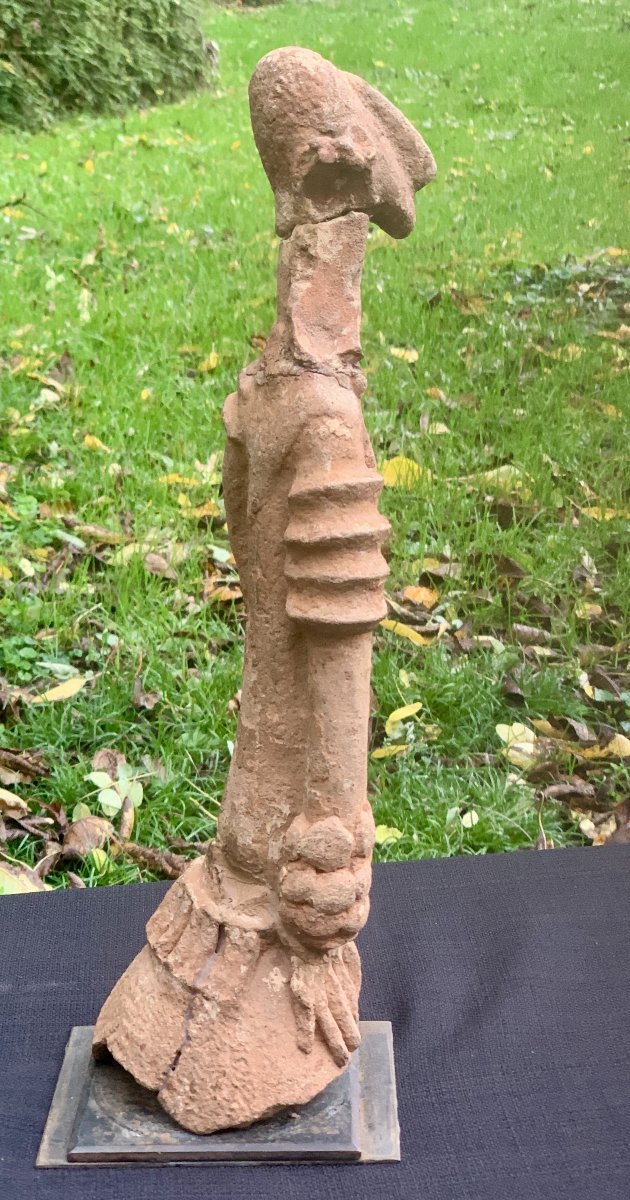
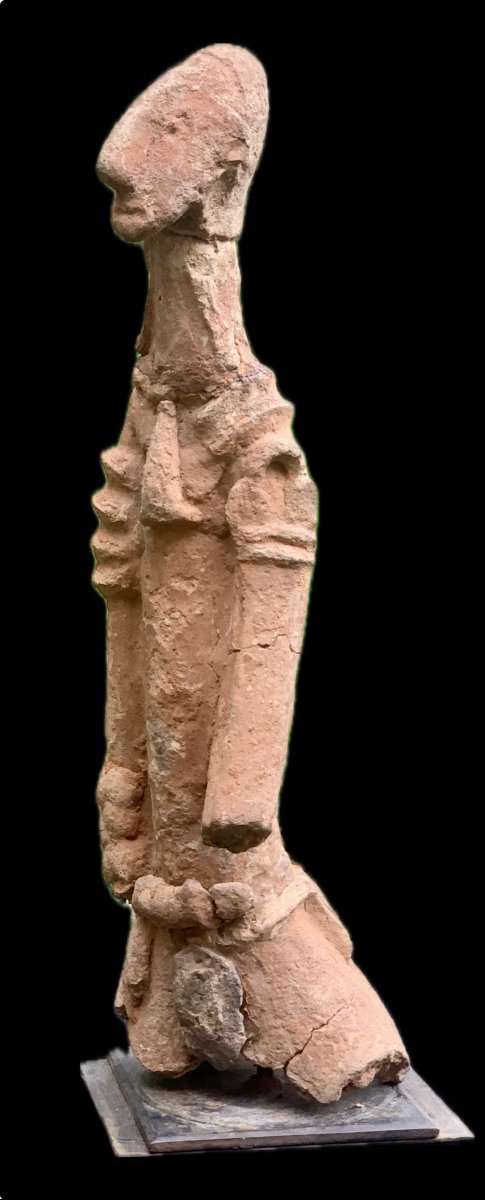
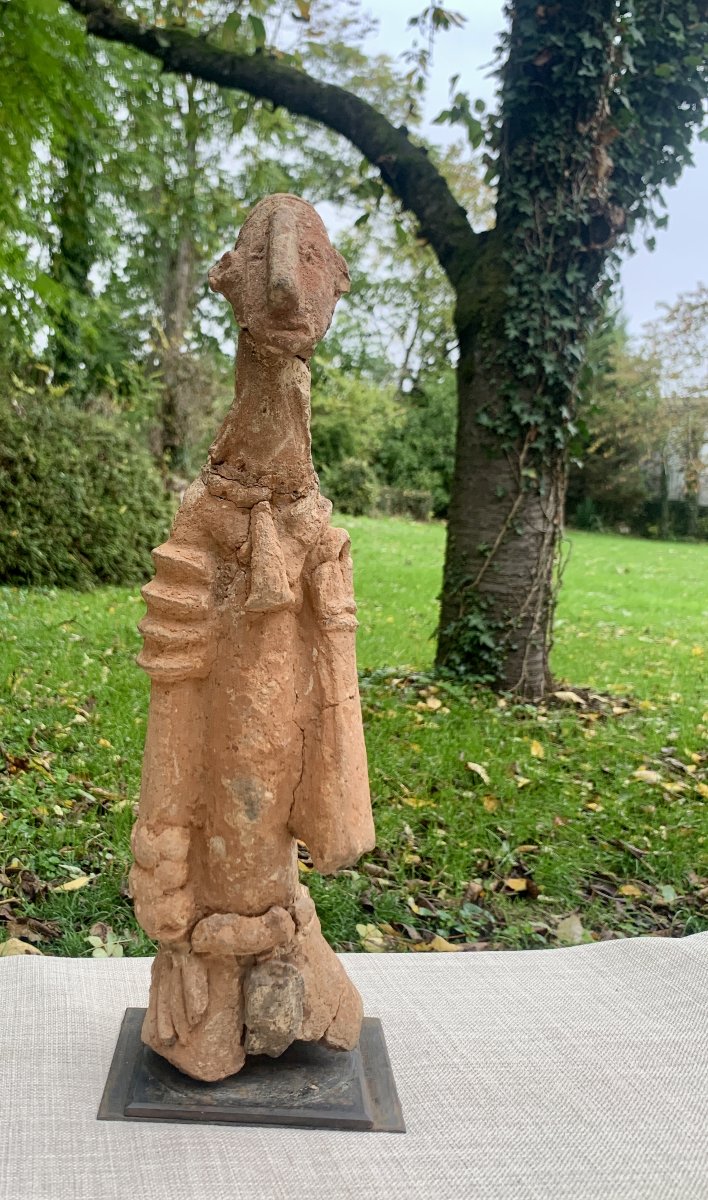
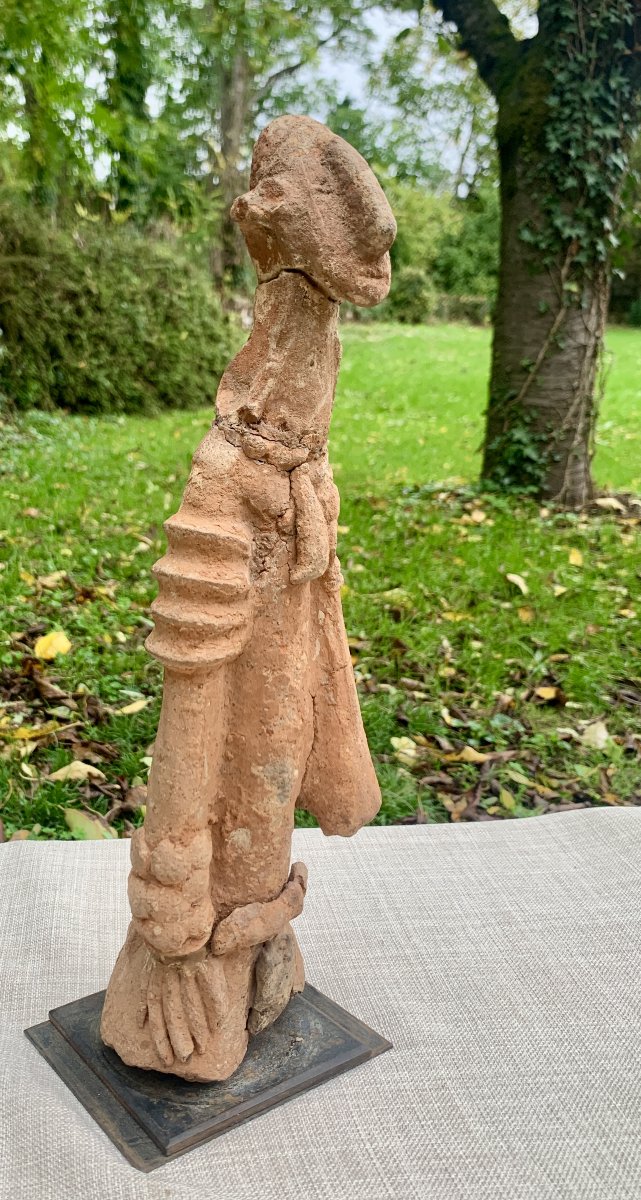
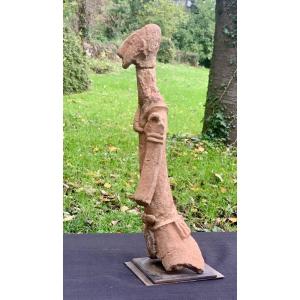
A superb Bankini terracotta statuette depicting a stylized male figure with a slender, dynamic posture and features characteristic of this style:
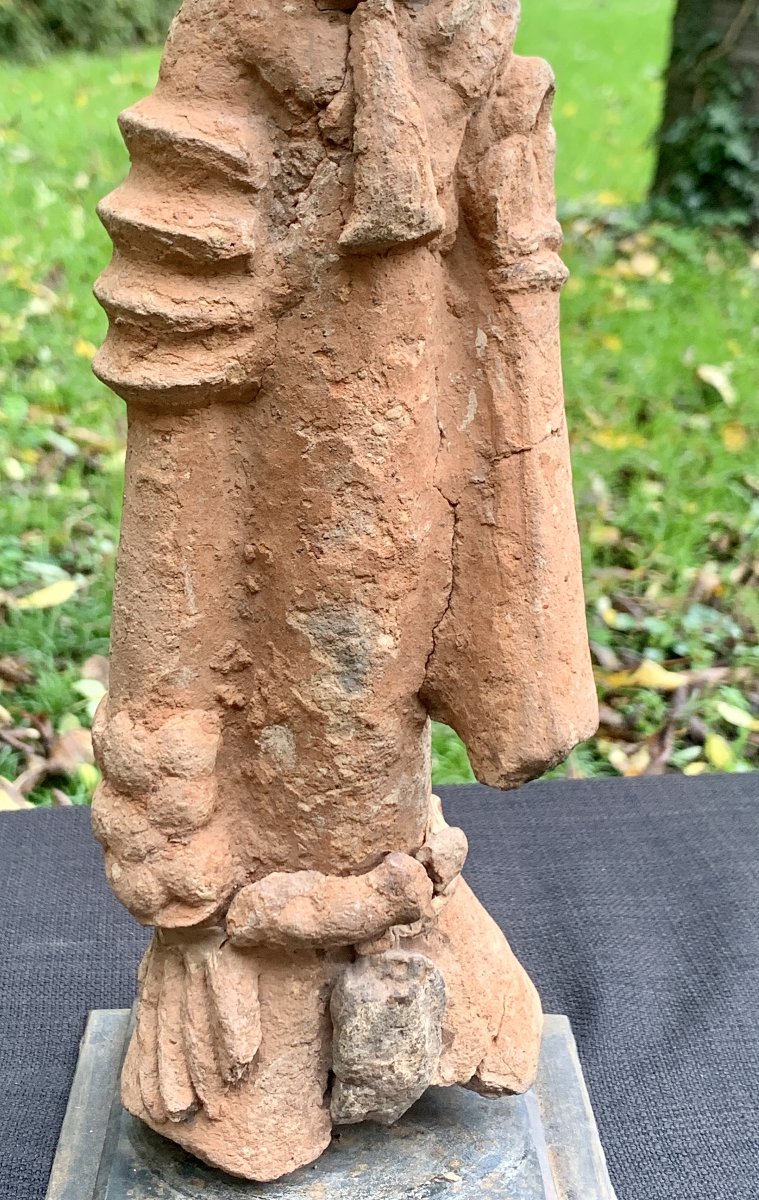
*very elongated arms extending along the body, ending in powerful hands (one of which is missing here)
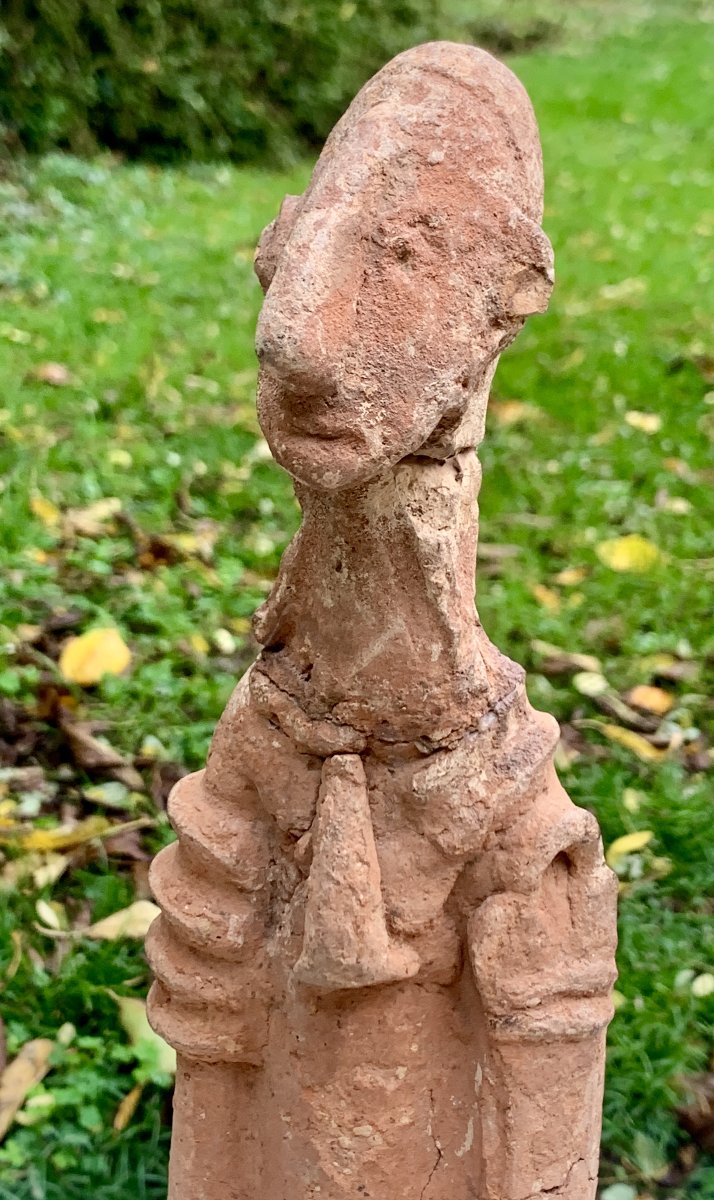
*A profile view of the face with a prominent nose and a distinctly marked, rounded bridge
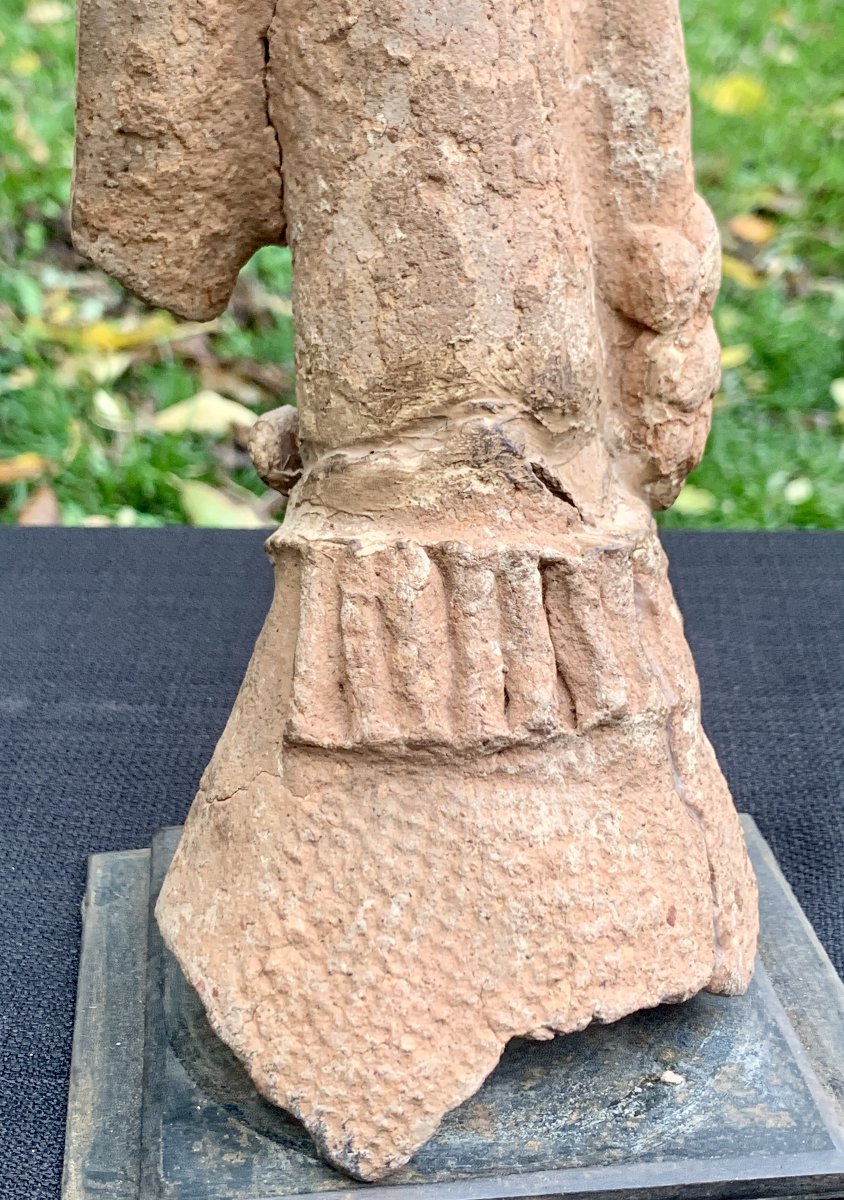
The figure wears a loincloth and a loin cover, as well as significant jewelry: arm bracelets, with 4 spirals on the right and only 2 rows on the left, a shoulder ornament on the right as well as a large bracelet on the left wrist, and also an imposing necklace with a pendant shaped like a notch or an inverted tulip (?)
Condition:
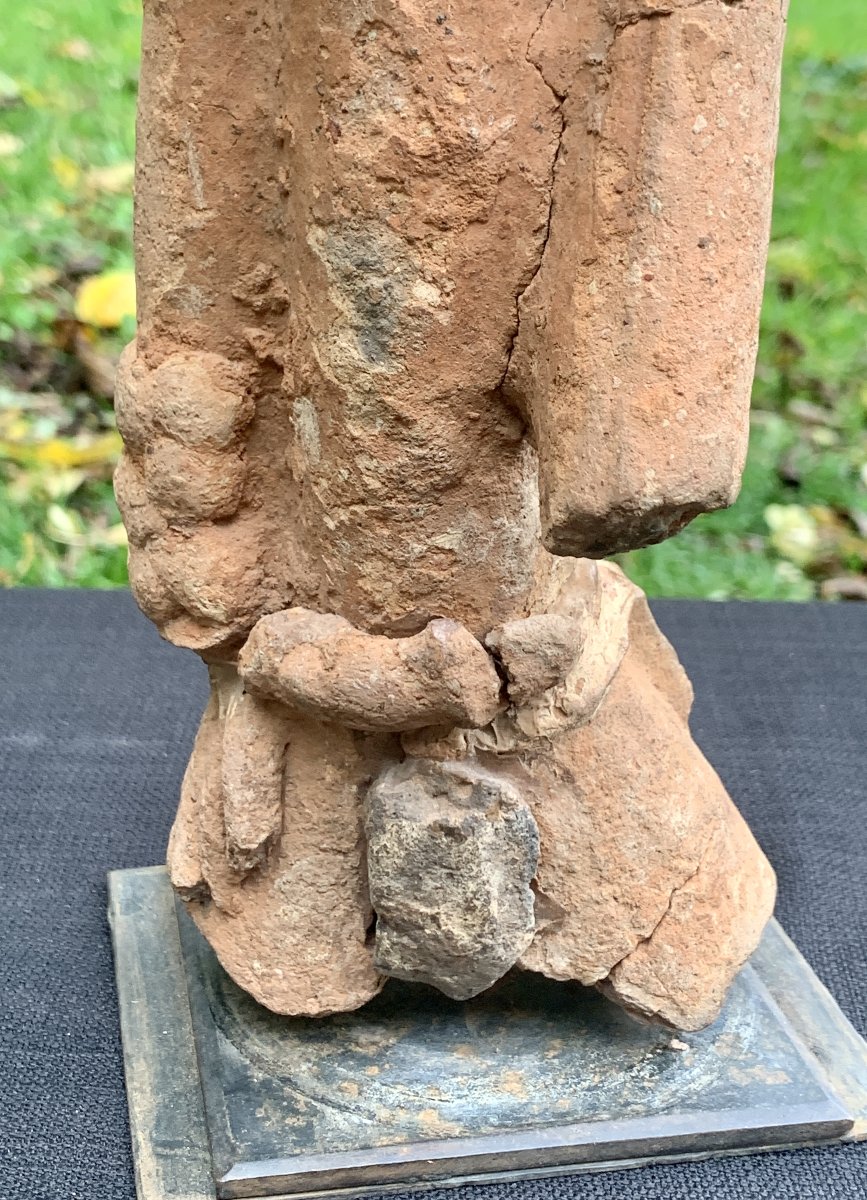
Numerous vernacular and ancient restorations visible on photos, on the left arm and at both ends of the neck, as well as at the base, whose irregular shape suggests that the statue was originally larger and is now fragmentary.
Traces of red pigments on the body and a crusty patina. Gray pigments on the loincloth
The statue, of a handsome size, has been mounted on a heavy, blackened iron base attached to a circular shaft, ensuring the sculpture’s perfect stability and balancing its highly dynamic posture, which leans sharply forward to suggest movement.
Dimensions:
37 cm high
10 cm wide and 10 cm deep
The Bankoni civilization was discovered by European archaeologists in 1930's during excavations in the region of Bougouni. The civilization was centered on the city of Niafunké, which was an important commercial and cultural center during the medieval period. The statue discovered in 1943 by Théodore Monod in Bankoni, south of Bamako, helped bring this primitive sculptural art to light in France.
This art form was scientifically studied after 1974.
The geographic distribution of Bankoni statuary also includes the localities of DIOILA, MBEDI, NGOUENDO, MBELA, and further north of theNiger River, those of ANGA, BAI, BANGO, BEDIE, BELE, BERI, BOA, BONGO, DON, DOUA,FIKO, GAMBA, GASE, GASSI, KOWA, PE, PO, SEKE, etc.
Bankoni terracotta is a type of traditional ceramic cretaed in the Bougouni region on Mali, in West Africa. It takes its name from the Bankoni civilization that flourished in this place between 11th and 16th centuries—the period of the Mali Empire. The civilization declined late 16th cty with the arrival of the Mandinga peoples, who conquered the region and introduced new forms of art and culture.
Bankoni terracotta pieces, distinguished by their distinctive style, were created from a mixture of clay and sand and were fired in low-temperature kilns. Unlike the more famous Djenné terracotta pieces, Bankoni terracotta pieces often have a rougher and more irregular surface, giving them a more rustic appearance.
1 900 €
Period: Before 16th century
Style: Tribal Art
Condition: Fully restored
Material: Terracotta
Width: 10 cm
Height: 37 cm
Depth: 10 cm
Reference (ID): 1846247
Availability: In stock
Print