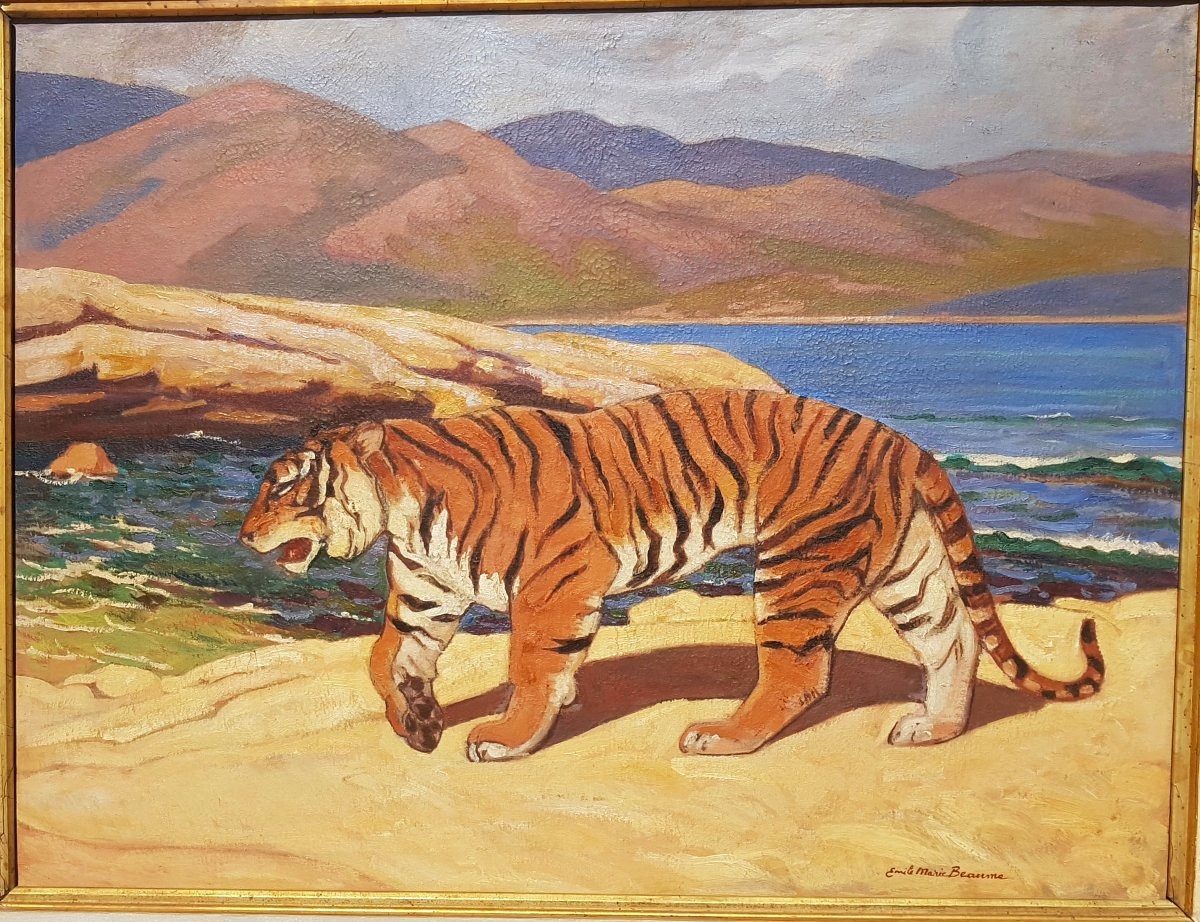
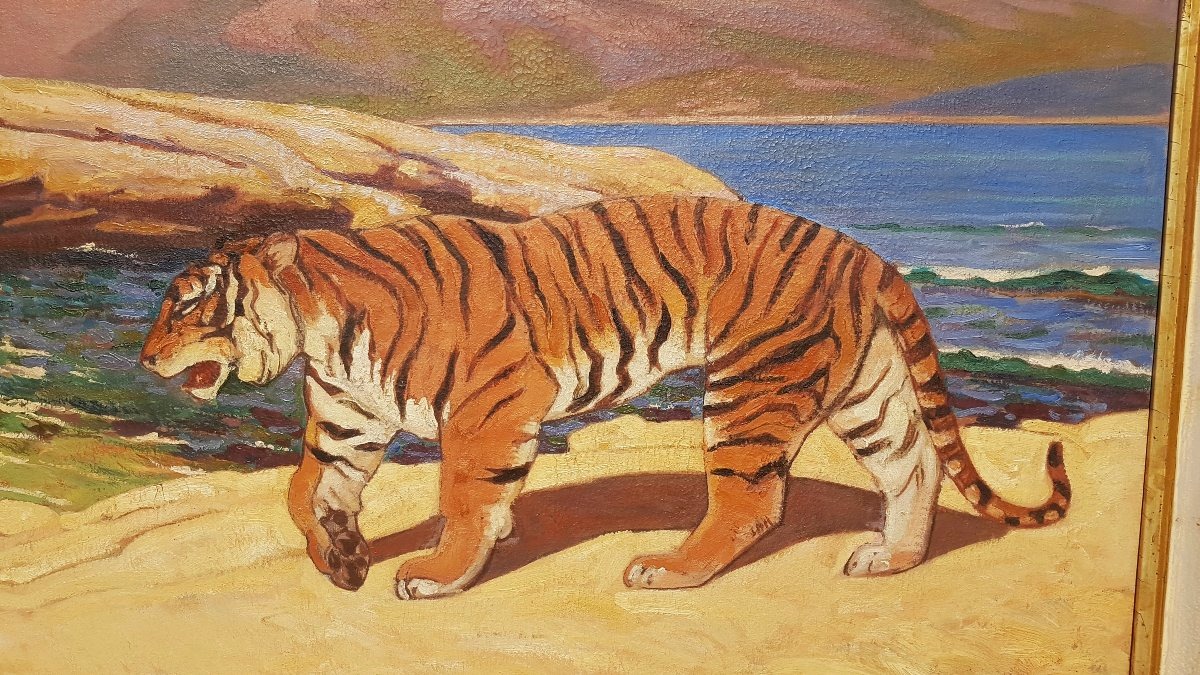


Emile Marie Beaume (1887–1967) The Tiger
Artist: Emile Marie Beaume (1887-1967)
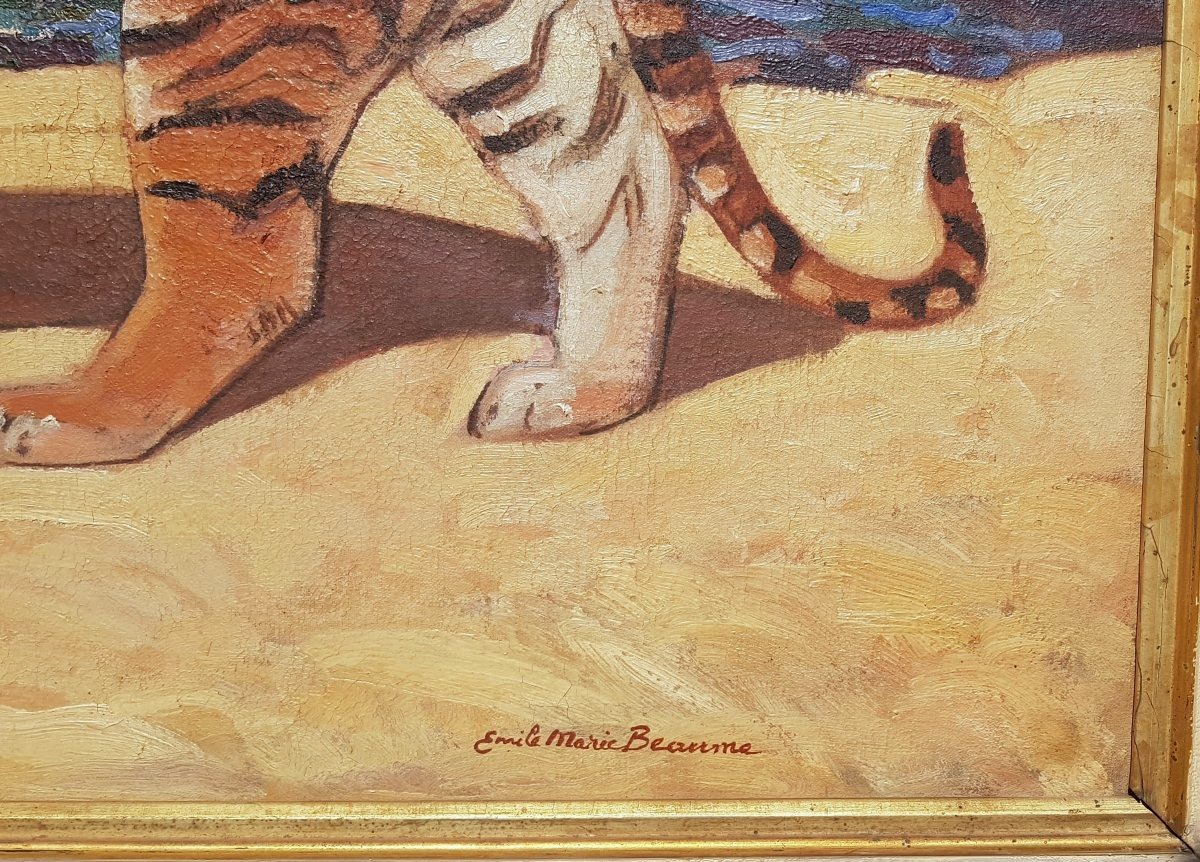
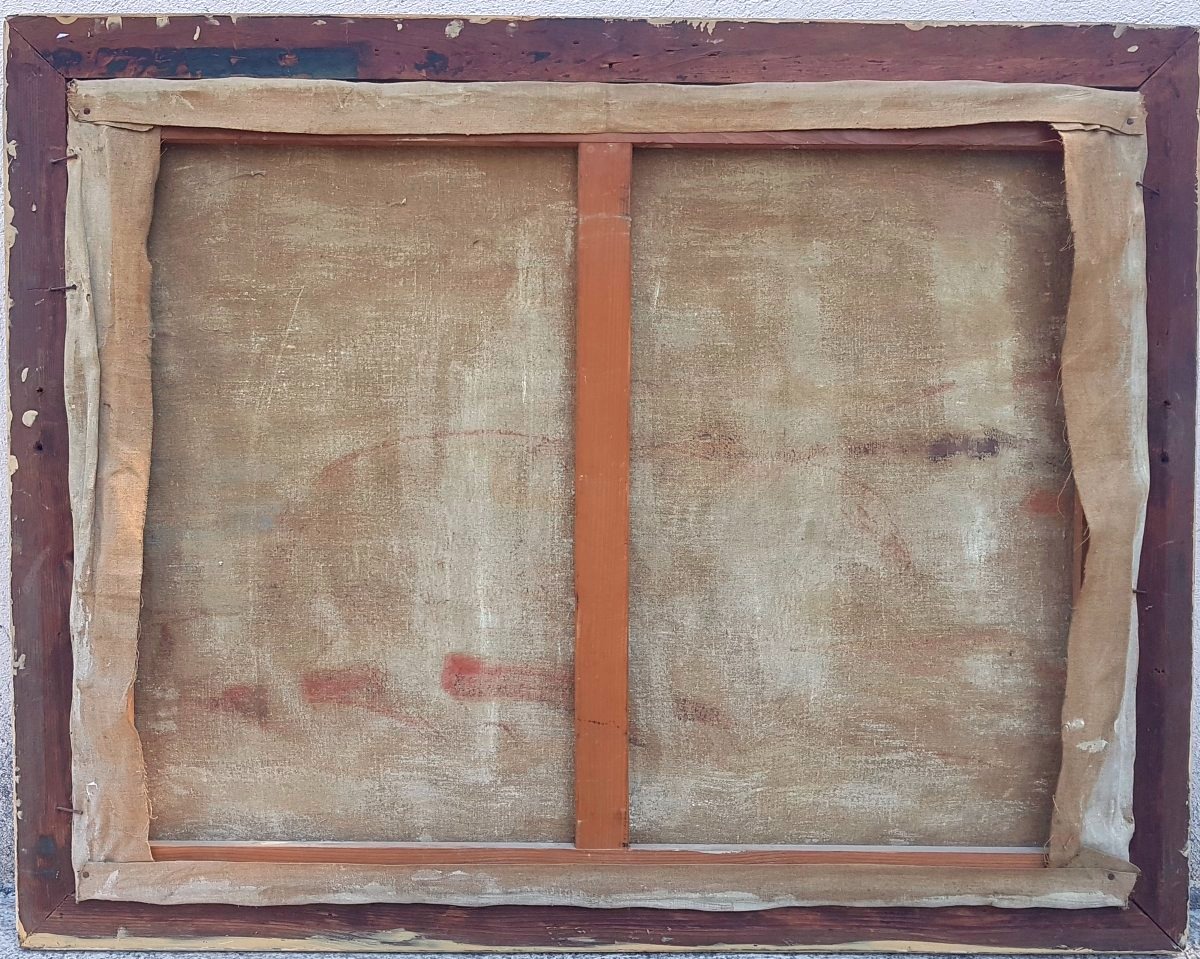
Emile Marie BEAUME (1887–1967) Walking Tiger, c. 1930, oil on canvas, 66 x 86 cm, signed lower right, framed 1930, Dimensions with frame: 76 x 97 cm.
Minor crazing.
Émile Marie Beaume, a French painter, lithographer, engraver, and fresco artist, was born in Pézenas in 1888.
From childhood onward, his family immersed him in a rich cultural and artistic environment, particularly his father, Georges Beaume, a novelist and art critic. His father’s close friends—Alphonse Daudet, Pierre Loti, and Marshal Lyautey—nurtured the young boy’s imagination, leading him to quickly develop a strong interest in the East and travel.
Emile-Marie Beaume studied at the École des Beaux-Arts in Paris in the studios of painters Fernand Cormon, François Flameng, and Adolphe Déchenauld.
A talented draftsman, the artist was assigned to the army’s cartography service when war broke out in 1914. There, he produced maps and topographical surveys.
In 1917, Beaume was deployed to Morocco by the French army. This journey would profoundly influence his work.
In Morocco, Beaume began painting street scenes and portraits.
Upon his return to France at the end of the war, Émile Beaume continued to paint in this style, producing, alongside his street scenes, luminous landscapes of the Maghreb.
In 1921, he received the First Grand Prix de Rome for an oil on canvas titled “The Burial of Saint Anthony.”
The artist subsequently became a recognized master of mural decoration and fresco art, completing numerous monumental commissions for private mansions, casinos, and public buildings.
From 1927 to 1932, he was a professor of drawing at the Manufacture nationale des Gobelins.
Emile Beaume continued his travels in North Africa. At the 1931 Colonial Exhibition in Paris, he decorated part of the Madagascar Pavilion.
In 1937, his panels depicting scenes from North Africa were exhibited at the International Exposition. As the 1937 winner of the French Equatorial Africa Prize, he traveled to Oubangui-Chari, Chad, and the Belgian Congo.
After World War II, the artist devoted himself to decorating the palaces of prominent Moroccan and Ethiopian families. In 1945, he painted a fresco for the Governor’s Palace in Djibouti. In 1948, in Casablanca, he decorated a villa for the King of Morocco.
Émile Marie Beaume died in 1967
The artist donated his studio in Pézenas, his hometown, in 1950
Decorations: Chapel of the Former Minor Seminary, known as the Chapel of Remembrance, Orne
Paintings in the Churches of the Holy Spirit in Paris.
Bibliography
Thornton Lynne, *Les Africanistes, peintres voyageurs: 1860–1960*, ACR Edition
1 850 €
Period: 20th century
Style: Other Style
Condition: Good condition
Material: Oil painting
Width: 86
Height: 66
Reference (ID): 1844649
Availability: In stock
Print