






Retractable Happiness Of The Day
Artist: Maison Giroux Paris, Vers 1867-1885
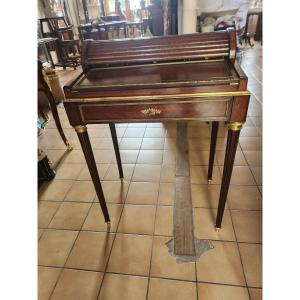
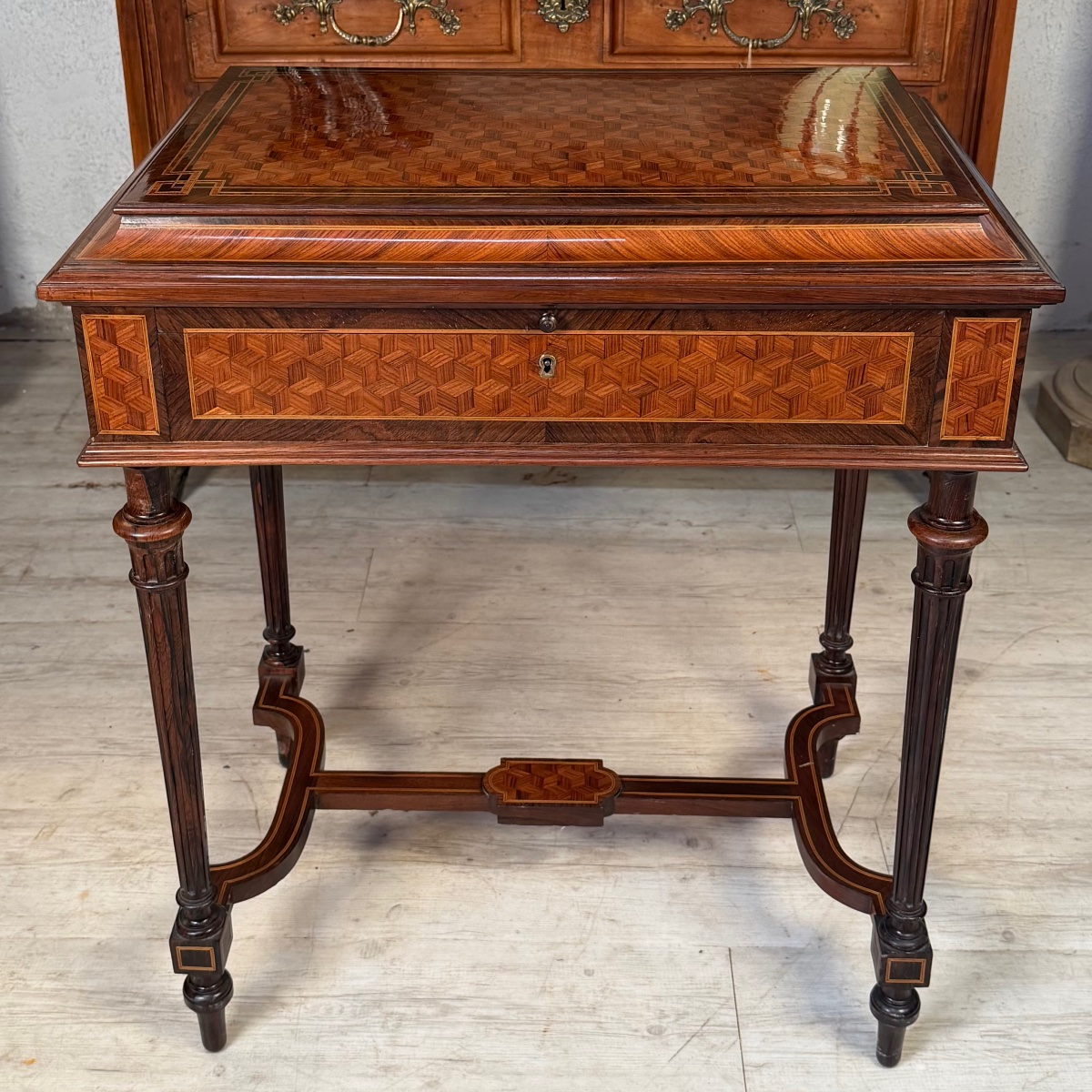
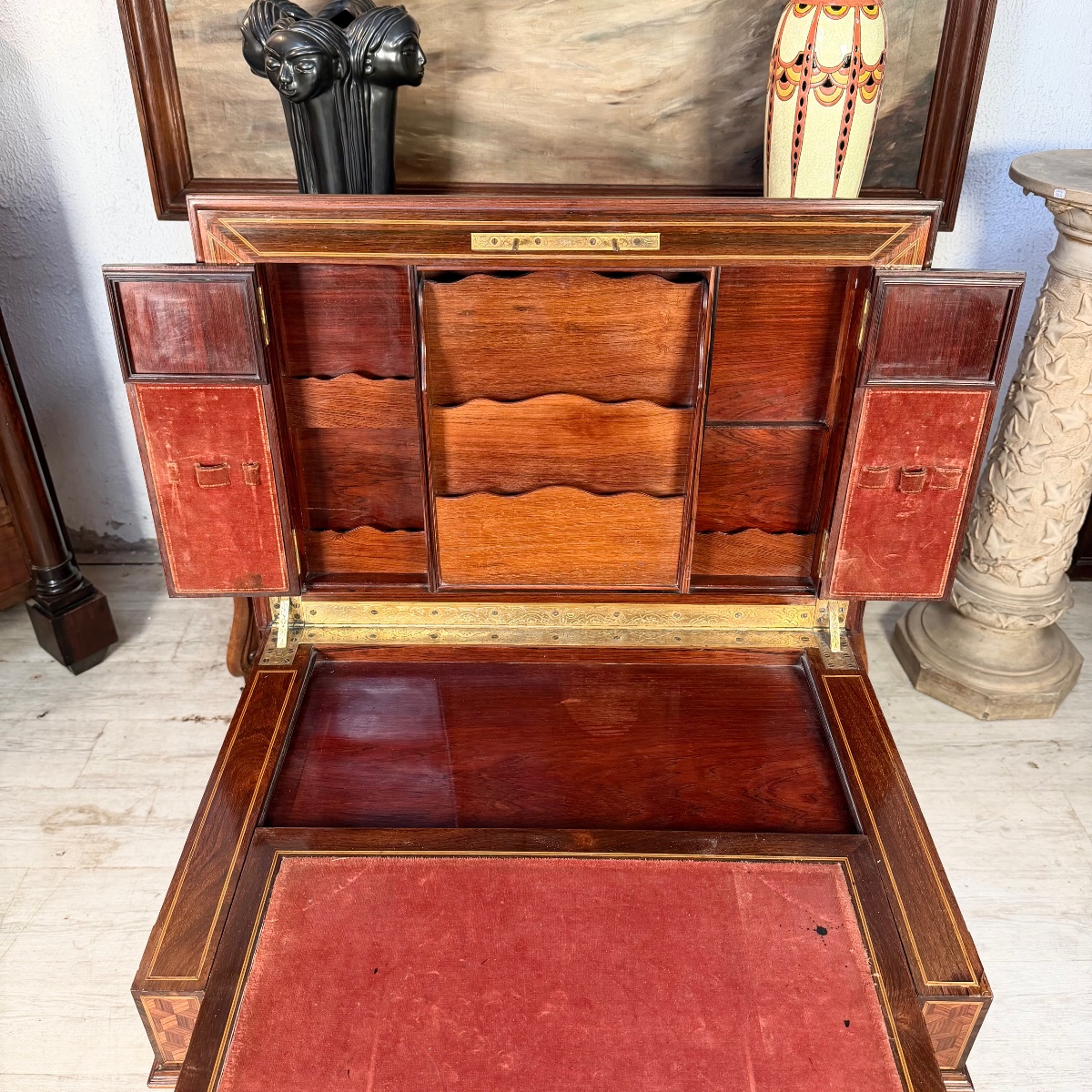
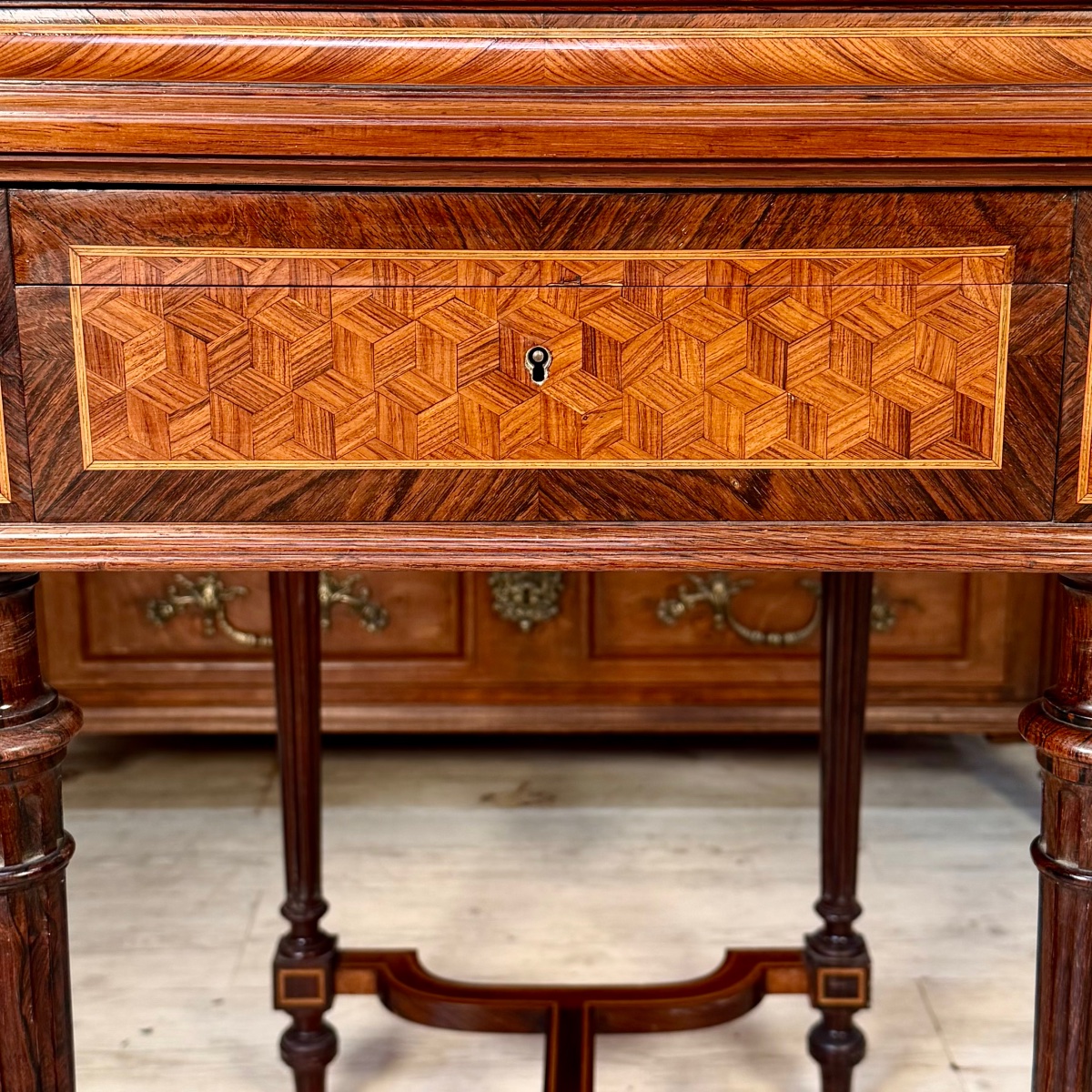
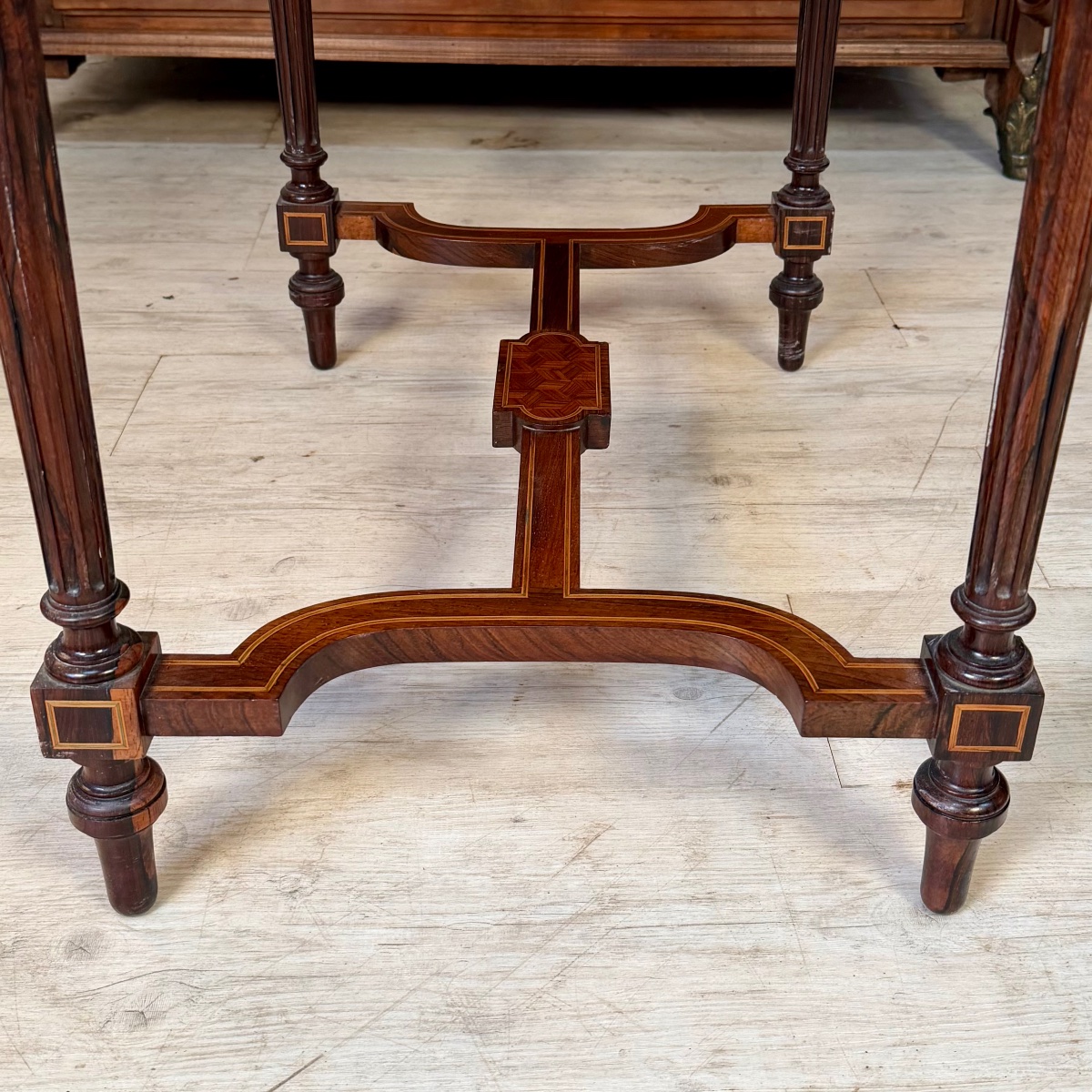
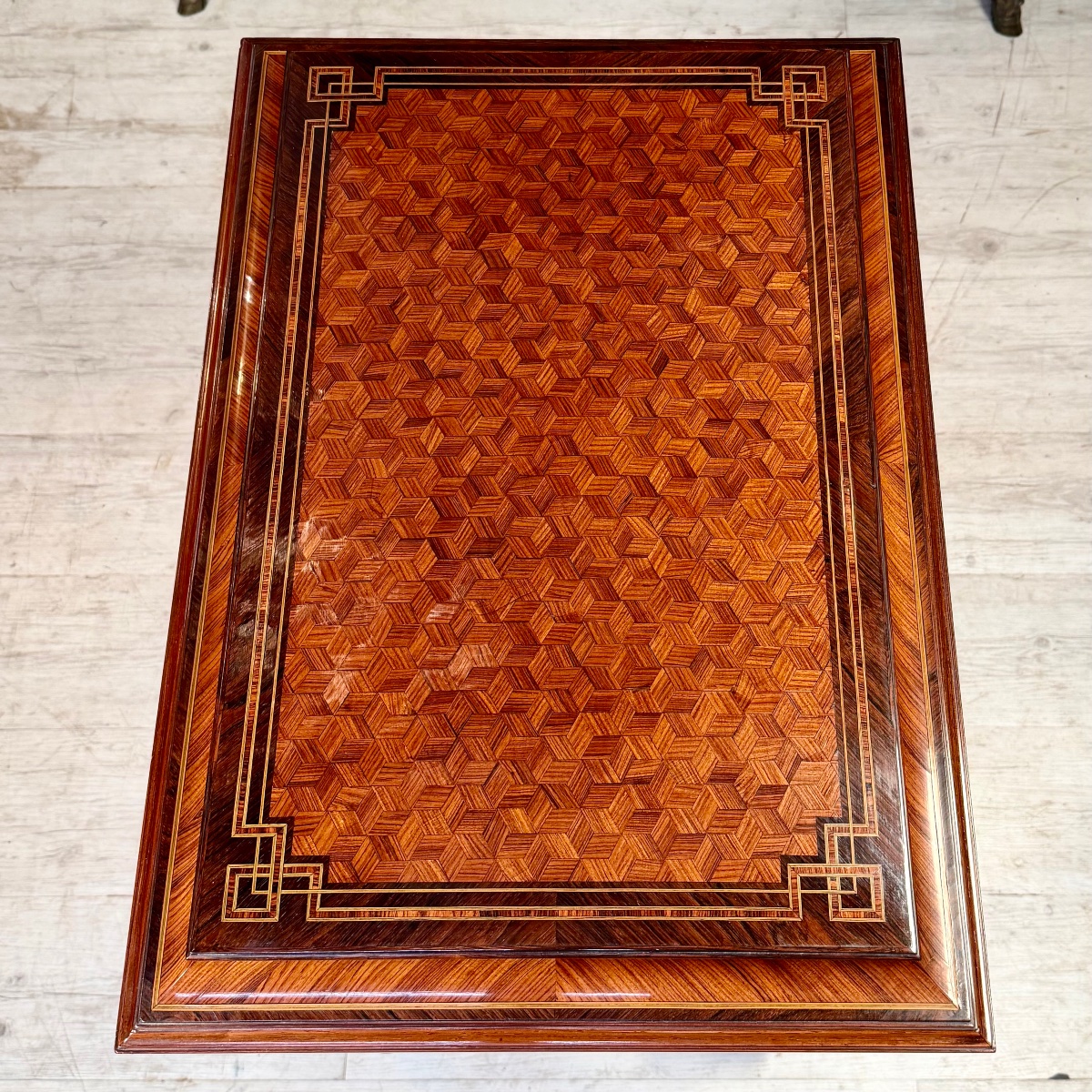
An exceptional retractable daybed that also serves as a writing desk. This hybrid piece of furniture, likely custom-made for a lady, evokes a perfectly executed blend of a daybed and a love note. The chiseled details on the gilded bronze fittings are magnificent. Signed “formerly Maison Giroux Paris” on the lock. Superb marquetry featuring a cube motif, made of rosewood, palisander, and amaranth veneers, with the four legs crafted from solid palisander. The felt on the tabletop is likely original. Fully restored and finished with a buffed varnish. Original key and lock.
Founded in 1799 at 7 rue du Coq-Saint-Honoré by François-Simon-Alphonse Giroux, the firm—nicknamed “the merchants to the princes”—attracted an aristocratic and bourgeois clientele. Initially a stationer, supplier of art supplies, painting restorer, and dealer in novelty items, Giroux filed a patent in 1818 for the kaleidoscope, which became a sensation, and received a commission from Louis XVIII for a golden carriage as a New Year’s gift for the children of France, now preserved at the Carnavalet Museum. Around 1830, the firm shifted its focus to tabletopware and cabinetmaking, producing luxury pieces inspired by the 18th century, the Troubadour style, and later Japonism, such as the “bonheur-du-jour” in carved linden wood that captivated Empress Eugénie at the 1855 World’s Fair (now in Compiègne). Always at the cutting edge, it partnered with Rivart to produce furniture inlaid with porcelain and, in 1839, secured the exclusive rights to daguerreotype photography, in collaboration with the Susse firm. Taken over in 1838 by her sons Alphonse-Gustave and André, the firm moved to Boulevard des Capucines in 1857, then passed to Duvinage in 1867, who ran it alone from 1870 onward. There, he developed a line of Japanese-inspired furniture, which won an award in Vienna in 1873 and was marked “formerly Maison Giroux Paris.” After his widow (1874–1882), followed by Philippe and Arnut, the firm closed in 1885.
Founded in 1799 at 7 rue du Coq-Saint-Honoré by François-Simon-Alphonse Giroux, the firm—nicknamed “the merchants to the princes”—attracted an aristocratic and bourgeois clientele. Initially a stationer, supplier of art supplies, painting restorer, and dealer in novelty items, Giroux filed a patent in 1818 for the kaleidoscope, which became a sensation, and received a commission from Louis XVIII for a golden carriage as a New Year’s gift for the children of France, now preserved at the Carnavalet Museum. Around 1830, the firm shifted its focus to tabletopware and cabinetmaking, producing luxury pieces inspired by the 18th century, the Troubadour style, and later Japonism, such as the “bonheur-du-jour” in carved linden wood that captivated Empress Eugénie at the 1855 World’s Fair (now in Compiègne). Always at the cutting edge, it partnered with Rivart to produce furniture inlaid with porcelain and, in 1839, secured the exclusive rights to daguerreotype photography, in collaboration with the Susse firm. Taken over in 1838 by her sons Alphonse-Gustave and André, the firm moved to Boulevard des Capucines in 1857, then passed to Duvinage in 1867, who ran it alone from 1870 onward. There, he developed a line of Japanese-inspired furniture, which won an award in Vienna in 1873 and was marked “formerly Maison Giroux Paris.” After his widow (1874–1882), followed by Philippe and Arnut, the firm closed in 1885.
3 800 €
Period: 19th century
Style: Louis 16th, Directory
Condition: Excellent condition
Length: 57
Width: 48
Height: 77
Reference (ID): 1844352
Availability: In stock
Print