

Antique Napoleon III-era Sèvres-style Porcelain Jewelry Box, Late 19th Century
Artist: Sevres
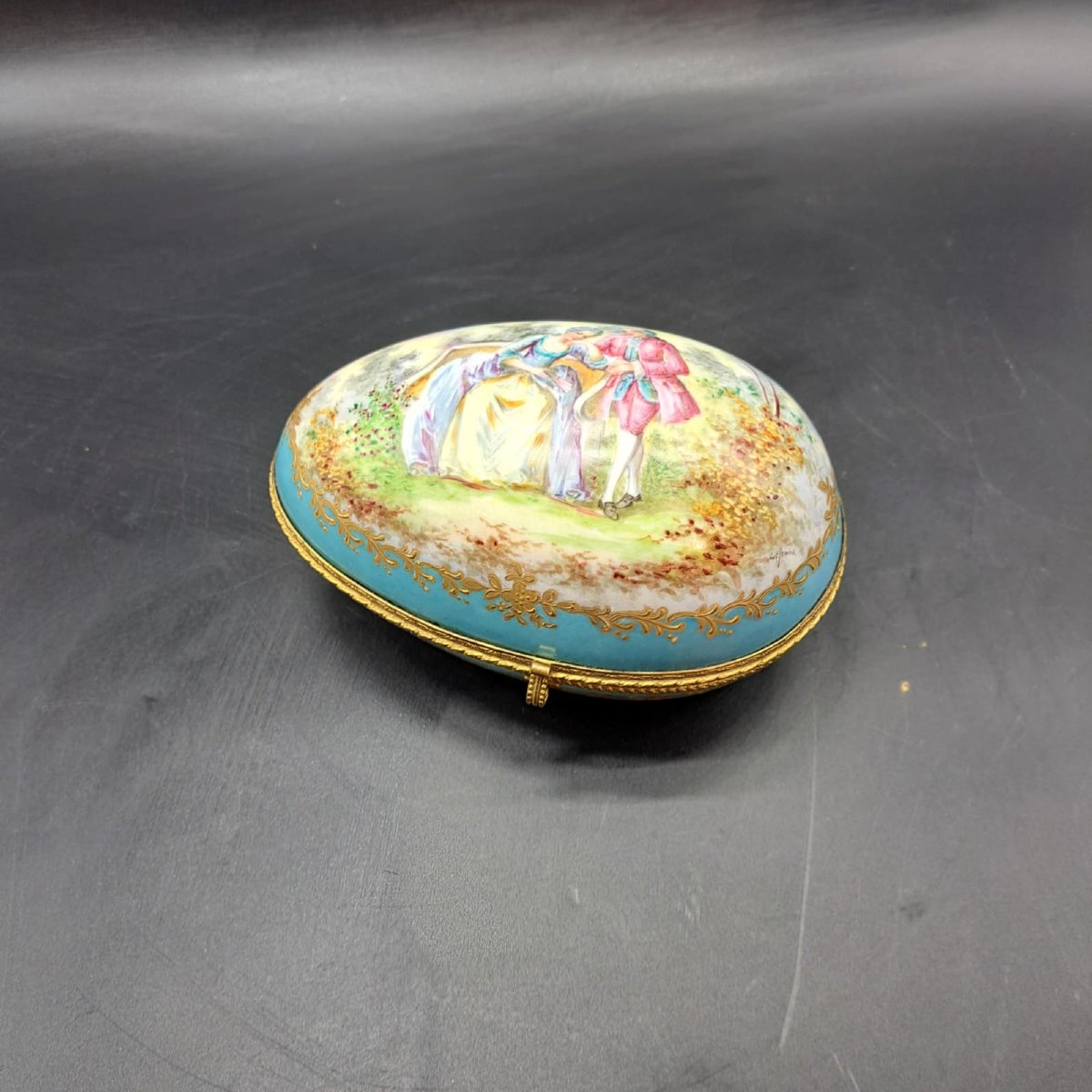
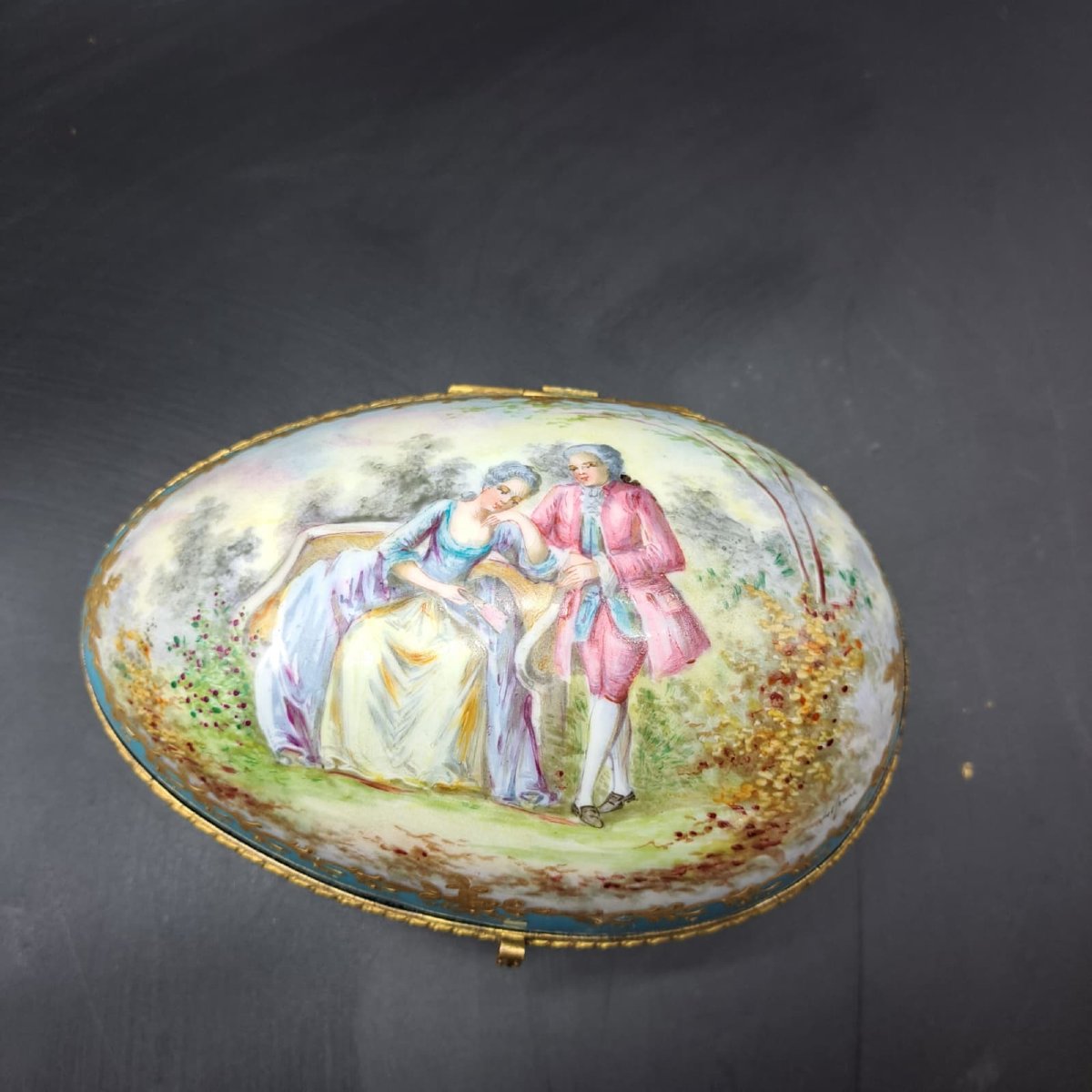
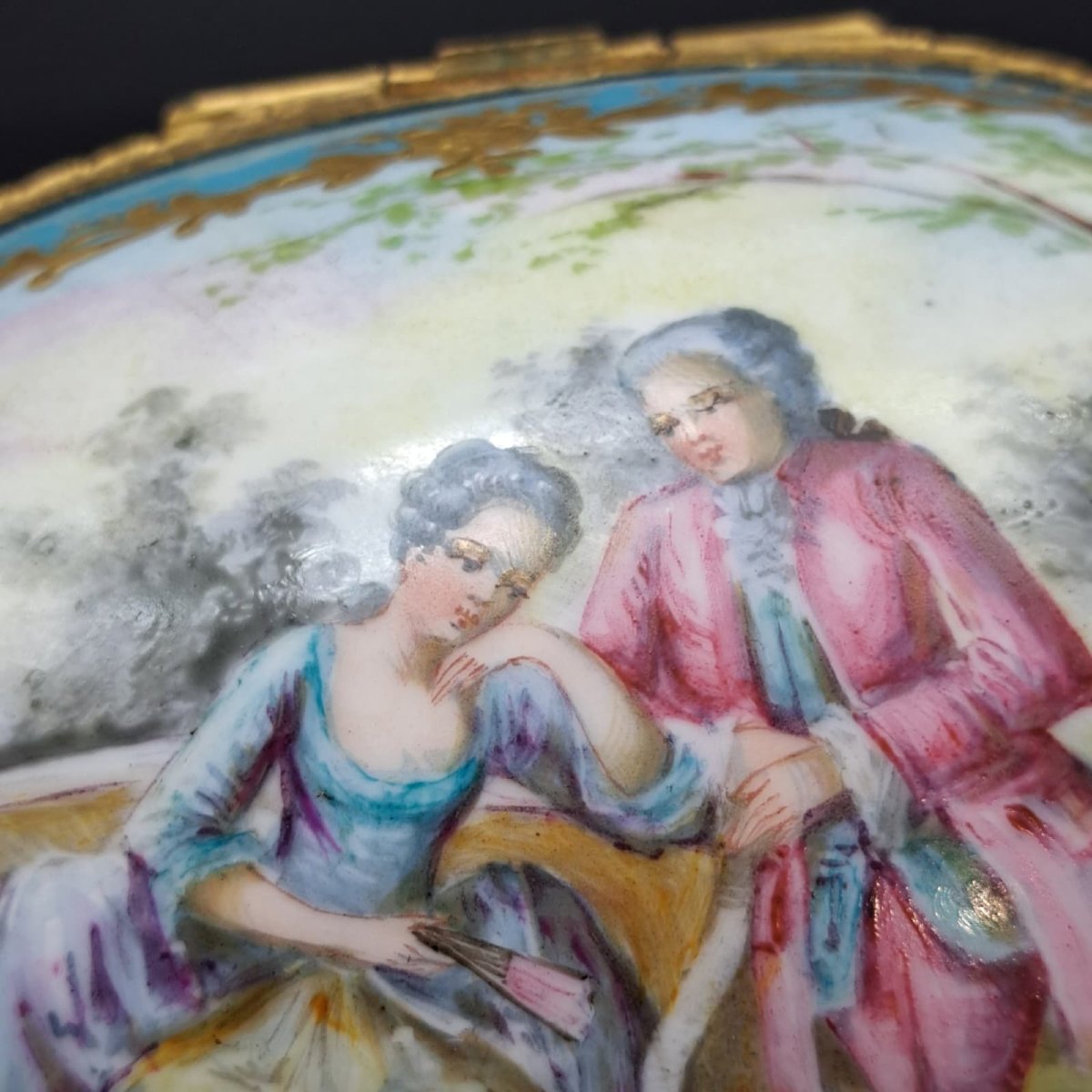
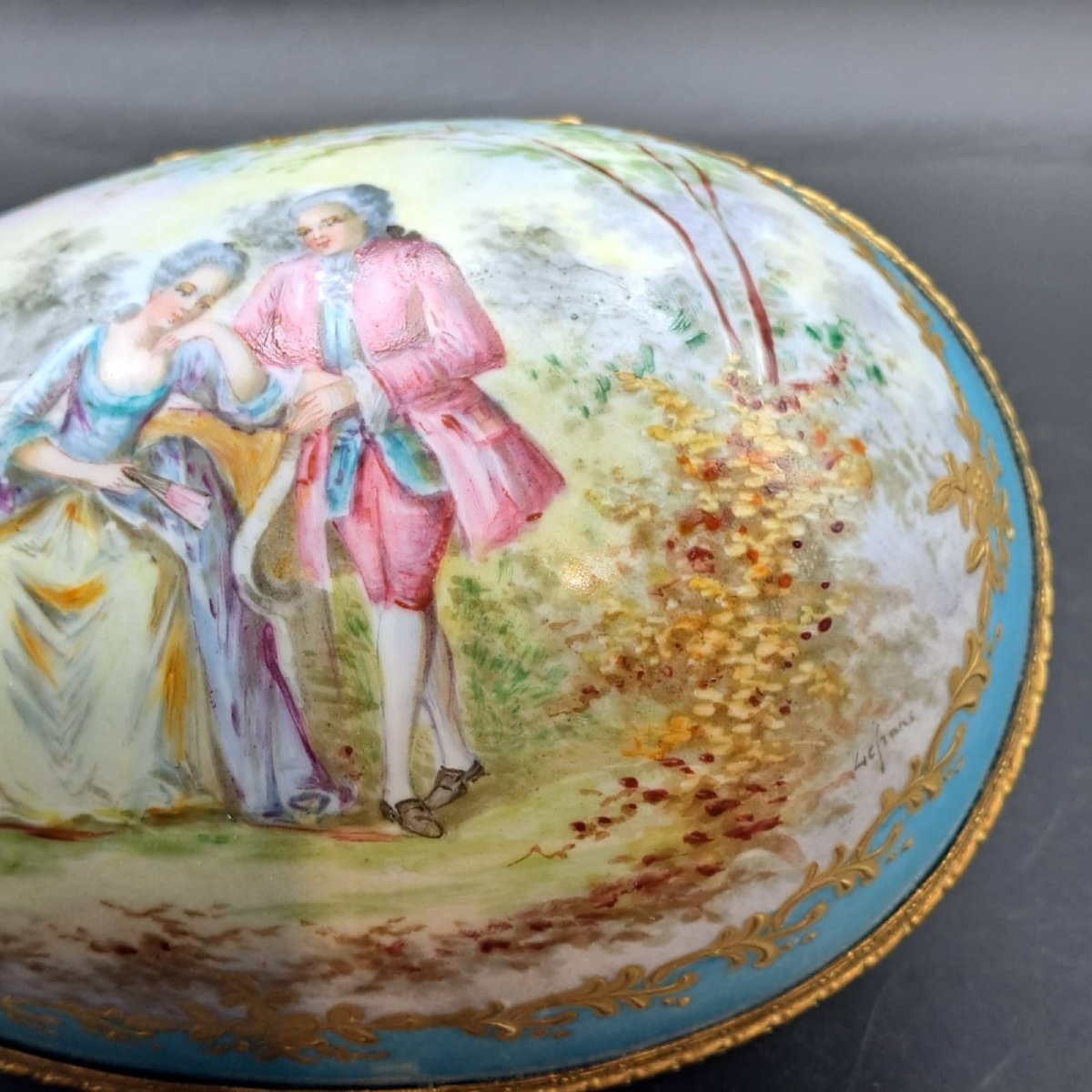
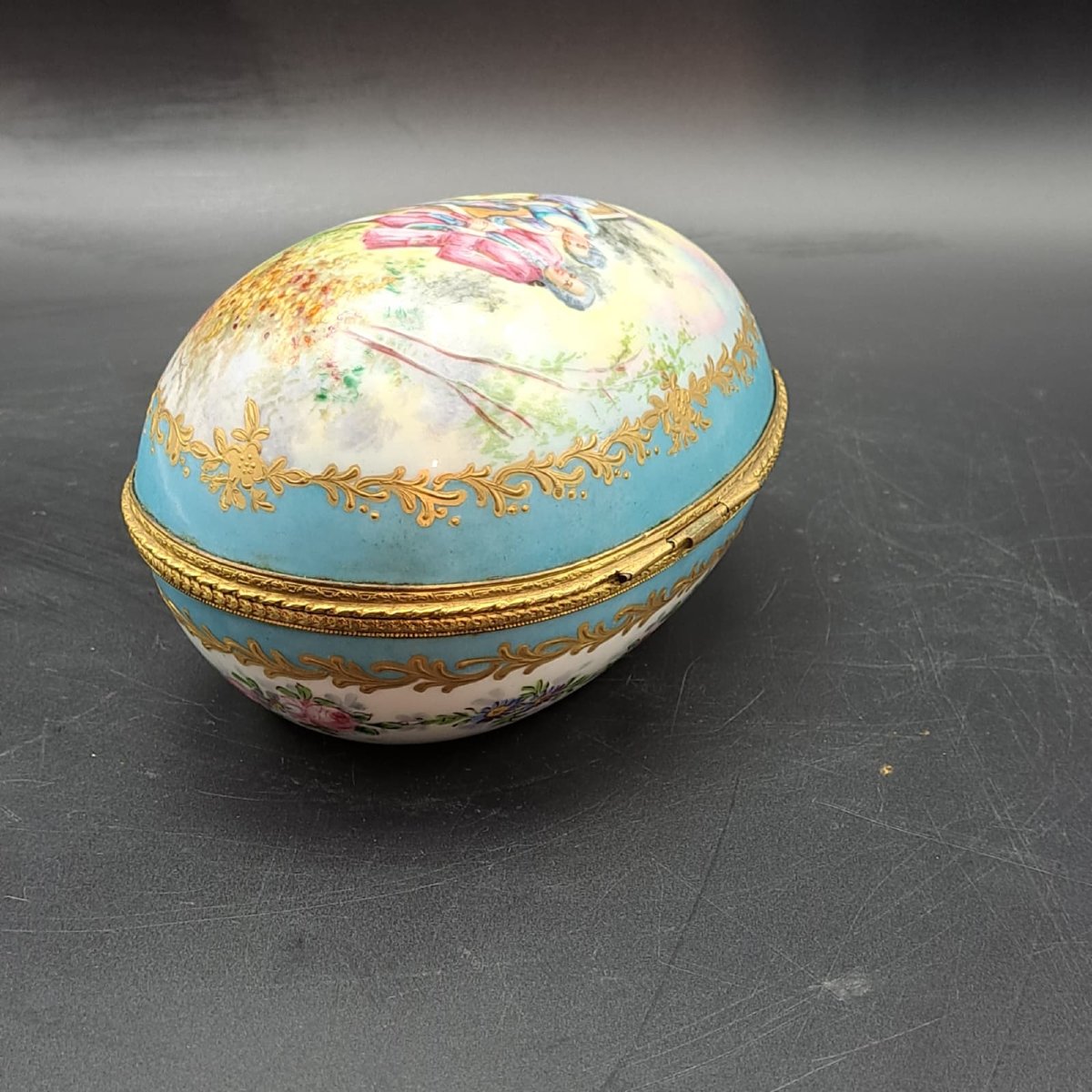
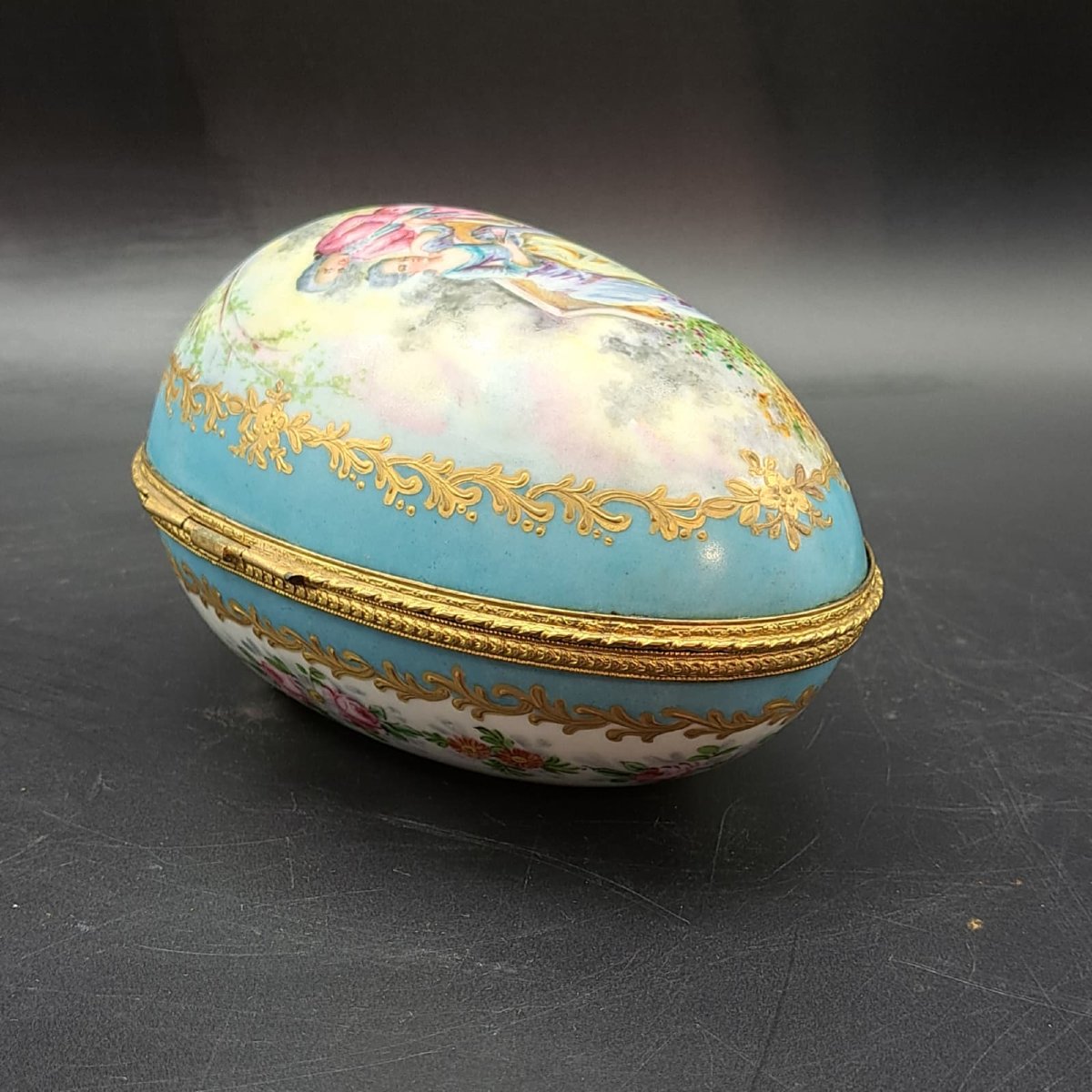
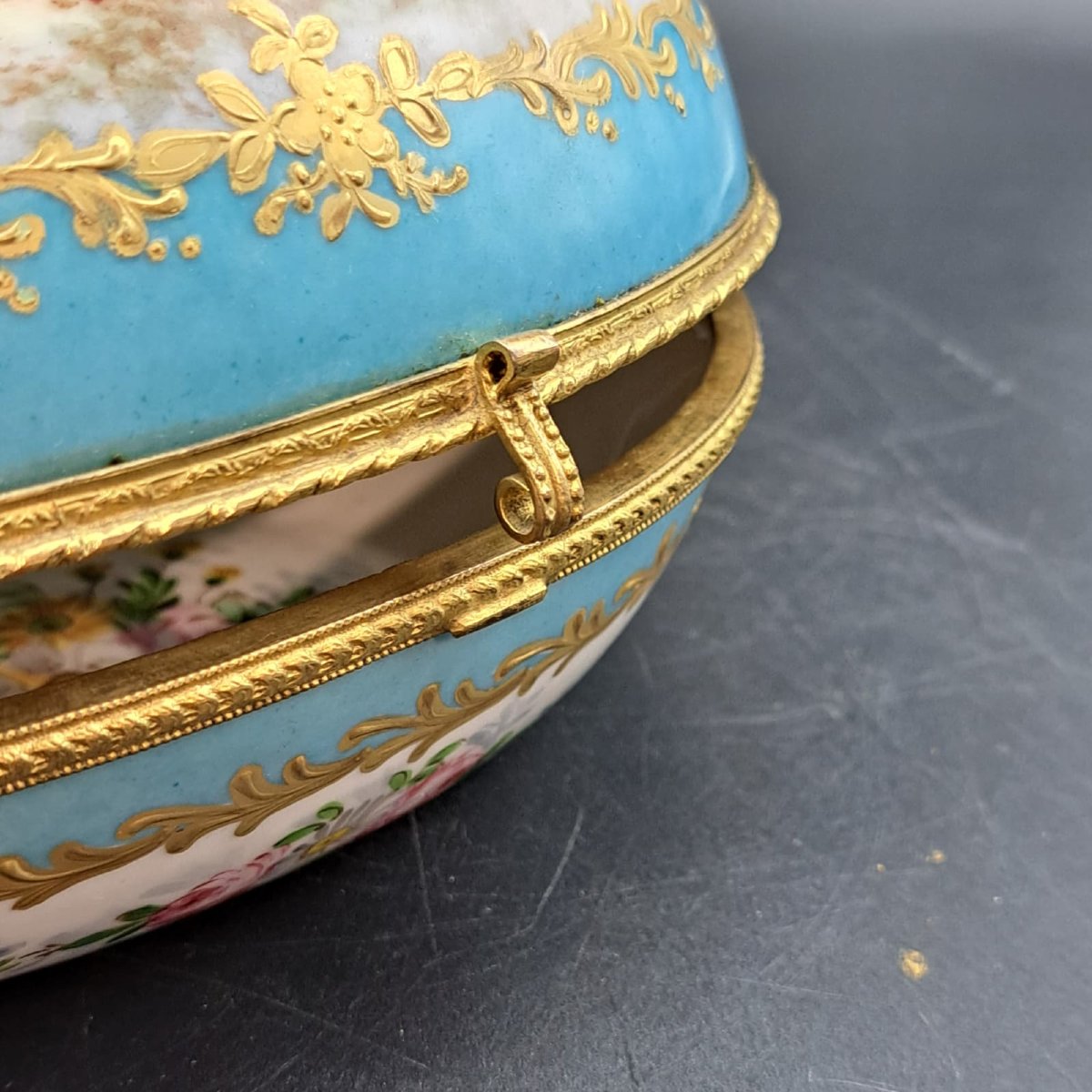
An antique, egg-shaped box crafted from fine porcelain, dating to the second half of the 19th century—the "Napoleon III" period. The piece closely follows the artistic traditions of the historic Sèvres porcelain manufactory—a French style highly favored by the nobility and the upper bourgeoisie of the 1800s, characterized by vibrant pastel backgrounds, intricate gilding, and bucolic or romantic figurative motifs. The upper section of the egg features a central, hand-painted polychrome medallion, framed by soft, cloud-like shading. It depicts a gallant, 18th-century-inspired scene, showing figures in period attire set within an idyllic natural landscape. The body of the egg is finished in a distinctive sky-blue glaze—known as *bleu céleste*, a hallmark of Sèvres porcelain—which contrasts beautifully with the white sections. The painted scene and the various color bands are defined and enhanced by elaborate, raised, pure-gold ornamentation, featuring floral garlands, scrolls, and tiny blossoms, all executed with meticulous precision. The lower half of the egg, set against a white background, is decorated with small bouquets of wildflowers and roses, accented by further gold detailing. The box is secured by a hinged, gilt-bronze mount, finely worked in relief with a motif of twisted cord and delicate leaves. Inside, both halves of the egg are hand-decorated on a white ground with a polychrome floral bouquet. The bouquets feature a romantic, bucolic composition—typical of the French style—highlighted by large roses in shades of pink and fuchsia, accompanied by white daisies with yellow centers, small blue wildflowers, and delicately rendered green foliage. On the underside of the box, one can see the Sèvres mark, alongside a small label. This label adds significant collectible value, as it links the object to the city of Genoa—specifically to the firm "Gismondi & Mangini - Confettieri - Genova." Established in 1876 as "Fossati & Gismondi" in the centrally located Piazza Corvetto, the business later adopted the name found on the label, "Gismondi & Mangini," before eventually becoming known simply as "Caffè Pasticceria Mangini" from 1945 onwards. The underglaze monogram—consisting of a double "L" with an "S" enclosed within—alludes to the renowned Sèvres manufactory. However, research indicates that this is an "apocryphal" mark inspired by Sèvres. Such markings were frequently used by other prominent European manufacturers—particularly in France and Germany—that specialized in replicating the splendor and aesthetic of French Rococo and Neoclassical styles. During the Victorian era and the Belle Époque, the demand for porcelain bearing pseudo-Sèvres marks—hand-decorated with roses and accented with pure gold—reached its peak on the international antiques market. In conclusion, we can state that the dating of this object to the late 19th century is perfectly corroborated by the adjacent paper label from the firm Gismondi & Mangini of Genoa. As a luxury confectionery shop operating at the turn of the 19th and 20th centuries, the firm imported or purchased high-quality decorative porcelain—using it to package their sweets and party favors—and sold these items as prestigious gifts for their elite clientele.
PERIOD: Napoleon III / Late 19th century
DIMENSIONS: W 20 cm x D 12.5 cm x H 10.5 cm
CONDITION: In perfect state of preservation
PERIOD: Napoleon III / Late 19th century
DIMENSIONS: W 20 cm x D 12.5 cm x H 10.5 cm
CONDITION: In perfect state of preservation
1 350 €
Period: 19th century
Style: Napoleon 3rd
Condition: Excellent condition
Material: Porcelain
Length: l. cm 20
Height: h. cm 10,5
Depth: p. cm 12,5
Reference (ID): 1843107
Availability: In stock
Print