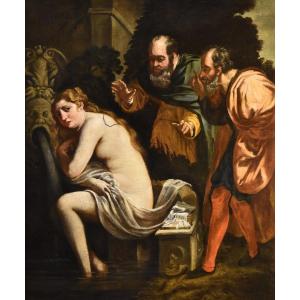


Susanna And The Elders, A Painter Active In Rome In The Early 17th Century
Artist: Peintre Actif à Rome Au Début Du Xviie Siècle
Painter active in Rome in the early 17th century
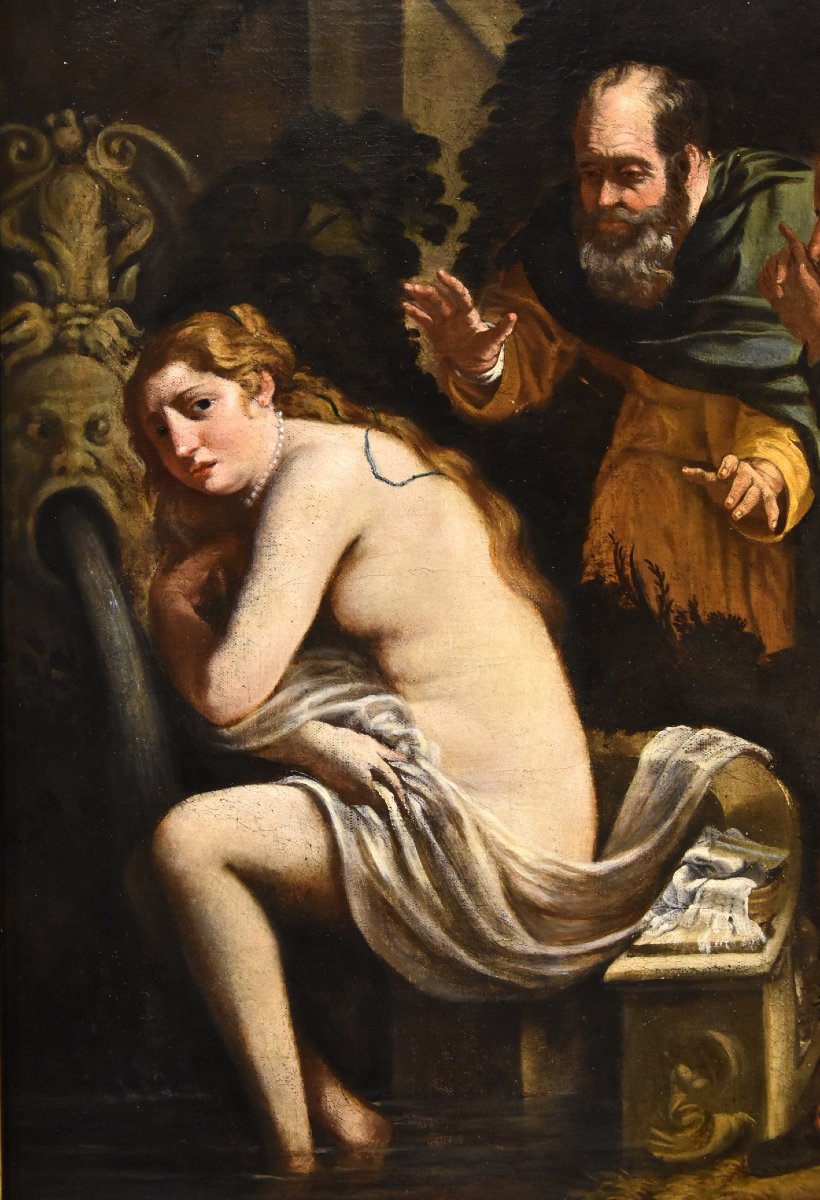
Susanna and the Elders
oil on canvas
76 x 62 cm.
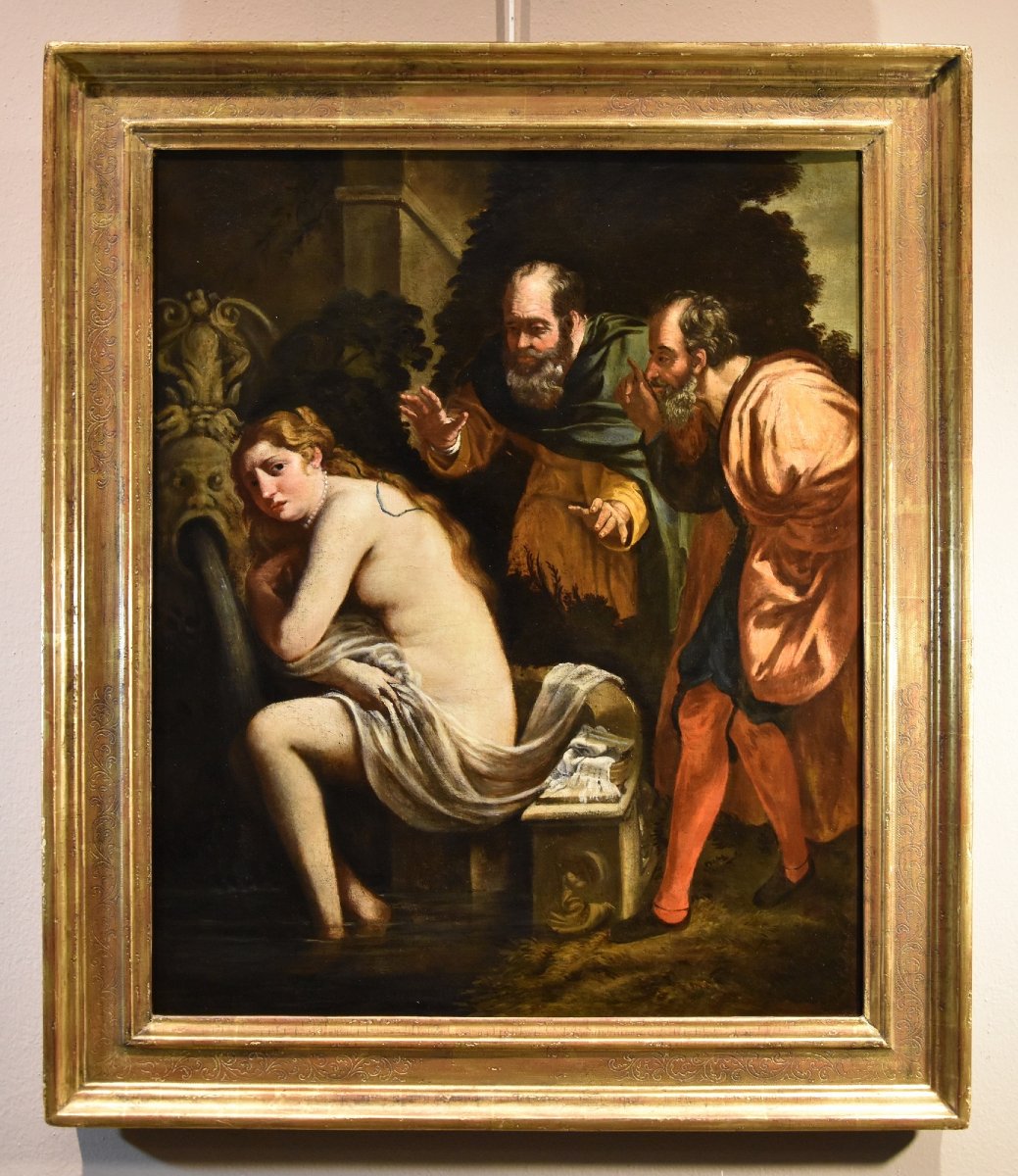
With frame: 92 x 78 cm.
Details of the work (click HERE)
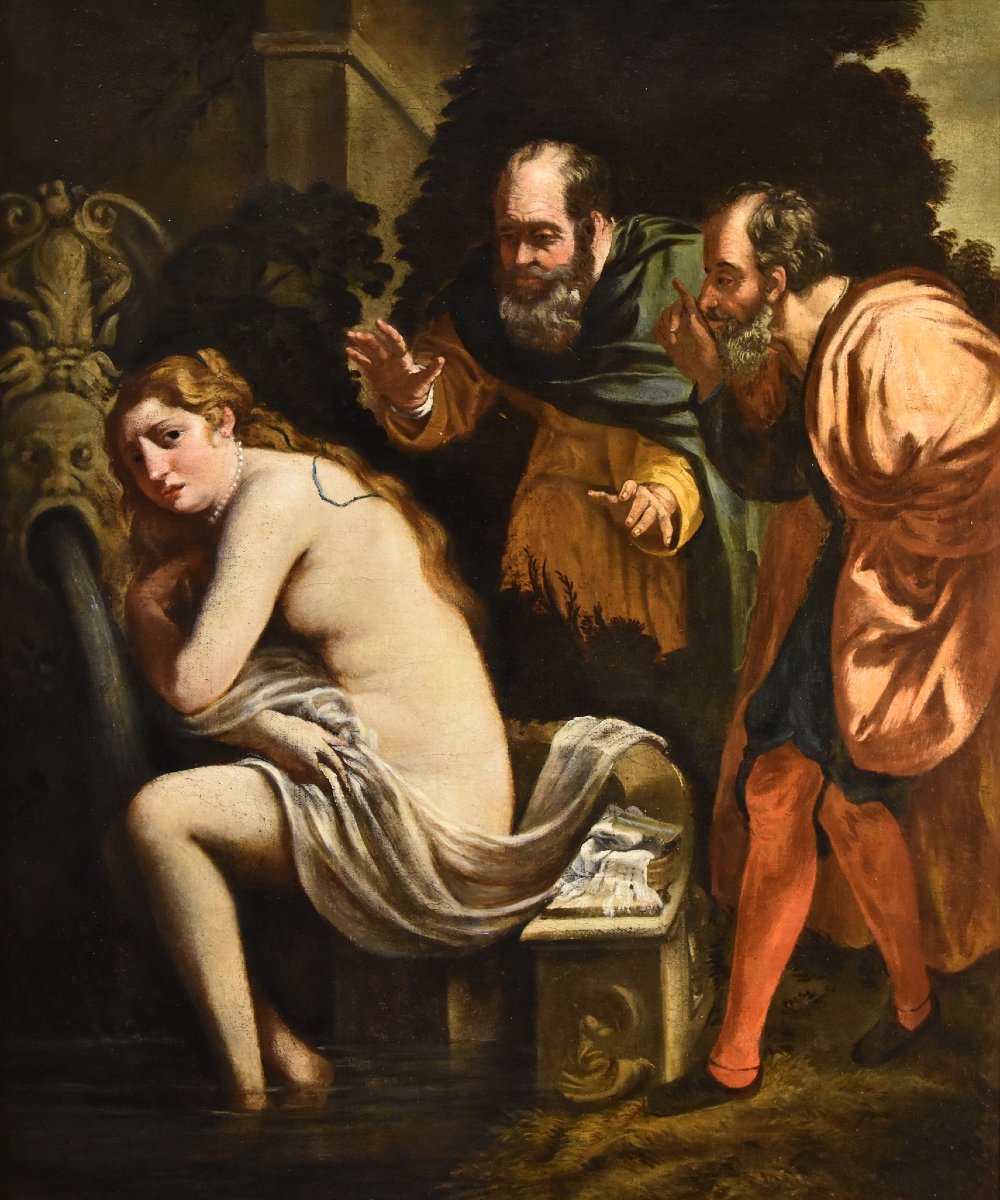
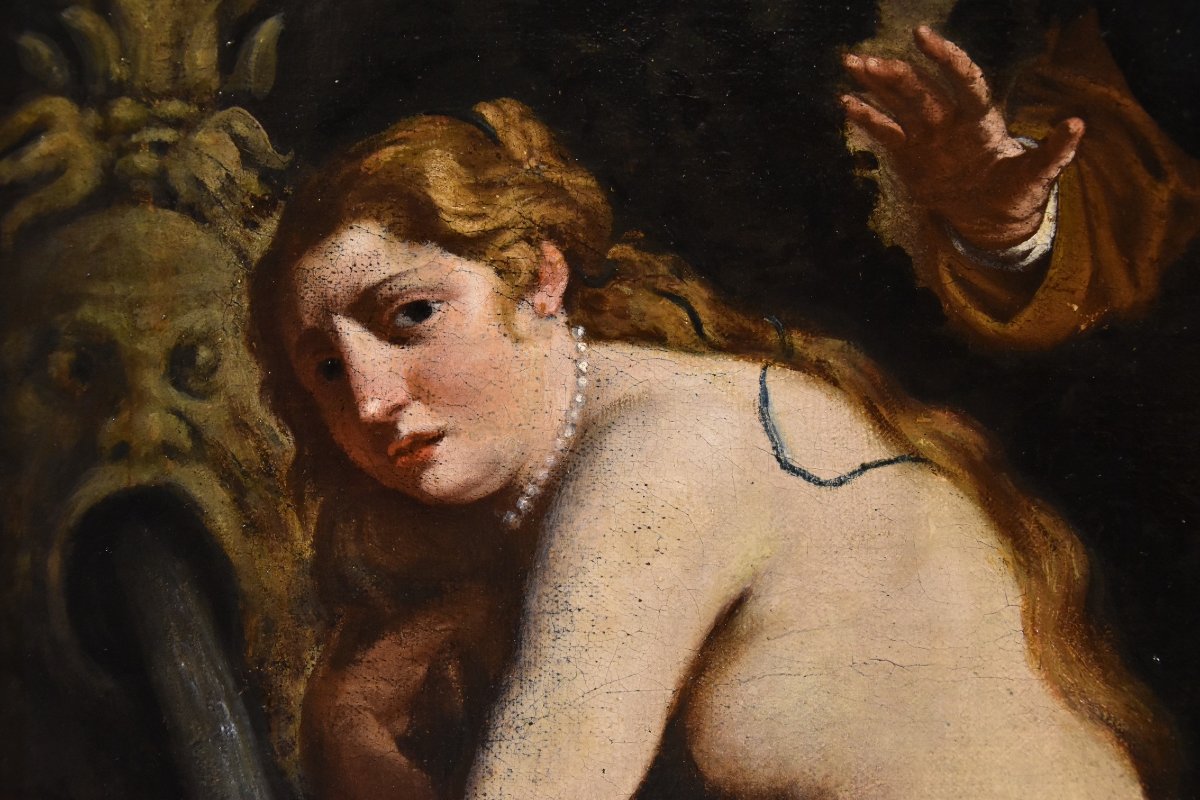
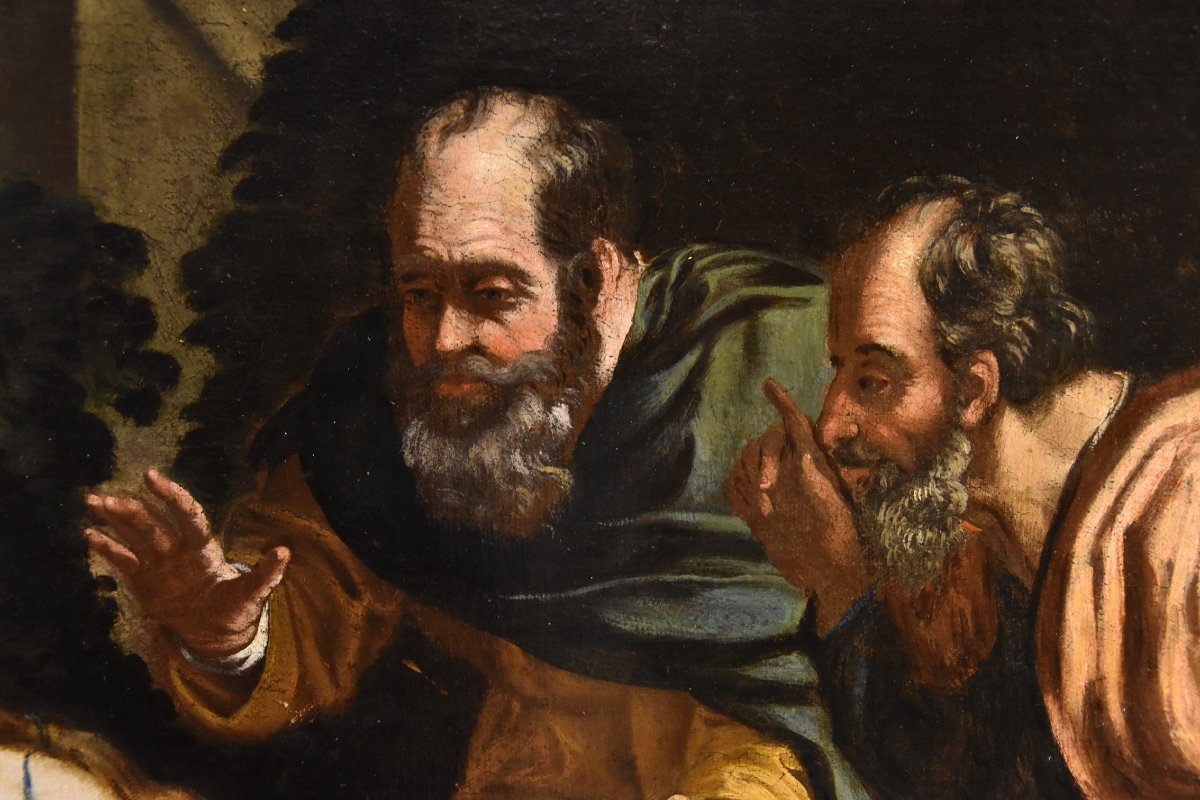
This exquisite painting depicts the scandalous episode from the Old Testament (Daniel, Chapter 13), in which the virtuous Susanna, the married daughter of a wealthy Jew, is caught by two elderly men—who had just been elected judges—while bathing in the garden of her palace. When she refuses to yield to the elders’ lusts, they denounce her with false accusations of adultery, but in the end, their shameful lies are exposed.
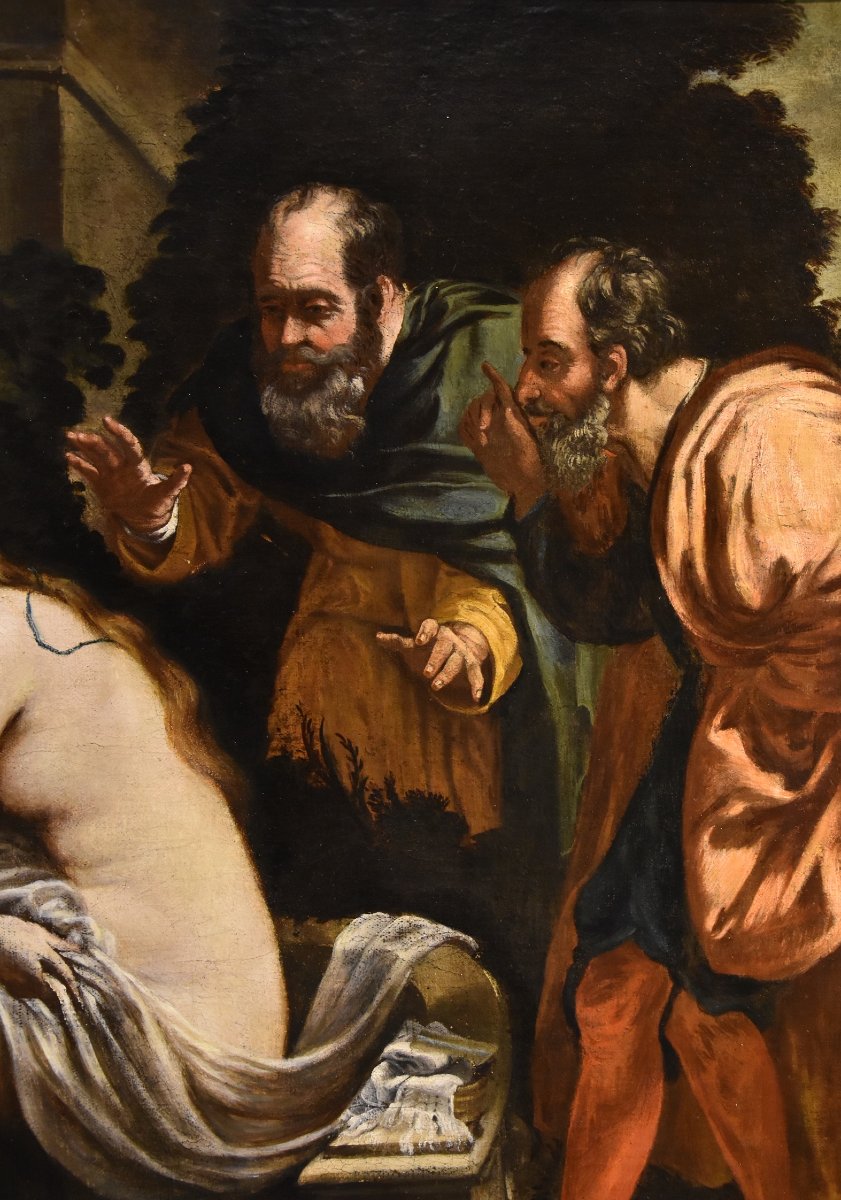
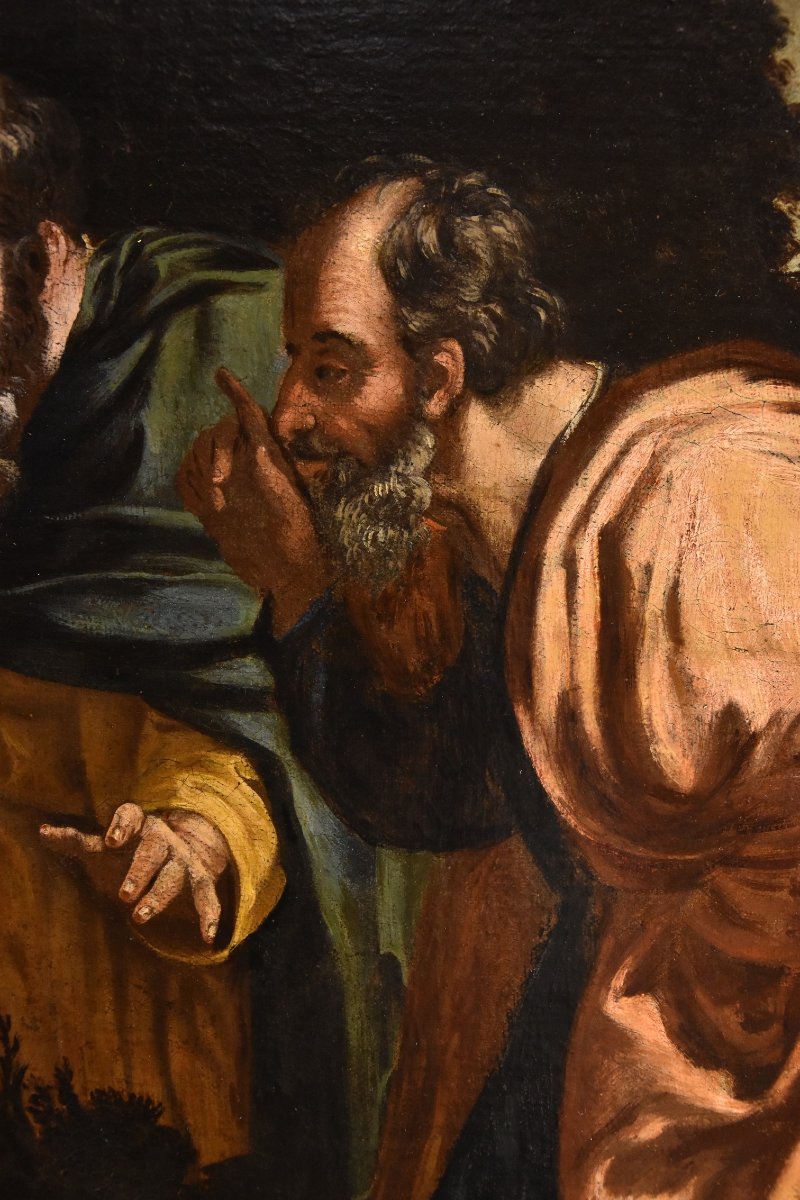
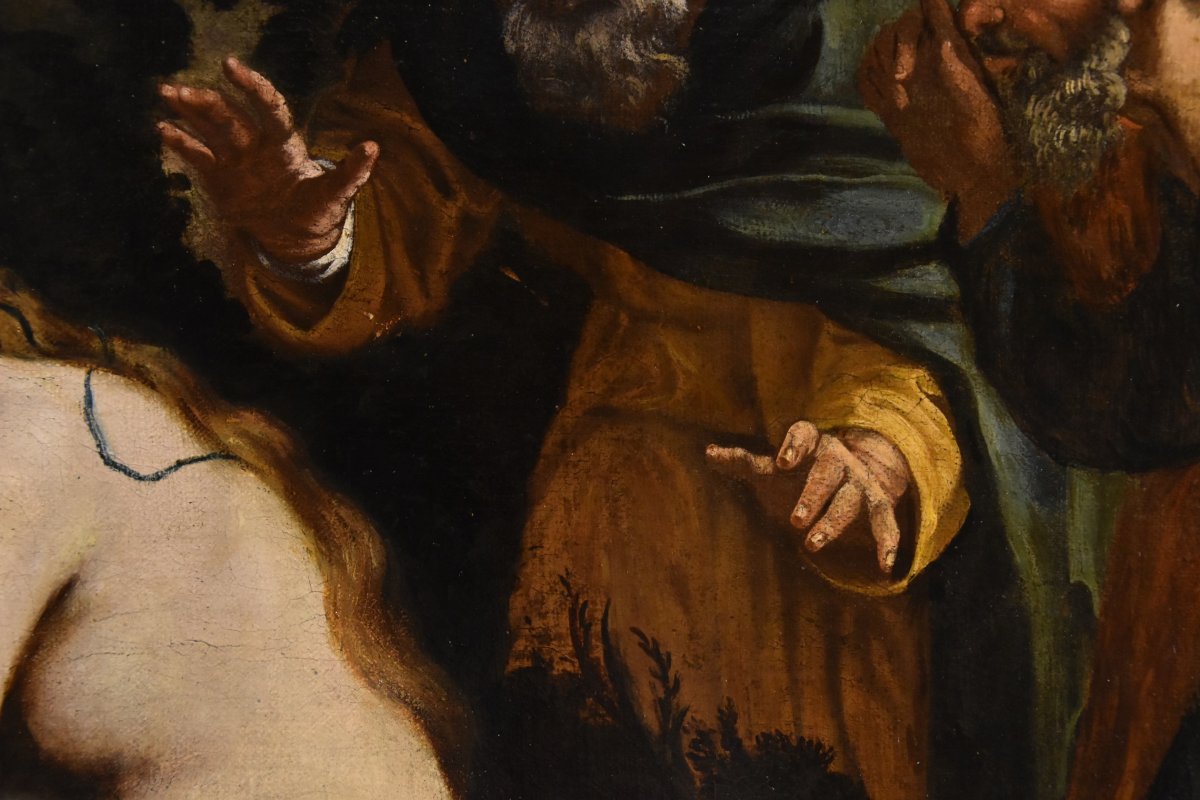
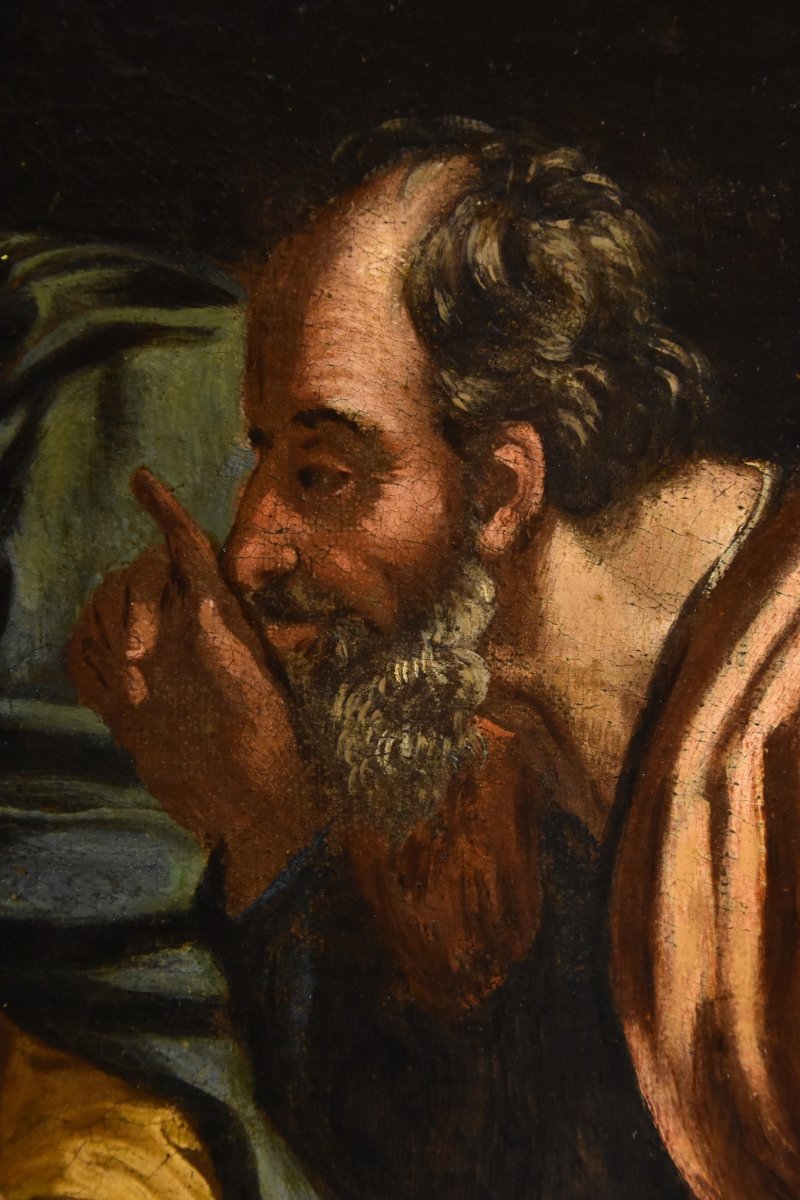
In this work, the painter adheres to the typical Italian figurative style of the sixteenth century, in which the male figures are positioned on the opposite side from the young woman, who, in her energetic and contorted posture, expresses modesty and dramatic fear, symbolizing the divide between righteousness and wickedness.
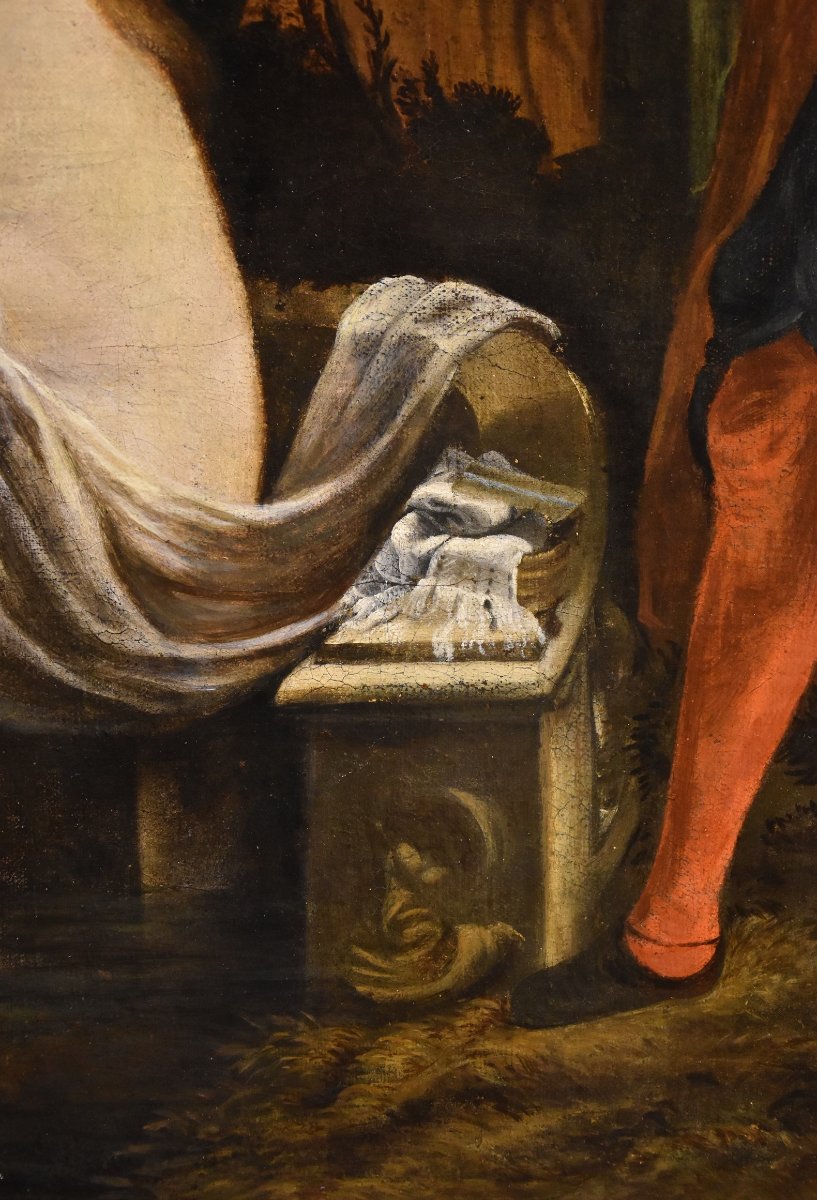
In the portrait, Susanna is wrapped in a draped white cloth, a symbol of her purity: she knows she has not committed adultery, but her face nonetheless reveals her fear of not being believed.
The iconographic theme of “Susanna and the Elders,” which ostensibly boasted moralistic intentions, became all the rage during the Baroque period due to its obvious erotic undertones, duly masked by its biblical origin, and for its intrinsic celebration of marital fidelity and chastity. The depiction of Susanna caught half-naked was therefore often a pretext to satisfy the patrons’ desire for female nude subjects.
The stylistic characteristics and the heartfelt classical spirit with which the scene is conceived indicate that it was executed by a skilled artist active in Rome around the mid-17th century. This historical period, crucial for Italian painting, saw the papal city as an extraordinary crossroads of artistic influences: on the one hand, Lombard painters alongside a host of artists inspired by Caravaggio’s naturalism, as well as foreign artists—Flemish, French, and Spanish—such as Rubens, Poussin, or Ribera; and on the other, the Bolognese classicist painters—first and foremost Annibale Carracci, but also Domenichino and Reni—who carried on the great tradition of Raphael.
It is therefore difficult to make a precise attribution, given this extremely prolific and heterogeneous cultural environment: the structure of the composition, though reinterpreted, recalls a composition by Annibale Carracci (https://www.lombardiabeniculturali.it/prints/fiches/C0060-00345/), while if we focus on the individual figures, that of Susanna evokes the one conceived by Rubens (https://catalogo.beniculturali.it/detail/HistoricOrArtisticProperty/0800079030), while the figures of the two old men evoke Guido Reni’s painting on the same subject (https://catalogo.beniculturali.it/detail/HistoricOrArtisticProperty/0800079030).
ADDITIONAL INFORMATION:
The sold artwork is framed in a beautiful gilded frame and comes with a certificate of authenticity and warranty.
We arrange and organize the shipping of purchased works, both within Italy and internationally, using professional and insured carriers. It is also possible to view the painting at our gallery in Riva del Garda; we would be delighted to welcome you and show you our collection of works.
Please feel free to contact us, with no obligation, for any additional information.
Follow us on:
INSTAGRAM https://www.instagram.com/galleriacastelbarco/?hl=it
FACEBOOK https://www.facebook.com/galleriacastelbarco/
7 900 €
Period: 17th century
Style: Louis 14th, Regency
Condition: Excellent condition
Material: Oil painting
Width: encadré 78 cm.
Height: encadré 92 cm.
Reference (ID): 1840409
Availability: In stock
Print